Various Portents

Posted in Poetry with tags , on March 18, 2010 by telescoper

I recently stumbled across a book of poetry by Alice Oswald, a name that was then quite new to me. Since then she’s quickly established herself as one of my absolute favourites, and I’ve acquired as many of her collections as I’ve been able to get my hands on.

Her verse is full of energy and vitality and she has an uncanny ability to make her words pull you along with them. Her favourite themes include many relating to the natural world, but she handles such material in a way that manages to be inspirational without being sentimental (or just plain vacuous). I recommend her brilliant third collection Woods etc particularly strongly.

I’ve taken this one, Various Portents, as an example. I first saw it on Jeanette Winterson’s blog. It’s a Christmas poem, so a bit out of season, but I love the playful way she mixes the lexicon of modern astronomy with the familiar language of the nativity scene. Superb.

Various stars. Various kings.
Various sunsets, signs, cursory insights.

Many minute attentions, many knowledgeable watchers,
Much cold, much overbearing darkness.

Various long midwinter Glooms.
Various Solitary and Terrible stars.
Many Frosty Nights, many previously Unseen Sky-flowers.
Many people setting out (some of them kings) all clutching at stars.

More than one North star, more than one South star.
Several billion elliptical galaxies, bubble nebulae, binary systems.
Various dust lanes, various routes through varying thickness of Dark,
Many tunnels into deep space, minds going back and forth.

Many visions, many digitally enhanced heavens,
All kinds of glistenings being gathered into telescopes:
Fireworks, gasworks, white-streaked works of Dusk,
Works of wonder and or water, snowflakes, stars of frost …

Various dazed astronomers dilating their eyes,
Various astronauts setting out into laughterless earthlessness,
Various 5,000-year-old moon maps,
Various blindmen feeling across the heavens in Braille.

Various gods making beautiful works in bronze,
Brooches, crowns, triangles, cups and chains,
Various crucifixes, all sorts of nightsky necklaces.
Many Wise Men remarking the irregular weather.

Many exile energies, many low-voiced followers,
Watchers of whisps of various glowing spindles,
Soothsayers, hunters in the High Country of the Zodiac,
Seafarers tossing, tied to a star…

Various people coming home (some of them kings). Various headlights.

Two or three children standing or sitting on the low wall.
Various winds, the Sea Wind, the sound-laden Winds of Evening
Blowing the stars towards them, bringing snow.

Planck and the Cold Galaxy

Posted in The Universe and Stuff with tags , , , , , , on March 17, 2010 by telescoper

Just a quick post to show a cool result from Planck which has just been released by the European Space Agency (ESA). It will be a while before any real cosmological results are available, but in the meantime here are a couple of glimpses into the stuff we cosmologists think of as foreground contamination but which are of course of great interest in themselves to other kinds of astronomers.

The beautiful image above (courtesy of ESA and the HFI Consortium) covers a portion of the sky about 55 degrees across. It is a three-colour combination constructed from Planck’s two shortest wavelength channels (540 and 350 micrometres, corresponding to frequencies of 545 and 857 GHz respectively), and an image at 100 micrometres obtained with the Infrared Astronomical Satellite (IRAS). This combination effectively traces the dust temperature: reddish tones correspond to temperatures as cold as 12 degrees above absolute zero, and whitish tones to significantly warmer ones (a few tens of degrees above absolute zero) in regions where massive stars are currently forming. Overall, the image shows local dust structures within 500 light years of the Sun.

Our top man in the HFI Consortium,  Professor Peter Ade, is quoted as saying

..the HFI is living up to our most optimistic pre-flight expectations.  The wealth of the data is seen in these beautiful multicolour images exposing previously unseen detail in the cold dust components of our galaxy.  There is much to be learned from detailed interpretation of the data which will significantly enhance our understanding of the star formation processes and galactic morphology.

This Planck image was obtained during the first Planck all-sky survey which began in mid-August 2009. By mid-March 2010 more than 98% of the sky has been observed by Planck. Because of the way Planck scans the sky 100% sky coverage for the first survey will take until late-May 2010.

Other new results and a more detailed discussion of this one can be found here and here.

Education and Careers

Posted in Science Politics with tags , , , , , on March 16, 2010 by telescoper

The piece I posted a few days ago about the effect of recent cuts in Astronomy funding by the Science and Technology Facilities Council (STFC) has generated quite a lot of comment so I thought I’d try to open up the debate by adding a few comments of my own. I’ve made some of them before and I know many of my colleagues disagree entirely with them, but I think they might prove useful in stimulating some further dialogue.

Of course the backdrop to this discussion is the decision by STFC to impose heavy cuts on the funding it sets aside for the “exploitation” of astronomical facilities. This funding, primarily in the form of research grants awarded to University groups, is used among other things to support early career researchers as postdoctoral research assistants on short-term contracts. Although its own advisory panels were unanimous in placing such funding the highest priority in the recent consultation exercise, STFC Executive  nevertheless decided to impose additional cuts this year. This decision, made very late in the cycle of grant awards, has led to many groups having their budgets slashed from 1st April 2010. Many young researchers facing a very uncertain future, with many of them facing redundancy in a few months.

The fallout from STFC’s financial collapse  has brought to a head a crisis that has been brewing for several years, but in my view it is symptomatic of wider problems within UK science as a whole. There are many problems, but I think the biggest problem with astronomy in particular is that we drastically overproduce PhDs. Even in times of plenty there were too many people competing for too few postdoctoral positions. Now that STFC has decided it wants to cut the number of working astronomers by more than 25% this looming problem has become a full-scale disaster. Many of the most talented scientists in the UK are certain to leave for greener pastures and few will ever return.

The argument I’ve heard over and over again is that training so many people to the level of a PhD in astronomy is good because the skills acquired will benefit the wider economy as those that fail to find a job as a postdoctoral researcher move into other areas, such as finance or industry.

I am not convinced by this argument. I think what we’re doing is producing large number of highly intelligent yet extremely disgruntled scientists who feel – quite rightly – that they’ve been duped into taking on a PhD when they are unlikely to be able to make use of it in their future careers unless they go abroad.

What we’re also doing is deluding ourselves about the quality of a PhD. The UK system produces too many PhDs who are not sufficiently experienced or skilled to take the next step onto a postdoctoral position. Of course there are exceptions, but generally speaking we produce too many PhDs too few of whom have any realistic chance of making a career in science research. The reason for this is that despite the introduction of 4-year degrees in subjects like physics, the UK undergraduate degree is not fit for the purpose of training a scientific researcher.

You may find that harsh, and maybe it is, but I think it’s true.

What I think the UK economy does require is more science graduates (including more physicists) rather than more science post-graduates. I believe we need a radical overhaul in the entire system of science education from undergraduate  through to postdoctoral level.

I have said it before and I’ll no doubt say again that I think we need something similar to what the Bologna process is designed to achieve. This essentially means a 3-year Bachelors degree, followed (for some) by a two-year Masters, then for a subset of them a 3 year PhD.

I think the structure of funding for university courses needs to change in order that we produce more graduates with BSc degrees. Passage from that qualification to a MSc should be highly selective, so fewer such degrees would be awarded. The final selection to a PhD should be more selective still. I’m sure the influx of MSc graduates this system would generate into the wider economy would produce a greater benefit to society as large than the current system, and at a lesser cost.

I’d suggest that in the particular case of astronomy we should be producing about half the PhDs nationally that we do at present.

What about the next step, the postdoctoral research assistantship or fellowship? I hope that STFC can be persuaded to reverse its recent savage cuts in the budget that supports such positions but the government and STFC Executive are showing no inclination to change their position. The current situation for PDRAs is grim. The number of positions available is small and funding for these is insecure.

My first suggestion will probably lead in time to a reduction in the number of  people competing for postdoctoral positions but will not in itself make a career in science seem more attractive.

I think the government also needs to guarantee the stability of  research grant funding over a longer timescale than the current 3-year cycle. Rolling grants used to do this, to some extent anyway, but these have for all practical purposes been abandoned by STFC. I think we need ring-fenced protection for grant funding to be installed at a high level of the Research Council structure to prevent individual research councils playing God with the careers of junior scientists.

I don’t in fact have a problem with the principle that scientists should serve apprenticeships in the form of fixed-term contracts as postdoctoral researchers. What is wrong is that the instability of current funding makes survival in the current system a lottery.

And finally, though it doesn’t really fit with my other comments, I have some advice for young scientists. Your best chance of securing a permanent job in the long run is by being good, not by being shy. Put yourself about. Get involved in teaching – you’ll almost certainly need to do it in a future career, so embrace it. Do outreach work. Work hard at your research. Believe in yourself.

If you don’t, nobody else will.

Idus Martiae

Posted in Uncategorized with tags , , on March 15, 2010 by telescoper

Today is the Ides of March and we’re entering the final straight before crossing the finishing line of term and collapsing in a sweaty mess into the arms of the Easter holiday. I’ve been ridiculously busy today so, being too knackered to think of anything else to post, I thought I’d tap into a priceless bit of British cultural history relevant to this auspicious day.

This is from the First Folio Edition of Carry On Cleo, and stars the sublime Kenneth Williams as Julius Caesar delivering one of the funniest lines in the whole Carry On series. The joke may be nearly as old as me, but it’s still a cracker…

Professor Denzil Dexter

Posted in Science Politics, The Universe and Stuff with tags , , on March 14, 2010 by telescoper

I’ve often complained about how the United Kingdom’s  Science & Technology Facilities Council is failing to reap adequate scientific rewards from  its investment in experimental facilities, astronomical observatories and space missions by refusing to provide funds necessary to support the exploitation and analysis of the data they provide.

In the interests of balance, however, I feel I should point out that this problem is also affecting research elsewhere in the world, even in the United States of America. In this short video presentation, my close friend and scientific collaborator Professor Denzil Dexter of the University of Southern California describes how a brilliantly conceived scientific project failed owing to lack of proper investment in “science exploitation” (i.e. data analysis).

(I’m obliged to point out that “Dave” is not the real name of the research student depicted in this clip.)

Life Cycles

Posted in Biographical, Science Politics with tags , , , , , on March 13, 2010 by telescoper

This was a strange Saturday. Usually I don’t do very much on the weekend, except for a bit of shopping, tidying up, and of course the crosswords. Today, however, was one of our undergraduate Open Days wherein prospective students visit the department (usually with their adoring parents) in order to have a look around, learn about our research, and meet some of the staff that will be teaching them if and when they come here.  Our usual Open Days are Thursdays, but some people find it very difficult to get here on a weekday – parents working, school commitments, etc – so we have a few Saturdays too. Since I live within walking distance of the department I don’t mind taking part.

Bizarrely, my job today was to act as a tour guide around the experimental physics labs. I must be one of the least qualified people in the School to do that, as I’m a theoretical astrophysicist. As it happens, we had two groups to show around today and the other guide was Ant Whitworth, also a theoretical astrophysicist (though one who works on star formation, not cosmology like I do). Ours not to reason why. I got a free lunch out of it anyway, and also managed to find most of the places I was supposed to take the visitors to, most of which I’ve never seen before!

Anyway, it was nice to meet and chat with so many young people interested in physics. I hope to see at least some of them in October. Funding will be very tight this year for new undergraduates and although we’ve asked the University to increase our quota to take more students in, we haven’t so far been allowed to do so. I think that is the situation around much of England too, so I think some might not find a place at their chosen institution. I hope there aren’t too many disappointments when the A-level results come out.

The recruitment of undergraduates for next year is part of the cycle of academic life. We’re currently doing the same thing with postgraduates, although fewer people are involved in that case. The end of term comes up next week, then it’s the Easter break. Soon after that we’ll be back into examinations. Some will be graduating this year and we’ll have to say goodbye to them as they make their way into the big wide world. Others will leave for the summer and return to continue their studies next year.

The cycle of academic life is embedded within that of the seasons too. Today was a beautiful spring day in Cardiff. We’ve had sunny weather for a week or so already, but yesterday and today were the first days mild enough in temperature to be called spring. Yesterday evening as I walked home I noticed it wasn’t dark at 6pm, a sign that the days are getting longer. Soon I’ll be able to walk home through Bute Park,  which I can’t do at present because the gate on the east side is closed at sunset. I did, however, go back that way this afternoon after the Open Day activities were over.

There’s a lot of construction work going on, associated with Cardiff City Council’s plan to turn Bute Park into Bute Lorry Park, and one has to complete an obstacle course to get into it on foot these days. Still, once away from the affected areas the rest of the Park is shaping up again for spring and summer and there was quite a crowd there today, just quietly enjoying it for it’s own sake. You know, like a Park should be. I’m not looking forward to having to dodge juggernauts on the way, which is what is what the future seems to have in store.

Apart from the seasons and the cycle of academic life, I also thought on the way home about another cycle that is about to unfold. A General Election is due to be held this year. It seems like yesterday that I cast my vote in the last one, while I was living in Nottingham. Now the politicians are gearing up for the interminable months of electioneering that inevitably presage such events. I’m not at all sure at this point who I’m going to vote for. I’m disillusioned with the main parties and skeptical of the alternatives.

I heard last night on Twitter of a story that Lord Mandelson has promised that “The Science Budget will be spared from cuts”. That’s interesting because we’ve already suffered plenty. Perhaps the word “further” was accidentally omitted. Not that I believe him anyway. Why should I? It’s obviously just electioneering. Science Minister Lord Drayson also recently announced on Twitter that under the next Labour government, the UK will be the best place in the world to do science. I don’t believe that either, although I do have a little more faith in Drayson than I do in Mandelson.

I think the deep cuts already made to fundamental physics have in any case guaranteed the exodus of a huge number of talented scientists. And that’s emphatically not the result of the recession. It’s the result of deliberate government policy, sustained since 2007. I won’t believe New Labour’s claims about science until they own up and reverse the damage they have done, which I don’t think they’re going to do.

I have to admit that I am very fearful not just for the future of astronomy in the UK, but for the UK as a whole. Although people talk about the country being out of recession, the fact remains that we’re teetering on the brink of insolvency. I have a deep-seated feeling  that this election is critical. Very difficult decisions will have to be made over the next two to three years, and if we get them wrong, we could be propelled into a catastrophic decline. The trouble is, I don’t trust any political party to deliver a coherent plan for the recovery. The more I think about it, the more my optimism ebbs away. I hope I’m proved wrong.

Now after all that I haven’t done the Guardian crossword yet! Where’s my pen?

Astronomy with Knobs on

Posted in The Universe and Stuff with tags , , , on March 12, 2010 by telescoper

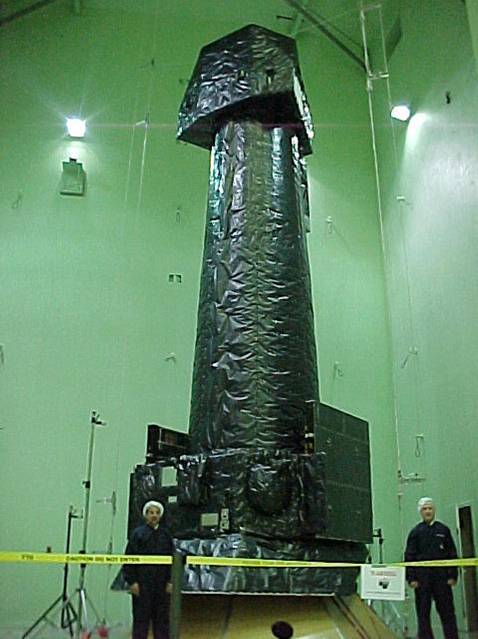
I just saw a splendidly smutty blog post which contains graphic examples of astronomical objects in the form of male genital organs. Since this appears to be an entirely suitable topic for a Friday afternoon blog post, here is my suggestion of  a contribution to her gallery. It’s the X-rated X-ray satellite XMM Newton which, as you can see, has a disturbingly phallic appearance.

I wonder if astropixie might be able to make room for this one?

Astronomy Look-alikes, No. 18

Posted in Astronomy Lookalikes with tags , on March 11, 2010 by telescoper

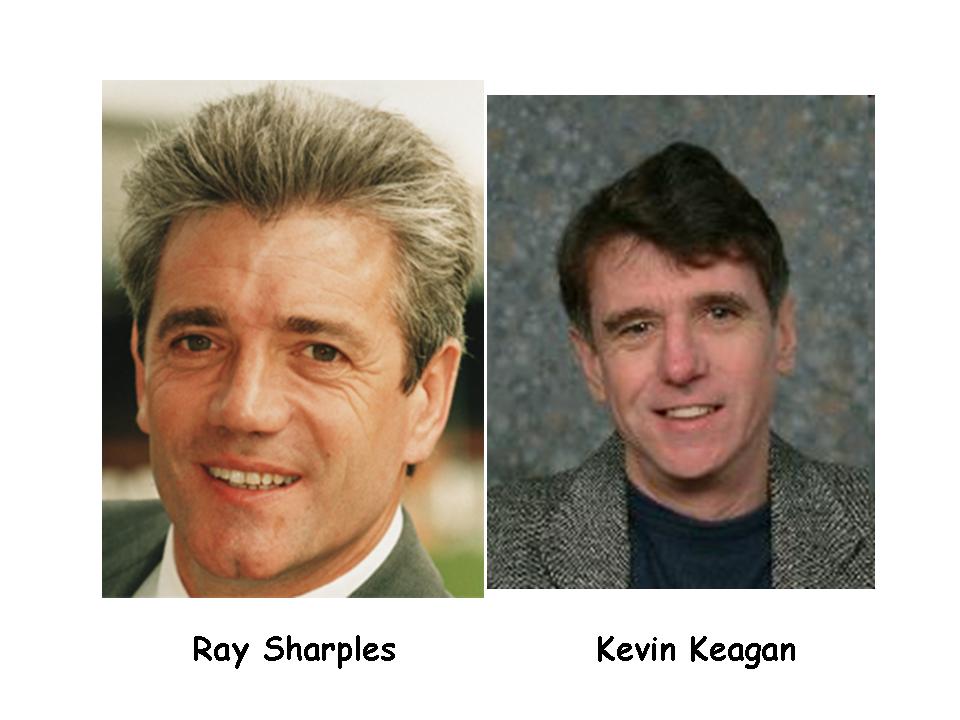
I wonder if anyone else has noticed the similarity between Ray Sharples of Durham University and erstwhile Geordie Messiah Kevin Keegan? They sound similar too!

Taken for Granted

Posted in Science Politics with tags , , , , on March 10, 2010 by telescoper

It’s been a couple of weeks since the Astronomy group in the School of Physics & Astronomy at Cardiff University was informed of the result of its recent application to the Science and Technology Facilities Council (STFC) for a continuation of its rolling grant. I haven’t been able to post anything about it because it has led to some difficult personal situations and we didn’t want anyone to hear about it other than face to face from relevant members of the department.

In case you weren’t aware, a rolling grant covers a 5-year but a group holding one has to apply for renewal every three years at which point the programme of research is reviewed by a panel of experts. If this review is positive a new 5-year grant is awarded and the two years remaining on the old grant or cancelled. In the case of a negative review, however, there is two years’ grace until the funding is terminated, giving the applicants the chance to try again next time.

At least that’s what used to happen.

The previous Cardiff Astronomy roller supported 6 postdoctoral research assistants (PDRAs) as well as providing other funds for travel, equipment, infrastructure and other staff time. This time we requested an increase, primarily in order to enable us to exploit the wonderful data coming from the Herschel observatory. I joined Cardiff after the last review so I wasn’t included in the existing  funding package. However, I did succeed in getting a standard grant in last year’s grant round which provides support for a 3-year period. This time, I applied to have this grant subsumed into the rolling programme when it completes in 2012. I requested an extension to the 3-years to tide this over until the next rolling grant and bring me into phase with the rest of the group.

That was the idea, anyway. STFC is extremely short of money, so despite what we felt was a strong case for supporting our Herschel work we weren’t particularly optimistic of a good outcome, especially since  additional cuts to research grants were announced last December.  In fact the rolling grant application went in last year, but the process is extremely lengthy. Three of us had to go to Swindon last October to present the case to the grants panel. The panel had apparently completed its work by December, but when new cuts were announced they had to revisit their decisions. That’s why we were only informed at the end of February of the level of support that we would get from April 1st this year.

In fact we received two announcements, one detailing what we would have got had the panel’s original recommendations been followed, then another showing the result of the additional 15% cut decided in December. In the first we were cut from 6 PDRAs to 5, but in the second an additional position was cut leaving us with 4 surviving from the previous grant. Moreover, STFC has basically abandoned the rolling grant concept entirely, and refused us permission to let the previous grant roll out. We had no choice but to accept the new grant, which means that we have insufficient funds from 1st April 2010 to honour contracts already issued to two scientists. Not a pleasant situation to be presented with. We’ve managed to find a way of coping to the extent that nobody will be made redundant in the short-term, but it’s still a time of great uncertainty for those involved.

For my own part, the circumstances are a bit better. The panel did award me an extension of my grant to enable me to merge my research with the rest of the programme by the next review date. They also – unexpectedly, I must admit – gave me a small uplift in my existing funding. I’ll be OK, at least for another 3 years.

Overall, we’re disappointed. The outcome wasn’t as good as we’d hoped but, then again, it wasn’t as bad as we’d feared. Taking into account the standard grant I hold, we’ve gone down from 7 PDRAs to 5. I’ve heard rumours of much more drastic cuts elsewhere, and I’m sure other departments are feeling the pain much more than we are right now. I don’t have a clear picture of what has happened nationally, so I’d be grateful for any information people might be prepared to divulge through the comments box as long as you don’t betray any confidences!

The whole business of securing grant funding can be deeply frustrating, and sometimes the  decisions seem bewildering. However, I’ve been on these panels before and I know how hard it is, so I’m never tempted to whinge. In fact, I’m going to be joining the panel again for this round. Not that I’m looking forward to it very much!

However, I can’t resist ending with a comment about the current management of STFC. It really seems quite absurd to be cutting grant funding at precisely the time that Herschel and Planck are starting to deliver huge quantities of exquisite data.  I say that as a scientist of course, not a civil servant. However, the prevailing mentality at STFC – instigated by the Treasury – seems to be that science part of their remit is much less important than the technology and the facilities. Although the Science Minister Lord Drayson recently announced a proposal that purports to fix some of STFC’s difficulties, this seems more than likely to keep grant funding at a miserably low level for the indefinite future. The STFC management’s readiness to rewrite the rules governing rolling grants, cut funding at absurdly short notice, and raid the grant budget in order to solve problems elsewhere has convinced me that there will be no improvement until there are people at the top that recognize that it’s science that matters, that science is done by people, and that the way to manage those people is not to treat them the way they are doing now.

Especially if they want people to provide free advice to their panels…

To look at a star by glances..

Posted in Literature, The Universe and Stuff with tags , , , , , on March 9, 2010 by telescoper

I’ve blogged before about my love of classic detective stories and about the intriguing historical connections between astronomy and forensic science. However, I recently finished reading a book that gave me a few more items to hang on that line of thought so I thought I’d do a quick post about them today.

I picked up a copy of The Suspicions of Mr Whicher by Kate Summerscale when I saw it in a stack of discounted books in Tesco a few monthsa go. I thought it might be mildly diverting, so I bought it. It turned out to be a fascinating read. I won’t spoil it by telling too much about the story, but it is basically an investigation into the circumstances surrounding a real-life murder that happened on 30th June 1860. The case involved a truly shocking crime, the brutal slaying of a young boy, but it also offers great insights into the history of the Criminal Investigation Division (CID) of the Metropolitan Police, which was based at Scotland Yard from about 1842 onwards. Mr Jack Whicher was the Yard’s most celebrated detective at the time, but this crime went unsolved until, about five years later, the perpetrator walked into a police station and confessed to the murder.

In telling the story, Kate Summerscale touches on a lot of fascinating social history. For example, I had never realised that in the early days of the CID people were strongly opposed to the idea that plain clothes policemen might be snooping about so all detectives were required to wear their uniforms even when off duty! It’s also fascinating to note that the rise of the true-life detective coincided with the rise of the detective story in popular fiction.

Edgar Allan Poe’s short story The Murders in the Rue Morgue, generally accepted to have been the first real detective story, was first published in 1841. Even in this first example of the genre, we find a clear parallel being drawn with astronomy by the detective Dupin:

Thus there is such a thing as being too profound. Truth is not always in a well. In fact, as regards the more important knowledge, I do believe that she is invariably superficial. The depth lies in the valleys where we seek her, and not upon the mountain-tops where she is found. The modes and sources of this kind of error are well typified in the contemplation of the heavenly bodies. To look at a star by glances–to view it in a side-long way, by turning toward it the exterior portions of the retina (more susceptible of feeble impressions of light than the interior), is to behold the star distinctly–is to have the best appreciation of its lustre–a lustre which grows dim just in proportion as we turn our vision fully upon it. A greater number of rays actually fall upon the eye in the latter case, but in the former, there is the more refined capacity for comprehension. By undue profundity we perplex and enfeeble thought; and it is possible to make even Venus herself vanish from the firmament by a scrutiny too sustained, too concentrated, or too direct.

No less a figure than Charles Dickens also had thoughts along these lines. In 1850 in a short article called A Detective House Party, he compared detectives with the astronomers Urbain Leverrier and John Couch Adams who in 1846 had simultaneously discovered the planet Neptune. Dickens died in 1870 leaving his own detective story The Mystery of Edwin Drood still unfinished but his good friend Wilkie Collins did a great deal to establish the literary genre of detective fiction with The Moonstone and The Woman in White. Indeed, in the mid-19th Century the idea of detection seems to have imprinted itself on fields as diverse as natural history and journalism as well as astronomy.

The point that strikes me is that astronomy and criminal investigations are primarily observational rather than experimental. One has one Universe and one scene of the crime. In both disciplines the task is to reconstruct what happened from what is seen and what is not.

The detective instinct, brightened by genius, marked unerringly the place of that missing planet which no eye had seen, and whose only register was found in the calculations of astronomy.

I use metaphors like this quite often in popular lectures, and they seem to go down quite well. On the other hand, I’ve often had my leg pulled for admitting to watching TV programmes like CSI: Crime Scene Investigation. Admittedly, the characterisation is very weak and the plots often ridiculously far-fetched. However, these stories do at least attempt to portray something of what the scientific method is about. And that’s something that not many so-called science programmes bother to do these days.