Archive for Abell 426

The Perseus Cluster

Posted in Euclid, Maynooth, The Universe and Stuff with tags , , , , on April 16, 2026 by telescoper

In a vain attempt to convince my readership that I know anything about observational astronomy, I thought I’d share this image of the central regions of the Perseus Cluster (also known as Abell 426) made by my final-year project students:
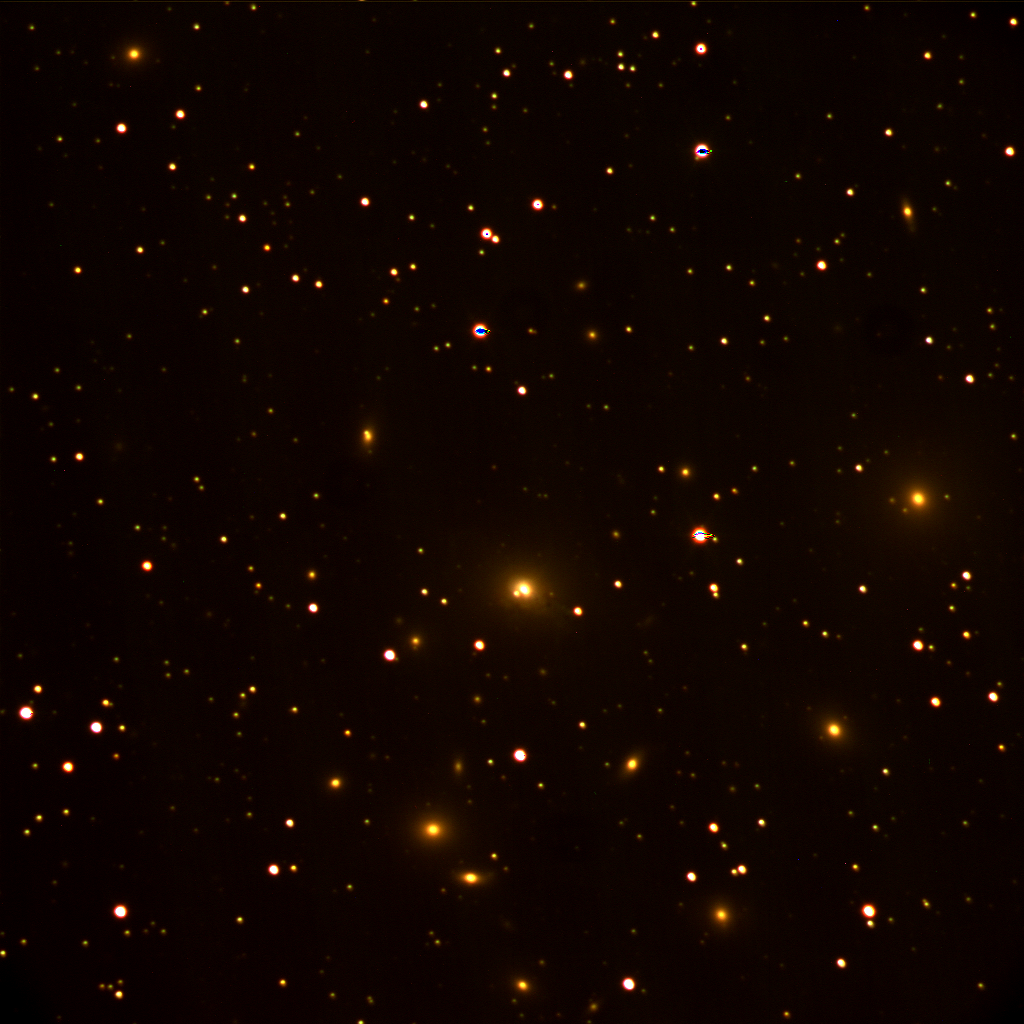
Picture Credit: Ben Doyle

The image was taken last November using the 1.20m reflecting telescope at the Observatoire de Haute-Provence where the final-year astrophysics students from Maynooth spent a week last November on a field trip taking various observations. The exposure was 240 seconds and the field of view is about 15 arcminutes on a side. Most of the objects in the image are galaxies, rather than stars.

I asked my students to look at this cluster (which is about 10 degrees across), partly because it appears near the Zenith in November so would be a good target, partly because it is nearby so the galaxies in it are therefore quite bright, and partly because it was observed by Euclid and featured among the Early Release Observations. The Euclid telescope is also 1.20m in diameter, but because it has a very fancy camera and is in space, Euclid reveals far more galaxies but I was nevertheless impressed at how well this turned out!
Euclid, the Perseus Cluster, and Beyond!

Posted in Euclid, The Universe and Stuff with tags , , , on November 8, 2023 by telescoper

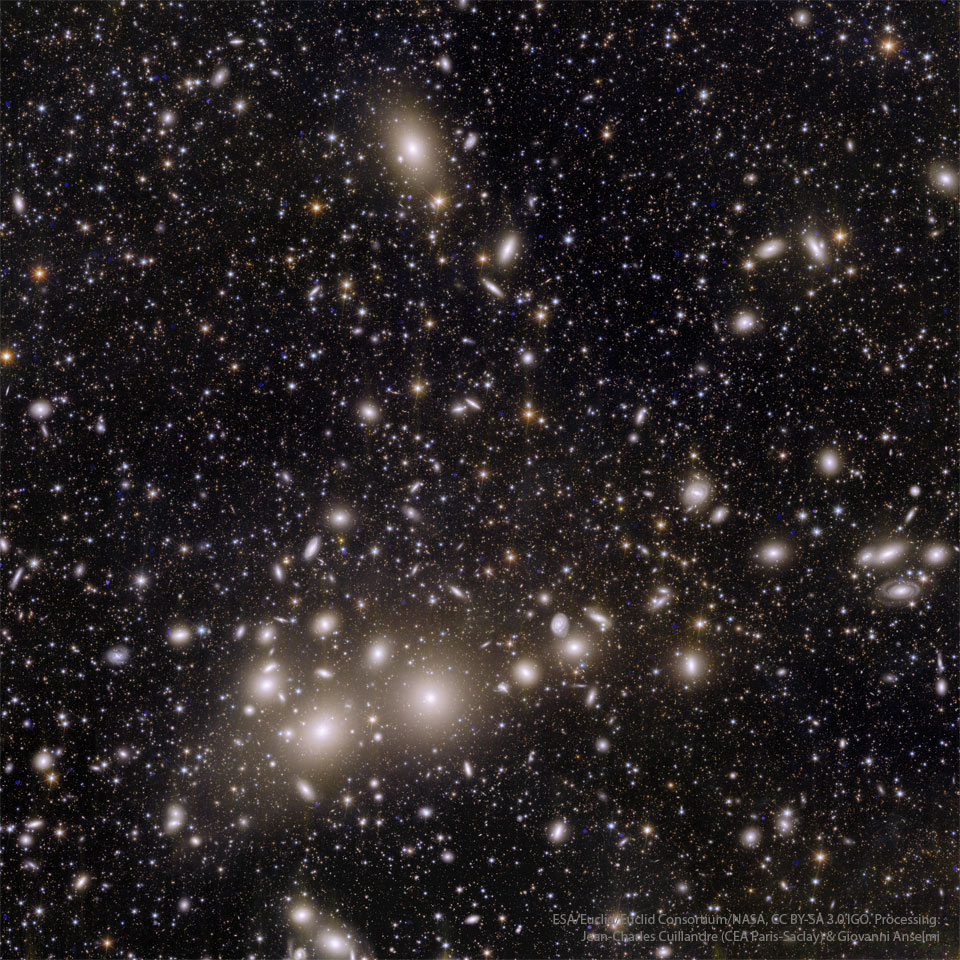
I see that the Euclid Early Release Observation of the Perseus Cluster is today’s Astronomy Picture of the Day:

The Perseus Cluster seen by Euclid

The Perseus Cluster (Abell 426) – a dense concentration of over a thousand galaxies with a total mass of about 1.2 × 10¹⁵ M – is impressive in its own right, especially because the picture was taken in a single exposure, but the staggering thing about this image is that it contains hundreds of thousands of galaxies. In other words there are as many galaxies in this picture as there are words in a book. Most of these galaxies are in the background, not associated with the cluster, and many of them extremely distant. With so many objects in one field, you can perhaps see how much data we will get from the entire survey, which will last more than 6 years. It is these distant sources – billions of them – that Euclid will survey to glean information about the expansion history of the Universe.

P.S. Yesterday’s press conference resulted in a lot of media attention worldwide, even some in Ireland. There is a piece on the RTÉ website, for example, and another on Silicon Republic (which includes a quote from yours truly).