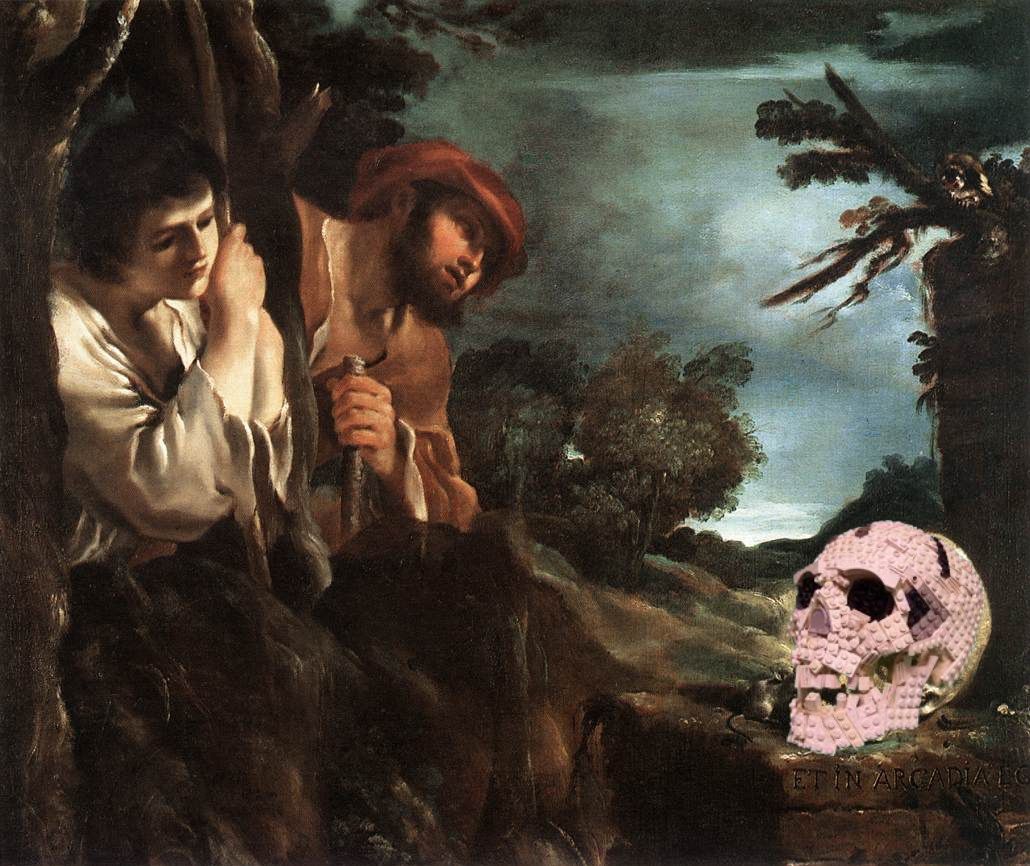
Posted with apologies to the Italian Baroque artist Giovanni Francesco Barbieri (Guercino) on whose original Et in Arcadia Ego this is based.
Posted with apologies to the Italian Baroque artist Giovanni Francesco Barbieri (Guercino) on whose original Et in Arcadia Ego this is based.

The artist Joan González was born in Barcelona, and lived from 1868 to 1908; the title of this work in Catalan is Sous-bois Printanier.
I got up at Stupid O’Clock this morning to catch an early morning plane from Dublin to Cardiff. It was very cold when I arrived but it soon warmed up and turned into a lovely day.
I had a nice breakfast at Bill’s when I arrived in the City then did tour of the National Museum of Wales where there is an exhibition about the Miners’ Strike of 1984/5, from which this display case caught my attention:

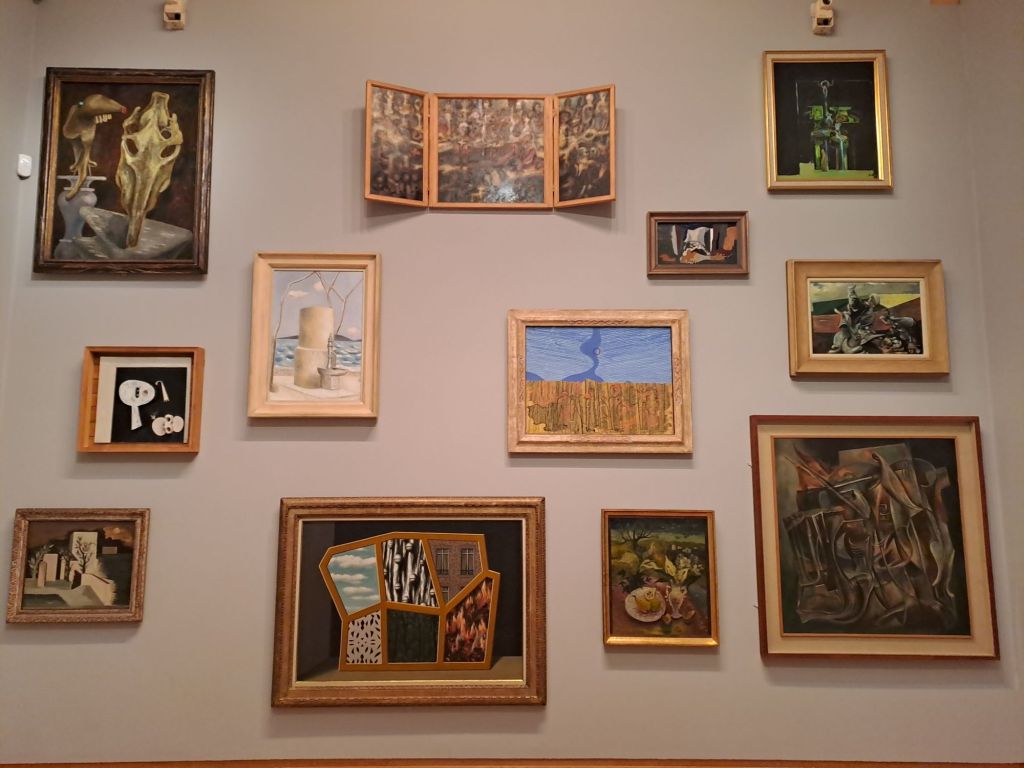
I also had time for a round of Name That Artist (scoring a miserable 3/12, for Sutherland, Ernst, and Magritte).
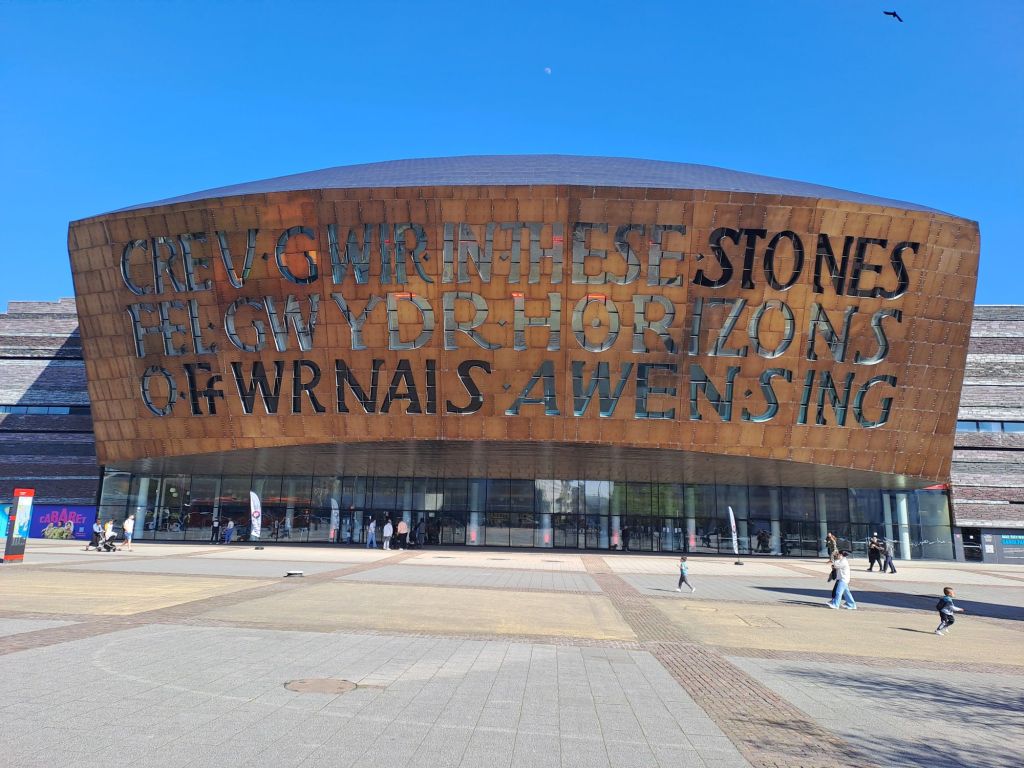
After that, I took a stroll around Bute Park before heading to my hotel in Cardiff Bay to check in and have a rest before the reason for my visit, an event which will take place here at 7pm:
I won’t be able to blog about that until I get back to Maynooth tomorrow afternoon.
It’s been a very busy day today so I just have time to test out the new “Bluesky embed” feature on WordPress. That means I can share a selection of my very best shitposts directly here. Try this one:
It seems to work on some browsers but not others. How is it for you?
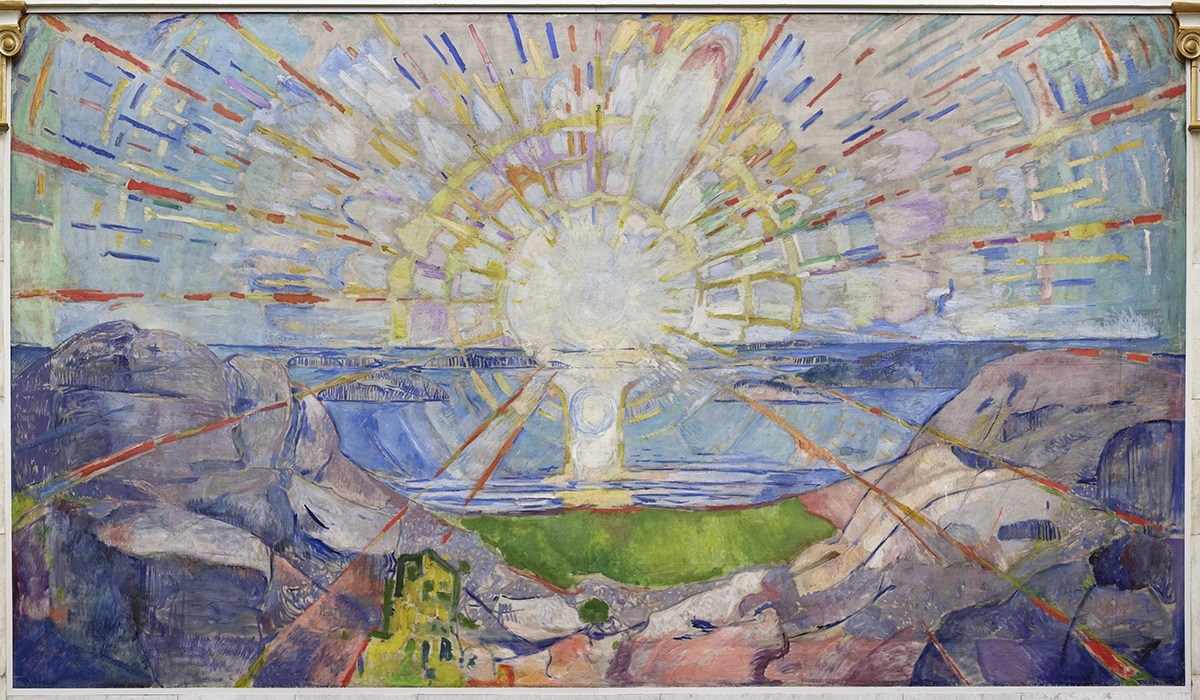
by Edvard Munch (1911, 455 x 780 cm, oil on canvas, University of Oslo; this very large work hangs in the University Aula at the University of Oslo where it is flanked by ten other Munch paintings )
I was trying to find a work of art with which to illustrate the start of teaching term and decided on this remarkable painting by El Greco, usually called The Opening of the Fifth Seal though it has been given other names. Actually it’s only part of the original painting – the upper section was destroyed in 1880 – which at least partly accounts for the unusual balance of the composition. What I find astonishing about this work, though, is that at first sight it looks for all the world like an early 20th Century expressionist work, complete with distorted figures and vivid colour palette. It’s very hard to believe that it was painted in the early years of the 17th Century! El Greco was 300 years ahead of his time.

by Doménikos Theotokópoulos (“El Greco“), painted between 1608 and 1614, 224.8 cm × 199.4 cm, oil on canvas, The Metropolitan Museum of Art, New York.

by Bridget Riley (1994, 1576 × 2278 mm, Oil on Canvas, Private Collection)
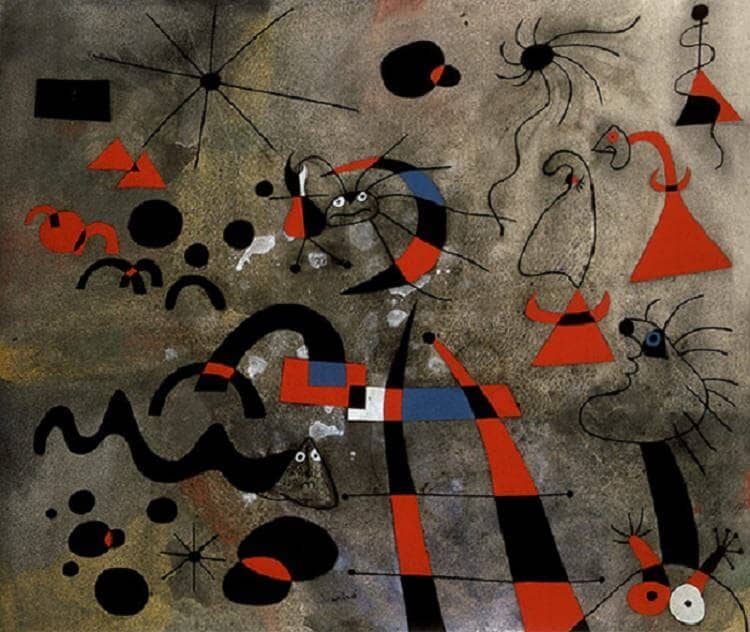
by Joan Miró (1940, gouache, watercolor, and ink on paper, 38cm × 46 cm, The Museum of Modern Art, New York City )

The famous portrait of Thomas Cromwell by Hans Holbein the Younger shown above is in fact a copy; the original is lost. There is another copy in the National Portrait Gallery in London, but it’s not as good. The original was painted around 1533, during the period covered by the novel Wolf Hall (which I reviewed yesterday) and is mentioned in the book. Holbein is known for having sometimes painted excessively flattering portraits – most notably of Anne of Cleves – but he doesn’t seem to have done that here. Cromwell is portrayed as dour, stern-faced and more than a little scary. He probably wanted people to fear him, so wouldn’t have minded this.
As well as the nature of the likeness, the composition is interesting. The subject seems to be squashed into the frame, and hemmed in by the table that juts out towards the viewer. He is also looking out towards the viewer’s left, though not simply staring into space; his eyes are definitely focussed on something. I’m not sure what all this is intended to convey, except that the table carries an ornate prayer-book (the Book of Hours) as if to say “look, here’s a symbol of how devout this man is”.
Interesting, just last year scholars published research that argues that the copy of the Hardouyn Hours which can be found in the Library at Trinity College, Cambridge, is precisely the book depicted on the table. If so, it’s a rare and perhaps unique example of an artefact seen in a Tudor painting that survives to this day.
I mentioned in my last post that I plan to visit the ongoing Kandinsky Exhibition at the Art Gallery of New South Wales so I thought I’d share this little video introducing the artist and the exhibition:

 In the Dark
