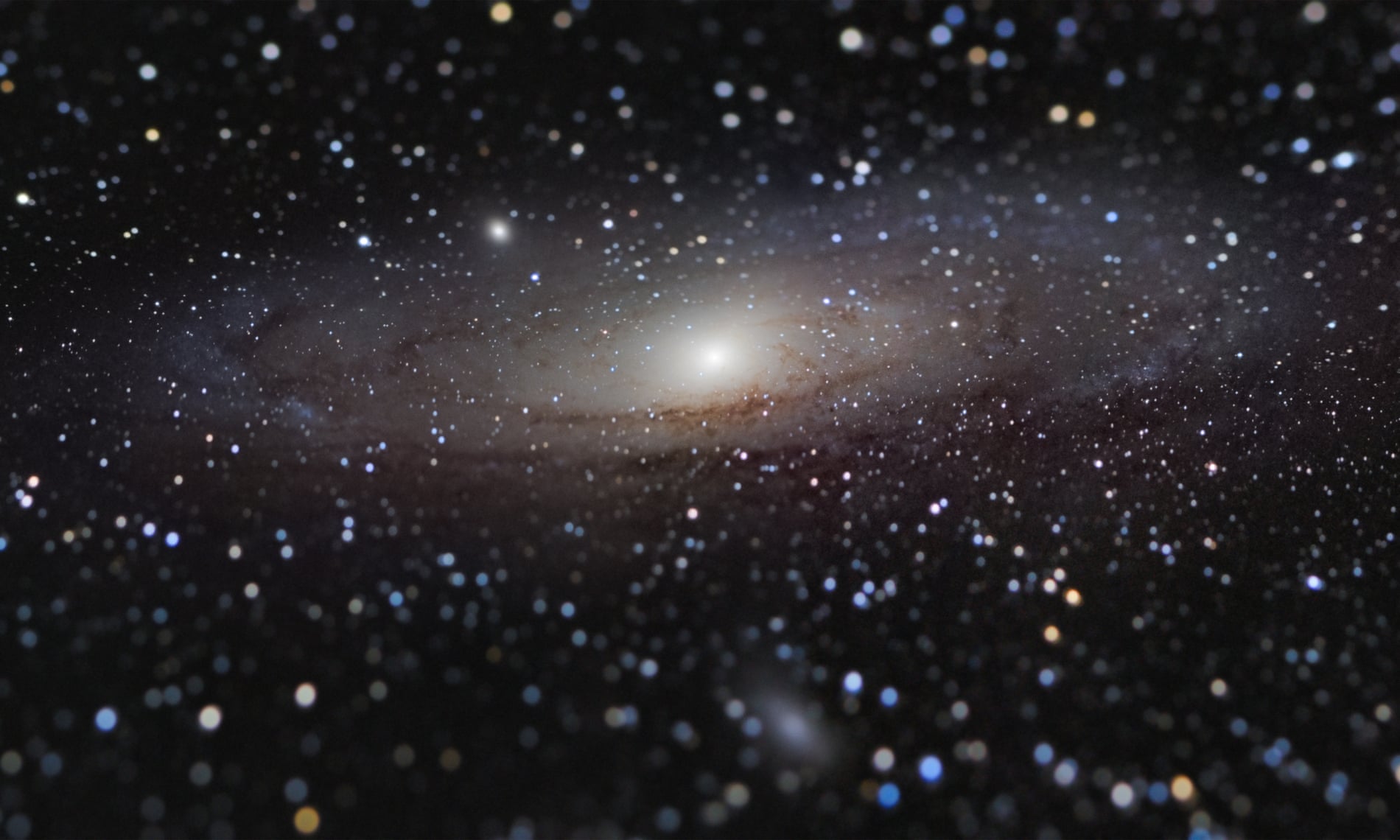
Very busy today so I only have time to share a this stunning picture, the overall winner of the 2020 Astronomy Photographer of the Year, Andromeda Galaxy at Arm’s Length? by Nicolas Lefaudeux (France).
Follow @telescoper
Very busy today so I only have time to share a this stunning picture, the overall winner of the 2020 Astronomy Photographer of the Year, Andromeda Galaxy at Arm’s Length? by Nicolas Lefaudeux (France).
Follow @telescoper
Episode 4, in which I show that spiral galaxies are very grubby – they contain huge amounts of dust. And not only galaxies – astronomical dust is everywhere we look. The Universe may be big, but it sure is dirty..
Follow @telescoper
I apologize for being a bit late onto this but this is a very important initiative that tries to safeguard the sky from the plethora of satellite fleets that threaten to cause untold damage to major astronomical projects, especially surveys. I’ve signed the document and I hope you will also consider doing so.
Many of the readers of this blog will be aware of the fast-moving issue of satellite constellations, which is the launching of the first of potentially tens of thousands of communications satellites. The SpaceX Starlink cluster is one of these, but there will be others such as Amazon’s project Kuiper and Facebook Athena.These satellite constellations will be detrimental to both optical and radio ground-based astronomy, from their reflected light and broadcasted emissions. Mitigating the effects of these satellites needs to be done quickly before services such as 5G internet from them are established in the coming months. Beyond that point, it will be harder to regulate them.Organisations which represent our discipline such as the AAS, IAU, EAS and RAS are attempting to engage directly with SpaceX and others on this issue.Please consider promptly adding your name to the appeal linked to in the post below.
Download EN_PDF – Download IT_PDF
THIS APPEAL HAS BEEN SIGNED BY
901+ ASTRONOMERS
(the refresh rate of the counter may slow down).
For centuries the astronomical observations from the ground have led to exceptional progress in our scientific understanding of the Laws of Nature. Currently, the capability of astronomical instrumentation from the ground is endangered by the deployment of satellites fleets.
Through this international appeal and following the same concerns expressed by the International Astronomical Union, IAU [1] and other institutions, we raise a formal request for greater…
View original post 1,586 more words
We’ve more-or-less sorted out who will be teaching what next term in the Department of Theoretical Physics at Maynooth University next term (starting a month from now) and I’ll be taking over the Mathematical Physics module MP110, which is basically about Mechanics with a bit of of special relativity thrown in for fun. Being in the first semester of the first year, these is the first module in Theoretical Physics students get to take here at Maynooth so it’s quite a responsibility but I’m very much looking forward to it.
I am planning to start the lectures with some things about units and dimensional analysis. Thinking about this reminded me that I posted a dimensional analysis problem (too hard for first-year students) on here a while ago which seemed to pose a challenge so I thought I would post another here for your amusement.
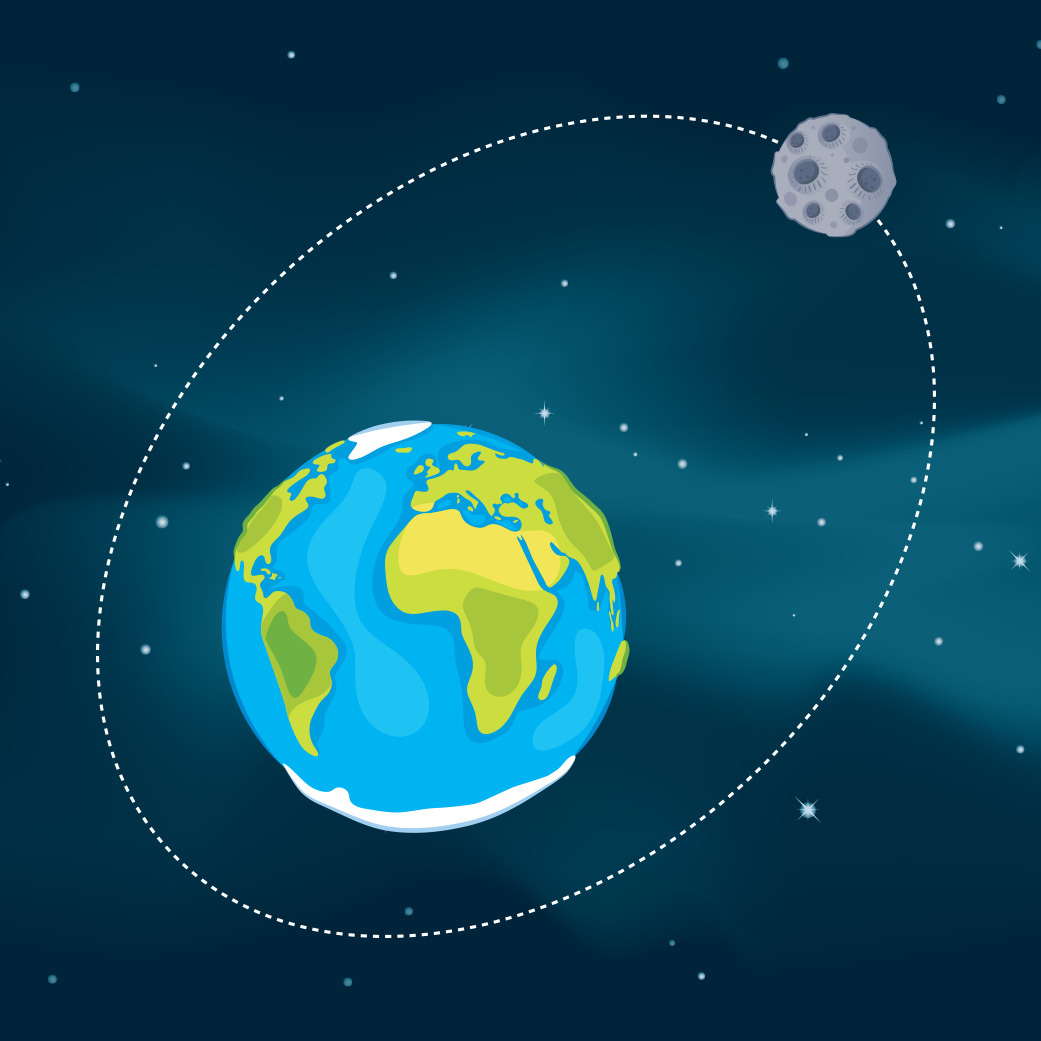
The period P for an elliptical orbit of semi-major axis a of a moon of mass m around a planet of mass M, depends only on the quantities a, m, M and G (Newton’s Gravitational Constant).
(a). Using dimensional analysis only, determine as completely as possible the relationship between P and these four quantities.
(b). How would the period P compare with the period P′ of a system consisting of a moon of mass 2m orbiting a planet of mass 2M in an ellipse with the same semi-major axis a?
Please submit your efforts through the comments box below.
Follow @telescoper
As I had little window of opportunity before the start of exam marking season and other goings-on in Maynooth I decided to make a quick trip back to Wales back in Cardiff for the weekend.
I flew back on Thursday evening. It had been a busy day and I’d only had a sandwich for lunch so I went into the bar in Dublin Airport to get a beer and a burger. Who did I bump into there but Professor Walter Gear…

Walter was Head of the School of Physics and Astronomy at Cardiff University when I joined it in 2007, so and was he persuaded me to leave Nottingham. He was a very good Head of School and, in particular, he helped a lot when I had mental health problems seven years ago.
Anyway after twenty years in Cardiff during which he built up the School and particularly the world-leading Astronomy Instrumentation Group there, Walter has left for a new position as Dean for Science and Engineering at NUI Galway, in Ireland.
He was in Dublin Airport because he was travelling back to his leaving do in Cardiff, which I turned up for on Friday. There were drinks and speeches and presents and it was nice to see some old friends there and in the Flute and Tankard afterwards. It was a good send-off.
I’m sure that Walter (who was born in Ireland) enjoy his new role in the Emerald Isle very much indeed. Galway is quite a distance from Maynooth (almost 200 km) but I hope we will be in regular contact.
Anyway I should mention that there are advertisements out for a Research Associate in Sub-mm Astronomy and and a Lecturer in Astronomy (with an emphasis on the same) in Galway. I’m sure these will prove very attractive to many applicants!
Follow @telescoperI’m sharing this interesting post with a quick reminder that the Vernal Equinox in the Northern Hemisphere occurs today, 20th March 2019, at 21:58 GMT.

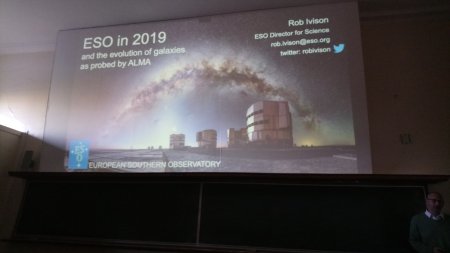
It was a pleasure to welcome Rob Ivison, Director of Science at the European Southern Observatory (ESO) , to Maynooth this afternoon for a colloquium.
I was on my best behaviour introducing his talk and even refrained from pointing out that his native Lancashire is actually in the Midlands.
Ireland became a full member of ESO earlier this year and Rob has been touring Ireland giving talks to encourage Irish astronomers to make the most of the many opportunities membership presents. Having already visited Cork and Galway he passed through Maynooth today before ending up in Dublin tomorrow.
It was an enjoyable and impressive talk and very nice to chat with Rob afterwards over dinner.
Bon voyage to Rob and thanks for the visit!
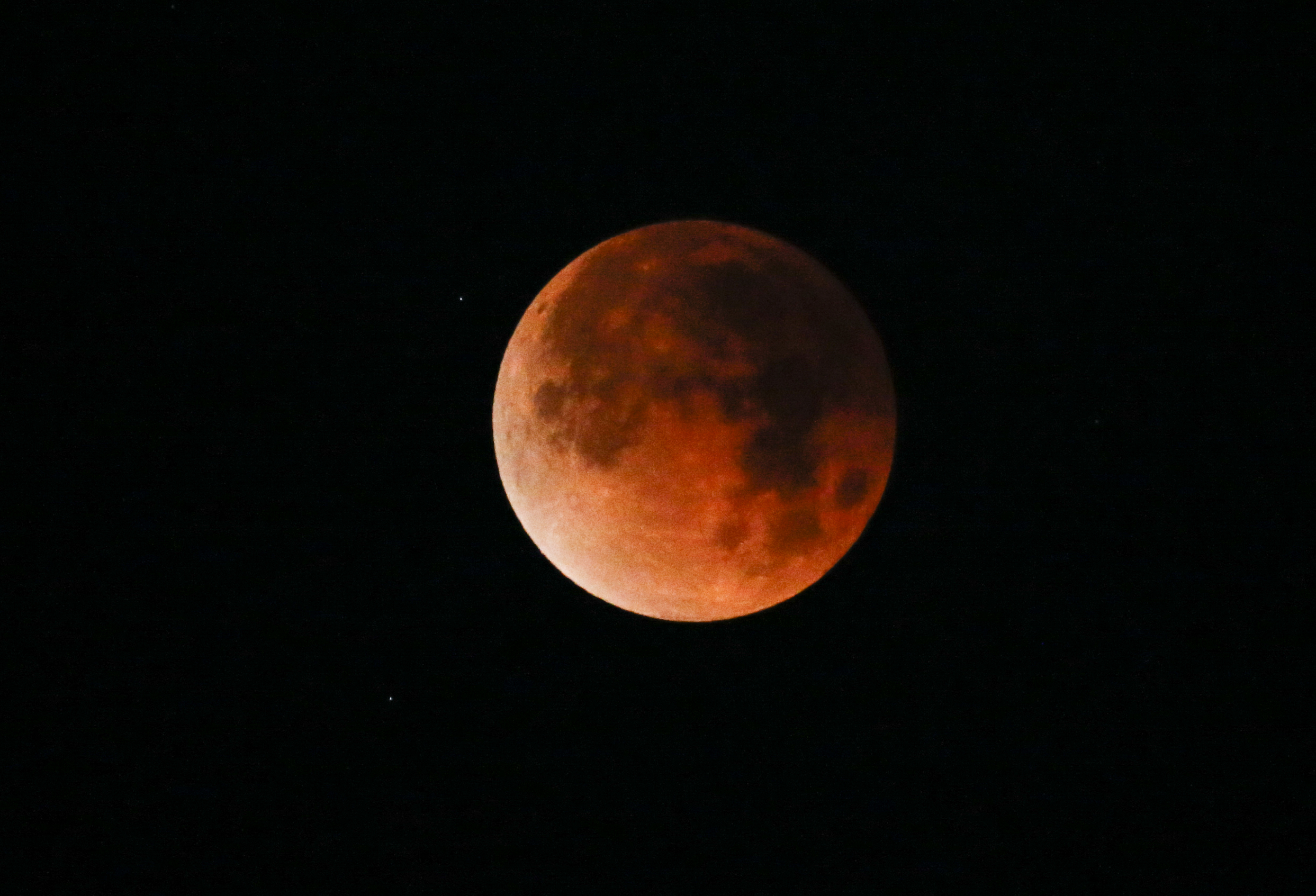
Follow @telescoperJust a reminder that there will be lunar eclipse tonight. The so-called `blood Moon’ will be visible across Ireland and the United Kingdom (as well as much of the rest of world tonight) although there is rain forecast, and its very overcast as I write this, so it’s possible that all I from Maynooth will see is clouds. That’s a shame as this will be the longest total lunar eclipse of the 21st century, lasting one hour, 42 minutes and 57 seconds.
Observers in Ireland will not be able to see the start of the eclipse as the moon will still be below the horizon when the Earth passes between the Sun and the Moon. However, in the Dublin area it will be seen (clouds permitting) from 9.30pm to 10.15pm low in the sky to the South East. Then from 10.15pm to 11.20pm, the moon will be seen coming out of Earth’s shadow. The partial eclipse will last around four hours. Oh, and you should be able to see Mars which will be very bright tonight, down a bit and to the left from the Moon.
The photograph above is of a lunar eclipse taken earlier this year, on 31st January. Lunar eclipses tend to be seen in pairs, like low comedians.
Update:

P.S. It’s worth also giving advanced notice that next year, on March 29th 2019, there will be a total eclipse of the United Kingdom visible from Ireland and all the rest of the world…
Follow @telescoperBefore I go for a lie down here is a video that goes with the discovery of the first astrophysical source of high-energy neutrinos!
You can find the two Science papers relating to the discovery here and here. The first abstract reads:
Previous detections of individual astrophysical sources of neutrinos are limited to the Sun and the supernova 1987A, whereas the origins of the diffuse flux of high-energy cosmic neutrinos remain unidentified. On 22 September 2017, we detected a high-energy neutrino, IceCube-170922A, with an energy of ~290 TeV. Its arrival direction was consistent with the location of a known γ-ray blazar, TXS 0506+056, observed to be in a flaring state. An extensive multi-wavelength campaign followed, ranging from radio frequencies to γ-rays. These observations characterize the variability and energetics of the blazar and include the detection of TXS 0506+056 in very-high-energy γ-rays. This observation of a neutrino in spatial coincidence with a γ-ray–emitting blazar during an active phase suggests that blazars may be a source of high-energy neutrino.
The other abstract is:
A high-energy neutrino event detected by IceCube on 22 September 2017 was coincident in direction and time with a gamma-ray flare from the blazar TXS 0506+056. Prompted by this association, we investigated 9.5 years of IceCube neutrino observations to search for excess emission at the position of the blazar. We found an excess of high-energy neutrino events, with respect to atmospheric backgrounds, at that position between September 2014 and March 2015. Allowing for time-variable flux, this constitutes 3.5σ evidence for neutrino emission from the direction of TXS 0506+056, independent of and prior to the 2017 flaring episode. This suggests that blazars are identifiable sources of the high-energy astrophysical neutrino flux.
It’s all very cool!
Follow @telescoperA few weeks I read an article in Physics Today which prompted me to revise and resubmit an old post I cobbled together in response to the BBC television series Wonders of the Universe in which I argued that the title of that programme suggests that the Universe is wonder-ful, or even, in a word which has cropped up in the series a few times, `awesome’. When you think about it the Universe is not really `awesome at all’. In fact it’s extremely overrated.
Take this thing, for example:
This is an example of a galaxy (the Andromeda Nebula, M31, to be precise). We live in a similar object. Of course it looks quite pretty on the surface but, when you look at it with a physicist’s eye, such a galaxy is really not as great as it’s cracked up to be, as I shall now explain.
We live in a relatively crowded part of our galaxy on a small planet orbiting a fairly insignificant star called the Sun. Now you’ve got me started on the Sun. I know it supplies the Earth with all its energy, but it does the job pretty badly, all things considered because the Sun only radiates a fraction of a milliwatt per kilogram. By comparison a human being radiates more than one watt per kilogram. Pound for pound, that’s more than a thousand times as much energy as a star.
So, in reality, stars are bloated, wasteful, inefficient and not even slightly awesome. They’re only noticeable because they’re big. And we all know that size shouldn’t really matter. In short, stars are extremely overrated.
But even in what purports to be an interesting neighbourhood of our Galaxy, the nearest star is 4.5 light years from the Sun. To get that in perspective, imagine the Sun is the size of a golfball. On the same scale, where is the nearest star?
The answer to that will probably surprise you, as it does my students when I give this example in lectures. The answer is, in fact, on the order of a thousand kilometres away. That’s the distance from Cardiff to, say, Munich. What a dull landscape our Galaxy possesses. In between one little golf ball in Wales and another one in Germany there’s nothing of any interest at all, just a featureless incomprehensible void not worthy of the most perfunctory second thought.
So galaxies aren’t dazzlingly beautiful jewels of the heavens. They’re flimsy, insubstantial things more like the cheap tat you can find on QVC. What’s worse is that they’re also full of a grubby mixture of soot and dust. Indeed, some are so filthy that you can hardly see any stars at all. Somebody needs to give the Universe a good clean. I suppose you just can’t get the help these days.
And then to the Physics Today piece I mentioned at the start of this article. I quote:
Star formation is stupendously inefficient. Take the Milky Way. Our galaxy contains about a billion solar masses of fresh gas available to form stars—and yet it produces only one solar mass of new stars a year.
Hopeless! What a waste of space a galaxy is! As well as being oversized, vacuous and rather dirty, one is also pretty useless at making the very things it is supposed to be good at! What galaxies clearly need is some sort of a productivity drive or perhaps a complete redesign using more efficient technology.
So stars are overrated and galaxies are overrated, but surely the Universe as a whole is impressive?
No. Think about the Big Bang. Well, I don’t need to go on about that because I’ve already posted about it. Suffice to say that the Big Bang wasn’t anywhere near as Big as you’ve been led to believe: the volume was between about 115 and 120 decibels. Quite loud, to be sure, but many rock concerts are louder. To be honest it’s a bit of an anti-climax. If I’d been in charge (and given sufficient funding) I would have put on something much more spectacular.
In any case the Big Bang happened a very long time ago. Since then the Universe has been expanding, the space between galaxies getting emptier and emptier so there’s now less than one atom per cubic metre, and cooling down to the point where its temperature is lower than three degrees above absolute zero.
The Universe is a cold, desolate and very empty place, lit by a few feeble stars and warmed only by the fading glow of the heat left over from when it was all so much younger and more exciting. Here and there amid the cosmic void a few galaxies are dotted about, like cheap and rather tatty ornaments. It’s as if we inhabit a shabby downmarket retirement home, warmed only by the feeble radiation given off by a puny electric fire as we occupy ourselves as best we can until Armageddon comes.
In my opinion the Universe would have worked out better had it been entirely empty, instead of being contaminated with such detritus. I agree with Tennessee Williams:
BRICK: “Well, they say nature hates a vacuum, Big Daddy.
BIG DADDY: “That’s what they say, but sometimes I think that a vacuum is a hell of a lot better than some of the stuff that nature replaces it with.”
So no, the Universe isn’t wonderful. Not at all. In fact, it’s basically a bit rubbish. Again, it’s only superficially impressive because it’s quite large, and it doesn’t do to be impressed by things just because they are large. That would be vulgar.
Digression: I just remembered a story about a loudmouthed Texan who owned a big ranch and who was visiting the English countryside on holiday. Chatting to locals in the village pub he boasted that it took him several days to drive around his ranch. A farmer replied “Yes. I used to have a car like that.”
Ultimately, however, the fact is that whatever we think about the Universe and how badly constructed it it, we’re stuck with it. Just like the trains, the government and the weather. There’s nothing we can do about it, so we might as grin and bear it.
It’s being so cheerful that helps keep me going.
Follow @telescoper