Archive for European Space Agency

LISA adopted by ESA

Posted in Science Politics, The Universe and Stuff with tags , , , , on January 25, 2024 by telescoper

I have some good news for gravitational-wave physicists to pass on. The European Space Agency (ESA) has formally “adopted” the Laser Interferometric Space Experiment (LISA) – a gravitational wave experiment in space. This follows the detection of gravitational waves using the ground-based experiment Advanced LIGO and the success of a space-based technology demonstrator mission called Lisa Pathfinder. LISA was actually selected as a potential mission in 2017 – see here – but “adoption” means that the mission concept and technology required are now both sufficiently advanced that it can proceed in 2025, once contractors are found to actually build it.

LISA consists of a flotilla of three spacecraft in orbit around the Sun forming the arms of an interferometer with baselines of the order of 2.5 million kilometres, much longer than the ~1km arms of Advanced LIGO. These larger dimensions make LISA much more sensitive to long-period signals. Each of the LISA spacecraft contains two telescopes, two lasers and two test masses, arranged in two optical assemblies pointed at the other two spacecraft. This forms Michelson-like interferometers, each centred on one of the spacecraft, with the platinum-gold test masses defining the ends of the arms.

Here’s an artist’s impression of LISA:

This is excellent news for the gravitational waves community, especially since LISA was threatened with the chop when NASA pulled out in 2011. Space experiments are huge projects – and LISA is more complicated than most – so it will take some time before it actually happens. The first I heard of the LISA concept was back in the mid-1990s and at the moment LISA is pencilled in for launch in 2035, so it will be forty years in the development.

Ireland is a full member of ESA so let’s hope the Irish Government finds a way of funding participation in the LISA mission. Although Ireland joined ESA nearly fifty years ago, and is paying  into the mandatory science programme which includes LISA (and, for example, Euclid), there is no funding programme in Ireland dedicated to the scientific exploitation of ESA projects. Let’s hope the Irish scientists involved in LISA – including those at Maynooth – are able to play a full part in this exciting project.

Euclid in the Media

Posted in Euclid, The Universe and Stuff with tags , , , , , on December 3, 2023 by telescoper

Yesterday came across the above “infographic” – as I’m told such things are called – showing the media traffic generated by last month’s Early Release Observations from the ESA Euclid mission. Some quite interesting facts emerge from it. The new observations were released n 7th November, hence the big spike in the left hand panel on that date.

I see that about 31% of the activity was on Twitter, which I am no longer on, with a slightly smaller amount on Facebook. Overall, social media account for about 60% of the “reach”, with mainstream media (including print, online, and TV/Radio) languishing far behind. Blogs (presumably including this one) account for a mere 1%.

The breakdown by country is interesting too; the table shows only EAS member states. The UK is way out in front, no doubt because BBC News ran a major item on the day of the release. France, Germany, Italy and Spain all have major scientific involvements in Euclid and correspondingly active public engagement activities.

I was pleasantly surprised at the significant amount of interest in Ireland, given that some bigger countries with far greater scientific involvement in Euclid (e.g. Denmark and The Netherlands) generated so little. As the only member of the Euclid Consortium in Ireland I could try to pretend that this was all down to me, but I rather think it’s more likely to be a result of the fact that many Irish people read the UK media so some of the Irish traffic could be spillover from the big UK spike. Still, I think one can interpret this as meaning that the Public in the Republic have an appetite for news about space, something that we have certainly noticed when organizing events in Maynooth.

I thought I’d mention another nice thing. Here is one of the PR images produced by ESA about the early release observations. The point about Euclid is that to achieve its science goals it has to have extremely good optical quality across a very wide field of view. The systems are currently being tested and fine-tuned to see how good their performance actually is, but so far it’s looking good.

The main thing that caught my eye, however, is the collection of little flags along the bottom. How nice it is to see Ireland’s among them!

Ireland, CERN and Science

Posted in Science Politics, The Universe and Stuff with tags , , , , , on November 15, 2023 by telescoper

And lo! it came to pass that Minister for Further and Higher Education, Research, Innovation and Science Simon Harris TD has today secured Government approval to submit Ireland’s formal application to join the European Organization for Nuclear Research (CERN) as an Associate Member.

I have posted about this before, for example here. Currently Ireland is in the anomalous position of not having any form of association agreement with CERN; the list of Full and Associate Member states can be found here.

There is an important point about CERN membership, however, which I hope is not sidelined. The case for joining CERN made at political levels is largely about the return in terms of the potential in contracts to technology companies based in Ireland from instrumentation and other infrastructure investments. This was also the case for Ireland’s membership of the European Southern Observatory, which Ireland joined about five years ago. The same thing is true for involvement in the European Space Agency, which Ireland joined in 1975. These benefits are of course real and valuable and it is entirely right that arguments should involve them.

Looking at CERN membership from a scientific point of view, however, the return to Ireland will be negligible unless there is a funding to support scientific exploitation of the facility. That would include funding for academic staff time, and for postgraduate and postdoctoral researchers to build up an active community as well as, e.g., computing facilities. This need not be expensive even relative to the modest cost of associate membership (approximately  €1.9M). I would estimate a figure of around half that would be needed to support CERN-based science.

The problem is that research funding for fundamental science (such as particle physics) in Ireland is so limited as to be virtually non-existent by a matter of policy at Science Foundation Ireland, which basically only funds applied research. Even if it were decided to target funding for CERN exploitation, unless there is extra funding that would just lead to the jam being spread even more thinly elsewhere.

As I have mentioned before, Ireland’s membership of ESO provides a cautionary tale. The Irish astronomical community was very happy about the decision to join ESO, but that decision was not accompanied by significant funding to exploit the telescopes. Few astronomers have therefore been able to benefit from ESO membership. While there are other benefits of course, the return to science has been extremely limited. The phrase “to spoil a ship for a ha’porth of tar” springs to mind.

Although Ireland joined ESA almost fifty years ago, the same issue applies there. ESA member countries pay into a mandatory science programme which includes, for example, Euclid. However, did not put any resources on the table to allow full participation in the Euclid Consortium. There is Irish involvement in other ESA projects (such as JWST) but this is somewhat piecemeal. There is no funding programme in Ireland dedicated to the scientific exploitation of ESA projects.

Under current arrangements the best bet in Ireland for funding for ESA, ESO or CERN exploitation is via the European Research Council but to get a grant from that one has to compete with much better developed communities in those areas.

A significant shake-up of research funding in Ireland is in view, with Science Foundation Ireland and the Irish Research Council set to merge into a single entity called Research Ireland. If I had any say in the new structure I would set up a pot of money specifically for the purposes I’ve described above. Funding applications would have to be competitive, of course, and I would argue for a panel with significant international representation to make the decisions. But for this to work the overall level of public sector research funding will have to increase dramatically from its current level, well below the OECD average. Ireland is currently running a huge Government surplus which is projected to continue growing until at least 2026. Only a small fraction of that surplus would be needed to build viable research communities not only in fundamental science but also across a much wider range of disciplines. Failure to invest now would be a wasted opportunity.
Preparing for Euclid’s First Images

Posted in Euclid, The Universe and Stuff with tags , , , on November 3, 2023 by telescoper

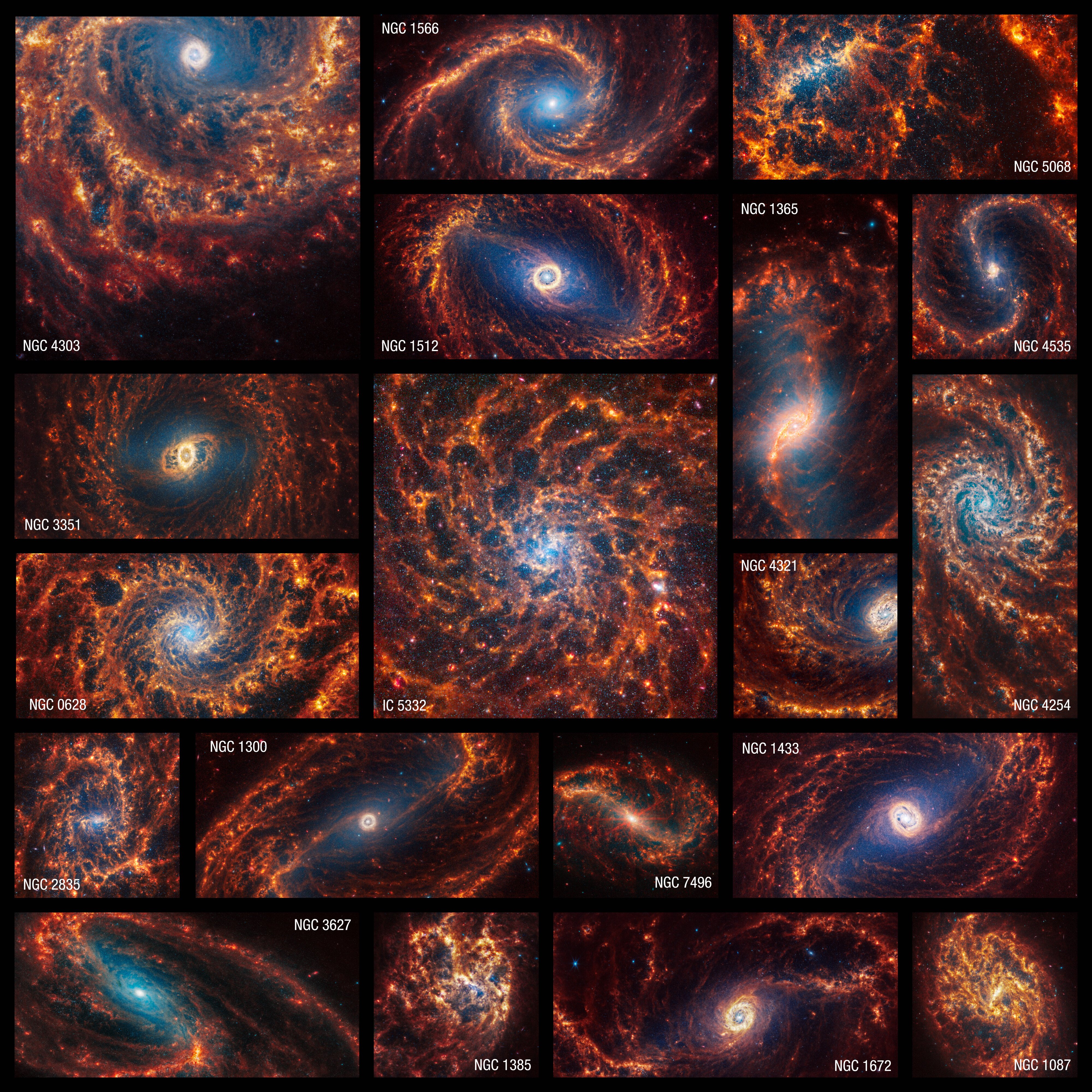
Another quick update about the release of the Early Release Observations (EROs) from Euclid, due to take place next Tuesday 7th November. For one thing, here is a little taster video.

Five images will be released on Tuesday. I know what the Early Release Observations are but you will have to wait until Tuesday to find out. If I told you now I’d have to kill you…

Gaia Focused Product Release

Posted in The Universe and Stuff with tags , on October 10, 2023 by telescoper

I almost forgot about this but some new data from the ESA Gaia mission will be announced this afternoon at 3pm CEST*, though it seems to be a bit late. This announcement concerns the latest batch of Gaia Focused Product (Gaia FPR) data. The release consists in the publication of 5 papers on specific aspects of the mission and the associated data.  You can watch here. Due to technical problems it has been delayed by 30 minutes and there is a new link:

While waiting to view the announcement, you may wish to familiarize yourself with the mission by reading this list of Top Ten Gaia Facts.

*Coles Extended Sabbatical Time

Euclid Update

Posted in Euclid, The Universe and Stuff with tags , , , , on October 7, 2023 by telescoper

Having settled in to my new apartment on the Gran Via I’ve got time for a another quick update on the European Space Agency’s Euclid mission. For full details about what follows you can see here. Everything I mention here is already in the public domain, so I am not disclosing any secrets!

The last update I posted contained some frustrating and potentially worrisome news: the Performance Verification (PV) phase of the mission had to be put on hold in order to troubleshoot an intermittent problem with the Fine Guidance Sensor (FGS), which is supposed to help to maintain correct pointing of the telescope. This wasn’t working correctly as demonstrated vividly by the following image:

Obviously the survey couldn’t proceed without accurate control of the pointing of the telescope so it was urgently necessary to find out what was going wrong and fix it. It turns out that the software was getting confused by the flashes caused by cosmic ray protons hitting the detectors, think they were the gude stars it was supposed to be steering by. After identifying the problem, new software was written and uploaded to the spacecraft.

I wasn’t sure how this had gone until I saw via an internal communication that the PV phase had restarted. That announcement would not have been made had the upgrade not worked and sure enough it has now been made public that all is well. Congratulations to the instrumentation and software teams for this success. They’ve been working phenomenally hard on this.

There was an additional problem with stray light in the telescope that I have also mentioned before. That was only an issue for specific orientations of the telescope and has been dealt with by simply redesigning the survey a little to minimize the occurrence of the effect.

So the gremlins have been dispelled, and we go on into the PV phase after a delay of about a month. The survey is due to last 6 year so this hiccup is not a big deal really. We can in fact anticipate some early science results from this phase in a month or so, although they will not be part of the full survey which will start after the PV phase is complete, after a few months.

New Views of the Orion Nebula

Posted in The Universe and Stuff with tags , , on October 3, 2023 by telescoper

The Orion Nebula, a stellar nursery about 400 pc away from Earth, is a much-studied object that has yielded considerable insights into the processes of star formation. If you thought that there wasn’t much more to be learned about this object, though, you’d be very wrong. A set of JWST images has been released by the European Space Agency and they are amazing. You can see them all here, but here’s a taster in the form of a detail from one of the pictures. The following image is entitled “Explosion fingers from the BN-KL region in Orion” but to me it looks like demons rising up from the Underworld, like in the last act of Don Giovanni…

Here’s the blurb:

This cutout from the new NASA/ESA/CSA James Webb Space Telescope short-wavelength infrared image of the Orion Nebula shows bright ‘fingers’ of gas racing away from an explosion that occurred roughly 500 to 1000 years ago in the heart of a dense molecular cloud behind the nebula, perhaps as two young massive stars collided. The dense cloud is called Orion Molecular Cloud 1 and lies to the northwest of the visible Trapezium stars in Orion.

The fingers are predominantly red, indicating emission from molecular hydrogen gas that has been shocked by the immense energy pouring out from the explosion site. Near the tips of some of the fingers, the emission turns green due to hot iron gas and even white in some cases where the gas is at its hottest. Further down, the fingers seem mostly turbulent, but in some places, the flow appears laminar.

The Orion Nebula lies roughly 1300 light-years from Earth in the so-called ‘sword’ of the constellation of Orion the Hunter, and the image shows a region that is 4 by 2.75 light-years in size.

Image description: The image shows a series of red fingers of shocked molecular gas expanding from the bottom of the image towards the top and top right. Each of the fingers comprises a series of bright arcs of emission like bow waves, expanding behind tips, the latter often appearing green. There are many stars spread across the image with the characteristic eight spikes due to diffraction in the optics of Webb, and there is a foreground haze of wisp blue clouds due to the Orion Nebula, which lies in front of the fingers.

Research Matters

Posted in Science Politics, The Universe and Stuff with tags , , , , , on September 10, 2023 by telescoper

One of the things that happened last week while I was preoccupied with ITP2023 is that, finally, the UK Government has decided to re-join the European Union’s Horizon 2020 project. I’m very happy about this, and can’t understand why it has taken so long to reach an agreement. I know many researchers in the UK who will be mightily relieved too. Of course things won’t immediately get back to normal. It’s not just that the UK contributions will start in January 2024 so there will have to be some sort of transitional arrangement. More importantly it remains to be seen how long it takes to repair the damage done to goodwill by all the political shenanigans.

While I’m on about research I should also mention that there was a short talk at ITP2023 by a particle physicist by the name of Ronan McNulty who is based at University College Dublin. The topic of that talk was the history of Ireland’s non-membership of CERN; I have blogged about this before, for example here. Currently Ireland is in the anomalous position of not having any form of association agreement with CERN; the list of Full and Associate Member states can be found here. It does seem, however, that Ireland is at last about to lodge an application for Associate Membership, perhaps as early as January 2024.

Ronan made a particularly important point about membership, which I hope is not sidelined in the discussions. The case for joining CERN made at political levels is largely about the return in terms of the potential in contracts to technology companies based in Ireland from instrumentation and other infrastructure investments. This was also the case for Ireland’s membership of the European Southern Observatory, which Ireland joined about five years ago. The same thing is true for involvement in the European Space Agency, which Ireland joined in 1975. These benefits are of course real and valuable and it is entirely right that arguments should involve them.

Looking at CERN membership from a scientific point of view, however, the return to Ireland will be negligible unless there is a funding to support scientific exploitation of the facility. That would include funding for academic staff time, and for postgraduate and postdoctoral researchers to build up an active community as well as, e.g., computing facilities. This need not be expensive even relative to the modest cost of associate membership (approximately  €1.5M). I would estimate a figure of around half that would be needed to support CERN-based science.

The problem is that research funding for fundamental science (such as particle physics) in Ireland is so limited as to be virtually non-existent by a matter of policy at Science Foundation Ireland, which basically only funds applied research. Even if it were decided to target funding for CERN exploitation, unless there is extra funding that would just lead to the jam being spread even more thinly elsewhere.

As I have mentioned before, Ireland’s membership of ESO provides a cautionary tale. The Irish astronomical community was very happy about the decision to join ESO, but it was not accompanied by significant funding to exploit the telescopes. Few astronomers have therefore been able to benefit from ESO membership. While there are other benefits of course, the return to science has been extremely limited. The phrase “to spoil a ship for a ha’porth of tar” springs to mind.

Although Ireland joined ESA almost fifty years ago, the same issue applies there. ESA member countries pay into a mandatory science programme which includes, for example, Euclid. However, did not put any resources on the table to allow full participation in the Euclid Consortium. There is Irish involvement in other ESA projects (such as JWST) but this is somewhat piecemeal. There is no funding programme in Ireland dedicated to the scientific exploitation of ESA projects.

Under current arrangements the best bet in Ireland for funding for ESA, ESO or CERN exploitation is via the European Research Council but to get a grant from that one has to compete with much better developed communities in those areas.

A significant shake-up of research funding in Ireland is in view, with Science Foundation Ireland and the Irish Research Council set to merge into a single entity. If I had any say in the new structure I would set up a pot of money specifically for the purposes I’ve described above. Funding applications would have to be competitive, of course, and I would argue for a panel with significant international representation to make the decisions. But for this to work the overall level of public sector research funding will have to increase dramatically from its current level, well below the OECD average. Ireland is currently running a huge Government surplus which is projected to continue growing until at least 2026.

Only a small fraction of that surplus would be needed to build viable research communities not only in fundamental science but also across a much wider range of disciplines. Failure to invest now would be a wasted opportunity.

Euclid Update

Posted in Euclid, The Universe and Stuff with tags , , , , on August 27, 2023 by telescoper

Time for a quick update on the European Space Agency’s Euclid mission. For full details about what follows you can see here. Everything I mention here is already in the public domain, so I am not disclosing any secrets!

The last update I posted mentioned that Euclid had moved into what is called the Performance Verification phase of its mission. That has now been put on hold in order to troubleshoot an intermittent problem with the Fine Guidance Sensor (FGS) which helps to maintain correct pointing of the telescope. This issue can probably be fixed by software updates, but these will have to be tested, hence the pause. This is rather irksome, but the instrument teams are confident they can find a solution soon.

Anyway, while we’re waiting, here is a video from Launch Pad Astronomy explaining about the mission. It was actually released about six days ago but I didn’t have time to post it until now. About 15 minutes long, it’s a big longer than previous official Euclid videos I’ve posted, but I think it’s very informative:

Oh, I almost forgot to mention that I’ll be talking a little bit about Euclid among other things at this event on 6th September.

Euclid Update

Posted in Euclid with tags , , , , , on August 15, 2023 by telescoper
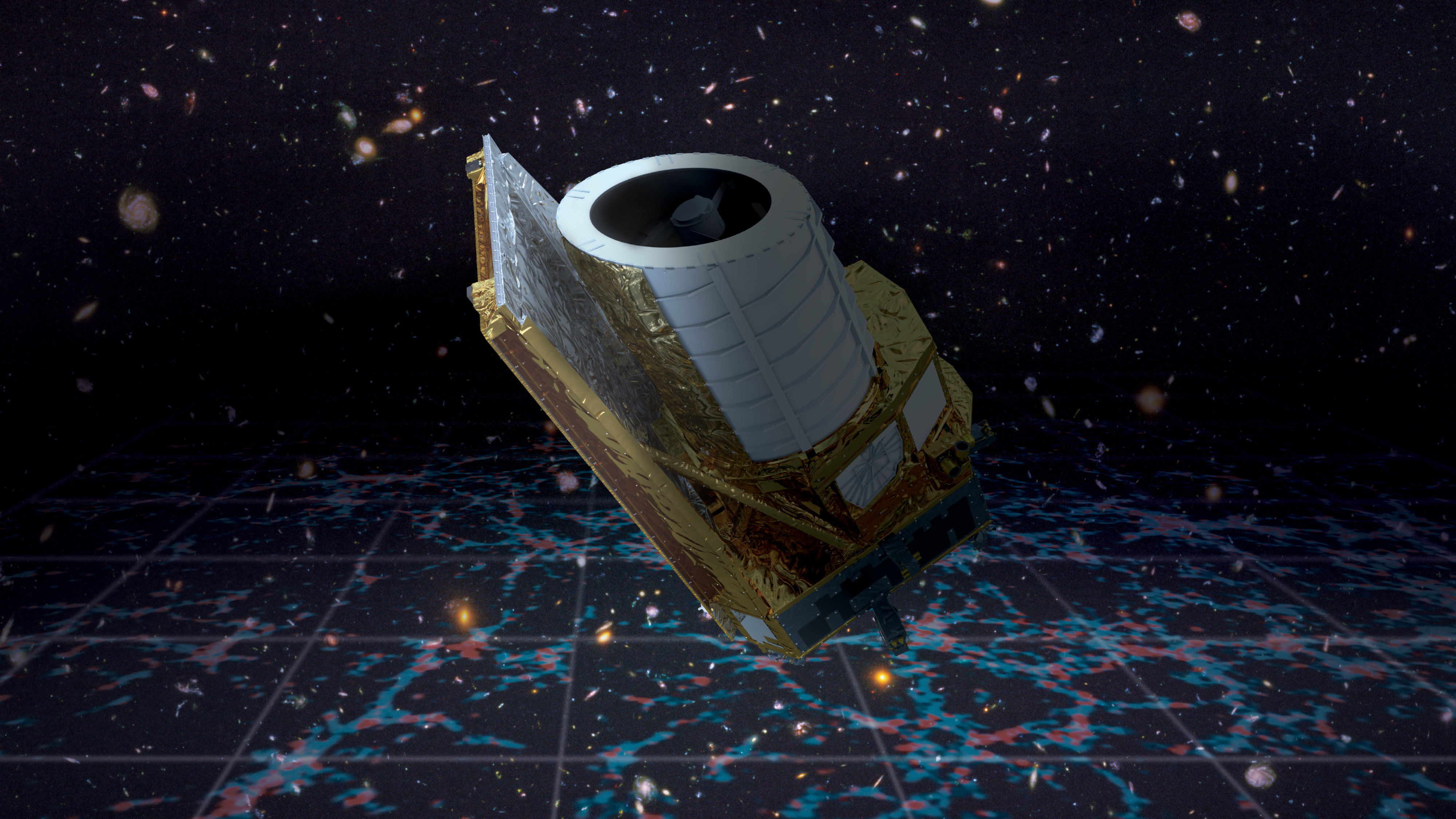
ESA/Euclid/Euclid Consortium/NASA. Background galaxies: NASA, ESA, and S. Beckwith (STScI) and the HUDF Team.

Since I’ve been working today on stuff related to ESA’s Euclid mission, I thought I would post a brief update on the mission status before I go home. The official channel to which I refer you for full updates is here.

A message was sent out on Saturday to member of the Euclid Consortium indicating that the commissioning phase of the Euclid satellite was essentially completed, although with some issues still to be fixed. In particular, as has previously been reported, there is an issue with stray light in the VIS instrument, which will have to be coped with. To prevent stray sunlight getting onto VIS detectors, Euclid will be configured to operate at a range of specific angles with respect to the Sun. This means that the survey strategy will have to be adapted in order to be as optimal as possible with this new constraint.

The next phase after the commissioning phase is called performance verification, for which control switches over to the science ground segment. The operations team will then operate the spacecraft in the same way as required for the full survey in order to assess the performance of the instruments and obtain calibration data ahead of the start of the full survey.