I’m in the middle of marking examinations so I will only do a brief post, while I take a short break, to follow up on the one about Hampton Hawes I did a couple of days ago. When I wrote that one it struck me that there are rather a lot of great musicians, especially pianists like Hampton Hawes, who were never appreciated as much as they should have been. Another that springs to mind is Elmo Hope, for whom Thelonious Monk seems to have been a great influence and who therefore provides an interesting contrast with Hampton Hawes who was perhaps more influenced by Bud Powell. Elmo Hope died young, largely because of a bad heroin habit, which also affected his career through his erratic behaviour and the criminal record he acquired for narcotics offences. He was a really fine musician and composer, though, with a very original voice and idiosyncratic sense of time. This track was recorded in 1953 with Paul Chambers on bass and Philly Joe Jones on drums, both of whom were to find fame with Miles Davis a few years later.
Archive for Jazz
De-Dah – Elmo Hope Trio
Posted in Jazz with tags De-Dah, Elmo Hope, Elmo Hope Trio, Jazz, Paul Chambers, Philly Joe Jones on January 14, 2026 by telescoperR.I.P. Cleo Laine (1927-2025)
Posted in Jazz with tags Cleo Laine, George Gershwin, Jazz, John Dankworth on July 25, 2025 by telescoper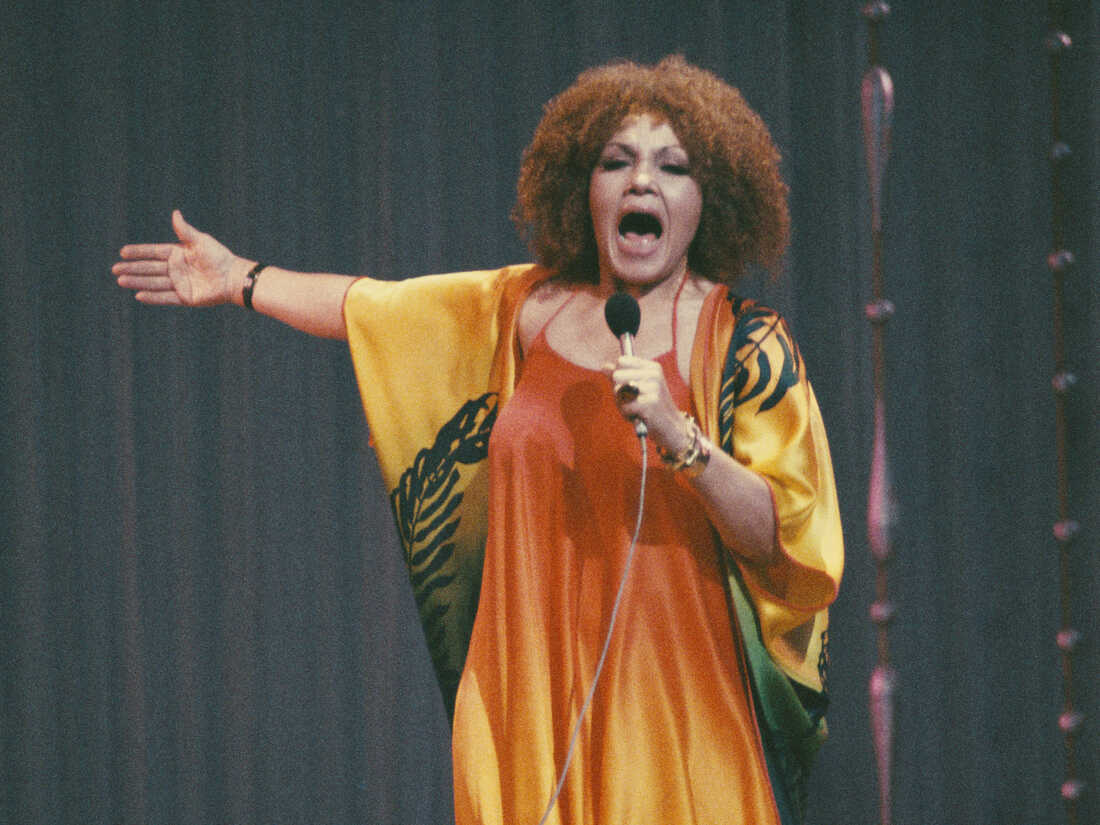
I just heard the very sad news of the death at the age of 97 of that great jazz singer, Cleo Laine. Although stylistically related to Sarah Vaughan, her voice was instantly recognisable. It always struck me that most British jazz singers would adopt an American accent when performing, but Cleo Laine always kept a very crisp diction and sounded very English…
I think it’s her musical and personal partnership with John Dankworth (who passed away in 2010) for which she will be known best. He hired Cleo Laine as a singer for his small band in 1951; they married in 1958 and remained together for over 50 years, until separated by John’s death.
I think it is appropriate to use this lovely version of George Gershwin’s great tune Lady be Good (with lyircs by his brother Ira) as a tribute. It’s always good to end on a high note. John Dankworth takes a back seat – as he often did when Cleo was singing – but the band is in great form. Unfortunately there is no personnel listing, apart from John Dankworth. The small band you see and hear here was drawn from his larger orchestra and many of the musicians therein doubled on different instruments. The vibes player, for example, could be Alan Branscombe, who also played piano. Or he could be the pianist. The trumpeter could very well be a young Kenny Wheeler.
Anyway, if you didn’t realise what a terrific vocalist Cleo Laine was, then pin back your lugholes around 2 minutes in where she demonstrates a range and level of vocal ontrol that would put many opera singers to shame.
Happy 85th Birthday, Herbie Hancock!
Posted in Jazz with tags Donald Byrd, Herbie Hancock, Jazz, The House of the Rising Sun on April 12, 2025 by telescoperProlific jazz pianist, composer, and arranger Herbie Hancock was born on 12th April 1940, which means that today is his 85th birthday. I’ve posted quite a few pieces of music featuring Herbie Hancock over the years so I thought I’d put up something a little different to mark his birthday in the form of this unusual but very cool version of The House of the Rising Sun, featuring Donald Byrd on trumpet, Hancock on piano, Kenny Burrell on guitar, Bob Cranshaw (bass) and Grady Tate (drums) and the Donald Byrd Singers. This track appeared on the album Up With Donald Byrd which wasn’t well received when it came out in 1964, but I like it!
P.S. I did a Google search for Herbie Hancock House of the Rising Sun and found this:

Fat Tuesday again…
Posted in Jazz with tags Fat Tuesday, Humphrey Lyttelton, Jazz, Paseo Jazz Band on March 4, 2025 by telescoperWell, it’s Shrove Tuesday, Pancake Day, Mardi Gras and Fat Tuesday which gives me four excuses to post this lovely old record made by Humphey Lyttelton’s Paseo Jazz Band in the early Fifties. That’s the band that featured Humph’s regular crew alongside a number of London’s marvellous West Indian musicians of the time, hence the abundance of percussion and the resulting infectious calypso beat. I’ve posted this before but the link died, so here it is again. Enjoy!
Keith Jarrett, The Köln Concert – 50 years on
Posted in Jazz with tags Jazz, Keith Jarrett, The Köln Concert on January 24, 2025 by telescoperI was just reminded that it was on 24th January 1975 – 50 years ago today – that pianist Keith Jarrett played a live solo concert at the Opera House in Köln, West Germany. The concert was recorded and released on ECM Records as a double LP later that year. It went on to become the best-selling solo album in jazz history and the best-selling piano album ever. It’s a must-have for anyone interested in jazz.
You don’t need me to tell you why as the whole concert is available for your listening pleasure here:
100 Years of Paul Desmond
Posted in Jazz with tags alto saxophone, Dave Brubeck, Jazz, Koto Song, music, Paul Desmond on November 25, 2024 by telescoperThis evening I happened across a reminder that today is the centenary of the birth of saxophonist and composer Paul Desmond, who was born on November 25th 1924. Paul Desmond is best known for his work with Dave Brubeck’s quartet from 1951 to 1967, and particularly as composer of their smash hit Take Five. He didn’t only work with Brubeck, though. He made fine recordings with Chet Baker and Gerry Mulligan amongst others. His gentle tone and lyrical phrasing on alto saxophone were instantly recognizeable and very typical of the West Coast style of cool jazz, and on alto saxophone was instantly recognizeable. Never a speed merchant in the Charlie Parker tradition, Desmond fell out with Brubeck’s drummer Joe Morello who would often set the tempo, especially on Take Five, too fast in live performances, so I thought I’d pay my little tribute by playing a less familiar number, the Japanese-influenced Koto Song on which Paul Desmond plays very beautifully.
A Century of See See Rider
Posted in Jazz with tags Blues, Fletcher Henderson, Gertrude "Ma" Rainey, Jazz, Louis Armstrong, Ma Rainey, music, See See Rider on October 16, 2024 by telescoperBack in 2023 I posted an item marking the first appearance of Louis Armstrong on record with King Oliver’s Creole Jazz Band back in 1923. Now it’s time to mark another jazz centenary which also involves Satchmo but in a different setting. King Oliver’s band split up at the end of 1923 over a disagreement about a planned nationwide tour and in 1924 Louis Armstrong moved to New York. He was soon snapped up by Fletcher Henderson and spent a glorious year as star trumpet soloist with Henderson’s big band. During that time he also made records with various small bands, including a number with the great vocalist and “Mother of the Blues” Gertrude “Ma” Rainey.
One of the tracks recorded by Ma Rainey in the Paramount studio in New York was called See See Rider. Although not released until 1925, the very first recording of this number was made exactly one hundred years ago today, on 16th October 1924, by “Ma Rainey and her Georgia Jazz Band”, the supporting musicians being Charlie Dixon (Banjo), Buster Bailey (Clarinet), Charlie Green (Trombone), Fletcher Henderson (Piano) and Louis Armstrong (Cornet). The origins of this blues song are lost in the mists of time but it has been recorded a huge number of times, not only by jazz and blues musicians but also by the likes of Elvis Presley; I posted a great version by Peggy Lee here.
Unusually for the time, two takes were made of which the following was the first. Notice that there is an introduction in the form of a verse, which is quite unusual: most blues performances involve only a chorus. Despite the limitations of recording technology at the time you can hear what a tremendously soulful voice Ma Rainey had, and the muted cornet work by Louis Armstrong is unmistakable.
The sound quality may not be great, but it’s a priceless piece of music history.
Quasar – The Jimmy Giuffre 4
Posted in Jazz with tags Four Brothers, Jazz, Jimmy Giuffre, quasar, The Train and the River on August 19, 2024 by telescoperJimmy Giuffre (1921-2008) was an immensely gifted saxophonist and clarinet player who was also an accomplished arranger and composer who worked for many big bands. His most famous piece as an arranger was Four Brothers which he wrote for Woody Herman’s fantastic saxophone section of Stan Getz, Zoot Sims, Serge Chaloff and Herb Steward. My first encounter with Giuffre as an instrumentalist was in the opening track of the 1958 film Jazz on a Summer’s Day playing a tune called The Train and the River which has been a favourite of mine for many years. Back then he had a quite accessible style that blended jazz with folk elements, but he later developed a freer and more “modern” approach, including the use of electronic instruments and elements of jazz/rock fusion. I recently read a biographical article about him and – for obvious reasons – was intrigued that in 1985 he made an album called Quasar so I thought I’d share the title track here. Giuffre is on soprano sax on this one.
All Things You Are – Joe Pass
Posted in Jazz with tags All the things you are, Brecon Jazz Festival 1991, Jazz, Joe Pass on June 23, 2024 by telescoperAll The Things You Might Be
Posted in Jazz with tags All the things you are, chords, Jazz, Jerome Kern on April 29, 2024 by telescoperApparently the great American songwriter Jerome Kern didn’t like Jazz at all. It’s ironic therefore that his tune All The Things You Are is such a favourite among Jazz musicians, sometimes played as it is and sometimes forming the underlying chord progression for some other tune. Here it is, sung by the sublime Ella Fitzgerald:
The first things you learn if you try to teach yourself something about how jazz works is that there are two basic forms: the Twelve-bar Blues and the Thirty-two-bar form built from an A section and a B section (the bridge) arranged AABA. It’s true that this gets you quite a long way but it doesn’t take you long to realize that many famous Blues are not based on 8 or 16 -bar cycle and many of those that are 12-bar blues don’t have the standard progression. Then you find out that some of the most well-known Jazz standards aren’t AABA either.
All The Things You Are is an example. The chorus of this tune actually consists of 36 bars in a A1A2BA3 form with two twists on the usual 32-bar AABA song-form: A2 transposes the initial A section down a fourth, while the final A3 section adds an extra four bars. The result is much easier to lose your way when you try to improvise but, on the other hand, provides a very rich framework within which to experiment. That’s obviously why Jazz musicians like it so much.
Here is a backing track for this tune that shows you the chords without the melody. Although I’m a fairly incompetent musician I love trying to play along to this sort of thing, playing the melody for one chorus to find your feet and then just letting the chords suggest possibilities. It’s tremendous fun and very rewarding if you do manage to play something original, even if it makes Jerome Kern turn in his grave.

 In the Dark