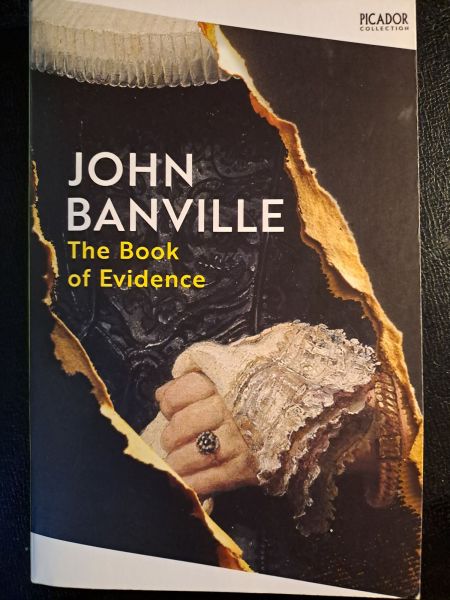
The Book of Evidence, by Irish author John Banville, isn’t a new novel – it was published in 1989 – but it was recommended to me a couple of years ago by an Irish friend and was in my pile of books to read until I took it with me on a recent trip.
I wasn’t sure what to expect of this book, but found it an intriguing and unsettling read. Shortlisted for the Booker Prize in 1989, The Book of Evidence is the tale of a dark journey into the mind of a murderer.
The story revolves around Freddie Montgomery who is an educated man – a scientist – but an unsympathetic and unsavoury character. I’d say he is a borderline sociopath, actually. He is the (evidently unreliable) narrator of the story, which is essentially that he tries to steal a painting in order to sell it and settle a debt, but in the course of the attempted robbery he kills a young servant girl in a very brutal way. He is eventually arrested and tells his story on remand awaiting trial. The plot is apparently based on a true story.
This isn’t a whodunnit at all, as the killer tells us what he did. There is a puzzle, though, which is why he killed the girl. The reader never finds out, but that’s probably because Freddie Montgomery himself doesn’t know. In his account he looks back over his entire life, he comes across as an aimless drifter who seems confused by many of the things he has done. It’s only at the very end that he shows any remorse for the murder he committed. At least he realises that he can’t blame his actions on anyone but himself (although he would obviously like to).
We never find out what happens at his trial, as the account finished before it starts. So it’s not a courtroom drama.
In some ways this book echoes The Outsider by Albert Camus as well as Crime and Punishment and Notes from the Underground by Fyodor Dostoevsky. The confessional nature of the account in this book is given authenticity by Banville by making the narration dense and loquacious, with frequent detours and peppered with long words. Montgomery seem to be trying to impress the reader with his erudition but he just comes across as a narcissist. The cumbersome prose style is essential for conveying Montgomery’s inner voice, but it doesn’t make for easy reading. It’s not supposed to. I was intrigued enough to want to read more by Banville, including a sequel to this novel, Ghosts.
P.S. For non-Irish readers it is perhaps worth spelling out that, in Irish criminal law, the “Book of Evidence” is a mandatory set of documents the prosecution must serve to the defence before a trial in a higher court. It’s a term one finds quite often in media reporting of court cases in Ireland.


