It was more than four years ago that I passed on the news that the space mission LiteBIRD had been selected as the next major mission by the Japanese Space Agency JAXA and Institute for Space and Astronautical Science (ISAS).
LiteBIRD (which stands for `Lite (Light) satellite for the studies of B-mode polarization and Inflation from cosmic background Radiation Detection’) is a planned space observatory that aims to detect the footprint of the primordial gravitational waves on the cosmic microwave background (CMB) in a form of a B-mode polarization pattern. This is the signal that BICEP2 claimed to have detected nine years ago to muc excitement, but was later shown to be a caused by galactic dust.
At the time, I said that this was great news for a lot of CMB people all round the world that this mission had been selected – include some old friends from Cardiff University. Well, I’ve just seen a news item announcing a grant to Cardiff astrophysicists who will lead the UK involvement and develop the optical design.
The launch date has slipped into the 2030s (no doubt partly because of the pandemic) so I’ll be long retired before it happens, but the mission will last three years and will, like Euclid, be at Earth-Sun Lagrange point known as L2. It will be a very difficult task to extract the B-mode signal from foregrounds and instrumental artifacts but I wish LiteBIRD every success!
Archive for Litebird
LiteBIRD Update
Posted in Cardiff, The Universe and Stuff with tags B-mode, Cardiff, ISAS, JAXA, Litebird, Primordial Gravitational Waves on October 12, 2023 by telescoperNew Publication at the Open Journal of Astrophysics
Posted in OJAp Papers, Open Access, The Universe and Stuff with tags arXiv:2110.13856, Cosmic Microwave Background, Cosmology, Ken Ganga, Litebird, Mathieu Remazeilles, Michele Maris, The Open Journal of Astrophysics on December 6, 2021 by telescoperTime to announce yet another publication in the Open Journal of Astrophysics. This one is the 15th paper in Volume 4 (2021) and the 46th in all.
The latest publication is entitled Interplanetary Dust as a Foreground for the LiteBIRD CMB Satellite Mission by Ken Ganga (Paris), Michele Maris (Trieste) and Mathieu Remazeilles (Santander) on behalf of the LiteBIRD collaboration. For information about the LiteBIRD mission see here.
Here is a screen grab of the overlay which includes the abstract:

You can find the paper on the Open Journal of Astrophysics site here and can also read it directly on the arXiv here.
Follow @telescoperLiteBIRD Newsflash
Posted in The Universe and Stuff with tags B-mode, ISAS, JAXA, Litebird, Primordial Gravitational Waves on May 23, 2019 by telescoper
Just a quick post to pass on the news that the space mission LiteBIRD has been selected as the next major mission by the Japanese Space Agency JAXA and Institute for Space and Astronautical Science (ISAS).
LiteBIRD (which stands for `Lite (Light) satellite for the studies of B-mode polarization and Inflation from cosmic background Radiation Detection’) is a planned space observatory that aims to detect the footprint of the primordial gravitational waves on the cosmic microwave background (CMB) in a form of a B-mode polarization pattern. This is the signal that BICEP2 claimed to have detected five years ago to much excitement, but was later shown to be a caused by galactic dust.
It’s great news for a lot of CMB people all round the world that this mission has been selected – include some old friends from Cardiff University. Congratulations to all of them!
I’m not sure when the launch date will be, but the mission will last three years and will be at Earth-Sun Lagrange point known as L2.It will be a very difficult task to extract the B-mode signal from foregrounds and instrumental artifacts so although there’s joy that it has been selected, the real work starts now!
Nature After Planck…
Posted in Maynooth, The Universe and Stuff with tags CMB-Bharat, Cosmic Microwave Background, Cosmology, European Space Agency, Litebird, Planck, Planck ESA on July 24, 2018 by telescoper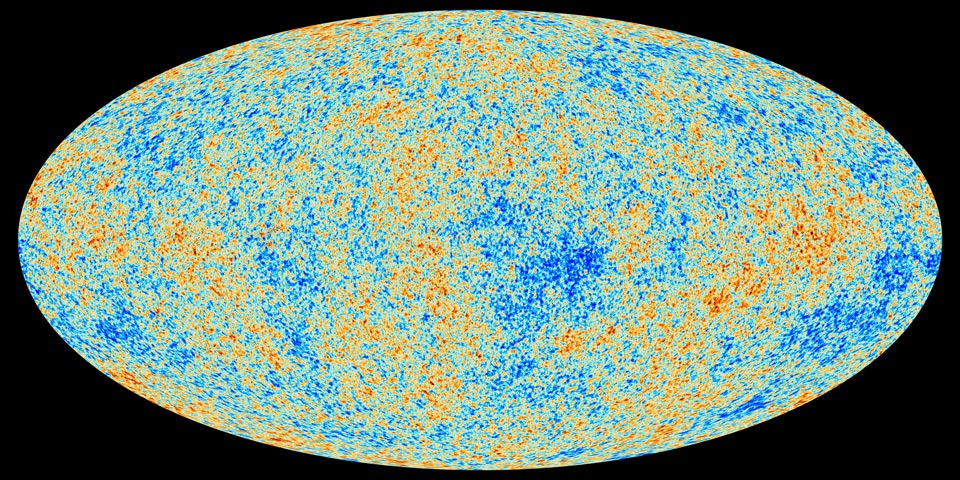
After last week’s short update about the last tranche of papers from the European Space Agency’s Planck Mission it’s time for another short update about a piece in Nature (by David Castelvecchi) that explains how researchers are moving to smaller projects studying different aspects of the cosmic microwave background.
In the spirit of gratuitous self-promotion I should also mention that there’s a little quote from me in that piece. My comment was hardly profound, but at least it gets Maynooth University a name check…
Much of Davide’s piece echoes discussions that were going on at the meeting I attended in India last October, but things have moved on quite a bit since then at least as far as space experiments are concerned. In particular, the proposed Japanese mission Litebird has been shortlisted for consideration, though we will have to wait until next year (2019) at the earliest to see if it will be selected. An Indian mission, CMB-Bharat, has also emerged as a contender.
While the end of Planck closes one chapter on CMB research, several others will open. These are likely to focus on polarization, gravitational lensing and on cosmic reionization rather than refining the basic cosmological parameters still further.

 In the Dark