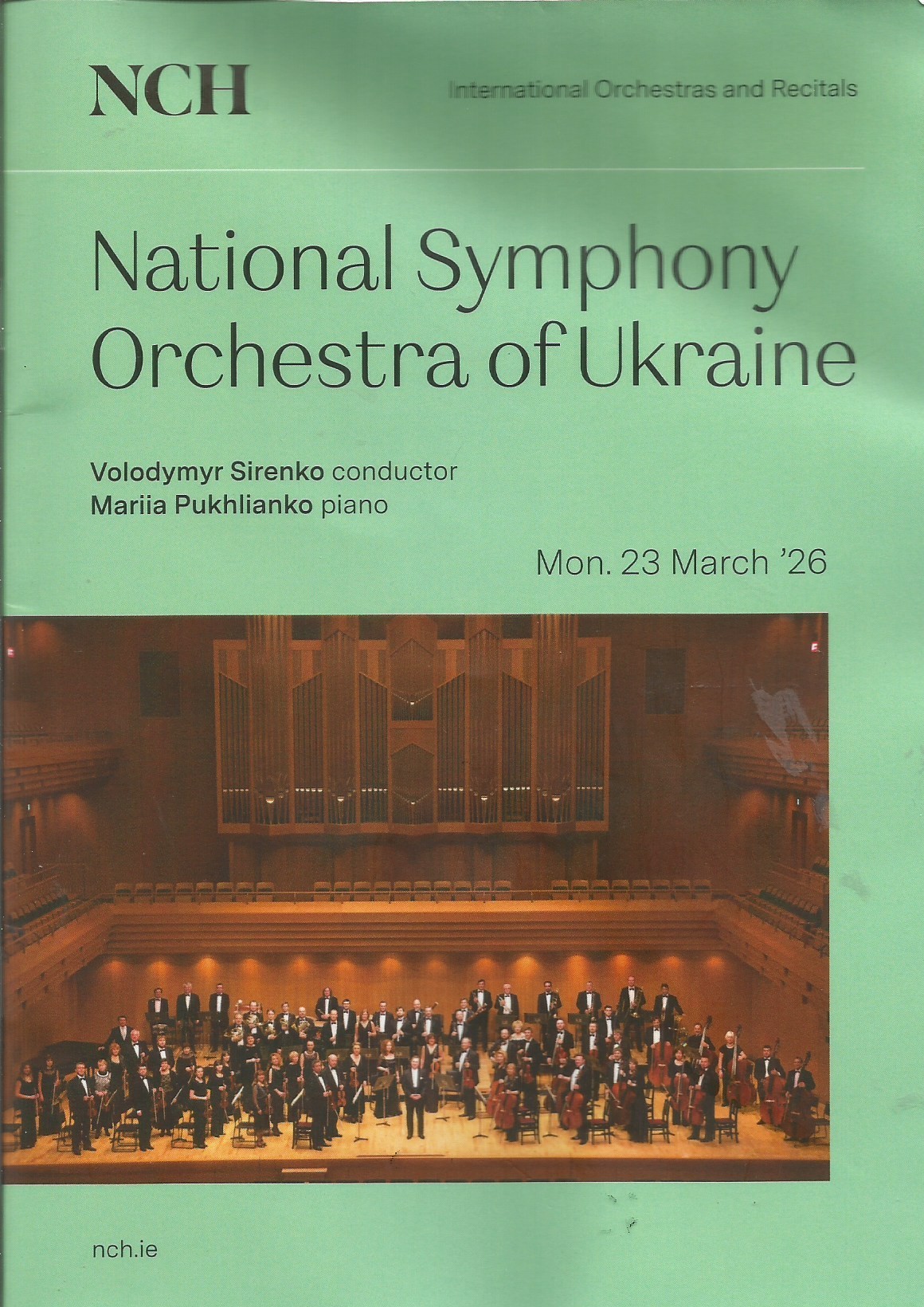
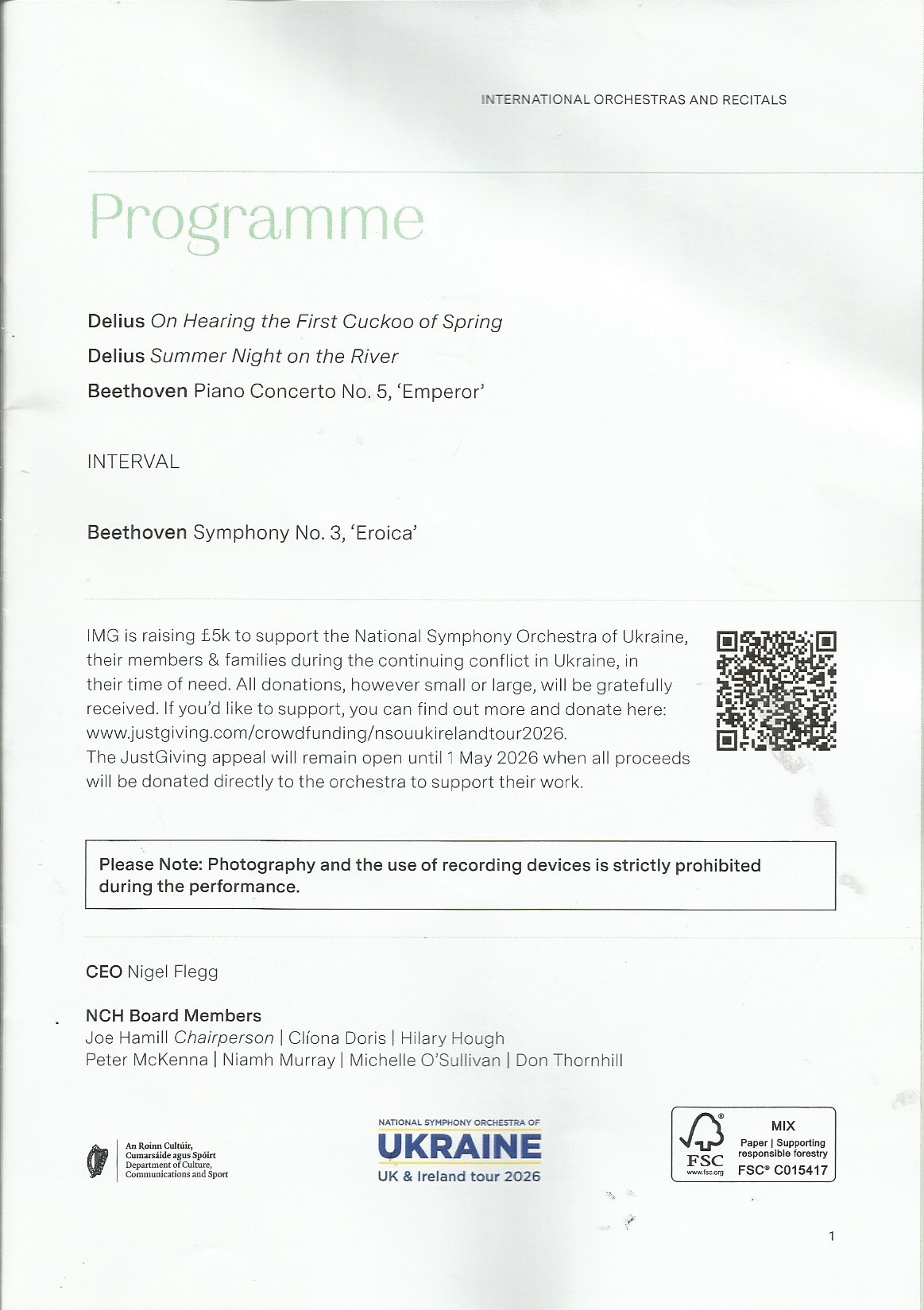
It’s not often that I go to the National Concert Hall in Dublin on a Monday evening, but I made an exception last night to attend a concert by the National Symphony Orchestra of Ukraine (who are currently on tour and have recently played a number of concerts in the UK). It was an interesting (and very full programme) and a very enjoyable concert. Partly because of the large Ukrainian diaspora in Ireland, hall was packed last night.
The concert opened with two pieces by Frederick Delius: On Hearing the First Cuckoo of Spring and Summer Night on the River, originally published together as Two Pieces for Small Orchestra. I used to listen to quite a lot of recordings of Delius when I was younger and know both these works quite well. I was a bit surprised to see them on the programme, but they certainly provided an interesting contrast with what was to come later. In fact the Orchestra, under the direction of Volodymyr Sirenko, tackled them quite differently from the versions I have heard. The sound of the cuckoo in the in the first piece was much more subtle than usually played and the overall sound was much stronger than typical performances which tend to be rather delicate.
After that we had the Piano Concerto No. 5 (“Emperor”) by Ludwin van Beethoven, played by Mariia Pukhlianko. This work wasn’t immediately popular when it was first performed in 1809 – perhaps because it was considered a bit grandiose – but is now firmly established as one of the pinnacles of the repertoire. The soloist played this very well, with a splendid balance of delicacy and power, with good transitions between the ensemble and solo sections. I enjoyed this very much indeed.
After the interval – no wine for me because I had a 9am lecture this morning – we came back for the main course, The Symphony No. 3 in E♭ major (“Eroica”) by Ludwig van Beethoven. It’s hard to know what to say about it really, except that it’s a magnificent work in its own right as well as being historically important. Before this one, which was published in 1806, symphonies (including not only Beethoven’s First and Second, but those of Mozart, Haydn and others) were much shorter (typically around 20 minutes) and much more constrained in form. This composition – which shares some elements with Mozart’s Symphony No. 39 and was apparently inspired by it – ushered in the era of the epic symphony that culminated with the likes of Mahler and Bruckner; last night’s performance took . The first movement, in sonata form, is especially long – with an extended recapitulation – and both complex and rewarding.
The performance last night was full of energy and colour and hugely enjoyable. It’s worth mentioning the unsual arrangement of the orchestra on stage. From the point of view of the Conductor, the first violins were on the far left (as usual), the cellos and basses behind them, and second violins on the far right. This was basically the same layout as was used for the last concertof this work I attended.
The NCH audience is usually generous with its applause and last night was no exception. There was a long standing ovation that precipitated two orchestral encores, neither of which was a piece that I knew.
The concert started at 8pm and didn’t finish until about 10.30pm, and it took quite a long time to get out given the nearly full house, so I missed the usual train and had to wait for the last one, at 11.21pm which got me home well after midnight. The things I do for art!
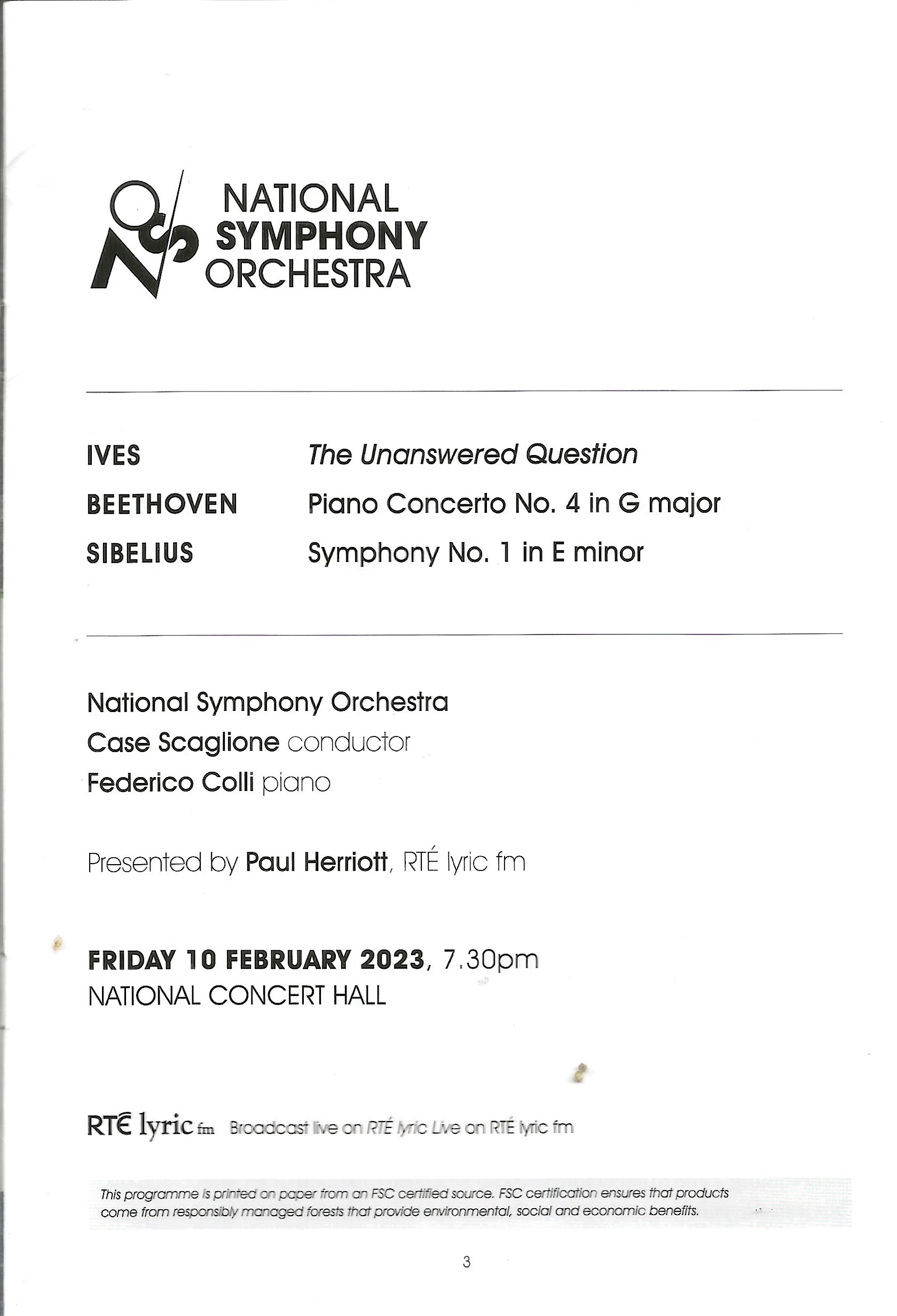
P.S. I’ve included the a page from the programme above. If you wouldn’t like to make a donation to support the National Symphony Orchestra of Ukraine, you can scan the QR code in the right hand image above. Alternatively you can follow this link.


 In the Dark