The appointment, announced yesterday, of Professor Michelle Dougherty as Astronomer Royal, replacing Professor Martin Rees who has held the title since 1995, has prompted me to make a couple or three pedantic comments.
First the BBC story announcing this appointment is headlined:

This is actually incorrect. Last time I looked, Scotland was still part of the United Kingdom, and Scotland has its own Astronomer Royal. That position has been held since 2021 by Catherine Heymans. Technically, therefore, the first female Astronomer Royal was Catherine not Michelle.
Anyway, yesterday’s news made me look up a few things about the Astronomer Royals. One thing that is interesting (to me) is that the position of Astronomer Royal for Scotland has only existed since 1834, which is not only well after the Act of Union 1707 that joined Scotland, England and Wales in Great Britain, but also after the Act of Union 1800 that joined Ireland and Great Britain into the United Kingdom. The position of Astronomer Royal to which Michelle Dougherty has been appointed was founded in 1675. The UK didn’t have an Astronomer Royal between 1675 and 1800, however, but because the United Kingdom didn’t exist in this period!
More importantly this got me thinking about the situation in Ireland. In fact there was a position called Royal Astronomer of Ireland, which was created in 1783, before the Act of Union 1800. This position was coupled with the Andrews Professorship of Astronomy and was held by the Director of Dunsink Observatory. The most famous holder of these positions was William Rowan Hamilton.
This arrangement was similar to that in Scotland in that, until 1995, the position of Astronomer Royal for Scotland was coupled to the Regius Professorship of Astronomy at Edinburgh University and the Directorship of the Royal Observatory in Edinburgh, but these were decoupled when the Royal Observatories were reorganized. The position of Astronomer Royal for Scotland was actually vacant for five years during this time. Malcolm Longair held the post from 1980 to 1990, but John Brown did not take up the office until 1995.
This situation in Ireland is a bit more extreme than this. The last Royal Astronomer for Ireland was Henry Plummer – best known for the Plummer sphere. He was an Englishman and he resigned and returned to England in 1921, the year the War of Independence ended. To cut a long story short the Anglo-Irish Treaty which ended the War of Independence created a “Free State” that still had the British monarch as Head. There could therefore have been a Royal Astronomer in Ireland after 1921, but none was ever appointed. I suppose there were other priorities at the time. The Republic of Ireland was created in 1949 and the Andrews Professorship was subsequently revived in 1981 but more than a century on, the position of Royal Astronomer remains in abeyance.
You might think it obvious that the Republic of Ireland should no longer have a Royal Astronomer, but many Royal things do linger here: there are the Royal Irish Academy*, the Royal College of Surgeons, the Royal Dublin Society (RDS); and the Royal Canal runs through Maynooth, where there is also a Royal City Korean Barbecue.
*The Royal Irish Academy is the Irish equivalent of the Royal Society (except that Elon Musk is not a fellow). Some years ago it held a public consultation about modernisation. My input was that I thought the name was antiquated and irrelevant and I could think of no possible objection to renaming it the Irish Republication Academy.



 available from a wind turbine is given roughly by
 is the wind speed,
  is the area of the turbine,
  is the density of air, which is about 1.2 kg per cubic metre, and
  is the efficiency with which the turbine converts the kinetic energy of the air into useable electricity.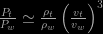

 is the vertical tidal range, about 8 metres for the Severn Estuary, and
  is the acceleration due to gravity. The average power generated would be found by dividing this amount of energy by 12 hours, the time between successive high tides. It remains to be seen whether tidal basin or lagoon based on this principle emerges as competitive.
 In the Dark