Archive for Maynooth University

Ahead of a Four-Day Week…

Posted in Artificial Intelligence, Biographical, Education, mathematics, Maynooth with tags , , , , , , on March 29, 2026 by telescoper

It’s Sunday 29th March – Palm Sunday in favt – and Friday 3rd April is Good Friday, which is followed by a break of a week for Easter, so I’ve been looking at what I have to do in the four days between Monday and Thursday.

On Tuesday afternoon part of my 3rd Year Computational Physics class will be doing a supervised test in the computer lab. I (foolishly) promised to ensure they would get their grades before Easter, so I’m going to have to mark them straight away. This is a larger group than usual because some students who would normally be in the lab on Thursdays swtiched to Tuesday so they could go on a trip to Armagh. Anyway, this is the third lab test and at least I have graded the first two tests for all groups in time for the arrival of the new ones.

There will be one more of these lab tests after the Easter break but after that the students will be working full-time for 3 weeks or so on mini-projects. That is the part they usually enjoy most and I’m very happy to see that some have already started work.

Then, on Wednesday I have the second class test for my 4th year Particle Physics module. This is the second such test, and it will be held during a tutorial session. This is a pen-and-paper test rather than a coding test to be done in the lab. For such tests I allow students to bring whatever they like on paper but phones, laptops and tablets are banned. This is the easiest way I could think of to avoid students using AI to solve the problems. In previous years I gave take-home assignments for this module, and I still hand out exercise sheets to be gone over in tutorials, but these are for formative purposes only. The summative assessments are the class tests. There will be three of those, which means they will have to endure one more after Easter. In a normal week I would have a Particle lecture on Friday, but that won’t happen because it’s Good Friday and my lectures apparently aren’t good enough to happen on that day.

As well as the Computational Physics lab test and the Particle Physics class test, next I have two lectures, both at 9am – one on Tuesday and one on Thursday – and another lab session on Thursday which is not a test, but a practical session about solving ODEs.

Then it will be the Easter Break. After that, according to my calculations, there will be four more teaching weeks before the examination period. The last day of teaching is May 8th. Between that and the examinations there is a gap of a week during which I will have to mark all the completed Computational Physics project reports, as well as giving some revision classes if there is demand for them.

40 Years since Prof. Susan McKenna-Lawlor made Contact with a Comet – Guest Post by Emma Whelan

Posted in Maynooth, The Universe and Stuff with tags , , , , , , on March 13, 2026 by telescoper

Today (Friday 13th March 2026) is 40 years to the day since the Giotto spacecraft started to send back images of Halley’s comet;it reached its closest approach on 14th March 1986. This guest post by my colleague in the Department of Physics at Maynooth, Dr Emma Whelan, was written to mark this anniversary and the connection with the eminent Irish astrophysicist Susan McKenna-Lawlor.

–o–

This week, as I mull over the importance of International Women’s Day, I am also thinking about the significance to Irish women scientists of the 40th anniversary of the historic flyby of Halley’s Comet by the European Space Agency’s first deep space mission Giotto. On 14 March 1986, Giotto passed within about 600 km of the nucleus of Halley’s comet at a relative speed of roughly 68 km/s. Despite being bombarded by dust particles in the comet’s coma, the spacecraft successfully returned unprecedented data. Maynooth University space scientist and former Head of the Department of Experimental Physics, Prof. Susan McKenna-Lawlor, made a key contribution to this mission and was the Principal Investigator for Giotto’s instrument, the Energetic Particle Analyser otherwise known as EPONA. EPONA was designed to measure high-energy charged particles in the vicinity of Halley’s comet. By analysing the flux and energy of these particles, the experiment helped scientists understand the interaction between the solar wind and a comet.

Giotto represents not only a major milestone in the history of ESA, but also an important moment in the history of the contribution of Irish Women to the field of Astrophysics and the involvement of Maynooth University women scientists, in Space Science. The Department of Physics now has a thriving Physics with Astrophysics degree (MH204) with many women (students, technicians, administrators and academics) making important contributions to the success of this programme. Prof. McKenna-Lawlor’s leadership in developing and operating the instrument represented one of Ireland’s earliest direct contributions to an international space mission. Her work helped establish Ireland’s reputation in space science and encouraged future Irish participation in European and international space research, especially by young women who were inspired by seeing an Irish woman succeeding in a field where women were very rarely visible.

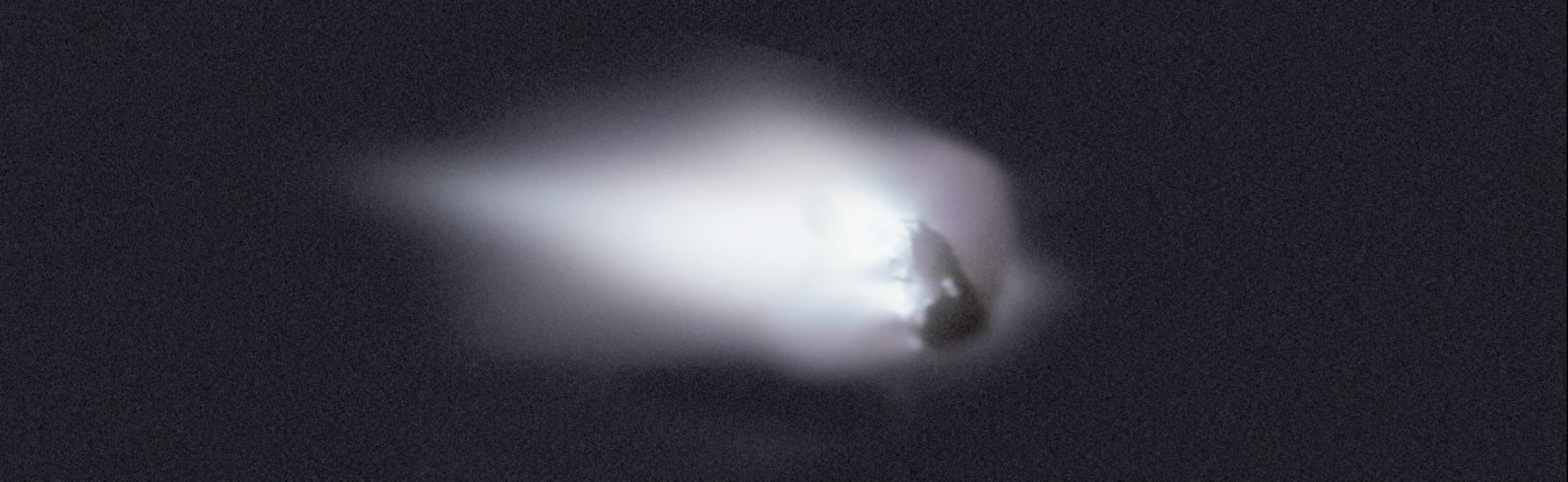
Launched in July 1985, Giotto’s primary objective was to encounter and study Halley’s Comet during its 1986 return to the inner Solar System. ESA have compiled a movie of its encounter which can be viewed here. At the time, Halley’s Comet was the most famous comet known, having been observed for centuries, yet very little was understood about comets and in particular the detailed structure of their nuclei and the physical processes occurring as they approach the Sun. Giotto provided the first close-up measurements of a comet and fundamentally changed scientific understanding of these Solar System bodies. One of Giotto’s most significant results was the first direct image of a comet’s nucleus. The images revealed that Halley’s nucleus is a dark, irregular object roughly 15 km long, far darker than expected, reflecting only a small fraction of sunlight. This confirmed the long-standing “dirty snowball” model proposed by astronomer Fred Whipple, in which a comet consists of volatile ices mixed with dust and rocky material. Giotto’s observations also showed jets of gas and dust erupting from localised regions on the nucleus, demonstrating that cometary activity is driven by sunlight heating specific surface areas rather than uniformly across the surface.

In addition to imaging, Giotto carried instruments designed to study the plasma, dust, and the energetic particle environment around the comet. These measurements revealed the complex interaction between the comet’s expanding atmosphere and the solar wind. Scientists were able to observe the formation of structures such as bow shocks and ion tails, helping to explain how cometary material becomes ionised and carried away through space. These results provided critical insights into the physics of cometary comae and their interaction with the heliosphere. The results from EPONA were crucial in identifying regions where energetic particles were produced by the interaction between the solar wind and the cometary plasma. These measurements contributed to the understanding of shock waves and particle acceleration processes occurring near the comet.

Prof. McKenna-Lawlor (pictured above, in 2017) was born in Dublin in 1935 and received a BSc, MSc and PhD from University College Dublin. She was a research assistant at The Dublin Institute for Advanced Studies and became a lecturer at the Department of Experimental Physics in Maynooth in the early 1970s. She has received numerous awards including the Russian Tsiokovsky Gold Medal for “Outstanding Contributions to Cosmonautics” in 1988. She has written several books on the history of Irish Astronomy including “Whatever Shines Should be Observed” that documents the pioneering contributions of five 19th-century Irish women to astronomy, photography, and science. The title is derived from the motto of the Royal Astronomical Society. In more recent times she was involved with ESA’s Rosetta mission which landed its Philae probe on comet 67P/Churyumov-Gerasimenko on November 12, 2014.

Maynooth University Library Cat Update

Posted in Maynooth with tags , on February 27, 2026 by telescoper

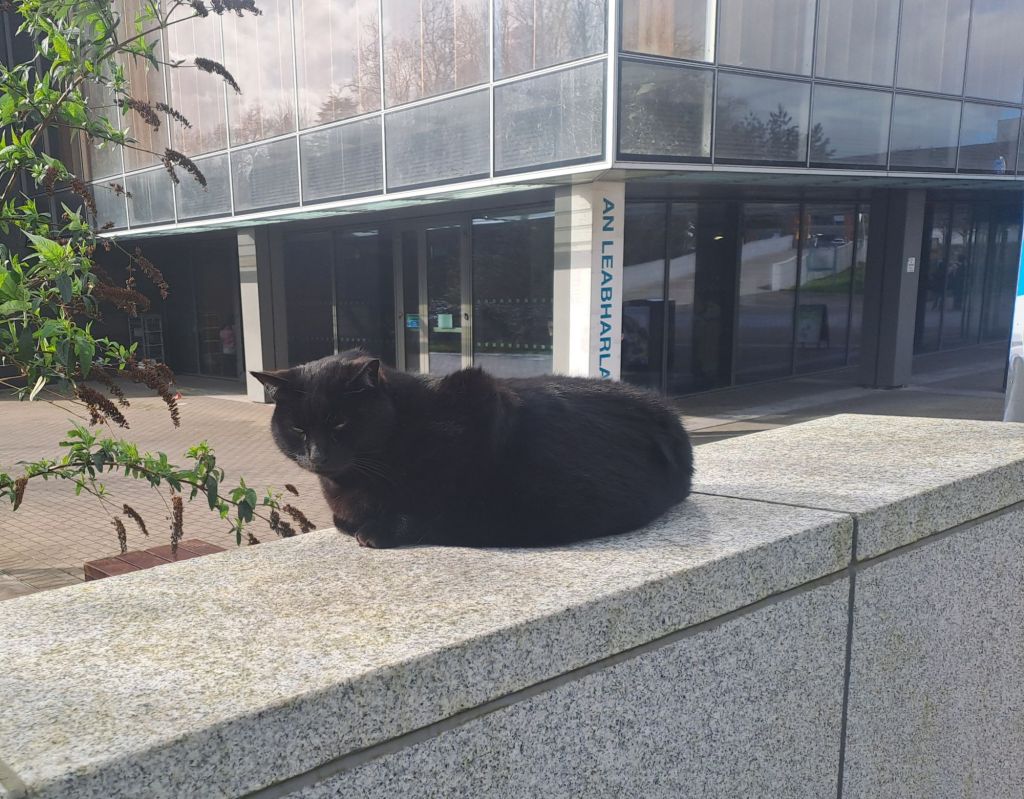
It being a spring-like day, Maynooth University Library Cat took the opportunity to choose a spot away from his usual post so he could loaf in the sunshine.

Take Note!

Posted in Bad Statistics, Biographical, Education, Maynooth with tags , , , , on February 9, 2026 by telescoper

We’re a week into teaching term here at Maynooth University and I’m taking a short break from the task of preparing notes and problem sets for the modules  I’m teaching this term.  Yesterday I came across a paper with the title Typed Versus Handwritten Lecture Notes and College Student Achievement: A Meta-Analysis. I always cringe when I see the word “Meta-Analysis”, as this is a very problematic statistical approach. Nevertheless, that article reminded me of a post I did some time ago about  lecture notes which I thought I would rehash here. I won’t repeat the entire content of my earlier discussion, but one of the main points I made in that was that many students are simply not used to taking notes and find it difficult to do so effectively during lectures, so much so that the effort of copying things onto paper must surely prevent them absorbing the intellectual content of the lecture (assuming that there is any).

I dealt with the problem  of taking notes when I was an undergraduate by learning to write very quickly without looking at the paper as I did so. That way I didn’t waste time moving my head to and fro between paper and screen or blackboard. Of course, the notes I produced using this method weren’t exactly aesthetically pleasing, but my handwriting is awful at the best of times so that didn’t make much difference to me. I always wrote my notes up more neatly after the lecture anyway. But the great advantage was that I could write down everything in real time without this interfering with my ability to listen to what the lecturer was saying. An alternative to this approach is to learn shorthand, or invent your own form of abbreviated language. This approach is, however, unlikely to help you take down mathematical equations quickly.

My experience nowadays is that many students simply aren’t used to taking notes like this – I suppose because they get given so many powerpoint presentations or digital materials or other kinds of handout –  so they struggle to cope with the old-fashioned chalk-and-talk style of teaching that some lecturers still prefer (and which actually works very well in mathematically-based disciplines). That’s probably because they get much less practice at school than my generation did. Most of my school education was done via the blackboard..

Nowadays,  many lecturers  give copies of their presentations to students and others even give out complete sets of printed notes before, during, or after lectures. That’s all very well, I think, but what are the students supposed to be doing during the lecture if you do that? Listen, of course, but if there is to be a long-term benefit they should take notes too. In other words, entirely passive learning is unlikely to be effective.

Even if I hand out copies of slides or other notes, I always encourage my students to make their own independent set of notes, as completely as possible. I don’t mean by copying down what they see on the screen and what they may have on paper already, but by trying to write down what I say as I say it. I don’t think many take that advice, which means much of the spoken illustrations and explanations I give don’t find their way into any long term record of the lecture. And if the lecturer just reads out the printed notes, adding nothing by way of illustration or explanation, then the audience is bound to get bored very quickly.

My argument, then, is that regardless of what technology the lecturer uses, whether he/she gives out printed notes or not, then if the students can’t take notes accurately and efficiently then lecturing is a complete waste of time. 

As a further study aid, most lectures at my previous institutions (Sussex University and Cardiff University) were recorded and made available to students to view shortly after the event. At those institutions, we found – contrary to popular myth – no evidence that availability of recorded lectures lowers the attendance at in-person lectures. It appears that students use the recordings for revision and/or to clarify points raised in the notes they have taken, and if anything the recordings allow the students to get greater value from lectures rather than persuading them that there’s no need to attend them. Of course we had to use lecture recordings during the pandemic. Unfortunately Maynooth University decided not to invest in the technology needed to make this routine after we went back to classroom-based teaching, so we can’t offer lecture recordings in a systematic way. This is very regrettable,as many students live nowhere near campus and find it onerous to travel every day for one or two teaching sessions.

I do like lecturing, because I like talking about physics and astronomy, but as I’ve got older I’ve become less convinced that lectures play a useful role in actually teaching anything. I think we should use lectures more sparingly, relying more on problem-based learning to instil proper understanding. When we do give lectures, they should focus much more on stimulating interest by being entertaining and thought-provoking. They should not be for the routine transmission of information, which is far too often the default.

I’m not saying we should scrap lectures altogether. At the very least they have the advantage of giving the students a shared experience, which is good for networking and building a group identity. Some students probably get a lot out of lectures anyway, perhaps more than I did when I was their age. But different people benefit from different styles of teaching, so we need to move away from lecturing as the only option and ensure that a range of teaching methods is available.

I don’t think I ever learned very much about physics from lectures – I found problem-based learning far more effective – but I’m nevertheless glad I learned out how to take notes the way I did because I find it useful in all kinds of situations. Effective note-taking is definitely a transferable skill, but it’s also in danger of becoming a dying art. If we’re going to carry on using lectures, we old fogeys need to stop assuming that students learnt it the way we did and start teaching it as a skill.

Perhaps the biggest problem with the way physics is generally taught these days, however,  is not really about the mode of delivery but the compartmentalization that has crept in via the school system which encourages students to think of each `module’ as a bite-sized piece that can be retained until the examinations, regurgitated, and then forgotten. I’ve no doubt that a great many students pass the examinations we set by simply memorizing notes with little genuine understanding  needed or problem-solving ability demonstrated. We promote physics as a subject that nurtures these skills, but I don’t think many physics graduates – even those with good degrees – actually possess them at the end. We should be making much more of an effort in teaching students how to use their brains in other ways than as memory devices, and getting them engaged in more active teaching activities seems to me to be a very high priority. That said, I think we probably do much more of this in physics than in most other subjects!

Maynooth University Library Cat Update

Posted in Maynooth with tags , , , on February 4, 2026 by telescoper

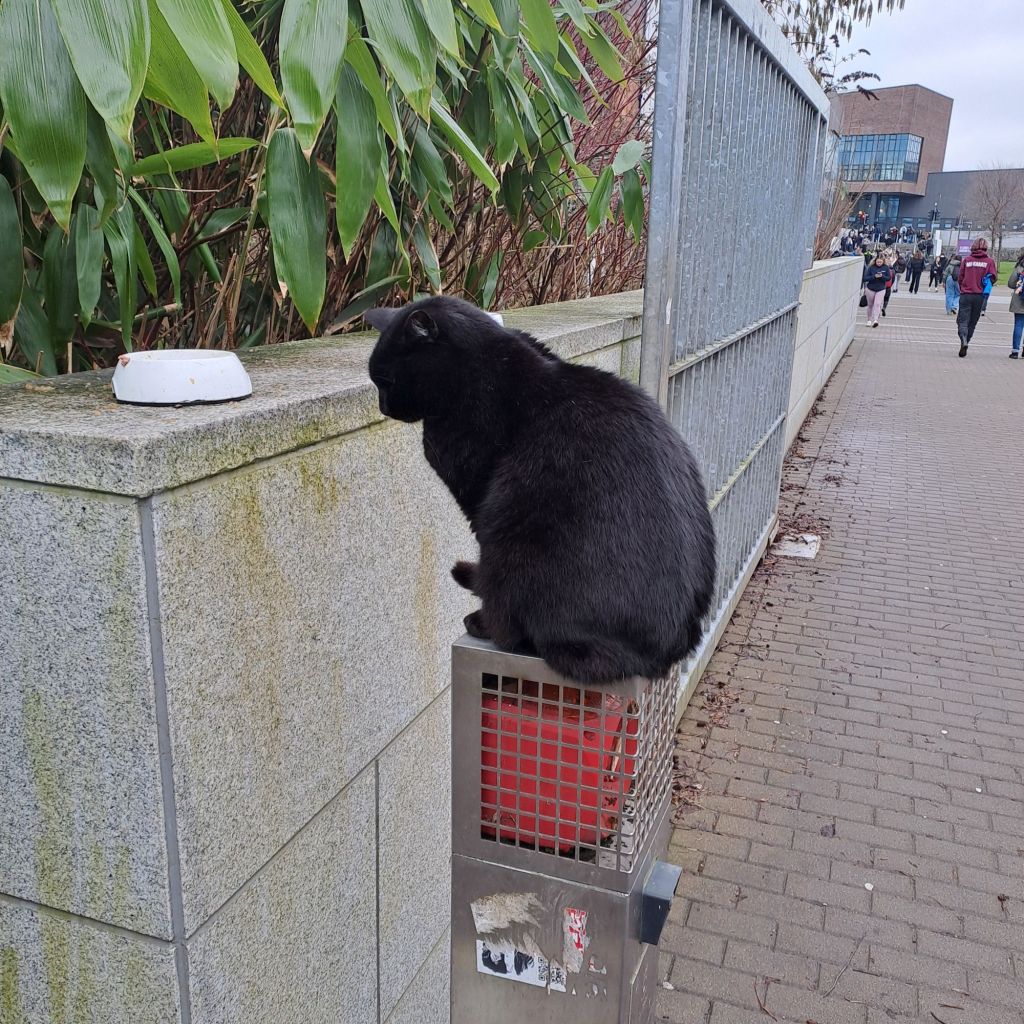
I hadn’t seen Maynooth University Library Cat for a while, so it was nice to see him today, on post, as large as life. Approaching him I saw him receive a number of back scratches. It seems he enjoyed them and continued to present his back to passers-by in the hope of getting more.

Maynooth off X!

Posted in Maynooth with tags , , on January 28, 2026 by telescoper

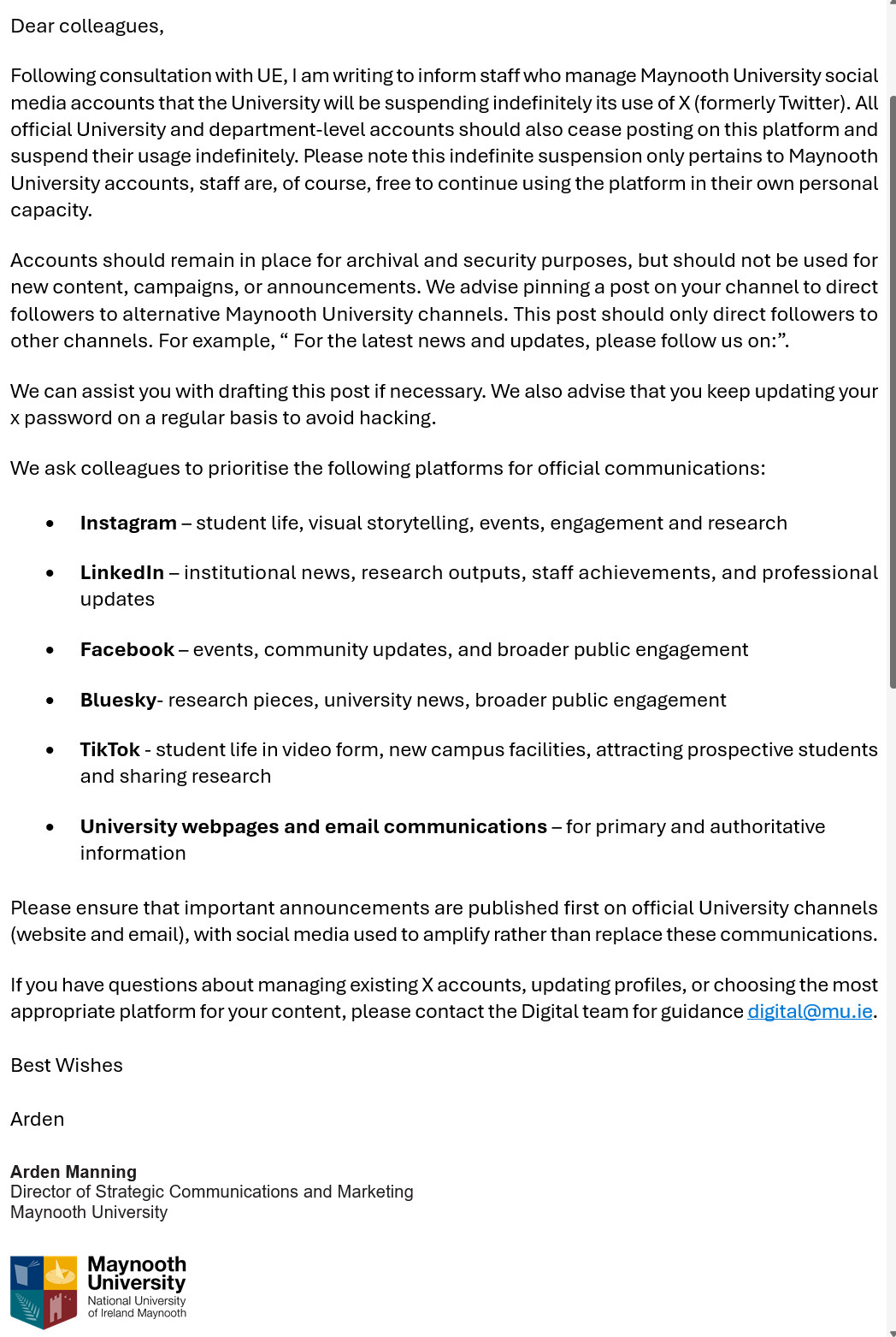
Following on from my post earlier today, I was sent a copy of a letter (below) instructing those people who run its social media accounts to desist from posting on X/Twitter.:

It stops short of deactivating accounts, but that is probably just to prevent someone else taking over the username/handle and using it for nefarious purposes. It’s a pity they don’t recommend Mastodon as well as BlueSky, as I think that is better for disseminating research-based news than BlueSky, but this is positive news and I’ll count it as a win.

The growth of light seed black holes in the early Universe

Posted in Maynooth, The Universe and Stuff with tags , , , , , on January 21, 2026 by telescoper

Meanwhile, back in the world of research, I see that Maynooth University has issued a news item about a new paper by colleagues in the Department of Physics, Daxal H. Mehta, John A. Regan and Lewis Prole. The story has also been picked up by the Irish media, e.g. here.

You may find the paper behind a paywall, as it is published in Nature Astronomy, in which case you will just have to make do with the abstract:

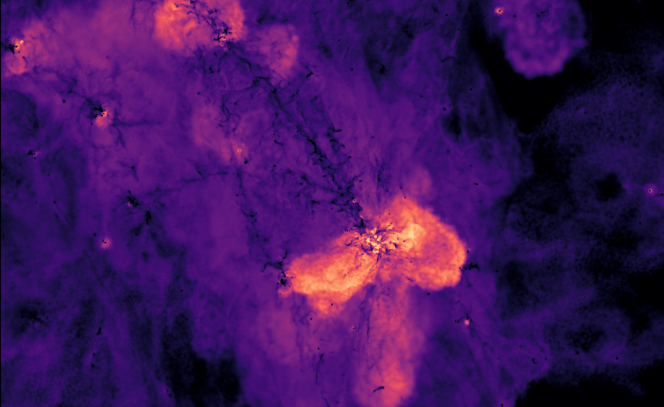
And here’s a pretty picture from one of the simulations used in the paper:

Marking Time Once More

Posted in Biographical, Education, Maynooth with tags , , , , on January 13, 2026 by telescoper

Lecturers at Maynooth University are supposed to be available on the telephone to deal with queries from students concerning their examinations. And so it came to pass that yesterday I was “on call”. Since I live in Maynooth, I decided to come into campus in case of a query so I could go to the examination venue l to deal with it if required. In the event, however, the examination passed off without incident and nobody called.

I wasn’t twiddling my thumbs all morning though. It seemed a good opportunity to go through the accumulated coursework for this module, applying various exemptions for medical or other reasons, so that when I’ve marked the scripts I can immediately combine the results with the CA component.

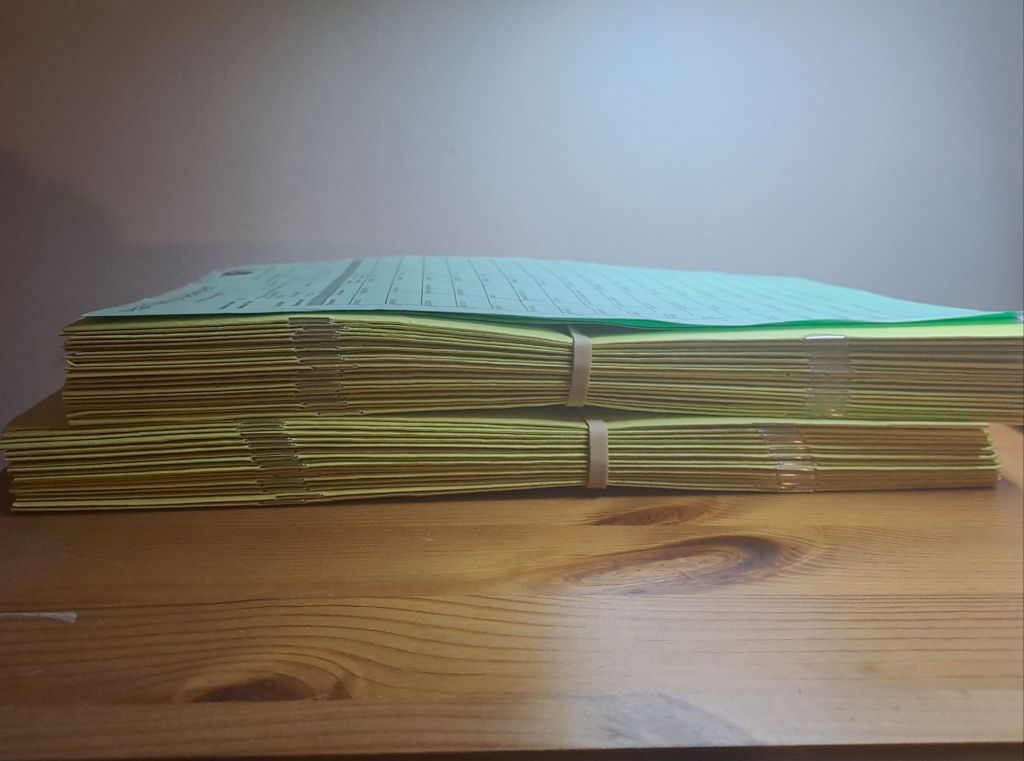
The examination venue, incidentally, was not on campus but in the Glenroyal Hotel in Maynooth. The Sports Hall on campus is usually one of the places for examinations to be sat, but it is not available this year due to refurbishment. The other day I was in one of the shops in the shopping centre next to the hotel and there were some complaints about the lack of available car parking spaces owing to so many students parking there for their exams. Anyway, the exam scripts found their way to my office this morning and here I am again, back home with a stack of an examination scripts to mark. The picture shows about 40 papers from my module on Differential Equations and Transform Methods. I want to get them out of the way as quickly as possible as I have another paper coming up on Thursday and have a lot of other things to do before term starts at the beginning of February. All the usual displacement activities having been exahusted, I’ve already made a start. With a bit of luck I’ll complete this task by Thursday.

I’ve often discussed the process of marking examinations with my colleagues and they all have different techniques. What I do is mark one question at a time rather than one script at a time. What I mean by that is that I go through every script marking all the attempts at Question 1, then I start again and do Question 2, etc. I find that this is much quicker and more efficient than marking all the questions in each script then moving onto the next script. The reason for this is that I can upload into my mind the model answer for Question 1 so that it stays there while I mark dozens of attempts at it so I don’t have to keep referring to the marking scheme. Other advantages are that it’s easier to be consistent in giving partial credit when you’re doing the same question over and over again, and that also you spot what the common mistakes are more easily.

Anyway, I’ve decided to take a break for today. I’ll start again tomorrow.

Exam Time Yet Again

Posted in Education, Maynooth with tags , , , on January 8, 2026 by telescoper

The January examination period at Maynooth starts tomorrow (Friday 9th January), so I thought I’d do a quick post on the topic of examinations. First of all let me wish the very best of luck to everyone at Maynooth or elsewhere taking examinations in the next few weeks. I hope at least that the exam halls are nice and warm! Actually, owing to the Sport Hall being unavailable for this examination period owing to building work, some exams will be off campus; my first exam paper is actually being sat in the GlenRoyal hotel.

Here’s a video produced by Maynooth University to remind those taking exams of some general points about preparation and, most importantly, to look after themselves before during the examination period. It’s directed at Maynooth students but students from elsewhere may find useful tips in it.

I completed the last of my revision sessions today but, as the first examination for which I have responsibility is not until Monday 12th, I’ll have to wait to find out how any of my own students have done but let me take this opportunity to pass on a few of my own tips more aimed at students in Physics:

  1. Try to get a good night’s sleep before the examination and arrive in plenty of time before the start. This is especially important when there’s bad weather that may disrupt travel. It is your responsibility to get to the examination on time!
  2. Read the entire paper before starting to answer any questions. In particular, make sure you are aware of any supplementary information, formulae, etc, given in the rubric or at the end.
  3. Start off by tackling the question you are most confident about answering, even if it’s not Question 1. This will help settle any nerves.
  4. Don’t rush! Students often lose marks by making careless errors. Check all your numerical results on your calculator at least twice and – PLEASE – remember to put the units!
  5. Don’t panic! You’re not expected to answer everything perfectly. A first-class mark is anything over 70%, so don’t worry if there are bits you can’t do. If you get stuck on a part of a question, don’t waste too much time on it (especially if it’s just a few marks). Just leave it and move on. You can always come back to it later.

Readers of this blog are welcome to add other tips through the comments box below!

The Last Judgment

Posted in Art, Maynooth with tags , , , , on December 15, 2025 by telescoper

Walking home through Maynooth this evening, the streets filled with partying students, I was reminded of this:

It’s the central part of the triptych Das letzte Gericht (The Last Judgment) by  Hieronymus Bosch. The medium is oil on oak panel and it measures 164 x 127 cm. The original work is in the Academy of Fine Arts in Vienna.

The figures at the top, looking down on the chaos, are clearly identifiable as members of academic staff, while those below are students. I’m sure that if Christmas jumpers had been invented in 1486, when the work is thought to have been completed, Bosch would have painted a few in…