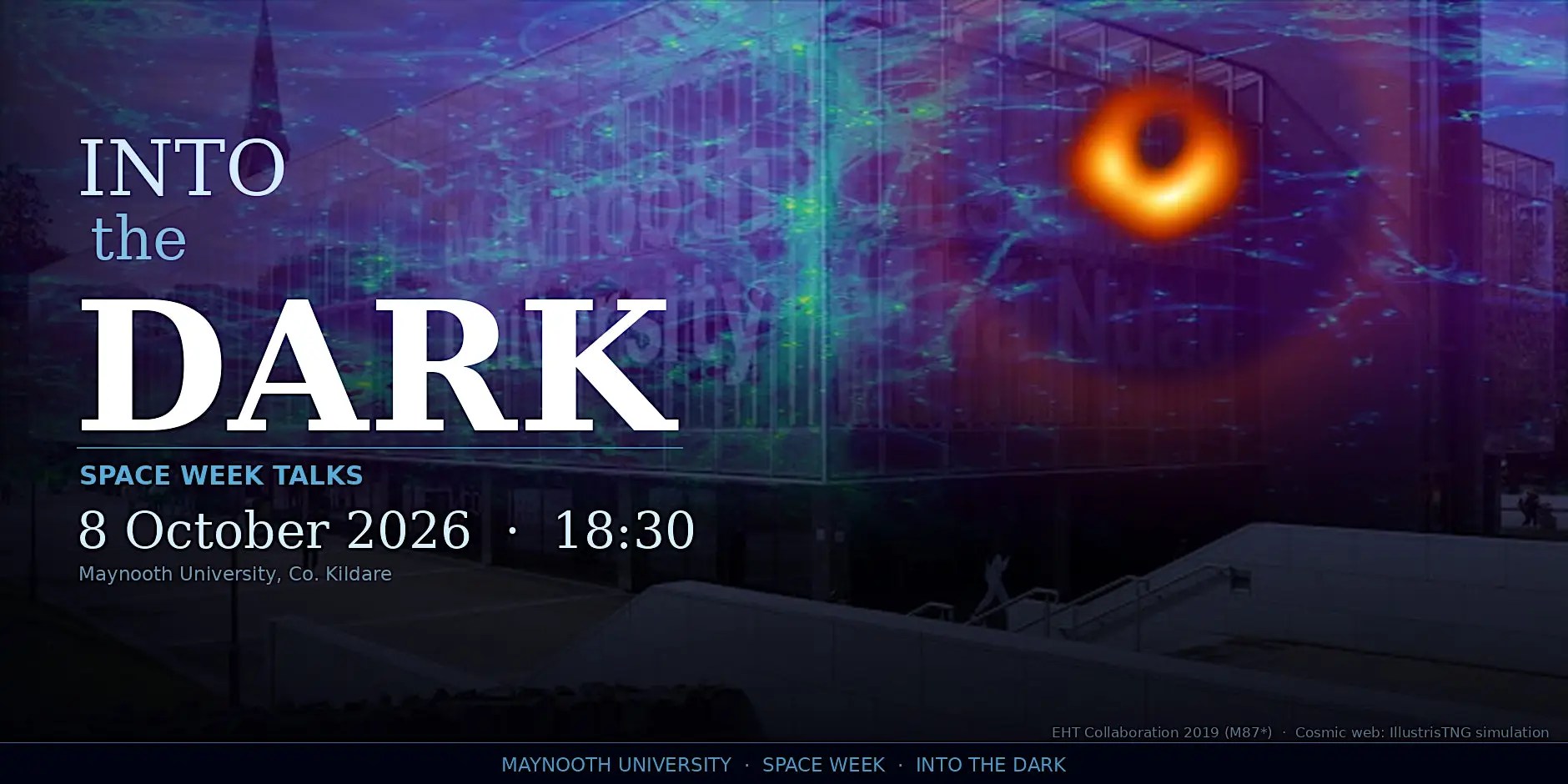
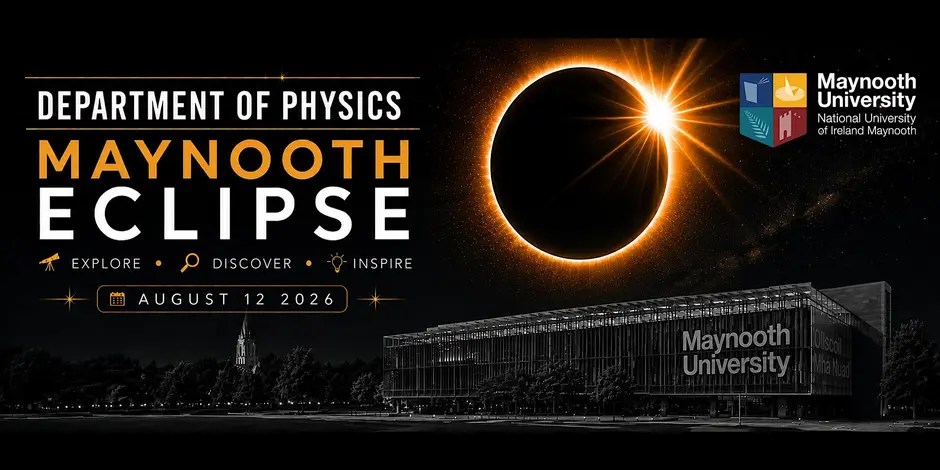
While I remember here’s a quick preview of an event at Maynooth during Space Week 2026. This will take place on the evening of Thursday 8th October 2026:
The event is free but, in order to make sure there is enough space, we need you need to register, which you can do here:
What we call the beginning is often the end
And to make and end is to make a beginning.
The end is where we start from.
from Little Gidding, Four Quartets, by T.S. Eliot.
The start of teaching for 2026/7 is approaching at an alarming rate. new and continuing students are registering and today we had a staff meeting in the Department of Physics about arrangements for the new term. This all made me think again about retirement.
About three years, while I was in Barcelona on sabbatical , I posted an item about looking forward to retirement. Here is an excerpt from that piece:
The fact of the matter is, though, that I can’t afford to retire yet. I have a mortgage to pay and I’ve only had five full years of pensionable service in the Irish system, so won’t get much of a pension. I have the frozen residue of my UK pension, of course, but that is subject to an actuarial reduction if I take the benefit before I’m 65, which is also the standard retirement age for academic staff in Ireland. I can’t be made to retire here until I’m 70, in fact, but I think I’ll be well beyond my best-before date by then and am not keen to overstay my welcome.
So it looks like I’ll have to stay until I’m 65 at the earliest. In fact I won’t be able to collect the State Pension (SPC) until I’m 66, so I’ll probably have to stay until then. That means that when I get back from sabbatical I will have four or five years left until I can retire.
Since I posted this I made a firm decision that I will retire as soon as I’m able, which should be in June 2028. Having sold my old house in Cardiff some time ago, I have paid off my Maynooth mortgage which makes the financial situation much simpler. I am now quite confident that I can afford to retire before I’m 66.
I know many academics don’t like the idea of retiring. I suppose that’s because they’re afraid they won’t know what to do with their time. I’ve never felt like that. I’ve always had plenty of outside interests, but now there’s another factor. As I alluded to in an earlier post, and contrary to all my expectations of three years ago, there is another person involved. That person, whose name I won’t reveal, graduated this summer from an unnamed university, and is just about to embark on a two-year Masters degree (in a subject not to be disclosed) in a location I won’t tell you about. He will be finishing that course in the summer 2028.
For the next two years things for us will be pretty much as they are now: not living together, but spending as much time in each other’s company as possible at weekends and holidays. That arrangement suits us both very well in the current circumstances but we have already started discussing plans beyond the two-year horizon. Some of these are not at all serious, but amusing to think about. Others would be fantastic if they turned out to be possible. We have the best part of two years to decide what to do. In any event, I find it exciting to be able to think seriously of retirement as a beginning as well as an end.
I was feeling a bit grotty this morning and had lost my voice but I managed to summon up the energy to attend today’s Conferring Ceremonies – usually known as Graduation ceremonies in the UK – at Maynooth University. It was a special day for the graduands, their families and friends, of course, but also quite a significant one for me. The cohort of students graduating today included a significant number whom I taught in the first year at Maynooth, four years ago, before I went on sabbatical. I taught some of them again in their third year, after I returned, and some last year. I am no longer teaching first-year students, so this will be the last group that I’ll see from beginning to end of their degrees. It was nice to be at their Conferrings to see them off, and especially nice to chat afterwards and see that so many of them are going to do further study as postgraduates (some here in Maynooth and some elsewhere, including Trinity and UCD). I noticed this morning that the next intake of students has started to register. I don’t yet know how many Physics students I’ll be teaching in two weeks’ time but I do know that I’ll have retired before any of them graduate.
Conferring Ceremonies at Maynooth used to be held in the Aula Maxima, on South Campus, which is an excellent venue with lots of atmosphere. Nowadays however they are held in the far less evocative surroundings of a modern lecture theatre in the TSI Building. I know I’m an old fuddy-duddy but much preferred the previous location. Students don’t even get to sit in the same room as the parents, but march in through one door, cross the front of the hall, collect their parchment, and then march out through another door.
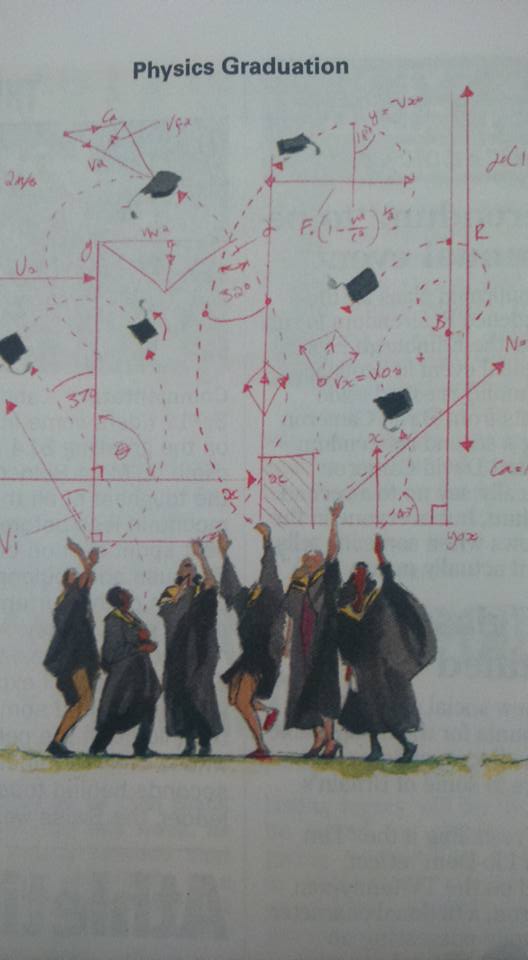
I like graduation ceremonies, actually. As the graduands go across the stage you realize that every one of them has a unique story to tell and a whole universe of possibilities in front of them. How their lives will unfold no-one can tell, but it’s a privilege to be there for one important milestone on their journey. It’s also a bit strange in some cases finally to put a name to a face that I’ve seen around the place regularly, just before they leave the University for good. I always find this a bittersweet occasion. There’s joy and celebration, of course, but tempered by the realization that many of the young people who you’ve seen around long enough to grow accustomed to their faces, will disappear into the big wide world never to be seen again. On the other hand, this year quite a few graduates of the Department of Theoretical Physics are staying in Maynooth to do Masters programmes so they won’t all be vanishing without trace.
Graduation of course isn’t just about dressing up. Nor is it only about recognizing academic achievement. It’s also a rite of passage on the way to adulthood and independence, so the presence of the parents at the ceremony adds another emotional dimension to the goings-on. Although everyone is rightly proud of the achievement – either their own in the case of the graduands or that of others in the case of the guests – there’s also a bit of sadness to go with the goodbyes. It always seems that as a lecturer you are only just getting to know students by the time they graduate, but that’s enough to miss them when they go. All this is a roundabout way of saying congratulations once more to everyone who graduated today, and I wish you all the very best for the future!
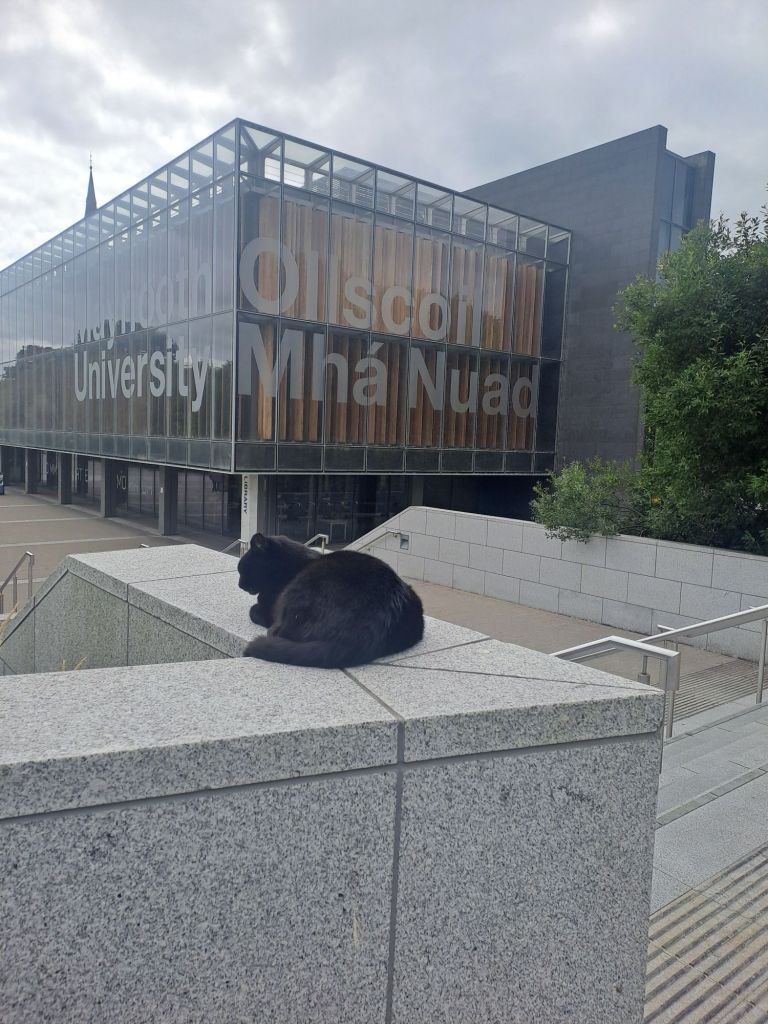
I saw Maynooth University Library Cat in a different location today so I thought I’d take the opportunity to share a picture of him with his Library in view.
Today (26th August 2026) was the day that students across Ireland received offers of places at Third-Level Institutions to start next month. The offers for all courses and all institutions are available on the official CAO website here; they are also widely available elsewhere.
The official numbers for first round offers at Maynooth are here. Minimum points required for Maynooth’s – and indeed Ireland’s – most important course, MH206 Theoretical Physics and Mathematics, are 500 this year, down from 520 last year. MH204 Physics with Astrophysics is 401, up on last year’s 385. MH201 General Science (of which Physics is a part) is on 346 points, down 6 from 352 last year. Maynooth’s biggest course (by student numbers) – and indeed the biggest course in Ireland reckoned that way – is the Omnibus Arts programme MH101 which has an entry level this year of just 300 CAO points, the same as last year. There are several more rounds of offers and the final points may vary as the system works through to the finish.
Leaving Certificate results are just one factor in determining the CAO points for a particular course at a particular Institution. Overall the picture is rather complex. Across Ireland, points are up for about 50% of courses and down for about 42%. The CAO points needed for a course are largely a matter of demand versus capacity rather than academic performance. For the last few years Maynooth University has been recruiting more and more students, putting pressure on accommodation, teaching loads and campus space. This strategy will prevent any significant rise in CAO points for the foreseeable future. This is probably happening to some extent across the sector, though Maynooth has a more urgent need for more students: to pay for the legions of new posts it has created within its bloated management structure.
A reminder that all this just concerns the first round of offers so things may change significantly over the next week or two. Students now have to decide whether to accept their first-round offer or try to change course. They have until next week to do this. Departments won’t know how many new students they have for a while yet.
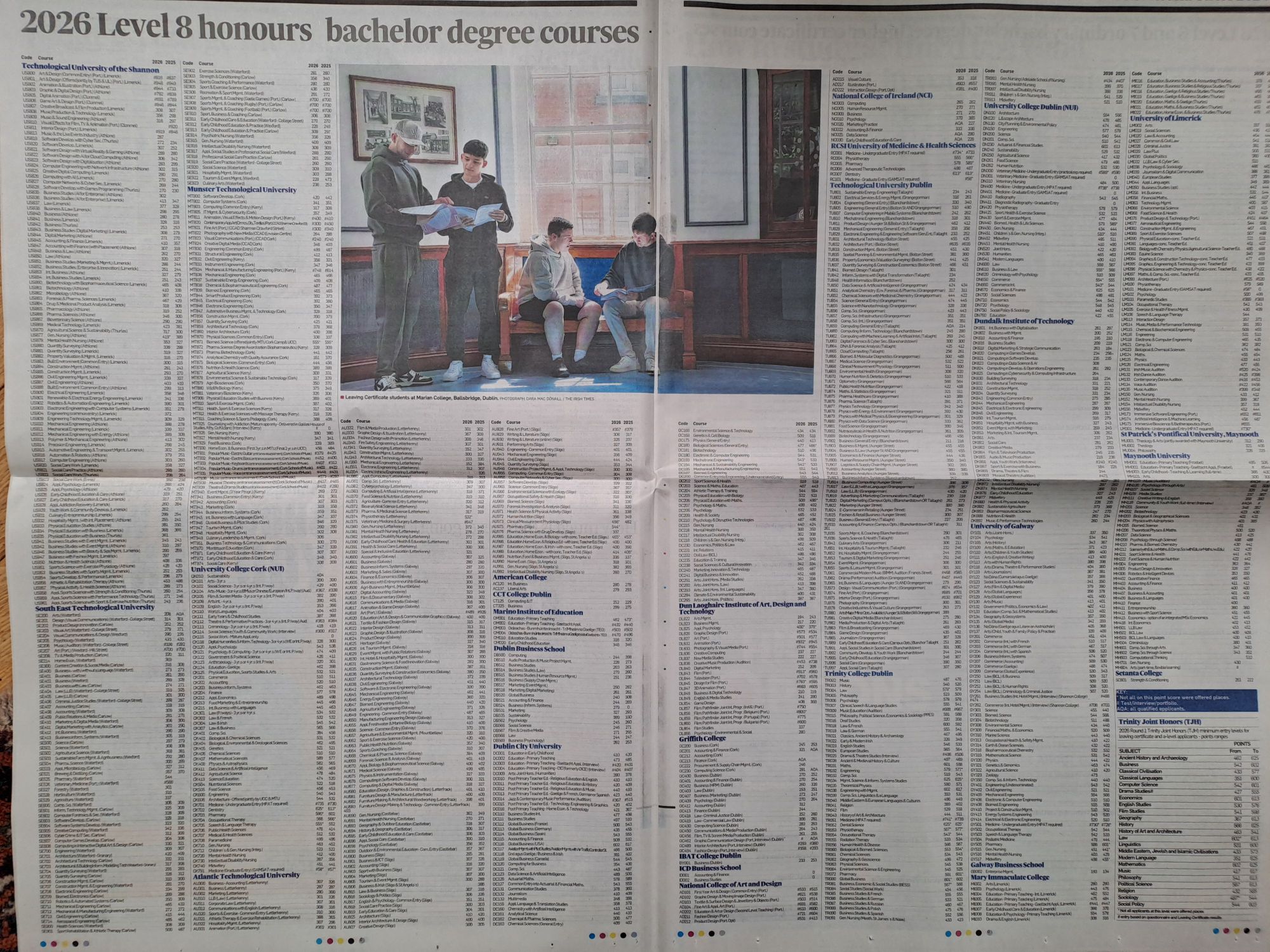
Update: 27/8/206. Here is the traditional Irish Times supplement with all first-round offers, confirming most courses at Maynooth are bucking the national trend by going down rather than up:
I thought I’d pass on a little amusement arising from last week’s Eclipse Event in Maynooth. I gave a very short and non-technical talk about the famous 1919 Eclipse Expeditions which I have mentioned many times on this blog. As you probably know there were two expeditions, one to Sobral in Brazil and the other to the island of Principe, off the coast of Equatorial Guinea. Here’s a nice and very informative old graphic (from the London Illustrated News) about the expeditions, showing the two locations:
I finished my talk and had one or two questions but we had to move on to the next speaker, who happened to be giving the last talk of the day.
After the session finished I was packing up some things to take back to the office before heading to the pub when a little boy came up to me and asked: “So which expedition were you on, the one to Brazil or the one to Africa?”
I know many people think that University staff are on holiday all the way through the summer, particularly August, but this week has been very busy indeed, not only because of the Eclipse Event. It is somewhat cooler today, but the heat this week has also contributed to my general sense of exhaustion.
For a start I had repeat examinations to correct. I collected my first scripts Monday 10th and managed to correct them all the same day as I wanted to get everything done before the Eclipse on Wednesday afternoon. The other modules I had to grade involved fewer students so I achieved that goal satisfactorily.
Monday 10th also saw the for the dissertations for our MSc course in Theoretical Physics and Mathematics. I’m glad to say all the students handed in their project reports by the deadline and all our now being graded. The presentations were held this morning (Friday 14th) and all went well.
With the repeat examinations and the MSc dissertations now in hand, next week we have two separate sets of Examination Boards, one for the undergraduate repeats and one for the (postgraduate) Masters. I have to attend the Engineering Board as well as Physics, as there were students repeating my Engineering Mathematics module. The MSc students will subsequently be given their final grades and will have completed, as will the final-year undergraduates who needed to pass a repeat in order to graduate. Other undergraduates will find out whether they can pass into the next year of their course. Only after all this will the academic year 2025/26 really come to close.
Conferrring (graduation) ceremonies will be held from 7th to 10th September for those who have already completed – the Masters students and students who need to repeat paper(s) in order to graduate will have to wait until November for their ceremony.
On Friday next (21st August), school students in Ireland will get their Leaving Certificate results, which signals the onset of student enrolment for the 2026/27 academic year. I noticed that in the UK A-level students got their results this week. In Ireland we will find out over the following weeks, we will find out exactly how many new students we have coming in, and how many continuing. Then it will be orientation week, followed by the start of lecturing for the new term, by which point we will know how many people we will have in our classes.
And so it continues. But, for me, not for much longer…
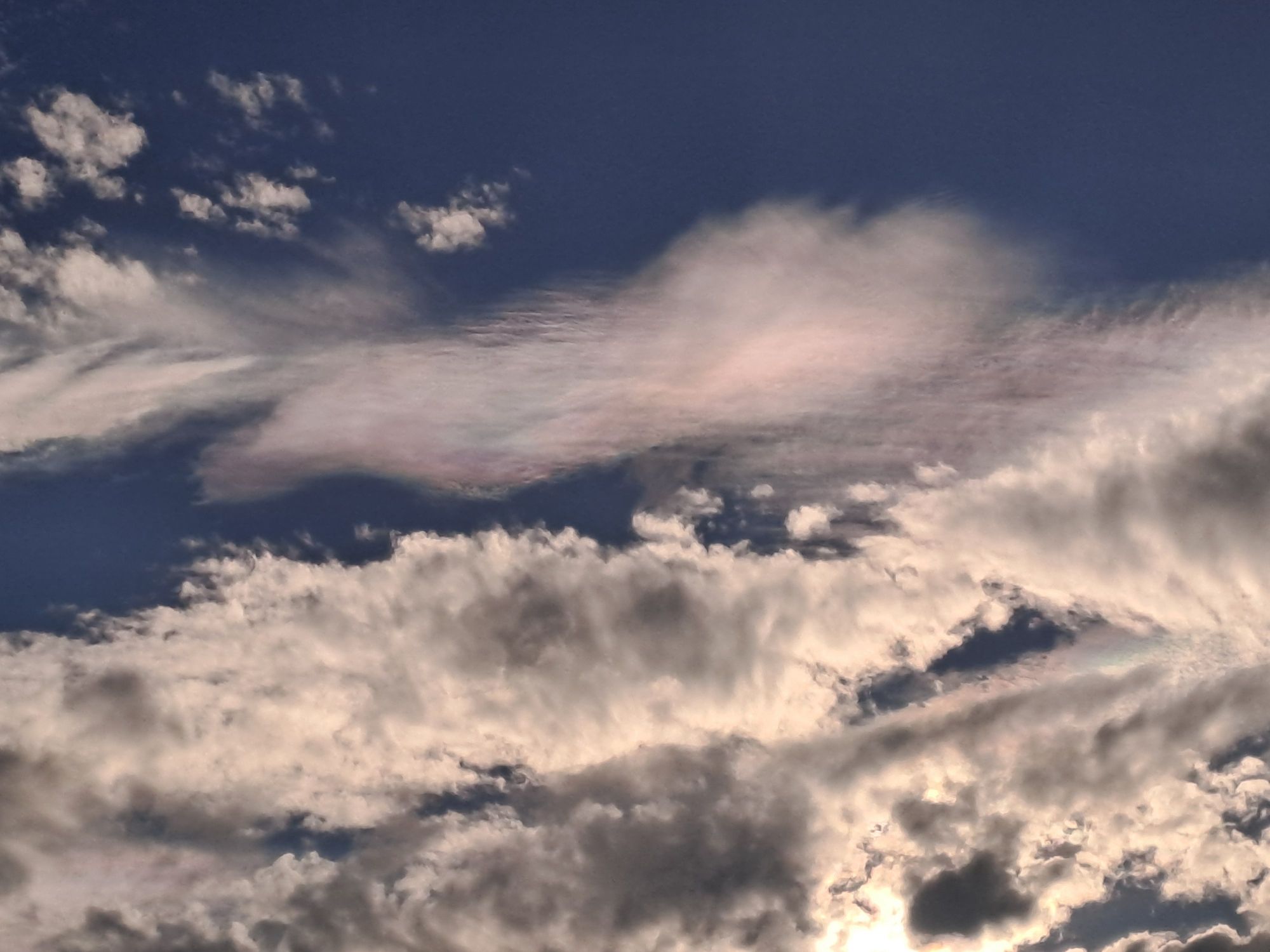
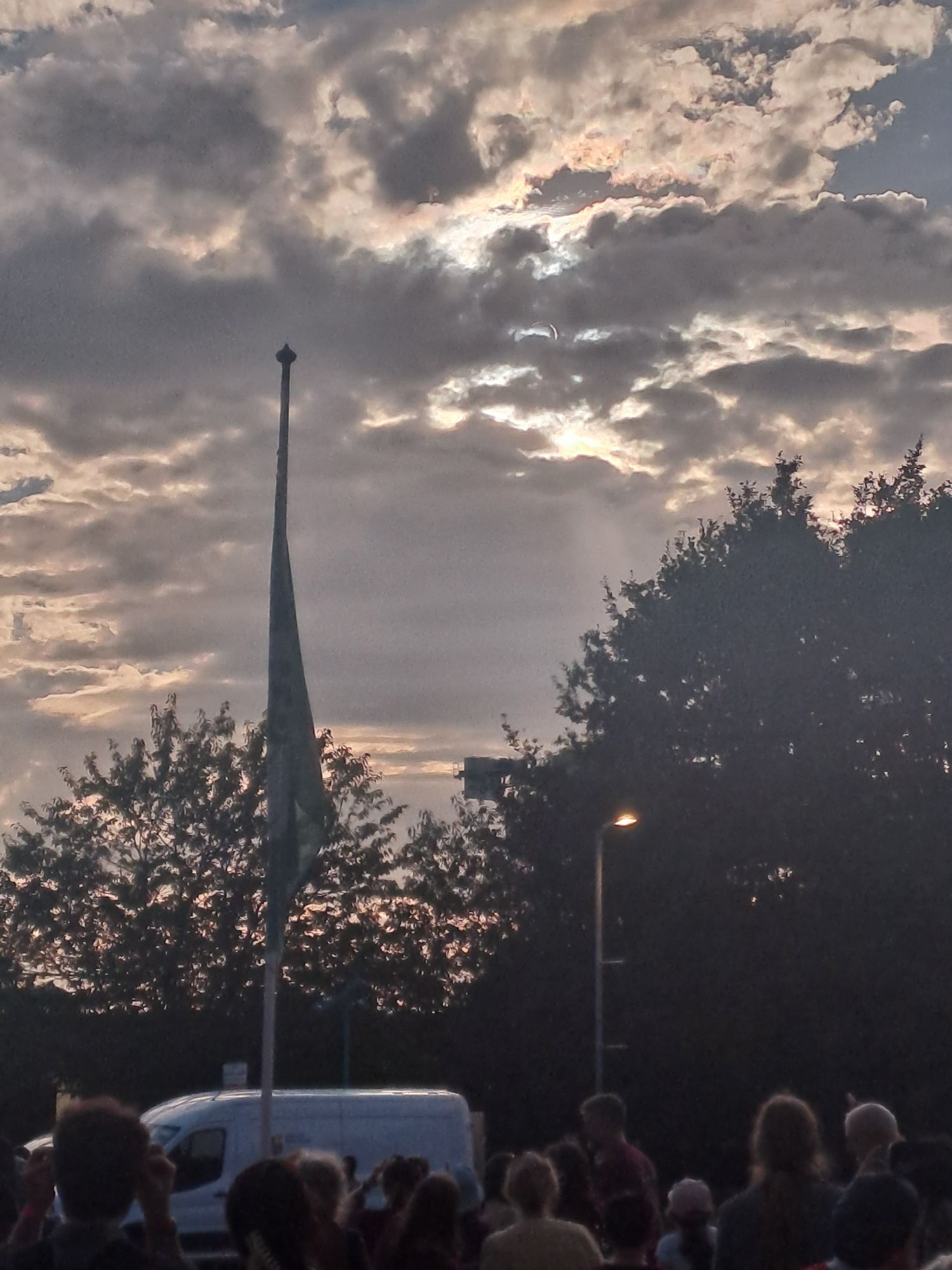
Today been a very busy but hugely enjoyable day. We had a big turnout for the Eclipse Event at Maynooth University – I don’t have attendance figures right now, but will update when I do – and good weather in the build-up to the eclipse. Unforunately just as maximum coverage approached, clouds intervened. That was a little disappointing but there were some lovely colour effects that made up for it and it did also get eerily dark…
I heard only nice things about the event from people who attended. Here are some random snaps taken throughout the day:
The combination of heat and exertion meant that I couldn’t resist going for a pint or three afterwards so I think I’ll leave it there, except to congratulate Emma Whelan, whose brainwave today was, plus all the lecturers, technicians and students who made it possible, as well as all the members of the public who participated. It was great to see so many people of all ages release their inner nerd.
As I mentioned last week, the Department of Physics at Maynooth University will be hosting an Eclipse Event, this week on Wednesday August 12th. This sold out very quickly so we expect a good turnout. In the last few days we have been featured prominently in articles in the Irish Times and The Journal and on the RTÉ website. Although it is officially full, there may be a few returns, so it is worth checking on the day to see if we can fit you in.
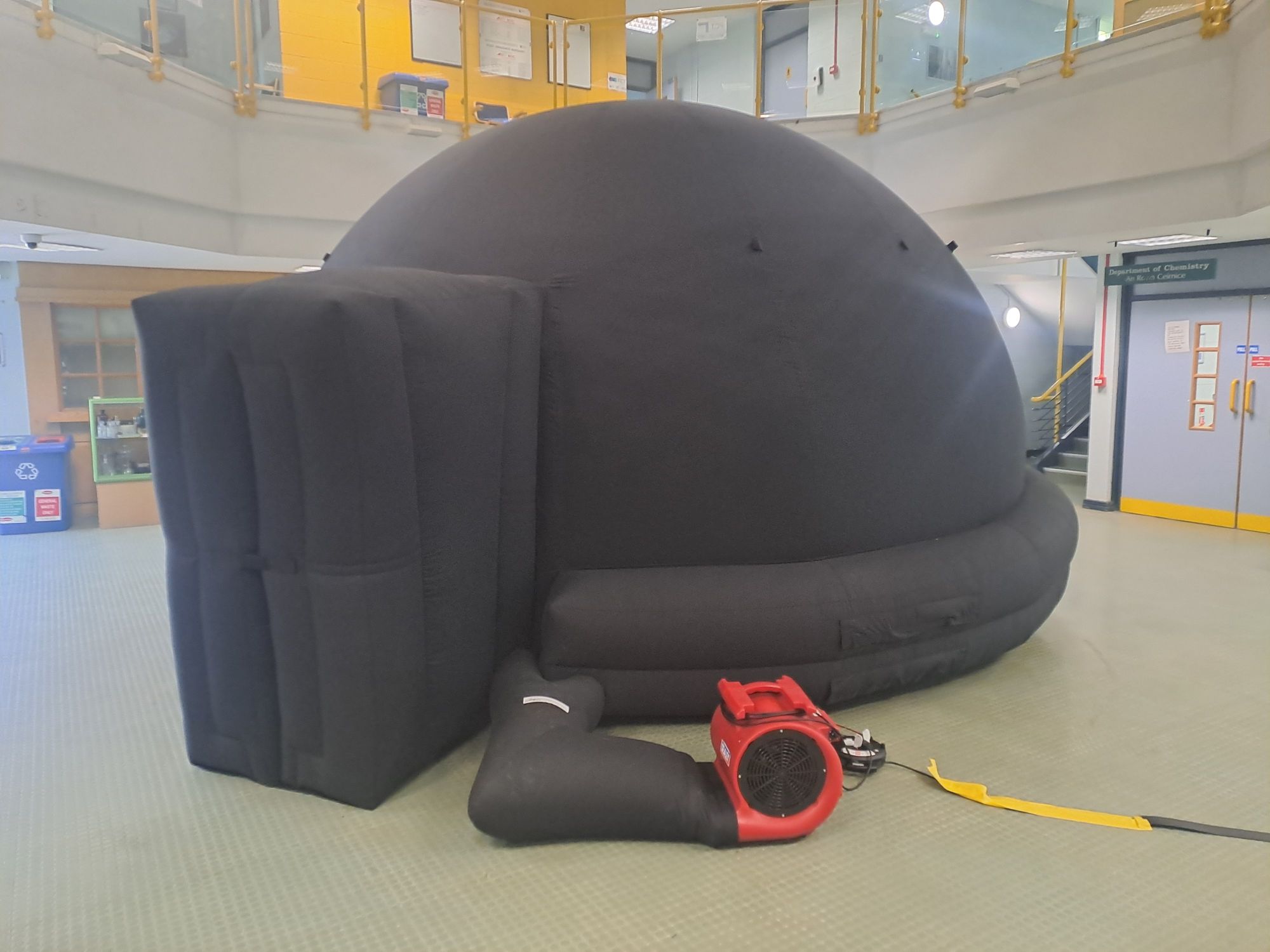
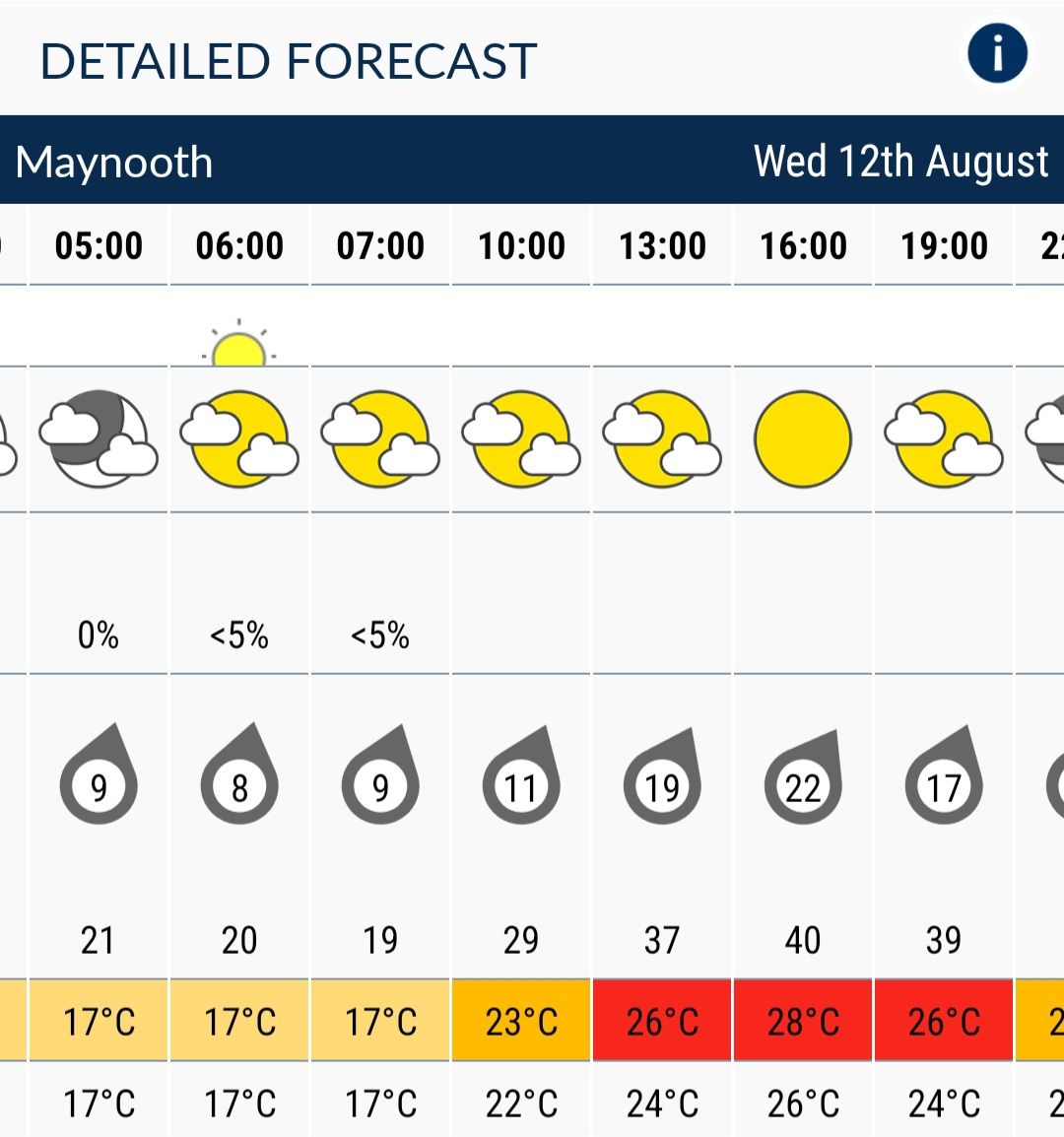
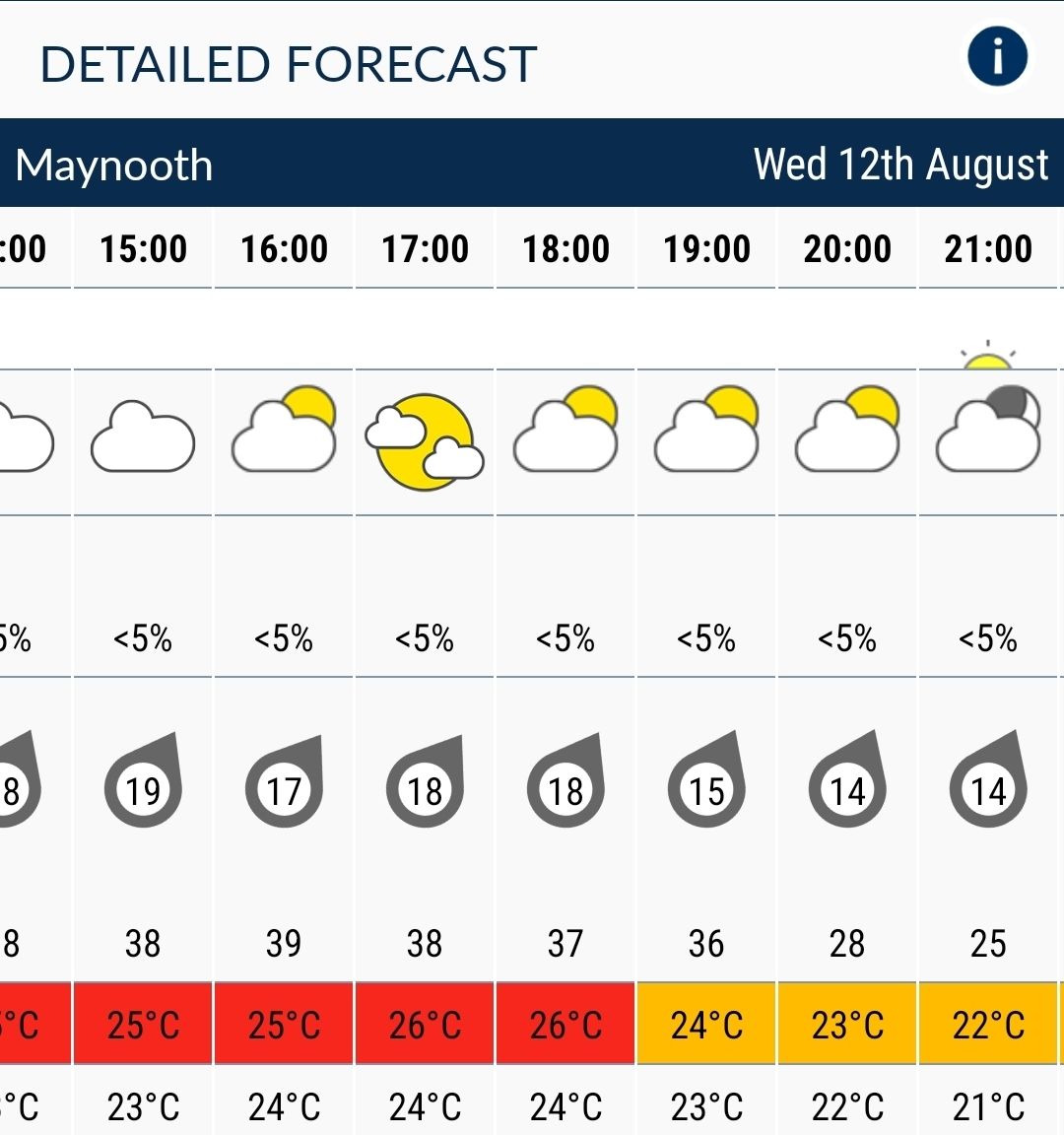
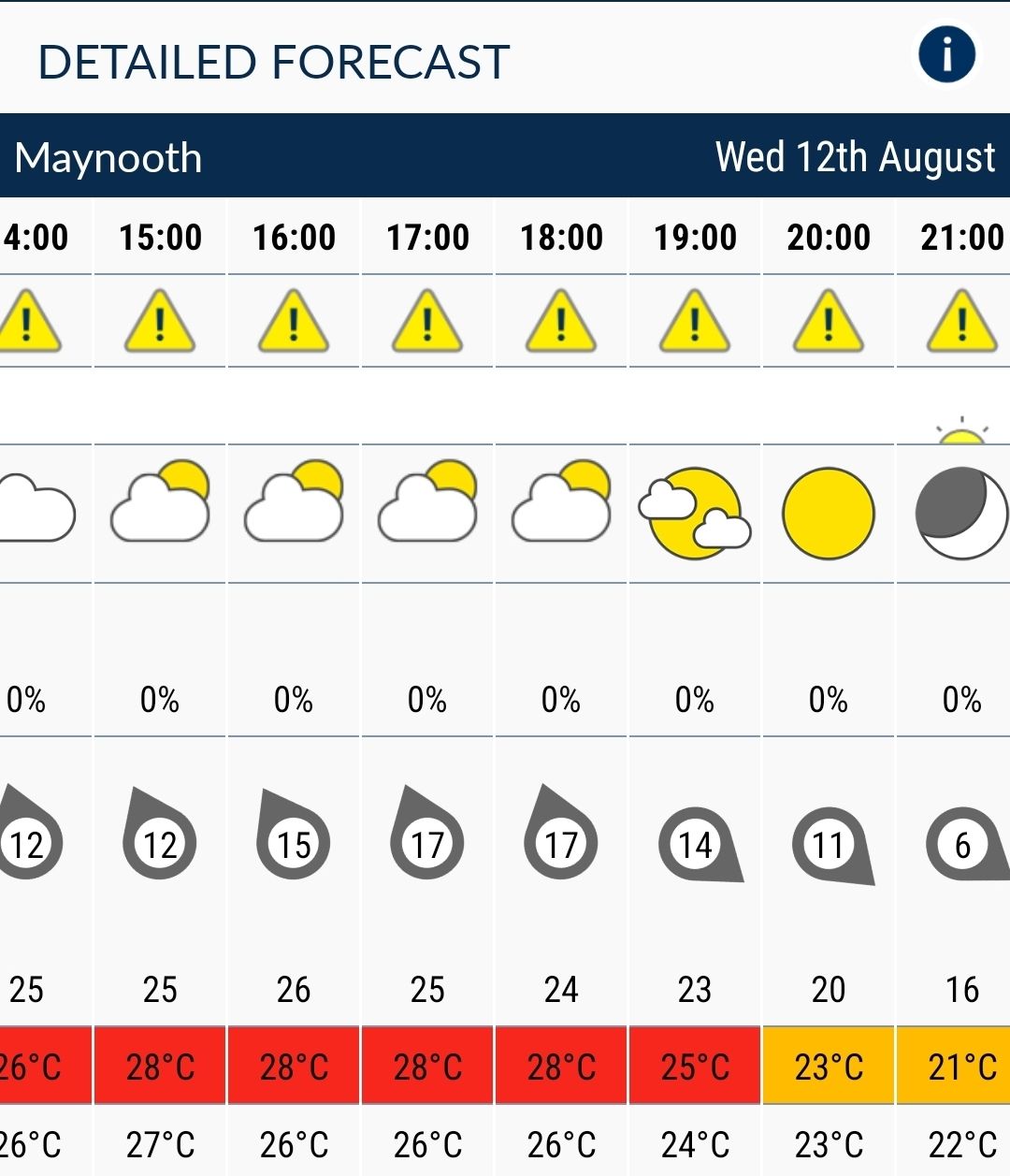
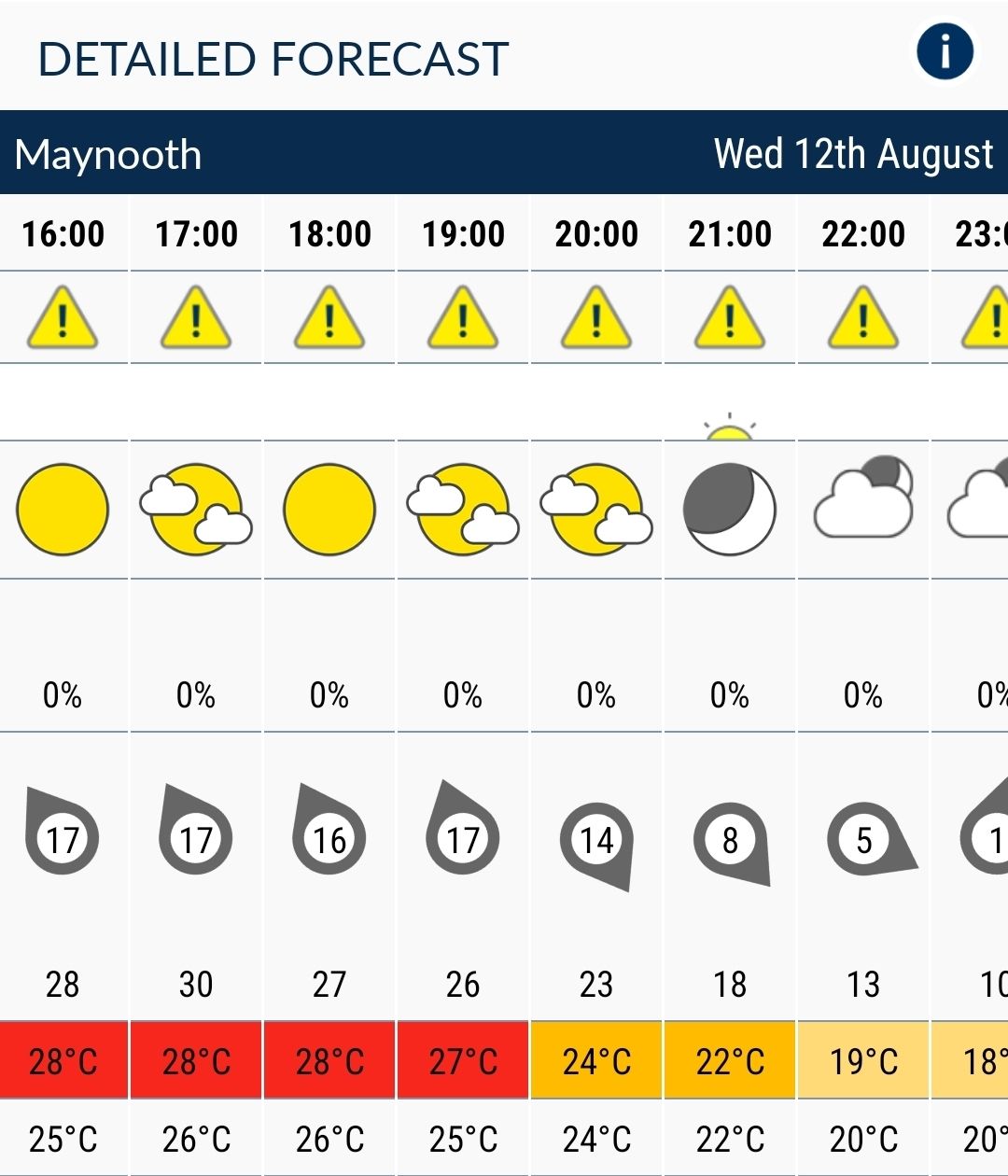
The viewing of the eclipse will of course depend on the weather, but we have talks lined up indoors and a pop-up planetarium so I hope people will turn up even if the weather isn’t great. I’ve been checking the forecast on the Met Éireann app quite regularly. As of last week it wasn’t very good, with cloud and rain likely but since then it has improved. In the light of my recent post that one can’t really trust Irish weather forecasts more than three days in advance, I thought it would be fun to track the forecast until the big event to see how stable it is.
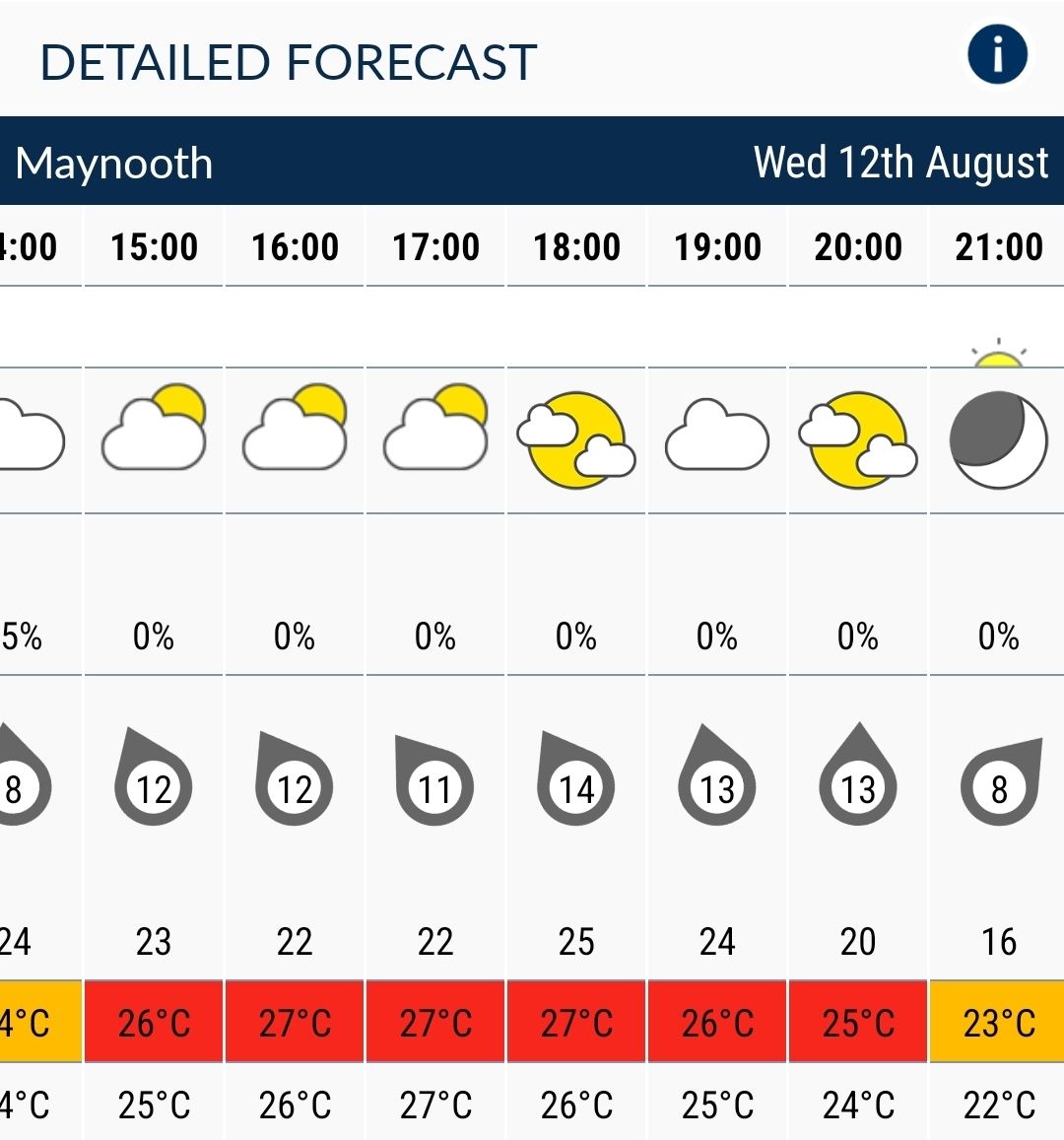
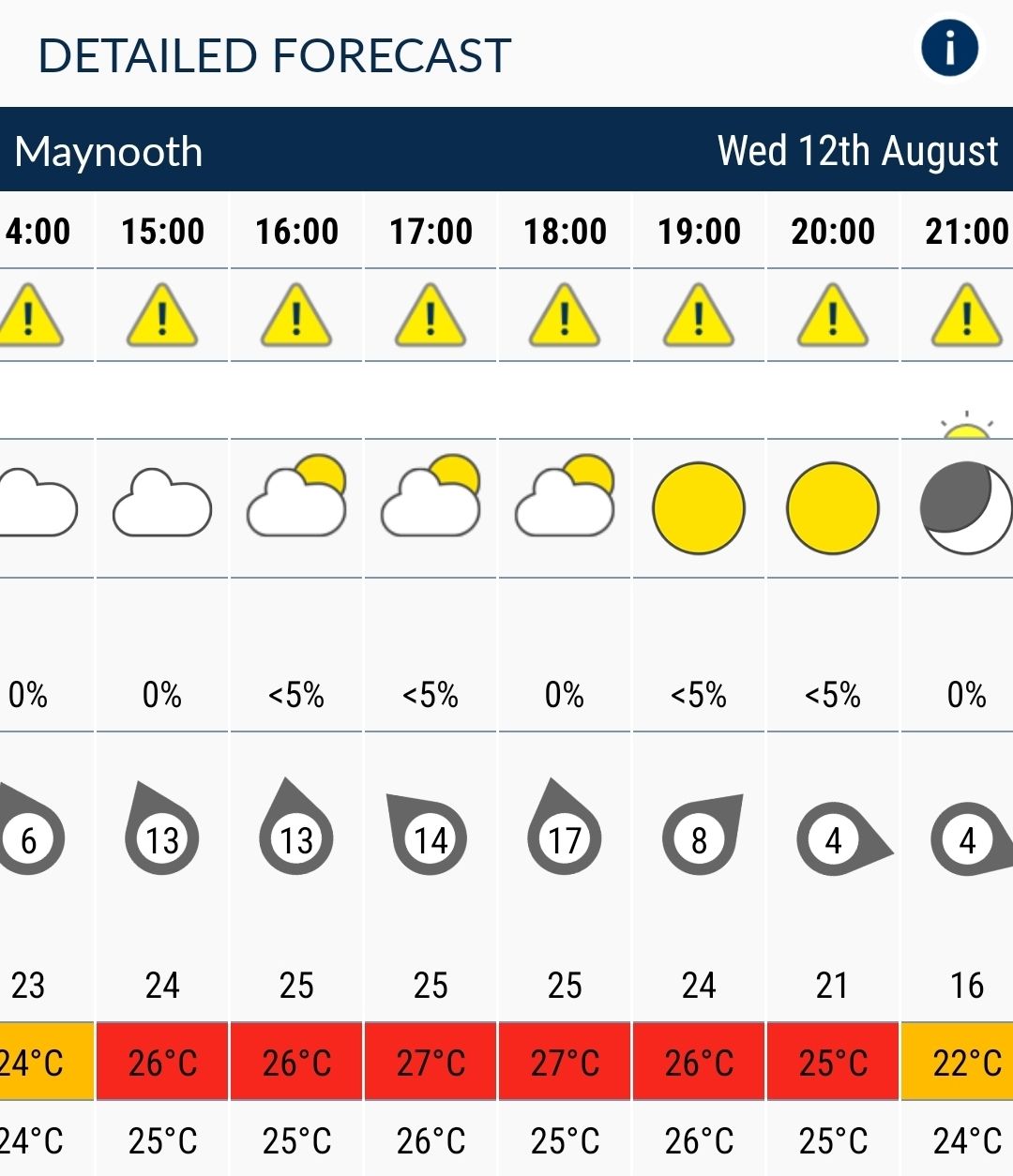
Here are the summaries for yesterday (Saturday, when it only gave a prediction every three hours for Wednesday), and today (Sunday, where there is an hourly forecast). The peak of the (partial) eclipse is around 7pm (19.00 hours) in Maynooth.
As you can see, the Sunday forecast predicts the temperature on Wednesday to be rather high, with little chance of rain, though with more cloud than the Saturday forecast. I’ll update on Monday, Tuesday and Wednesday to see how it progresses…
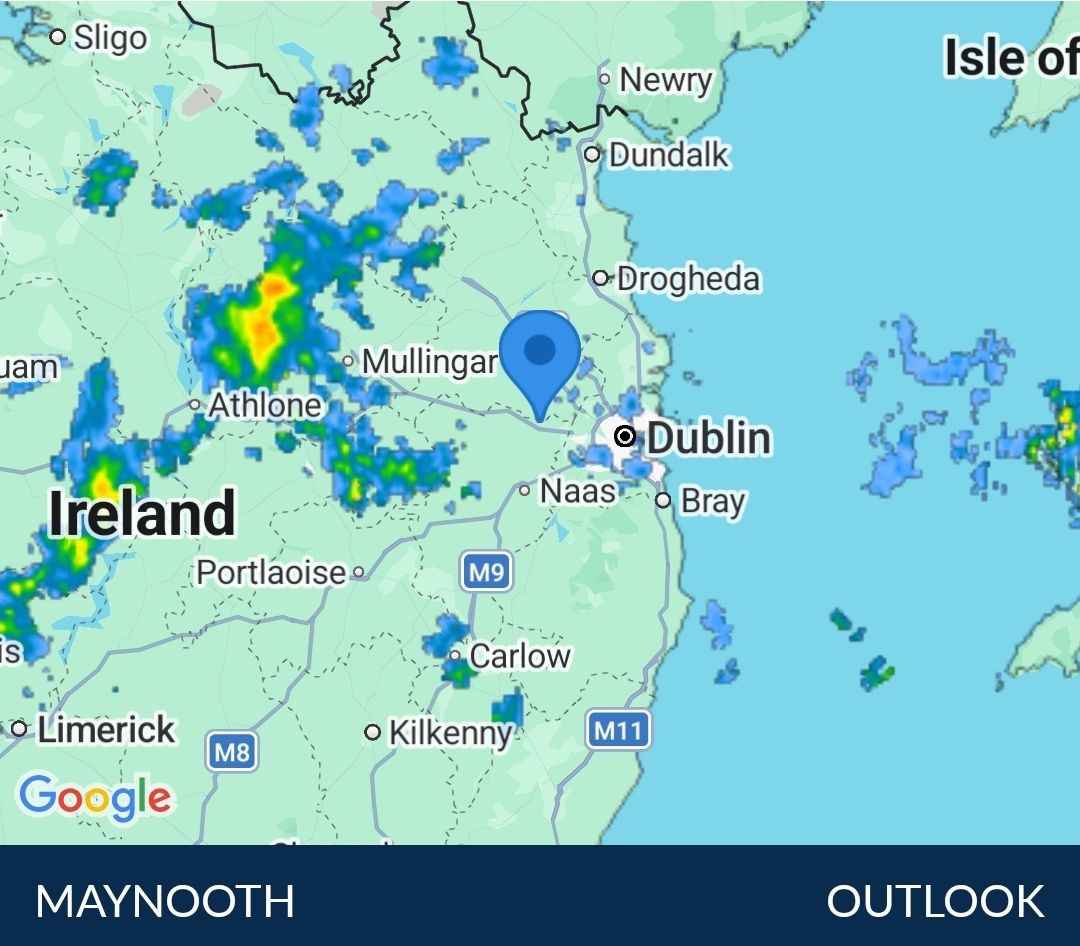
Update: Wednesday 12th, 7.30am. As you can see from the above the forecast for the eclipse is quite good. There is quite a lot of rain out to the west, but it is tracking noreth-eastwards and most of it is forecast to miss Maynooth.
The rainfall situation at 7.30am, Wednesday 12th August
P.S. In the Irish language, “eclipse” can be either urú or éiclips. The former is interesting as it is also the name for a form of initial mutation that occurs certain grammatical situations in Irish, the change at the beginning of a word, where a new letter is placed in front of the original consonant, so that the new letter’s sound replaces (or “eclipses”) the old one.
The repeat examination period at Maynooth University has begun. In fact the first papers were sat yesterday (5th August); the period goes on for ten days or so, I will have four different papers to grade, though I’m expecting only one candidate each for three of them. My first is tomorrow (Friday 7th August).
A couple of years ago, Maynooth University produced this nice good luck message for those resitting so I’ll repeat it here:
Every year at this time I mention the difference between the system of repeats in Maynooth compared to other institutions with which I am familiar, especially in the UK. Elsewhere, students generally take resits when, because they have failed one or more examinations the previous May, they have not accumulated sufficient credits to proceed to the next year of their course. Passing the resit allows them to retrieve lost credit, but their mark is generally capped at a bare pass (usually 40%). That means the student gets the credit they need for their degree but their average (which determines whether they get 1st, 2nd or 3rd class Honours) is affected. This is the case unless a student has extenuating circumstances affecting the earlier examination, such as bad health or family emergency, in which case they take the resit as a `sit’, i.e. for the first time with an uncapped mark.
Here in Maynooth, however, the mark obtained in a repeat examination is usually not capped. Indeed, some students – though not many – elect to take the repeat examination even if they passed earlier in the summer, in order to increase their average mark.
Some people don’t like the idea of uncapped repeats because they feel that it would lead to many students playing games, i.e. deliberately not taking exams in May with the intention of spreading some of their examination load into August. For this reason the Institute of Physics has decided to impose capped resits as part of its accreditation requirements. Some people here seem to think IOP accreditation is worth having so we’re being pushed into that requirement. I find it heavy-handed and unhelpful. I also think it imposes a dreary uniformity on physics courses in the UK. In any case, IOP accreditation is unimportant unless you want to do postgraduate study in physics in the UK (and often not even then). It doesn’t matter at all anywhere else.
If you think students have an unfair advantage if they don’t take a full diet of examinations in May, then the logical conclusion is that part-time students have an unfair advantage as do students taking micro-credentials consisting of just one or two modules. It’s the essence of the modular system that each module result should be considered on its own merit, not in relation to other modules a student may or may not have taken at the same time. One can of course argue whether the modular system is good or not, but if you have it then you should act consistently in accordance with it. You wouldn’t penalize students who have to work to support their study relative to those who don’t, would you?
And there’s no real evidence of students in Maynooth actually playing the system in the way the IOP thinks they do anyway. For one thing, the results from the repeat examination period are not confirmed until early September so that students that deploy this strategy do not know whether they are going to be able to resume their course until just a couple of weeks before term. That could cause lots of problems securing accommodation, etc, so it doesn’t seem to me to be a good ploy. Finalists adopting this strategy will not be able to graduate with the rest of their cohort and may miss several months of potential employment. I think most of our students are smart enough to realize that it’s a risky strategy.
Anyway, I’d welcome comments for or against whether resits/repeats should be capped/uncapped and on what practice is adopted in your institution.
The views presented here are personal and not necessarily those of my employer (or anyone else for that matter).
Feel free to comment on any of the posts on this blog but comments may be moderated; anonymous comments and any considered by me to be vexatious and/or abusive and/or defamatory will not be accepted. I do not necessarily endorse, support, sanction, encourage, verify or agree with the opinions or statements of any information or other content in the comments on this site and do not in any way guarantee their accuracy or reliability.