Archive for Maynooth University

Prophet Song by Paul Lynch

Posted in Literature, Maynooth with tags , , , on January 23, 2024 by telescoper

My ongoing quest to keep up with the literature brings me to the winner of the 2023 Booker Prize, Prophet Song by Paul Lynch. Before writing a few comments on this extraordinary work I should mention the Maynooth connection: the book was written during the writer’s tenure as Writer-in-Residence at Maynooth University which involves teaching creativity and novel-writing, on the MA in Creative Writing, which is now in its second year.

So to the book, which is a grimly compelling novel set in an alternative Ireland after a far-right takeover revolving around Eilish Stack and her family. Her husband, Larry, a trade unionist, is detained by the state police and her efforts to find him get tangled up in the disintegration of society into civil war during which she tries desperately to keep herself and her family together as anarchy descends. We learn little of what goes on in the wider world, except what Eilish herself sees and rumours she picks up from others, but eventually, her home engulfed by the fighting, she is forced to attempt to flee with what remains of her family and cruelly exploited by human traffickers.

I won’t give away any details, but the story is bleak and at times is truly harrowing. I had to stop reading at one point – when Eilish visits a military hospital in the penultimate chapter, for those of you who have read it.

I have to admit that it took me a while to get the hang of Lynch’s writing style, with no conventional division into paragraphs and minimal punctuation. For example, speech is not included in quotation marks but embedded into the often very long sentences that blur the distinction between Eilish’s inner thoughts and the outer reality. Once I got used to it, however, I found it gripping despite the relentless horror of Eilish’s situation: Lynch conjures up an atmosphere of dread and hopelessness as effectively as George Orwell does in Nineteen Eighty-Four, with which this book has been rightly compared, but the prose also seems to me to be heavily influenced by James Joyce.

This is not an easy read, but is an important novel that should be read. I don’t think it will be long before it is on the syllabus for Leaving Certificate English.

I’ll just make further comment. Many of the reviews I have read of this book describe it as an “alternative future” and a warning about the rise of the fascism, but that’s only a part of the story. To me, it’s not really an alternative future, but an alternative present. The point is all the horrors described in this book – the murders, the abductions, the torture, the indiscriminate slaughter of innocent civilians, the people trafficking are actually happening right now elsewhere in the world, but those of us living in safer places can view them from a safe distance or, more likely, just ignore them. The novel’s power is that it makes such things happen on the familiar streets of Dublin, making the unthinkable an alternative reality.

You have to wait until near the very end of the book for Paul Lynch to explain the title, which he says far more eloquently, essentially what I said in the preceding paragraph.

…and the prophet sings not of the end of the world but of what has been done and what will be done and what is being done to some but not others, that the world is always ending over and over again in one place but not another and that the end of the world is always a local event, it comes to your country and visits your town and knocks on the door of your house and becomes to others but some distant warning, a brief report on the news, an echo of events that has passed into folklore…

Paul Lynch, Prophet Song

The tale ends with a crowd of refugees – Eilish and her young children among them – getting into small boats to attempt to reach safety across the sea. Frail as it is, that’s their only hope of survival and a better life…
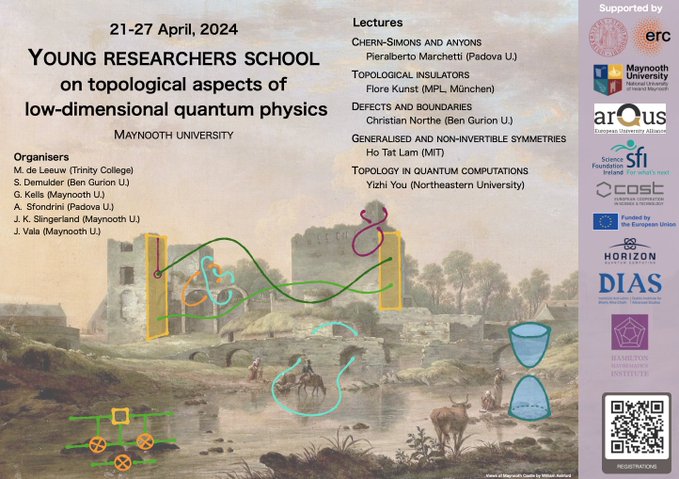
Spring School on Topological Aspects of Low-dimensional Quantum Physics at Maynooth!

Posted in Maynooth, The Universe and Stuff with tags , , on January 23, 2024 by telescoper

I’ve been asked by colleagues not in Barcelona to use the medium of this blog to advertise the fact that Maynooth University is hosting an exciting spring school for Early Career Researchers this April:

Registration is now open!

For further information and to register see here. Please forward to anyone who might be interested!

Astrophysics & Cosmology Masterclass at Maynooth

Posted in Maynooth, The Universe and Stuff with tags , , , on November 13, 2023 by telescoper

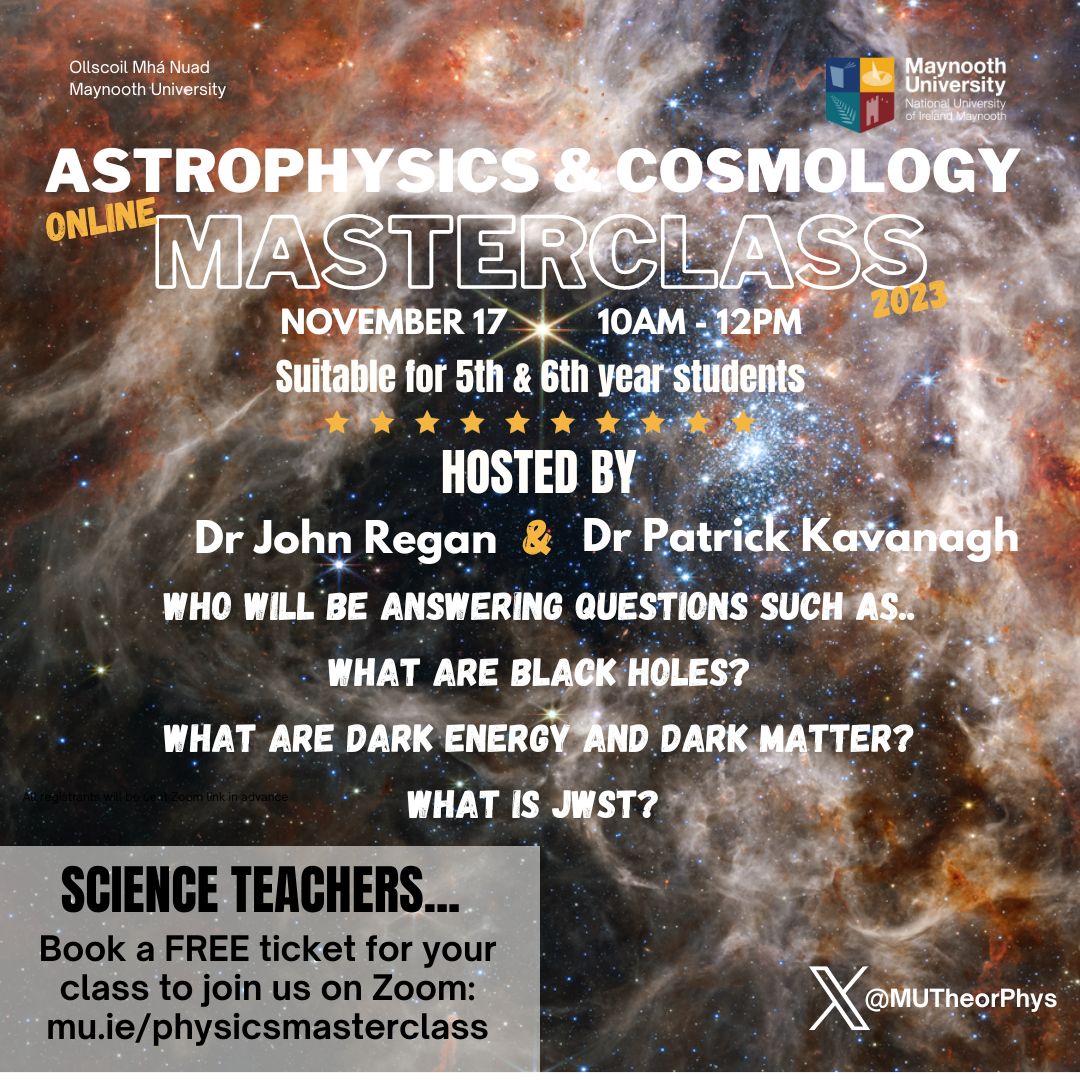
Both my regular readers may remember that for the last couple of years at this time of year there has been an Astrophysics & Cosmology Masterclass at Maynooth; see here and here for the previous incarnations. Not being in Maynooth I almost forgot about this year’s Masterclass, which has a different line-up with Dr Paddy Kavanagh adding some observational content alongside Dr John Regan.

This event is online only from 10am to 12pm on Friday 17th November 2023 and you can find out more details and register here.

Another Country

Posted in Barcelona, Biographical, Maynooth with tags , , on October 25, 2023 by telescoper

It was only when I looked at my calendar this morning, and saw the reminder that my rent is due shortly, that I realized that I have now been in Barcelona for a whole month (plus one day). Lacking the usual cycle of lectures and other teaching sessions, I’ve still had regular telecons and other virtual discussions through which to reckon the passage of time, but these are different. When I’m teaching I always number my lectures consecutively so it’s easy for me to look at my notes and see that we’re, say, approaching half-term. That gives me a sense of progress which I must admit I don’t feel with scheduled telecons, which seem more cyclic – i.e. going around in circles most of the time.

Other than that, I’ve settled in here better than I expected. I’ve even managed to memorize the codes needed to get into my flat – no mean feat given my fading powers of recollection. Progress on the research has been a bit slower than expected, but I hope to finish the paper I’m working on by the weekend.

Next week is Study Week in Maynooth, including a public holiday on Monday 30th October to mark Samhain. Wednesday November 1st is a (national) public holiday in Spain too, Tots Sants (“All Saints” in Catalan). That would be the third public holiday since I arrived in Barcelona, but I won’t be here for it, as I have to make a flying visit to another country to give a talk, and do a few other things.

This reminds me that I should send an update on the affair of Maynooth University’s Governing Authority. As you may recall, the Powers That Be initially decided to scrap elections to the Governing Authority of the University in favour of selection. There was a protest at this authoritarian plan and a petition was raised. After initially proposing a mixture of election and selection, The Management finally backtracked and agreed to elections for all five internal representatives. Although the elections happened after I moved to Barcelona, they were held online so I was able to vote. The process is now complete, and I send congratulations to the five duly elected representatives!

One thing I hope the new members of Governing Authority will do concerns the outcomes of Maynooth University’s “Staff Climate and Culture Survey” which was carried out in 2022 with the promise made to participants that results would be published in early 2023. No such results have ever communicated to staff (or anyone else that I am aware of) and all mention of this survey has been wiped off the University’s web pages. Perhaps the new members of GA can push for the long overdue publication of this information?

Spanish Practices

Posted in Barcelona, Education, History, Maynooth with tags , , , , , on October 20, 2023 by telescoper

When I was a lad, during the 1970s, the term Spanish Practices was used pejoratively in a union-bashing sense to describe restrictive practices in the workplace. Until recently I thought it was a modern invention that relied on a stereotypical view of Spanish people as being lazy. In fact it seems the term dates back to Tudor times and is religious in origin, referring to Roman Catholic rites, in contrast to the simpler Protestant forms of worship. Anyway, none of that is what this post is about. I just used the title as clickbait.

I’ve been here in Barcelona, and working in the University of Barcelona, for four weeks now and I thought I’d share a few observations about differences in practice here and in the Ireland (and the UK).

The other night I went out for dinner with colleagues from the Department. The restaurant was much closer to the University than to my flat so instead of going home first I stayed in my office and walked straight there. My route out of the building takes me past a number of teaching rooms. During this warm weather, most of the rooms have the doors open so it’s easy to have a quick look at what’s going on inside. On my way out at about 7.30pm I was surprised to see a number of classes still going on, and they weren’t sparsely attended either.

In Maynooth the latest regular lectures finish at 6pm. Even during the 5pm to 6pm lectures, many students have to leave before the end to catch the one and only bus back to their place of residence. Here the public transport system is so good that isn’t really an issue even for those who don’t live near the campus. As far as I know lectures start at 9am, so students potentially have a very long day. They work hard.

I have to say that I wouldn’t like to have teach late in the evening. I used to do that on Fridays at Queen Mary for the MSc course and didn’t enjoy it. I don’t mind doing 9am lectures, though, but I don’t think students agree – partly because of the difficulty of getting to campus at that time.

In the Faculty of Physics, all the lecture halls, classrooms and laboratories are in one building rather than spread around the campus like they are in Maynooth (and many places in the UK). Fortunately, the building has been designed with students in mind and there is plenty of space for students to use socially or for private study between teaching sessions.

In this picture you can see the inner courtyard of the building occupied by the Faculties of Chemistry and Physics. It’s a big open space, with teaching rooms, etc, on either side. In the far right-hand corner there is a café/bar where one can buy lunch, a coffee, or even a beer, to be consumed either inside or in the seating area in the courtyard. Many students seem to prefer bring their own lunch and eat it in this space., although the food available is pretty good and cheap compared to back home.

As well as being able to eat and drink here, there is plenty of room for students simply to hang out or to study, either alone or in groups. If they don’t feel like that they can use the tram, bus or Metro to go home, and come back later if they have a long gap between classes. None of this is possible at Maynooth.

This particular kind of open space would not work so well in Ireland or the UK because of the weather, though you can probably see in the picture that there had been a bit of rain before I took the photograph, but I hope I’ve made the point that having social spaces makes a huge amount of difference to the student experience, not least because it feels that the University has thought about them. In the neoliberal system that dominates in the UK and Ireland, students are simply a commodity, a source of revenue, to be crammed into every available space and processed as cheaply as possible. In Maynooth students have been, and are being, forced to pay an extra levy for a notional student centre that will probably never be built.

The contrast is very disheartening.

Getting back to educational matters, another thing I’ve noticed walking past classrooms is that it’s not unusual to see a student standing at the blackboard in front of the class going through a problem. I’ve seen that a number of times with quite large classes. Sometimes we ask students to do that sort of thing in tutorials, but I’ve never done so in a full lecture. I think our students would be shocked if we asked, but it’s clearly not unexpected here. That’s a Spanish Practice I’d be quite happy to try.

Exploring the Cosmos at Maynooth

Posted in Maynooth, The Universe and Stuff with tags , , on October 4, 2023 by telescoper

Being away on sabbatical I almost forgot to post a reminder of the event I blogged about a few weeks ago at Maynooth University entitled Exploring the Cosmos. I’m told this has attracted a huge amount of interest, but the room for the event is very large and there may well be some space left.

Best wishes to everyone taking part and I hope it goes well!

On the 5th of October, at 6.30pm, in the TSI Building Maynooth University will host an all-ages event to explore the vastness of space. Using stunning visualisations Maynooth University Astrophysicists will examine star and planet formation, peer back in time with our physicists trying to image the very edges of our visible universe, and take a journey into the unknown as we trace the origin and evolution of black holes.

Programme:

18.30 Welcome

18.35: John Regan: “Black Holes in Our Universe”

Black Holes are among the most exotic objects in our Universe. In this talk John will discuss the basics of black hole formation, how we can detect them today and the future of black hole hunting using gravitational wave observatories that Maynooth University is a part of. John will also discuss some of the strange effects you might encounter near a black hole – like time slowing down!

18.55: Aoibhinn Gallagher: “The Dark Universe”

There is so much in our universe which is unknown to us, most of it in fact. What is dark matter, what is dark energy? We will go on a journey during this talk through the history of our universe and the history of cosmology (the study of the universe) itself to try and arrive at answers to these questions. Also I will talk about the real life science happening at Maynooth university on these very topics.

19.15: Tea & Coffee Break

19.45: Neil Trappe: “Seeing the Invisible Universe – Terahertz Astronomy”

When you look outside at the clear night sky you will see many thousands of stars overheard. The Moon, stars, planets, comets and galaxies can all be observed if you know where to look just using your eyes, binoculars or a telescope.

Astronomers spend many hours looking at the night sky with large automated telescopes from many exotic places around the world to add to our knowledge of the Universe and understand difficult questions like how did the Sun and our Solar System form, how are stars born and how do they die, is there life elsewhere in the Universe, and indeed how did the Universe come into existence at all?

In Maynooth University a team of researchers develop telescopes to see the Universe with different kinds of light, specifically far infrared or “terahertz” light. Why do we do this – we see the Universe differently and can learn lots more information ‘seeing’ with terahertz radiation that is invisible to our eyes.

20.05: Patrick Kavanagh: “The First Year of the James Webb Space Telescope”

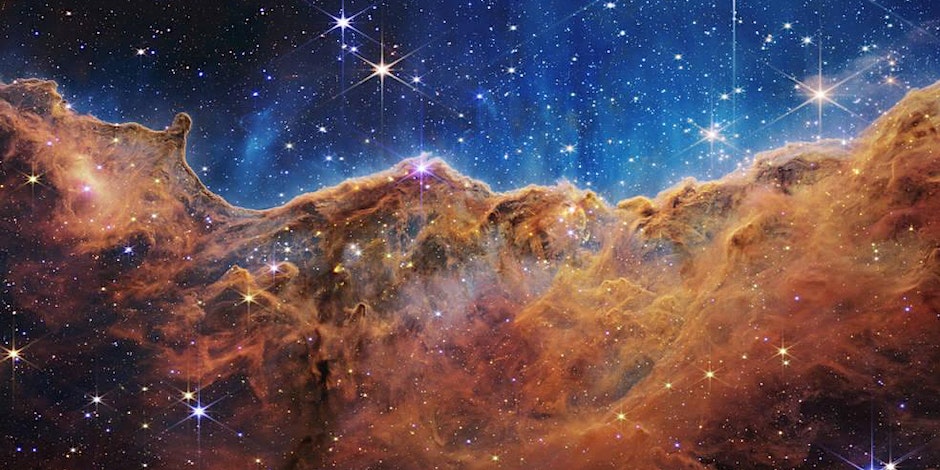
The James Webb Space Telescope has made unexpected and groundbreaking discoveries almost routine in its first year. It has produced captivating images of our own Solar System, measured the content of atmospheres around other stars, viewed the stellar birth and death in amazing detail, revealed the skeletal structure of galaxies, and peered deep in to the cosmic past in search of the first stars and galaxies. In this talk Dr. Kavanagh will give an overview of Webb and present some of the highlights of the first year of this revolutionary telescope.

20.30: Finish

It should be a fun evening. If you’re around please come along. This event is free to attend but you need to register, which you can do here. Please feel free to share this with friends and colleagues.

Exploring the Cosmos at Maynooth

Posted in Maynooth, The Universe and Stuff with tags , , on September 21, 2023 by telescoper

Regular readers of this blog – both of them – may remember that last year there was an event at Maynooth University entitled Exploring the Cosmos which was very well attended, with over 400 people showing up. That event was held during Space Week 2022 and it was such a success that it’s being repeated during this year’s Space Week.

I gave a talk at last year’s event but won’t be there this year as I’ll be away on sabbatical. Some of the other speakers are different too. The fact that the line-up has changes is good because it means that people who came last year will get a different set of presentations.

On the 5th of October, at 6.30pm, in the TSI Building Maynooth University will host an all-ages event to explore the vastness of space. Using stunning visualisations Maynooth University Astrophysicists will examine star and planet formation, peer back in time with our physicists trying to image the very edges of our visible universe, and take a journey into the unknown as we trace the origin and evolution of black holes.

Programme:

18.30 Welcome

18.35: John Regan: “Black Holes in Our Universe”

Black Holes are among the most exotic objects in our Universe. In this talk John will discuss the basics of black hole formation, how we can detect them today and the future of black hole hunting using gravitational wave observatories that Maynooth University is a part of. John will also discuss some of the strange effects you might encounter near a black hole – like time slowing down!

18.55: Aoibhinn Gallagher: “The Dark Universe”

There is so much in our universe which is unknown to us, most of it in fact. What is dark matter, what is dark energy? We will go on a journey during this talk through the history of our universe and the history of cosmology (the study of the universe) itself to try and arrive at answers to these questions. Also I will talk about the real life science happening at Maynooth university on these very topics.

19.15: Tea & Coffee Break

19.45: Neil Trappe: “Seeing the Invisible Universe – Terahertz Astronomy”

When you look outside at the clear night sky you will see many thousands of stars overheard. The Moon, stars, planets, comets and galaxies can all be observed if you know where to look just using your eyes, binoculars or a telescope.

Astronomers spend many hours looking at the night sky with large automated telescopes from many exotic places around the world to add to our knowledge of the Universe and understand difficult questions like how did the Sun and our Solar System form, how are stars born and how do they die, is there life elsewhere in the Universe, and indeed how did the Universe come into existence at all?

In Maynooth University a team of researchers develop telescopes to see the Universe with different kinds of light, specifically far infrared or “terahertz” light. Why do we do this – we see the Universe differently and can learn lots more information ‘seeing’ with terahertz radiation that is invisible to our eyes.

20.05: Patrick Kavanagh: “The First Year of the James Webb Space Telescope”

The James Webb Space Telescope has made unexpected and groundbreaking discoveries almost routine in its first year. It has produced captivating images of our own Solar System, measured the content of atmospheres around other stars, viewed the stellar birth and death in amazing detail, revealed the skeletal structure of galaxies, and peered deep in to the cosmic past in search of the first stars and galaxies. In this talk Dr. Kavanagh will give an overview of Webb and present some of the highlights of the first year of this revolutionary telescope.

20.30: Finish

It should be a fun evening. If you’re around please come along. This event is free to attend but you need to register, which you can do here. Please feel free to share this with friends and colleagues.

The Universe from Einstein to Euclid

Posted in Biographical, Talks and Reviews with tags , , on September 7, 2023 by telescoper

As we head into the Day 2 of the ITP2023 I thought I’d share the slides I used for the public talk I gave last night. We had an audience of around a hundred which wasn’t bad given that it is graduation week and the undergraduates aren’t back!

Here is the abstract used to advertise the talk:

Euclid is the name of a new scientific mission from the European Space Agency, launched on July 1st, designed to explore the composition and evolution of the Universe. The Euclid mission takes its name from the ancient Greek mathematician regarded by many as the Father of geometry. Until the last century, Euclid’s theorems were assumed not just to be mathematical notions, but to describe the geometrical structure of the physical Universe. Einstein’s general theory of relativity swept that idea aside and gave us new ways of describing space, by unifying it with time, and by allowing it to be affected by matter in a manner very different from that formulated by Euclid. Over the past century, this theory has proved to be very effective at describing the properties of the Universe as observed by modern astronomical telescopes, while also suggesting the existence of dark matter and dark energy.

The Euclid telescope will create an enormous map of the large-scale structure of the Universe across space and time by observing billions of galaxies out to 10 billion light-years, across more than a third of the sky. Euclid will explore how the Universe has expanded and how galaxies and clusters of galaxies have formed over cosmic history, and how space itself is distorted by these structures.

This talk will discuss our modern ideas of space and time, how the Euclid mission will try to test whether or not they are correct and shed light on the nature of dark matter and dark energy.

And here are the slides:

Obviously I cut a number of long stories very short, which probably contributed to why I had a lot of questions from the audience at the end of the talk. I always assume that’s a basically a good sign because it shows people are interested, but it also makes me worry that I didn’t explain things very well!

We didn’t finish until past 9 o’clock and it was a very warm evening, so I was very happy to have a few pints afterwards in O’Neills…

The Centre for Astrophysics and Space Science at Maynooth (CASM)

Posted in Maynooth, The Universe and Stuff with tags , , on September 5, 2023 by telescoper

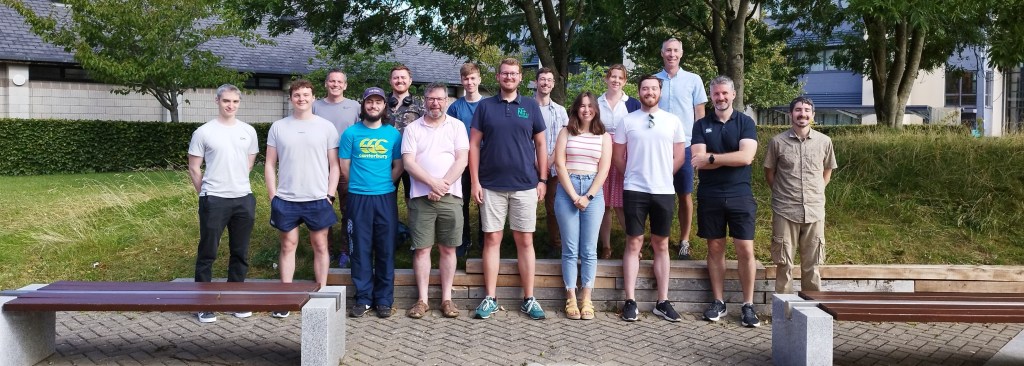
As part of effort to bring about closer interactions between members of the Departments of Theoretical Physics and Experimental Physics at MaynoothUniversity, we have formed a Centre for Astrophysics and Space Science which now has its own web pages.

The members of CASM have been meeting regularly together for coffee on Tuesdays for over a year, during which time more people have joined the Centre.

Today being a nice day we decided to make a team photograph showing staff, postgrads, and postdocs split roughly evenly between the two Departments. There’s also an undergraduate who has been working with us through the summer and helped to set up the web pages.

The People of CASM

Not everyone was able to be there this morning, but it’s lovely to see the group as big as this. I think it will be even bigger when I get back from my sabbatical next year…

The Sabbatical Starts Here…

Posted in Biographical, Maynooth with tags , on September 1, 2023 by telescoper

Today is 1st September 2023, which means that it is the first day of my year-long sabbatical. No teaching and no admin until 31st August 2024! I moved the last of my personal things out of the office yesterday and put an auto-reply on my email. I did plan to take today off to celebrate but I had some things to do relating to the Open Journal of Astrophysics so I spent the morning doing them. If the rain holds off I might do a spot of gardening later on.

A sabbatical isn’t a holiday of course, and will have plenty to do over the next year, much of it clearing a backlog of things I should have done well before now but failed because of workload issues. I make no apology for taking the first day off, however.

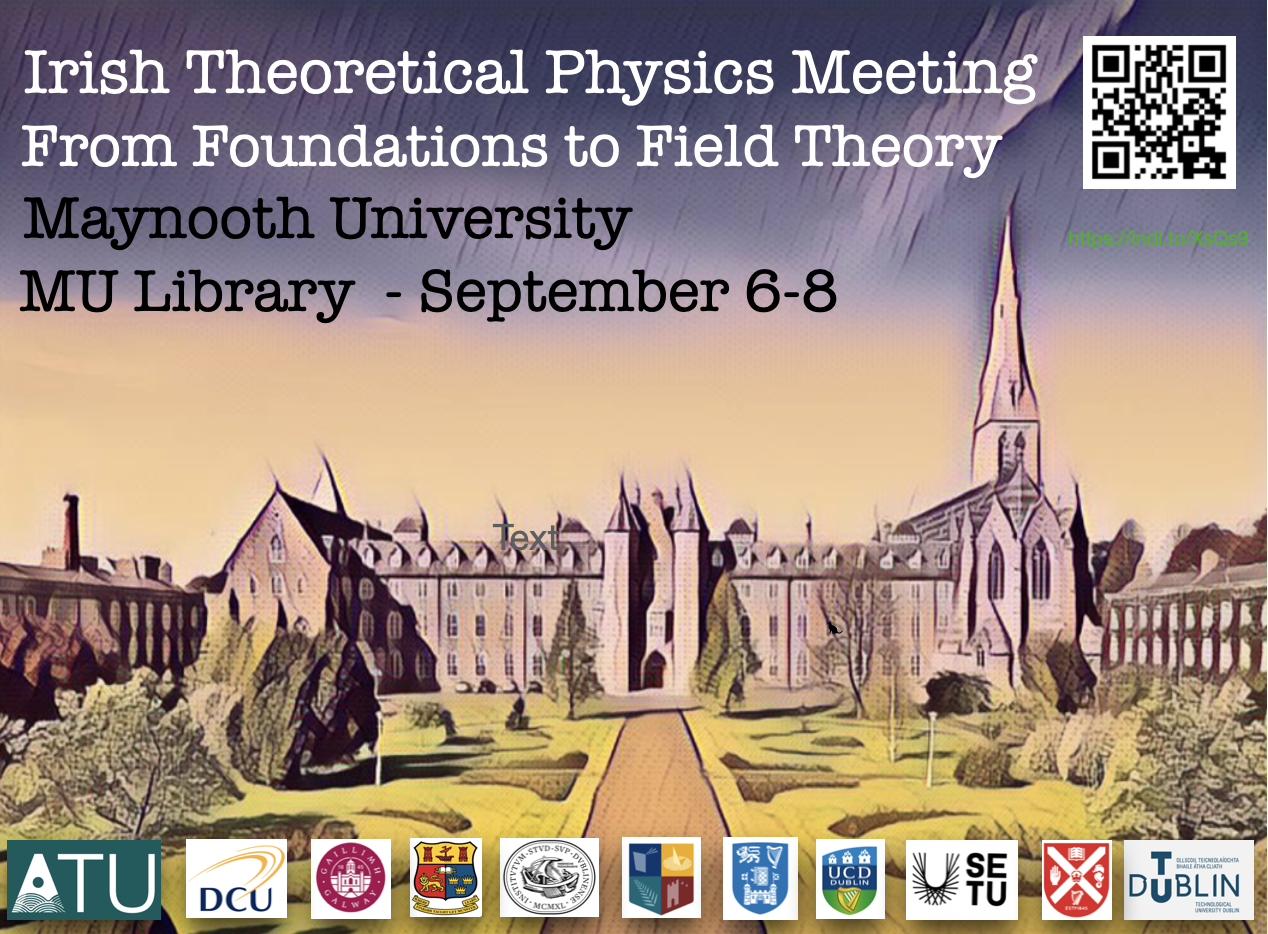
Next week will be quite busy. I will be attending a meeting in Maynooth next week and giving a public talk, which gives me the chance to post a reminder that it’s not too late to register for either/both:

Another thing I did last night was to deactivate my own personal Twitter account as well as the one for the Open Journal of Astrophysics. Twitter is both unpleasant and useless these days and I can’t be doing with it anymore. I had been on it for 14 years and had accumulated over 7,000 followers. Those that want to carry on following me on social media will find me on BlueSky or Mastodon. The same goes for those who followed the Open Journal of Astrophysics on Twitter.

Anyway, in a fortnight or so I should be heading off to distant lands. I’m greatly looking forward to getting away and being able to concentrate on things to do with research for a change. I’m looking forward to the temporary change of location, not least because a warmer climate might help with my arthritis…