Archive for the Maynooth Category

The Hitchhiker’s Guide to the Swampland Published

Posted in Maynooth, The Universe and Stuff with tags , , , , , on March 31, 2026 by telescoper

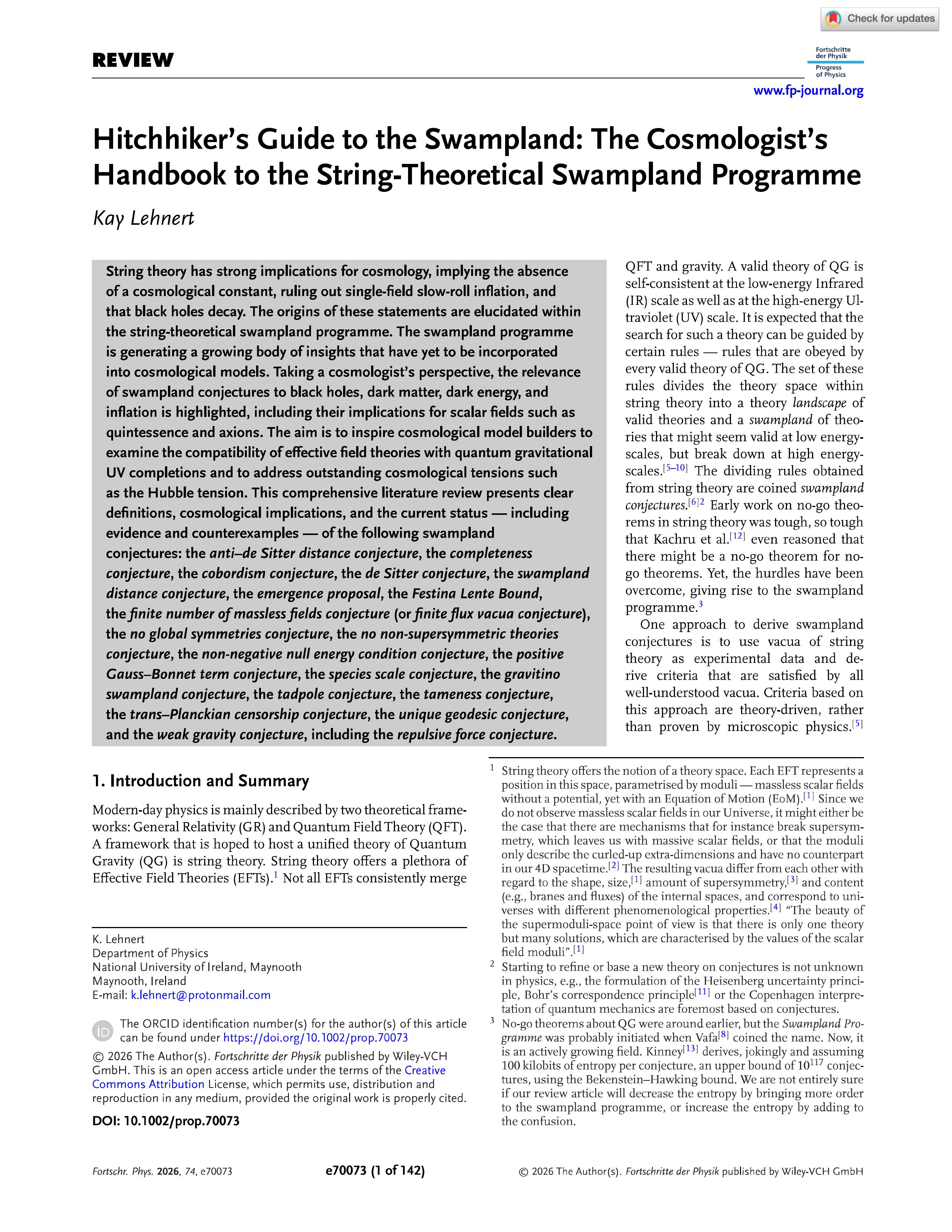
Regular readers of this blog might remember that last year I did a post about a very comprehensive review article which had appeared on arXiv with the title Hitchhiker’s Guide to the Swampland: The Cosmologist’s Handbook to the string-theoretical Swampland Programme. The article is by Kay Lehnert (who happens to be my PhD student). Well, that paper was published last Saturday (28th March 2026) in the journal Fortschritte der Physik (which I translate roughly as “Advances in Physics”, but whose official English title seems to be “Progress of Physics”). Anyway, it is available (and indeed openly accessible) here. And, if you don’t believe me, here’s a grab of the front page showing the deets (as you young people say):

Ahead of a Four-Day Week…

Posted in Artificial Intelligence, Biographical, Education, mathematics, Maynooth with tags , , , , , , on March 29, 2026 by telescoper

It’s Sunday 29th March – Palm Sunday in fact – and Friday 3rd April is Good Friday, which is followed by a break of a week for Easter, so I’ve been looking at what I have to do in the four days between Monday and Thursday.

On Tuesday afternoon part of my 3rd Year Computational Physics class will be doing a supervised test in the computer lab. I (foolishly) promised to ensure they would get their grades before Easter, so I’m going to have to mark them straight away. This is a larger group than usual because some students who would normally be in the lab on Thursdays swtiched to Tuesday so they could go on a trip to Armagh. Anyway, this is the third lab test and at least I have graded the first two tests for all groups in time for the arrival of the new ones.

There will be one more of these lab tests after the Easter break but after that the students will be working full-time for 3 weeks or so on mini-projects. That is the part they usually enjoy most and I’m very happy to see that some have already started work.

Then, on Wednesday I have the second class test for my 4th year Particle Physics module. This is the second such test, and it will be held during a tutorial session. This is a pen-and-paper test rather than a coding test to be done in the lab. For such tests I allow students to bring whatever they like on paper but phones, laptops and tablets are banned. This is the easiest way I could think of to avoid students using AI to solve the problems. In previous years I gave take-home assignments for this module, and I still hand out exercise sheets to be gone over in tutorials, but these are for formative purposes only. The summative assessments are the class tests. There will be three of those, which means they will have to endure one more after Easter. In a normal week I would have a Particle lecture on Friday, but that won’t happen because it’s Good Friday and my lectures apparently aren’t good enough to happen on that day.

As well as the Computational Physics lab test and the Particle Physics class test, next I have two lectures, both at 9am – one on Tuesday and one on Thursday – and another lab session on Thursday which is not a test, but a practical session about solving ODEs.

Then it will be the Easter Break. After that, according to my calculations, there will be four more teaching weeks before the examination period. The last day of teaching is May 8th. Between that and the examinations there is a gap of a week during which I will have to mark all the completed Computational Physics project reports, as well as giving some revision classes if there is demand for them.

Time for Summer?

Posted in History, Maynooth with tags , , , on March 29, 2026 by telescoper

Last night the clocks went forward an hour so we are now on Irish Summer Time (GMT+1, the same as BST). Among other things, this means that for the next seven months or so the clock on my oven will actually be set correctly…

One of the more sensible decisions made by the European Parliament some years ago was to approve a directive that will abolish `Daylight Saving Time’. I’ve long felt that the annual ritual of putting the clocks forward in the Spring and back again in the Autumn was a waste of time effort, so I’ll be glad when this silly practice is terminated. It would be better in my view to stick with a single Mean Time throughout the year. This was supposed to happen in 2021 but was delayed by the pandemic and still hasn’t happened.

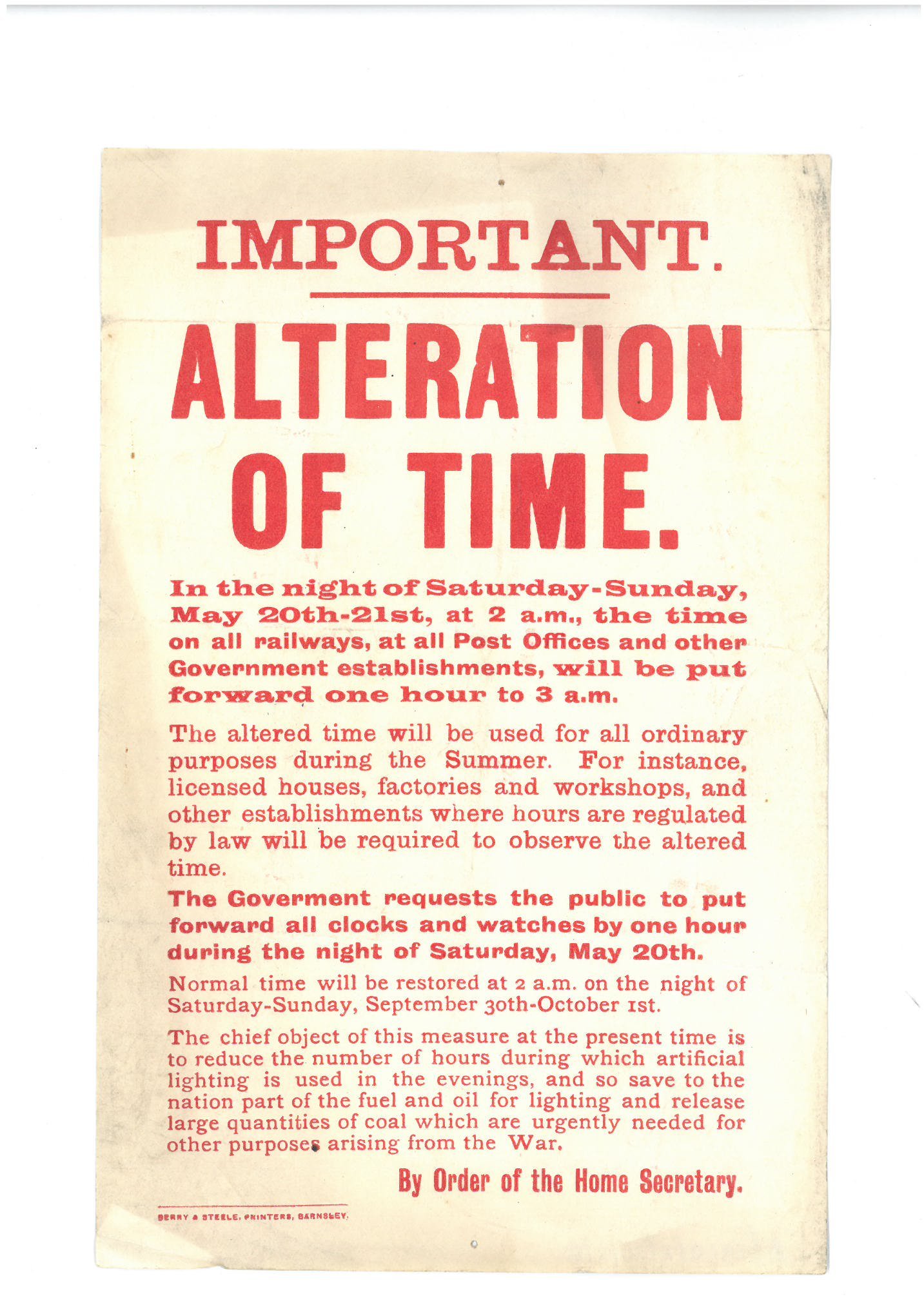
The marvellous poster above is from 1916, when British Summer Time was introduced, though it ran for only about 4 months (May to September), rather than the seven we have now (March to October).

You might be surprised to learn that the practice of changing clocks backwards and forwards is only about a hundred years old. in the United Kingdom. To be honest I’m also surprised that the practice persists to this day, as I can’t see any real advantage in it. Any institution or organization that really wants to change its working hours in summer can easily do so, but the world of work is far more flexible nowadays than it was a hundred years ago and I think few would feel the need.

Anyway, while I am on about Mean Time, here is a another poster from 1916.

Until October 1916, clocks in Ireland were set to Dublin Mean Time, as defined at Dunsink Observatory, rather than Mean Time as defined at Greenwich. The adoption of GMT in Ireland was driven largely by the fact that the British authorities found that the time difference between Dublin and London had confused telegraphic communications during the Easter Rising earlier in 1916. Its imposition was therefore, at least in part, intended to bring Ireland under closer control of Britain. Needless to say, this did not go down well with Irish nationalists.

Ireland had not moved to Summer Time with Britain in May 1916 and was still on Dublin Mean Time, which was 25 minutes 21 seconds behind GMT, so the change to GMT was introduced at the same time as BST ended in the UK, hence the alteration by one hour minus 25 minutes 21 seconds, i.e. 34 minutes and 39 seconds as in the poster.

March – William Cullen Bryant

Posted in Maynooth, Poetry with tags , , on March 27, 2026 by telescoper
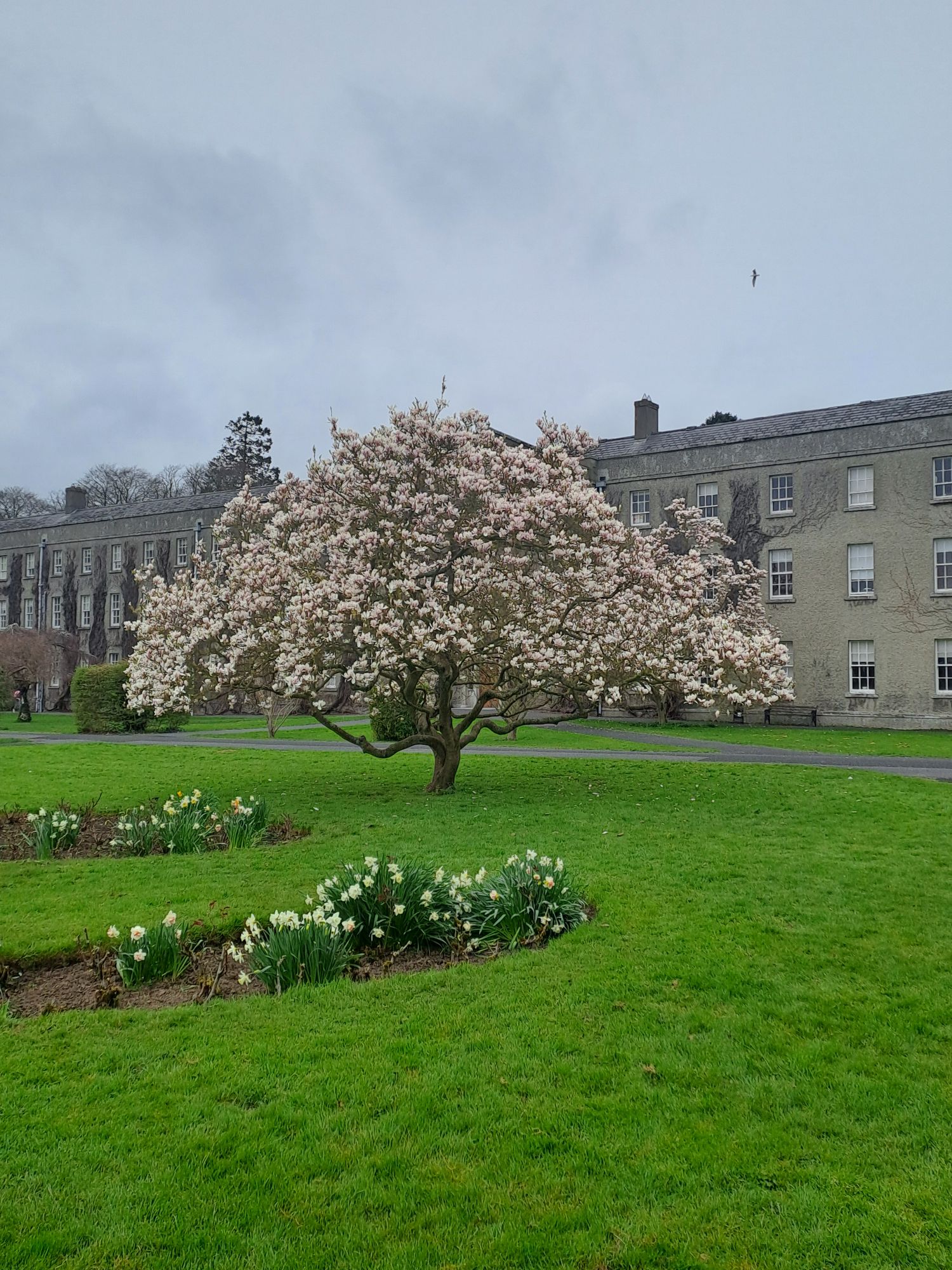
Magnolia and Daffodils in St Joseph’s Square Maynooth
The stormy March is come at last, 
With wind and cloud, and changing skies,
I hear the rushing of the blast,
That through the snowy valley flies.

Ah, passing few are they who speak,
Wild stormy month! in praise of thee;
Yet, though thy winds are loud and bleak,
Thou art a welcome month to me.

For thou, to northern lands, again
The glad and glorious sun dost bring,
And thou hast joined the gentle train
And wear’st the gentle name of Spring.

And, in thy reign of blast and storm,
Smiles many a long, bright, sunny day,
When the changed winds are soft and warm,
And heaven puts on the blue of May.

Then sing aloud the gushing rills
And the full springs, from frost set free,
That, brightly leaping down the hills,
Are just set out to meet the sea.

The year’s departing beauty hides
Of wintry storms the sullen threat;
But in thy sternest frown abides
A look of kindly promise yet.

Thou bring’st the hope of those calm skies,
And that soft time of sunny showers,
When the wide bloom, on earth that lies,
Seems of a brighter world than ours.

by William Cullen Bryant (1794-1878)

Access to Registry Data

Posted in Harassment Bullying etc, Maynooth with tags , , , on March 23, 2026 by telescoper

I was shocked to read in the news of the case of a lecturer at University College Dublin who has been charged with offences relating to unlawfully access of students’ personal information and use of that information to harass students. According to news reports, over 100 students were affected by these actions.

The case is still before the courts so it would not be appropriate to comment any further on it, but I hope it sets alarm bells ringing in universities everywhere about access to student information. University registry systems store personal data on each student, from home addresses and telephone numbers to photographs and confidential medical records. It has always worried me that a determined hacker could have access to very sensitive information they could use for nefarious purposes.

Higher education institutions do take data security very seriously. In the UCD case mentioned above the person concerned is alleged to have used some sort of malware to read student passwords and access personal data that way. That in itself is a criminal offence, quite apart from what this lecturer may have done with the information subsequently.

On the other hand, it does concern me greatly how much information about students may be routinely accessible by teaching staff without needing to do anything unlawful. For example, I can see no reason for lecturers to be able to access home addresses and private telephone numbers of students. The university needs to hold that information, of course, but I can see no legitimate purpose for individual lecturers to have access to it. Access to such data should be strictly limited to departmental administrators or other carefully selected staff, for use in very specific situations (e.g. emergencies). Otherwise a student database may become a stalker’s paradise.

I hope universities in Ireland and elsewhere will be sufficiently worried about this case that they will review not only the defence of their systems against unlawful access from outside, but also their policies on who inside the institution is actually allowed access to what data and why. The more people who can obtain this data, the greater the risk to students.

Naomh Pádraig – Séamus Murphy

Posted in Art, Maynooth with tags , , , on March 23, 2026 by telescoper

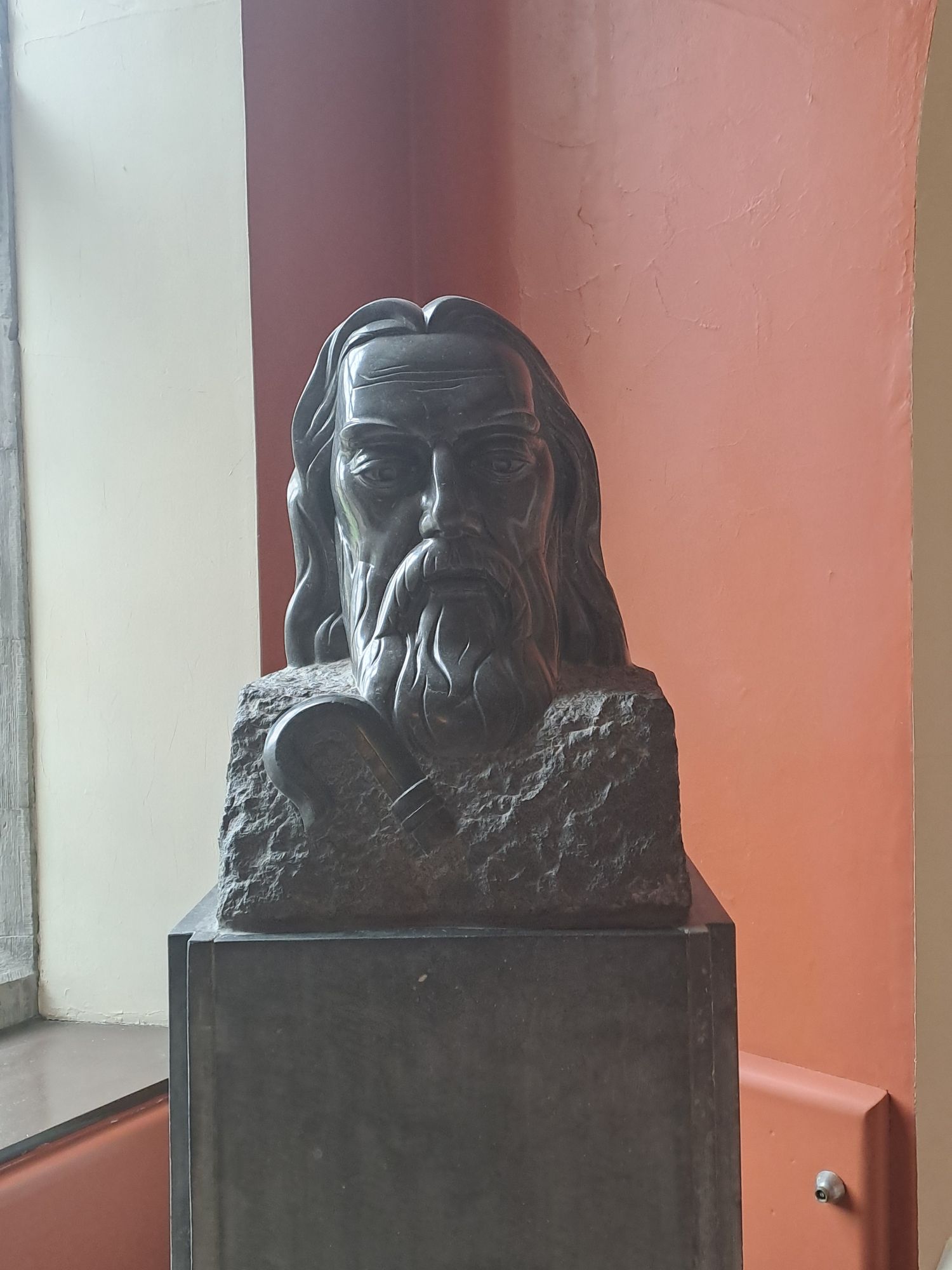
I’ve walked past this imposing head of St Patrick countless times since I arrived in Maynooth, seven and a half years ago, but it was only last week that I found out a bit about it.

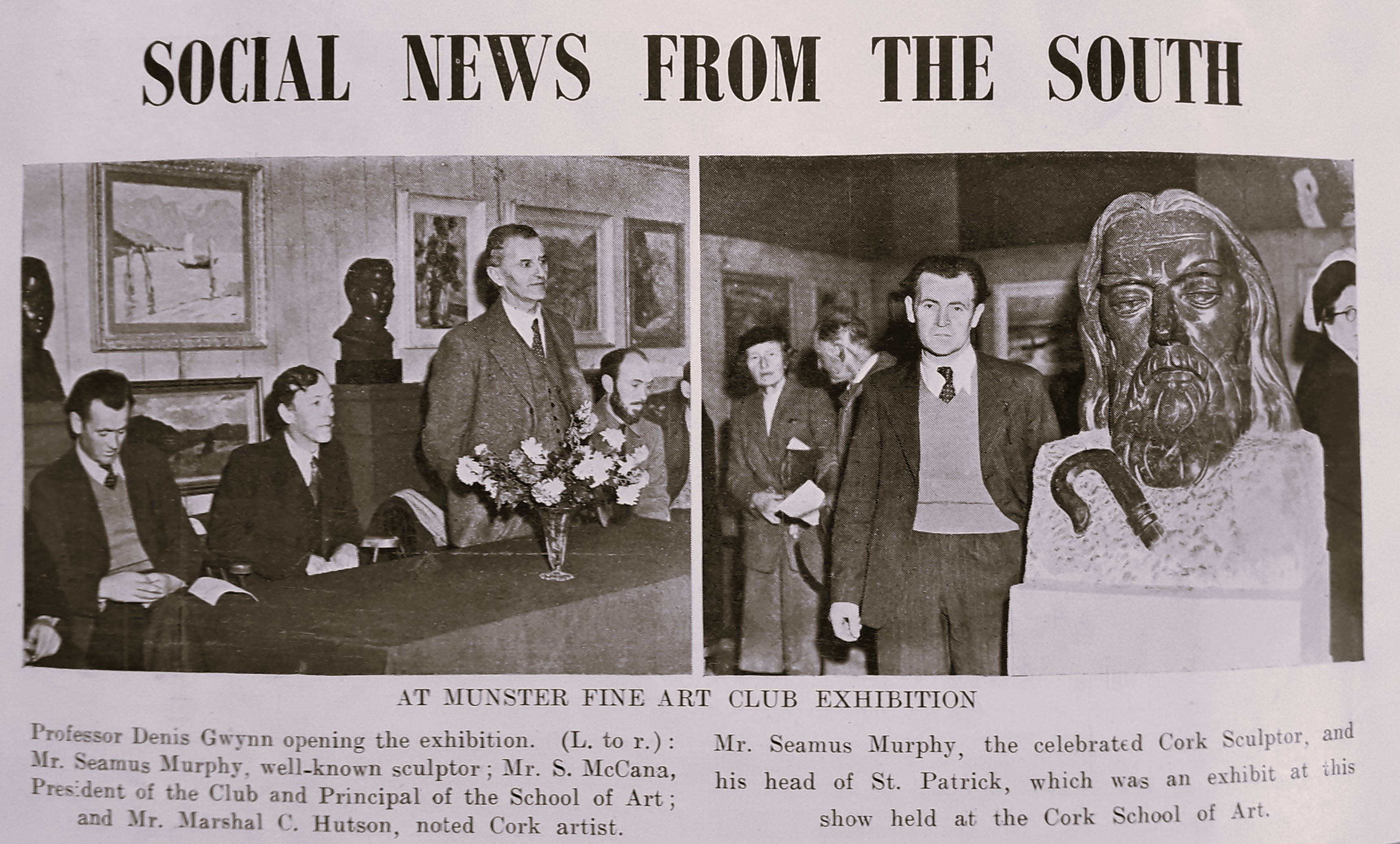
The statue is called Naomh Patrick (Saint Patrick) and it was created by Irish sculptor Séamus Murphy. It is on public view in St Patrick’s House, Maynooth, just inside the main entrance. It is made of polished limestone and was first unveiled in 1949. Here is an old newspaper article in which the photograph on the right shows the artist beside the sculpture…

(The picture on the left seems to show the artist, on the far left, dozing off during a speech…)

From the Study Break…

Posted in Biographical, Education, Maynooth, Poetry with tags , , , , , on March 22, 2026 by telescoper

So now after a half-term mid-semester study break, including one day of actual holiday, that was both pleasant and eventful it will soon be time to return to the fray, at least for 9 working days. A full week of lectures, labs and tutorials starts tomorrow but the following week end a day early, on Thursday 2nd April, because 3rd April is Good Friday. Campus is closed then, as it is on Easter Monday and there are no lectures for the rest of that week. I’ll miss a lecture on Good Friday. I’m sure the students will be distraught, but that’s the way of things.

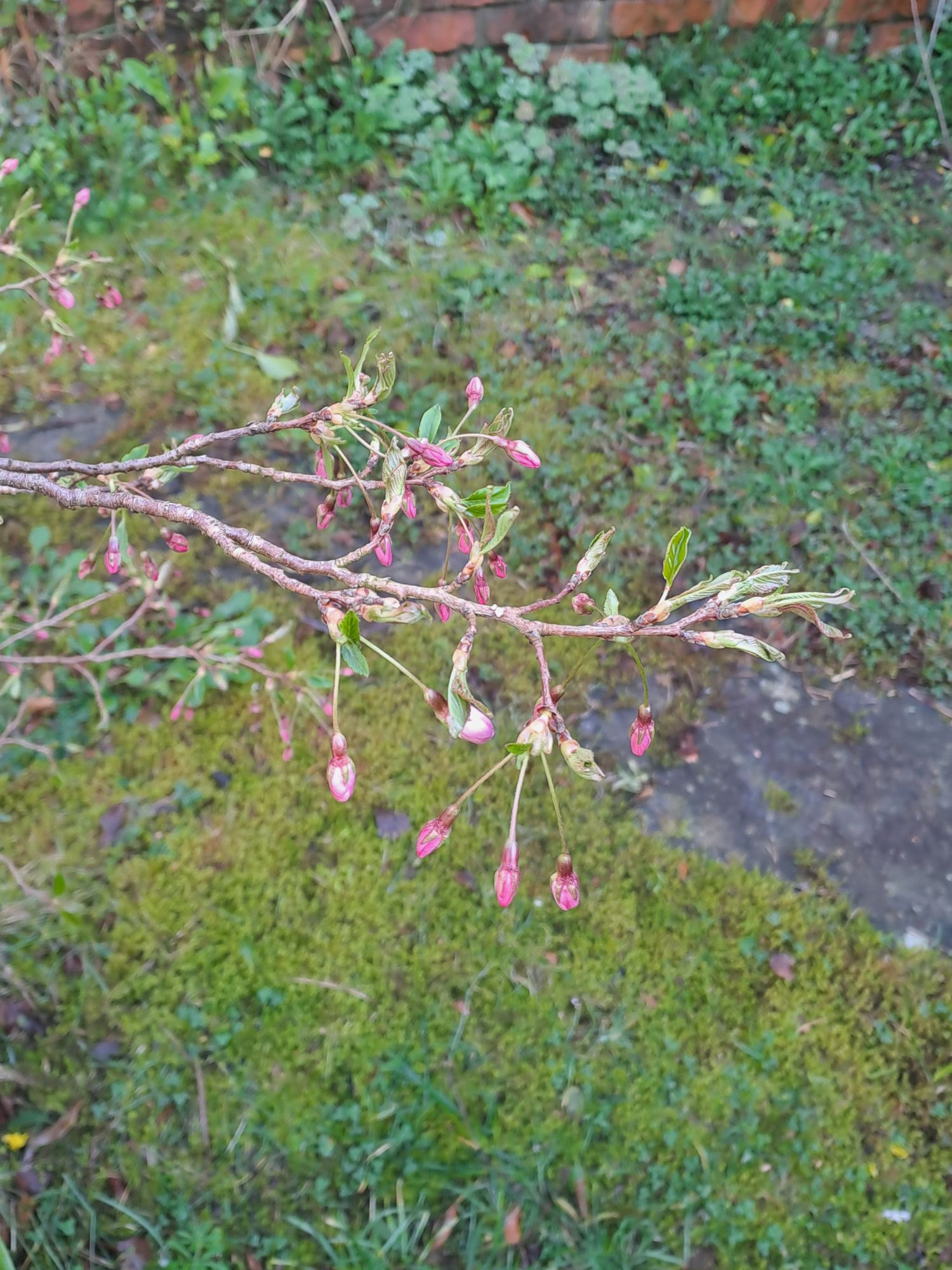
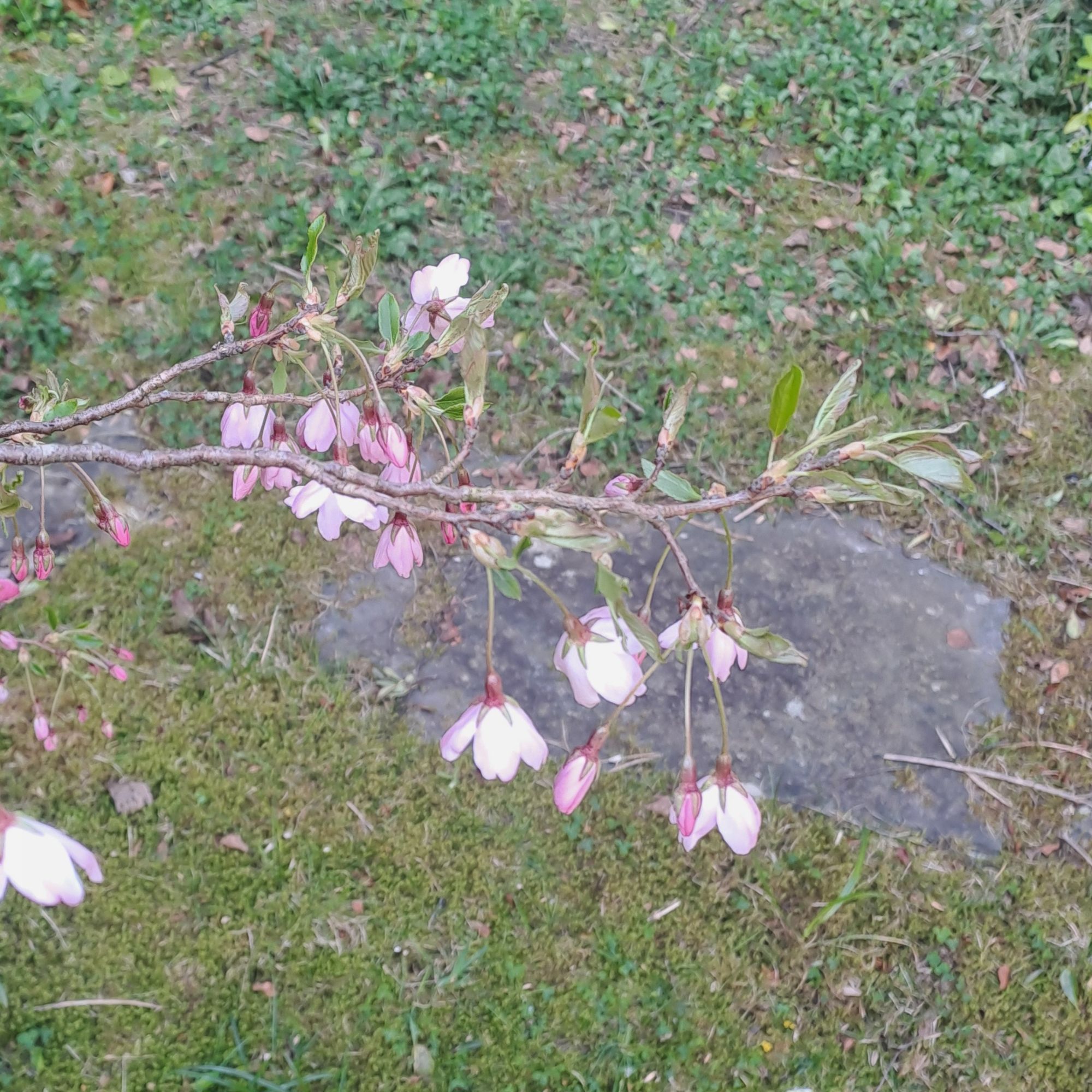
Anyway, with the Eastertide coming in and yesterday being World Poetry Day I thought I’d share a couple of pictures (taken two days apart) of the Japanese cherry trree in my back garden along with this haiku on a theme by A.E. Housman:

Loveliest of trees?
Not yet, but soon there will be
Bloom along the bough...

The Vernal Equinox 2026

Posted in Biographical, Maynooth, The Universe and Stuff with tags , , , on March 20, 2026 by telescoper
Loughcrew Cairn: for a few days on and around the Vernal Equinox the rays of the rising Sun penetrate the passage and illuminate the back stone.

Just a quick note to mention that the Vernal Equinox (Spring Equinox) in the Northern hemisphere happens this afternoon, Friday 20th March 2026, at 14.46 UTC (which is 2.46 pm local time here in Ireland. Many people in the Northern hemisphere regard the Vernal Equinox as the first day of Spring, atlhough round these parts that is taken to be 1st February (Imbolg). Of course in the Southern hemisphere, this is the Autumnal Equinox.

The date of the Vernal Equinox is often given as 21st March, but in fact it has only been on 21st March twice this century so far (2003 and 2007); it was on 20th March in 2008, has been on 20th March every spring from then until now, and will be until 2044 (when it will be on March 19th). I’ll be retired by then.

Anyway, people sometimes ask me how one can define the `equinox’ so precisely when surely it just refers to a day on which day and night are of equal length, implying that it’s a day not a specific time? The answer is that the equinox is defined by a specific event, the event in question being when the plane defined by Earth’s equator passes through the centre of the Sun’s disk (or, if you prefer, when the centre of the Sun passes through the plane defined by Earth’s equator). Day and night are not necessarily exactly equal on the equinox, but they’re the closest they get. From now until the Autumnal Equinox, days in the Northern hemisphere will be longer than nights, and the days will continue get longer until the Summer Solstice on June 21st before beginning to shorten again.

Beard of Ireland 2026!

Posted in Beards, Biographical, Maynooth with tags , , on March 17, 2026 by telescoper

Just got back from the St Patrick’s parade in Maynooth to find that I won the Beard of Ireland poll!

Thanks to everyone who voted for me! I’m going to celebrate this evening with a traditional Irish dinner of bacon and cabbage, with a parsley sauce.

Lá Fhéile Pádraig sona daoibh go léir!
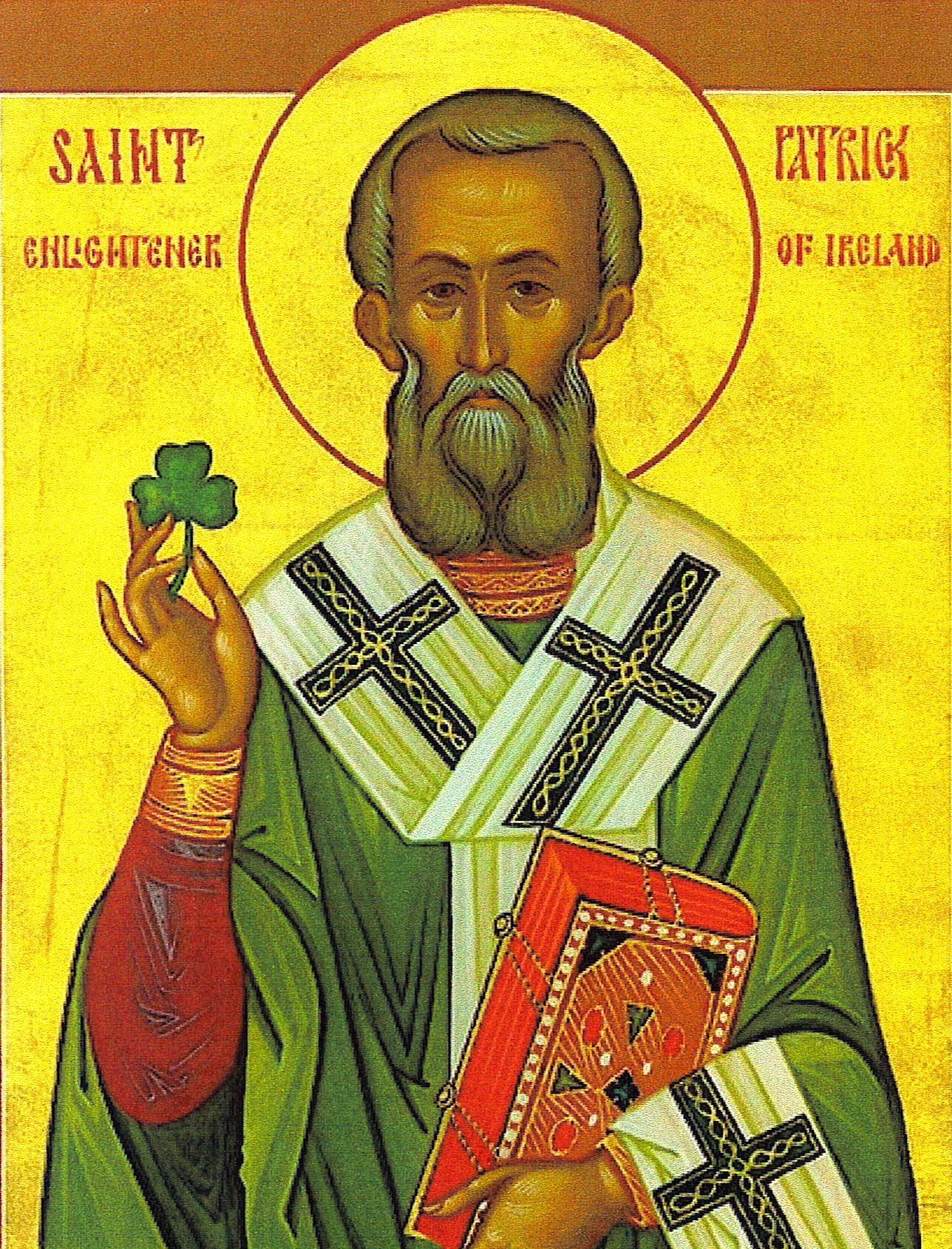
Posted in History, Literature, Maynooth with tags , , , , , on March 17, 2026 by telescoper

Well, it’s St Patrick’s Day, which means I’m on holiday. I’ll soon be toddling off to watch the parade in Maynooth, which passes quite close to my house. In accord with tradition, it’s very cold today – and not a little windy – but at least it’s not raining.

Not many facts are known about the life of St Patrick, but it seems he was born in Britain, probably in the late 4th Century AD, probably somewhere around the Severn Estuary and possibly in Wales. It also appears that he didn’t know any Latin. When a young man, it seems he was captured by Celtic marauders coming up the River Severn and taken as a slave to Ireland. He eventually escaped back to Britain, but returned to Ireland as a missionary and succeeded somehow in converting the Irish people to Christianity.

Or did he? This interesting piece suggests his role was of lesser importance than many think. On the other hand, if even a fraction of what is said about him is true, then he must have been a very remarkable man.

However it happened, Ireland was the first country to be converted to Christianity that had never been part of the Roman Empire. That made a big difference to the form of the early Irish Church. The local Celtic culture was very loose and decentralized. There were no cities, large buildings, roads or other infrastructure. Life revolved around small settlements and farms. When wars were fought they were generally over livestock or grazing land. The church that grew in this environment was quite different from that of continental Europe. It was not centralized, revolved around small churches and monasteries, and lacked the hierarchical structure of the Roman Church. Despite these differences, Ireland was well connected with the rest of the Christian world.

Irish monks – and the wonderful illuminated manuscripts they created – spread across the continent, starting with Scotland and Britain. Thanks to the attentions of the Vikings few of these works survive but the wonderful Lindisfarne Gospels, dating from somewhere in the 8th Century were almost certainly created by Irish monks. The Book of Kells was probably created in Scotland by Irish Monks.

The traffic wasn’t entirely one-way however. A while ago I saw a fascinating documentary about the Fadden More Psalter. This is a leather-bound book of Psalms found in a peat bog in 2006, which is of similar age to the Lindisfarne Gospels. It took years of painstaking restoration work to recover at least part of the text (much of which was badly degraded), but the leather binding turned out to hold a particularly fascinating secret: it was lined with papyrus. The only other books from the same period with the same structure that are known are from the Coptic Church in Egypt. That doesn’t mean that whoever owned the Fadden More Psalter had actually been to Egypt, of course. It is much more this book made its way to Ireland via a sort of relay race. On the other hand, it does demonstrate that international connections were probably more extensive than you might have thought.

Anyway, back to St Patrick’s Day.

Saint Patrick’s Day is celebrated on March 17th, the reputed date of his death in 461 AD. Nobody really knows where St Patrick was born,, and the when of his birth isn’t known either.

In any case, it wasn’t until the 17th Century that Saint Patrick’s feast day was placed on the universal liturgical calendar in the Catholic Church. Indeed, St Patrick has never been formally canonized. In the thousand years that passed any memory of the actual date of his birth was probably lost, so the choice of date was probably influenced by other factors, specifically the proximity of the Spring Equinox (which is this year on Saturday March 20th).

The early Christian church in Ireland incorporated many pre-Christian traditions that survived until roughly the 12th century, including the ancient festival of Ēostre (or Ostara), the goddess of spring associated with the spring equinox after whom Easter is named. During this festival, eggs were used a symbol of rebirth and the beginning of new life and a hare or rabbit was the symbol of the goddess and fertility. In turn the Celtic people of Ireland probably adapted their own beliefs to absorb much older influences dating back to the stone age. St Patrick’s Day and Easter therefore probably both have their roots in prehistoric traditions around the Spring Equinox, although the direct connection has long been lost.

Lá Fhéile Pádraig sona daoibh go léir!