Archive for the Maynooth Category

A New Academic Year Begins…

Posted in Artificial Intelligence, Biographical, Education, mathematics, Maynooth with tags , , , , , , on September 21, 2026 by telescoper

It’s been a lovely summery day in Maynooth so far, despite the summer having definitely ended and therefore having to return to teaching at the start of my penultimate academic year as a university teacher. The campus was very full this morning, and I was stopped many times on my walk into the office by new students trying to find their lecture theatres. A common (understandable) mistake for the uninitiated of Maynooth is to think that the Science Lecture Theatre is actually in the Science Building. To add to the excitement there was a fire alarm in Pugin Hall, where I sometimes go for lunch, so the building was evacuated. The kitchen staff and others were taking the opportunity to bask in the sunshine before the alarm ended. I think it was a false alarm. In any case lunch was available as soon as they opened up again, and no harm was done.

It’s hard to believe that it is two full years since I returned from sabbatical, but at least I’m teaching the same modules this semester as I did when I returned in the Autumn of 2024. I still have to get everything sorted out, though, including setting up my Moodle pages and preparing the materials, which is what I’ve been doing today, as well as giving my first lecture of the year, for MP469 Differential Equations and Complex Analysis, this afternoon at 2pm; my second, also MP469, will be at 11am on Tuesday (tomorrow).

The timetable for my Engineering Mathematics (EE206 Differential Equations and Transform Methods) module has not changed, so my first lectures on that (a double session) are not until tomorrow. That means I have three hours of teaching tomorrow and every Tuesday throughout the semester, which will make Tuesday my most tiring day.

Both the modules I am teaching this term are mathematical in nature. As last year, I am concerned about the integrity of the coursework element of these modules in the light of improvements in Generative AI. Only a couple of years ago GenAI could not solve the sort of problems I set for homework, but now it generally can – especially for EE206. I don’t altogether object to people applying artificial intelligence to solve mathematical problems, but the issue is that it does make mistakes. Moreover, instead of saying “sorry I can’t solve that problem” it will generally present a superficially plausible but incorrect solution. Although students will probably use GenAI for problem-solving, I think it is important that they learn to do such problems themselves, otherwise they won’t know whether the solution coughed up by the algorithm is correct or not. That way lies disaster.

The only way to learn mathematics is by doing it. If students get GenAI to do the mathematics for them, then they won’t learn it. In the past we have given marks for coursework (usually 20% of the module mark) mainly to encourage students to do them. Students who don’t bother to do these exercises generally do badly in the final exam (80%).

For these reasons I moved the assessment from weekly homework sheets – which could be tackled with AI – to supervised in-class tests for which students can use notes on paper, but not laptops or phones, just like they would in the final examination. I will of course give examples for the students to have a go at themselves, and I will give feedback on their attempts, but they will not contribute to the module score. Another advantage of this approach is that students won’t have to do so much work against deadlines outside of class. Some students will probably use AI to solve these non-contributory assignments, which is fine by me. It’s like having an extra tutorial. To learn they must actually try the problems, rather than absorb the methods by just watching CoPilot solve them.

I followed this approach last year and it worked quite well so I’m keeping the same basic idea, although with some tweaks. As I described here, this means I have taken a much harder line on assignments than other lecturers and indeed other departments. I allow no assignment to contribute to a module grade unless it is supervised in such a way as to prevent “AI” being used. I believe that this is the only way to maintain the integrity of these assessments and that to do anything else will result in a lowering of academic standards. I believe there should be university-wide regulations to manage it, but there are none…
Space Week at Maynooth!

Posted in Maynooth, The Universe and Stuff with tags , on September 16, 2026 by telescoper

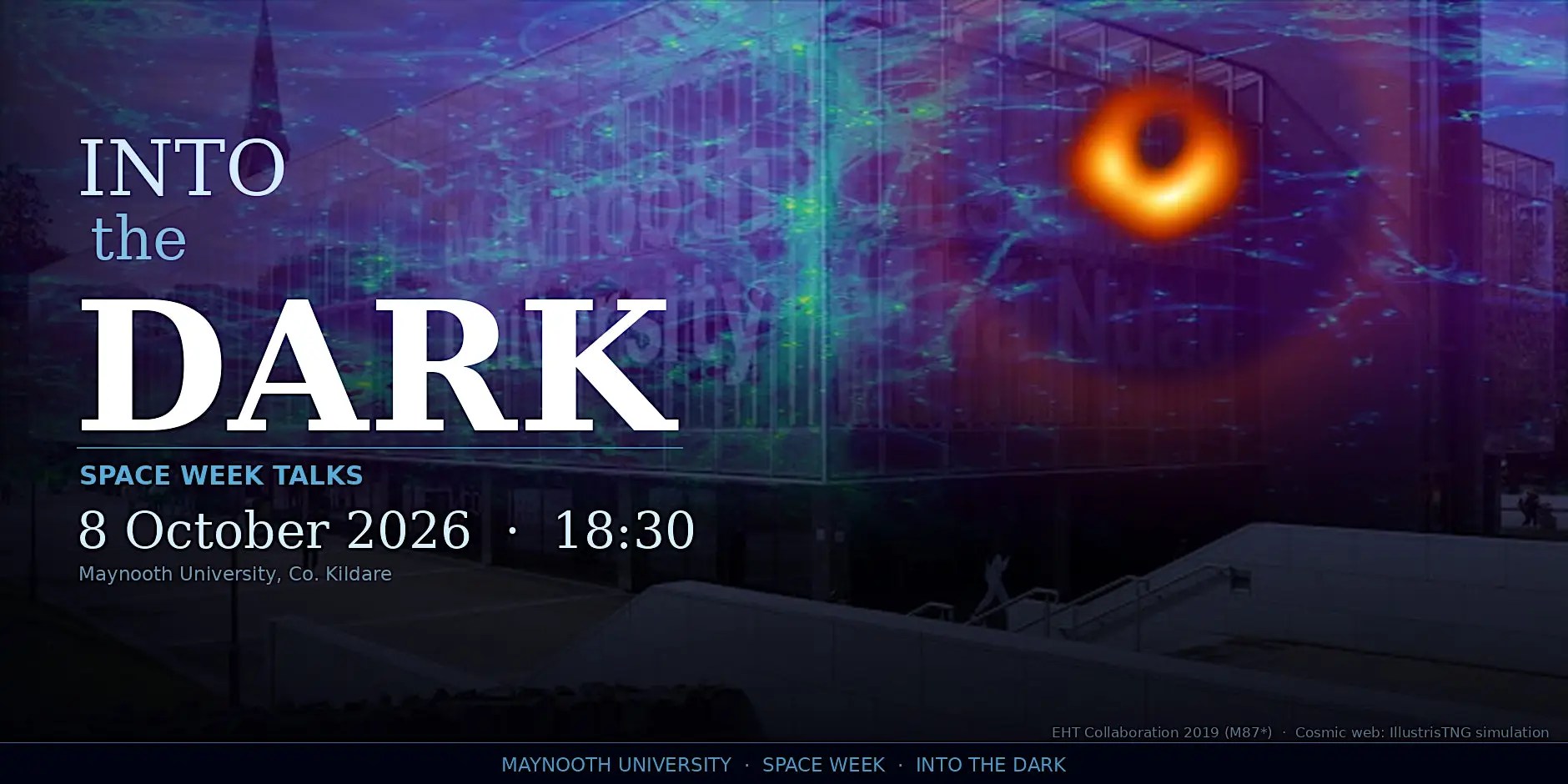
While I remember here’s a quick preview of an event at Maynooth during Space Week 2026. This will take place on the evening of Thursday 8th October 2026:

The event is free but, in order to make sure there is enough space, we need you need to register, which you can do here:

I know it is three weeks away, but demand for these events is very high so I encourage you to register ASAP!

Further Thoughts of Retirement…

Posted in Biographical, Maynooth with tags , , , , on September 14, 2026 by telescoper
What we call the beginning is often the end
And to make and end is to make a beginning.
The end is where we start from.

from Little Gidding, Four Quartets, by T.S. Eliot.

The start of teaching for 2026/7 is approaching at an alarming rate. new and continuing students are registering and today we had a staff meeting in the Department of Physics about arrangements for the new term. This all made me think again about retirement.

About three years, while I was in Barcelona on sabbatical , I posted an item about looking forward to retirement. Here is an excerpt from that piece:

The fact of the matter is, though, that I can’t afford to retire yet. I have a mortgage to pay and I’ve only had five full years of pensionable service in the Irish system, so won’t get much of a pension. I have the frozen residue of my UK pension, of course, but that is subject to an actuarial reduction if I take the benefit before I’m 65, which is also the standard retirement age for academic staff in Ireland. I can’t be made to retire here until I’m 70, in fact, but I think I’ll be well beyond my best-before date by then and am not keen to overstay my welcome.

So it looks like I’ll have to stay until I’m 65 at the earliest. In fact I won’t be able to collect the State Pension (SPC) until I’m 66, so I’ll probably have to stay until then. That means that when I get back from sabbatical I will have four or five years left until I can retire.

Since I posted this I made a firm decision that I will retire as soon as I’m able, which should be in June 2028. Having sold my old house in Cardiff some time ago, I have paid off my Maynooth mortgage which makes the financial situation much simpler. I am now quite confident that I can afford to retire before I’m 66.

I know many academics don’t like the idea of retiring. I suppose that’s because they’re afraid they won’t know what to do with their time. I’ve never felt like that. I’ve always had plenty of outside interests, but now there’s another factor. As I alluded to in an earlier post, and contrary to all my expectations of three years ago, there is another person involved. That person, whose name I won’t reveal, graduated this summer from an unnamed university, and is just about to embark on a two-year Masters degree (in a subject not to be disclosed) in a location I won’t tell you about. He will be finishing that course in the summer 2028.

For the next two years things for us will be pretty much as they are now: not living together, but spending as much time in each other’s company as possible at weekends and holidays. That arrangement suits us both very well in the current circumstances but we have already started discussing plans beyond the two-year horizon. Some of these are not at all serious, but amusing to think about. Others would be fantastic if they turned out to be possible. We have the best part of two years to decide what to do. In any event, I find it exciting to be able to think seriously of retirement as a beginning as well as an end.

A Time of Conferring

Posted in Biographical, Education, Maynooth with tags , , , on September 7, 2026 by telescoper

I was feeling a bit grotty this morning and had lost my voice but I managed to summon up the energy to attend today’s Conferring Ceremonies – usually known as Graduation ceremonies in the UK – at Maynooth University. It was a special day for the graduands, their families and friends, of course, but also quite a significant one for me. The cohort of students graduating today included a significant number whom I taught in the first year at Maynooth, four years ago, before I went on sabbatical. I taught some of them again in their third year, after I returned, and some last year. I am no longer teaching first-year students, so this will be the last group that I’ll see from beginning to end of their degrees. It was nice to be at their Conferrings to see them off, and especially nice to chat afterwards and see that so many of them are going to do further study as postgraduates (some here in Maynooth and some elsewhere, including Trinity and UCD). I noticed this morning that the next intake of students has started to register. I don’t yet know how many Physics students I’ll be teaching in two weeks’ time but I do know that I’ll have retired before any of them graduate.

Conferring Ceremonies at Maynooth used to be held in the Aula Maxima, on South Campus, which is an excellent venue with lots of atmosphere. Nowadays however they are held in the far less evocative surroundings of a modern lecture theatre in the TSI Building. I know I’m an old fuddy-duddy but much preferred the previous location. Students don’t even get to sit in the same room as the parents, but march in through one door, cross the front of the hall, collect their parchment, and then march out through another door.

I like graduation ceremonies, actually. As the graduands go across the stage you realize that every one of them has a unique story to tell and a whole universe of possibilities in front of them. How their lives will unfold no-one can tell, but it’s a privilege to be there for one important milestone on their journey. It’s also a bit strange in some cases finally to put a name to a face that I’ve seen around the place regularly, just before they leave the University for good. I always find this a bittersweet occasion. There’s joy and celebration, of course, but tempered by the realization that many of the young people who you’ve seen around long enough to grow accustomed to their faces, will disappear into the big wide world never to be seen again. On the other hand, this year quite a few graduates of the Department of Theoretical Physics are staying in Maynooth to do Masters programmes so they won’t all be vanishing without trace.

Graduation of course isn’t just about dressing up. Nor is it only about recognizing academic achievement. It’s also a rite of passage on the way to adulthood and independence, so the presence of the parents at the ceremony adds another emotional dimension to the goings-on. Although everyone is rightly proud of the achievement – either their own in the case of the graduands or that of others in the case of the guests – there’s also a bit of sadness to go with the goodbyes. It always seems that as a lecturer you are only just getting to know students by the time they graduate, but that’s enough to miss them when they go. All this is a roundabout way of saying congratulations once more to everyone who graduated today, and I wish you all the very best for the future!

On the Uncritical Adoption of “AI” in Academia

Posted in Artificial Intelligence, Education, mathematics, Maynooth with tags , , , on September 6, 2026 by telescoper

With thoughts turning to the new academic year I noticed an Open Letter to Universities in the Netherlands, which I have signed. You can read the letter yourself but here is a summary of the main calls to action:

• Resist the introduction of AI in our own software systems, from Microsoft to OpenAI to Apple. It is not in our interests to let our processes be corrupted and give away our data to be used to train models that are not only useless to us, but also harmful.

• Ban AI use in the classroom for student assignments, in the same way we ban essay mills and other forms of plagiarism. Students must be protected from de-skilling and allowed space and time to perform their assignments themselves.

• Cease normalising the AI hype and the lies which are prevalent in the technology industry’s framing of these technologies. The technologies do not have the advertised capacities and their adoption puts students and academics at risk of violating ethical, legal, scholarly, and scientific standards of reliability, sustainability, and safety.

• Fortify our academic freedom as university staff to enforce these principles and standards in our classrooms and our research as well as on the computer systems we are obliged to use as part of our work. We as academics have the right to our own spaces.

• Sustain critical thinking on AI and promote critical engagement with technology on a firm academic footing. Scholarly discussion must be free from the conflicts of interest caused by industry funding, and reasoned resistance must always be an option.

I agree with all of these. I don’t think The Management does though.

In Maynooth University there has been a total absence of leadership from the Management about the academic threats posed by the uncritical adoption of “AI” . I’ve put “AI” in quotes because most of what is being described as AI nowadays (e.g. LLMs) is not is in no way Artifical Intelligence. There is a place for such things as Machine Learning. Indeed, much of the data-driven research in my own field of cosmology would be impossible without them. The key, however, is not whether you insist on calling it AI or not, but the word uncritical. Much of what I have heard from our “Leadership” is simple-minded boosterism. And yes, that word is in quotes for the same reason as “AI”.

In planning my teaching for next term, which starts in two weeks, I have taken a hard line on assignments. I allow no assignment to contribute to a module grade unless it is supervised in such a way as to prevent “AI” being used. Both modules I will be teaching next semester are mathematical in nature, and the summative assessments will consist of four (unseen) in-class tests and a written exam. Phones, laptops and tablets are banned from all these.

I believe that this is the only way to maintain the integrity of these assessments and that to do anything else will result in a lowering of academic standards. I believe this is the case across a great many disciplines, so there should be university-wide regulations to manage it. I find the absence of any “Leadership” on this scandalous (but I’m afraid not surprising).

This is not to say that I will band the use of LLMs etc entirely. Students will be free to use ChatGPT or CoPilot or whatever to check their answers to the formative assessments I hand out, if they think that will help, but these will not contribute to their module mark.

The Irish National Astronomy Meeting 2026

Posted in Maynooth, The Universe and Stuff with tags , , on September 2, 2026 by telescoper

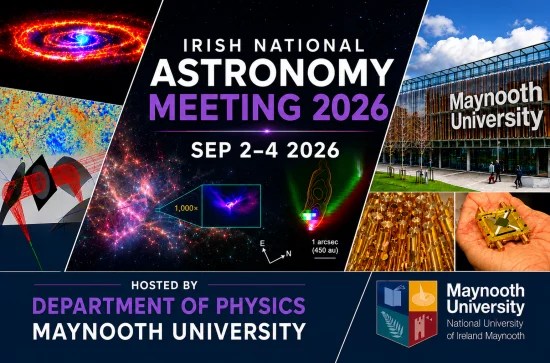
Today’s the start of this year’s Irish National Astronomy Meeting (INAM), which is being held in Maynooth. There’ll be a series of talks over the next three days covering all areas of astronomy. I’ll be chairing a session tomorrow but will generally popping in and out because I have various other commitments that clash with some of the sessions, but I’ll post updates whenever I can.

To start with, though, let me welcome all the participants who are arriving this morning!

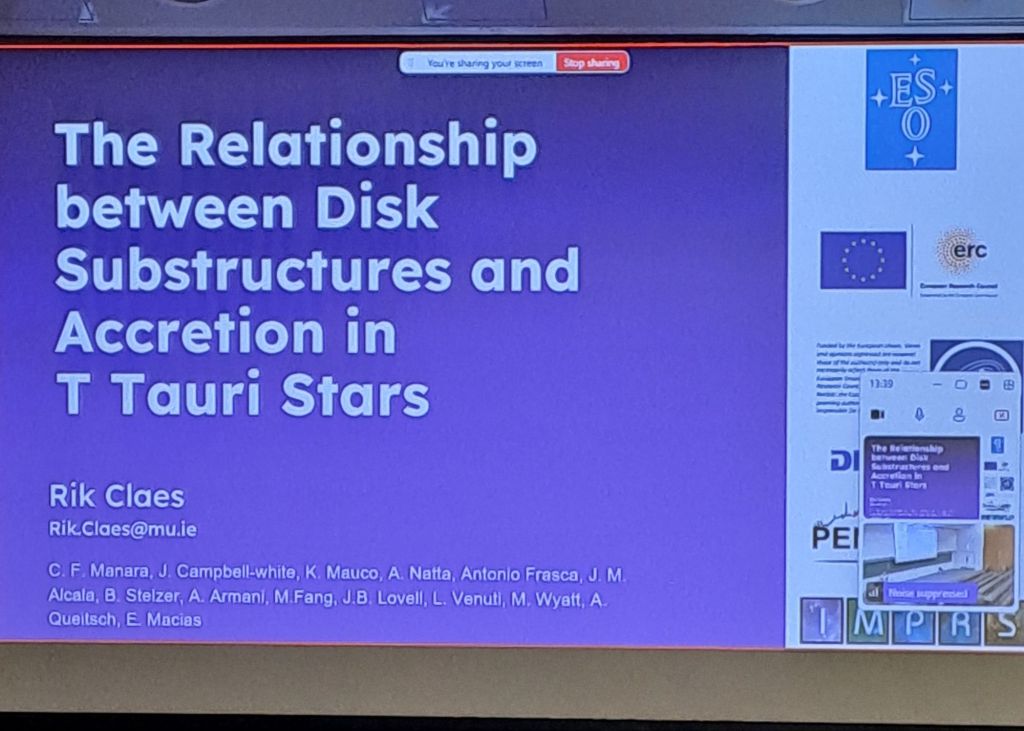
The first talk:

The Strike Ballot

Posted in Biographical, Politics, Maynooth with tags , , , , on September 1, 2026 by telescoper

I mentioned a couple of weeks ago that the Irish Federation of University Teachers (IFUT), of which I am a member, was planning a ballot on industrial action. The reason for the ballot is that the Public Service Agreement, covering pay and working conditions for all public service workers in Ireland, lapsed at the end of June this year (2026) and there is currently no pay settlement for the second half of this year or next year. Salaries have fallen behind inflation under the existing Agreement and some important commitment have not yet been implemented. The Government does not give the impression of being serious about negotiations on these matters.

The ballot opened today, September 1st 2026, and as soon as the link for the electronic vote arrived in my inbox I clicked it and voted ‘YES’, i.e. in favour of industrial action.

Similar ballots are taking place across all the public service unions. Yesterday, it was revealed that Ireland’s largest public sector union, SIPTU, has voted 98% in favour of industrial action. Today it was announced that 96 per cent of the union Fórsa had voted similarly. I hope the IFUT result – and results from the other relevant unions – is as strong.

If it comes to industrial action – which I hope it does not – then such action will be coordinated across the public sector.

P.S. Solidarity to former colleagues at Nottingham University as they take industrial action over job losses resulting from its proposed “restructuring”.

Back to School….

Posted in Biographical, Education, Maynooth on August 31, 2026 by telescoper

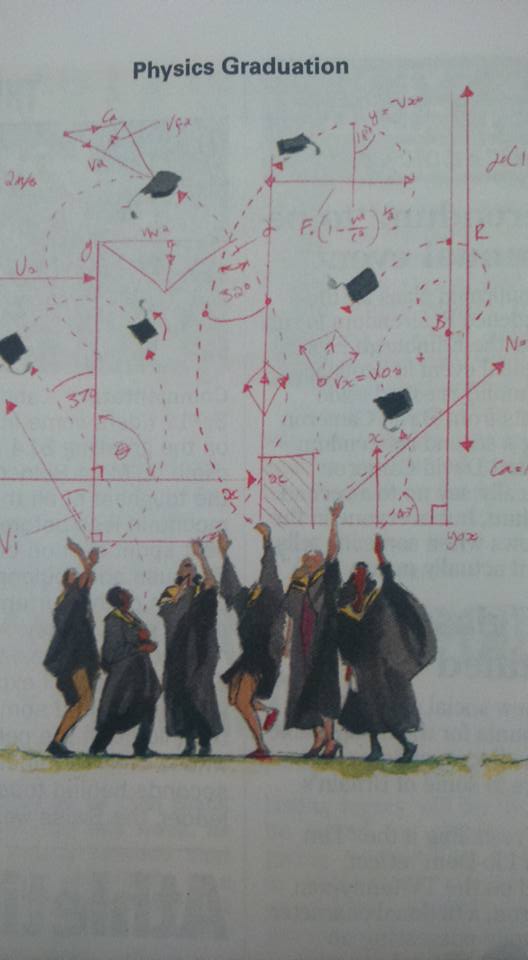
Today has been a Bank Holiday in England and Wales but not here in Ireland; we had our August Bank Holiday at the start of the month of August. In fact this week sees school students of various ages returning to the classroom. That reminded me of this, from a while back:

I had three hours of telecons this afternoon which I decided to do at home, so I left work a little earlier than usual. On my way home I passed a group of boys who were obviously going home after their first day back at school. Their uniforms look very new and in pristine condition. I bet that won’t last!

Three weeks from today, on September 21st, we resume lectures at Maynooth University. We don’t yet know how many students will be taking our various modules but I checked just now and noticed that one or two postgraduate and exchange students have already started enrolling…

Maynooth University Library Cat Update

Posted in Maynooth with tags , , , on August 31, 2026 by telescoper

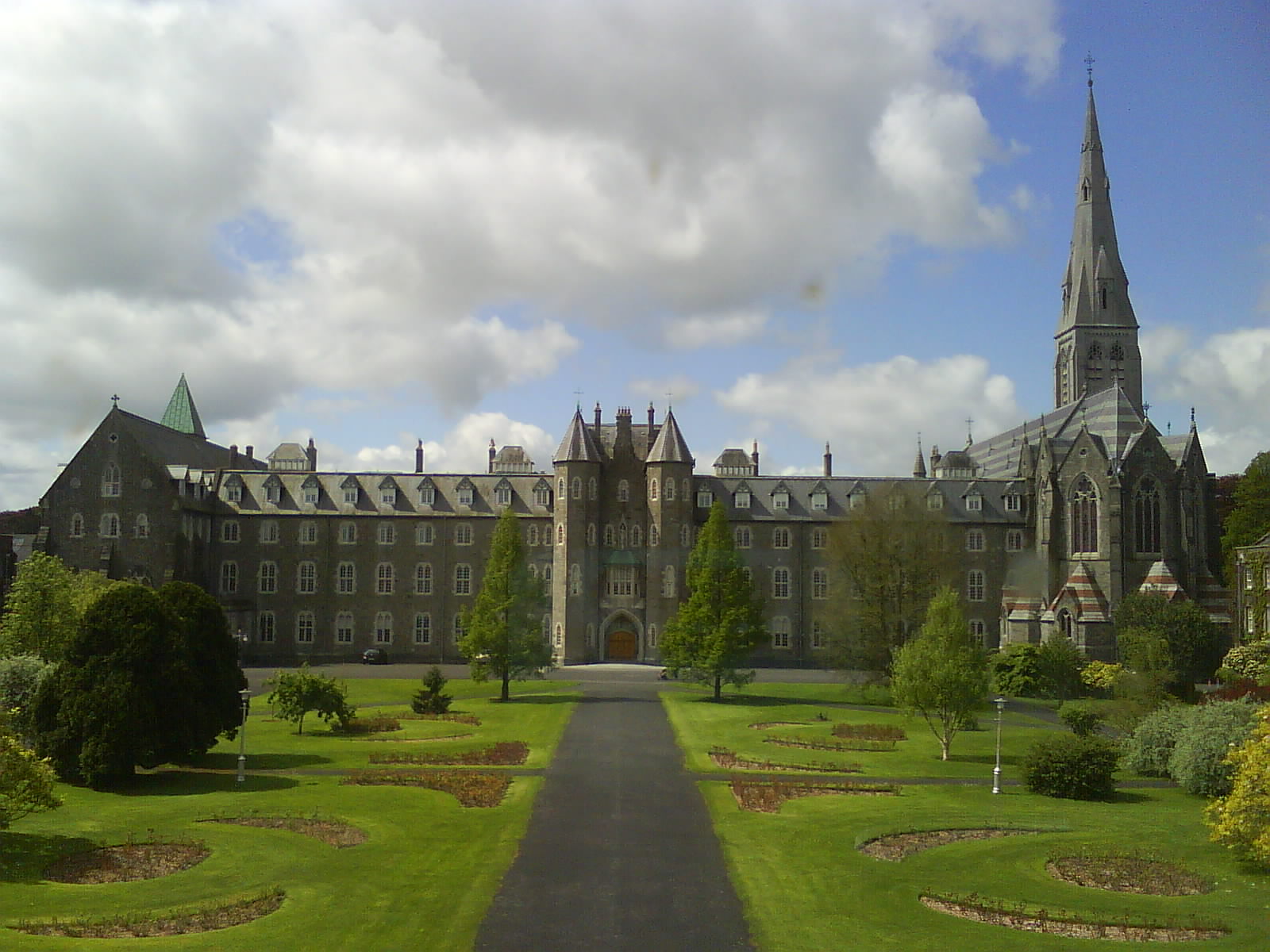
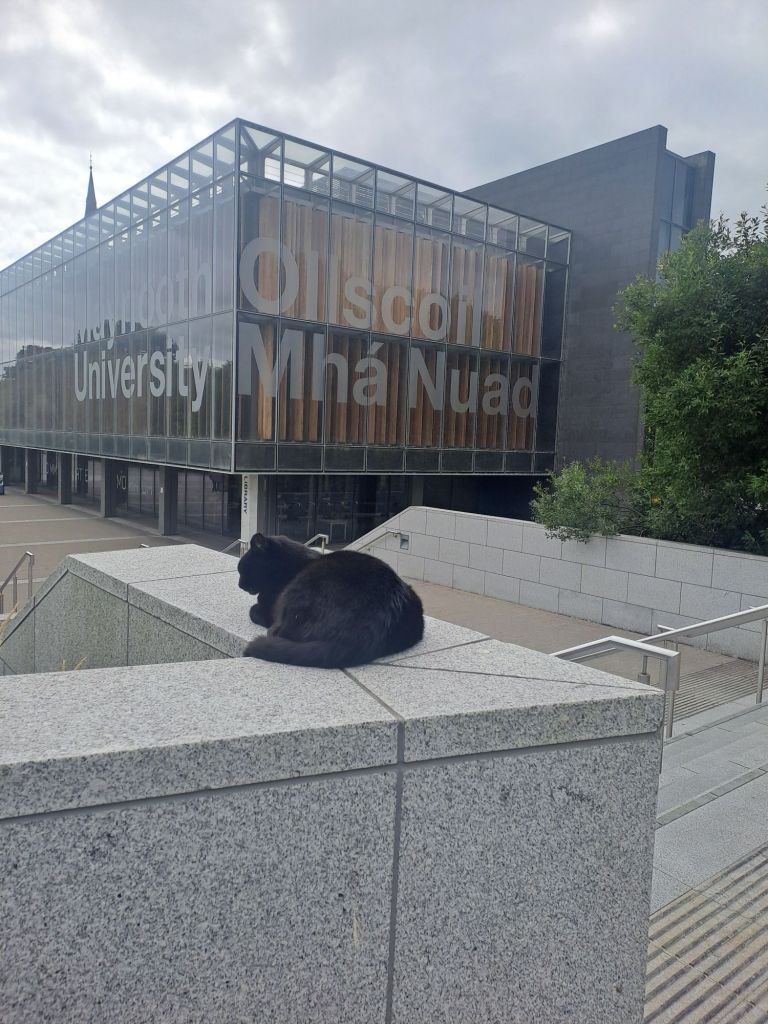
I saw Maynooth University Library Cat in a different location today so I thought I’d take the opportunity to share a picture of him with his Library in view.

Another Day of Offerings

Posted in Education, Maynooth with tags , , , , , , , on August 26, 2026 by telescoper

Today (26th August 2026) was the day that students across Ireland received offers of places at Third-Level Institutions to start next month. The offers for all courses and all institutions are available on the official CAO website here; they are also widely available elsewhere.

The official numbers for first round offers at Maynooth are here. Minimum points required for Maynooth’s – and indeed Ireland’s – most important course, MH206 Theoretical Physics and Mathematics, are 500 this year, down from 520 last year. MH204 Physics with Astrophysics is 401, up on last year’s 385. MH201 General Science (of which Physics is a part) is on 346 points, down 6 from 352 last year. Maynooth’s biggest course (by student numbers) – and indeed the biggest course in Ireland reckoned that way – is the Omnibus Arts programme MH101 which has an entry level this year of just 300 CAO points, the same as last year. There are several more rounds of offers and the final points may vary as the system works through to the finish.

It seems the first-round entry points for most courses at Maynooth have not changed dramatically despite the reduction in Leaving Certificate grades this year after several years of artificial inflation over the Covid-19 years. Across the country it seems about half the courses have increased their CAO first-round offers. No upward trend is discernible at Maynooth.

Leaving Certificate results are just one factor in determining the CAO points for a particular course at a particular Institution. Overall the picture is rather complex. Across Ireland, points are up for about 50% of courses and down for about 42%. The CAO points needed for a course are largely a matter of demand versus capacity rather than academic performance. For the last few years Maynooth University has been recruiting more and more students, putting pressure on accommodation, teaching loads and campus space. This strategy will prevent any significant rise in CAO points for the foreseeable future. This is probably happening to some extent across the sector, though Maynooth has a more urgent need for more students: to pay for the legions of new posts it has created within its bloated management structure.

A reminder that all this just concerns the first round of offers so things may change significantly over the next week or two. Students now have to decide whether to accept their first-round offer or try to change course. They have until next week to do this. Departments won’t know how many new students they have for a while yet.

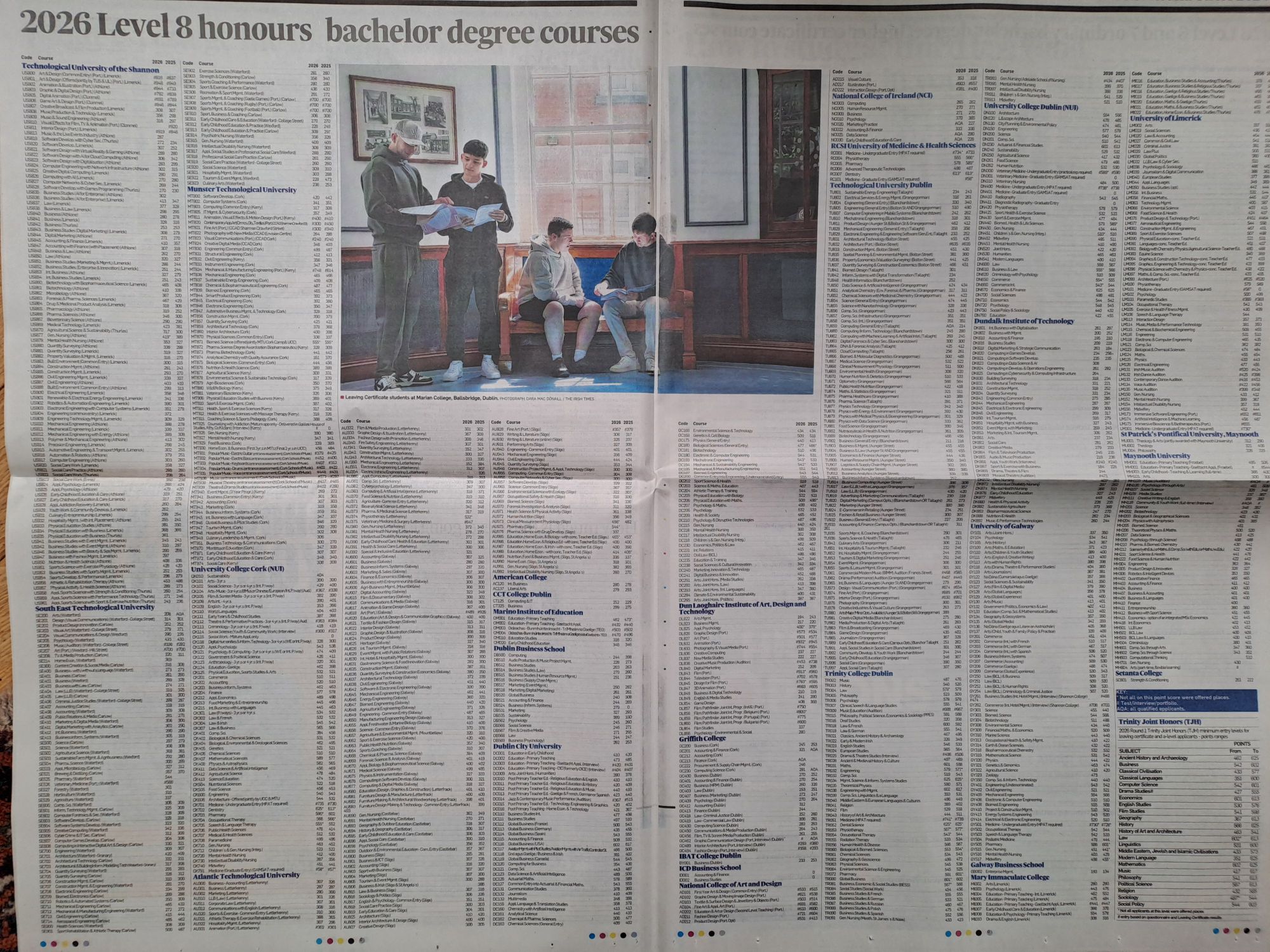
Update: 27/8/206. Here is the traditional Irish Times supplement with all first-round offers, confirming most courses at Maynooth are bucking the national trend by going down rather than up: