Archive for OJAp

Scopus Listing for the Open Journal of Astrophysics

Posted in Open Access with tags , , , on January 6, 2024 by telescoper

I have been asked a number of times about whether or not the Open Journal of Astrophysics will be listed on Scopus. For myself,  I couldn’t care less about getting listed by Scopus – which is a profit-making service run by publishing giant Elsevier as a gate-keeper for the academic publishing industry. I have, however, heard from many individuals around the world that their research managers and the like actually take it seriously, to the extent that a journal isn’t counted as a journal unless Scopus tells them that is the case.

I’m well aware that hanging the “Approved by Elsevier” tag on the Open Journal of Astrophysics would open us up to the accusation that we collaborating with the enemy. I fully understand that moral objection, but I had to weigh it up against the serious practical difficulties facing researchers who are being forced to pay for Gold Open Access as a result of the absence of OJAp from the Scopus approved list. In the end I decided to apply, but to continue to argue against the use of Scopus and related proprietary databases by research institutions as I consider them just as corrosive as league tables.

Last November, therefore, I decided to hold my nose and apply for Scopus listing; I blogged about this here. Just to clarify, although institutions and organizations pay to subscribe to Scopus, a journal doesn’t have to pay to be listed. The application process, though free, is nevertheless rather time-consuming and I was told to expect the process to take several months. I submitted the application on 21st November 2023.

I was quite surprised yesterday (5th January 2024) to receive an email from Scopus containing the following:

The Scopus Content Selection & Advisory Board (CSAB) has reviewed your application and approved it for coverage.

For your information, the reviewer comments are copied below:

+ The articles are consistently of high academic quality, consistent with the journal’s stated aims.
+ This title is a very welcome addition to the literature.

So there we are. The Open Journal of Astrophysics will indeed be listed on Scopus, though I’m told it might take a few weeks to appear as such. From now on, whenever anyone asks me about this I have a definite answer!
This has, however, reminded me to re-apply for listing by Clarivate. I did apply for this way back in March but the application was rejected on the grounds that we weren’t publishing enough papers (although we publish more papers than many of the journals currently listed by them). Since then our rate of publication has increased substantially, however, so I don’t think they can raise the same objection again.

It will be interesting to see if listing by Scopus makes any difference to the rate of submissions and the geographical distribution of the authors concerned. My guess is it probably will, but not immediately. We’ll just have to wait and see?

The 2023 OJAp Annual!

Posted in OJAp Papers, The Universe and Stuff with tags , on December 29, 2023 by telescoper

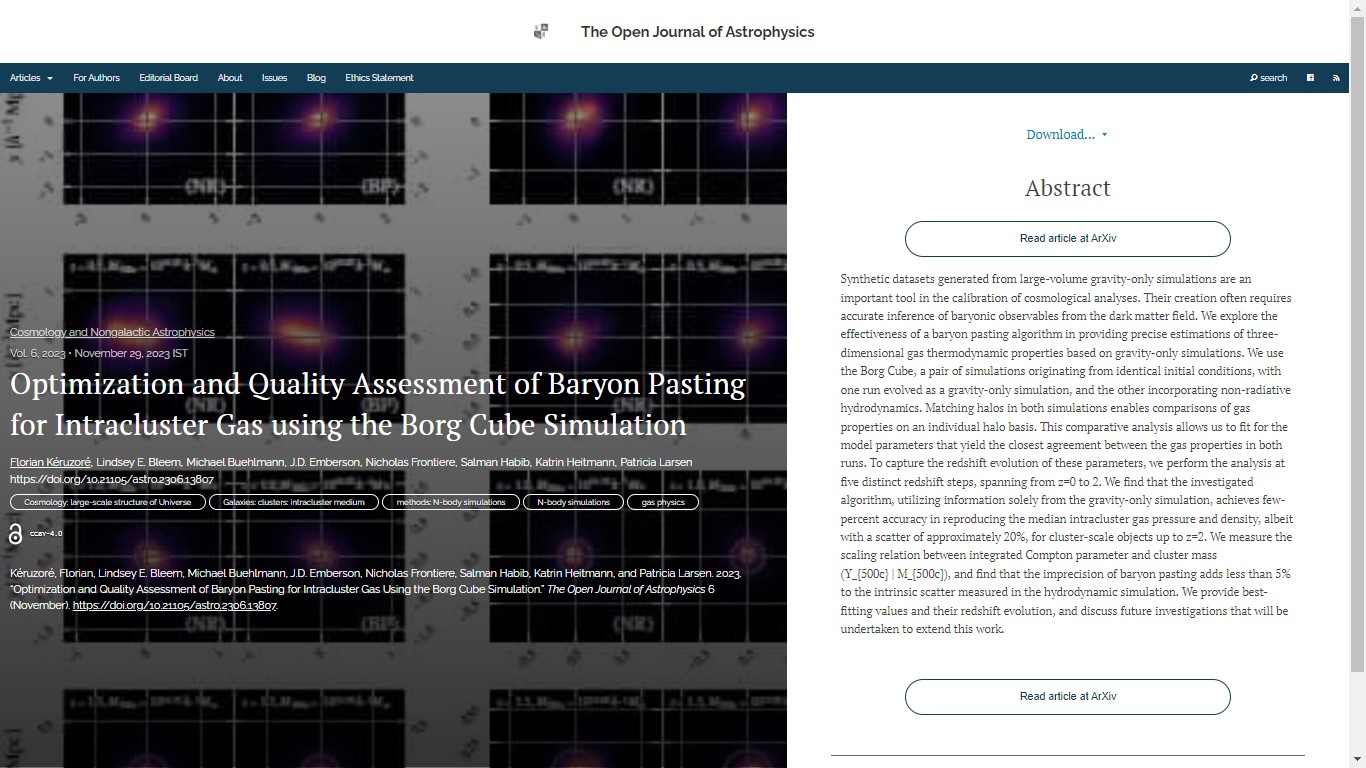
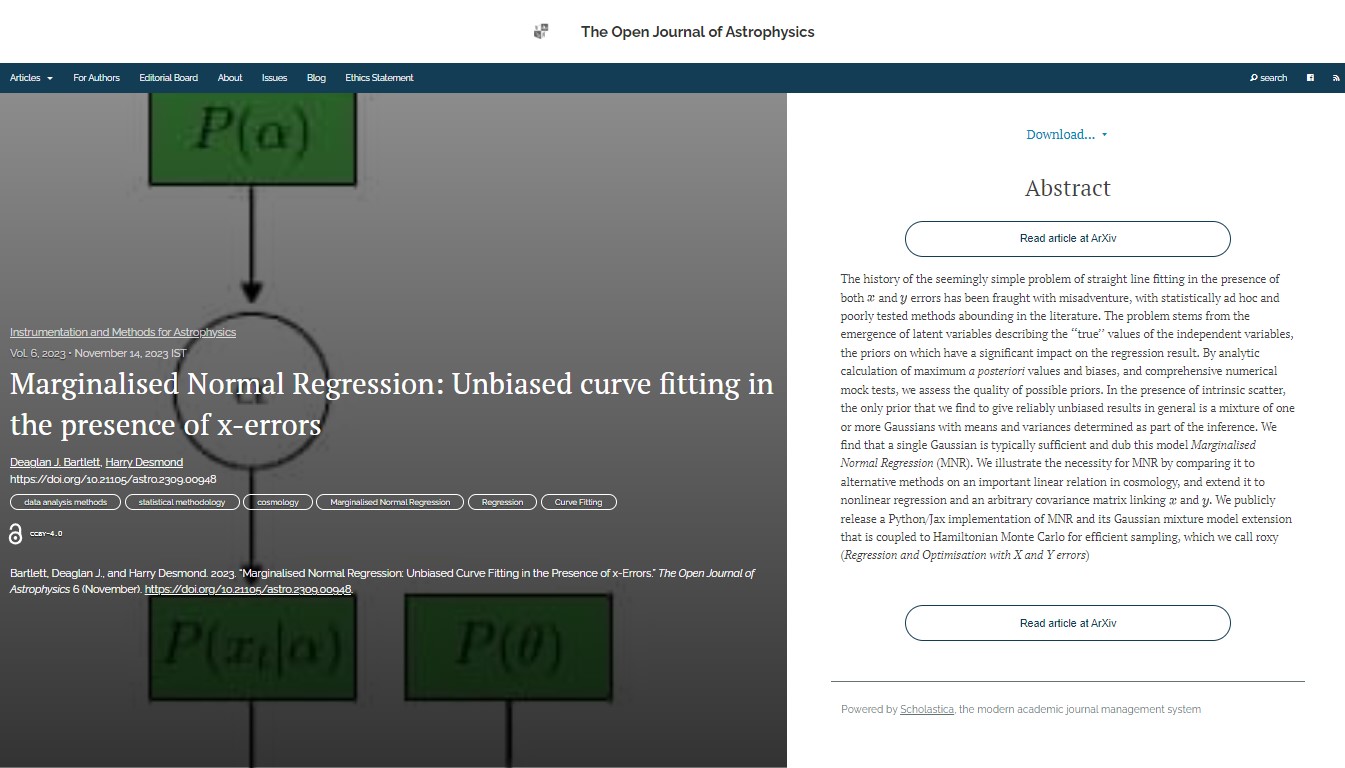
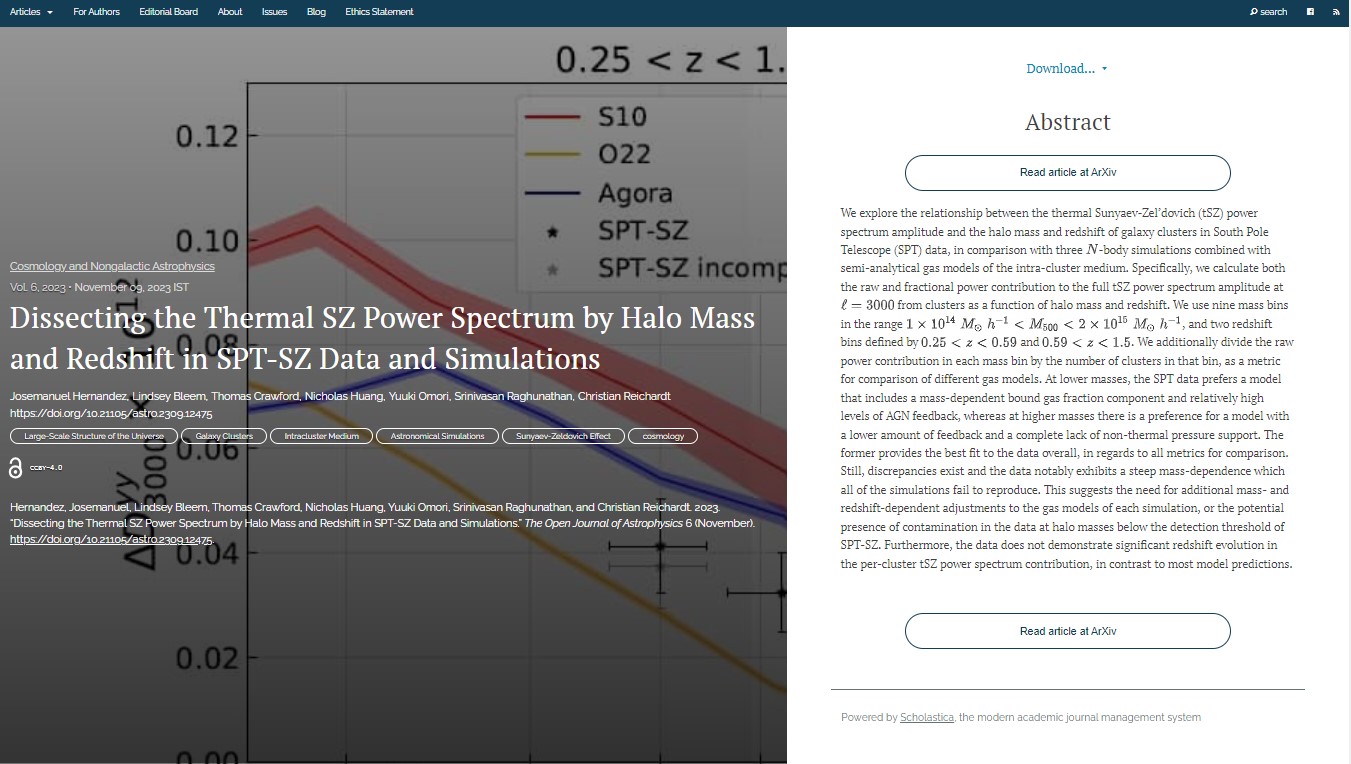
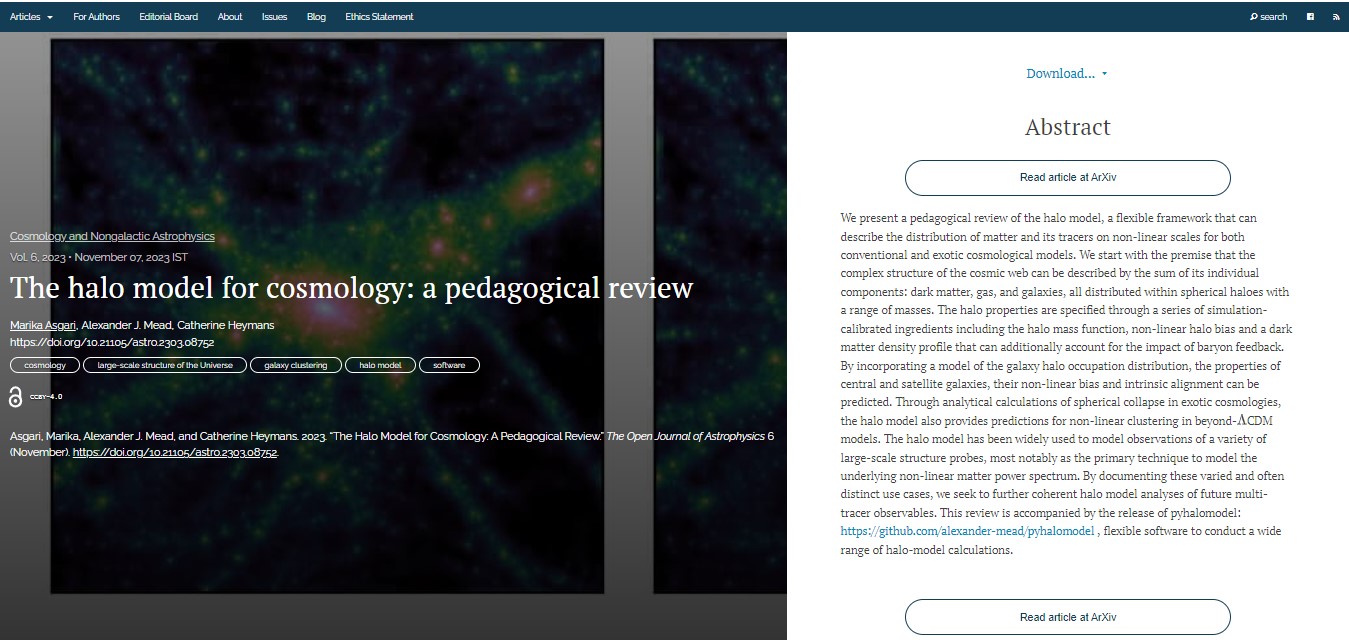
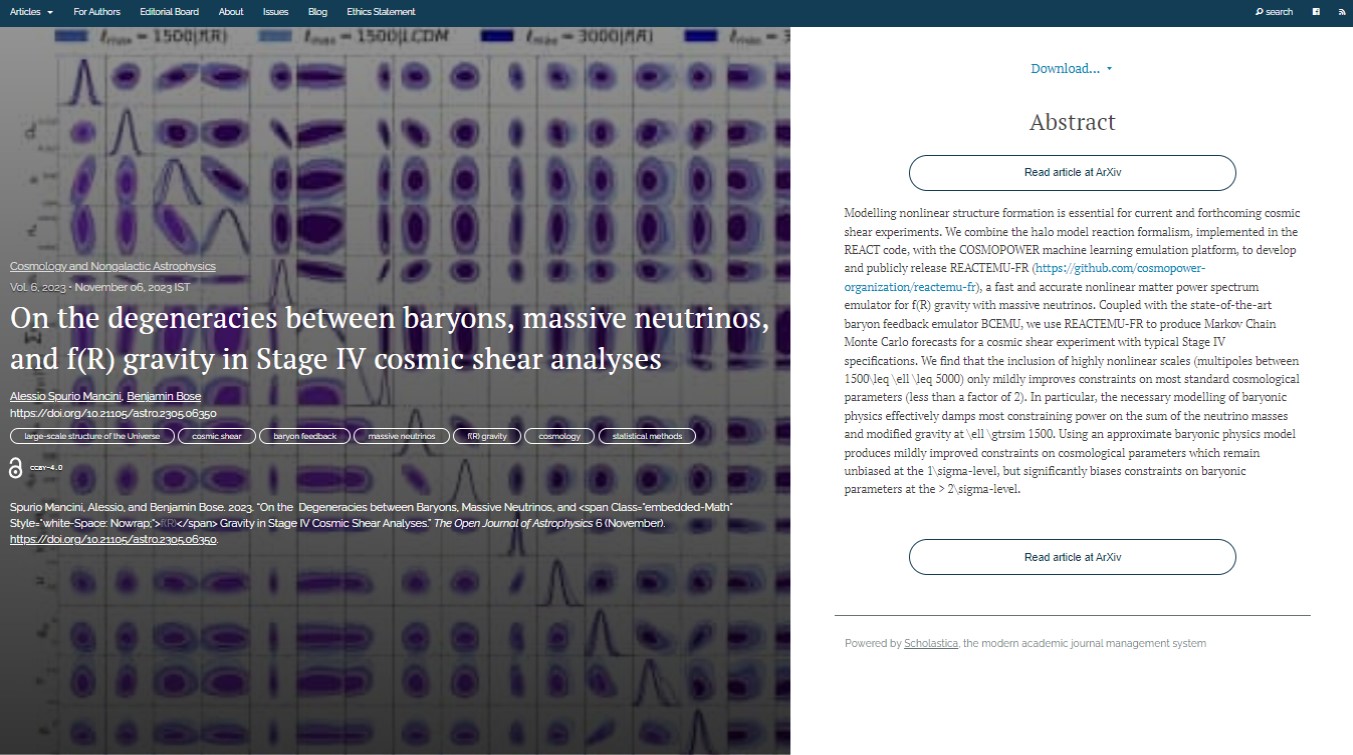
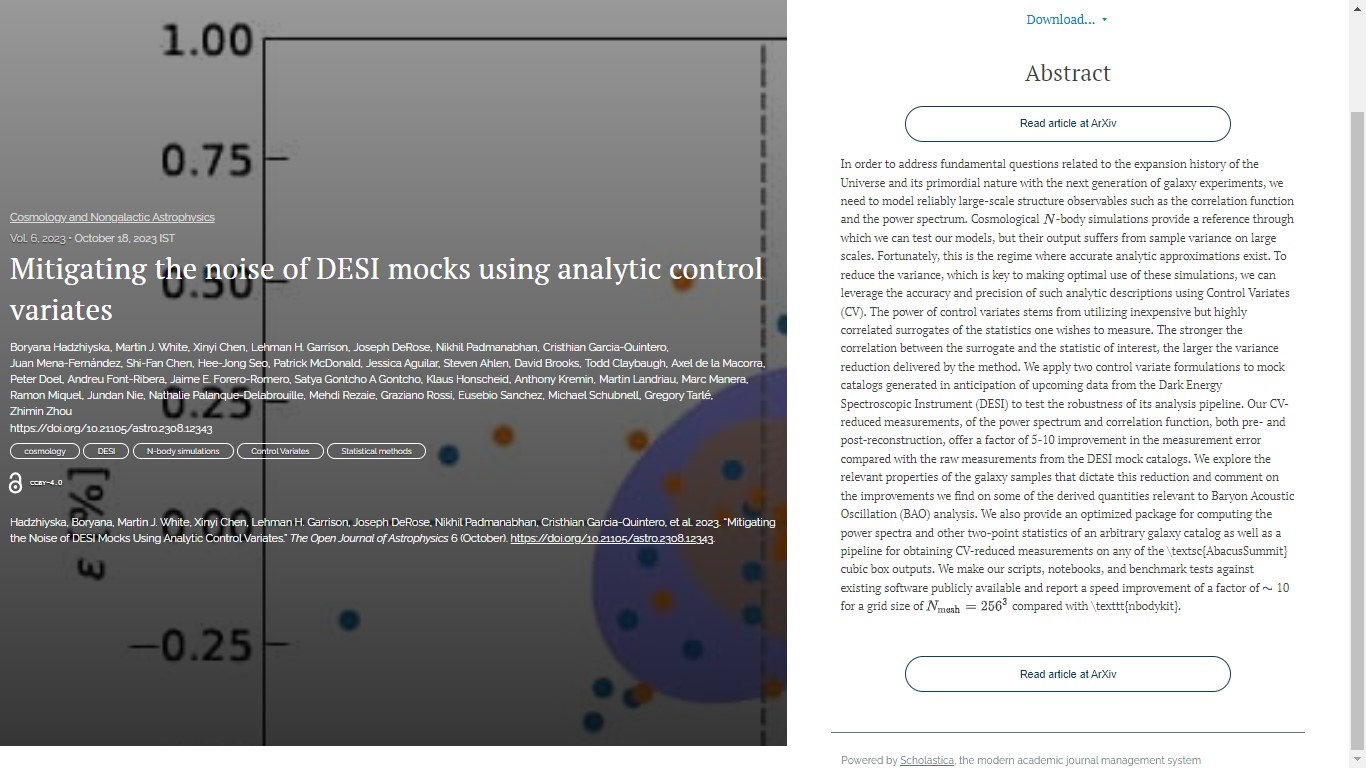
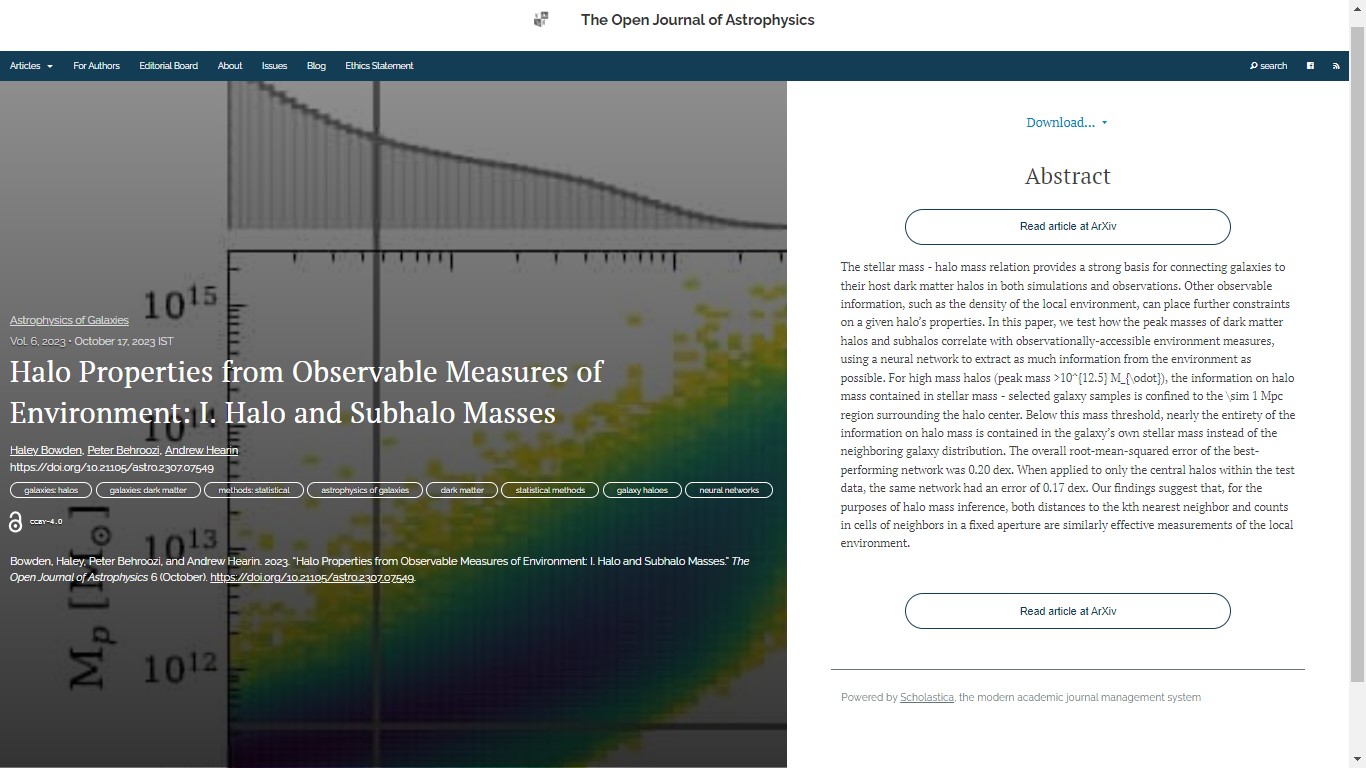
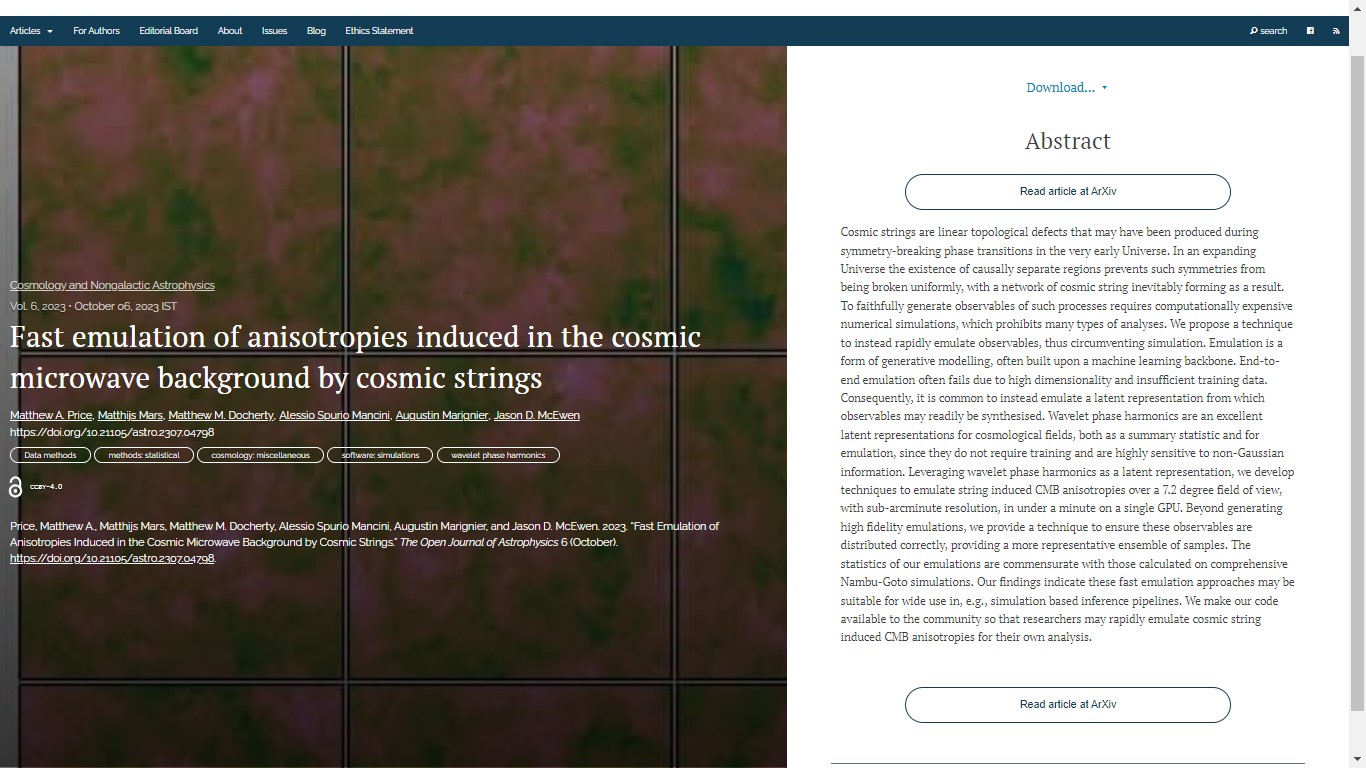
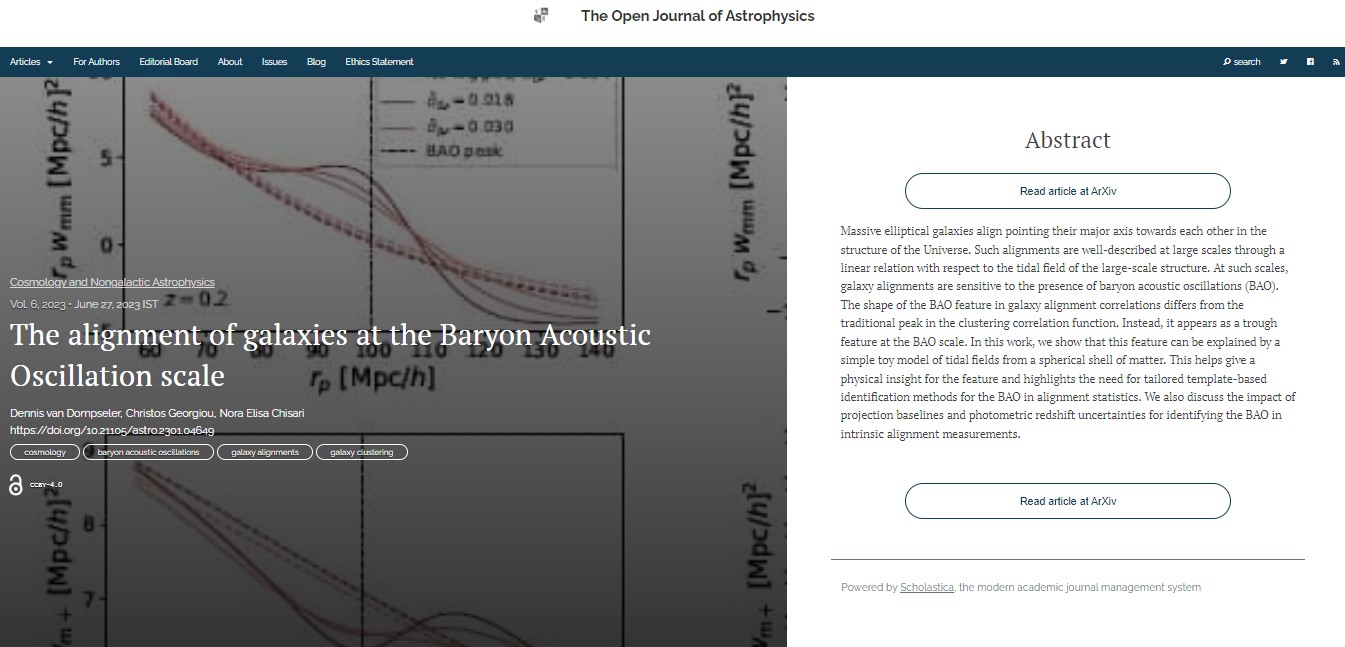
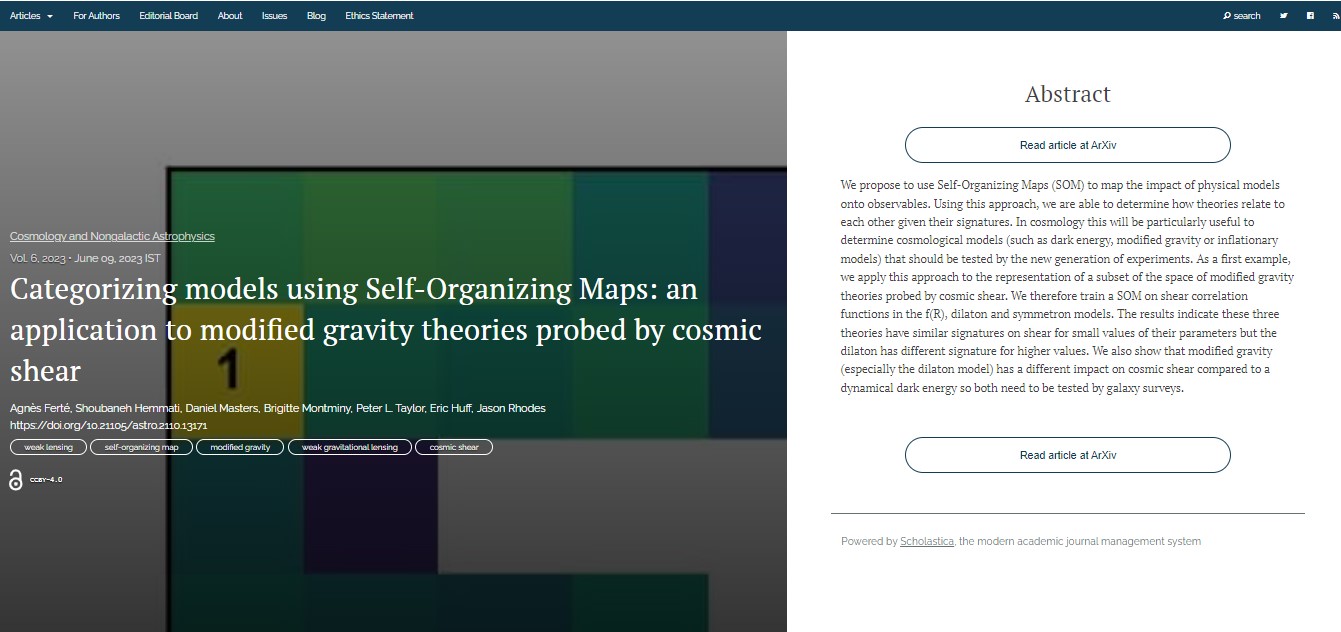
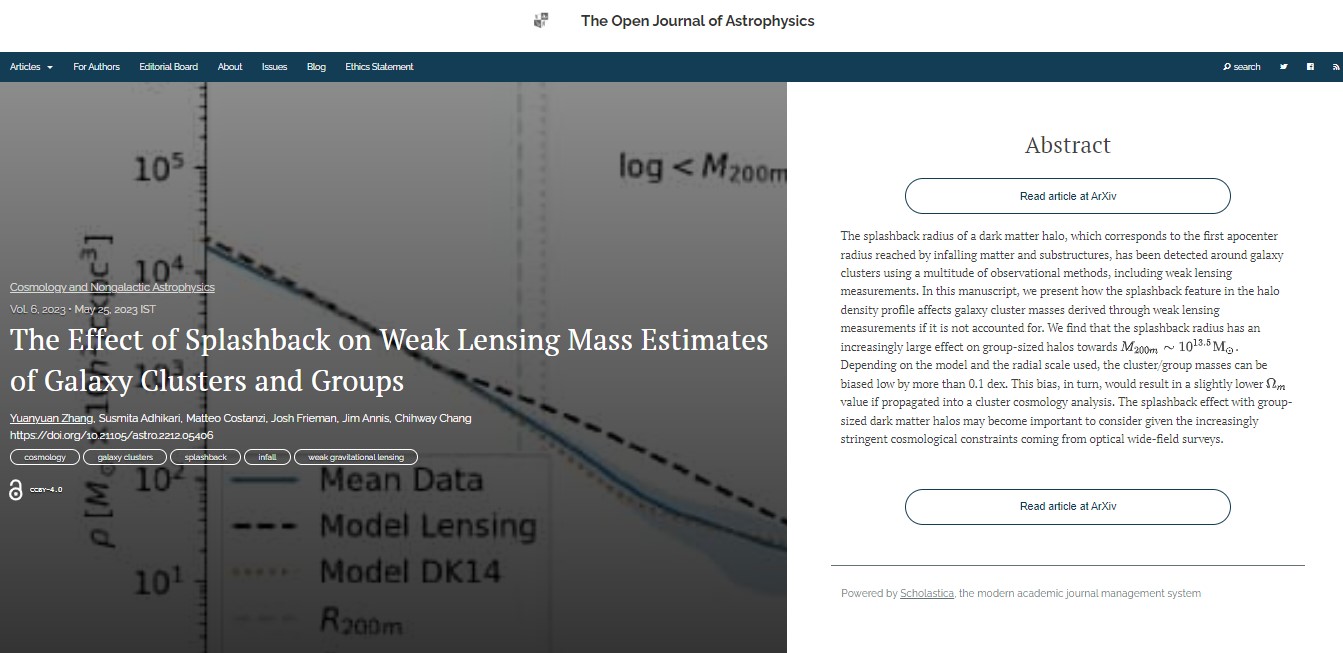
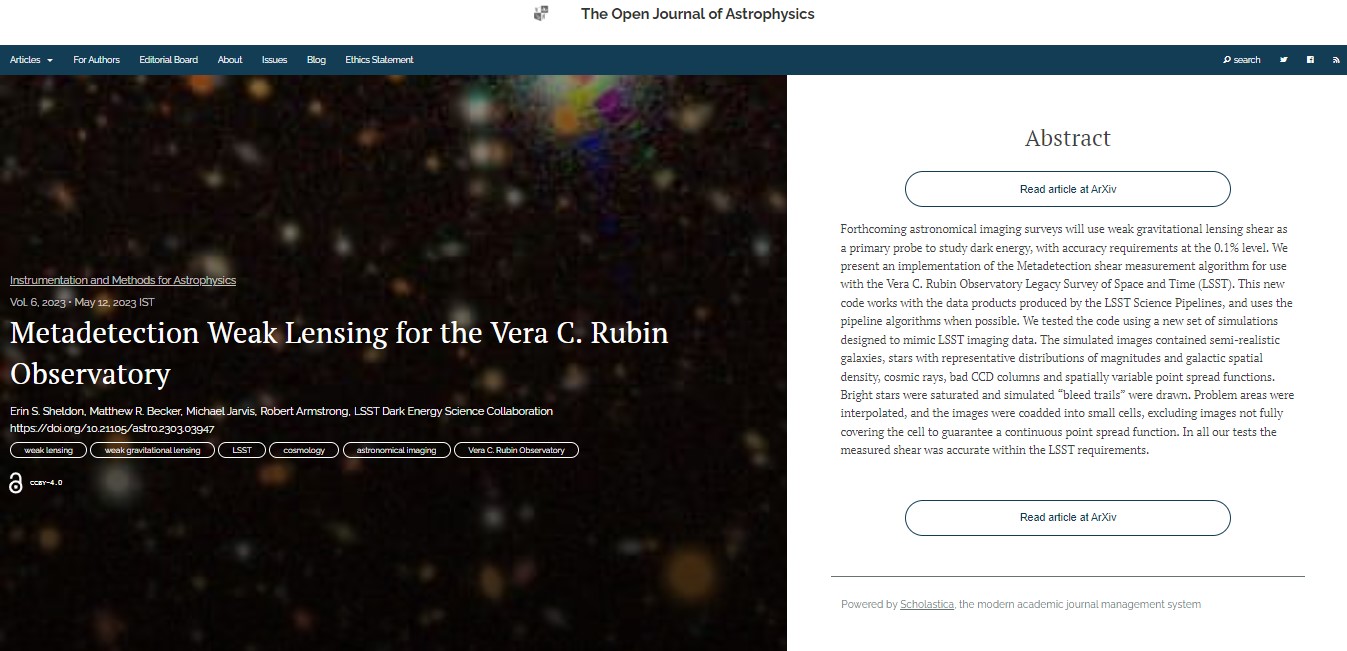
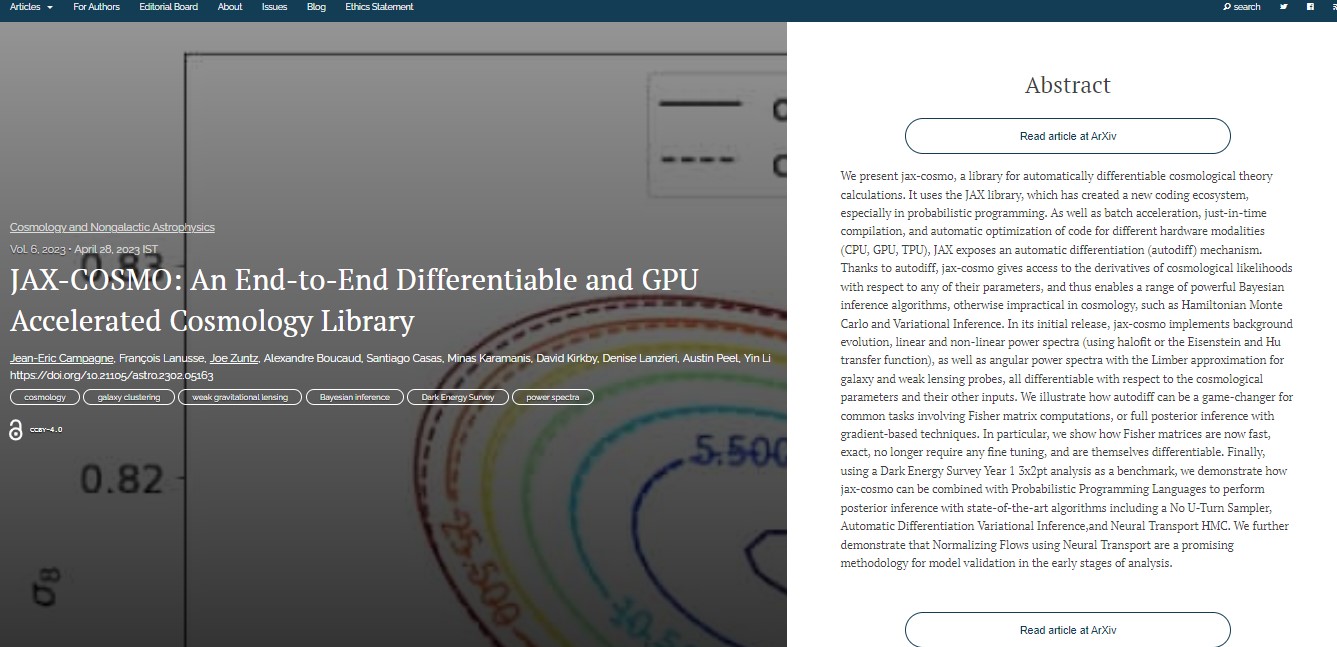
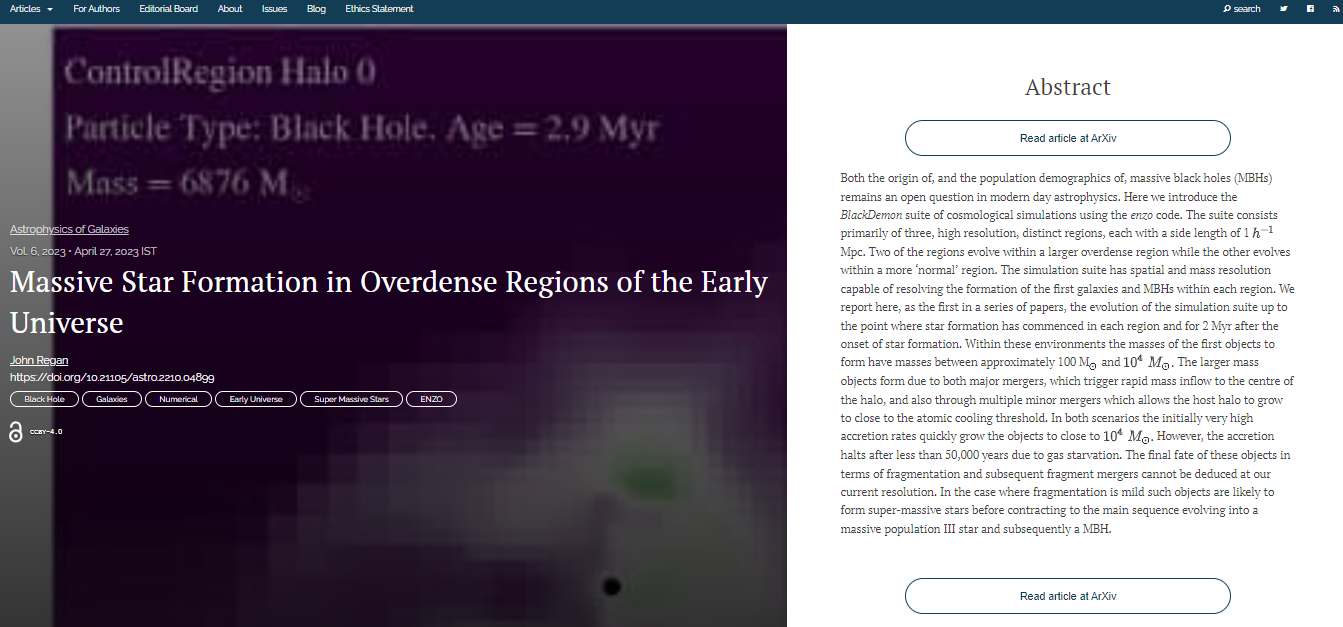
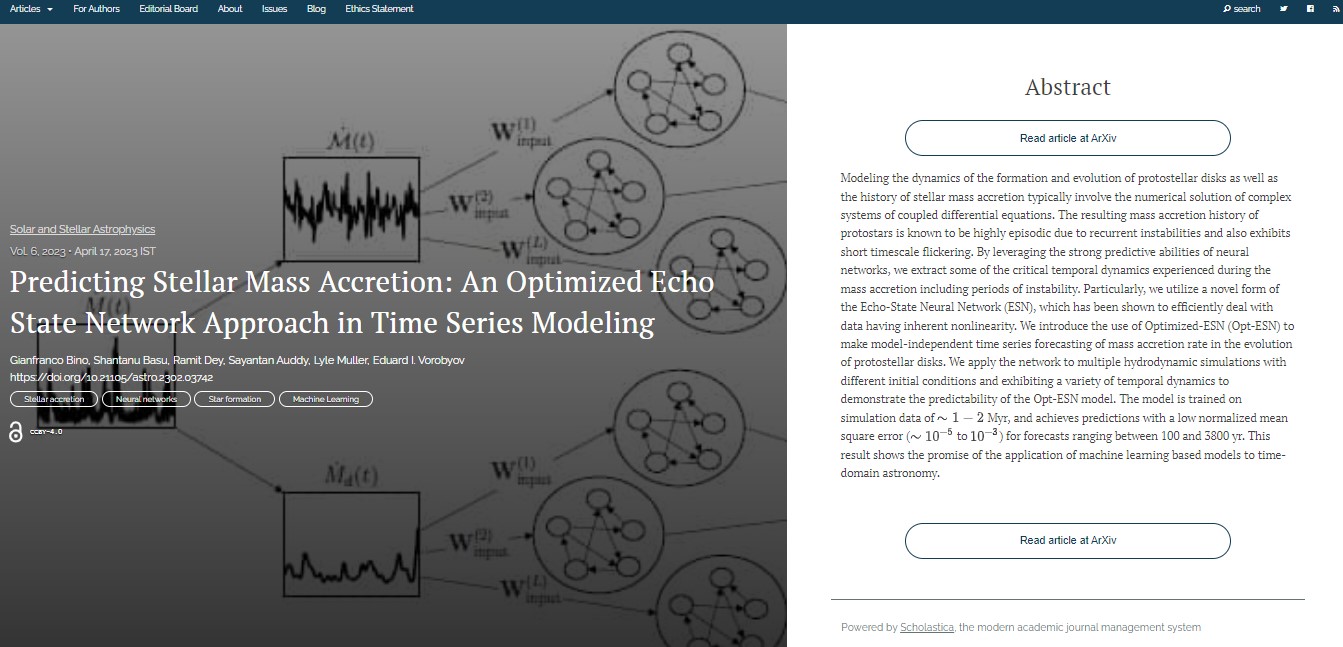
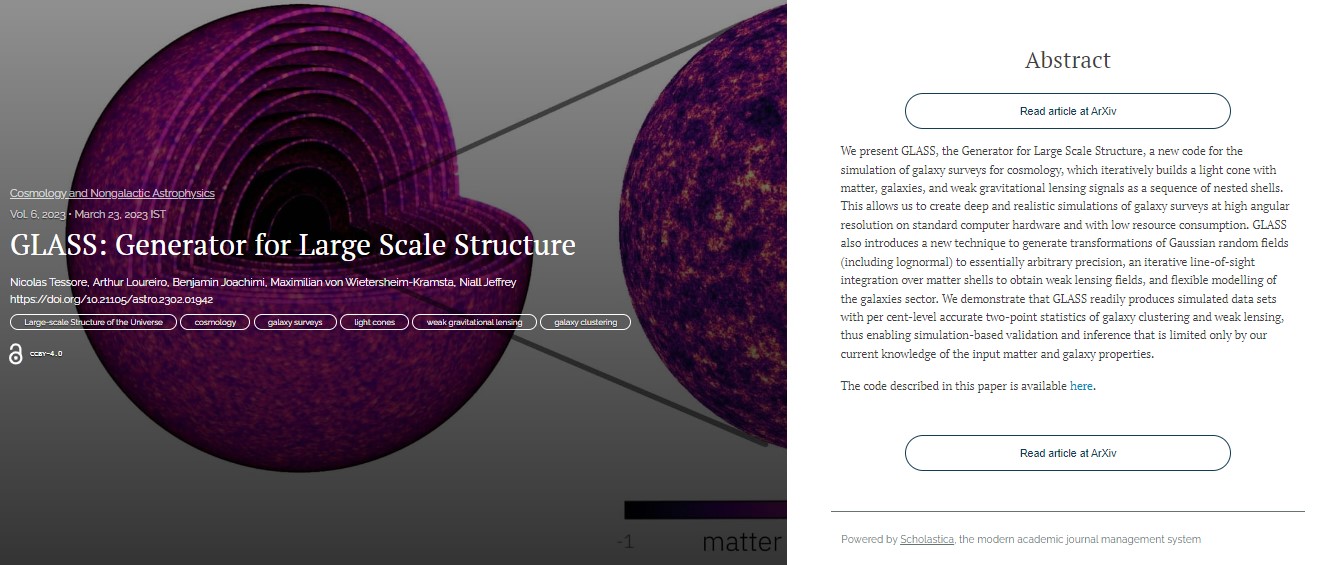
I was leafing through my copy of the 2023 Private Eye Annual and thought it would be fun to do a sort of annual for the Open Journal of Astrophysics, so here you are: all 50 of the papers in Volume 6 (2023) in glorious technicolour.

I could have linked each image to the relevant paper, but I’m way to lazy to do that!

In case you are interested here is the breakdown into different sections:

You can see that over half the papers we published are in Cosmology and Nongalactic Astrophysics, and just three arXiv categories account for 90% of the publications. I hope we can increase our diversity in 2024!

New Publication at the Open Journal of Astrophysics

Posted in OJAp Papers, Open Access, The Universe and Stuff with tags , , , , , , on July 22, 2023 by telescoper

Time to announce yet another new paper at the Open Journal of Astrophysics. This one was published yesterday, on 21st July 2023.

The latest paper is the 27th  so far in Volume 6 (2023) and the 92nd in all. The authors are Sohan Ghodla, Richard Easther, M.M. Briel and J.J. Eldridge, all of the University of Auckland in New Zealand.

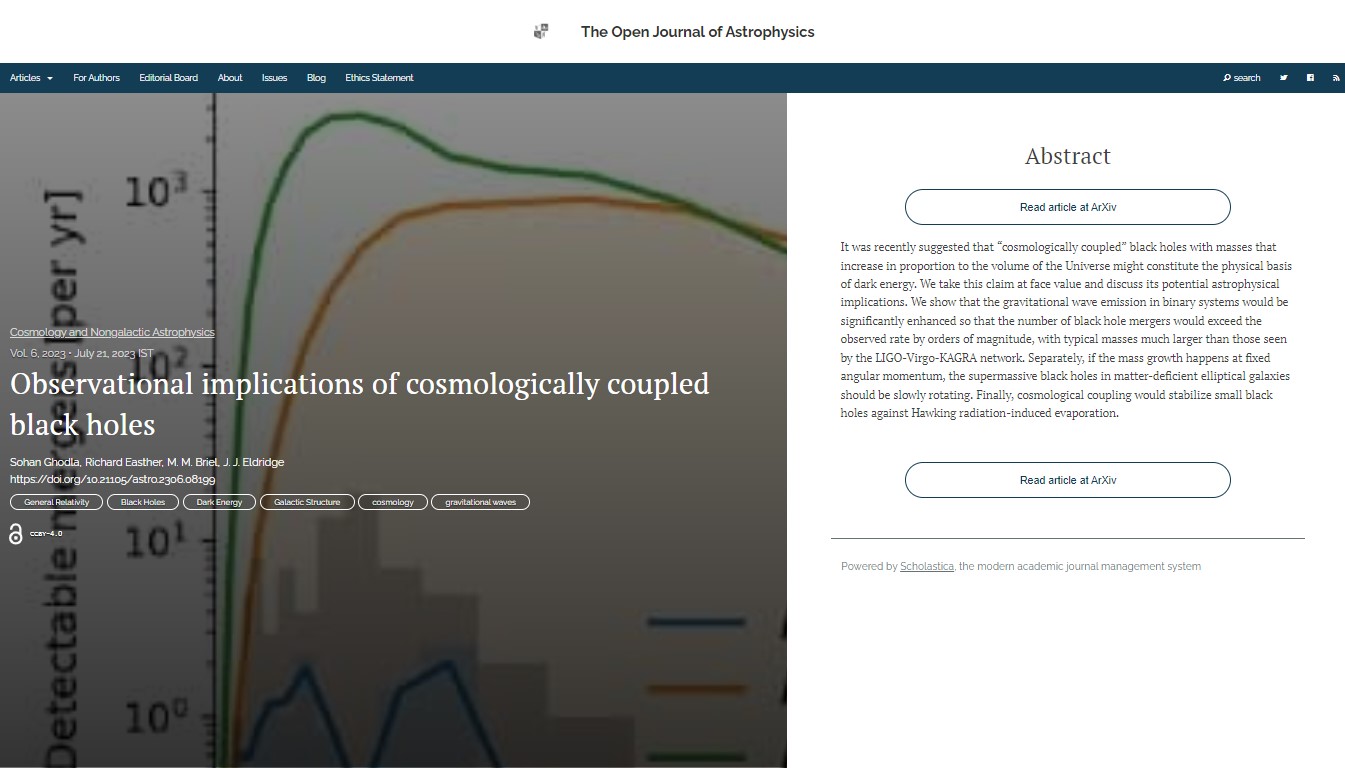
The primary classification for this paper is Cosmology and Nongalactic Astrophysics and its title is “Observational implications of cosmologically coupled black holes”.  The paper elucidates some of the consequences of a suggestion that the interaction between black holes and the global properties of space-time underlying explanation for dark energy. The key result is that the existence of cosmologically-coupled black holes implies a much larger rate of black-hole merger events than is observed.

The papers to which this is a response are mentioned here. For reference ,these earlier works were published in The Astrophysical Journal and The Astrophysical Journal Letters. There is also a detailed twitter thread about this paper by Richard Easter, posted when it was submitted as a preprint to the arXiv last month:


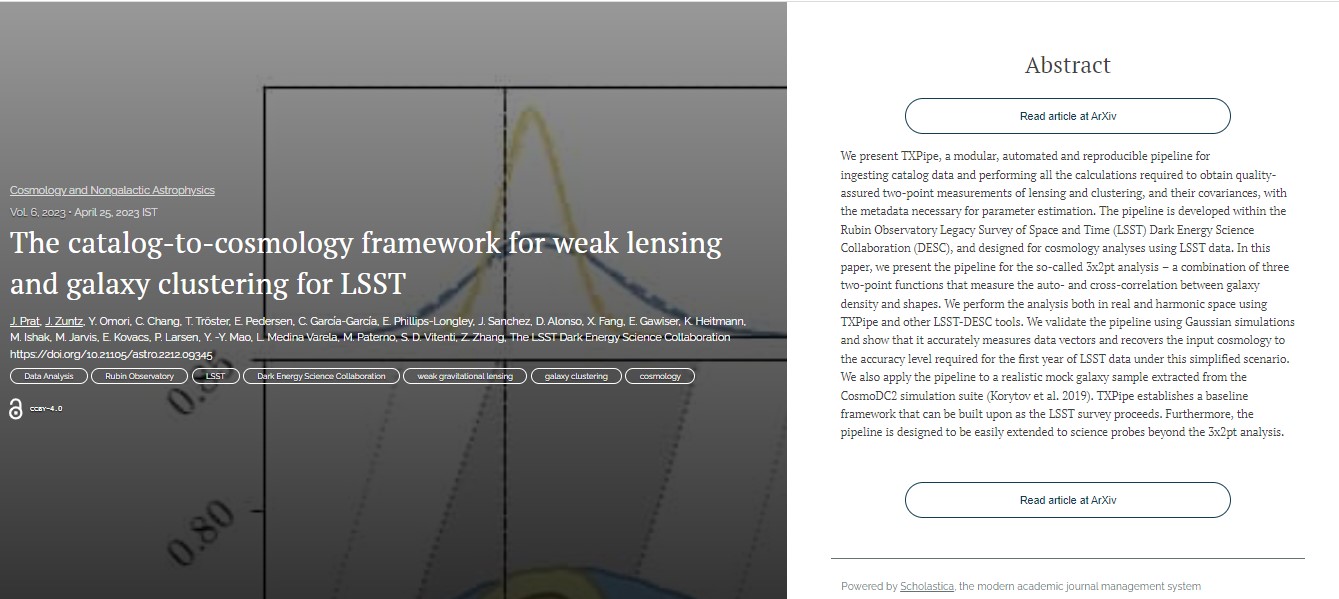
Anyway, here is a screen grab of the overlay of the published version which includes the  abstract:


You can click on the image of the overlay to make it larger should you wish to do so. You can find the officially accepted version of the paper on the arXiv here.

To Preprint or not to Preprint?

Posted in Open Access with tags , , , , on May 16, 2023 by telescoper

In my capacity as managing editor of the Open Journal of Astrophysics I’ve received a few emails recently disagreeing with our policy of asking authors to submit their papers to the arXiv before submitting them to OJAp. Before reflecting on the wider issue, let me just point out that we don’t actually require papers to on the arXiv first. It is possible to submit a PDF directly to the Scholastica platform. We do however say in our For Authors page:

We strongly encourage authors to submit in the manner described above (i.e. on the arXiv first). We can receive and review papers submitted directly to this platform but since the final version must be on the arXiv in order to be published we feel it is far better to submit it there first in order to establish that it is on an appropriate topic for this journal.

Looking back over the 81 papers we have published, only a handful were submitted directly to the platform; the vast majority were put on the arXiv first.

This behaviour is in some sense a continuation of a very old practice in astrophysics. I can’t resist sharing this, one of the interesting astronomical curiosities I’ve acquired over the years, which is a preprint of the classic work of Burbidge, Burbidge, Fowler and Hoyle in 1957 (a paper usually referred to as B2FH after the initials of its authors), which is such an important contribution to the literature that it has its own wikipedia page.

Younger readers will probably not realize that preprints were not always produced in the electronic form they are today. We all used to make large numbers of these and post them at great expense to (potentially) interested colleagues before publication in order to get comments. That was extremely useful because a paper could take over a year to be published after being refereed for a journal: that’s too long a timescale when a PhD or PDRA position is only a few years in duration. The first papers I was given to read as a new graduate student in 1985 were all preprints that were not published until well into the following year. In some cases I had more or less figured out what they were about by the time they appeared in a journal!

The B2FH paper was published in 1957 but the practice of circulating preprints persisted well into the 1990s. Usually these were produced by institutions with a distinctive design, logo, etc which gave them a professional look, which made it easier to distinguish `serious’ papers from crank material (which was also in circulation). This also suggested that some internal refereeing inside an institution had taken place before an “official” preprint was produced and this lending it an air of trustworthiness. Smaller institutions couldn’t afford all this, so were somewhat excluded from the preprint business.

With the arrival of the arXiv the practice of circulating hard copies of preprints in astrophysics gradually died out, to be replaced by ever-increasing numbers of electronic articles. The arXiv does have some gatekeeping – in the sense there are some controls on who can deposit a preprint there – but it is far easier to circulate a preprint now than it was.

It is still the case that big institutions and collaborations insist on quite strict internal refereeing before publishing a preprint – and some even insist on waiting for a paper to be accepted by a journal before adding it to the arXiv – but there’s no denying that among the wheat there is quite a lot of chaff, some of which attracts media coverage that it does not deserve. It must be admitted, however, that the same can be said of some papers that have passed peer review and appeared in high-profile journals! No system that is operated by human beings will ever be flawless, and peer review is no exception.

Nowadays, in astrophysics, the single most important point of access to scientific literature is through the arXiv, which is why the Open Journal of Astrophysics was set up as an overlay journal to provide a level of rigorous peer review for preprints, not only to provide quality control but also to improve papers through the editorial process. In fact, I think the latter is more important than the former.

Ethics Statement for the Open Journal of Astrophysics

Posted in Open Access with tags , , , on August 3, 2022 by telescoper

For various reasons I spent yesterday evening, the last evening of my “break”, concocting an Ethics Statement for the Open Journal of Astrophysics. I don’t know much about this sort of thing so some of the text is based on similar statements elsewhere, e.g. at the AAS Journals site. So far we haven’t had many instances of misconduct but I have had to ban a couple of authors for violations.

Anyway, you can find the statement on the OJAp website but I’ve copied it below in case anyone has suggestions of things we might wish to add. If you have any such comments please use the box below:

–o–

  1. Ethics and Professionalism
    Authors of papers published in the Open Journal of Astrophysics (OJAp) are expected to adhere to basic standards of professional ethics and conduct that are common across all areas of scholarly publishing. Because we are an arXiv overlay journal we also require adherence to the specific standards stipulated in the arXiv code of conduct of conduct. By submitting a paper authors affirm that their work is theirs, is original and has not been published elsewhere. All parties are also expected to conform to common standards of professional respect and civility. This page summarizes the expected standards of professional and ethical conduct required for OJAp.
  2. Plagiarism (including Self-Plagarism)
    Plagiarism (understood as the act of reproducing text or other materials from other papers without properly crediting the source) represents a serious ethical breach, and may constitute legal breach of copyright if the reproduced material has been previously published. This includes repeating text from previously published papers by the author or authors (i.e., “self-plagiarism”). The arXiv submission process does an initial screen for plagiarism, and we will look very carefully at submissions that have triggered the arXiv filter.
  3. Citations and References
    Articles published in OJAp should include citations to previously published articles which are directly relevant to the results being presented. This requirement is especially important when new ideas or results are being presented. Deliberate refusal to credit or cite prior or corroborating results represents a breach of professional ethics, and can result in summary rejection of a manuscript but an unintentional failure to cite a relevant article does not necessarily imply misconduct. Responsibility for updating references after acceptance (but before publication) of an article rests fully with the authors, but the same principles should apply.
  4. Conflicts of Interest
    The referees selected by the editor assume responsibility for evaluating the scientific veracity, clarity, and significance of the results presented. For such a system to function effectively it is essential that the referee be free of any conflicts of interest that might influence the content or the promptness of the review. Authors may identify individuals who they believe are conflicted and should not serve as referees. Referees also have a responsibility to recuse themselves if they feel a conflict may arise. Editors are required to disqualify themselves whenever a real or perceived conflict is present.
  5. Confidentiality
    The Editorial Board of OJAp will not reveal the identities of referees nor the contents of peer-review-related materials to individuals outside of the respective peer-review process. Referees are also bound by strict confidentiality; neither the manuscripts nor the contents of referee correspondence may be shared with other parties without written permission from the editor. Authors are not bound by similar confidentiality requirements (for example, they may choose to consult with co-authors and colleagues when revising a manuscript in response to a referee report), but public dissemination of the contents of referee reports and editorial correspondence is highly inappropriate.
  6. Professional Conduct
    All participants in the publication process, including Editors, Authors and Referees, are expected to conform to basic standards of professional courtesy, and respect the basic rules and guidelines that govern the peer-review and publication process. Authors should also recognize that all our Editors and Referees are volunteers who give their time freely; that’s part of the reason why the journal is free. Personal attacks or verbal abuse are unacceptable and OJAp reserves the right to refuse submissions from individuals who repeatedly violate these guidelines or refuse to cooperate with editors and referees in the normal peer review and publication processes.
  7. Allegations of Misconduct
    The integrity of OJAp rests on the professionalism of its authors, referees, and editors. Alleged cases of unethical conduct within the editorial process will be investigated vigorously by the Editor-in-Chief or an appropriately delegated individual or individuals and with respect for confidentiality. Accusations of misconduct falling outside of the peer review or publication process may be more properly directed elsewhere. OJAp also recognizes its obligation to protect their authors and referees against malicious, frivolous, vexatious or unfounded allegations of misconduct. Repeated complaints of this type by individuals may be summarily dismissed.