Archive for Royal Astronomical Society

Postcard from Cardiff

Posted in Biographical, Cardiff, Politics, Rugby with tags , , , on March 16, 2014 by telescoper

So here I am in Cardiff for the weekend, relaxing after a very busy and stressful week. It’s nice to have the option to get away like this, especially in the spring sunshine, so I’m glad I kept the Cardiff house going rather than try to sell it the moment I got the job at Sussex University. I have been working very long hours recently and with another month to go before the end of teaching term, I think I need to make better use of the weekends if I’m going to avoid a state of complete exhaustion.

On Friday I attended a meeting of the Council of the Royal Astronomical Society (of which I am an elected member) followed by a very interesting Open Meeting and a nice dinner with the RAS Club. After all that I took the late train to Cardiff instead of going back to Brighton.

During the journey I thought quite a lot about Tony Benn; the news of his death at the age of 88 was announced on Friday morning. Although I didn’t agree with his political views on some things, he was a person I admired enormously and I am very sad that he is no more.

I only ever met Tony Benn once, many years ago, as it happens, on a train from Brighton to London. It was one of those old-fashioned carriages, divided into compartments each with a door. I had almost missed the train and was so flustered when I got on that it took me some time to recognize the gentleman opposite who was just lighting his pipe.

I summoned up the nerve to speak, shook his hand, and introduced myself. We were the only occupants of the carriage and we talked for the entire journey – an experience I’ve never forgotten. In person Tony Benn was wonderful: charming, kindly, impeccably polite and above all absolutely fascinating to talk to. As I recall it, I did most of the listening. Not that I minded. I’m a man who likes talking to a man who likes to talk..

People also forget that Tony Benn was one of the very few politicians to champion LGBT rights. It’s now a fashionable thing, but it wasn’t then back in the dark days of Section 28.

So I’d just like to record a little personal farewell to Tony Benn. There’s nobody of his stature in current British politics, and none whose company I’d like to spend a train journey in, either.

Yesterday I was out and about in sunny Cardiff running various undemanding errands, in the course of which I came across an internet cafe. I’ve never actually used one of those before, and was quite surprised that an hour’s access cost just £1. I took the chance to sit down for a bit and wrote yesterday’s blog post there.

Saturday was the last day of the Six Nations rugby and Wales were hosting Scotland. The two sets of supporters were mingling and imbibing throughout the city. When it came to the match, Wales thrashed Scotland 51-3.

Earlier England had comfortably beaten Italy so were top of the table, but would only win the competition if Ireland lost the last game to France in Paris. It was an exciting finale, with stout Irish defence enabling them to cling on to a lead of just two points. So well played Ireland, who probably deserved the title, but also good signs for England whose young side have performed admirably this year. Better luck next year?

At least English supporters can now enjoy one of their favourite pastimes: blaming everything on the French.

It’s warm and sunny again today so I think I’ll take another walk around. I really miss Cardiff, but one has to follow one’s star wherever it leads.

Why is Astronomy Important?

Posted in The Universe and Stuff with tags , , , , on November 5, 2013 by telescoper

There’s an interesting and unusual article on the arXiv today entitled Why is Astronomy Important? Here is the abstract:

For a long time astronomers and other scientists believed that the importance of their work was evident to society. But in these difficult days of financial austerity, even the most obvious benefits of science have to undergo careful scrutiny. Eradicating poverty and hunger is a worldwide priority, and activities that do not directly attempt to resolve these issues can be hard to justify and support. However, several studies have told us that investing in science education, research and technology provides a great return not only economically, but culturally and indirectly for the population in general and has helped countries to face and overcome crises. The scientific and technological development of a country or region is closely linked to its human development index a statistic that is a measure of life expectancy, education and income.

The full text of the paper can be found on the IAU website here.

The article focusses on matters relating to the transfer of technology between astronomy and, e.g. industry, aerospace, and medicine, its effect on technology we are familiar with in everyday life, on astronomy as an exemplar of international collaboration and on its wider cultural and philosophical impact. Many of the points made in this article can also be found in the Royal Astronomical Society‘s free publication Beyond the Stars: Why Astronomy Matters which is available for free online here.

I recommend you read the full article and make your own mind up about why astronomy is important. I have just two comments, which are partly questions. The first is that I’ve always had a bit of a problem with the interpretation of correlations like that mentioned in the last sentence of the abstract (between technological development and the human development index). The issue is the basic one that correlation of two phenomena does not necessarily imply that one causes the other. Is it really possible to establish rigorously a causal link between spending money on astronomy and wider societal benefits? I’m not saying that there isn’t such a link, just that it’s difficult to interpret evidence which is dependent on so many factors. Could one not argue instead that more developed countries spend more money on astronomy because they can afford to?

The other thing that troubles me with arguments of the type presented in the paper is that there is a danger that  emphasizing the transfer of knowledge to other disciplines as the rationale for funding astronomy implicitly negates the argument that astronomy has intrinsic worth of its own. In other words, answering the question “Why is Astronomy important?” seems to accept at the outset that it isn’t.  If it is indeed the case that we can only justify astronomy because it has produced spin-offs in, e.g., medicine, why not just spend more money on medicine and forget the astronomy?

I’m not saying that the technology transfer arguments carry no weight, just that they are definitely double-edged and should be used with caution. For the record, I think we should fund Astronomy (and other sciences) primarily because they are an essential part of the fabric of our culture and civilization; all the rest is icing on the cake. In other words, I support state funding for the sciences for very much the same reasons as for the arts.  I’m fully aware, however, that this unlikely to persuade the powers that be as effectively as an appeal to economic benefits; that’s why science funding has fared so much better than arts funding in this age of austerity.

Vote Away Day

Posted in Biographical, Science Politics with tags , on May 8, 2013 by telescoper

Well, I’m up early today because no sooner do I get back to work when I have to leave for the South East Physics Network SEPNET “Awayday”. Actually it’s more than a day, more like a day and a half but it’s pointless quibbling about such things. Anyway, it’s going to be held at the Cosener’s House in Abingdon and will be my first visit to that august establishment.

Before departing into the wilds of Oxfordshire, however, I thought I’d just post a quick reminder to any Fellows of the Royal Astronomical Society who happen to be reading this blog that the deadline is approaching for votes in the election of a new President and new Members of Council.Electronic votes must be received by 12 noon on 9 May 2013, and paper votes by the start of the Annual General Meeting on 10 May 2013, so if you are eligible but haven’t voted yet please get your finger out.

In the interest of full disclosure I should make it clear that I am standing for election to Council…

Remembering David Axon

Posted in The Universe and Stuff with tags , , , on April 19, 2013 by telescoper

Over the past couple of days there has been a special Memorial Event to remember David Axon, my predecessor as Head of  the School of Mathematics and Physical Sciences at the University of Sussex, who passed away suddenly on 5th April 2012. The memorial event has consisted of a two-day specialist discussion meeting of the Royal Astronomical Society about David’s primary research interest – Massive Black Holes in Galaxies – here on the Sussex campus and will end this afternoon with a Memorial Service in the Meeting House Chapel, which will include music and poetry.


IMG-20130419-00094

Professor David John Axon (1951-2012)

Professor David John Axon (1951-2012)

Although I knew David Axon through his published work I didn’t know him very well at all personally. In fact we only met a couple of times. The first of those occasions was when we’d both applied for a certain job. He was interviewed before me and came into the room in which I was waiting when he had finished. You would never expect such a situation to be comfortable, but it turned out to be so because David was very friendly and direct. Those are precisely the qualities that I’ve heard described over the last few days by many people who knew him far better than I did. People say these qualities reflect his Northern heritage. I won’t argue with that, except to point out that he was born in Doncaster, i.e. in the Midlands….

As David’s successor here at Sussex all I can do is say that he clearly left the School of Mathematical and Physical Sciences in excellent shape, which is testament to the energy and ability he brought to the job that I now hold.  He set a very high standard. Equally clearly, David Axon is sorely missed, by staff and students alike, not just in MPS but throughout the University.

Such occasions are inevitably a bit sad, but this occasion is, as it should be, very much the celebration of a life and I’m sure David will live on in the memories of those who knew him closely, as it will for one person who met him only briefly. Remembering David Axon is something many people will do for a very long time.

Missing the Point on Open Access

Posted in Open Access with tags , , , , , , on January 28, 2013 by telescoper

Blogging this week will be a bit patchy as I try to finish off a few Cardiff jobs before the big move to Sussex at the end of the week. However, I have got time today for a quick comment on an article I saw in yesterday’s Observer.

The piece tries argue  that the government’s plans for Open Access, stemming from the Finch Report, amount to an “attack on academic freedoms”, a stance apparently held by a number of eminent historians (and others). The argument is that the Gold Open Access model preferred by RCUK will require the payment of Article Processing Charges (APCs) which could in some cases amount to thousands of pounds per article. Departmental budget holders (possibly administrators rather than academics) will then have to be involved in decisions about which papers can be funded and which can’t. This, it is argued, will mean that researchers will have much less freedom to publish when, where and what they like – the people holding the purse strings will have the final say.

A similar point was made by Mike Cruise in a strange article that appeared in the latest Astronomy and Geophysics (house organ of the Royal Astronomical Society):

Even in the UK it is not clear how the flow of funding for APCs will work. Will universities limit an academic’s publication rate or where he or she can publish? How and by whom will this funding be controlled? Academic freedom may, perversely, be curtailed as a result of open access.

So does Open Access pose a real threat to academic freedom? The answer is “yes”, but only if the Research Councils persist in forcing academics to pay the extortionate APCs demanded by academic publishers, out of all proportion to the real cost of publishing a paper on the internet, which is (at the very most) a few tens of pounds per article. Publishers want a much higher fee than this because they want to maintain their eye-watering profit margins, despite the fact that the “service” they provide has been rendered entirely obsolete by digital technologies. Any protests against open access should be directed to the real enemy, i.e. the profiteers.

The Finch Report was hi-jacked by the publishing lobby, with the result that RCUK has been persuaded to pour  millions of pounds of taxpayers’ money down a gold-plated drain. The model it recommends is absurd and clearly unsustainable. Low-cost repositories and community-based refereeing can deliver Green Open Access at a tiny fraction of the cost of the Gold Option, by cutting out the middle men.

All that’s needed to defend academic freedoms  is to set up on-line subject-based repositories in much the same way as physicists and astronomers have set up the arXiv. In other words, the historians just need an archive.  They should be comfortable with that idea. And as for refereeing, they can do that the way it will shortly be done in astronomy…

P.S.  Astronomy & Geophysics have invited me to write a response to Mike Cruise’s article; my piece should appear in the April 2013 issue. Hopefully it won’t be behind a paywall.

Dress Codes

Posted in Biographical, Education with tags , , , , , , , on January 11, 2013 by telescoper

Just time for a very quick one before I scoot off to London for this month’s Royal Astronomical Society meeting (and subsequent Club dinner).

Today is the last day of “Revision Week” so I had a two-hour revision class this morning. I gave my final proper lecture at Cardiff University before Christmas, in fact, but this morning was the last teaching of any sort I’ll be doing here before I move to Sussex at the end of the month. If any of the students taking The Physics of Fields and Flows happens to read this, then I wish them the best of luck in next week’s examination!

I won’t be able to mark the scripts (and thus find out how well they’ve all done) until I return from a trip to Brighton next week to carry out interviews for three lectureships in astronomy at Sussex recently advertised. I’m looking forward to that, but I think the three days will be just as gruelling for the panel as for the candidates.

There were some sarcastic comments at the start of today’s class about the fact that I was wearing a suit and tie. It reminded me of an old joke: “Q: What do you call a ‹insert name of institution> graduate who’s wearing a suit? A: The Accused.” I think I can guess which institution most Cardiff students would pick as the butt of that one.

In fact the reason I’m wearing a suit today is that there’s a dress code for the RAS Club, which dines at the Athenaeum. It’s not very strict, actually, just jacket-and-tie, but I usually dust off one of my suits for the occasion as I don’t mind dressing up now and again. The only other clubs I’ve been to that operate a dress code have been very different, but I’ll draw a hasty veil over that.

The RAS Club isn’t particularly posh, actually, nor is it as stuffy as people seem to think. This evening is the Parish Dinner at which the Club elects new members. It’s nice to see quite a few youngsters among the candidates, but the election procedure is so dotty it’s impossible to predict who will get in!

Coincidentally, I got an email about the dress code for next week’s interviews. “Smart casual”, apparently. Since I don’t really know what that means I think I’ll wear a suit, which presumably most of the male candidates will too.

It always seems to me rather peculiar, this thing of dressing up for interviews. The default style of dress for academics is “scruffy”, so it’s a bit odd that we all seem to pretend that it’s otherwise for interviews. I suppose it’s just to emphasize that it’s a formal occasion from the point of view of the interview panel, and to show that the candidates are taking it seriously. I don’t really pay much attention to what interviewees wear, other than that if they look like they’ve just been dragged through a hedge one might infer that they’re  a bit too disorganized even to be a member of the academic staff at a University or that they’re not really putting enough effort into the whole thing.

On the other hand, some people feel so uncomfortable in anything other than jeans and a T-shirt that putting on a suit would either be an unbearable ordeal for them or conflict with their self-image in some fundamental way. Neither of these are intended, so if that’s going to be the case for you, just dress as you normally do (but preferably with something reasonably clean).

This is the time of year that many undergraduate students are putting in their applications for PhD places too. I sometimes get asked (and did yesterday, in fact) whether a (male) candidate for a PhD place should wear a suit and tie for the interview. Having conducted interview days for many years at a number of different institutions, my experience is that a small proportion dress formally for PhD interviews than for job interviews. My advice to students asking about this is just to say that they should try to look reasonably presentable, but suit–and-tie are definitely not compulsory. It’s unlikely the staff interviewing you will dress formally, actually…

Anyway, my views may well differ from those of  my readers so here’s a poll.

I realise this post is written from a male perspective, as women’s clothes are a mystery to me. I hope someone can explain through the comments box what the equivalent categories are for female persons?  At least women are spared the choice of whether or not to wear a tie. Is there an equivalent quandary?

Rolling Boulders…

Posted in Bad Statistics, The Universe and Stuff with tags , , , , , , , , on October 13, 2012 by telescoper

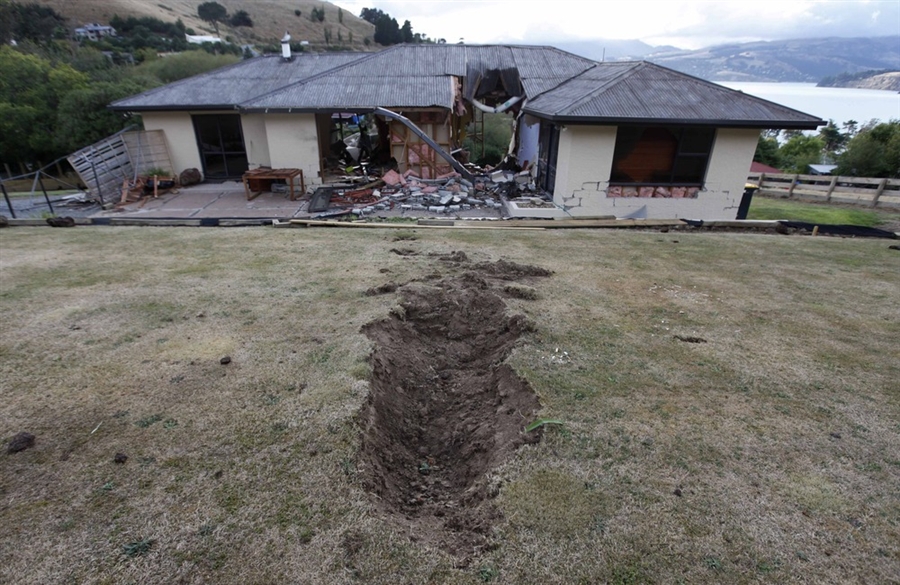
I’m a bit slow to get started this morning, since I didn’t get home until the wee small hours after a trip to the Royal Astronomical Society yesterday, followed by a pleasantly tipsy dinner at the Athenaeum with the RAS Club. Anyhow, one of the highlights of the meeting was a presentation by Prof. Gerald Roberts from Birkbeck on Marsquakes: evidence from rolled boulder populations, Cerberus Fossae, Mars.  The talk was based on a recent paper of his (unfortunately behind a paywall), which is about trying to reconstruct the origin and behaviour of “Marsquakes” using evidence from the trails made by rolling boulders, dislodged by seismic activity or vulcanism.  Here is a sample picture showing the kind of trails he’s using – the resolution is such that one pixel is only 20cm!

There are enough trails to allow a statistical analysis of their distribution in space and in terms of size (which can be inferred from the width of the trail). I had some questions about the analysis, but I haven’t been able to read the paper in detail yet so I won’t comment on that until I’ve done so, but the thing I remember most from the talk were these remarkable pictures of what a rolling boulder can do on Earth. They were taken after the earthquake in Christchurch, New Zealand, in 2011.

A large boulder was dislodged from the top of the hill behind the house in the second picture. It didn’t just roll, but bounced down the slope (see the large furrow in the first picture; similar bouncing trajectories can be seen in the picture from Mars), smashed straight through the house, exited the other side and came to rest on a road. Yikes.

Whither the Learned Societies?

Posted in Open Access with tags , , , , on October 1, 2012 by telescoper

An interesting aspect of the ongoing debate about Open Access publishing is the extent to which “learned societies”, such as the Royal Astronomical Society and the Institute of Physics, rely for their financial security upon the revenues generated by publishing traditional journals.

IOP Publishing is a wholly-owned subsidiary of the Institute of Physics that generates annual income  in the region of £40M from books and journals. This is the largest source of the revenue that the IoP needs to run its numerous activities relating to the promotion of physics.  A similar situation pertains to the Royal Astronomical Society, although on a smaller scale, as it relies for much of its income from Monthly Notices of the Royal Astronomical Society, in which as a matter of fact I publish quite regularly.

Not surprisingly, these and other learned societies are keen to protect their main source of cash. When I criticized the exploitative behaviour of IoP Publishing in a recent blog post, I drew a stern response from the Chief Executive of the Institute of Physics, Paul Hardaker. That comment seems to admit that the high prices charged by IOP Publishing for access to  its journals is nothing to do with the cost of disseminating scientific knowledge but is instead a means of generating income to allow the IoP to pursue its noble aim of  “promoting Physics”. This explains why such organizations have lobbied very hard for the “Gold” Open Access that is being foisted on the research community, rather than the “Green” Open Access that it really wants.

I recently came across another blog post, pointing out that other learned societies around the world are also opposing Green Open Access:

There is also great incentive for the people who manage and run these organisations to defend their cartel. For example, the American Chemical Society, a huge opponent to open access, pays many of its employees, as reported in their 990 tax return, over six figures. These salaries range from $304,528 to $1,084,417 in 2010.

I don’t know the salary of the Chief Executive of the IoP.

The problem with the learned societies behaving this way is twofold. First, I consider it to be inevitable that the traditional journal industry will very soon be completely bypassed in favour of Green Open Access. The internet has changed the entire landscape of scientific publication. It’s now so cheap and so easy to disseminate knowledge that journals are already  redundant, especially in my field of astrophysics. The comfortable income stream that has been used by the IoP to “promote Physics”, as well as to furnish its spacious  buildings in Portland Place and pay the no doubt “competitive” salaries of its officers, will therefore surely dry up in the near future.  The “Gold” OA favoured by such organizations is unjustifiable and unsustainable and it won’t last. The IoP, RAS et al need to find another way of funding their activities pronto, or downsize accordingly.

The other problematic aspect of this  approach is that I think it is fundamentally dishonest. University and institutional libraries are provided with funds to provide access to published research, not to provide a backdoor subsidy for a range of extraneous activities that have nothing to do with disseminating research. The learned societies do many good things – and some are indeed oustandingly good – but that does not give them the right to syphon off funds from their constituents in this way.  Institutional affiliation, paid for by fee, would be a much fairer way of funding these activities.

I should point out that, as a FRAS and a FInstP, I pay annual subscriptions to both the RAS and the IoP. I am happy to do so, as I feel comfortable spending some of my own money supporting astronomy and physics. What I don’t agree with is my department having to fork out huge amounts of money from an ever-dwindling budget for access to scientific research that should be in the public domain because it has already been funded by the taxpayer.

Some time ago I had occasion to visit the London offices of a well-known charitable organization which shall remain nameless. The property they occupied was glitzy, palatial and obviously very expensive. I couldn’t help wondering how they could square the opulence of their headquarters with the quoted desire to spend as much as possible on their good works. Being old and cynical, I came to the conclusion that, although charities might start out with the noblest intentions, there is a grave danger that they simply become self-serving, viewing their own existence in itself as more important than what they do for others.

The academic publishing industry has definitely gone that way. It arose because of the need to review, edit, collate, publish and disseminate the fruits of academic labour. Then the ease with which profits could be made led it astray. It now fulfils little or no useful purpose, but simply consumes financial resources that could be put to much better effect actually doing science. Fortunately, I think the scientific community knows this and the parasite will die a natural death.

But I wonder if the learned societies will go the same way.  Is there a financial model according to which they can enjoy a stable and sustainable future?  Are they actually needed? After all, if we can publish our own physics, why can’t we ourselves also promote it?

A Modest Proposal – The Open Journal of Astrophysics

Posted in Open Access with tags , , on July 17, 2012 by telescoper

Following on from yesterday’s piece, I thought I’d make a quick suggestion.

Astrophysics has taken the lead for many years in opening up access to scientific publications – all publications of any merit are available for free on the internet via the arXiv and, in my opinion, the traditional journals are already more-or-less redundant even without considering their “astronomical” cost. The one thing that seems a consistent objection to dispensing with journals altogether is the element of peer review.

However, yesterday’s news that many of us are probably going to have to pay up front fees to publish papers (at thousands of pounds  a pop) will no doubt have convinced many that the government’s decision is potentially ruinous for science. I think it’s time for astrophysics to lead the way again.

My suggestion is that we set up a quick-and-easy trial system to circumvent the traditional publishing route. The basic is that authors who submit papers to the arXiv can have their papers refereed by the community, outside the usual system of traditional journals. I’m thinking of a website on which authors would simply have to post their arXiv ID and a request for peer review. Once accepted, the author would be allowed to mark the arXiv posting as “refereed” and an electronic version would be made available for free on the website.

Although there are many issues to be sorted out,  a limited trial of The Open Journal of Astrophysics could I think happen very soon, perhaps even before the REF.

This idea would require community support setting it up (and doing the refereeing/administration)  and it would probably only get off the ground if sufficient senior astronomers get on board. It will no doubt also take money to get it going. However, I feel sufficiently strongly about this that I’m prepared to stump up £10k from my own pocket just to get it started.

If anyone has ideas about how to take this project forward, is willing to help with technical expertise, or if any prominent astronomers would simply like to add their name in support of the idea please do so through the comments box below.  Any further pledges of financial support would of course also be welcome.

And please pass this message on via Twitter/email/whatever, so I can gauge the level of support.

Astronomy in Darkness

Posted in The Universe and Stuff with tags , , , , , , , , on January 14, 2012 by telescoper

Yesterday, being the second Friday of the month, was the day for the Ordinary Meeting of the Royal Astronomical Society (followed by dinner at the Athenaeum for members of the RAS Club). Living and working in Cardiff it’s difficult for me to get the specialist RAS Meetings earlier in the day, but if I get myself sufficiently organized I can usually get to Burlington House in time for the 4pm start of the Ordinary Meeting, which is open to the public.

The distressing news we learnt on Thursday about the events of Wednesday night cast a shadow over the proceedings. Given that I was going to dinner afterwards, for which a jacket and tie are obligatory, I went through my collection of (rarely worn) ties, and decided that a black one would be appropriate. When I arrived at Burlington House I was just in time to hear a warm tribute paid by a clearly upset Professor Roger Davies, President of the RAS and Oxford colleague of the late Steve Rawlings. There then followed a minute’s silence in his memory.

The principal reaction to this news amongst the astronomers present was one of disbelief and/or incomprehension. Some  friends and colleagues of Steve clearly knew much more about what had happened than has so far appeared in the press, but I don’t think it’s appropriate for me to make these public at this stage. We will know the facts soon enough. A colleague also pointed out to me that Steve had spent most of his recent working life as a central figure in the project to build the Square Kilometre Array, which will be the world’s largest radio telescope. He has died just a matter of days before the announcement will be made of where the SKA will actually be built. It’s sobering to think that one can spend so many years working on a project, only for something wholly unforeseen to prevent one seeing it through to completion.

Anyway, the meeting included an interesting talk by Tom Kitching of the University of Edinburgh who talked about recent results from the Canada-France-Hawaii Telescope Lensing Survey (CHFTLenS). The same project was the subject of a press release because the results were presented earlier in the week at the American Astronomical Society meeting in Austin, Texas. I haven’t got time to go into the technicalities of this study – which exploits the phenomenon of weak gravitational lensing to reconstruct the distribution of unseen (dark) matter in the Universe through its gravitational effect on light from background sources – but Tom Kitching actually contributed a guest post to this blog some time ago which will give you some background.

In the talk he presented one of the first dark matter maps obtained from this survey, in which the bright colours represent regions of high dark matter density

Getting maps like this is no easy process, so this is mightily impressive work, but what struck me is that it doesn’t look very filamentary. In other words, the dark matter appears to reside predominantly in isolated blobs with not much hint of the complicated network of filaments we call the Cosmic Web. That’s a very subjective judgement, of course, and it will be necessary to study the properties of maps like this in considerable detail in order to see whether they really match the predictions of cosmological theory.

After the meeting, and a glass of wine in Burlington House, I toddled off to the Athenaeum for an extremely nice dinner. It being the Parish meeting of the RAS Club, afterwards we went through a number of items of Club business, including the election of four new members.

Life  goes on, as does astronomy, even in darkness.