Archive for Royal Society

FRS: Failure at the Royal Society

Posted in Politics with tags , on March 4, 2025 by telescoper

A while ago I posted an item about the Royal Society’s failure to take proper action against Elon Musk. The petition I linked to then gained almost 4,000 signatures – including quite a number of people I know. Well, yesterday evening that venerable institution held a meeting attended by over 150 of its Fellows. The meeting was behind closed doors but it seems to have been rather fractious. It also seems that Elon Musk remains a Fellow.

Here is the resulting statement in all its bland uselessness:

At a meeting this evening of the Royal Society, Fellows agreed on the need to stand up for science and for scientists around the world in the face of the growing challenges science faces.

Concern was expressed, in particular, about the fate of colleagues in the US who are reportedly facing the prospect of losing their jobs amid threats of radical cutbacks in research funding.

Fellows, over 150 of whom attended tonight’s meeting, were united in the need for the Society to step up its efforts to advocate for science and scientists at a time when these are under threat as never before and yet at the same time have never been more necessary for humanity at large.

The Society agreed to look at potential further actions that might help make the case for science and scientific research and counter the misinformation and ideologically motivated attacks on both science and scientists.

Is that the best they could come up with?

On Elon Musk

Posted in Politics, Science Politics with tags , on February 13, 2025 by telescoper

I’m taking the liberty of reblogging this post about the Royal Society’s inaction in the case of Elon Musk. I urge you to read the post. As I said in a previous article:

The venerable Royal Society still counts him as a Fellow, despite his overtly antiscientific dissemination of false information and his support for far-right extremism. I don’t know how Musk was elected an FRS in 2018, perhaps before the worst of his character became widely known, but the fact that he remains a Fellow tarnishes the reputation of that organization.

I urge you to read the following blog post and also to sign (as I have done) the open letter from Stephen Curry.

Taking a stand against Musk (or not)

Posted in Maynooth, Politics with tags , , , , , , on December 29, 2024 by telescoper

This morning I saw an announcement (dated 19th December 2024) that the Université Paris-Saclay has, to its credit, ceased its activity on the social media platform formerly known as Twitter and now known as Elon Musk’s personal mouthpiece. I have written about why individuals and institutions should leave Twitter several times before, e.g. here.

According to the Saclay announcement:

It comes following changes to the platform’s content policy, which is no longer in compliance with the European Union’s Code of Practice on Disinformation, making the platform incompatible with the universal values that the university and its community share.

Bravo!

But why are so many other universities still supporting Twitter/X? I suppose it may be because many of them have specifically employed staff to broadcast news about themselves on this platform and without it they’d have nothing to do. That’s not a very good argument, in my opinion. I’m sure other bullshit jobs can be found. Another possibility, of course, is that they just don’t care. Given the prevalence of toxic management in higher education these days, this may well be the real reason. Whatever the motivation I find it deeply shaming to be working for an institution that is still happy to tout for trade in a neo-Nazi chatroom.

I very much doubt my own institution’s management will take the correct ethical course. The Maynooth University leadership doesn’t even follow the institution’s own Statutes, so I doubt that a mere EU Code of Conduct will have any influence on them. I do hope, however, the decision by the mega-University Saclay – one of the world’s top research institutions may influence others to do the right thing. As well all known, University “leadership” these days largely involves copying what others do.

It’s not only universities, and not only via Xitter, that institutions are being degraded by their association with Elon Musk. The venerable Royal Society still counts him as a Fellow, despite his overtly antiscientific dissemination of false information and his support for far-right extremism. I don’t know how Musk was elected an FRS in 2018, perhaps before the worst of his character became widely known, but the fact that he remains a Fellow tarnishes the reputation of that organization.

P.S. I had the opportunity to visit Saclay about 13 months ago.

Dorothy Bishop’s Resignation from the Royal Society

Posted in Politics, Science Politics with tags , , , on November 26, 2024 by telescoper

Just a quick post to draw your attention to a blog post by eminent pyschologist Dorothy Bishop, who has just taken the decision to resign as a Fellow of the Royal Society in protest at that institution’s refusal to strip Elon Musk of the status of FRS he was awarded in 2018.

Here’s an excerpt from the post:

For many scientists, election to the Royal Society is the pinnacle of their scientific career. It establishes that their achievements are recognised as exceptional, and the title FRS brings immediate respect from colleagues. Of course, things do not always work out as they should. Some Fellows may turn out to have published fraudulent work, or go insane and start promoting crackpot ideas. Although there are procedures that allow a fellow to be expelled from the Royal Society, I have been told this has not happened for over 150 years.

The post – which is very well written – goes on to explain why Musk is unfit to hold the title FRS and why attempts to expel him have stalled. I suggest you read it all.

I’m not a Fellow of the Royal Society, and will never be elected such, but it beats me why any self-respecting scientist would want to be a member of the Elon Musk Fan Club anyway.

Challenging the Standard Cosmological Model

Posted in The Universe and Stuff with tags on November 20, 2023 by telescoper

I have been asked to use the medium of this blog to transmit information about a forthcoming event at the Royal Society – that’s English for Real Sociedad – next April.

This is a scientific discussion meeting organised by Prof James Binney FRS, Dr Roya Mohayaee, Prof John Peacock FRS & Prof Subir Sarkar to be held from 15-16 April 2024, 09:00-17:00, The Royal Society, London SW1Y 5AG. Here’s a description:

Is the universe simple enough to be adequately described by the standard ΛCDM cosmological model which assumes the isotropic and homogeneous Friedmann-Lemaître-Robertson-Walker metric? Tensions have emerged between the values of cosmological parameters estimated in different ways. Do these tensions signal that our model is too simple? Could a more sophisticated model account for the data without invoking a Cosmological Constant?

The meeting is free to attend – both in-person and on-line attendance available. Advance registration is essential (an optional lunch is available to purchase during registration).

Meeting papers will be published in Philosophical Transactions of the Royal Society A.

For the full Chapter and Verse see the meeting website here.

Making a Statement about Ukraine

Posted in Maynooth, Politics with tags , , , , , , on March 2, 2022 by telescoper

A Ukrainian student here in Maynooth gave out some ribbons for staff and students to show support by making a visible statement of solidarity. I’m proud to be wearing one:

Public statements made by institutions such as universities and research organizations aren’t going to end the war in Ukraine, but they can at least offer solidarity with the victims of war and sometimes even offer practical support.

I was very pleased to see on Friday, dust a day after the Russian invasion of Ukraine, that my own University, Maynooth, issued a statement on the conflict:

Maynooth University condemns the invasion of Ukraine and we extend our deepest sympathy at this dark hour to all our Ukrainian colleagues, students and graduates as they anxiously await word from friends and family fleeing their homes.

Also in our thoughts are members of the MU community from the entire region, whose families, lives and livelihoods are affected by the escalating tension and violence.

Maynooth University stands in solidarity with those who cherish democracy and peace, and we will undertake a process of engagement with colleagues from this region to discuss and explore ways to activate our support.  

It doesn’t say much, but it was at least timely and thoughtful. Far better than remaining silent.

The Royal Irish Academy issued a statement on Monday:

The Royal Irish Academy, as Ireland’s national academy for science, the humanities, and social sciences, is shocked and deeply concerned at the military invasion by Russia of Ukraine. The Academy notes with grave concern the damage this represents to educational and scientific institutions, academics, and international research collaboration, and to the social, economic and cultural foundations of Ukraine. The Academy expresses support and solidarity with the National Academy of Sciences of Ukraine. The Academy also wishes to salute the courageous position taken by many members of the Russian Academy of Sciences, who associated their signature with that of several hundred researchers and scientific journalists from their country in an open letter denouncing the aggression against Ukraine by the Russian Federation and calling for its immediate end.

In my own field, I saw a statement issued by various learned societies and organizations in the field of astronomy. It’s not as strong but at least does offer some practical supports for Ukrainian academics fleeing the war:

The European Astronomical Society (EAS), the International Astronomical Union (IAU), the American Astronomical Society (AAS), and African Astronomical Society (AfAS), the Astronomical Society of Australia (ASA), and the Korean Astronomical Society (KAS) have been observing with great concern the events unfolding in Ukraine and fear the adverse consequences for the scientific community, our colleagues, and their families. We have been receiving reports of the dire circumstances they are experiencing: their freedom, safety and even their lives are under threat.

The mission of our societies is to promote and safeguard the science of astronomy in all its aspects, including research, communication, education and development through international cooperation. We believe in free expression and free exchange of scientific ideas and in peaceful collaboration at a global level. The current events jeopardise the scientific cooperation within our European community and with the rest of the world.

We are deeply concerned for the Ukrainian community as well as for the entire region. Triggered by the life-threatening situation in which our Ukrainian colleagues find themselves, we wish to encourage members to help wherever possible in this difficult time for Ukraine. Ukrainian astronomers seeking support should contact the Institute of International Education (IIE) scholar rescue fund, which supports refugee scholars and is activating an Ukraine-specific student emergency fund.

Notice that the Royal Astronomical Society is absent from the list of signatories. Indeed it has not made any public statement whatsoever about the invasion of Ukraine. Their silence is deafening. From where I sit, as a Fellow, their policy of ignoring the conflict just looks spineless and contemptible.

UPDATE: The Royal Astronomical Society has now posted a statement (dated 2nd March):

The Royal Astronomical Society deeply regrets the illegal military invasion of Ukraine, a sovereign democratic nation, by Russia. Our thoughts and hopes go out to our fellow scientists and all the citizens of Ukraine for their safety and well-being. We will be exploring avenues for supporting our fellow scientists who are fleeing the war zone with government agencies and our sister societies.

There are a number of non-governmental organisations working to provide humanitarian relief in Ukraine itself and in neighbouring countries, including the following, who welcome donations:

British Red Cross

United Help Ukraine

Sunflower of Peace

Voices of Children

As far I know the Institute of Physics has so far refused to address the Ukraine crisis.

The Institute of Physics has also now issued a (brief) statement (dated 3rd March):

The Institute of Physics condemns Russia’s actions against Ukraine which are a violation of one of the most fundamental norms of international law that prohibits the use or threat of force by one state against another. As a member of the European Physical Society we support the statement of the Executive Committee.

Physics is a global endeavour, and we continue to support academic freedom of scientists everywhere.

We hope for a quick resolution of the crisis to bring an end to its devastating impacts on the people of Ukraine.

My regard for both these organizations has fallen considerably in the last week, to the point that I now seriously doubt whether I wish to remain a Fellow of either. If there are good reason why I should change my mind, or if either organization has made public statements that I’ve missed, I’d love to hear them, either through the comments box or privately.

P.S. The Royal Society of London is also yet to make a statement on Ukraine. I find this regrettable. Obviously, though, I am not a Fellow of that organization so am not able to resign.

UPDATE: The Royal Society has now joined with the National Academies of all the G7 Nations in making a strong statement against the Russian invasion of Ukraine:

I don’t know why it took a full week to get there, but I am pleased at last that the RAS, IOP and Royal Society have now at least said something. Every little helps.

Royal Society University – Science Foundation Ireland University Research Fellowships

Posted in Maynooth with tags , on August 18, 2021 by telescoper

It is now time for a quick public information broadcast.

Did you know about the scheme run jointly between the  Royal Society and Science Foundation Ireland that enables early career researchers in Ireland access to University Research Fellowships?

This scheme provides five years of research funding (with the possibility of renewal) and has proved to be a stepping stone to their first permanent academic position for a great many scientists. Here are a couple of items about the eligibility and duration.

Eligibility:  The scheme is open to early career Post Doctoral Researchers with between 3-8 years of actual research experience since their PhD (date on which the degree was approved by board of graduate studies) by the closing date.  You cannot apply if you hold a permanent post in the university or have held (or currently hold) an equivalent fellowship that provides the opportunity to establish independence.  Please see call notes for further details.

Funding and Duration:  Funding consists of the research fellow’s salary and research expenses for an initial period of 5 years with the possibility to apply for a further 3 years.  Research expenses cover the standard consumables/materials, equipment up to €15,000, travel, training and public engagement in the first year and €13,000 thereafter.  Fellowships are expected to have commenced by October 2022.

For full details of the scheme, see here.

The scheme covers a wide range of disciplines. including physics and astronomy. Of course if you want to do cosmology, the best place here to do it is here in Maynooth! The deadline if you want to apply to hold a URF from 2022 in Ireland is 28th September 2021, which is a bit later than for the UK version but still not far off,  so please get cracking!

P.S. Five years residency in Ireland qualifies you for Irish citizenship. Just saying…

Maynooth and the Boyle Family

Posted in History, Maynooth, The Universe and Stuff with tags , , , , , , , on January 30, 2021 by telescoper

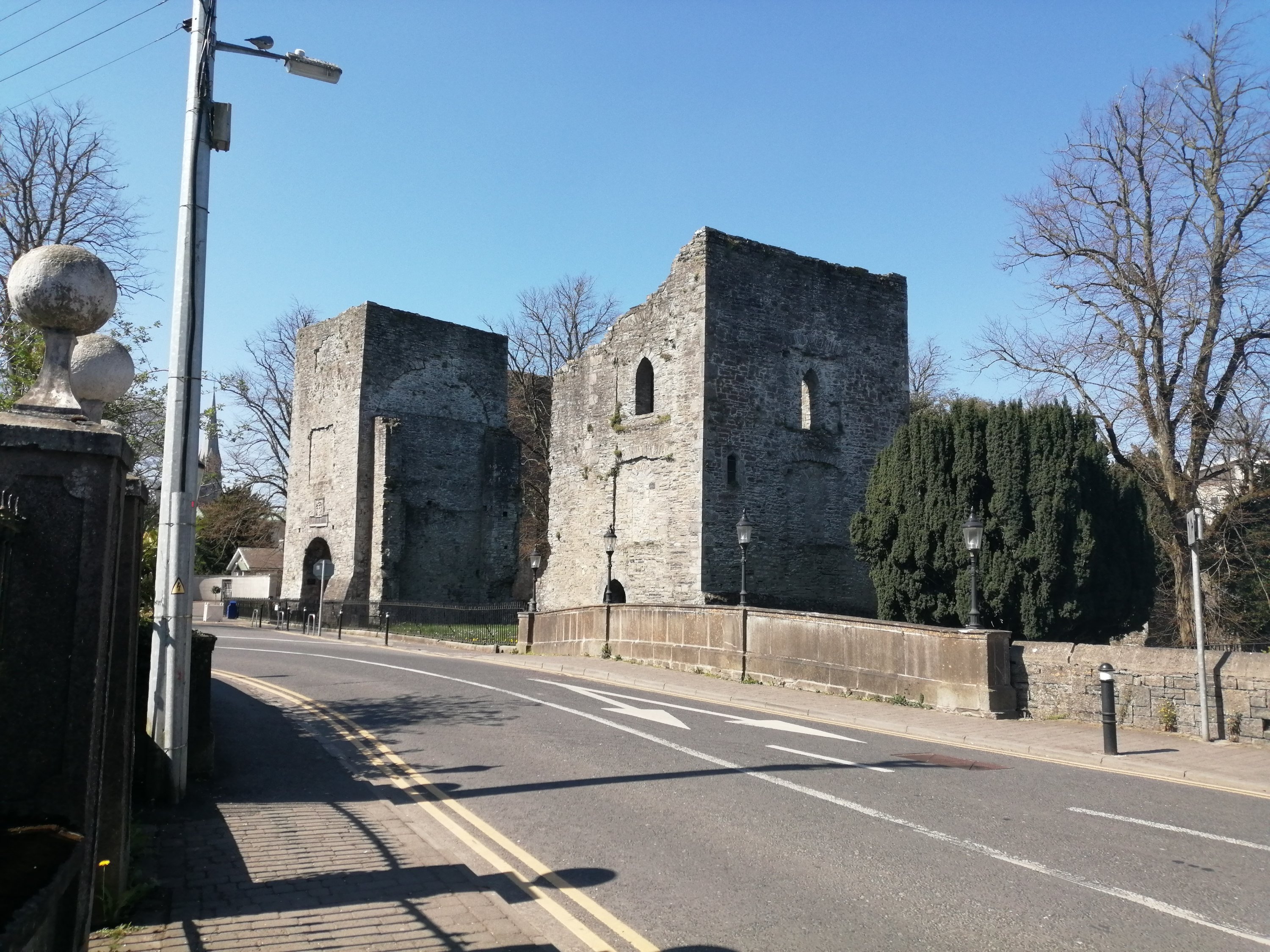
It’s a rainy Saturday afternoon in Maynooth and I don’t feel like taking my usual walk so I thought I’d post another bit of local history like I did last week. This is another thing I’ve just found out and thought I’d share. This is a view I took last spring of Maynooth Castle (or the ruins thereof):

The Castle, together with a Manor House that was next to it, belonged to the Fitzgerald family, local aristocracy since the 13th Century. As I mentioned in a previous post, Thomas Fitzgerald, the 10th Earl of Kildare, led a rebellion against the English authorities during the time of Henry VIII. He acquired the nickname “Silken Thomas” because of the ribbons of silk worn by his supporters. The rebellion failed and his family castle was badly damaged. Thomas surrendered and was subsequently executed, along with several members of his family, in 1537. The family fortunes declined pretty drastically at that point but the family line did survive.

Now fast forward to 1630 when George Fitzgerald, the 16th Earl of Kildare married a Lady Joan Boyle. She was the daughter of a tremendously powerful figure by the name of Richard Boyle, the 1st Earl of Cork. Richard Boyle had been part of the Tudor plantation of Ireland and had acquired enormous amounts of land and personal wealth in the process. He spent some of his riches at the time of his daughter’s wedding doing up the ancestral home of his son-in-law, refurbishing the castle and building a new manor house next to it.

Unfortunately this didn’t last long. During the Irish Confederate Wars the Castle was attacked several times and badly damaged. It remained in occupation but by the end of the 17th Century it was derelict. The Fitzgerald family eventually moved to a new home at the other end of Maynooth, Carton House (now an upmarket golf resort). All Richard Boyle’s refurbishment work went to nothing and all that survives to the present day – the Gatehouse and Solar Tower – dates to the 13th Century, no doubt because it was more solidly built.

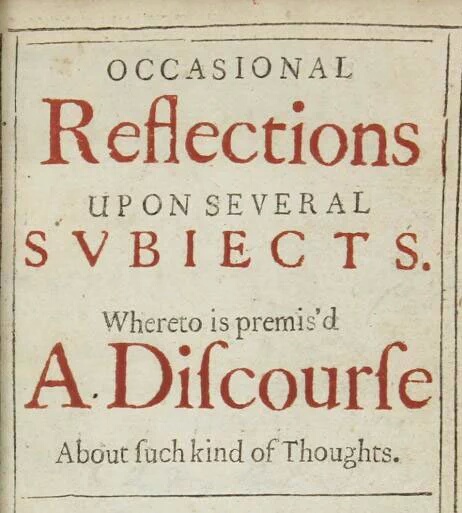
I’ve known about this for quite a while, but only this morning I discovered something else. Richard Boyle had a very large family – fifteen children altogether – and his seventh son (14th child altogether) was none other than the famous natural philosopher Robert Boyle, after whom Boyle’s Law is named. He was a particularly important figure in the development of chemistry, paid for the publication of a translation of the Bible into Irish, was a founder member of the Royal Society of London and, more importantly than any of those things, wrote the book whose cover I use when I post rambling from In The Dark on Twitter:

It’s a very descriptive title for this blog, but perhaps not so catchy.

Anyway, largely because he found it difficult to acquire materials and equipment in Ireland, Robert Boyle spent most his scientific career in England. He did however return to Ireland a number of times. He was born in Lismore, in County Waterford, so probably would have stayed near there on these visit. It is entirely possible – and indeed likely – that he may have visited his sister in Maynooth while in Ireland.

Royal Society University – Science Foundation Ireland University Research Fellowships

Posted in Maynooth with tags , on July 23, 2020 by telescoper

It is now time for a quick public information broadcast.

Did you know about the scheme run jointly between the  Royal Society and Science Foundation Ireland that enables early career researchers in Ireland access to University Research Fellowships?

This scheme provides five years of research funding (with the possibility of renewal) and has proved to be a stepping stone to their first permanent academic position for a great many scientists. Here are a couple of items about the eligibility and duration.

Eligibility:  The scheme is open to early career Post Doctoral Researchers with between 3-8 years of actual research experience since their PhD (date on which the degree was approved by board of graduate studies) by the closing date.  You cannot apply if you hold a permanent post in the university or have held (or currently hold) an equivalent fellowship that provides the opportunity to establish independence.  Please see call notes for further details.

Funding and Duration:  Funding consists of the research fellow’s salary and research expenses for an initial period of 5 years with the possibility to apply for a further 3 years.  Research expenses cover the standard consumables/materials, equipment up to €12,000, travel, training and public engagement.  Fellowships are expected to have commenced by October 2021.

For full details of the scheme, see here.

The scheme covers a wide range of disciplines. including physics and astronomy. Of course if you want to do cosmology, the best place here to do it is here in Maynooth! The deadline if you want to apply to hold a URF from 2020 in Ireland is 3rd September 2020, which is not far off,  so please get cracking!

P.S. Five years residency in Ireland qualifies you for Irish citizenship. Just saying…

The Royal Society really needs to work on its history of the telescope

Posted in History, The Universe and Stuff with tags , , , on October 30, 2019 by telescoper

An important corrective to frequently repeated fallacies about the history of telescopes in astronomy. The Royal Society really shouldn’t be making mistakes like this!

thonyc's avatarThe Renaissance Mathematicus

One would think that the Royal Society being one of the eldest, but not the eldest as they like to claim, scientific societies in Europe when presenting themselves as purveyors of the history of science, would take the trouble to get their facts right. If, however, one thought this, one would be wrong. Last week on the Internet the Royal Society was pushing a slide show, under their own name, on Google Arts and Culture on the history of the telescope in astronomy that in terms of historical accuracy is less than one, as a historian of science, nay of the telescope, might hope or indeed wish for.

The slide show in question is titled, Silent Harmony: astronomy at the Royal Society: Discover how innovation in telescopes and other optical instruments changed the way we see the universe. Following the title slide we have another general blurb slide…

View original post 835 more words