Archive for 2010

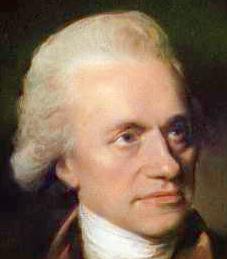
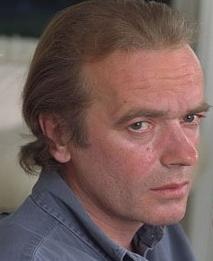
Astronomy Look-alikes, No. 22

Posted in Astronomy Lookalikes with tags , on April 26, 2010 by telescoper

I’m indebted to Matt Griffin for drawing my attention to the remarkable likeness between Martin Amis, novelist son of a novelist father, and William Herschel, astronomer father of an astronomer son. I wonder if by any chance they might be related?

Martin Amis

William Herschel

Lecture Notes

Posted in Education with tags , , , on April 25, 2010 by telescoper

One week to go before the end of teaching term, and it’s time for the dreaded questionnaires to be handed out for the purpose of gauging student feedback on our teaching. The responses from the students go off somewhere to be counted and I’ll get a summary back in due course and learn what the students made of the  series of chaotic and rambling performances I strung together to masquerade as lecture courses. At the end of the year we usually get to see a league table of who’s popular and who isn’t, but the scores aren’t very useful beyond that. More important than the tick boxes are the comments that students write about what’s good and what isn’t. I read through all those and they’re often very helpful in suggesting things to be done differently in subsequent years.

Lecturing has changed an enormous amount since I was at university almost thirty years ago. In those days we got very little in the way of printed notes and we were expected to write everything down in classes that were primarily delivered in the chalk-and-talk style, although some lecturers used overhead projectors. The disadvantage of the latter over the former was a tendency to go too quickly through the material.

As a student I just accepted this was the way things were and developed my own note-taking strategy. I trained myself to be able to write things down about as fast as the lecturer could speak. I did this by cutting out the biggest hindrance to taking notes quickly, which is the business of  making your eyes go backwards and forwards between the blackboard (or projection screen) and paper in front of you. I just wrote everything I could on the paper without looking at it. Although my handwriting was scrappy when I did this, I could keep track of just about everything that was said as well as what was written by the lecturer. Later on, I’d turn these notes into a neat copy and in the process of doing that I tried to iron out any bugs in the original notes as well as figure out things I couldn’t make sense of.

When I started lecturing I primarily used blackboards and chalk. I was teaching quite mathematical things and found this the best way to do it. For one thing the physical effort of writing made me go through the material at a reasonable pace. The other advantage is that I think mathematical proofs and derivations should not just be presented, but should happen as a process for the students to see. I always felt that a lecture would be more interesting if it appeared to be spontaneous rather than delivered from a pre-prepared script. Even if the students disagreed, I certainly enjoyed lecturing much more if there was an element of improvisation in the performance.

However, I soon noticed that many students didn’t really know how to take notes even at the modest speed I was going. They would generally only write down what I wrote on the board, not the little verbal explanations and embellishments I put in. My response to this observation was to make sure I wrote down more and consequently went through the material even more slowly. When I got to sit in as a peer reviewer of other staff lecturers, I looked at what the students around me were doing and realised that the vast majority simply didn’t know how to take notes efficiently or accurately. For many the act of writing things down took so much effort that they weren’t listening to the lecturer. I guess this stems from the changing style of teaching in schools, but even if that is true it is something that university teachers need to come to terms with.

Incidentally, I have from time to time given final-year undergraduate lectures at Italian universities (in English). When I used the same style there as at home – writing full notes on the board rather than just the equations – the students asked me why I was doing it. They all expected to have to write down what I was saying. If they could manage to do that with lectures in their second language, I don’t really see why our students can’t do it in their mother tongue!

Gradually the ubiquitous powerpoint has largely the old-fashioned style of lecturing to the extent that many lecture theatres don’t even have a blackboard. We’re generally expected to hand out complete sets of printed notes, with the result that the students don’t have to take notes of their own but also turning a lecture into an entirely passive experience.

I resisted the move to powerpoint for undergraduate lecturing for many years, but gave up and went with the flow when I moved to Cardiff.  However, what I do is a bit different from the others who teach this way. I generally use slides which have only a few bits of text, key equations and figures on them. I hand out copies of these slides at the start of each lecture and then go through them during the class, and also make the powerpoint files available on the web. This gives them all the important things, but I tell the students I expect students to annotate the handouts and make their own set of notes based on the skeleton I’ve handed out. However, it is clear that many students don’t write anything down at all during the lecture. We’ll see from the forthcoming exams how much they have actually learned.

Newer educational technology should enable us to improve the standards of teaching in universities, but I think there’s still a long way to go before we work out how to use it effectively.  In particular I think we need to question whether lectures in the old-fashioned sense should continue to provide the primary mode of teaching. My personal opinion is that we should be moving to more independent, problem-based, learning and much less of the passive spoon-feeding.  I think we should be aiming to cut the number of lectures we give by about 50% across the school and use the time and effort saved in more creative and effective ways.

We’re in the middle of a review of our course structure in the School of Physics & Astronomy at Cardiff University and I hope we take the opportunity to make radical changes not just to the curriculum but also to the way we present it. Not everyone in the School is keen on really radical changes. I think I understand why. I actually enjoy lecturing. I always have. It’s fun and it’s also a lot easier to give a lecture than to prepare large numbers of problems and write pages and pages of printed notes. Looking back at my time as a student, though, I am bound to admit that I learnt next to nothing from lectures. This was partly because many of the lecturers I had were poorly delivered but also partly because I’m not sure lectures are the best way to teach physics. We carry on doing it this way just because it’s what we’re used to.

Perhaps the biggest problem with the way we teach physics these days is that it encourages students to think of each module as a bite-sized piece that can be retained until the examinations, regurgitated, and then forgotten.  I’ve no doubt that memorizing notes  is how many students pass the examinations we set.  Little genuine understanding or problem-solving ability is needed. We promote physics as a subject that nurtures these skills, but I don’t think many physics graduates – even those with good degrees – actually possess them at the end. We should be making much more of an effort in teaching students how to use their brains in other ways than as memory devices.

Nuit St George

Posted in Biographical with tags , on April 24, 2010 by telescoper

Still feeling a bit fragile after the Chaos Ball last night, which by itself probably indicates that it was good fun. We started out at Peter Hargrave’s penthouse flat, which is in the same block I lived in for a while before I managed to buy my house in Cardiff. My flat was much smaller and on the first floor, but Pete’s is high enough to command a majestic view of the hills to the north, and in yesterday’s lovely late evening sunshine we could even see as far as Newport, to the east, although seeing Newport wasn’t something I was particularly yearning to do.

A cocktail or two later and we were on our way to the venue just down the road at the Mercure Holland House Hotel. We got there too late for the bubbly that had been laid on to welcome the guests, as it  had all been guzzled by the students in next to no time. Still, there was plenty of wine at the tables, so there wasn’t a problem. It wasn’t Nuits St Georges, incidentally, which is a fine wine-growing region of Burgundy. I picked the title because the ball  was on St George’s Night…

The food turned out to well-presented and very tasty too.  During the meal we had musical accompaniment from a saxophone quartet and afterwards a DJ plied us with music of a more contemporary nature. It was a bit too contemporary for my tastes, in fact, and I didn’t find much I wanted to dance to. A bit of Abba would have suited me better, but then it was all aimed at the students rather than the few old fogeys on the staff who came along. Not being inspired by the  terpsichorean muse I spent the rest of the evening chatting and drinking in the bar, as well as getting in the way of various peoples’ photographs.

My famous white dinner jacket attracted some comments but fortunately didn’t attract any of the tomato soup I had for a starter. I must say everyone looked  glamorous in their posh frocks and I think people were generally having a good time and were enjoying the chance to dress up.

Most of the younger crowd headed off to a club in town to carry on the evening, and I was toying with the idea of going along but it was getting close to midnight and I was in danger of turning into a pumpkin so I climbed into a comfortable taxi and went home to crash out. I’m far too old for all that sort of carrying on.

After debauched evenings like this I usually wake up the following morning to a vague recollection that I did or said something embarrassing, which usually turns out to have been the case. This morning I just had a headache. That doesn’t mean I didn’t disgrace myself again, but if I did I don’t remember how. Senility has its advantages.

On behalf of everyone who was there and had a good time I’d like to thank Harriet and Alice for doing such a grand job organizing it!

P.S. You can find another account of the night’s proceedings on Ed’s blog.

How to Vote: A Helpful Flowchart

Posted in Politics with tags on April 23, 2010 by telescoper

Pierrot Lunaire

Posted in Music with tags , , , , , on April 22, 2010 by telescoper

I’ve had a lot of readers this week, largely down to Anton’s inflammatory guest post about mathematics. In order to return to my normal situation as an idle backwater of the blogosphere I thought I’d do a quick post about something that probably not many people will like (apart from me).

A few weeks ago I stumbled across a short clip on Youtube which intrigued me, so I sent off for the DVD it was taken from. It arrived last week and I’ve watched the whole thing three times since then. In short, I’m captivated. The film in question is a realisation of Arnold Schönberg’s extraordinary work Pierrot Lunaire.

It’s hard to know exactly what to call this. It’s basically a musical setting of a series of poems (by Albert Giraud, but translated into German) so you might be tempted to call it a song cycle. However, it’s not quite that because the words are not exactly sung, but performed in a half-singing half-spoken style called Sprechstimme. Moreover, they’re not really performed in the usual kind of recital, but in a semi-staged setting rather like a cabaret. It’s not really an opera, either, because there’s only one character and it doesn’t really have the element of music drama.

The whole thing only lasts about 40 minutes so the 21 individual pirces are quite short, and they’re arranged as three groups of seven with the narrator Pierrot dealing with different themes in each group. The work was written in 1912 and is his Opus 21, so it’s a relatively early example of  Schönberg’s atonal music but before he turned towards full-blown serialism. Atonalism isn’t everyone’s cup of tea, but it can (and does in this case) allow a hugely varied orchestral landscape.

I’ve heard this work before, on the radio, and found it very intriguing but then I saw a youtube clip of the film version made in 1997 with Christine Schäfer as Pierrot. This is not a film of a concert or a recital, but an extraordinary visual response to the remarkable music and words. The director, Oliver Hermann, creates a grotesque dreamlike urban setting through which Pierrot wanders like a ghost, with emotions alternating between desperate alienation and amused reflection. I think music and film together create a wonderful work of art, which has gone right to the top of my list of favourite music DVDs.

Atonal music is very good for communicating a sense of disorientation and loneliness, course. The lack of tonal centre (or key) means that the listener is denied the usual points of harmonic reference. Hum doh-ray-me-fah-soh-la-ti and you’re drawn very powerfully back to the tonic doh. Deny this framework and the listener feels discomforted, but also, at least in my case, gripped.

Miles Davis’ classic album Kind of Blue – arguably the greatest jazz record of all time – was the first record I heard in which jazz musicians experimented with atonalism, and it has the same effect of most listeners, a spreading sense of melancholia and introspection. Perhaps not great for party music, but, in its own way, extremely beautiful.

Here’s the clip I saw on youtube that started me off on this. It’s the eighth item of Pierrot Lunaire (or, more accurately, the first of the second group of seven; Schönberg was quite obsessed with the number 7, apparently). It’s quite short, so hopefully won’t upset those who can’t stand atonal music for more than a few seconds, but it nicely exemplifies the extraordinary surreal imagery conjured up by the director as a response to the equally extraordinary music. Fantastic.

The Day’s Events

Posted in Biographical with tags , , , on April 21, 2010 by telescoper

Just a quick post today, because I’m worn out. Today was Cardiff University’s Open Day – not the small-scale one’s we have from time to time in the School of Physics & Astronomy, but a full-blown university-wide affair. The School is in the Queen’s Buildings, which are a little way to the East from the splendid civic buildings in the Cathays Park district of the city centre that constitute the core of the University. Naturally the organizers tend to concentrate on showing off it’s finer buildings, so many activities are centred on the posher parts, and often we don’t get that many visitors in our building especially if it’s raining and visitors don’t fancy the 15 minute walk. Today, however it was gloriously sunny and even the Physics department was packed with visitors, prospective students and their parents.

I’d agreed some time ago to give a public talk as part of the School’s activities, which meant that this morning I had a tutorial, an undergraduate lecture and a public lecture all one after the other. I was very surprised when I got to the venue for my open day talk to find it was absolutely full, with standing room only. By lunchtime I was already knackered, although the public talk was a lot of fun and the audience were very attentive and friendly. Some of them even laughed at my jokes. I got lots of questions at the end, which I always enjoy, although I was flagging by then after talking more-or-less continually for three hours.

This afternoon it was someone else’s turn to do the talking. It was the occasion of the PhD examination of Rob Simpson (orbitingfrog) for which I was Chair. Cardiff is unusual in having a Chair for PhD oral exams, as well as internal and external examiners. The Chair acts as a kind of umpire, making sure the rules are followed, but doesn’t play a very active role other than that. In fact I had the chance to chip in here and there – chiefly on matters of statistics – but also managed to get the Guardian crossword done.

I won’t talk about the substance of the examination, but it suffices to say that the examiners recommended that he be awarded the PhD subject to some corrections being made to his thesis. No doubt he’s out on the town celebrating as I type. Well done, Rob!

I got away just in time to go an collect my Tuxedo from the dry cleaners on the way home. It being good weather I thought I’d wear it for Friday’s annual Chaos Ball. I don’t know how widespread this usage is, but in Britain I’ve always thought the word Tuxedo refers to the white (or cream)  alternative to a traditional dinner jacket. That’s what I meant, anyway. I bought mine years ago in an Oxfam shop in Nottingham and hardly ever wear it, but it’s nice to push the boat out every now and again. Although it was bought second-hand about 8 years ago it still looks quite posh. Apart from the bullet hole in the back you would never have guessed it had been worn before…

(Guest Post) The Emperor’s New Math

Posted in The Universe and Stuff with tags , on April 20, 2010 by telescoper

Time for another guest post from my old chum Anton, this time on the topic of mathematics. I’m not sure any mathematicians reading this piece will be too happy, but if that applies to you then blame him not me. As usual, comments are welcome through the proper channel at the bottom of the page..

-0-

Nowadays a page of mathematics looks to a physicist or engineer like gobbledygook. This was not always so: a century ago a physicist might hope to understand everything in journals of mathematics, and even contribute to them. Fifty years ago a physicist might not be able to understand everything written there, but the mathematics would appear comprehensible in principle. A qualitative change has since taken place.

This change has coincided, roughly, with acceptance of the distinction between ‘pure’ and ‘applied’ (impure??) mathematics, and with the consequent, deliberate, emancipation of ‘pure’ mathematics. This is a new departure: for centuries mathematics evolved side by side with physics, and the mathematics that was studied was the mathematics used in tackling physical problems. Galileo had said (in his work Il Saggiatore, The Assayer) that

…the universe… cannot be understood unless one first learns to comprehend the language… in which it is written. It is written in the language of mathematics.

So the change is recent, and it is huge. I suggest that it is a change for the worse; that in divorcing themselves from physical science pure mathematicians have cut off their air supply; and that the suffocating style of modern pure mathematics is a result. Mathematics was not born in a vacuum, and it will not ultimately flourish in one.

A pure mathematician might respond that I would say that, since I am a physicist. But perhaps an outsider is needed to see the problem; insiders generally adopt the party line. The justification for my stance is this. Mathematicians acknowledge that their subject is the formal study of patterns. And mathematicians think in patterns, not formulae – which are really a highly efficient way to express their thoughts. Crucially, the patterns arising in the natural world are far richer and more diverse than the patterns that even the best pure mathematicians can pull out of their heads by introspection. Even number theory is not an exception, for the positive integers are abstractions – ideals – of the physical realisations of one, two, three etc sheep in a field, or boats on a lake.

The role of pattern explains the “unreasonable effectiveness” of mathematics in physical science (as Eugene Wigner put it), since physics is concerned with relations – correlations – between variables in space and time, and correlation is synonymous with pattern. The theoretical physicist Lev Landau vehemently believed that the best mathematics is the mathematics used in physics. An opposing point of view was taken by the pure mathematician Paul Halmos, in an essay titled Applied Mathematics is Bad Mathematics. Not all mathematicians share Halmos’ view, however. The mathematician Morris Kline was the author of many books about mathematics and its embedding in the cultures which nurtured it. In his book Mathematics: The Loss of Certainty, Kline demonstrated that the history of mathematics in the 20th century has not been the smooth progression that it appears to the outsider; and that arguments about the foundations have led not to resolution, but to schism into differing schools – based on different foundations – that do not talk to each other. Mathematics is not in fact a one-way road running from self-evident axioms to consequences, but is open at both top and bottom.

Already in the 19th century a formal style was developing in the mathematical study of logic, and such distinguished noses as Henri Poincaré (in Science et Methodes, part II) protested as early as 1909 that this tended to hide misleading or negligible content. To no avail: the dominance of the formalistic logical viewpoint led to the adoption of its house style across the whole of mathematics. Below university level, mathematics is still taught today as it used to be, with the emphasis on the understanding of ideas rather than their formal presentation. Freshmen are often shocked when they first meet the new way of doing things, in university lectures given by professional mathematicians. I doubt that the form of modern mathematical writing is governed by its content, for whenever my research has demanded I read some contemporary mathematics, and I have had to translate a piece of modern mathematical writing into something comprehensible to scientists, I have found it difficult to distinguish substantial points from trivia. When, for instance, four axioms are needed to establish a result, they will typically be presented as having equal weight, even if one is the crucial axiom that allows most of the proof to be constructed, and another is used only in closing loopholes. Acknowledging the quality of axioms, as well as the quantity, does not compromise rigour.

When I think of the work of Andrew Wiles and Grigori Perelman, I realise that magnificent work is done today by mathematicians far beyond my own competence. But might mathematicians question whether what they regard as the only way to write mathematics is actually a convention, and not necessarily a good one? If they wrote mathematics as they did fifty years ago, others might be able to see for themselves. More fundamentally, might they also realise what their predecessors understood, that by its abstraction mathematics is given an autonomy of its own, and that to look to the physical world for inspiration is not to make mathematics a slave of physics? The present divorce between mathematics and physics impoverishes everyone.

The Easy Winners

Posted in Football, Music with tags , , on April 19, 2010 by telescoper

I’ve been a bit busy today so all I’ve got time to do is mark the news that by beating Plymouth Argyle, 2-0 away from home Newcastle United have won the Championship. In truth they only needed one point from their remaining three games to be sure of the title, but they passed the winning post in style with a comfortable victory that in fact condemns Plymouth to relegation. This may not mean very much to most readers of this blog, but I can assure you that being a Newcastle supporter is sometimes a thankless task and ‘m absolutely delighted to see the club return to the Premier League in such  a surprisingly convincing way.

I was thinking of posting a little bit of music to celebrate, and this sprang to mind. It’s my favourite Scott Joplin rag and it’s called – appropriately enough – The Easy Winners. It was written in 1901 and the original sheet music is decorated with pictures of sporting events. It is also one of the few rags that the composer himself recorded as a piano roll, although I have my doubts as to whether this is actually that version..

Life, the Universe, and Coloured Pencils

Posted in Biographical, The Universe and Stuff with tags , , on April 18, 2010 by telescoper

Yesterday’s post got me thinking about what it is that makes scientists decide on their own speciality. It’s got to have something to do with the intersection between interest and aptitude, in that I think we learn gradually through our time at School that there are some things we can do well and others that we can’t but the things we can do well aren’t always things we find sufficiently interesting to make a career doing.

I suspect luck also plays a big part, in that the choices one gets to make must be taken from the options at a very particular time. I ended up doing research in cosmology after my first degree, but it wasn’t any kind of a grand plan that got me to Sussex in 1985 to do that but it just seemed the best choice to me out of all the half-a-dozen other places I visited.

Before I meander off the point again I’ll just pass on something that one of my teachers at school told me, and which probably had a big effect on an impressionable teenager. It was my chemistry teacher, Geoff (“Doc”) Swinden, that probably had more influence than anyone in making me decide to become a physicist.

By the way he was called “Doc” because he had a PhD (or perhaps a DPhil, as I think  he got his doctorate, in organic chemistry, from Oxford University). I didn’t go into Organic Chemistry, of course, but that was mainly because I hated the practical aspects of chemistry and pose a considerable threat to the safety of others when placed in any kind of laboratory environment.

Anyway, I remember very well a comment of Doc Swinden’s to the effect that anyone wanting to be called a proper scientist should avoid any subject that required the use of coloured pencils. That ruled out biology, geology and a host of others and left me firmly in the domain of physical science. I ended up going to Cambridge to do a degree in Natural Sciences, which allowed me to do chemistry and physics for a year and then decide which to continue. Obviously I went the way of physics.

I don’t regret going into physics at all, but I don’t think this bit of advice was all good. When I went to Cambridge to study Natural Sciences, I had to pick an extra subject to do in the first year to do alongside my main choices, chemistry, physics and mathematics. Among the options were geology, biology of organisms, and biology of cells but, mindful of the possibility that all of these might require the dreaded coloured pencil, I went for a course called Crystalline Materials. It’s true that I didn’t have to colour anything in, but it was the most mind-numbingly awful course I’ve ever taken. I very nearly failed it at the end of the first year, in fact, but still managed to get  a First-class mark overall.

Going back to yesterday’s post, I realise that one of the reasons I’m less gung ho for Mars exploration than some of my colleagues might be that it’s a bit too much like geology or even biology. It seems the ghost of the coloured pencil is still haunting me.

To Mars or not to Mars?

Posted in Science Politics, The Universe and Stuff with tags , , , , , on April 17, 2010 by telescoper

Amongst  the news this week was President Obama’s announcement of a new space exploration policy for NASA. Out goes the Constellation program, including the Orion crewship, its Ares launch rocket, and the rest of the project’s Moon-bound architecture. Obama says NASA were on an unsustainable path, costing too much money and taking too long to develop. Instead he’s given them extra funds ($6 billion, modest by the standards of space exploration) and told them to find new ways of putting people into space. Obama’s particular goal is to send someone to Mars by the mid 2030s and return them safely to Earth. I think Obama’s plans have ruffled a few feathers, especially among those longing for a return to the Moon, but it seems to me to be both bold and intelligent. 

The European Space Agency also has a programme – called Aurora – which includes components involved with both robotic and human exploration. This programme is a kind of optional extra within the ESA budget and countries that wanted to join in were asked to pay an extra contribution. The UK opted in so now we pay a top-up on our subscription to ESA in order to participate. This will be one of the things that transfers to the new UK Space Agency, when it’s up and running properly, from the Science and Technology Facilities Council (STFC).

Thus far the UK policy has been not to get involved in human space exploration. There are a lot of reasons behind that, but one of the most important is sheer cost. Space exploration is expensive by its very nature, but involving human beings creates enormous extra costs connected with keeping them alive and keeping them safe while they are in space. Since our national expenditure on space exploration has largely been channelled through STFC (or its predecessor PPARC) where it has had to compete for funds with “pure” science activities in the areas of particle physics and astronomy (and, more recently, nuclear physics).

I think the scientific argument against funding human exploration has always been as follows. There aren’t many things that people could do on Mars that a robot couldn’t – here I’m talking just about scientific experiments and the like. Human space exploration is much more expensive than the robotic variety. The scientific value for money is consequently much higher for robotic missions ergo, since money is tight, we don’t do human space exploration. Plus, we couldn’t afford it anyway…

The other factor is that there aren’t many feasible targets for manned spaceflight in the first place. The Moon and Mars are basically it. Other objects in the solar system are either too distant or too inhospitable (or both) to be considered. Unmanned probes haven’t all been successful, but some certainly have paid off enormously in scientific terms. I give the Cassini-Huygens mission to Saturn (and its extraordinary moon Titan) as an example that has turned out, in my opinion, to be nothing short of sensational. The images of Titan’s surface sent back by Huygens were gobsmackingly amazing, for instance.

Before going on let me point out that I’m a cosmologist, not a planetary scientist. There’s a tendency among scientists to think that their own field is more important than the others with which it has to compete for funding. It’s perfectly natural that someone working on galaxy formation should find galaxies more interesting than planets, and vice-versa. We all pick what we want to work on, and obviously we pick what interests us most.  But any scientist worth his/her salt should have enough of a grasp of the big picture to recognize outstanding work in disciplines other than their own.  I don’t want anyone to think that the following comments are intended to suggest that there isn’t excellent work going on in the UK and rest of the world in the field of planetary exploration.

I do think, however, that there is a big difference in character between fundamental science (especially particle physics and cosmology) and planetary exploration. In fundamental physics we are attempting to uncover the nature of basic constituents of the universe and the general laws that govern the structure of matter and how it interacts and evolves – in other words, its scope is (or at least tries to be) universal. It’s certainly this aspect – trying to unravel an enormous cosmic puzzle – that drew me into cosmology. By contrast, the study of a particular planet – even a fascinating one, such as Saturn with all the beautiful orbital dynamics going on in its ring system – lacks this aspect of universality. That’s why cosmology interests me more than planetary exploration does. This is nothing more than a statement of personal interest.

Having said that – and pointing out  again that I’m no particular expert on the Solar System – I don’t find the Moon and Mars very  interesting from a scientific point of view compared with, say,  the outer planets which I find fascinating. Others – a great many others, in fact – obviously do see a lot of interest in Mars. I’m not at all convinced about the scientific merit of some other space probes either, especially the planned Mercury orbiter BepiColombo. But there we are. We can’t all expect to agree on everything. What I’m trying to say, though, is at the moment these different types of activity are funded from the same pot. In order to draw up an order of priority, STFC has to compare apples with oranges with predictably bizarre outcomes.

Moreover, space exploration – especially human space exploration – isn’t just about science. There are definite commercial opporunities in space, in both short and long term.  Space missions often  provide results that are fairly easily accessible to non-scientists, so has considerable popular appeal as well as inspiring young people to take up science and engineering subjects. It has immense cultural impact too, altering the way we think about ourselves and our place in the Universe. But these aren’t unique to space exploration. Particle physics and astronomy do this too.

 But the overriding factor is the politics. When NASA put a man on the Moon 40 years ago, it was never about science – it was a political statement made right at the height of the Cold War. We no longer have a Cold War, but nations still feel the need to show off to each other. It’s called national pride. Politicians know how this works, and how it can turn into votes…

So we shouldn’t think of the plan to put a man on Mars as being primarily a scientific thing anyway. I’m quite comfortable with that.  My worry – if the UK decides to take part in manned Mars exploration – is that the money will come from the already dwindling pot allocated to fundamental science. Particle physics and astronomy research in the UK is on the ropes after the recent devastating cuts. Any more blows like this and we’ll be on the floor. I’m deeply worried that far worse is already on the way – a combination of public spending cuts after the general election and political directives to devote more to space exploration.

The new UK Space Agency could be either a hero or a villain, and I don’t know how it will turn out. On the one hand, the creation of this organization may prevent the fundamental sciences from being squeezed further by expensive space projects. In this way it might represent a recognition of the different characteristics I talked about above. The industrial and commercial aspects of space exploration are present in the new outfit too.  On the other hand, the result of hiving off the “glamorous” space parts of STFC may lead to further cuts in what is left behind. I’m also nervous about the future relationship between UKSA and STFC, especially the extent to which the former can demand research grant funding from the latter.

I’m sorry this has been such a long and rambling post, but this has been on my mind for quite some time and I wanted at last to put something together about it. I could summarise what I’m saying as follows:

  •  I’m not convinced about the scientific case for Mars exploration – particularly if it involves manned missions
  • BUT it’s not my field so it’s not my decision to make
  • AND there’s more to Mars than science anyway
  • SO by all means do it if there’s a will
  • BUT for heavens sake don’t pay for it by killing off the rest of astronomy

This is something that I’d be genuinely interested in hearing other views on. What is stated above is my opinion and is not intended to be representative of anyone, but I’d be very interested in hearing other views through the comments box.