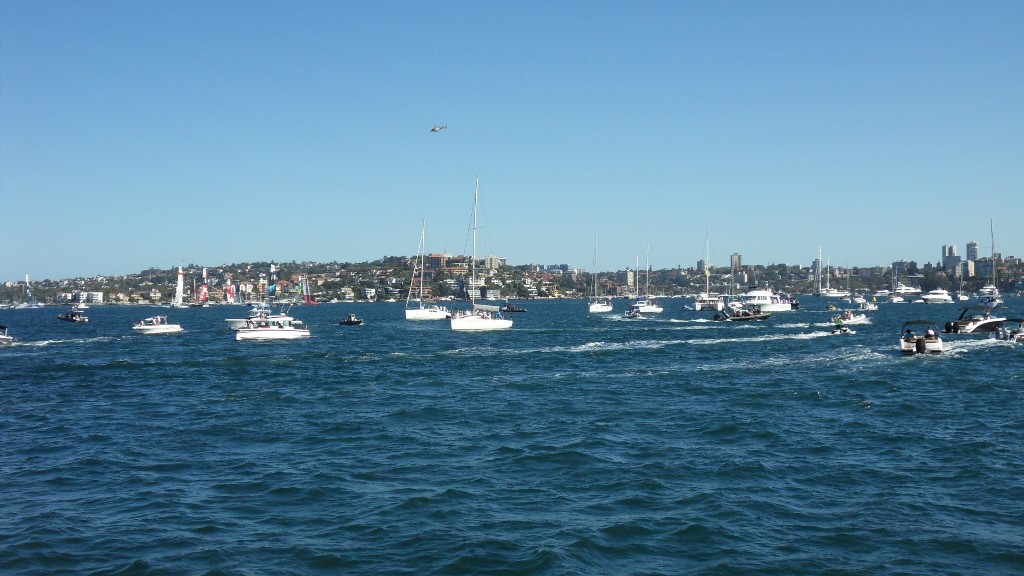
I’m just back from my second night at the Sydney Opera House, at which I saw Opera Australia’s production of Mozart’s The Magic Flute. What has been a very warm day turned into a very sultry evening, and it was nice to take my drink outside during the interval to admire the view:
I’ve lost track of how many different productions I have seen of this strange and wonderful masterpiece, and this was a distinctly Australian version. Technically it’s not an opera, but a singspiel: the recitative – the bit in between the arias – is spoken rather than sung. It’s really more like a musical comedy in that sense, and was originally intended to be performed in a kind of burlesque style.
The Magic Flute also has many points of contact with the pantomime tradition, including the character of the villainous Monostatos who, in this performance, was reminiscent of Rolf Harris. Papageno was a working class Australian, sporting a mullet, and carrying an Esky in place of the usual array of nets and birdcages. On her first entrance, the Queen of the Night put me in mind of Gloria Swanson in Sunset Boulevard. Sarastro, with long hair and flowing robes, looked like the leader of some sort of New Age cult; his acolytes were dressed in everyday casual clothes. The three boys – referred to as “spirits” in this production – were actually two boys and a girl, but “spirit” is a gender-neutral term so that’s fine.
I won’t even attempt to explain the plot, if you can call it that, because it’s completely daft. It’s daft, though, in a way that much of life is daft, and I think that’s the secret of its enduring popularity. Mozart’s music carries you along and constantly seems to be telling you not to take it all too seriously. It seems to me that it must be hard to get the balance right between the comedy (which frequently border on the slapstick) and the serious. The worst thing to do is to make it too pompous. This production doesn’t fall into that trap, but in playing it virtually entirely for laughs I think it misses the depths that make a truly successful version. The ending – in which the rays of the Sun are supposed to dispel the darkness – involved a big reveal to a picnic with the chorus in beach wear and sunglasses. There’s a lot to be said for sunshine, and I found the idea mildly amusing, but there should be more to the end of this Opera than that. On the other hand, Pamina’s aria in Act II, when she is heartbroken because she thinks Tamino has abandoned her, was intensely moving, so it wasn’t all shallow.
The sets are simple but use clever devices to suggest the extraordinary scene changes required by the libretto, including pyramids, forests, waterfalls and flames. The ordeals by fire and water, for example, are depicted using reflective strip curtains, red for fire and blue for water. The dragon in Act I is conjured up by shadow puppets against a translucent curtain.
Papageno, played by an understudy whose name I didn’t catch, was the pick of the performers but overall the cast was not particularly strong vocally. David Parkin’s basso wasn’t nearly profundo enough for Sarastro and he struggled with the lowest notes. I’m not sure either why he also played The Speaker, who is a distinct role. Giuseppina Grech as the Queen of the Night looked fabulous and hit her high notes, but the elaborate coloratura passages were not well articulated.
This probably seems very negative than I intended. There is much to enjoy in this production. It’s very entertaining, and at times riotously funny. It was just a bit too superficial for my taste.
Since my time in Sydney is rapidly running out, this afternoon I paid a visit to the Art Gallery of New South Wales. The main objective of this was to see the Kandinsky Exhibition I blogged about here, but there are many other fine things to see in the permanent so I went round that too.
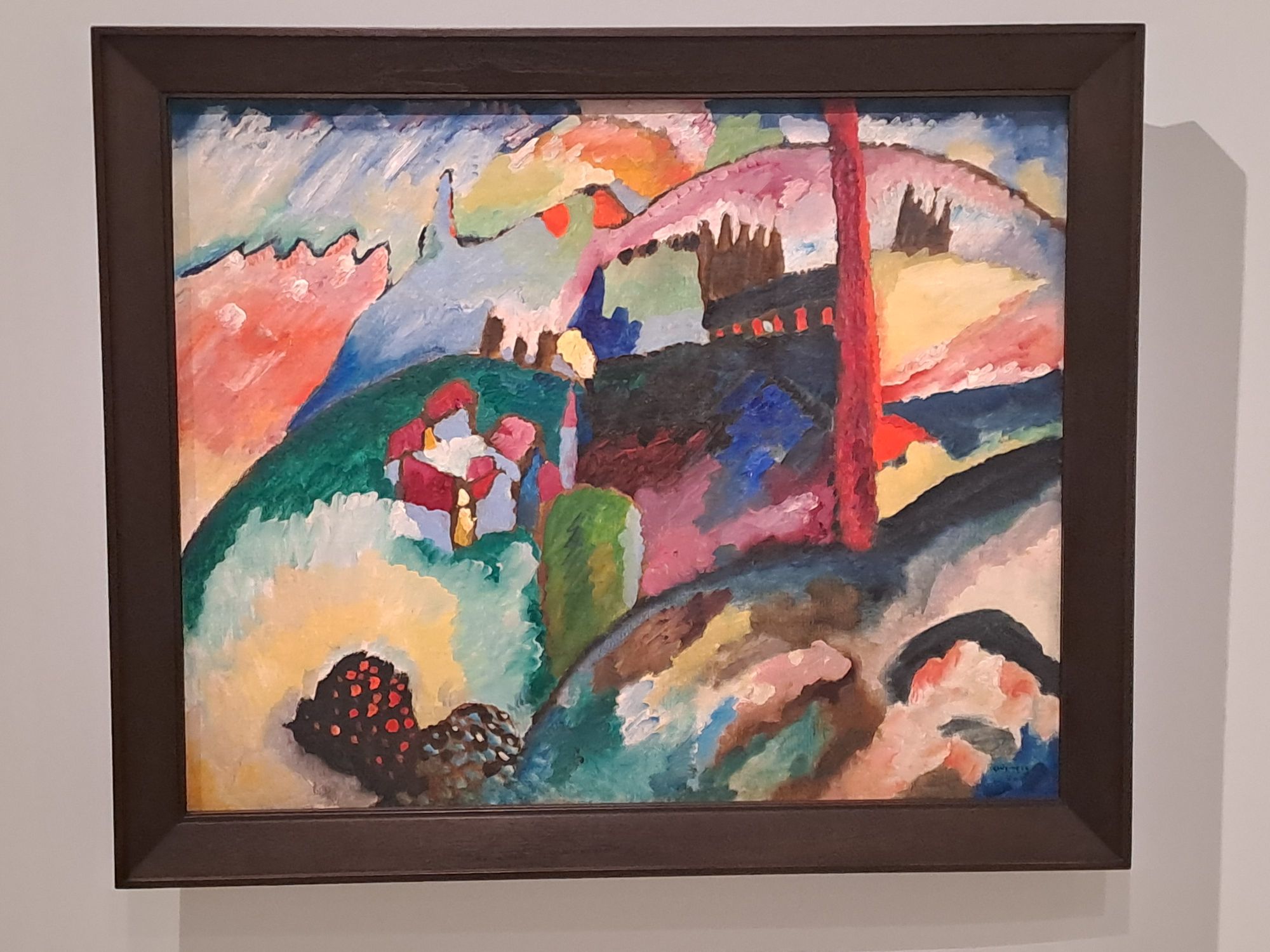
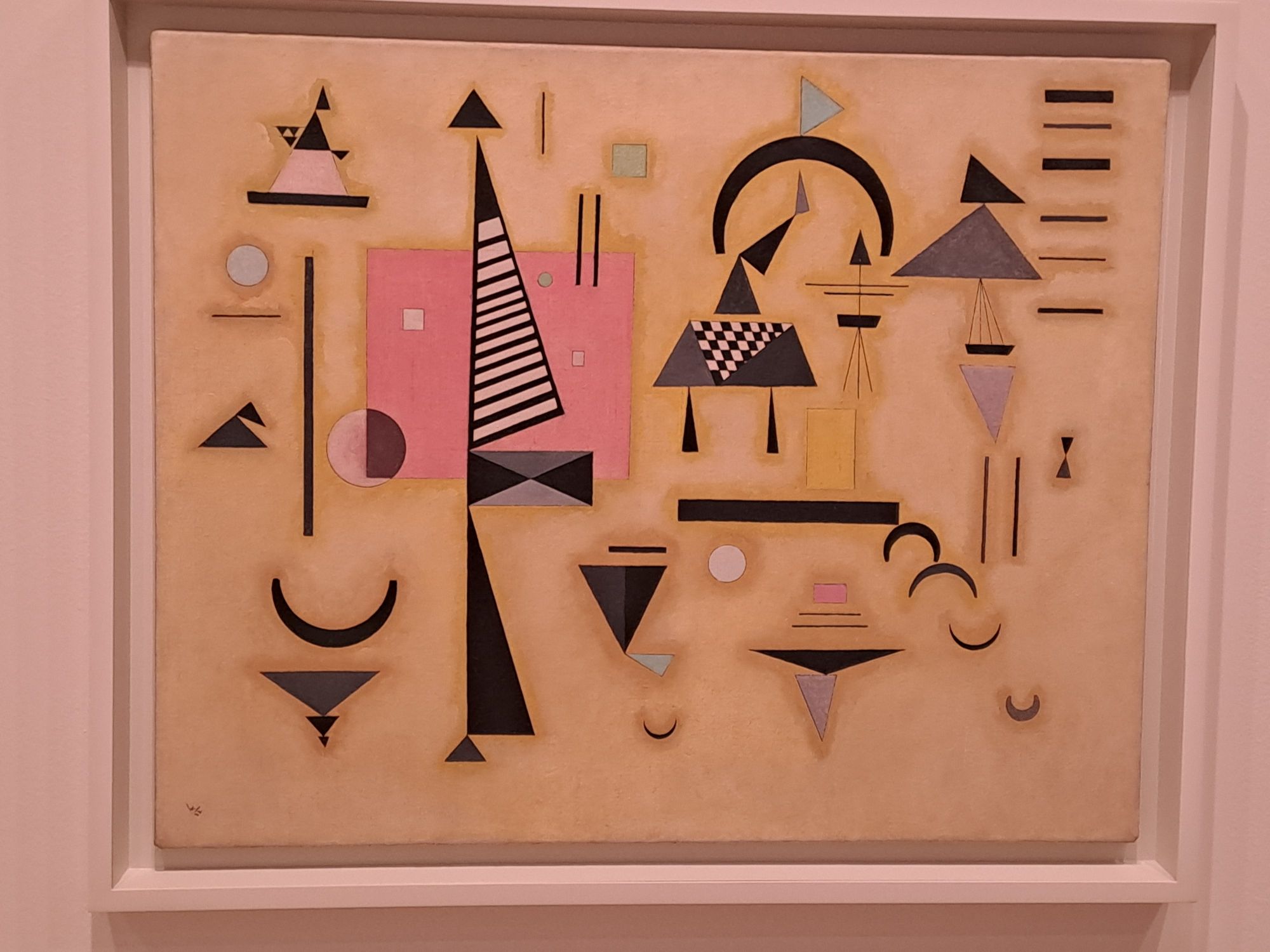
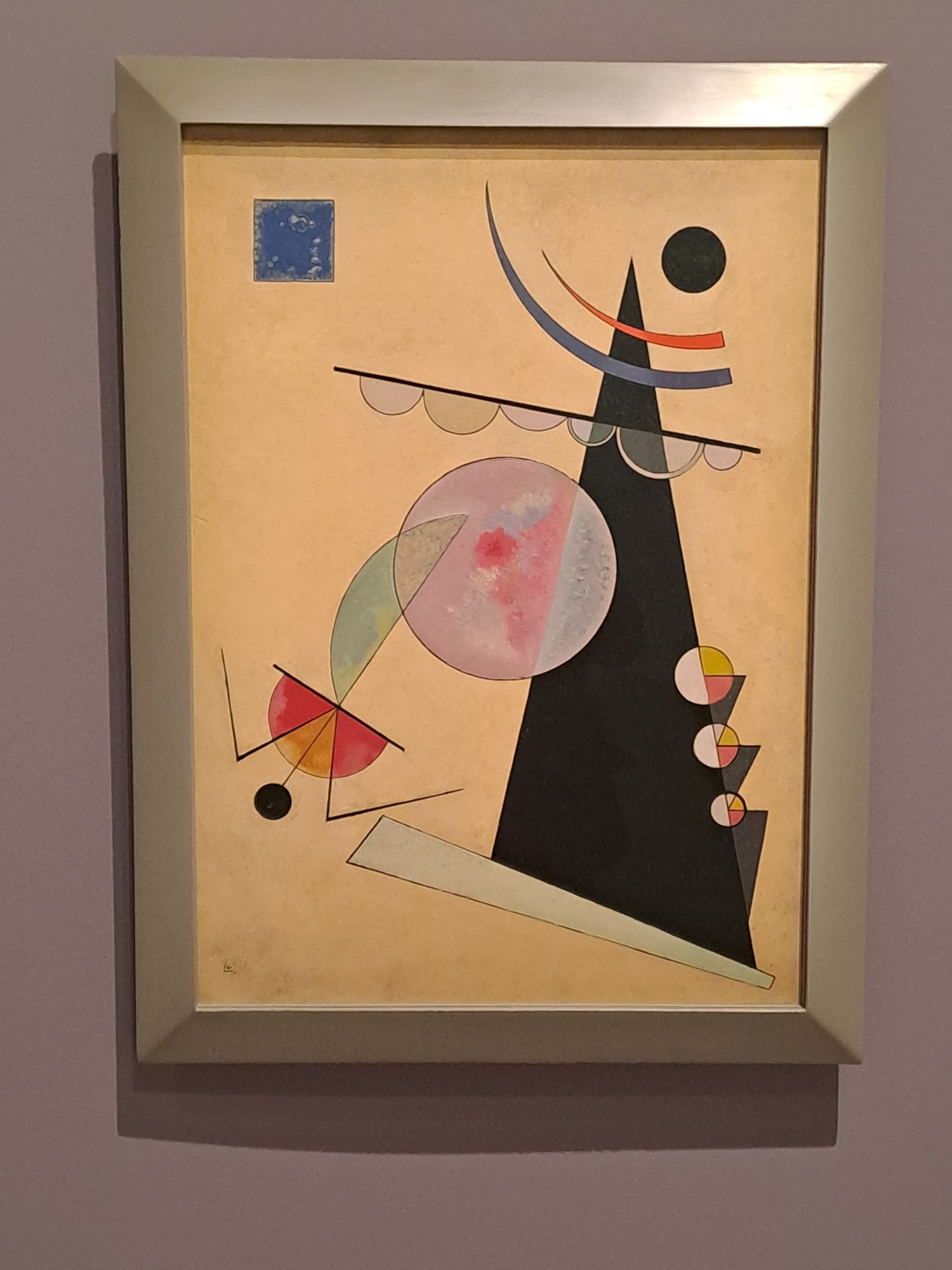
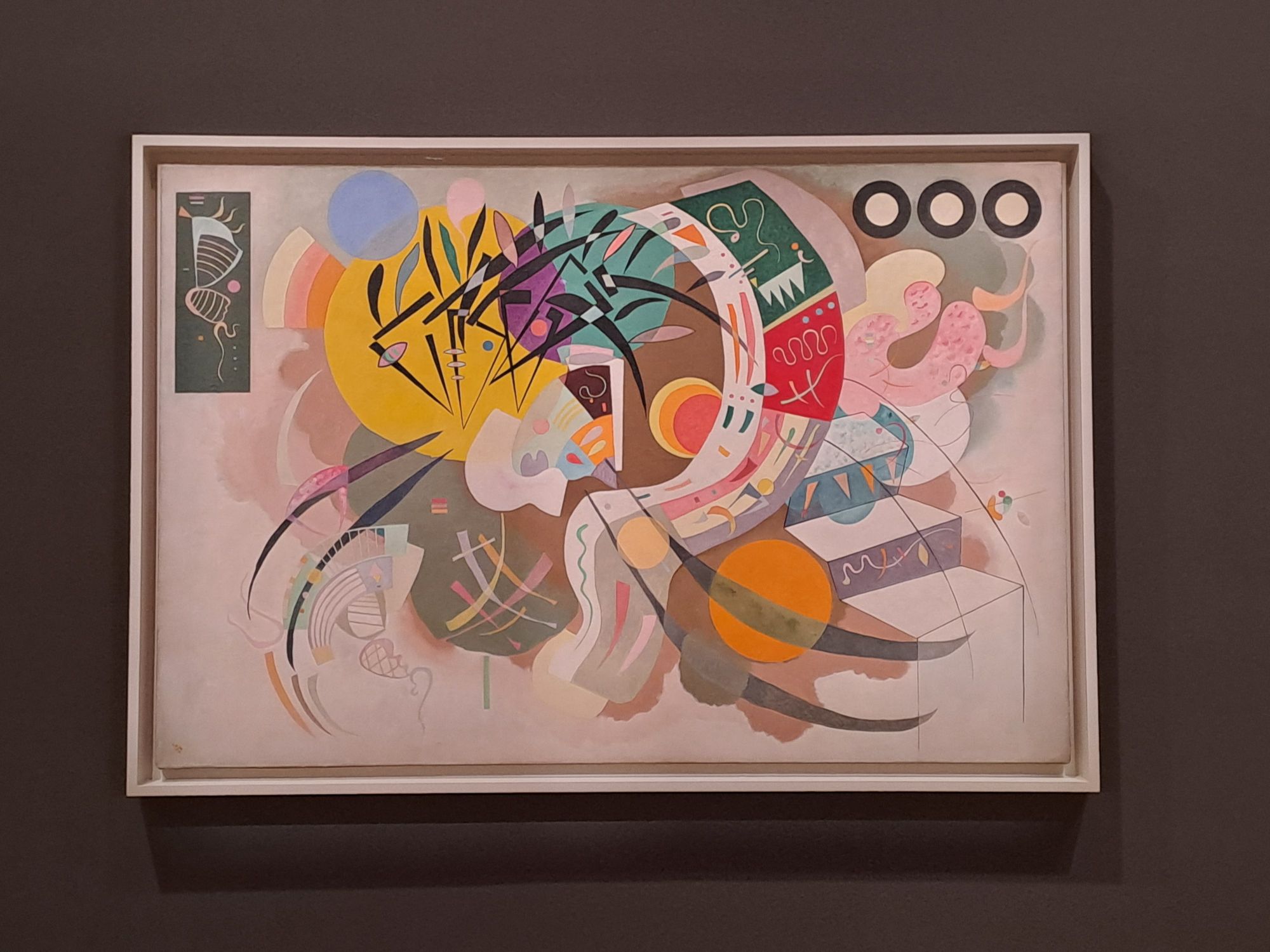
First here are some works by Wassily Kandinsky. You can see the evolution of his art from the expressionist landscapes of the early 20th Century to the highly influential abstracts from the Bauhaus period. I particularly love these compositions of simple geometric shapes – lines, circles, squares and arcs – with bold colours. They are fully abstract but also manage to suggest form and perspective and even movement in a way that fascinates me. After the Bauhaus period, Kandinsky seems to have used more organic shapes and softened the colour palette in a way that suggests a partial return to his artistic origins.
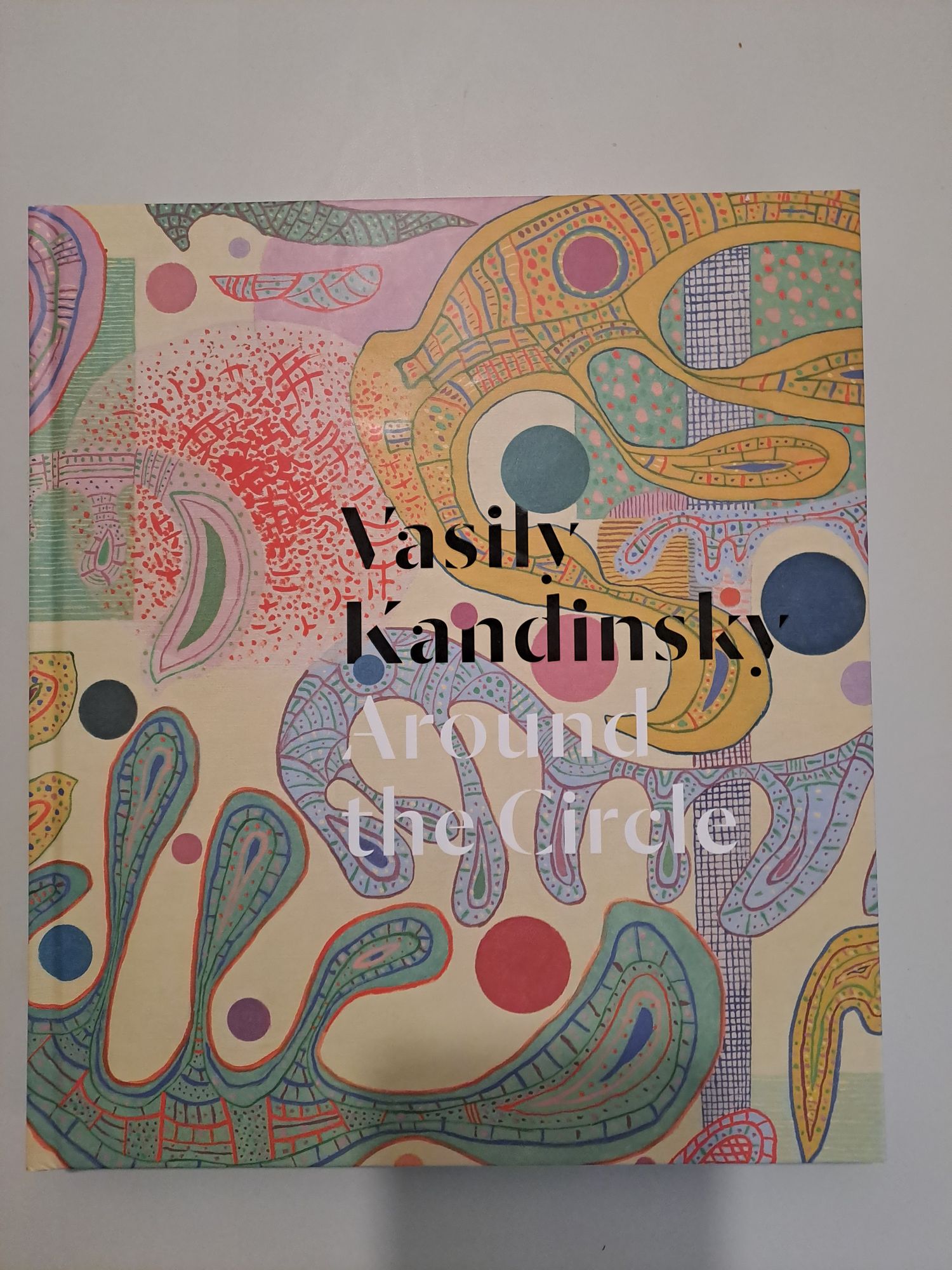
Anyway, as you can see from the last picture in the gallery, I liked the exhibition so much I bought the book!
The permanent collection is also very fine, with European art from many different periods (early Renaissance to Pre-Raphaelite and Impressionist and beyond). There are also many works by Australian artists, some of whom painted landscapes in a very conventional style reminiscent of the Royal Academy, as if they had stepped out of Burlington House into the full glare of the Australian Sun and struggled to cope with the light.
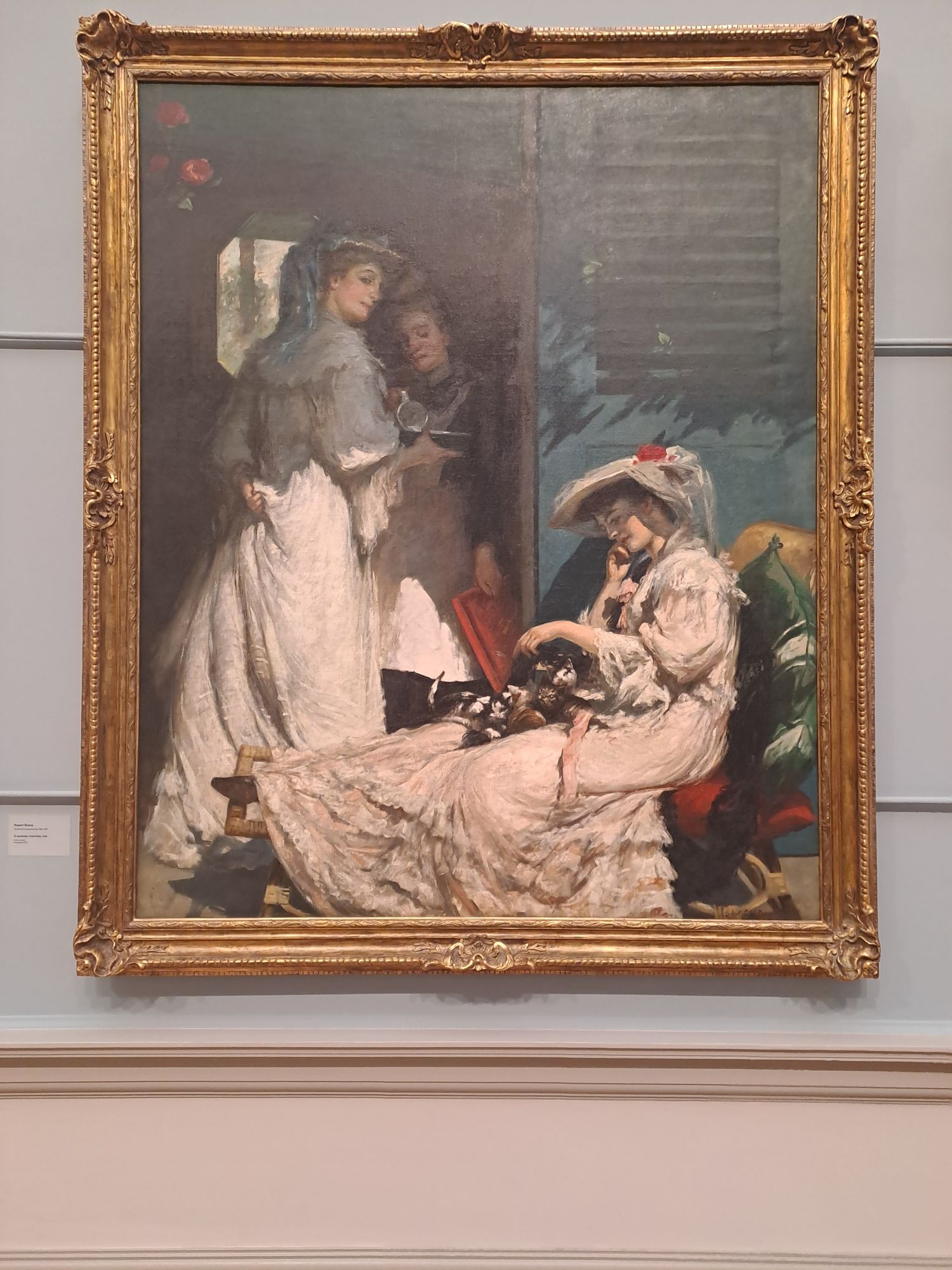
One painting that struck me is this lovely composition by a painter called Rupert Bunny:
It doesn’t really show up well in the quick snap I took but I think the depiction of light and shade in this picture – called A Summer Morning and painted in 1908, around the same time as Kandinsky’s early painting above – is very striking. Bunny was born in Melbourne but moved to Paris in the 1880s and was much celebrated there as a salon painter. Although the style of this composition is rather conservative, he seems to have been a very versatile artist.
The permanent collection is free to visit and is well worth a visit or several. In fact, I might go back once more before I leave…
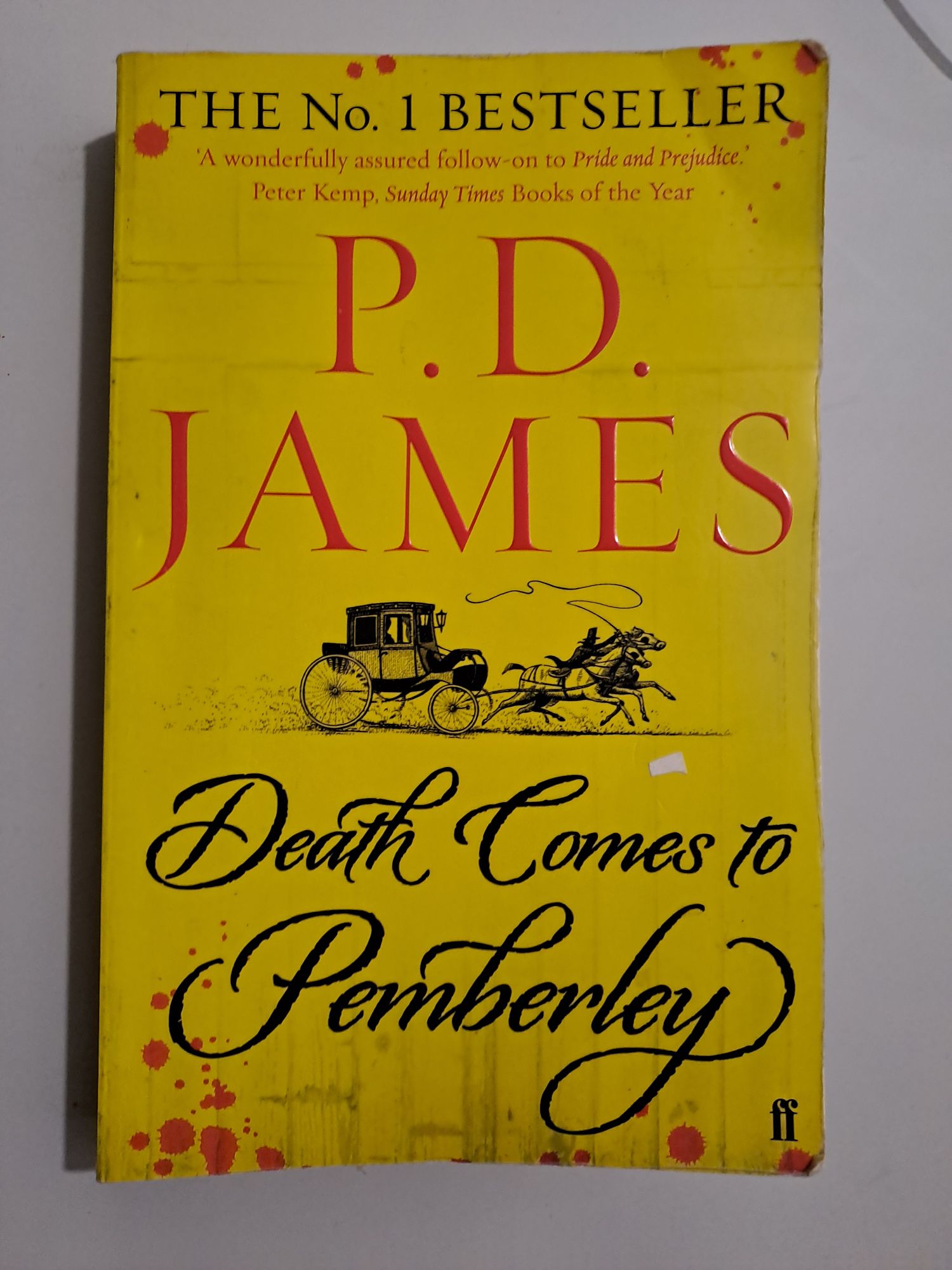
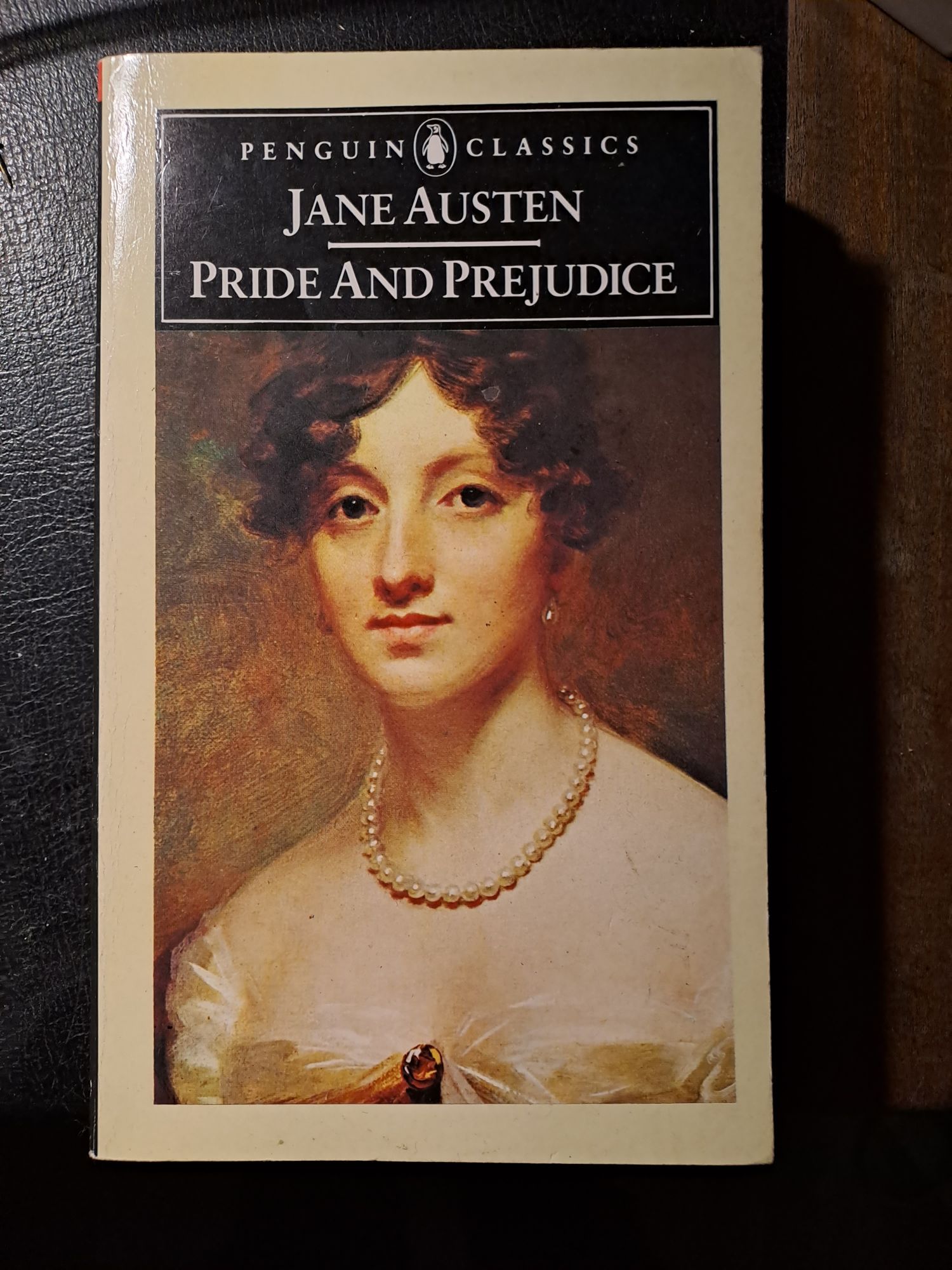
The latest book on my reading list is Death Comes to Pemberley, by P.D. James, which was published in 2011. The author was 90 years old when she began writing it and in her author’s note she admits that the book gave her a chance to indulge herself by combining her flair as a mystery writer with a love of the books of Jane Austen. This book is a skillful pastiche of the style of Jane Austen set in the world of Pride and Prejudice; this is why I re-read that book before departing for Sydney. It has however taken longer than I thought to get around to reading the P.D. James book as I have been rather busy.
It’s interesting to remark that Pride and Prejudice was actually written between 1796 and 1797, but not published until 1813 (and in a revised form). Jane Austen is a wonderful writer, with an elegant and witty style. It’s a hard act to follow, but P.D. James does a fine job. I’ll also remark that the original novel was written at the height of the Napoleonic Wars, and is set in England at a time when the threat of invasion from France was very real, but this barely registers in the plot.
I’ll let the author herself describe the setting
In Death Comes to Pemberley, I have chosen the earlier date of 1797 for the marriages of both Elizabeth and her older sister Jane, and the book begins in 1803 when Elizabeth and Darcy have been happily together for six years and are preparing for the annual autumn ball which will take place the next evening.
With their guests, which include Jane and her husband Bingley, they have been enjoying an informal family dinner followed by music and are preparing to retire for the night when Darcy sees from the window a chaise being driven at seed down the road from the wild woodlands. When the galloping horses have been pulled to a standstill, Lydia Wickham, Elizabeth’s youngest sister, almost falls from the chaise, hysterically screaming that her husband has been murdered. Darcy organises a search party and, with the discovery of a blood-smeared corpse in the woodland, the peace both of the Darcys and of Pemberley is shattered as the family becomes involved in a murder investigation.
P.D. James, Author’s Note, Death Comes to Pemberley
As this is a mystery novel, I will refrain from saying too much about the plot as that would spoil the book for readers. I will say that it is unusual for P.D. James that it isn’t a detective story as such because there isn’t actually a detective. The mystery of the murder is solved in the end by a spontaneous confession.
I get the impression that P.D. James wanted to use this book to add her own explanation of some of the events in Pride and Prejudice so there is a lengthy section at the end that functions to explain the back story. Most of the characters from Pride and Prejudice appear in the present book as bystanders, but they are well described and the overall atmosphere of the book is convincing. Darcy and Elizabeth have changed, but I imagine six years of marriage will do that. Although it’s a pastiche, this book is not at all superficial; the author seems to understand Austen’s characters and, rather than being merely imitative, the result is a genuine homage.
P.D. James passed away in 2014 at the age of 94. I bought Death Comes to Pemberley in 2014 too. The fact that it has taken me a decade to get around to reading it tells you something of how far I had got out of the reading habit. There’s also the point that I knew this was her last book and I was a bit reluctant to finish it knowing that there would be no more. Still, better late than never. I’m very glad I have read it at last as I enjoyed it greatly.
There’s something distinctively English about the novels of P.D. James, although that something is a something that clearly tends to polarize people. Some find her approach a bit too detached and genteel, some find it, “cosy”, snobbish and class-ridden, and some think that she was just an anachronism, harking back too much to the era of Agatha Christie and Dorothy L. Sayers. Yet others can’t understand the attraction of the genre at all. People are welcome to their opinions of course, but I think that the best detective fiction is not just about setting a puzzle for the reader to solve, but also posing questions about the nature of a society in which such crimes can happen. Far from being “cosy”, great crime writing actually unsettles complacent bourgeois attitudes. The solution of the mystery may offer us a form of comfort, but the questions exposed by the investigation do not go away. This is just as true for books set in the present as it is for those set two centuries ago in the world of stately homes and the threat of invasion from Napoleon.
Since it’s been a couple of weeks since Euclid commenced its routine survey operations, I thought I would share this little video from the European Space Agency that shows how the surveying will proceed over the next six years with explanatory text adapted from here:
This animation shows the location of the fields on the sky that will be covered by Euclid’s wide (blue) and deep (yellow) surveys. The sky is shown in the Galactic coordinate system, with the bright horizontal band corresponding to the plane of our Milky Way.
The wide survey will cover more than one third of the sky as shown in blue. Other regions are avoided because they are dominated by Milky Way stars and interstellar matter, or by diffuse dust in the Solar System – the so-called zodiacal light. The wide survey is complemented by a deep survey, taking about 10% of the total observing time and repeatedly observing just three patches of the sky called the Euclid Deep Fields, highlighted in yellow.
The Euclid Deep Field North – towards the top left – has an area of 20 square degrees and is located very close to the Northern Ecliptic Pole. The proximity to the ecliptic pole ensures maximum coverage throughout the year; the exact position was chosen to obtain maximum overlap with one of the deep fields surveyed by NASA’s Spitzer Space Telescope.
The Euclid Deep Field Fornax – in the lower right of the image – spans 10 square degrees and is located in the southern constellation Fornax, the furnace. It encompasses the much smaller Chandra Deep Field South, a 0.11 square degree region of the sky that has been extensively surveyed in the past couple of decades with the Chandra and XMM-Newton X-ray observatories, as well as the Hubble Space Telescope and major ground-based telescopes.
The third and largest of the fields is the Euclid Deep Field South – between the Large Magellanic Cloud and the Euclid Deep Field Fornax. It covers 20 square degrees in the southern constellation of Horologium, the pendulum clock. This field has not been covered to date by any deep sky survey and so has a huge potential for new, exciting discoveries. It has been planned to be observed from the ground by the Vera C. Rubin Observatory.
P.S. According to my latest calculations, I shall have retired by the time the Wide survey is completed.
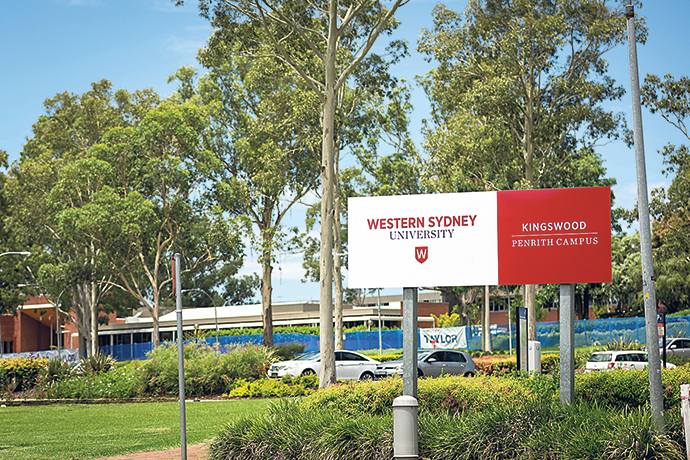
Today I made a journey by train to Kingswood, a suburb of Sydney which is the location of one of the campuses of Western Sydney University (WSU). The journey of about 50 km takes about an hour on the stopping train (T1) from Sydney Central Station. I was intrigued that the final destination for the train I got was Emu Plains; I had visions of vast herds of Emus gathered there, but I had to get off the stop before the terminus so never saw them. There’s about a 20-minute walk to the campus from Kingswood Station. It was quite warm so I was grateful when one of my hosts offered me a lift back to Kingswood Station at the end of my visit.
The reason for my visit was set another seminar about Open Access Publishing in Astrophysics. Here are the slides:
Although I’ve given a talk based on more-or-less the same slides recently, it always comes out slightly different. There was a bigger audience than I expected in the room, supplemented by even more on Zoom. The topic of Open Access Publishing does seem to be pretty hot these days in Australia and there was quite a lively discussion. I have a feeling we might have a manuscript or two submitted from WSU before too long.
Kingswood is a far less affluent area than where I am staying in Ultimo, and WSU is an institution that’s very different from the University of Sydney itself, but it was good to see another side of the city, geographically as well as socially. Thank you to everyone who attended and, especially, to Luke Barnes for inviting me and for lunch and coffee!
On the train back into Sydney I noticed that trains going in the opposite direction where crammed full, with (mostly) teenage girls heading to Olympic Park for a Taylor Swift concert. My train, heading into Sydney was fairly empty by contrast and the journey back pleasant enough.
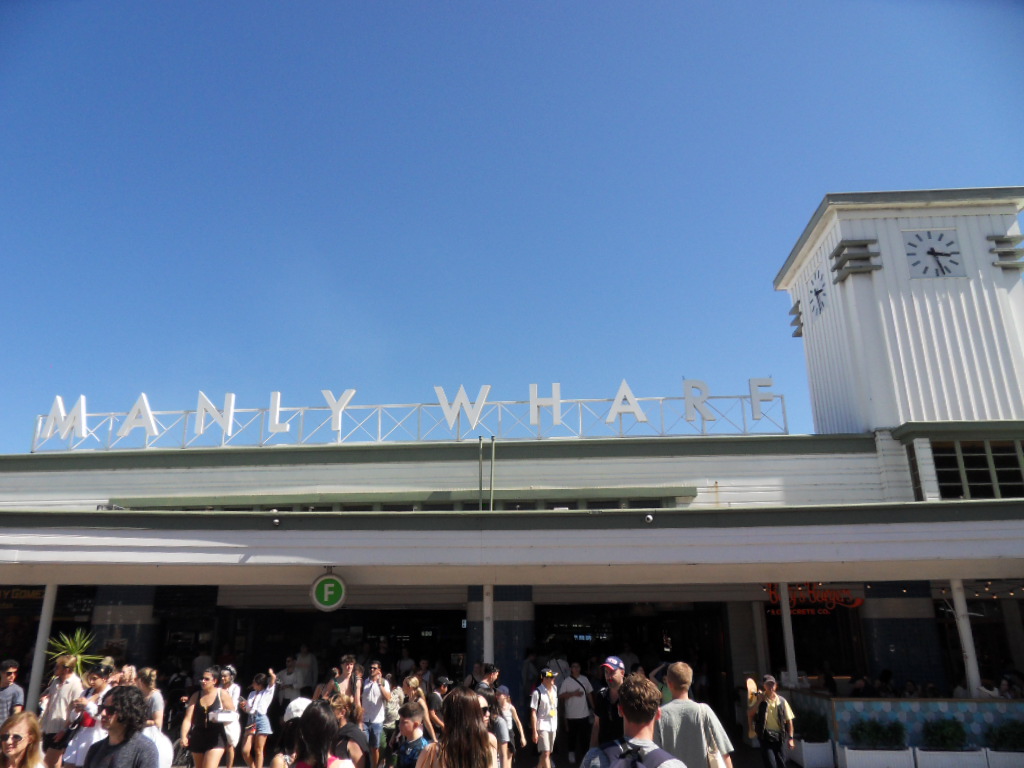
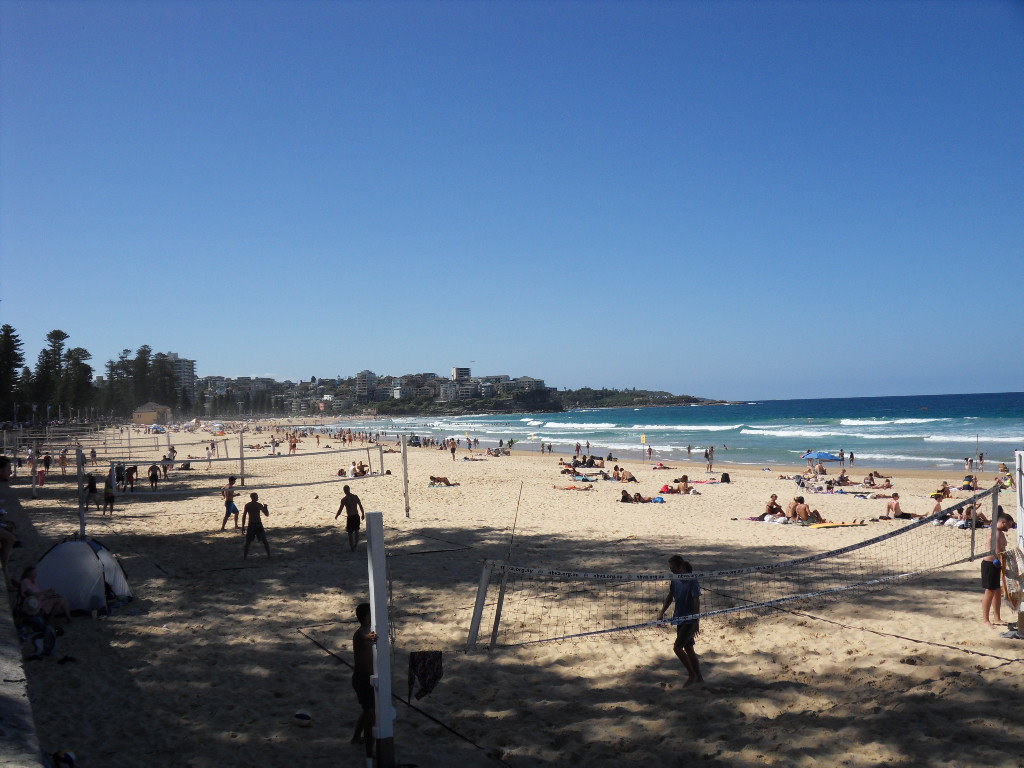
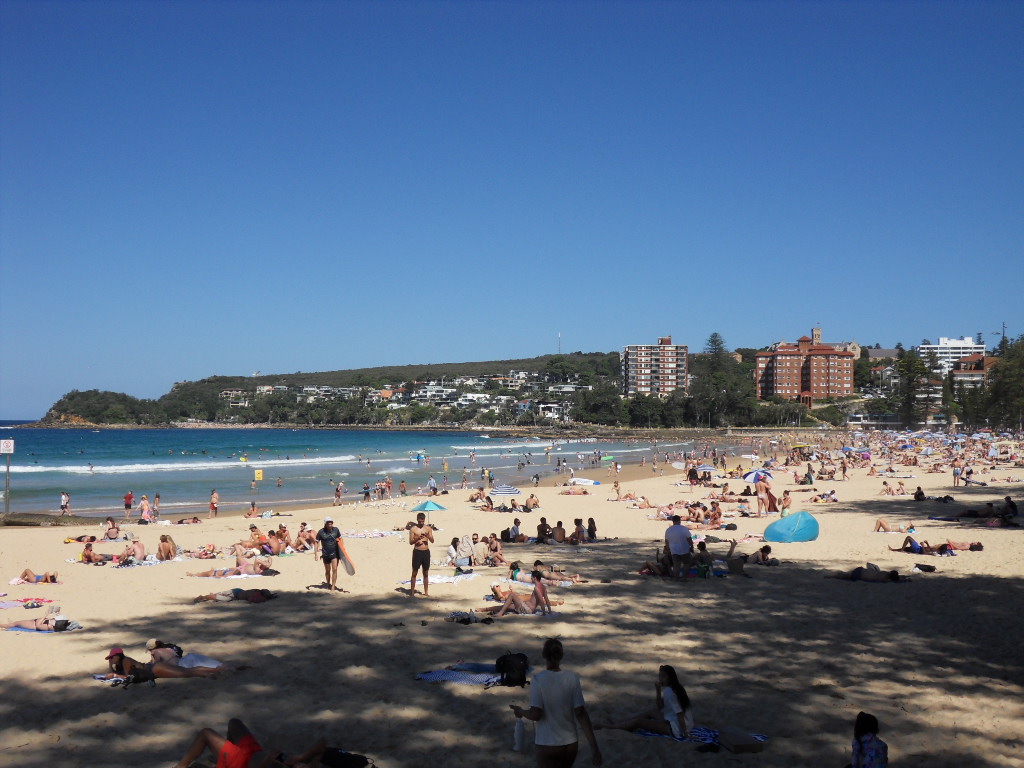
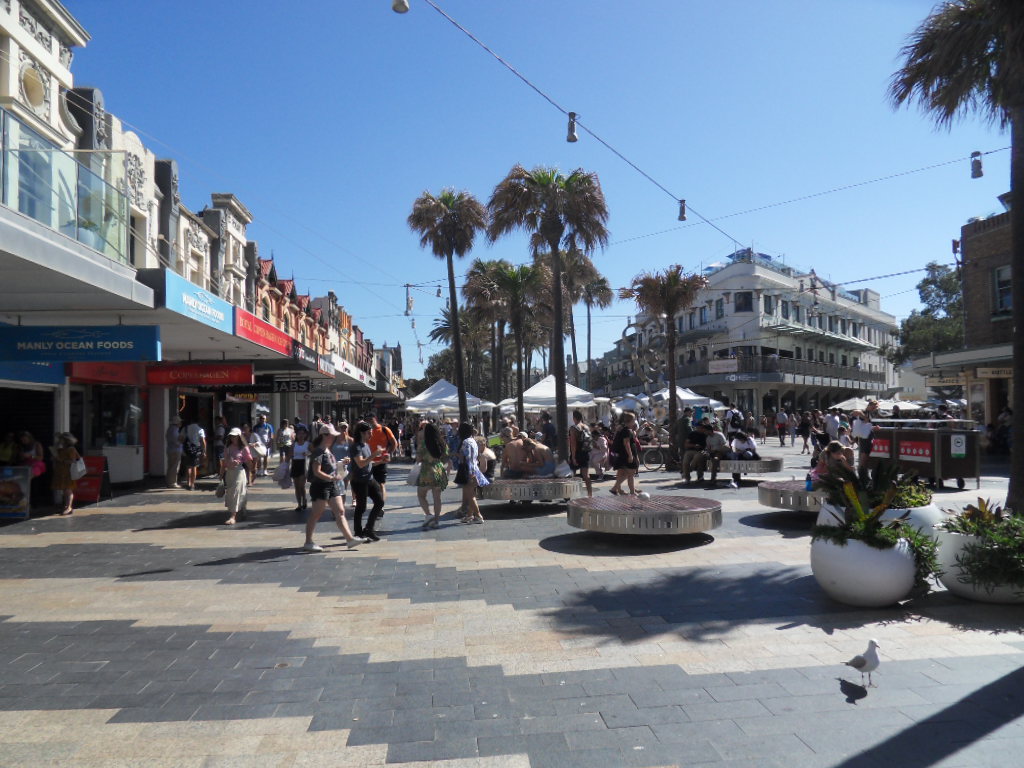
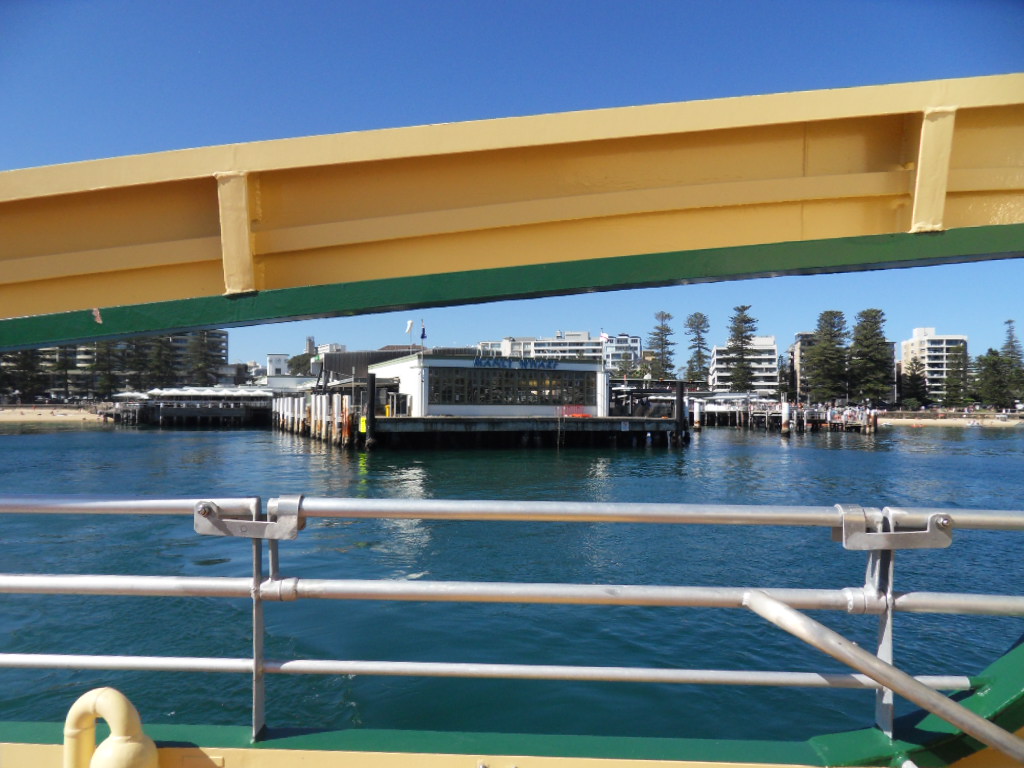
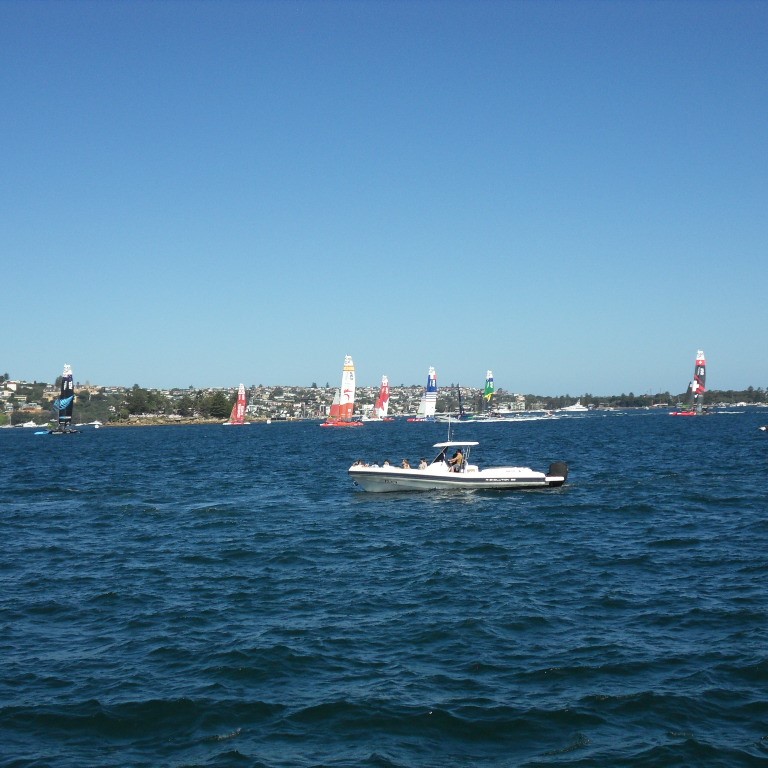
I realized this morning, with a shock, that I only have one more week in Sydney so I decided to cross off another of my things to do by taking the ferry (F1) from Circular Quay to Manly, so I could have a view of the Pacific Ocean. The most fun was on the way back, when a yacht race was under way in Sydney Harbour. Lots of small boats had come out to get a good view, many of them right in the ferry path. An officer of the Harbour Police on a jet ski was buzzing around politely inviting the offenders to get out of the way. At one point a quite large boat came right across our bow and the captain of the ferry had to sound the alarm. No harm was done, but that clown could have caused a serious accident.
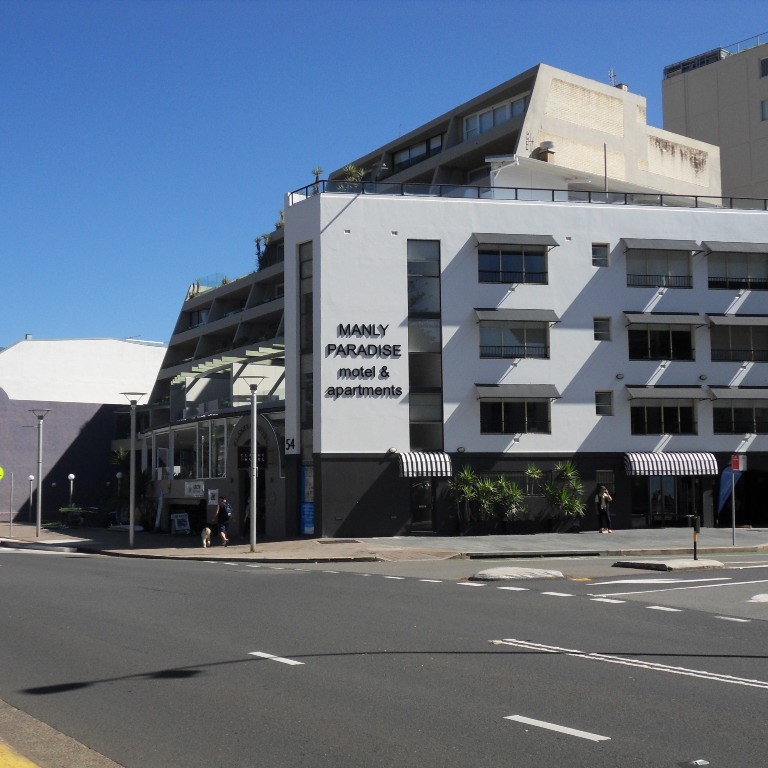
Anyway, there are lots of Manly things in Manly: a Manly Wharf, Manly Beach, a Manly Bank, Manly Pharmacy and, as you can see in one picture, Manly Paradise; there’s even, as pointed out to me by Richard Easther, Manly Astrophysics. I only stayed long enough to have a Manly beer and some Manly Fish & Chips before heading back to Circular Quay.
Here are some snaps.
Anyway, here are a few little videos from my instagram page:
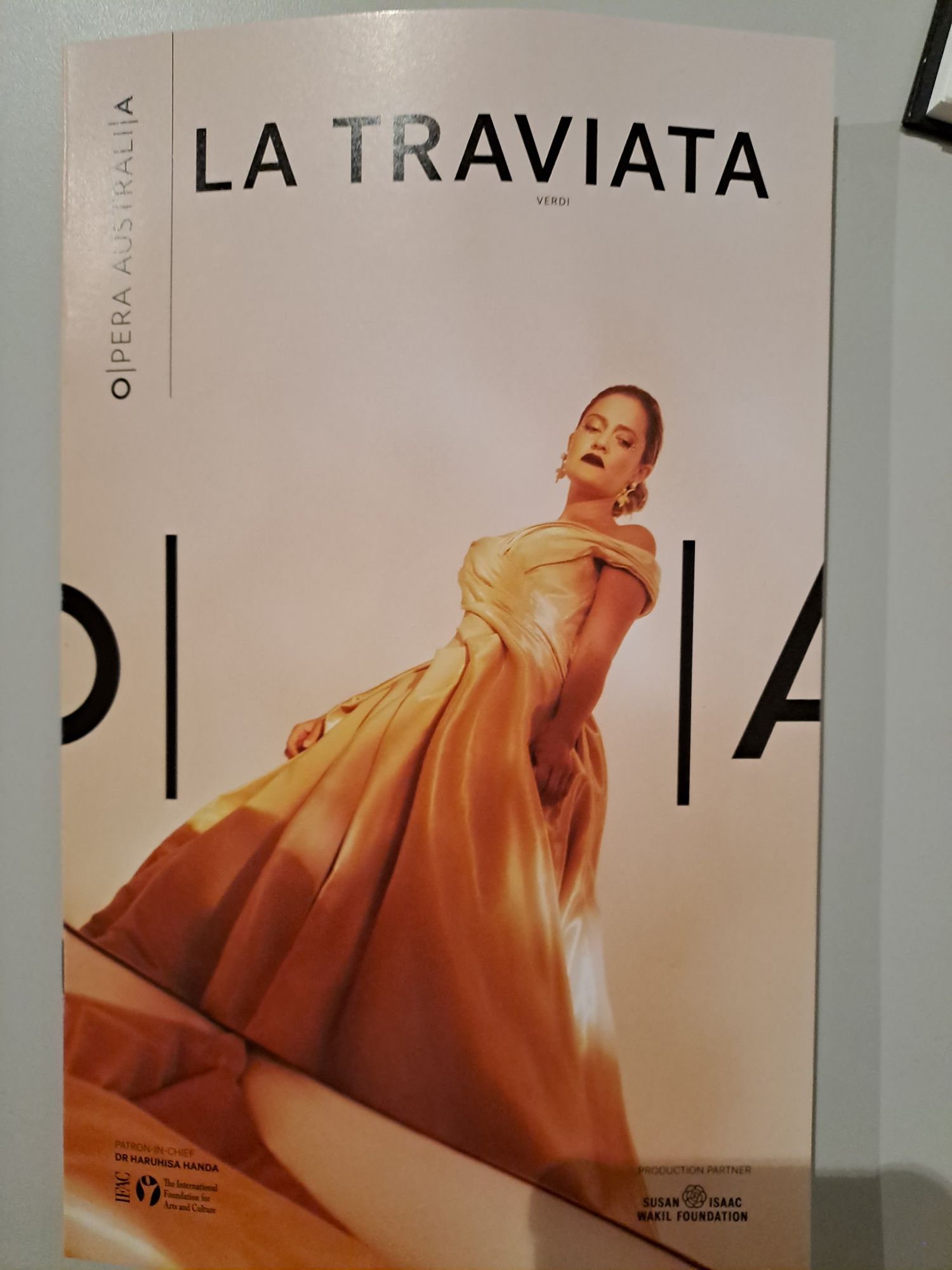
Last night I fulfilled a longstanding ambition of mine, to see an opera at the Sydney Opera House. It wasn’t that easy to get tickets, but last night I managed to see Opera Australia’s production of La Traviata by Giuseppe Verdi.
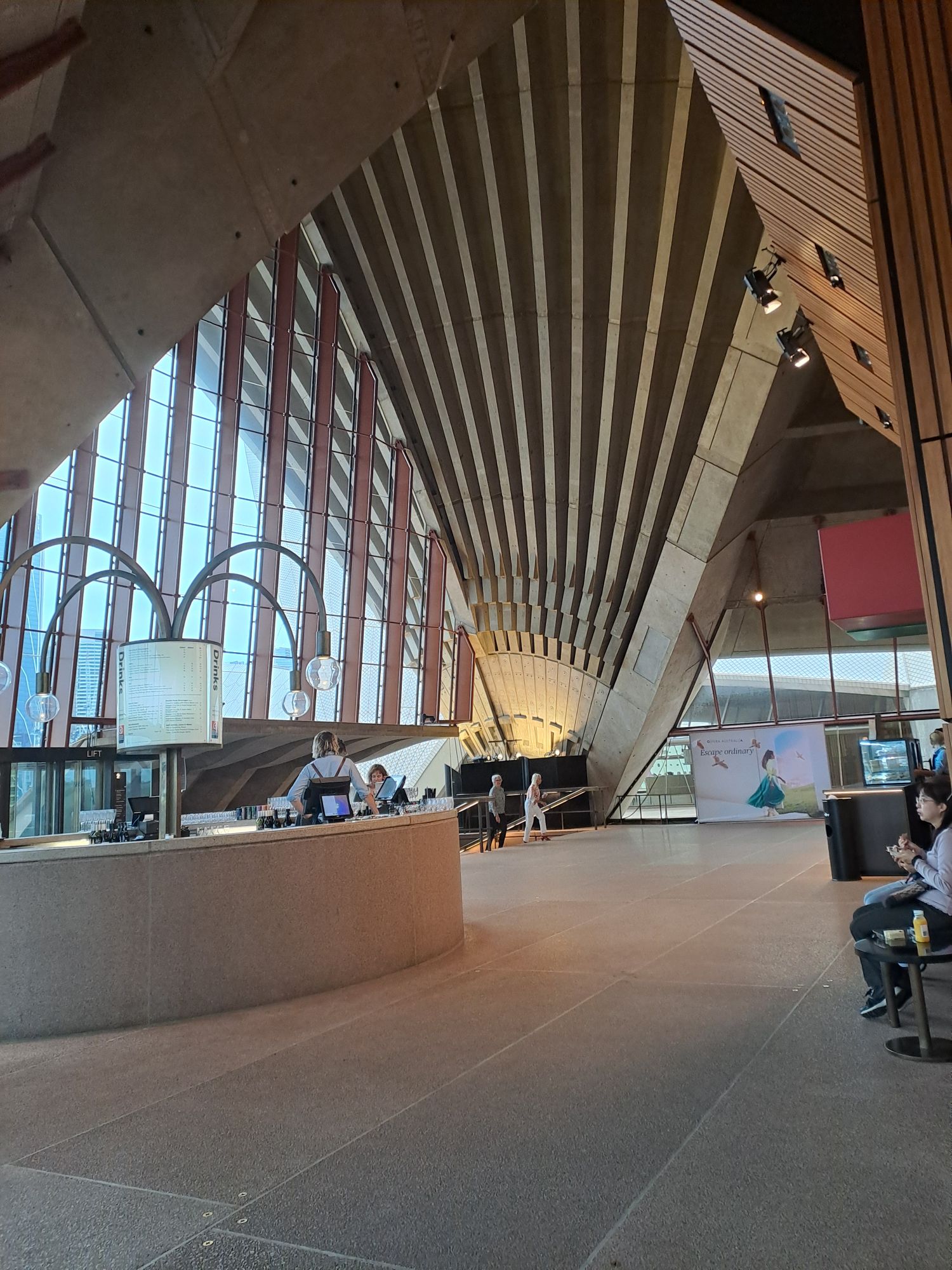
Foyer and BarJoan Sutherland Theatre
First a couple of comments about the Sydney Opera House. It is of course a splendid building but rather complicated inside, with surprising staircases and bizarre balconies. At dinner on Thursday, one of the locals here told me it is like a “1960s vision of The Future”, which is very apt. One of the nice things is that you can take your drink outside to get a breath of fresh air and a view of the harbour, which is very nice in the dark with all the lights from the boats and surrounding houses. The Joan Sutherland Theatre – where the operas are staged – is very nice. I have to say, though, that it’s a bit smaller than I’d anticipated. The seating capacity is just over 1500, while the Wales Millennium Centre – where Welsh National Opera perform – can seat 2500 people.
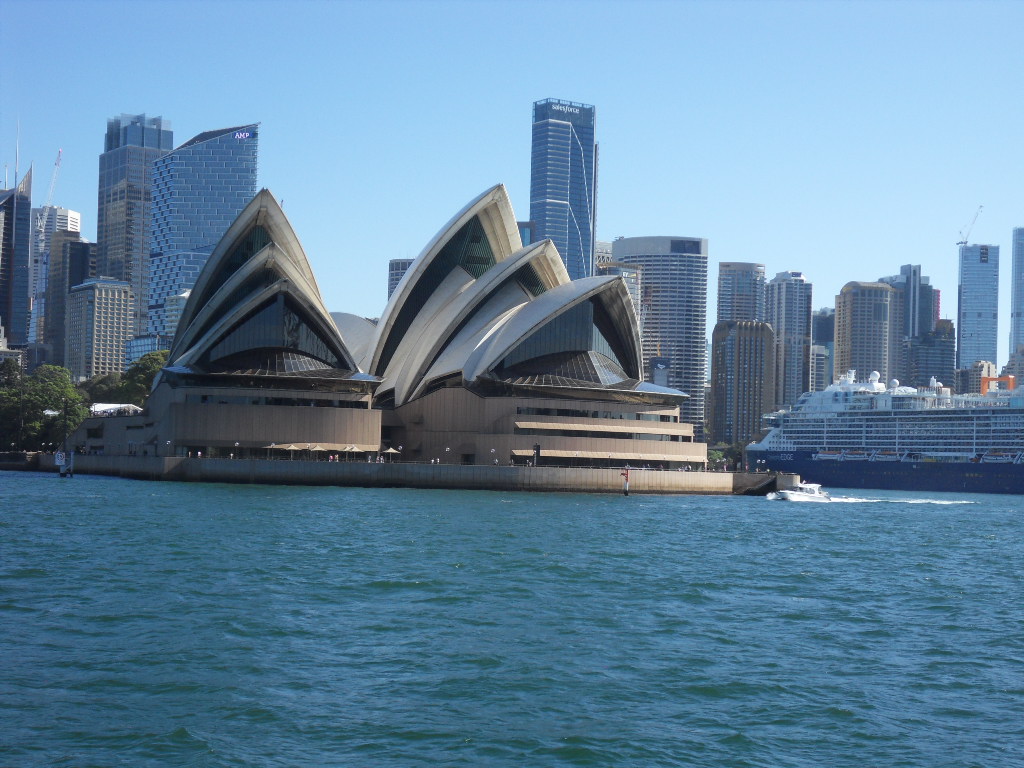
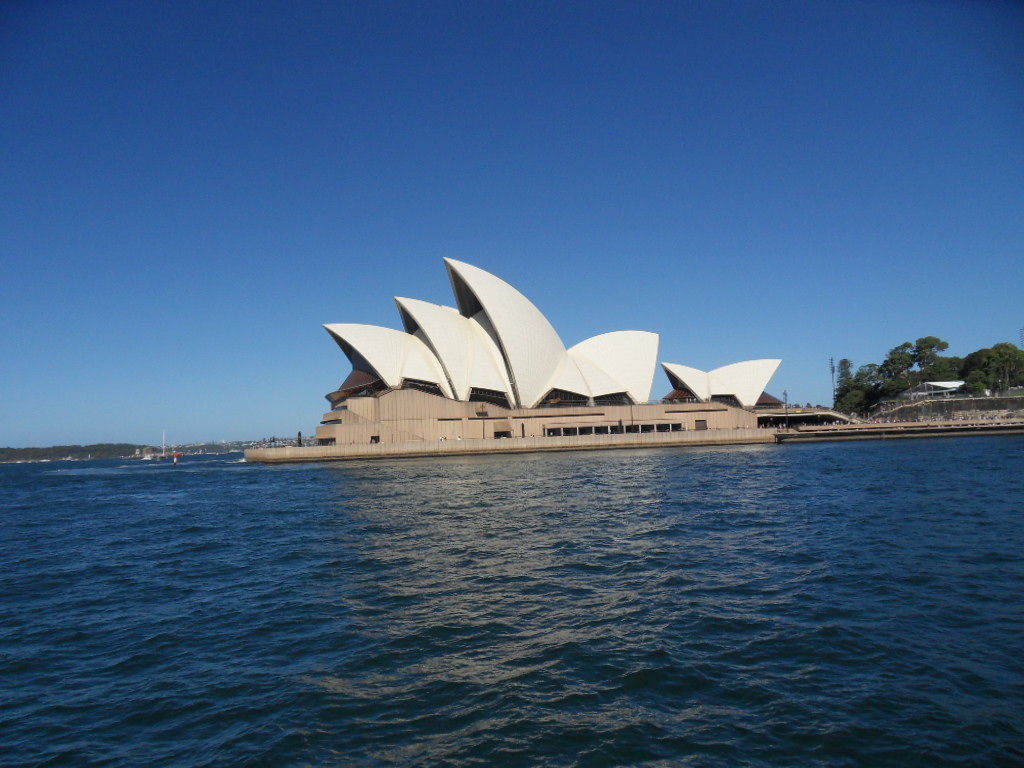
I took this picture from the Harbour Ferry
Sydney Opera House from the Harbour Ferry
The Joan Sutherland Theatre is actually in the slightly smaller edifice to the left; the other side is a Concert Hall. Anyway, the place has a nice ambience and very friendly staff. They even give out free programmes!
And so to the performance. The staging in this production is relatively simple, with the opulence of the Paris settings achieved by costumes and lighting rather than by scenery. In Act II Scene 1, when Violetta and Alfredo are in the country, the back of the set is opened out to give a view of gardens and a tree. This device returns to touching effect at the end; see below. Costumes and design are pretty much 19th Century, with some (deliberate) anachronisms in dress style for humorous effect.
The Opera is in three acts, lasting about 2 hours and 30 minutes with one interval. When I heard there was only one wine break interval I wondered how they would manage it without making the performance a bit lop-sided. In fact the break came between Scenes 1 and 2 of Act II, with the first scene performed as a continuation of Act 1 and Act III following directly from Scene 2. It worked well, with changes of costume and scenery achieved onstage by the cast in view of the audience.
This production has been running since December 2023 but the principals changed earlier this month (February). We saw Sophie Salvesani as Violetta, Tomas Dalton as Alfredo Germont, and Luke Gabbedy as Giorgio Germont (Alfredo’s Father); all of them Australian born and bred. The performance was sung in Italian.
La Traviata is one of the most enduringly popular of all operas – and is one of the most frequently performed. It’s quite curious that its first performance in Venice was a complete disaster and it took several revisions before it became established as part of the operatic repertoire. A production like the one we saw last night, however, makes it abundantly clear why it is such an evergreen classic. Act I in particular is just one memorable tune after another.
The opera is based on the novel La Dame Aux Caméliaswhich later became a play with the same name. It tells the story of Violetta, a glamorous courtesan and flamboyant darling of the Paris party scene. She meets a young chap called Alfredo at a spectacular do in her house in Act I and he tells her he’s completely in love with her. She laughs him off and he departs crestfallen. When the party’s over and he’s gone, though, she finds herself thinking about him. The trouble with Violetta is that she is already seriously ill with consumption (tuberculosis) at the start. She knows that she is doomed to die and is torn between her desire to be free and her growing love for Alfredo.
Cut to Act II, Scene I, a few months later. Violetta and Alfredo are shacked up in a love nest away from Paris. While Alfredo is away paying off some of Violetta’s bills, Alfredo’s father Giorgio turns up and tries to convince Violetta to abandon her relationship with his son because its scandalous nature threatens their family’s prospects, particular his daughter’s (Alfredo’s sisters) plans to get married. Violetta eventually agrees to do a runner. Alfredo returns and meets his father who tries to convince him to return to his family in Provence. Alfredo is distraught to hear of Violetta’s departure, refuses to go with his father, and vows to find Violetta again.
Scene 2 is back in Paris, at the house of a lady called Flora. There’s a lot of singing and dancing and general riotousness.Alfredo turns up, slightly the worse for drink and proceeds to gamble (winning a huge amout of money). Violetta turns up and Alfredo insults her by throwing his winnings at her. He’s then overcome by remorse but the Baron Douphol, a wealthy friend of Violetta, is outraged and challenges Alfredo to a duel.
Act III is set a few months later in Violetta’s bedroom where she’s clearly dying. Alfredo has run off after wounding the Baron in a duel. The doctor gives Violetta just a few hours to live. Alfredo returns. The lovers forgive each other and embrace. Violetta dies.
I thought Sophie Salvesani was a very convincing and sympathetic Violetta. She has a very nice, fluid voice and engaging stage presence. Violetta is a demanding role- there are several tricky coloratura passages to cope with – but her character is quite complicated too. Although we know she’s ill right from the start she’s not by any means a passive victim. She’s a courtesan who has clearly put it about a bit, but she’s also got a strong moral sense. She’s vulnerable, but also at times very strong.
All the cast sang very well, actually. I particularly liked the baritone of Luke Gabbedy (though even with his make up he looked too young to be Alfredo’s Daddy).
The look of the opera – staging, lighting and costumes – also worked very well. The Paris parties were riots of colour and movement with just as much debauchery as desired. The start of Act III finds the same set as Act I, bare apart from a Chaise Longue, bathed in a ghostly greenish light. A particularly moving touch was right at the end when Violetta is dying. Here last lines (and the last of the Opera) are:
È strano! Cessarono gli spasimi del dolore. In me rinasce – m’agita insolito vigor! Ah! ma io ritorno a viver! Oh gioia! (Ricade sul canapè.)
How strange! The spasms of pain have ceased: A strange vigour has brought me to life! Ah! I shall live – Oh, joy! (She falls down, senseless, upon the sofa.)
Most productions I have seen follow these directions but, in this one, before delivering these lines, Violetta stands up, while the other members of the cast present on stage – Alfredo, Giorgio, the maid Annina, and the Doctor – freeze as she sings the lines in full voice. The back of the set lifts up and shows the tree we saw in Act II and Violetta walks out into the sunshine while a double takes the place of the lifeless Violetta on the sofa. The implication is that she is already dead when she sings these last lines. It’s a powerful device, and puts quite a different perspective on the ending.
Anyway, congratulations to Opera Australia on an excellent production which I enjoyed greatly.
P.S. I’ll be going again to the Sydney Opera House next week, to see their Magic Flute.
I was just thinking this afternoon that I haven’t posted recently any of the Cosmology Talks curated by Shaun Hotchkiss, then I looked and found that I had the perfect excuse for doing so. This particular talk is actually about one of the two new OJAp papers I announced in my previous post, i.e. “The IA Guide: A Breakdown of Intrinsic Alignment Formalisms” and the authors are: Claire Lamman (Harvard, USA); Eleni Tsaprazi (Stockholm, Sweden); Jingjing Shi (Tokyo, Japan); Nikolina Niko Šarčević (Newcastle, UK); Susan Pyne (UCL, UK); Elisa Legnani (Barcelona, Spain); and Tassia Ferreira (Oxford, UK).
Here is Shaun’s description of the video:
Claire Lamman, Jingjing Shi, Niko Šarčević, Susan Pyne, Elisa Legnani and Tassia Ferreira tell us about the intrinsic alignments guide they wrote (along with Eleni Tsaprazi, who couldn’t make the video recording).
They wanted to write something that wasn’t quite a review, but also wasn’t quite a set of lecture notes. Instead they aimed for what might be best framed as a “cheat sheet” for intrinsic alignments. Everything you need to know about the topic, compressed into one article. However, there’s still a lot about the topic, so the compression is still 33 pages and 10 figures big.
To construct the guide they broke the topic of intrinsic alignments into sub-fields and then asked questions like “what are the key equations for this sub-field?”, “what are the different notations people use?”, “what might be confusing to a newcomer?” They then wrote the guide to answer those questions, even including subsections with quick definitions of each common term, and short lists of common alternative notations.
It’s Saturday morning in Sydney, and time to post another update relating to the Open Journal of Astrophysics. Since the last update we have published two more papers, taking the count in Volume 7 (2024) up to 15 and the total published by OJAp up to 130. I should have posted these before leaving but it slipped my mind.
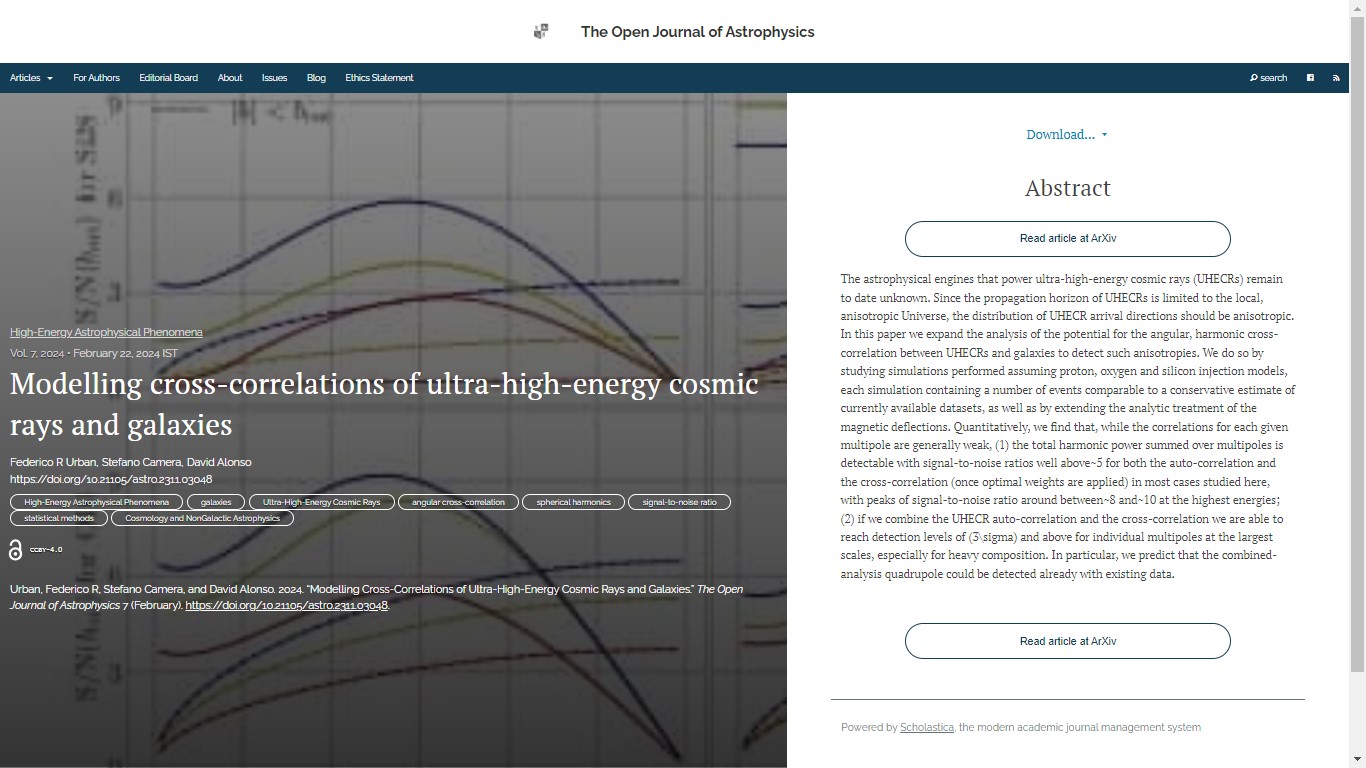
The first paper of the most recent pair – published on Thursday 22nd February – is “Modelling cross-correlations of ultra-high-energy cosmic rays and galaxies” by Federico Urban (Prague, Czech Republic), Stefano Camera (Torino, Italy) and David Alonso (Oxford, UK). It presents a discussion of the possible statistical correlations between Ultra-High-Energy Cosmic-Ray (UHECR) directions in various models and structure in the galaxy distribution and whether or not this signal could be measurable. This one is in the folder marked “High-Energy Astrophysical Phenomena“.
Here is a screen grab of the overlay which includes the abstract:
You can click on the image of the overlay to make it larger should you wish to do so. You can find the officially accepted version of the paper on the arXiv here.
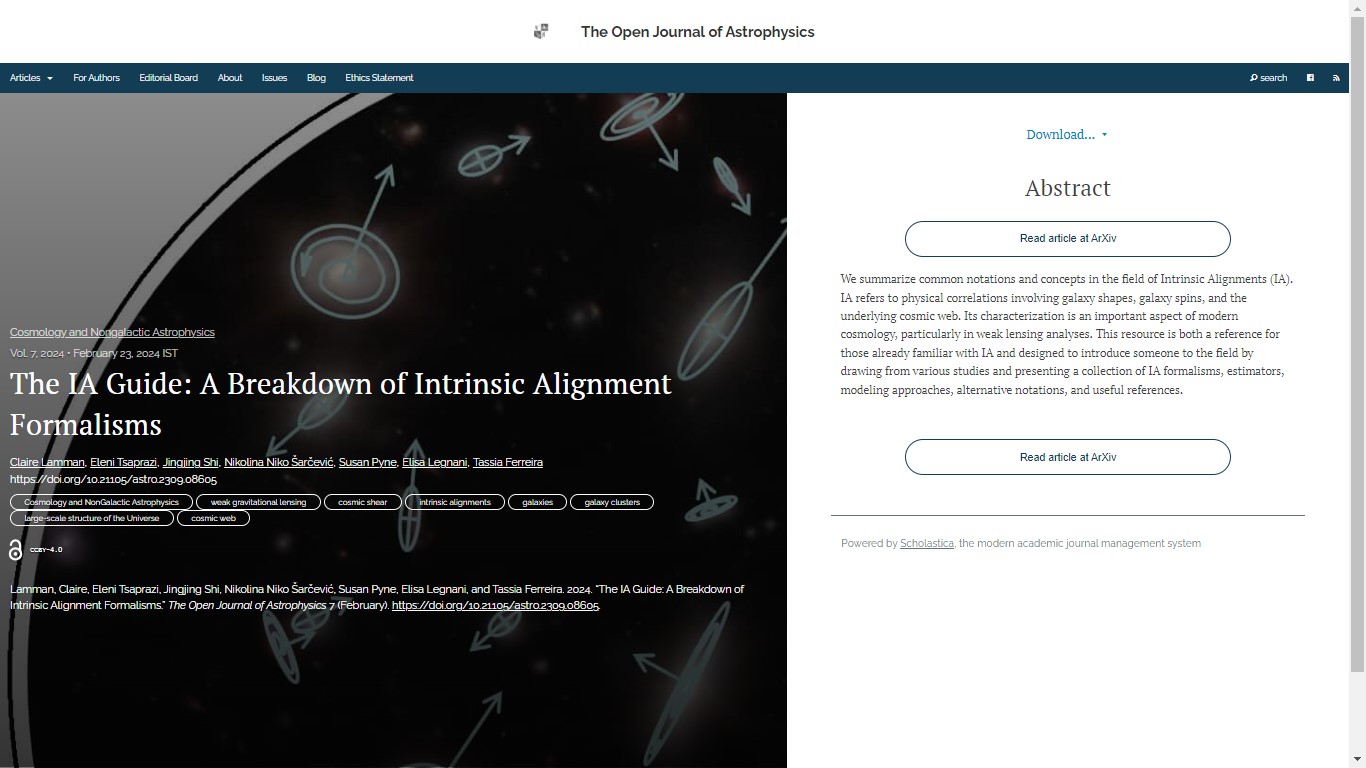
The second paper was published on Friday 23rd February and has the title “The IA Guide: A Breakdown of Intrinsic Alignment Formalisms” and the authors are: Claire Lamman (Harvard, USA); Eleni Tsaprazi (Stockholm, Sweden); Jingjing Shi (Tokyo, Japan); Nikolina Niko Šarčević (Newcastle, UK); Susan Pyne (UCL, UK); Elisa Legnani (Barcelona, Spain); and Tassia Ferreira (Oxford, UK). This one, which is in the folder marked Cosmology and NonGalactic Astrophysics, presents a review of Intrinsic Alignments, i.e. physical correlations involving galaxy shapes, galaxy spins, and larger scale structure, especially important for weak gravitational lensing
Here is a screen grab of the overlay which includes the abstract:
You can click on the image of the overlay to make it larger should you wish to do so. You can find the officially accepted version of the paper on the arXiv here.
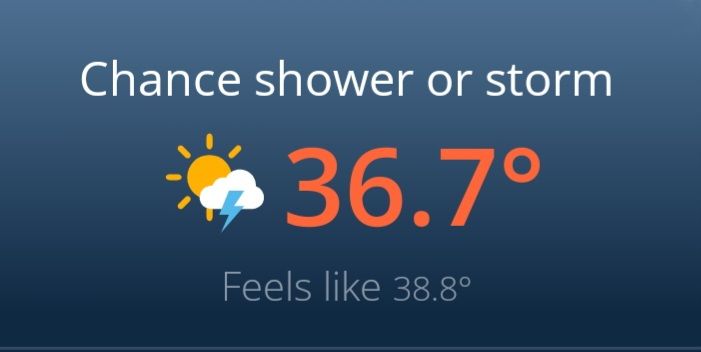
Today has been the hottest day of my visit to Sydney (so far). It was already 30°C by 11am, and got warmer as the day went on, reaching 35°C by 3pm, reaching a peak of almost 37°C by 4 o’clock. I was struggling a bit by then, and decided to go back to my air-conditioned apartment for a rest. I got there just before the lovely rain came; no thunder or lightning today though.
I was prepared for the high temperatures here, but at this time of year it is very humid which I find much more difficult to deal with. The hottest place I have ever been in was Aswan in Egypt, where it was 48°C in the shade, but it was very dry and I didn’t find it all that troublesome. I was careful to drink plenty of water, as I could feel myself evaporating, but other than that it wasn’t all that bad. Years ago I went to New Orleans where the temperature was barely 30°C but the humidity so oppressive I could barely function at all, even at night.
Anyway, out of curiosity, I googled the highest temperature ever recorded in Sydney, which turns out to have been recorded at Penrith with a high of 48.9 °C (120 °F) on 4 January 2020. Yikes! Coincidentally, I am going to Penrith on Monday to give a talk at Western Sydney University. The forecast for there and then is a mere 28°C…
The views presented here are personal and not necessarily those of my employer (or anyone else for that matter).
Feel free to comment on any of the posts on this blog but comments may be moderated; anonymous comments and any considered by me to be vexatious and/or abusive and/or defamatory will not be accepted. I do not necessarily endorse, support, sanction, encourage, verify or agree with the opinions or statements of any information or other content in the comments on this site and do not in any way guarantee their accuracy or reliability.





 In the Dark