Archive for February, 2024

SN1987A, Past and Present

Posted in Biographical, The Universe and Stuff with tags , , , , , , on February 23, 2024 by telescoper

There’s a new paper in Science featuring observations using the MIRI and NIRSpec instruments on JWST of Supernova SN1987A in the Large Magellanic Cloud. I couldn’t resist doing a short post about this result, partly because the paper features Maynooth colleague Paddy Kavanagh, and partly because I’m old enough to remember when this supernova was detected, in 1987. In fact I was doing my PhD at the time. When I started lecturing a few years later I used to use it as an example of a Type II (core-collapse) supernova. At first I would say “you will remember SN1987A” then, as the years passed, I realized that students would have been quite young in 1987 so I changed this to “some of you will remember SN1987A”. Still later, I realized that none of my students had even been born in 1987 so I forgot about the remembering bit and just talked about SN1987A. As of 2024, nobody under the age of 37 was born in 1987. Tempus has a distinct tendency to Fugit.

In 1987 I was in Sussex and I remember Roger Tayler getting very excited about the detection of anti-neutrinos from SN1987A at the Kamioka Observatory in Japan. There weren’t many – 12 altogether – but he wanted to do a statistical analysis of the arrival times to see if there was any evidence that might indicate the neutrinos had mass. Being rather “old-school”, he did a Monte Carlo experiment involving drawing numbers written on bits of paper out of a cardboard box. After a brief chat I suggested I could do a much better job using a random-number generator on a computer so I wrote a bit of code and did the computation. The results showed no evidence for neutrino mass.

Anyway, this type of supernova should produce a neutron star or black hole sitting inside a ring-shaped remnant. The ring has been well studied, but in 37 years of observation the central object has not been detected. The results in the latest paper (by Fransson et al.) involve a spectroscopic study of the emission lines of ionized argon from the SN1987a remnant at sufficiently high spectral resolution to map the velocity structure. The results suggest that ionizing radiation from a neutron star is illuminating gas from the inner parts of the remnant.

https://doi.org/10.1126/science.adj5796

For more details, see the paper.

DES and the BAO Scale

Posted in The Universe and Stuff with tags , , , , on February 22, 2024 by telescoper

I just saw a press release about new results from the Dark Energy Survey relating to measurements of baryon acoustic oscillations. These are basically the residue of the oscillations seen in the power spectrum of the cosmic microwave background (CMB) temperature distribution imprinted on the galaxy distribution. They are somewhat less obvious that the primordial temperature fluctuations because the growth of structure produces a much larger background but they are measurable (and indeed are one of the things Euclid will measure).

Anyway, there is a very nice detailed description in the press release and you can find the preprint of the work in full on arXiv here, so I’ll just show the key figure:

The effective redshift of this measurement is about 0.85; in the CMB the redshift is about 1000. You can see that there is a characteristic scale but it is slightly offset from that predicted using the standard ΛCDM model based on the Planck determination of cosmological parameters. One has to be careful in interpreting this diagram because it is determined using autocorrelation functions; the errors on different bins are therefore correlated, not statistically independent. They are also, as you can see, quite large. Nonetheless, it’s a tantalizing result…

Open Access Talk at UNSW

Posted in Biographical, Open Access, The Universe and Stuff with tags , , , on February 21, 2024 by telescoper

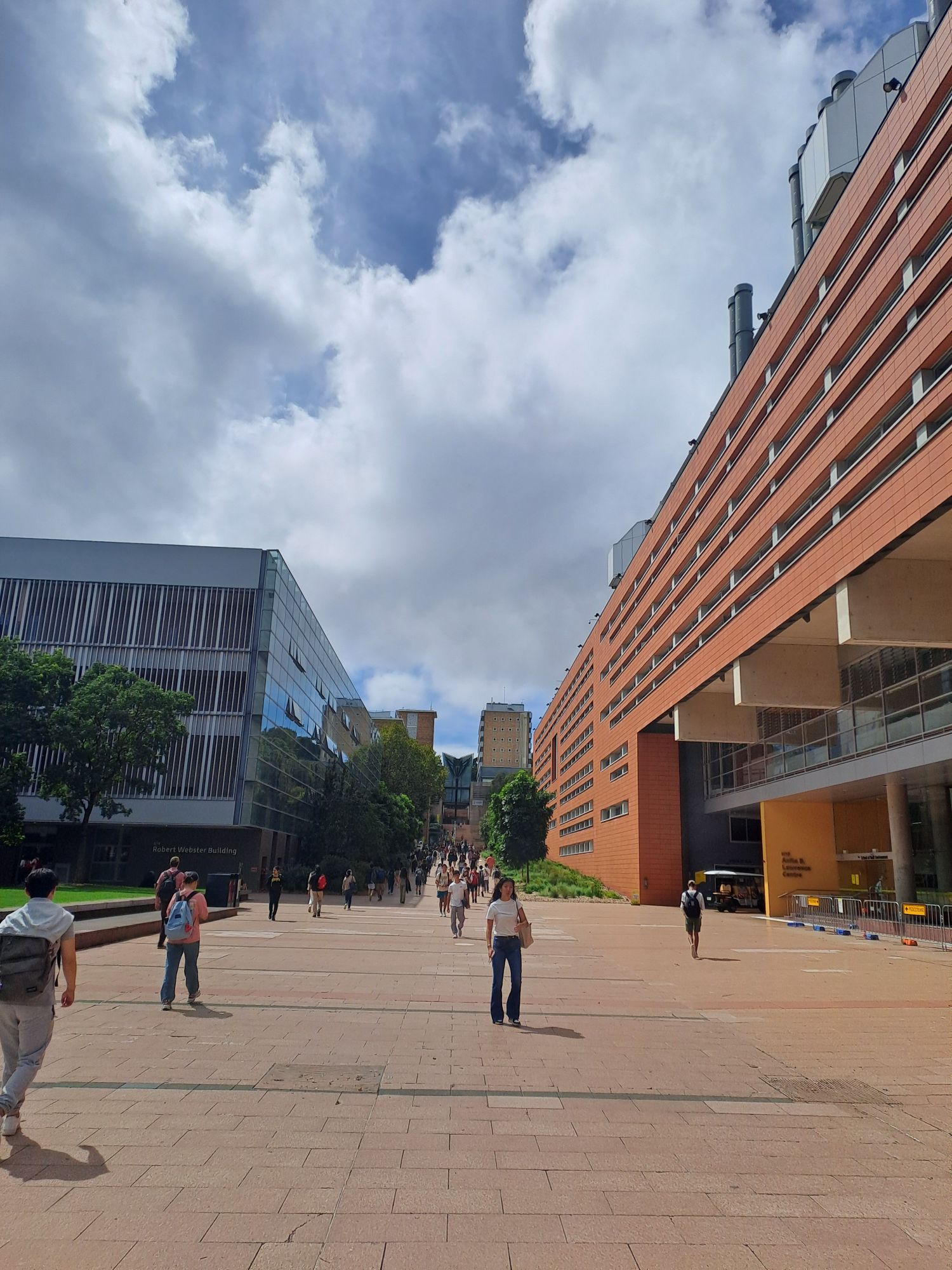
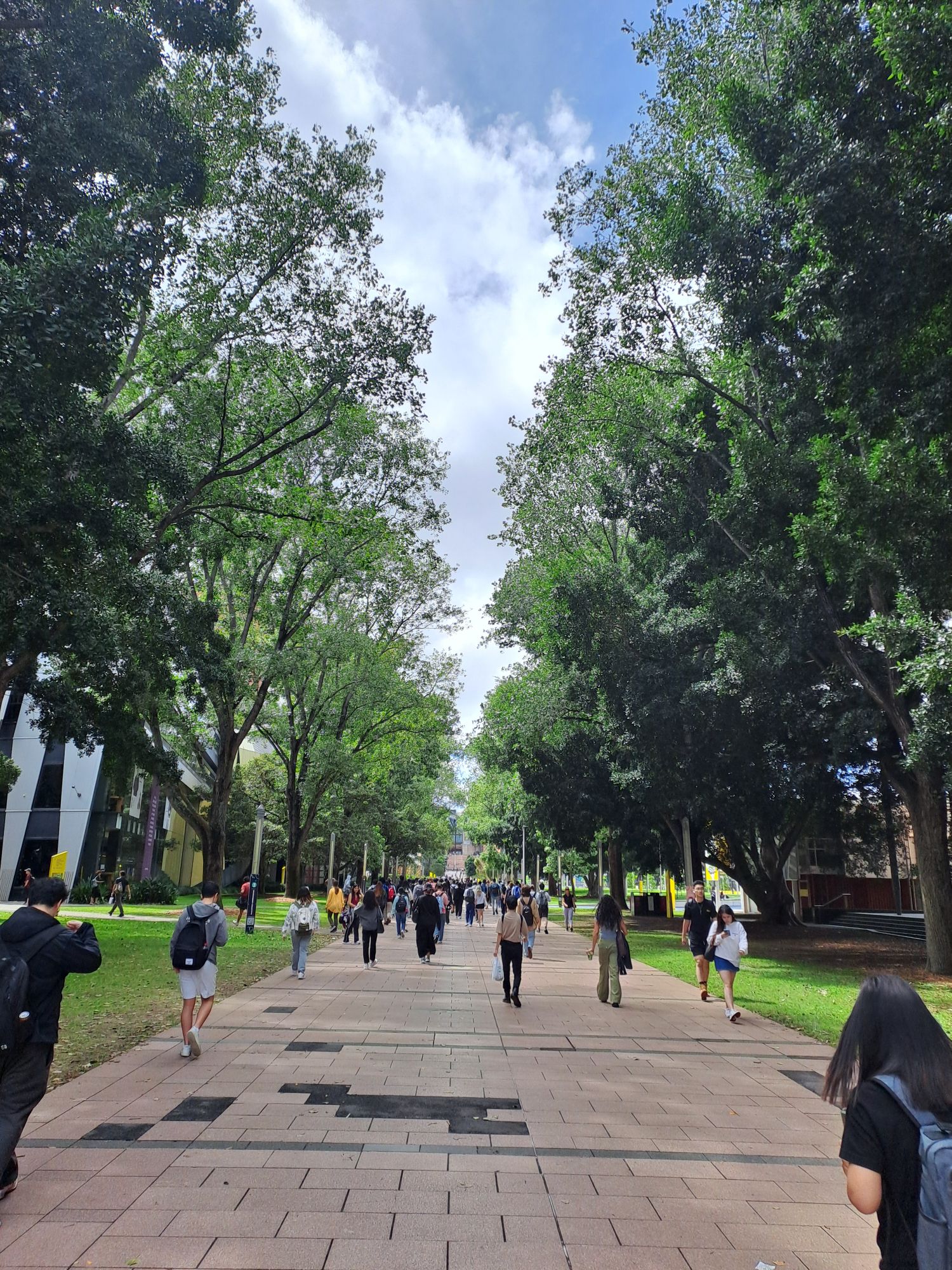
After an exciting start to the day involving a fire alarm and consequent evacuation of my hotel, I today ventured into the suburbs of Sydney via the Light Rail system (i.e. the tram) to the University of New South Wales. The tram ride took about 20 minutes from Central and, incidentally, took me right past the Sydney Cricket Ground. Anyway, the UNSW campus at Kensington is very impressive:

After a few gremlins with the WIFI connection, the talk I gave was a longer version of the one I did at the University of Sydney on Monday. In discussions with the Astrophysics group at UNSW, I found they were particularly unhappy about the decision of Monthly Notices of the Royal Astronomical Society to charge a high level of APC (Article Processing Artificial Profit Charge) so is looking at alternative journals that aren’t so exploitative. A journal has no right to call itself “open access” if it excludes researchers on grounds of cost. The problem with the Open Journal of Astrophysics in this case is that they need their publications to be in “high impact journals” for research assessment purposes, and OJAp doesn’t have an “official” journal impact factor yet. The fascination of bureaucrats with the obviously flawed journal impact factor disturbs me greatly but I hope we will have one soon so we may be able to help them out before too long.

Anyway, here are the slides from today’s talk:

ArXiv Accessibility

Posted in Open Access with tags , , , , on February 19, 2024 by telescoper

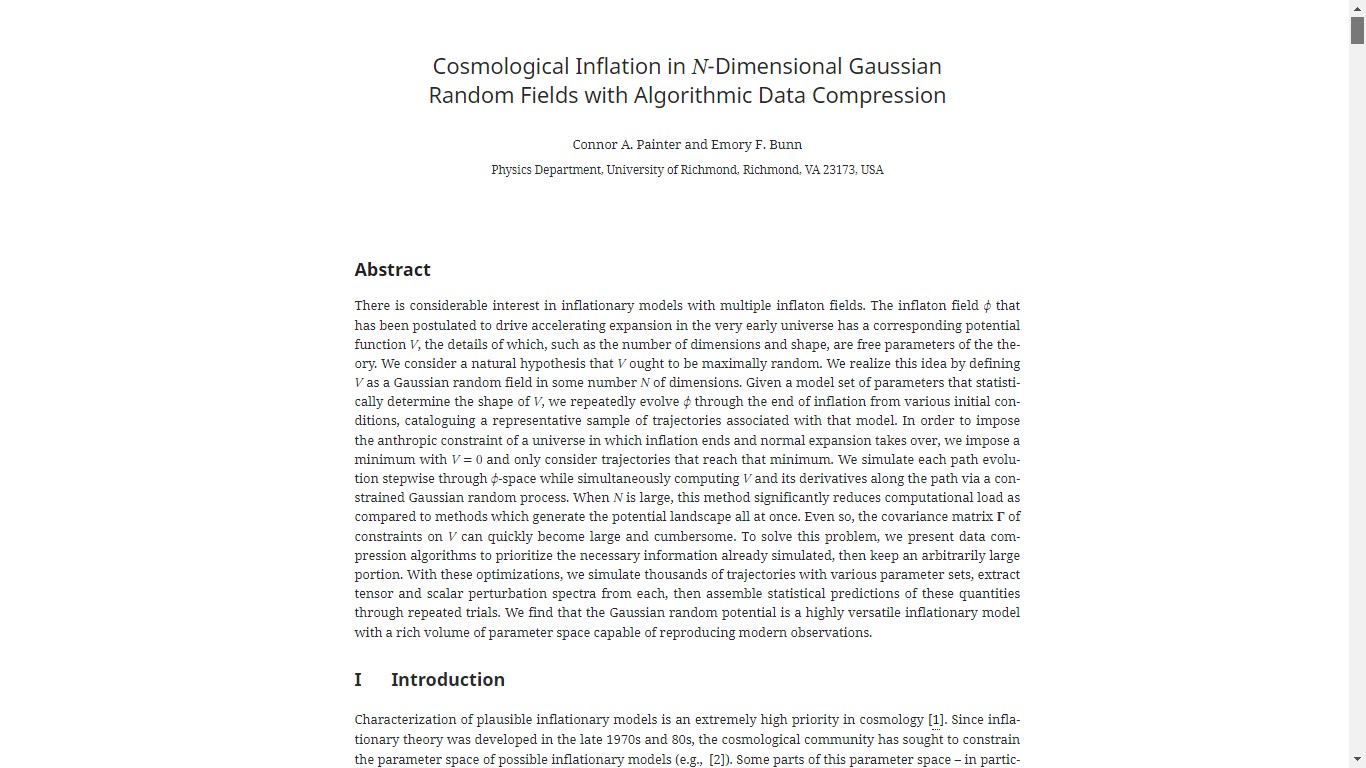
Just over a year ago I did a post about the need to make arXiv more accessible, particularly for readers with some form of visual impairment. Although I missed it at the time, there was an announcement from arXiv in December 2023 that new papers (by which is meant submitted after 1st December 2023) will be available as HTML as well as PDF format. This has been in development for some time, actually, and HTML versions have been available from arXiv labs by changing the address of a paper from, for example, “https://arxiv.org/abs/2111.15014v3” to “https://ar5iv.org/abs/2111.15014v3“. The latter produces this HTML version of one of the papers we have published at the Open Journal of Astrophysics:

As you can see, it works pretty well for this example.

Naturally I tried out the new “beta” release of the HTML generator, which you can now find on the right-hand panel of the abstract page alongside the PDF download instead of fiddling around with the URL. Here is an example of one of our papers on which it works well:

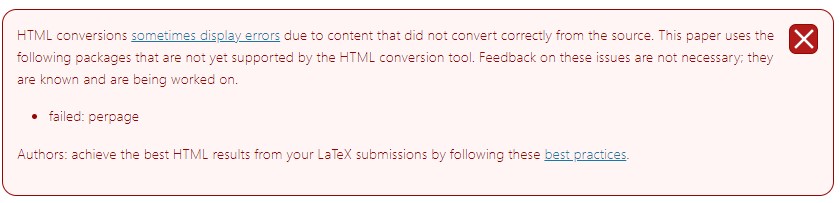
Here it is on another of our OJAp papers which, as you can see, does not work:

You can see the reason for the failure, which is that the LaTex used to generate the paper contains a package the HTML generator does not know about. One of the difficulties for arXiv is that new packages are always being developed and it is hard to keep up. I’m told that on average arXiv achieves ~75% successful conversions (and 97% partial success), but the articles from January 2024 (which contain more new packages) convert with a success rate of only 62%. It’s far from perfect, but it will improve -especially if authors follow the advice on best practice produced by arXiv; I actually think authors have a responsibility to help arXiv as much as possible in this regard.

This all reminds me of past experiences I’ve had teaching theoretical physics to blind and partially-sighted students. Years ago this used to involve making Braille copies of notes, but there are now various bits of software to help such people manage LaTeX both for creating and reading documents. In particular there are programs that can read Latex documents (including formulae and equations) which means that if a lecturer can supply LaTeX source version of their notes, the student can hear them spoken out loud as well as make their own annotations/corrections. While HTML may well be better for some fields, I do wonder if physicists and other people in disciplines that make heavy use of mathematics might prefer to use the LaTeX source code which is already downloadable from arXiv?

Talking Down Under

Posted in OJAp Papers, Open Access, The Universe and Stuff with tags , , , on February 19, 2024 by telescoper

This morning I gave a short talk at the “Astronomy Tea” at the Sydney Institute for Astronomy. No prizes for guessing what I talked about. The talk was followed by questions and then by a huge thunderstorm.

Here are the slides:

P.S. Today was the first day of teaching of the new academic year at the University of Sydney, so the campus was much busier today than it has been.

Predatory Encounters

Posted in Open Access with tags , , , on February 17, 2024 by telescoper

Yesterday I received two different emails from predatory publishers. The first invited me to submit a manuscript to the OSP Journal of Physics & Astronomy. I am informed that the journal is fully open access, with an Article Processing Charge of “only” $950. Of course $950 is $950 more than I’ll ever be prepared to pay for an APC, but did have a look at the website and found this:

A pretty good clue that OSP is a predatory publisher is that can spell neither “Scientific” nor “submit”…

Anyway, if you’re interested – and if I were you I wouldn’t be – you can find the OSP Journal of Physics & Astronomy here. I’ve skimmed the latest issue and the quality of articles is just as I expected.

The Second Encounter of the Predatory Kind was an email that begins thus:

I’ve never heard of the Auricle Global Society of Education and Research (AGSER) but the Open Journal of Astrophysics is not for sale to them (nor to anyone else, for that matter). Of course I don’t own OJAp anyway, but even if I did I wouldn’t sell it at any price. The only terms that I would agree to a takeover would be if the new owners committed to keep it as Diamond Open Access (i.e. free to authors and readers), and I can’t see any predators offering that!

I don’t know how AGSER arrived at a valuation of $70K but it got me thinking. We have so far published 128 articles at OJAp. Taking the APC for MNRAS of £2500 (approx $3000) as typical then we have saved the community about $384,000 in unnecessary publication charges.

A Sunny Afternoon in the Botanic Gardens

Posted in Biographical with tags , , , on February 17, 2024 by telescoper

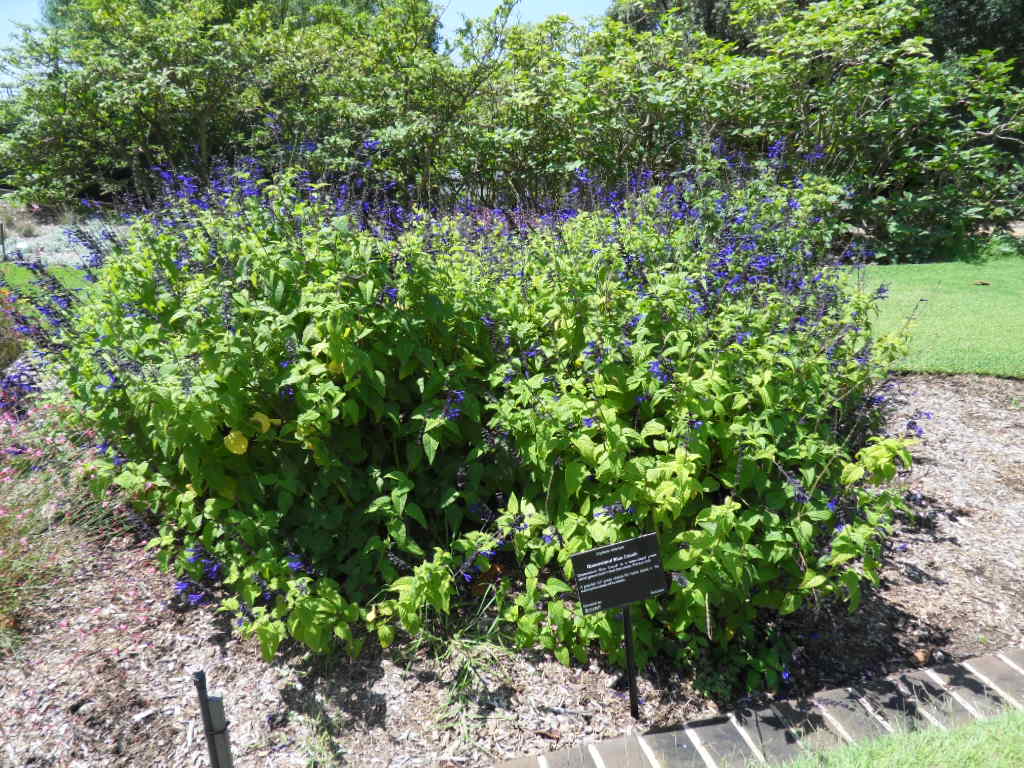
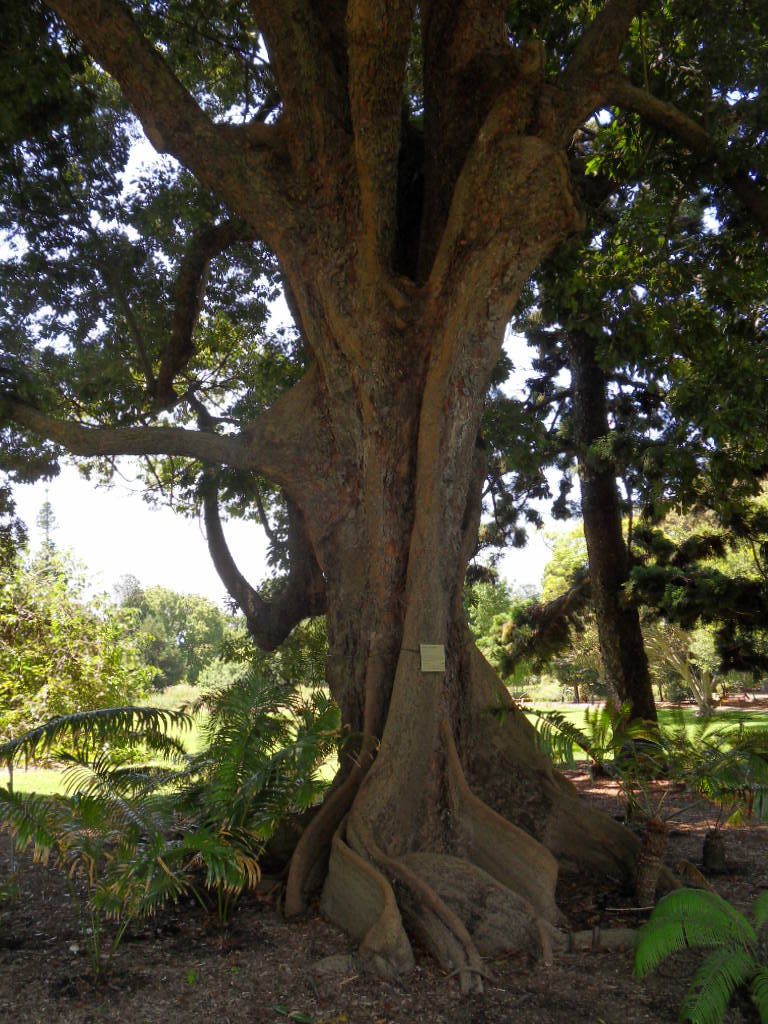
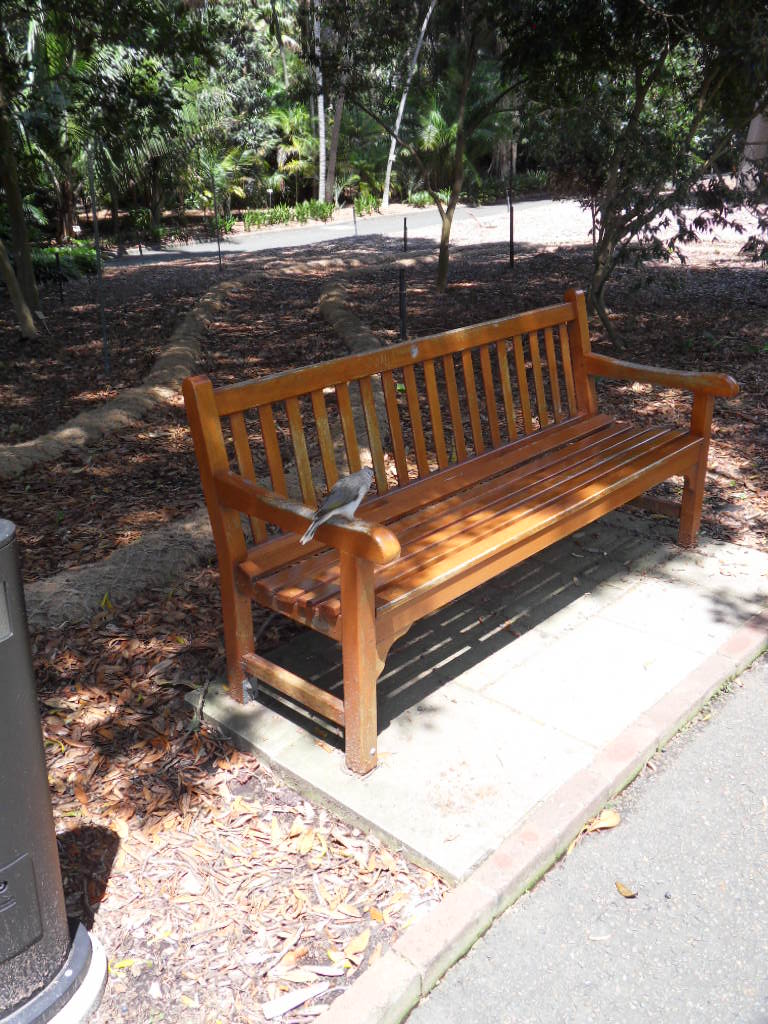
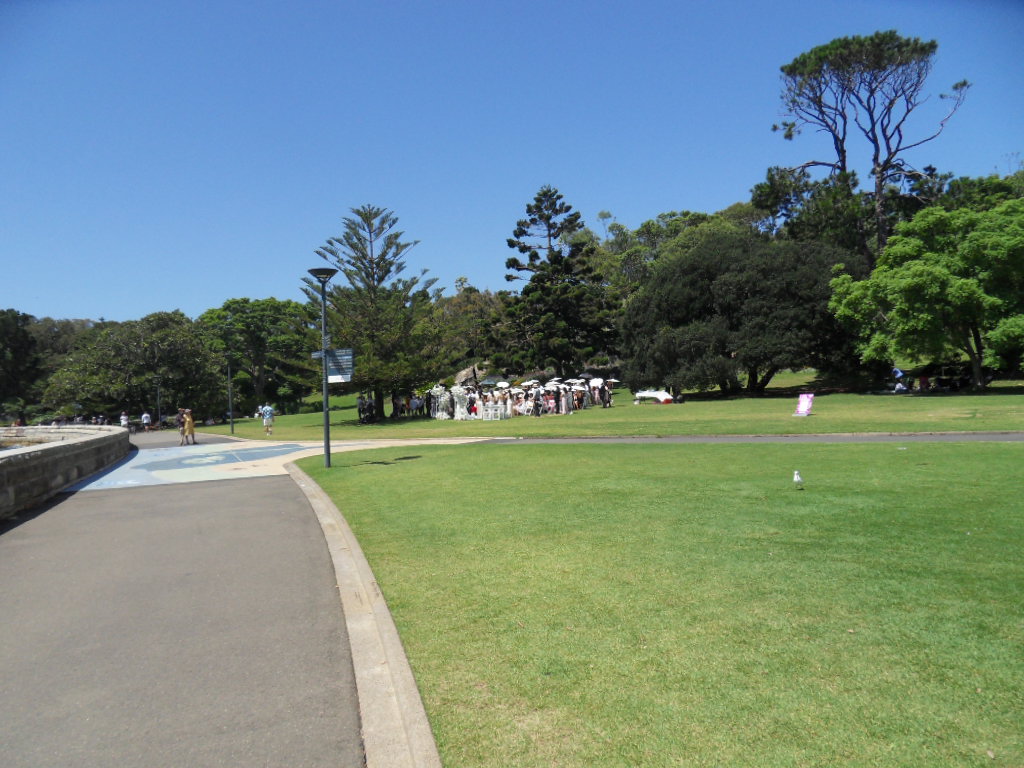
I took a stroll this afternoon in Sydney’s splendid Royal Botanic Garden. It was quite warm, so I soon had to retreat into a bar for some light refreshment, but not before I took a few snaps. The last one, incidentally, is of a wedding ceremony…

Two of the pictures show examples of Australian birds that are common in Sydney. The Australian White Ibis – called “Bin Chickens” because of their scavenging habits – look rather elegant from a distance but close up look rather manky. The smaller bird on the arm of the bench is a Noisy Miner. These are aggressively territorial, rather like the Eurasian Robin familiar to folk in the Northern hemisphere. They are also rather noisy. The other common native bird I see frequently is the Cockatoo. I’ll do a separate post about these very peculiar creatures when I get some decent pictures.

New Publication at the Open Journal of Astrophysics

Posted in OJAp Papers, Open Access, The Universe and Stuff with tags , , , , , , , on February 16, 2024 by telescoper

It’s Saturday morning here in Sydney, which means it is time for another weekly update from the Open Journal of Astrophysics. In fact there is only one paper to report this week, being  the 13th paper in Volume 7 (2024)  and the 128th altogether. It was published on February 15th 2024.

The title is “Jet – counter-jet asymmetry in the jittering jets explosion mechanism of supernovae” and it  This one is in the folder called High-Energy Astrophysical Phenomena. The paper presents a discussion of the production of jets in core-collapse supernovae and the resulting formation of neutron stars, and the implications for the morphology of the supernova remnant.

The sole author of the paper is Noam Soker of Technion, Haifa, in Israel.

Here is the overlay of the paper containing the abstract:


You can click on the image of the overlay to make it larger should you wish to do so. You can find the officially accepted version of the paper on the arXiv here.

Asbestos in the Park

Posted in Biographical, LGBTQ+ with tags , , , on February 15, 2024 by telescoper

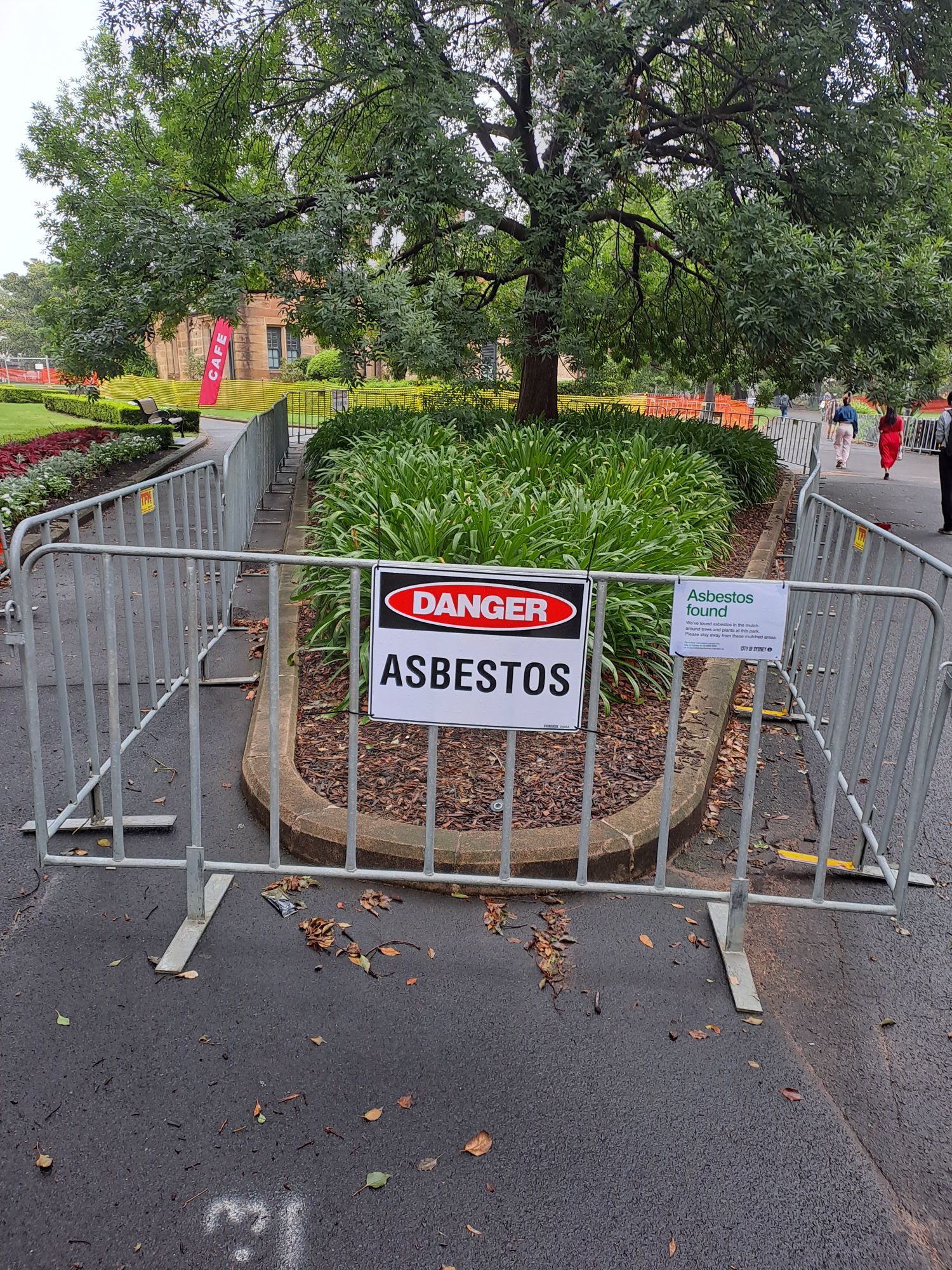
Time, I think, a bit of local news. There’s an ongoing asbestos crisis not only in Sydney but across all New South Wales. It seems that the mulch that has been used in many public parks, school grounds and even a hospital garden is contaminated with asbestos. One affected site is Victoria Park, which I walk through from my flat to the University. At least the park is still open, so you can walk on the paths and sit on the lawns, but all areas with mulch are fenced off:

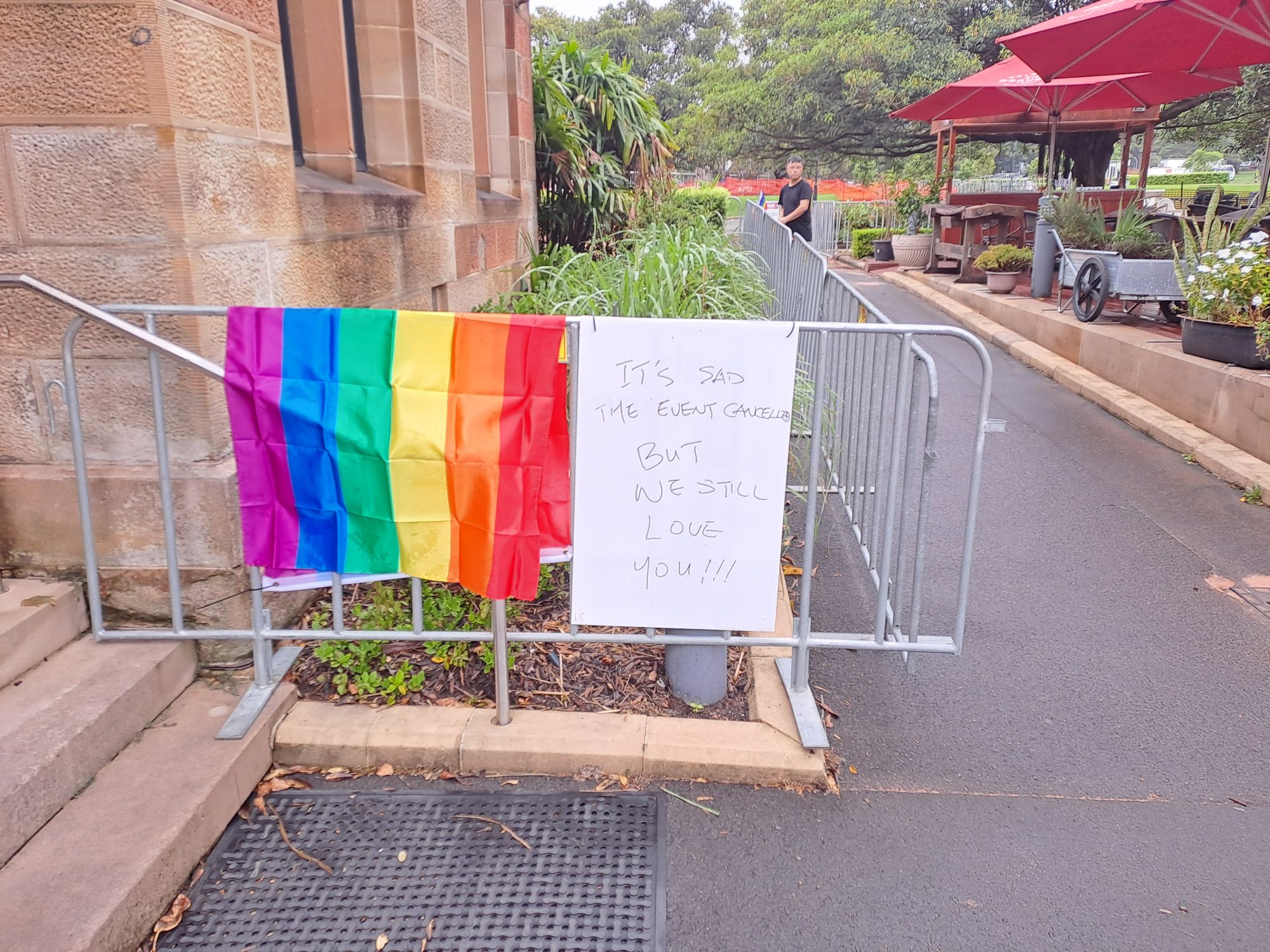
As it happens, Victoria Park was to be used for one of the events planned for Sydney Mardi Gras, which starts today*, but that particular event has been cancelled though many others are unaffected.

The contaminated mulch at all the sites affected was supplied by the same company, Greenlife Resource Recovery. I hope they have to foot the bill for clearing it all up!

*It is, of course, a complete coincidence that this LGBT festival coincides with my stay in Sydney…

Kandinsky: an introduction

Posted in Art with tags , , , on February 15, 2024 by telescoper

I mentioned in my last post that I plan to visit the ongoing Kandinsky Exhibition at the Art Gallery of New South Wales so I thought I’d share this little video introducing the artist and the exhibition: