Archive for July, 2024

Call for Editors at the Open Journal of Astrophysics

Posted in Open Access, Uncategorized with tags , , , , , , , , , , , , , on July 7, 2024 by telescoper

Just over halfway into 2024 the number of papers submitted to the Open Journal of Astrophysics continues to rise, as demonstrated by this nice graphic which shows the submission stats for the last five years:

The increasing number of articles is of course very welcome indeed, but it is increasing the load on our Editorial Board and that includes me! We’re therefore looking for volunteers to join the team, in any area of astrophysics. As a reminder, here are the areas we cover, corresponding to the sections of astro-ph on the arXiv:

  1. astro-ph.GA – Astrophysics of Galaxies. Phenomena pertaining to galaxies or the Milky Way. Star clusters, HII regions and planetary nebulae, the interstellar medium, atomic and molecular clouds, dust. Stellar populations. Galactic structure, formation, dynamics. Galactic nuclei, bulges, disks, halo. Active Galactic Nuclei, supermassive black holes, quasars. Gravitational lens systems. The Milky Way and its contents
  2. astro-ph.CO – Cosmology and Nongalactic Astrophysics. Phenomenology of early universe, cosmic microwave background, cosmological parameters, primordial element abundances, extragalactic distance scale, large-scale structure of the universe. Groups, superclusters, voids, intergalactic medium. Particle astrophysics: dark energy, dark matter, baryogenesis, leptogenesis, inflationary models, reheating, monopoles, WIMPs, cosmic strings, primordial black holes, cosmological gravitational radiation
  3. astro-ph.EP – Earth and Planetary Astrophysics. Interplanetary medium, planetary physics, planetary astrobiology, extrasolar planets, comets, asteroids, meteorites. Structure and formation of the solar system
  4. astro-ph.HE – High Energy Astrophysical Phenomena. Cosmic ray production, acceleration, propagation, detection. Gamma ray astronomy and bursts, X-rays, charged particles, supernovae and other explosive phenomena, stellar remnants and accretion systems, jets, microquasars, neutron stars, pulsars, black holes
  5. astro-ph.IM – Instrumentation and Methods for Astrophysics. Detector and telescope design, experiment proposals. Laboratory Astrophysics. Methods for data analysis, statistical methods. Software, database design
  6. astro-ph.SR – Solar and Stellar Astrophysics. White dwarfs, brown dwarfs, cataclysmic variables. Star formation and protostellar systems, stellar astrobiology, binary and multiple systems of stars, stellar evolution and structure, coronas. Central stars of planetary nebulae. Helioseismology, solar neutrinos, production and detection of gravitational radiation from stellar systems.

We are looking for experienced scientists in any of these areas, and it would indeed be useful to have people who can cover a range of subjects (as some of our existing editors do), but there are two specific topics that have seen a big increase recently: (a) galaxy formation simulations (especially involving hydrodynamics) covered by astro-ph.CO; and (b) galactic dynamics, covered by astro-ph.GA. The latter increase is driven Gaia data, an immensely rich source for discovery science.

Since we don’t charge authors or readers we can not offer payment to Editors but it is nevertheless a way of providing a service to the community.

Please get in touch either through the Open Journal website here, or through a message Mastodon here, BlueSky here, or Facebook here. You could even send a message through this form:

Go back

Your message has been sent

Warning
Warning
Warning
Warning.

Two New Publications at the Open Journal of Astrophysics

Posted in OJAp Papers, Open Access, The Universe and Stuff with tags , , , , , , , , , on July 6, 2024 by telescoper

My own laptop is still with the menders but I’ve managed to borrow one until I get it back so I don’t get too far behind. Anyway, it’s Saturday morning, and once again time to post another update relating to the  Open Journal of Astrophysics.  Since the last update we have published two more papers, taking  the count in Volume 7 (2024) up to 54 and the total published by OJAp up to 169.  There was one less arXiv update than usual last week, owing to the holiday on July 4th, so a couple of papers have been delayed.

The first paper of the most recent pair, published on July 3rd 2024,  is “Recovering 21cm Monopole Signals Without Smoothness” by Rugved Pund & Anže Slosar (Stony Brook, NY, USA) and Aaron Parsons (Berkeley, CA, USA) . This paper presents a new method for identifying the ‘Dark Ages’ trough contribution to the monopole of the 21cm radiation background that does not rely on the assumption that the spectrum is smooth. The paper is in the folder marked Cosmology and NonGalactic Astrophysics.

Here is a screen grab of the overlay which includes the abstract:


You can click on the image of the overlay to make it larger should you wish to do so. You can find the officially accepted version of the paper on the arXiv here.

The second paper, also published on 3rd July, has the title “LtU-ILI: An All-in-One Framework for Implicit Inference in Astrophysics and Cosmology”. There are fifteen authors with primary affiliations as follows: Matthew Ho (IAP, Paris, France), Deaglan J. Bartlett (IAP, Paris, France), Nicolas Chartier (Seoul National University, Korea),  Carolina Cuesta-Lazaro (Cfa, Harvard, USA),  Simon Ding (IAP, Paris, France), Axel Lapel (IAP, Paris, France), Pablo Lemos (Université de Montréal, Canada), Christopher C. Lovell (University of Portsmouth, UK),  T. Lucas Makinen (Imperial College, London, UK), Chirag Modi (Flatiron Institute, NY, USA), Viraj Pandya (Columbia University, NY, USA), Shivam Pandey (Columbia University, NY, USA), Lucia A. Perez (Flatiron Institute, NY, USA), Benjamin Wandelt (IAP, Paris, France),  and Greg L. Bryan (Sorbonne Université, Paris, France).

This paper, which is in the folder marked Instrumentation and Methods for Astrophysics, presents a suite of software for rapid, user-friendly, and cutting-edge inference using machine learning in astrophysics and cosmology. The software can be found on Github here.

Here is a screen grab of the overlay which includes the abstract:


You can click on the image of the overlay to make it larger should you wish to do so. You can find the officially accepted version of the paper on the arXiv here.

That concludes this week’s update. No doubt I’ll have more for you next week!

Interlude

Posted in Uncategorized on July 3, 2024 by telescoper

I finally decided to take my ailing laptop to the computer hospital where I hope it can be restored to health reasonably soon (or put out of its misery and replaced with a new one). In the meantime, however, I will be taking a break from blogging.

Normal services will be resumed as soon as possible but, for the time being, there will now follow a short intermission.

Poppies in July Again

Posted in Biographical, Education, Maynooth, Poetry with tags , , on July 3, 2024 by telescoper

I just passed by some poppies growing on a rather scruffy piece of verge near my house. They reminded me of this poem by Sylvia Plath, which I have posted before.

Incidentally, this poem is among those of Sylvia Plath specified for the Leaving Certificate examination in English next year…

Mercury Fountain, Miro Foundation

Posted in Art with tags , on July 2, 2024 by telescoper

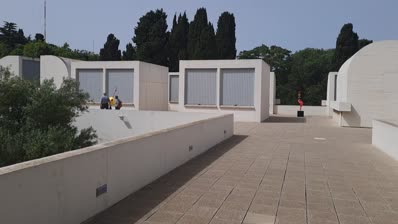
I thought I’d share a couple of little clips I took on my visit to the Fundació Joan Miró last week, one is a few of and from the rooftop, which is dotted with various sculptures, and the other is a fascinating mercury fountain created by Alexander Calder. And don’t worry, it’s enclosed in a glass case!

Farewell to the ECDC!

Posted in Biographical, Euclid, Harassment Bullying etc with tags , , , , on July 2, 2024 by telescoper

It was officially announced at last year’s Euclid Consortium Meeting in Copenhagen that I had been appointed to the role of Chair of the Euclid Consortium Diversity Committee (ECDC). Following the tradition, a similar announcement was made at the Rome meeting this year that from 1st July there would be a new Chair in the form of Helmut Dannerbauer, who is based at the Instituto de Astrofísicas de Canarias on Tenerife. There are still a few loose ends to tie up, not helped by my computer problems, but I’m gradually winding up my activity on the ECDC and handing things over to Helmut.

As I pointed out in my post last year, I was in the final year of my stint on the ECDC when I was made Chair so it was always envisaged that I would serve for only one year. I only agreed to do it, in fact, because I had my sabbatical coming up. I definitely wouldn’t have been able to do the job alongside a full teaching and other workload and didn’t even consider continuing after my sabbatical was over.

Instead of trying to describe the role and activities of the ECDC generally, I will direct you to the information given on the brand new Euclid Consortium website which is a one-stop shop for everything to do with Euclid. You can find specific information about Equity, Diversity and Conduct there and/or on the ECDC’s own public website here from which I’ve taken a screengrab of the nice banner:

Just for information, the Euclid Consortium has about 2600 members so it really is a very large organization. It is also very international, with many people working in countries they were not born in and whose language is not their first. It is the aim of the ECDC to encourage a positive and inclusive environment within it for the benefit of everyone in it. The diversity in Euclid has many dimensions, including gender, nationality, ethnicity, and career stage as well as type of work; Euclid comprises specialists in instrumentation, software engineering, observational astronomy and theory to name but a few. The aim of the ECDC is to try to make sure everyone can work together in an inclusive environment.

It has been good to see over the few years some policies have been implemented to allow a greater diversity among leadership roles in the Euclid Consortium, especially by having a planned programme of rotating chairs and coordinators. I think this and other inititiatives are making a difference.

Euclid was launched a year ago yesterday, and the past twelve months have involved a huge amount of hard work by everyone concerned and not a little tension in some parts. The stress will continue as we head towards DR1, the first main Data Release, in 2026. The Euclid Consortium has a Code of Conduct to remind members to behave professionally towards their fellow workers at all times.

I’d like to wish all the new members of the ECDC, and those continuing, all the best in the future. I’d also like to extend personal thanks to those members who are leaving this year, especially Marc, Florence and Chiara. We have had regular telecons virtually every fortnight for the last year and I’ve enjoyed everyone’s contribution to the discussions.

Two More Euclid ERO videos

Posted in Euclid, Football with tags , , , , on July 1, 2024 by telescoper

I’ve been a bit busy catching up on things since my departure from Barcelona with the result that I almost forgot to post anything today. Fortunately there are two more Euclid Early Release Observations I can share to fill the gap. They’re about 4 minutes apiece, so there’ll be plenty time to watch them while waiting for the VAR operators to make an offside decision during the next European Championship match…

The first is entitled Measuring Luminosity Function for the Perseus Cluster of Galaxies using Euclid ERO data:

The article describing this work can be found on arXiv here; it perhaps makes up for the missing article in the title of the video.

The second one is this, about gravitational lensing and the search for high-redshift galaxies:

The paper for this one can be found on arXiv here.