I was shocked to find out yesterday that the poet (and former Professor of Poetry at Oxford University) Alice Oswald has been arrested under the UK’s draconian anti-terrorism laws at a peaceful protest for holding up a sign supporting Palestine Action, an organization opposed to the ongoing genocide being committed by Israel against the people of Gaza. Among the others arrested were an 89-year old woman and a blind man in a wheelchair. I expect these absurd and unjust actions will achieve the exact opposite of what the Government intended.
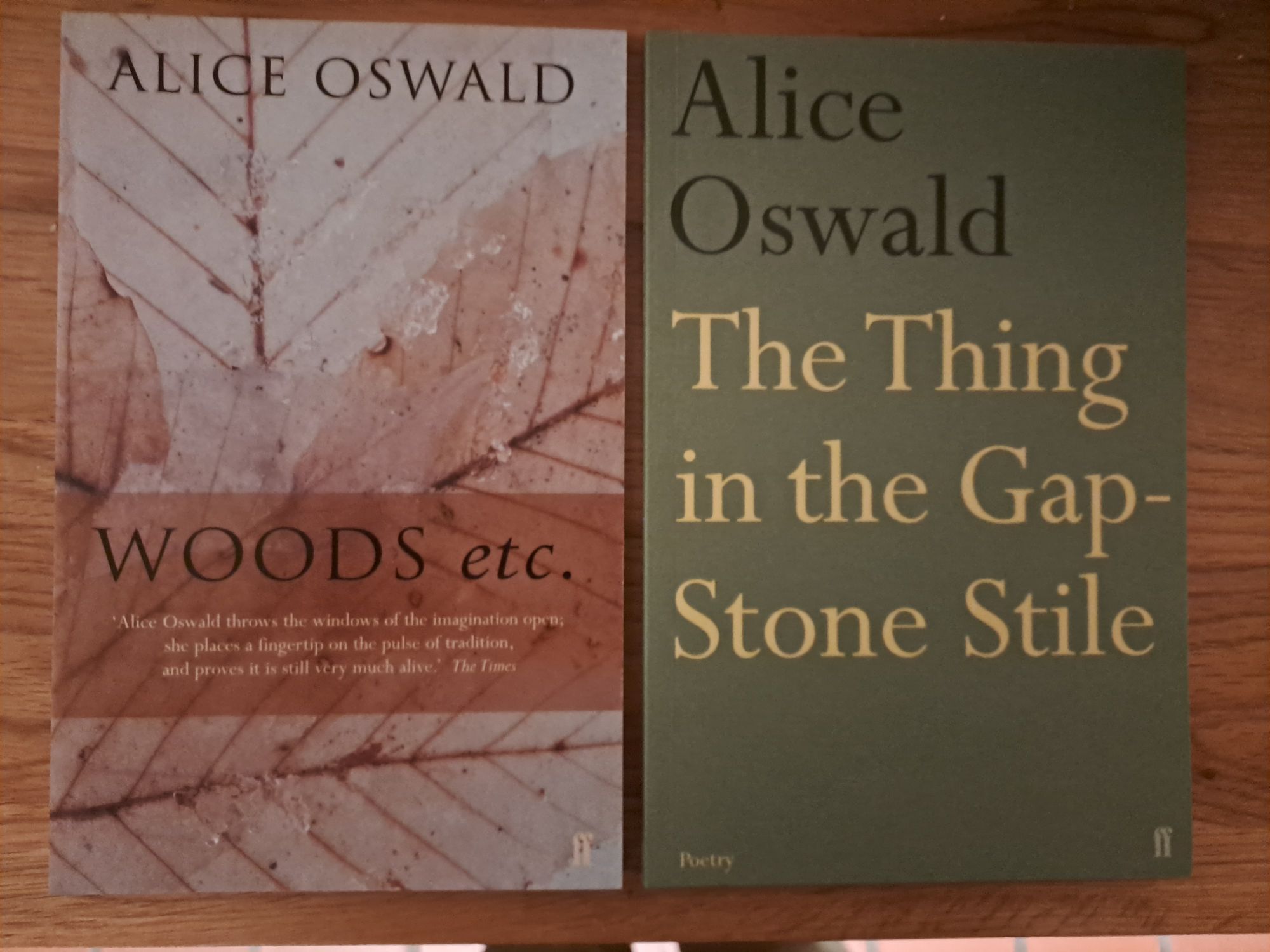
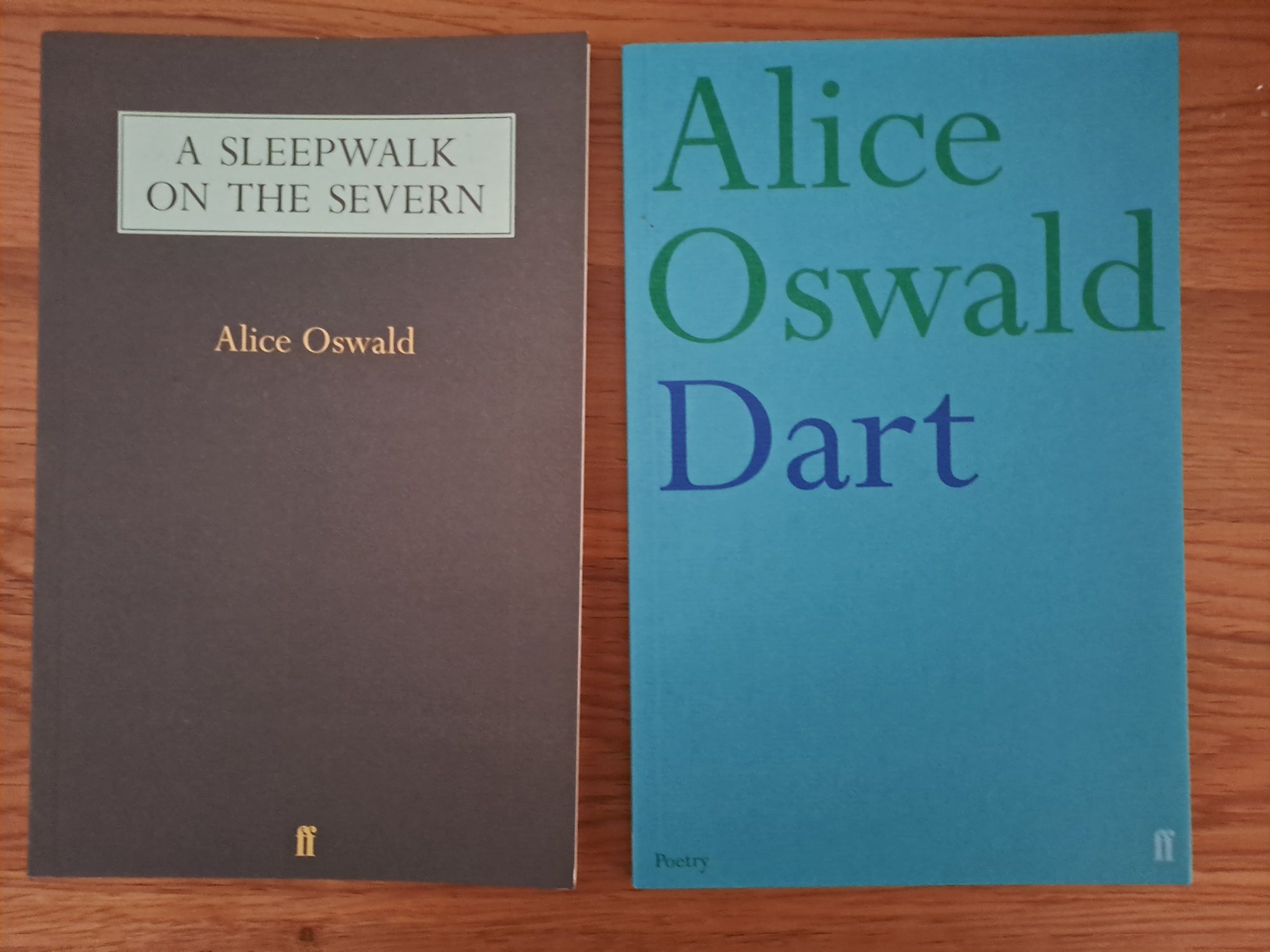
Anyway, I am an admirer of the poetry of Alice Oswald. I posted one of her poems here, and have four collections of her poems:
I thought I would post another now to express solidarity with Alice Oswald. This one is from the first of the collections shown above, in which it is simply titled Sonnet, though it is not a form of sonnet I have ever seen before!
Spacecraft Voyager 1 has boldly gone
into Deep Silence carrying a gold-plated disc inscribed with
       whale-song
it has bleeped back a last infra-red fragment of language
and floated way way up over the jagged edge
of this almost endless bright and blowy enclosure of weather
to sink through a new texture as tenuous as the soft upward
      pressure of an an elevator
and go on and on falling up steep flights of blackness with
      increasing swiftness
beyond the Crystalline Cloud of the Dead beyond Plato beyond
      Copernicus
O meticulous swivel cameras still registering events
among those homeless spaces gathering in that silence
that hasn't yet had time to speak        in that increasing sphere
of tiny runaway stars notched in the year
now you can look closely at massless light
that is said to travel freely but is probably in full flight
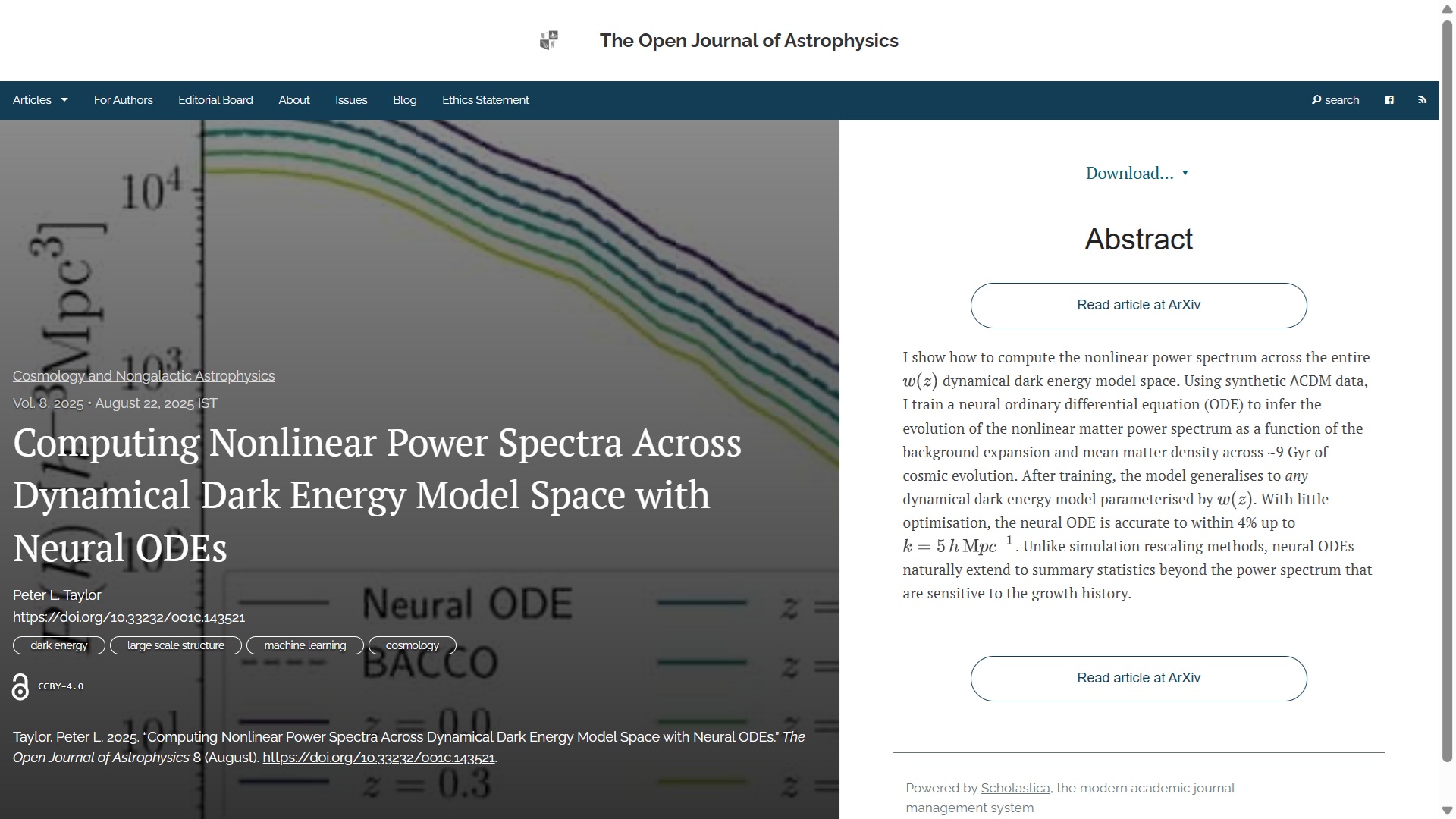
So it’s Saturday again, so it’s time for the usual update of papers published at the Open Journal of Astrophysics which I do every Saturday. Since the last update we have published six new papers, which brings the number in Volume 8 (2025) up to 122, and the total so far published by OJAp up to 357. As I mentioned here we have overtaken the total of 120 published in Volume 7 (2024) and are on track for in excess of 180 publications in 2025.
You can make this larger by clicking on it, as you can with all the overlays below. The officially accepted version of this paper can be found on the arXiv here.
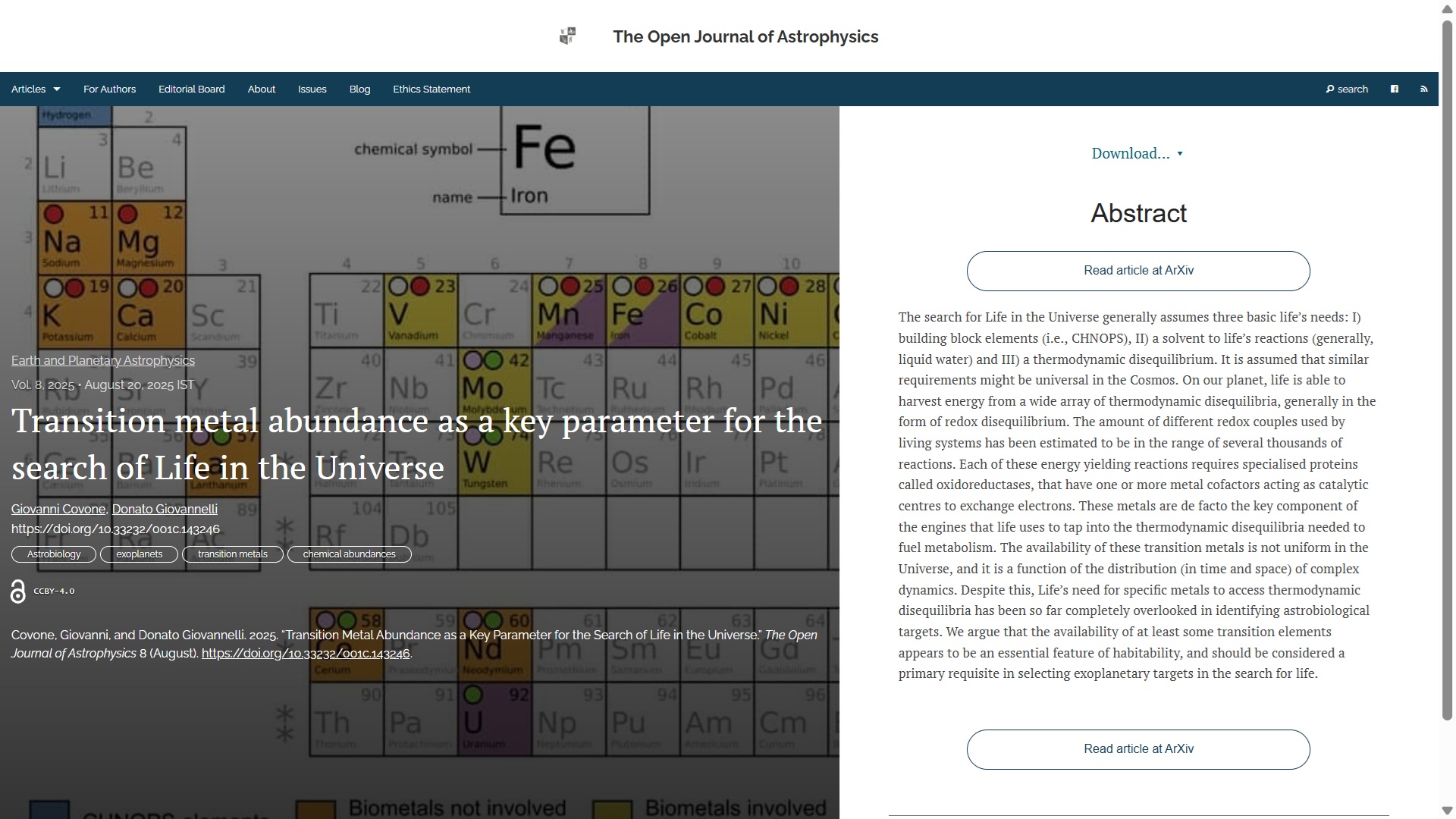
The second paper this week, published on Wednesday 20th August in the folder Earth and Planetary Astrophysics, is “Transition metal abundance as a key parameter for the search of Life in the Universe” by Giovanni Covone and Donato Giovannelli (University of Naples, Italy). This paper presents an argument that the availability of transition elements is an essential feature of habitability, and should be considered as such in selecting exoplanetary targets in the search for life.
The overlay is here:
You can find the officially accepted version of the paper on arXiv here.
You can find the officially accepted version on arXiv here.
The next paper, the fourth this week, is “Seeing the Outer Edge of the Infant Type Ia Supernova 2024epr in the Optical and Near Infrared” by W.B. Hoogendam (University of Hawaii, USA) and 32 others – too numerous to list by name – based in various institutes in the USA, Australia, UK, Denmark, Taiwan and China. This paper was also published on Wednesday 20th August 2025, but in the folder High-Energy Astrophysical Phenomena. The article reports on the results of optical-to-near-infrared photometry and spectroscopy of the Type Ia supernova (SN Ia) 2024epr and a discusses how these challenge models for this sort of supernova.
The overlay is here:
You can find the officially accepted version on arXiv here.
You can find the officially accepted version on arXiv here.
And finally for this week we have “Symbiotic star candidates in Gaia Data Release 3” by Samantha E. Ball & Benjamin C Bromley (University of Utah, USA) and Scott J. Kenyon (Smithsonian Observatory, USA). This paper was published on Friday 22nd August in the folder Solar and Stellar Astrophysics. It describes a new search for symbiotic star candidates in Gaia Data Release 3 (GDR3), based on astrometric, photometric, and spectroscopic information. The overlay is here:
You can find the officially accepted version of this one on arXiv here.
And that’s all the papers for this week. I suppose there will come a time when we publish a paper on every day of the week and each week’s summary will contain a paper in each of the astro-ph categories on arXiv, but we haven’t done that yet. This week we published on every day but Monday 18th August, and have papers in four of the six categories.
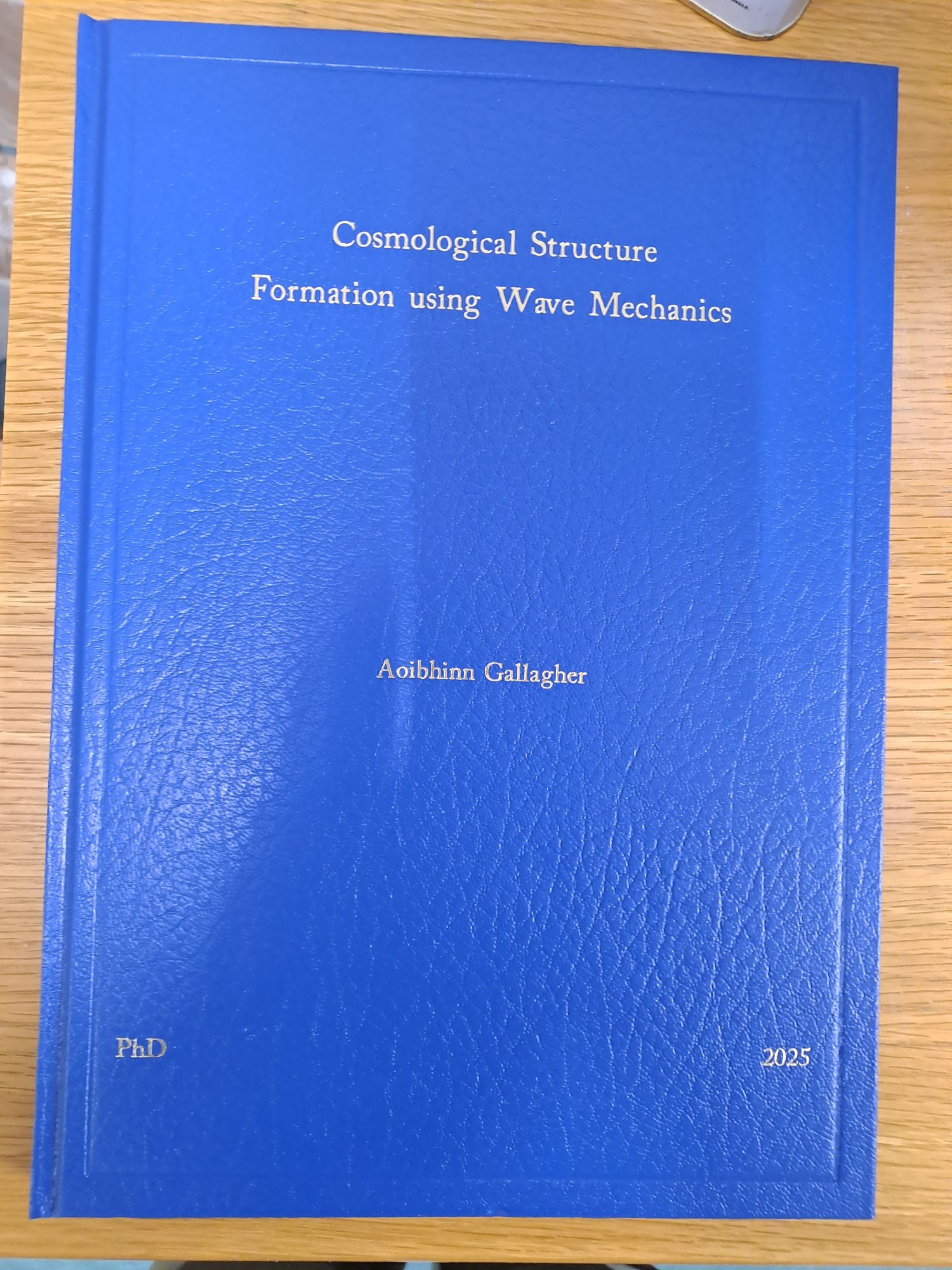
Last week I wrote a post about the loose ends of the academic year, one of which concerned my PhD student Aoibhinn, who passed her viva voce examination way back in May, who had to submit a bound copy of the thesis to the relevant office by September 6th so that her degree could be ratified by Faculty and Academic Council. She has now done that, and in the process kindly made me an extra copy of the Authorized Version to put on my shelf:
It will be easy to find on my shelf because it’s a different colour from the others. Aoibhinn will be off to Germany for a postdoctoral fellowship after her conferring ceremony in October.
In subsequent post I mentioned a plethora of meetings to take place this week, all of which went off without much incident. The various Departmental Examination Boards did their business and students will receive their results on September 5th. Students involved in these will be moving on in various ways: some will be graduating, some progressing to the next year of their course and others – though not very many at all – will be leaving without qualifying.
Meanwhile, elsewhere in Ireland, students in the Class of 25 have today been receiving their school Leaving Certificate results. As expected, the proportion at the highest grade (H1) is down significantly compared 2024. On the other hand, the total number of students taking Leaving Certificate examinations is significantly higher than last year. You can find all the national statistics here.
How these nationwide effects will work their way through to undergraduate admissions at Maynooth remains to be seen. Applicants will get offers through the CAO system next week; the points required by each higher education institution should be available online on Wednesday 27th. The Irish Times traditionally publishes a pull-out supplement showing all the offers for all courses at all universities across the sector the following day, i.e. on Thursday 28th September.
By the end of next week, therefore, we’ll have some sort of an idea how many students we will have entering the University in September 2025 and can begin moving on to the next academic year. One thing I’ve already got sorted out – way ahead of previous years – is my teaching timetable for Semester 1. Usually I’ve been happy if I had this before the first week of term! My new timetable makes Tuesdays and Thursdays my heaviest teaching days, but gives me Wednesday free for research and other things that I’ve started planning already.
Just a quick note to say that yesterday we published the 120th article in Volume 8 (2025) of the Open Journal of Astrophysics. This means that we have so far in 2025 published as many papers we published in the whole of 2024. At the end of August we will be about 2/3 of the way through the year so I expect we will publish more than 180 articles this year. It may be more than that because we have a group of articles in the pipeline that will be published simultaneously in a special issue, which may be completed this year. We might in this case reach 200 altogther for 2025, but if not the special issue will appear in 2026.
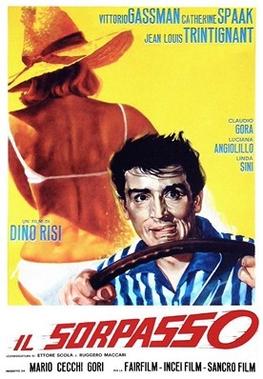
The relevance of all this to the 1962 Italian comedy film Il Sorpasso is entirely negligible, except that I like the movie.
Back in the 1940s, early in his career, trumpeter Dizzy Gillespie incorporated the theme from a tune called Be-Bop, or sometimes Dizzy’s Fingers, into a swirling big band arrangement and called the resulting piece Things to Come. It was a wild, gyrating score usually played at breakneck speed (often around 300bpm) that invariably proved a handful to perform. The Things Are Here is the eventual sequel to that composition that the Dizzy Gillespie Reunion Big Band played in the 1960s. Many concert performances of this are very long indeed, but this one (recorded in Berlin in 1968) lasts only about 8 minutes. I have this on vinyl but haven’t get got around to transferring it to digital. Here you hear the stunning power and virtuosity of this thrilling band; there must have been a tough entrance examination to get a place in it!
As you’d expect there’s a lot of solo space in this performance for Gillespie himself, but also room for solos and duets from the other musicians, including James Moody and Paul Jeffrey on tenor saxophone, Sahib Shihab on alto saxophone, Cecil Payne on baritone sax, Curtis Fuller on trombone and, right at the end, Otis Finch brings the house down with a drum solo.
It’s a wild, white-knuckle ride, so strap yourself in!
Some years ago I came across a blog post relating to the discovery of a fortified settlement at Drumanagh (near Dublin) where Roman coins and goods have been found. It might have been a Roman military site, but in my mind it could equally well have been a Celtic settlement and the finds might have been loot from elsewhere.
I do find it a bit hard to believe that no Romans ever set foot in Ireland, though, and Drumanagh may well have been some sort of trading post or temporary fort for a reconnaissance mission. If that site is Roman, and that was all there was, then it didn’t amount to a full invasion and there’s certainly nothing like the roads or other infrastructure that’s so common in England and Wales.
I thought about this when at the weekend I was “reorganising” my bookshelves (by which I mean changing from one form of disorganization to another), when I came across some old Latin textbooks that included excerpts from the book De vita et moribus Iulii Agricolae which was written by Publius Cornelius Tacitus (Tacitus to you). The Agricola of the title was Gnaeus Julius Agricola, Roman Governor of Britain from around AD 77 until 85. He also happened to be the father-in-law of Tacitus, which probably accounts for the sycophantic tone of some of the writing.
The availability of this book is interesting in itself because only a solitary codicil survived the Roman Era. It eventually became a very popular source in old-fashioned British grammar schools at which Latin was compulsory, as it was at the one I went to, partly because it related to Britain and partly because of the author’s very concise and direct prose which makes much of it quite easy to translate. We didn’t read the whole book at school, but excerpts cropped up regularly to illustrate various grammatical constructions and introduce new vocabulary.
You can find the full Latin text here and an English translation here. I tried Google translate on some passages and it was terrible.
Anyway, as an exercise to my erudite readers I here include sections 23 to 26 which describe part of Agricola’s adventures in Scotland, followed by some comments. Before doing so it is worth mentioning a bit of the context. Agricola’s military campaigns at this time were often carried out in the first instance by water. Scotland was very much bandit country and slogging through the terrain on foot would have led to multiple ambushes and pitched battles.
[23] Quarta aestas obtinendis quae percucurrerat insumpta; ac si virtus exercituum et Romani nominis gloria pateretur, inventus in ipsa Britannia terminus. Namque Clota et Bodotria diversi maris aestibus per inmensum revectae, angusto terrarum spatio dirimuntur: quod tum praesidiis firmabatur atque omnis propior sinus tenebatur, summotis velut in aliam insulam hostibus.

[24] Quinto expeditionum anno nave prima transgressus ignotas ad id tempus gentis crebris simul ac prosperis proeliis domuit; eamque partem Britanniae quae Hiberniam aspicit copiis instruxit, in spem magis quam ob formidinem, si quidem Hibernia medio inter Britanniam atque Hispaniam sita et Gallico quoque mari opportuna valentissimam imperii partem magnis in vicem usibus miscuerit. Spatium eius, si Britanniae comparetur, angustius nostri maris insulas superat. Solum caelumque et ingenia cultusque hominum haud multum a Britannia differunt; [in] melius aditus portusque per commercia et negotiatores cogniti. Agricola expulsum seditione domestica unum ex regulis gentis exceperat ac specie amicitiae in occasionem retinebat. Saepe ex eo audivi legione una et modicis auxiliis debellari obtinerique Hiberniam posse; idque etiam adversus Britanniam profuturum, si Romana ubique arma et velut e conspectu libertas tolleretur.

[25] Ceterum aestate, qua sextum officii annum incohabat, amplexus civitates trans Bodotriam sitas, quia motus universarum ultra gentium et infesta hostilis exercitus itinera timebantur, portus classe exploravit; quae ab Agricola primum adsumpta in partem virium sequebatur egregia specie, cum simul terra, simul mari bellum impelleretur, ac saepe isdem castris pedes equesque et nauticus miles mixti copiis et laetitia sua quisque facta, suos casus attollerent, ac modo silvarum ac montium profunda, modo tempestatum ac fluctuum adversa, hinc terra et hostis, hinc victus Oceanus militari iactantia compararentur. Britannos quoque, ut ex captivis audiebatur, visa classis obstupefaciebat, tamquam aperto maris sui secreto ultimum victis perfugium clauderetur. Ad manus et arma conversi Caledoniam incolentes populi magno paratu, maiore fama, uti mos est de ignotis, oppugnare ultro castellum adorti, metum ut provocantes addiderant; regrediendumque citra Bodotriam et cedendum potius quam pellerentur ignavi specie prudentium admonebant, cum interim cognoscit hostis pluribus agminibus inrupturos. Ac ne superante numero et peritia locorum circumiretur, diviso et ipso in tris partes exercitu incessit.

[26] Quod ubi cognitum hosti, mutato repente consilio universi nonam legionem ut maxime invalidam nocte adgressi, inter somnum ac trepidationem caesis vigilibus inrupere. Iamque in ipsis castris pugnabatur, cum Agricola iter hostium ab exploratoribus edoctus et vestigiis insecutus, velocissimos equitum peditumque adsultare tergis pugnantium iubet, mox ab universis adici clamorem; et propinqua luce fulsere signa. Ita ancipiti malo territi Britanni; et nonanis rediit animus, ac securi pro salute de gloria certabant. Ultro quin etiam erupere, et fuit atrox in ipsis portarum angustiis proelium, donec pulsi hostes, utroque exercitu certante, his, ut tulisse opem, illis, ne eguisse auxilio viderentur. Quod nisi paludes et silvae fugientis texissent, debellatum illa victoria foret.
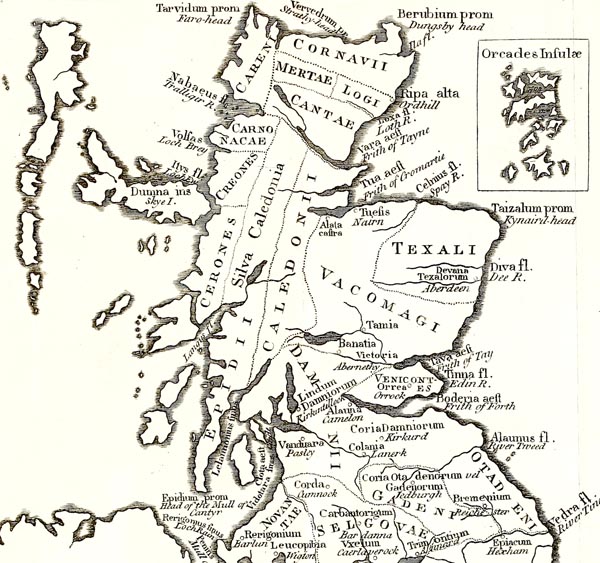
In [23], around 80 AD, we find that Agricola saw advantage in conquering Scotland as far as the Firth of Clyde (Clota) and Firth of Forth (Bodotria) because the tide would bring his ships a long way inland and they were separated by only a narrow stretch of land. He claims he would have gone further had he had the resources needed to do so.
[24] is the interesting one in light of the introduction to this piece . The fifth year of campaigning would have been 81 AD, long before the construction of Hadrian’s Wall. It says that Agricola crossed in his flagship (literally in the first ship, naveprima). It then goes to say that he garrisoned that part of Britain which faces Hibernia (i.e. Ireland) not out of fear but in hopes of further action. This is because he felt that Ireland offered a strategic connection between the provinces of Britain and Spain.
Some people think that the garrison Agricola formed for his putative future action, ostensibly an invasion of Ireland, was at Ravenglass in modern-day Cumbria, rather than Scotland, but it might have been further North; nobody really knows. My reading of the text is that he crossed the Firth of Clyde to the Mull of Kintyre. I remember as a kid seeing Ireland from the Mull of Kintyre and was told that on a clear day you could see as far as the mountains in Donegal from there.
Tacitus goes on to say that (my emphasis):
Ireland is smaller in size when compared to Britain, but larger than the islands of the Mediterranean. The soil, the climate and the character and manners of its inhabitants differ little from those of Britain, while its approaches and harbours are better known through trade and commerce. We also learn that Agricola has a friendly Irish chieftain in tow, who has been turfed out of his own land.
Agricola had given sanctuary to a minor chieftain driven from home by faction, and held him, under the cloak of friendship, until occasion demanded. My father-in-law often said that with one legion and a contingent of auxiliaries Ireland could be conquered and held; and that it would be useful as regards Britain also, since Roman troops would be everywhere, and the prospect of independence would fade from view.
So Agricola felt that people of Hibernia and Britain were similar and the effect of conquering the former would be to snuff out any hopes of independence in the latter. Either the planned invasion never happened, or Agricola tried it, got his fingers burnt and Tacitus chose to omit it from his account. This seems unlikely because Agricola had enough on his plate dealing with the Scottish campaign without diverting a legion to Ireland.
Anyway, the second emphasized section explains that Ireland’s ports were well known through trade and commerce, so one can infer that Romans were familiar enough to have landed there to trade, etc. I think Drumanagh was probably just one of many such stations.
In [25], a year later. Agricola is already campaigning beyond the Firth of Forth using a combination of naval and land-based forces. The Britons were wrong-footed by the Romans’ use of the sea, but mounted attacks against Roman forts. At the end of this section, Agricola, hearing that his force is about to be attacked, divides his army into three divisions and advances.
I included [26] because it mentions the Ninth Legion (in the accusative case, nonam legionem) because they are being attacked. The Ninth Legion has been the source of much speculation as the “Lost Legion”, as it disappears entirely from the historical record after about 120 AD. This unit was in the thick of the action, many times and was almost wiped out in 61 AD during the rebellion of Boudica and in other rebellions. According to Tacitus it was one of the three parts of Agricola’s army in 83 AD, though it was described as “especially weak” (maxime invalidem), and was in trouble there too, but was eventually rescued by the other two divisions. It doesn’t explain why the Ninth was the most weakened. Had it suffered more casualties than the rest of Agricola’s army or was it just not as well trained? Was part of it left as the garrison described in [24]? Could it have participated in an abortive invasion of Ireland the year before, got badly mauled in the process, and hadn’t recovered to full strength?
Bearing in mind that Tacitus wanted to portrary Agricola in a positive light, perhaps the complete rescue of the Ninth described in the text was exaggerated and its already weakened state was worsened still further by this battle? It wasn’t here that the Lost Legion was lost, however, as it cropped up elsewhere in Britain until at least 108 AD, twenty-five years later, and perhaps as late as 120 AD elsewhere on the continent. I’m not a historian but it seems to me that a plausible explanation of the fate of the Ninth Legion is that it was broken up into detachments and gradually dispersed, rather than being wiped out in one calamitous battle.
The last episode of Simon Schama‘s BBC TV series A History of Britain, called “The Two Winstons”, follows the story of the Second World War and its immediate aftermath through the eyes of two very different Englishmen, George Orwell and Winston Churchill. Near the end of the programme Schama talks about the year 1948, when a very sick Orwell wrote his last major novel, Nineteen Eighty-Four. I’ve reconstructed this section from the subtitles on my DVD of the series.
It starts with a direct quote from 1984
In our world there will be no love but the love of Big Brother, no laughter but that of triumph. No art, no science, no literature, no enjoyment, but always and only, Winston, there will be the thrill of power. If you want a picture of the future, imagine a boot stamping on a human face forever.
It continues with the voice of Simon Schama as narrator
To clear his head of the static hum of postwar London, Orwell went as far away as he could without actually leaving Britain, to the very edge of the kingdom – the Hebridean island of Jura. No electricity, no telephone, post twice a week, maybe.
And it was here, in the remotest cottage he could find, typing in bed with the machine on his knees, knowing he hadn’t long to live, that Orwell concentrated on what mattered most to him, and to Britain – the fate of freedom in the age of superpowers. As Churchill issued his grim warnings, Orwell created a common or garden plain man’s Winston – Winston Smith. The year was 1948.
When we think of 1984, most of us think of the tyranny of drabness and mass obedience ruled by Big Brother, a world of doublespeak where war is peace and lies are truth. But Orwell’s last masterpiece is most powerful and most lyrical when it describes Winston’s resistance to dictatorship, a guerrilla action fought, not with guns and barricades, but by literally taking liberties, a walk in the country, an act of love, the singing of an old nursery rhyme.
Winston Smith did all these forbidden things, prompted by a dim memory of a time when they were absolutely normal. The last refuge of freedom against Big Brother is memory. The greatest horror of 1984 is the dictator’s attempt to wipe out history.
I thought of the last sentence when I read about Donald Trump’s plan to rewrite American history for the 250th anniversary of the Declaration of Independence, but that’s just one example amid the rise of authoritarian regimes around the world. In the context of the TV programme, Schama was making a case for the importance of history as a discipline, but there is something else important to say: we should not forget the past but, perhaps even more importantly, neither should we forget about the future we wanted to see. The present is not the future I hoped for when I was younger, even in 1984, but the story isn’t over yet.
Another weekend is almost over so, after spending most of this afternoon in the garden, I’ve retreated indoors to look at my calendar for the forthcoming week. I find a plethora of Examination Board meetings, one (tomorrow) for our Masters students who did their presentations on Friday and two for undergraduates who took repeat examinations in August (one for Mathematical Physics and one for Engineering, as I happen to have been teaching Engineering Mathematics this year). The two undergraduate boards are both on Thursday. All three of these should be relatively brief, but you never know…
There is another meeting tomorrow, Monday, about organizing our computational physics teaching for the new academic year. The merger of theoretical and experimental physics has given us the chance to coordinate the different computational modules offered by the two previous departments, but we need to make sure the teaching rooms are big enough and the computers have the correct software, etc. Fortunately I’m not actually teaching Computational Physics again until Semester 2 but we have to get it sorted in time for other modules happening in Semester 1.
In between Monday and Thursday I have two whole days with no meetings and no grading to do. I might be able to get on with some research, or at least with writing up some research I’ve already done.
Friday is a big day for the Irish higher education system, in that it’s the day students get their Leaving Certificate results. This year the grade inflation introduced during the pandemic is supposed to begin to unwind, but none of us outside the examination system knows how this will be achieved or what the results will be. If I had to bet I’d say that the CAO points needed for most courses at Maynooth will go down substantially, partly because of the deflation mentioned previously but also because The Management has decided that the University has to recruit more and more students and will drop entry standards as low as it needs to in order to meet its targets.
I don’t know how many students we will end up with for Academic Year 2025/6 but I do know that I will have retired before most of them complete their course. I used to find it a bit scary thinking about retirement, but not any more.
Since I seem to be having a weekend dominated by feelings of nostalgia, I thought I would comment on a nice article I read yesterday about The Rocky Horror Picture Show, a cult film which got its first cinematic release fifty years ago in 1975. You can find the article here.
Here is a the original theatrical trailer:
The Rocky Horror Picture Show is redolent with nostalgia for my days in Brighton in the Eighties. For a time I lived in a shared house not far from the Duke of York’s Picture House which had fairly frequent late-night showings of Rocky Horror, but it wasn’t just a question of going to see the film. It was obligatory to dress up like the characters, join in the dancing, squirt water pistols to recreate the rain, throw rice during the wedding scene, etc.
The first time I went it took me ages to find an outfit resembling that of Dr. Frank-N-Furter, the mad scientist played by Tim Curry in the film. I eventually found suitable lingerie items in shops but failed when it came to the shoes. I couldn’t find stilettos in a size 11 anywhere. That’s probably just as well as I don’t think I’d have been able to walk in them anyway. I settled for a pair of Doctor Martens boots. I had longer hair in those days so a bit of gel did the trick for that, and a friend did the make-up for me. I had to shave my legs to wear the fishnet stockings too. I rather enjoyed dressing up, going to the show and, especially, the after-party…
I never got into the habit of cross-dressing, and haven’t got the figure for it now, but I am not at all ashamed to admit that I think some guys look very hot in lipstick and lingerie.
I lived in London from late 1990 until the very end of 1998. One of my favourite places for shopping in those days was the excellent Tower Records. There were two stores then, but I only ever visited the one at Number 10 Piccadilly as it was very conveniently placed to skive off from meetings of the Royal Astronomical Society at Burlington House, which is just round the corner.
It wasn’t just the huge selection of records, tapes and CDs across all musical genres but also the extremely helpful and knowledgeable staff. I always found their advice very helpful and often left with many more things than I intended to buy when I went in.
Tower records was acquired by the Virgin Group in 2003 and the store in Piccadilly closed down completely in 2009. I haven’t been past the site recently, but I think it is vacant and awaiting redevelopment.
The reason for mentioning this is that Tower Records is alive and well and living in Dublin. There are two stores in the city but I’ve only ever been to the larger one in Dawson Street. It’s not as big as the one in Piccadilly, but it does have a very good selection of music (including a large section of classical music) and very friendly staff. It also has a wide range of hifi equipment, including turntables for those of us who have a vinyl collection. It also has an online service. The last thing I ordered from them was delivered to my house in Maynooth the next day at no charge.
It brought back a lot of memories when I first went inside as it has the same old yellow and red signage and very much the same vibe as the old London store; you can see some interior pictures here. Tower Records (Ireland) is highly recommended for those who are nostalgic for the old Tower Records (London) as well as those who just want to visit a proper, independent, music store. I hope it not only survives but prospers.
The views presented here are personal and not necessarily those of my employer (or anyone else for that matter).
Feel free to comment on any of the posts on this blog but comments may be moderated; anonymous comments and any considered by me to be vexatious and/or abusive and/or defamatory will not be accepted. I do not necessarily endorse, support, sanction, encourage, verify or agree with the opinions or statements of any information or other content in the comments on this site and do not in any way guarantee their accuracy or reliability.






 In the Dark