Archive for Higher Education

The University Malaise

Posted in Biographical, Education with tags , , , , on April 26, 2026 by telescoper

The UK University sector is currently struggling very badly. The latest piece of news I have seen is from the University of Nottingham, where it seems the Management is planning to cut over 600 jobs. New appointments are being frozen and a voluntary severance scheme launched, but it may well come to compulsory redundancies given the scale of the proposal. I feel sorry for anyone there caught up in this because the mood must be very gloomy right now. None of this is the fault of the academics or support staff on whose positions the axe will fall.

The financial predicament of the University of Nottingham is largely the result of a reckless management decision to acquire a new campus called the Castle Meadow complex.
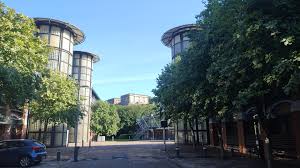
I worked in Nottingham from 1999 to 2007. At that time the Castle Meadow campus (left) was owned by HM Revenue & Customs. It’s next to the canal and not far from the Railway Station, but not very close to the main campus. I remember passing it many times on the train going in and out of Nottingham.

The University of Nottingham bought the campus from HMRC in 2021 for £37.5 million and spend over £45 million redeveloping it, with the idea of siting the Business School there (among other things), but there was no demand for it and in 2025, the university announced plans to sell the campus at a considerable loss.

Now you would think that the people responsible for this fiasco would be held to account and pay at least some of the price for their incompetence. But no. The former Vice-Chancellor of the University of Nottingham, Prof. Shearer West, with whom the responsbility for the Castle Meadow campus disaster, left her post in 2024 to take up the position of Vice-Chancelor at the University of Leeds on a salary of more than £330K, leaving others to clean up the mess. I’m sure the staff and students at Leeds are waiting nervously to see what plans she has in store for their ruination. No doubt she received a glowing reference from Nottingham.

Anyone who thinks that positions with high salaries are always held by highly skilled people need only look at the Higher Education sector for definitive counter-examples.

The pattern of incompetent “leaders” switching jobs before the impact of their incompetence is revealed is a well-established one, but it’s not only the fault of the people at the very top. The entire system of governance is rotten, and not only in the UK. universities and other higher-education institutions have forgotten that the exist above all for education and research. Nowadays they have been captured by a self-serving management class that has lost sight of this and instead acts as if the only purpose is the generation of revenue, not to be spent on teaching and research but on vanity projects (like the Castle Meadow campus) and employing even more managers. Even if they were not being steered unerringly onto the rocks, universities would in any case be in danger of sinking because they are unable to support the weight of their bloated management superstructure.

I saw a post on Bluesky recently that included the following:


I asked a senior administrator what’s causing the University budget deficit.

‘Research & teaching,’ he said, ‘both lose money, not financially viable’

I said, ‘Funny, then, we weren’t losing money in the past when central administration was half the size’

That’s it in a nutshell.

I only wish this were an isolated example. It’s a systemic problem. Management bloat, expensive vanity projects requiring the diversion of funds from teaching and research, and deeply flawed strategic decisions, are symptoms of a widespread malaise. Unless there are drastic changes, the HE sector is going to shrivel and die.

Exam Time Yet Again

Posted in Education, Maynooth with tags , , , on January 8, 2026 by telescoper

The January examination period at Maynooth starts tomorrow (Friday 9th January), so I thought I’d do a quick post on the topic of examinations. First of all let me wish the very best of luck to everyone at Maynooth or elsewhere taking examinations in the next few weeks. I hope at least that the exam halls are nice and warm! Actually, owing to the Sport Hall being unavailable for this examination period owing to building work, some exams will be off campus; my first exam paper is actually being sat in the GlenRoyal hotel.

Here’s a video produced by Maynooth University to remind those taking exams of some general points about preparation and, most importantly, to look after themselves before during the examination period. It’s directed at Maynooth students but students from elsewhere may find useful tips in it.

I completed the last of my revision sessions today but, as the first examination for which I have responsibility is not until Monday 12th, I’ll have to wait to find out how any of my own students have done but let me take this opportunity to pass on a few of my own tips more aimed at students in Physics:

  1. Try to get a good night’s sleep before the examination and arrive in plenty of time before the start. This is especially important when there’s bad weather that may disrupt travel. It is your responsibility to get to the examination on time!
  2. Read the entire paper before starting to answer any questions. In particular, make sure you are aware of any supplementary information, formulae, etc, given in the rubric or at the end.
  3. Start off by tackling the question you are most confident about answering, even if it’s not Question 1. This will help settle any nerves.
  4. Don’t rush! Students often lose marks by making careless errors. Check all your numerical results on your calculator at least twice and – PLEASE – remember to put the units!
  5. Don’t panic! You’re not expected to answer everything perfectly. A first-class mark is anything over 70%, so don’t worry if there are bits you can’t do. If you get stuck on a part of a question, don’t waste too much time on it (especially if it’s just a few marks). Just leave it and move on. You can always come back to it later.

Readers of this blog are welcome to add other tips through the comments box below!

A Meme for Modern University Management

Posted in Education, Maynooth with tags , , on October 1, 2025 by telescoper

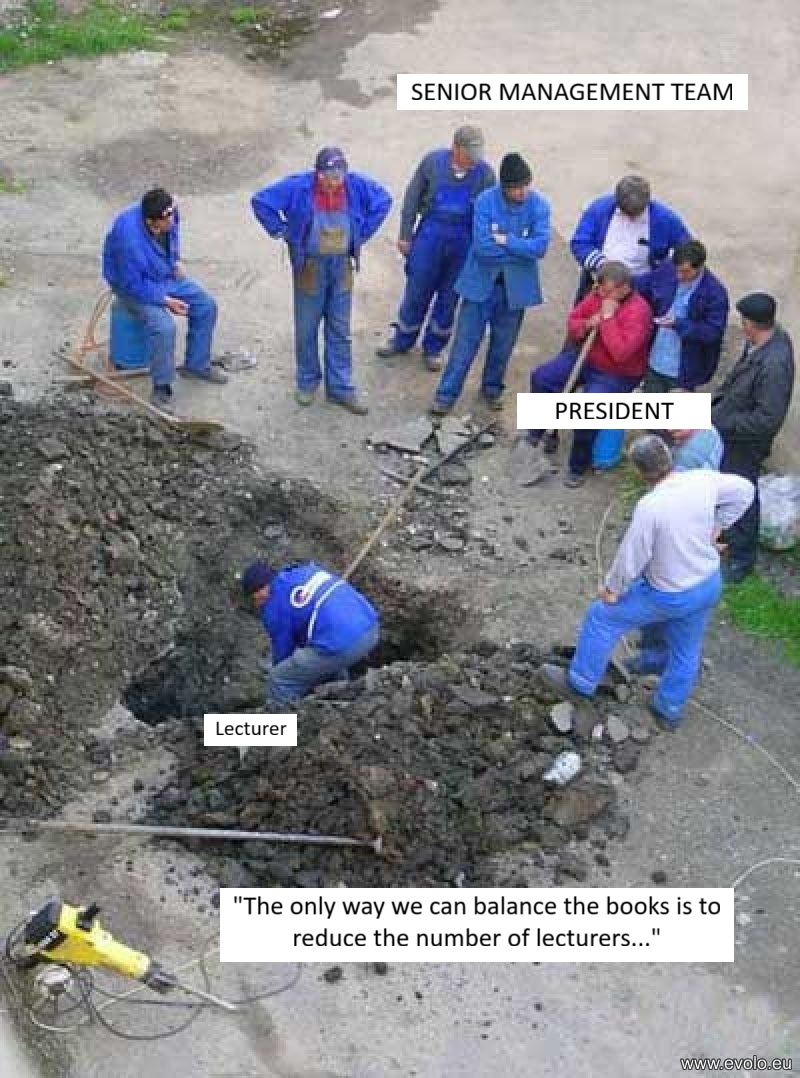
This variation on an old meme seems relevant to the state of the modern university system:

I posted a more detailed version on BlueSky here.

To pre-empt accusations that this is a misleading representation of the true state of affairs, I admit this is so. In a more accurate version there would be many more members of the Senior Management Team. Moreover, the President and Senior Management Team appear in the photo to be aware of, and some are even showing some interesting in, the activity of the lecturer.

Universities: Death by Bullshit

Posted in Education, Maynooth, Politics with tags , , , , , , on March 9, 2025 by telescoper

Just time for a quick post to pass on an Editorial by Masud Husain with the title On the responsibilities of intellectuals and the rise of bullshit jobs in universities which appeared in BRAIN magazine (which I buy for the Spot-the-Cell competition). I agree wholeheartedly with the article, which is available free of charge so I recommend you read it in full here, but I thought I’d give you a couple of tasters. The first is:

For some years now, it has become increasingly apparent to me that we are sleepwalking into a disaster. We are losing sight of the academic mission: to think, to enquire, to design and perform new research, to innovate, to teach and communicate our findings for the purpose of societal improvement. There are many reasons why this has occurred over just a quarter of century but a key contributor has been the corporatization of academic institutions.

The second is

To undertake corporatization, universities have borrowed principles that they think work in the private sector. These involve creating layers of administration to run different sectors of our institutions. In the UK, for example, between 1995 and 2019 while spending on university departments roughly doubled, the amount allocated to administration and central services more than quadrupled.

As you probably imagined, the piece borrows some themes from the book Bullshit Jobs (subtitled The Rise of Pointless Work and What We Can Do About It) by anthropologist David Graeber that I wrote about here.

The other day a colleague asked me if what I thought could be done about the underfunding of UK universities and the consequent job losses. I replied to say that I don’t think the problem so much that the universities as a whole are underfunded, but that the core missions of such institutions, by which I mean teaching and research, are. What is happening is that a huge slice of the money coming into universities is dissipated on bullshit jobs in a bloated management superstructure instead of being spent in the departments, which have become entirely subservient to “The Centre”. That is not only the case in the UK, but also here in Maynooth. Hardly a week goes by without some new bullshit job being advertised while our student-staff ratio soars and we academic underlings are starved of the resources we need to do our real jobs properly. It’s very dispiriting that Management continue to get away with this nonsense. If it continues, Ireland will undoubtedly encounter the same structural problems as are currently affecting the UK. I’m sure this is also the state of affairs in many other universities around the world.

It seems obvious to me that when your income falls, among the first things to do is reduce waste. If I were in charge of Higher Education funding my first priority would not be to increase funding but to impose penalties on universities that spend too little on what they’re actually supposed to be doing and too much on bullshit.

The University of Edinburgh in Crisis

Posted in Education, Finance with tags , , , , on February 26, 2025 by telescoper

It seems that financial emergencies are spreading around the United Kingdom like a contagion. About a month ago I posted about the crisis at Cardiff University, but now there’s a bombshell about the University of Edinburgh which, according to the Times Higher is planning to make cuts of around £140 million in recurrent expenditure, about 10% of its annual operating budget. This level of cuts is greater than those previously listed at other universities, including Cardiff, the largest of which are measured in tens of millions. The piece goes on to explain that target can’t be reached by voluntary redundancies, which presumably means compulsory redundancies are looming.

I don’t know which particular academic units are under threat, but I’m sure this episode is causing a great deal of stress to a great many people. The only advice I can offer to anyone at Edinburgh worrying about the future is, if they haven’t done so already, to JOIN A UNION!

Talking of which, the University of Edinburgh UCU has pointed out that the University revealed a budget surplus last year and has huge reserves measured in the billions. It accuses managers of manufacturing a crisis in order to cut staff and bring about even more centralisation – thus achieving an even greater level of corporate control over teaching and research activities. The subordination of academia to management is the aim. I don’t doubt that university managers around the world believe that teaching will be largely done by AI anyway which will allow even more lecturing staff to be cut.

I believe that universities need less centralisation not more. The Principal of the University of Edinburgh, Peter Mathieson, is quoted in the Times Higher piece as saying:

We can no longer afford to run duplicative services across the university, often with inconsistent practices which create inefficiencies, increase staff workload and impact our student experience..

This is fair enough, but it is quite wrong to assume that greater centralisation is the solution. In my experience it is “The Centre” that creates inefficiencies, increases staff workload and impacts student experience. That is because it knows far less than Schools and Departments about what is needed to achieve their academic objectives. Universities need a flatter and more responsive structure, not the ever-increasing management bloat that has been imposed on them for decades and which is now causing them to capsize.

Exam Time Again

Posted in Education, Maynooth with tags , , , on January 9, 2025 by telescoper

The January examination period starts tomorrow (10th January), so I thought I’d do a quick post on the topic of examinations. First of all let me wish the very best of luck everyone at Maynooth or elsewhere taking examinations in the next few weeks. I hope at least that the exam halls are nice and warm!

As the first examination for which I have responsibility is not until Monday 13th – unlucky for some! –  I’ll have to wait to find out how any of my students have done but let me take this opportunity to pass on a few quick tips.

  1. Try to get a good night’s sleep before the examination and arrive in plenty of time before the start. This is especially important when there’s bad weather that may disrupt travel. It is your responsibility to get to the examination on time!
  2. Read the entire paper before starting to answer any questions. In particular, make sure you are aware of any supplementary information, formulae, etc, given in the rubric or at the end.
  3. Start off by tackling the question you are most confident about answering, even if it’s not Question 1. This will help settle any nerves.
  4. Don’t rush! Students often lose marks by making careless errors. Check all your numerical results on your calculator at least twice and – PLEASE – remember to put the units!
  5. Don’t panic! You’re not expected to answer everything perfectly. A first-class mark is anything over 70%, so don’t worry if there are bits you can’t do. If you get stuck on a part of a question, don’t waste too much time on it (especially if it’s just a few marks). Just leave it and move on. You can always come back to it later.

Readers of this blog are welcome to add other tips through the comments box below!

The Cuts in UK Higher Education

Posted in Biographical, Cardiff, Education, Maynooth, Politics with tags , , , , on November 28, 2024 by telescoper

Today friend of mine send me a message pointing out that in order to save money the University of Sussex is planning to make about 300 staff redundant; you can see an article about it in the Times Higher here. For the time being it seems the plan to make these savings via a voluntary severance scheme. I don’t know whether academic and administrative staff will be treated equally, either.

This is grim news. I worked at Sussex from 2013 until 2016 when I resigned my post as Head of School of Mathematical and Physical Sciences. I took that decision largely for personal reasons but there were professional reasons too. From 2013 the University had embarked on an ambitious growth plan based on buoyant student numbers and the fee income generated thereby. Staff numbers grew too, to cope with the increased demand for teaching. Unfortunately the management was unable to match this with real improvements in infrastructure, largely due to the disastrous outsourcing of campus estates and services. Many promises made to me as Head of School by Senior Management were broken. I wasn’t the only Head of School to compain of this, either. Although things were still going relatively well when I left in 2016, and I was optimistic for the future of the School then, there were severe risks to its financial stability if student recruitment dived. Sadly, that’s exactly what happened. Falling student numbers – especially from overseas – left the institution very vulnerable, especially since the fee per student did not change. That problem was exacerbated by a burst of inflation. AlthoughIt has clearly been a very difficult time for the University of Sussex, largely due to national and international forces beyond its control, but exacerbated by ineffective, and at times incompetent, institutional management. It should be said also that many University leaders enthusiastically embraced the fees-based system that has led their institutions where they are now, though most of them have now departed and left others to carry the can.

It worries me that Maynooth University is also trying to grow very quickly, without adequate investment in infrastructure especially teaching. It isn’t increasing the number of academic staff much either, preferring to hire more and more managers; yet another such position was advertised this week. I don’t know whether Maynooth’s financial trajectory will follow that of Sussex. The funding environment is very different in Ireland compared to the UK, so it may not. It is clear that the enviroment for education and research here is being steadily degraded by the current leadership.

Anyway, when I saw the announcement about Sussex, I checked other Universities I’ve worked in over the years. There’s a list here. It seems that while there are particular factors at play at Sussex, there are similar difficulties across the Board. Cardiff University has a deficit of £35 million and the VC has refused to rule out compulsory redundancies there. I’m not sure how this is all affecting the School of Physics & Astronomy. Nottingham University, where I worked from 1999 to 2007, has deficit of £30 million, in response to which it has opened a voluntary severance scheme, introduced hiring freezes, cut non-pay budgets, and refused to renew 500 fixed-term contracts.

There certainly are cold winds blowing across the University landscape in the United Kingdom, and there is no sign of any respite. This is just the start.

The Cause of Academic Anomie

Posted in Covid-19, Education, Maynooth with tags , , , on July 22, 2024 by telescoper

I thought I’d share a paper entitled Academic anomie: implications of the ‘great resignation’ for leadership in post-COVID higher education, which presents a new study of 167 academics who quit UK academia, finding they often blame the declining quality of academic management. The abstract is here:

The full paper can be found here (Open Access). In case you weren’t aware the word anomie according to Durkheim, being a state of “normlessness”, in general means the lack of social cohesion and solidarity that often accompanies rapid social change. I’d say there’s a lot of that about these days.

The study relates directly to UK universities, many of which are struggling and some of which are on the verge of collapse as a result of several factors, not just those stemming from the Covid-19 pandemic. One of the surprising (and depressing) things about Ireland is that the people in charge of third level education here seem to be determined to repeat here the terrible decisions being taken across the Irish sea despite all the evidence of the damage they have done in the UK. Many of the comments made by individuals mentioned in the paper will definitely resonate with colleagues in Maynooth.

This bit particularly caught my eye:

All too often dangerous managers simply skip from one university to the next causing havoc wherever they go. (RS2 – Male, former Senior Lecturer, pre-1992 institution)

Tell me about it!

The Higher Education Market

Posted in Education, Maynooth with tags , , , on September 3, 2023 by telescoper
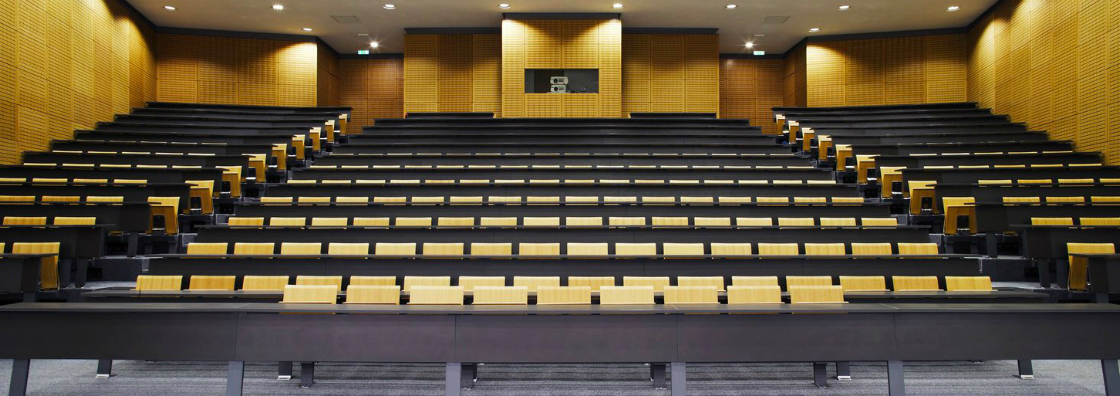
Iontas Lecture Theatre, Maynooth University

Last week I was talking to a current undergraduate student who has been working in the Department of Theoretical Physics over the summer. After a while the conversation turned to the possibilities for postgraduate education. I’ve had that sort of discussion many times over the years with many different students, but the curious thing is that I always find it quite difficult because I’m torn between competing motivations.

On the one hand, there is the wish to have the best undergraduates stay on for further study in the Department. That of course helps our research, but it is also good for our finances as postgraduate students bring income. I think we offer good opportunities at both Masters and Doctoral levels, so it’s not too difficult to point these out to students in a way that at least some find persuasive.

On the other hand, there is the fact that I am an academic not a salesman and I feel that it is my responsibility to give honest guidance. The fact is that a good undergraduate degree from the National University of Ireland will open a lot of doors elsewhere, and these should be considered. At Masters level in particular, there are excellent courses available in the EU which have the advantage of not charging fees at the level they are charged in Ireland. Add to that the cost of living and accommodation crises. It’s no surprise that many of our graduates seize opportunities to go to postgraduate study in Germany, Denmark or The Netherlands (to name just a few). I have no problem with explaining the advantages of options outside my own Department and no doubt some students find these points persuasive too.

There’s a wider context for this type of dichotomy, namely the progressive marketisation of higher education. When it comes to recruiting undergraduate students we academics are increasingly required to act as reps for the University, hawking our wares at Open Days, Recruitment Fairs, and a variety of online events. I’m reasonably happy to participate in these when asked to do so, but I always take the approach of describing what we do in our Department rather than trying to do down what happens elsewhere. I’m an academic not a salesman. And I work in a public university, not a private business. I see my job as giving advice in as objective a way as possible. If I feel that our courses would not be the right choice for a student, I’ll explain why. In the end, of course, the decision is up to the student, but I feel obliged to give them enough information to make an informed choice.

A couple of years ago, the (then) new President of Maynooth University walked up to the Theoretical Physics stand at a Maynooth Open Day when I was on duty. The first thing she said was “Sell your course to me”. I described what we had on offer, but I don’t think what I said impressed her at all. We can only hope to succeed in recruiting students who have some interest in science. An Open Day is a bit late to cultivate that: interest has to be nurtured from an early age.

Another problem I find, speaking as a physicist (though this is probably also true for people in many other disciplines), is that we see physicists in other institutions as colleagues rather than business rivals. This is particularly true for those of us working in large consortia that spread over many departments (and indeed many countries). I therefore see myself as a physicist who happens to work at Maynooth University rather than as an employee of Maynooth University who happens to do physics. It’s not that I am disloyal to my employer, it’s just that I have a greater loyalty to a larger community.

I do understand that the reality of the funding system here means that we have to be able to recruit students in order to pay our way, but I feel that the way to achieve that is by establishing a strong reputation in our core academic mission of teaching and research rather than through marketing gimmicks, corporate branding, or other forms of commercial flummery. No amount of propaganda will disguise a higher education institution that neglects those things that higher education is about.

Vaccination for Lectures?

Posted in Covid-19, Education, Maynooth with tags , , , , , on August 20, 2021 by telescoper

The full guidelines on the return to on-campus teaching in September that I referred to on Monday have now been distributed to all staff, not without comment.

Basically the new advice is that in-person teaching will return in September (in fact a month from today in Maynooth) for all forms of class except lectures containing over 250 people, which will be online. Lecture halls and labs will be at full capacity, i.e. with no social distancing requirement. Students will be “asked” to wear face coverings, but we are told not to attempt to enforce this. Importantly, there will be no requirement for students to have been vaccinated in order to attend lectures.

In Ireland there is a vaccination passport system so that those who wish to dine indoors at a bar or restaurant have to show vaccination status. Perhaps someone can explain to me how it makes sense for this to be a requirement in a restaurant while it is not a requirement for a student having to sit for an hour in close proximity to up to 249 others with no social distancing and no mandatory face coverings.

This conundrum is taken to another level of absurdity when you consider that a student wishing to get lunch indoors on campus will presumably have to show their vaccine passport?

There is an article here that argues that a safe return in the presence of the delta-variant requires 90% of the student population to have been vaccinated.

A more acceptable plan would have students show their vaccination status when enrolling on the course. Those who are unvaccinated but willing to have a vaccination shot could be vaccinated there and then and be allowed to attend lectures when the vaccine takes effect. Or I should say “could have been” because the facilities required to do on-campus vaccinations have not been set up and now there probably isn’t time. Those that refuse to have a vaccine should attend lectures online on a permanent basis.

(How such a scheme would be policed is a difficult question: we don’t usually have people on the doors of lecture theatres checking student IDs or anything and there is a far greater rate of traffic at the start of a lecture than you would have at a restaurant…)

There will of course be some students who are at very high risk and should not be attending lectures anyway even if vaccinated. For them we should be providing lecture recordings. Unfortunately I don’t think we have good enough facilities to record live lectures from theatres as there has been inadequate investment in cameras etc. If we’re told we have to provide lecture recordings, for many of us that means doing the lectures twice. And so our workload increases.

On the other hand it seems increasingly likely to me that all this will be irrelevant. New case numbers are running at about 1800 per day, a level that the HSE admits to being “unsustainable”. When the first colleges return in September, a substantial surge can be expected and everything will be back online anyway.

It’s like déjà vu all over again…