Author Archive

GAA Clustering

Posted in Bad Statistics, GAA, The Universe and Stuff with tags , , , , , , on July 25, 2022 by telescoper
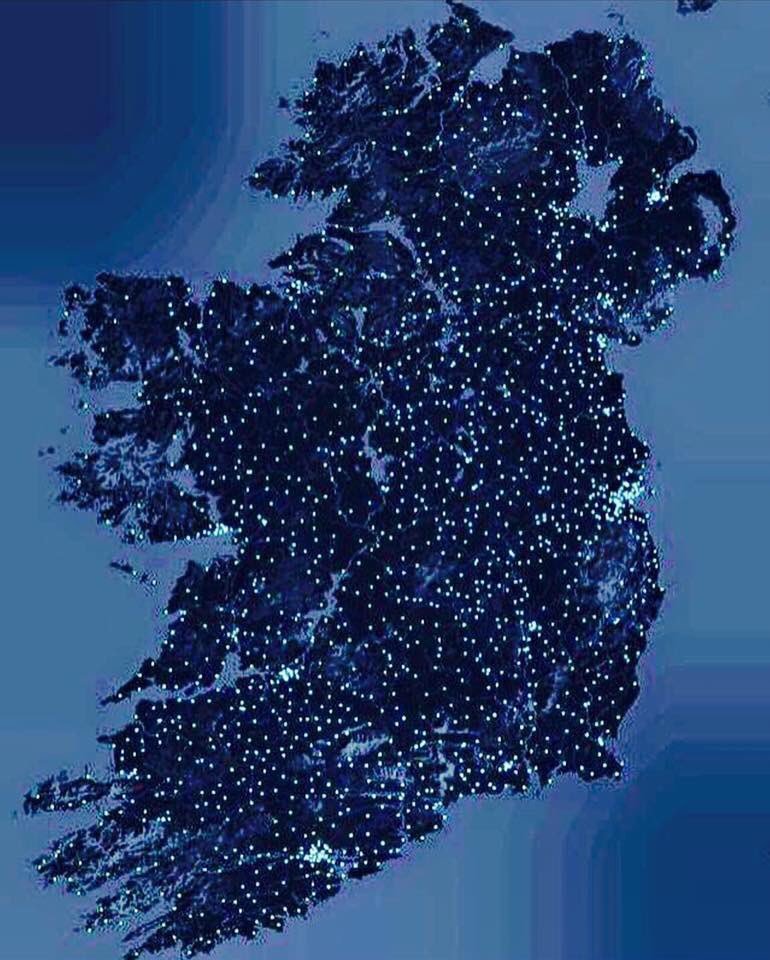
The distribution of GAA pitches in Ireland

The above picture was doing the rounds on Twitter yesterday ahead of this year’s All-Ireland Football Final at Croke Park (won by favourites Kerry despite a valiant effort from Galway, who led for much of the game and didn’t play at all like underdogs).

The picture above shows the distribution of Gaelic Athletics Association (GAA) grounds around Ireland. In case you didn’t know, Hurling and Gaelic Football are played on the same pitch with the same goals and markings on the field. First thing you notice is that the grounds are plentiful! Obviously the distribution is clustered around major population centres – Dublin, Cork, Limerick and Galway are particularly clear – but other than that the distribution is quite uniform, though in less populated areas the grounds tend to be less densely packed.

The eye is also drawn to filamentary features, probably related to major arterial roads. People need to be able to get to the grounds, after all. Or am I reading too much into these apparent structures? The eye is notoriously keen to see patterns where none really exist, a point I’ve made repeatedly on this blog in the context of galaxy clustering.

The statistical description of clustered point patterns is a fascinating subject, because it makes contact with the way in which our eyes and brain perceive pattern. I’ve spent a large part of my research career trying to figure out efficient ways of quantifying pattern in an objective way and I can tell you it’s not easy, especially when the data are prone to systematic errors and glitches. I can only touch on the subject here, but to see what I am talking about look at the two patterns below:

You will have to take my word for it that one of these is a realization of a two-dimensional Poisson point process and the other contains correlations between the points. One therefore has a real pattern to it, and one is a realization of a completely unstructured random process.
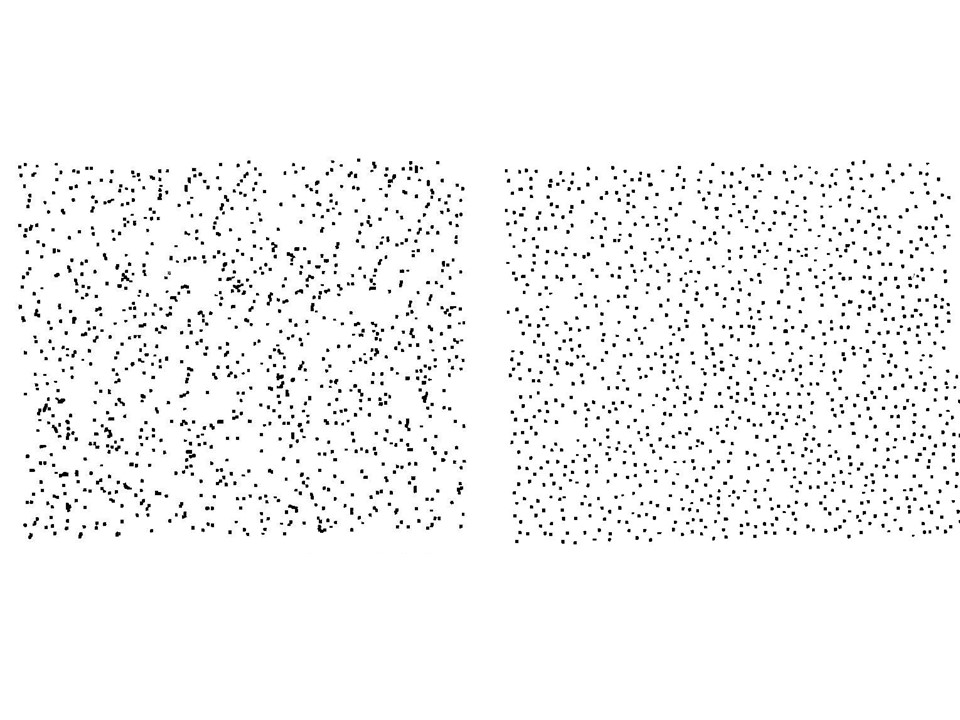
random or non-random?

I show this example in popular talks and get the audience to vote on which one is the random one. The vast majority usually think that the one on the right that  is random and the one on the left is the one with structure to it. It is not hard to see why. The right-hand pattern is very smooth (what one would naively expect for a constant probability of finding a point at any position in the two-dimensional space) , whereas the left-hand one seems to offer a profusion of linear, filamentary features and densely concentrated clusters.

In fact, it’s the picture on the left that was generated by a Poisson process using a  Monte Carlo random number generator. All the structure that is visually apparent is imposed by our own sensory apparatus, which has evolved to be so good at discerning patterns that it finds them when they’re not even there!

The right-hand process is also generated by a Monte Carlo technique, but the algorithm is more complicated. In this case the presence of a point at some location suppresses the probability of having other points in the vicinity. Each event has a zone of avoidance around it; the points are therefore anticorrelated. The result of this is that the pattern is much smoother than a truly random process should be. In fact, this simulation has nothing to do with galaxy clustering really. The algorithm used to generate it was meant to mimic the behaviour of glow-worms which tend to eat each other if they get  too close. That’s why they spread themselves out in space more uniformly than in the random pattern.

Incidentally, I got both pictures from Stephen Jay Gould’s collection of essays Bully for Brontosaurus and used them, with appropriate credit and copyright permission, in my own book From Cosmos to Chaos.

The tendency to find things that are not there is quite well known to astronomers. The constellations which we all recognize so easily are not physical associations of stars, but are just chance alignments on the sky of things at vastly different distances in space. That is not to say that they are random, but the pattern they form is not caused by direct correlations between the stars. Galaxies form real three-dimensional physical associations through their direct gravitational effect on one another.

People are actually pretty hopeless at understanding what “really” random processes look like, probably because the word random is used so often in very imprecise ways and they don’t know what it means in a specific context like this.  The point about random processes, even simpler ones like repeated tossing of a coin, is that coincidences happen much more frequently than one might suppose.

I suppose there is an evolutionary reason why our brains like to impose order on things in a general way. More specifically scientists often use perceived patterns in order to construct hypotheses. However these hypotheses must be tested objectively and often the initial impressions turn out to be figments of the imagination, like the canals on Mars.
How to be a better PhD supervisor

Posted in Education with tags , , , on July 24, 2022 by telescoper

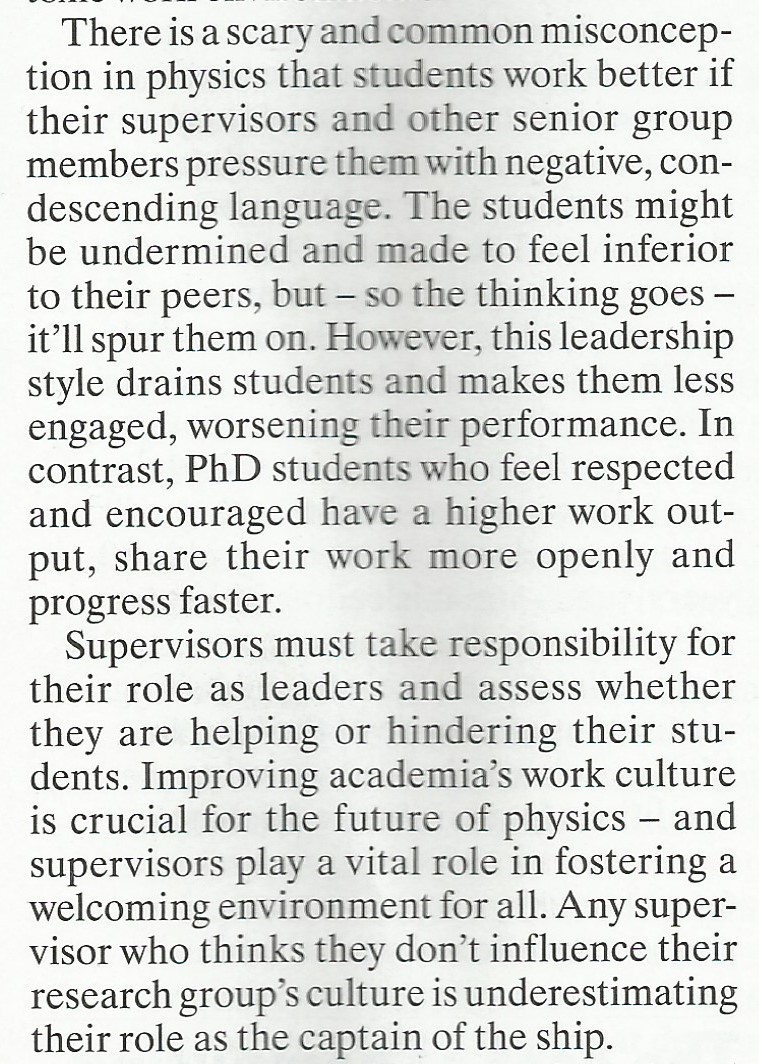
The text for this Sunday’s sermon is provided by a piece by a Danish PhD student called Rikke Plougmann in the latest Physics World entitled How to become a better supervisor. The article is quite interesting, though I was a bit alarmed by the first of the two paragraphs here:

While it certainly is “scary” I don’t think the “misconception” described in the first paragraph is “widespread”, or at least I sincerely hope it isn’t. I think any supervisor who behaves in such a way towards their research students shouldn’t be allowed to have any! Does your supervisor use “negative, condescending language”? If so I think you should get a new one!

Whether or not the first paragraph is accurate, the second definitely is. It is important for a supervisor (and the rest of a research group and the rest of a department and indeed the whole institution) to try their best to create a welcoming environment for all.

I have written several times on here about my own experiences as a PhD student, most recently here. I have written much less about my experiences as a supervisor. That’s partly because I don’t feel comfortable writing about what I think should really be confidential matters relating to PhD students and partly because each student-supervisor relationship is different.

I certainly don’t think I’m any sort of role model as a PhD supervisor. Among many other failings, I have let my students down at various times when I’ve been mentally unwell and/or when struggling with workload. But I’ve always tried to be friendly and supportive, and encouraged students to look after their work-life balance.

Other than that, it has always seemed to me that it is important for a supervisor to create a healthy working relationship. It’s not simply about training an early-career researcher. The fact of the matter is that when you take on a research student it’s because there is a project you think should be done but you’re not able to do it on your own. The student should realize that their work is not some sort of prolonged test but is highly valued as an essential contribution to a project. In other words, you need the student. I have known some supervisors to act as if they are doing students a favour by taking them on, when the reality is the other way round.

Another thing that I think a supervisor should do is make it clear that they do not have a monopoly on wisdom. Students should be encouraged to question what the supervisor suggests. I always feel I’m succeeding as a supervisor when a PhD student has the confidence to say something like “I thought about what you suggested and decided it wouldn’t work so I did this instead….”

Certainly, by the end of a PhD, the student should know more about the topic than their supervisor. At the beginning, though, the supervisor will know more and it is more of a teacher/pupil relationship then. Managing the transition from that to the equal partnership it should become is tricky as it depends on individual personalities, and it doesn’t always work out. That’s not always the fault of the supervisor. On the other hand, recognizing that’s where you should be headed is at least a start.

Above all, a supervisor should try the best they can to enable the student to enjoy their PhD. I certainly enjoyed mine and I am immensely grateful to my supervisor, who is alas no longer with us, for being so kind and supportive to me during the difficult times as well as giving me such interesting projects to do.

I’m aware this is all rather vague so I’d welcome any comments either from students about how they feel their supervisor might be better or from supervisors with advice to others. The box below is at your disposal.

Can SpaceX save Euclid?

Posted in Euclid, The Universe and Stuff with tags , , , , , , , on July 23, 2022 by telescoper

A little over a month ago I posted a piece about the European Space Agency’s Euclid Mission which had been due to be launched in 2023 on a Soyuz ST 2-1b rocket. That no longer being possible because of Russian’s invasion of Ukraine, it seemed there would be a lengthy delay in the launch of Euclid, with late 2024 seeming the earliest feasible date for launch on the obvious alternative, the new Ariane 6.

I ended that piece with this:

It seems to me that the best hope for a resolution of this problem would be for ESA to permit the launch of Euclid using something other than Ariane 6, which means using a vehicle supplied by an independent commercial operator. I sincerely hope ESA is able to come up with an imaginative solution to this very serious problem.

In the Dark, 17th June

I have heard various rumours since then but yesterday I saw a piece by Paris-based astronomer Henry Joy McCracken (a famous name in Ireland) that reveals that a proposal is being actively investigated to launch Euclid on a Falcon 9 rocket operated by Elon Musk’s outfit SpaceX. If all goes well it might be possible to launch Euclid by the end of 2023, and at a fraction of the cost of the alternative Ariane 6-2.

Setting aside any personal opinions about Elon Musk, the Falcon 9 has proved to be very reliable, with the latest version having 110 out of 110 successful launches. Euclid will not be in an Earth orbit, like most of the satellites so far launched by SpaceX, but has to be delivered to the 2nd Lagrange Point, L2. That should not pose to much of a difficulty.

As far as I understand it the decision whether or not this is feasible will be taken later this year after extensive engineering tests, especially to see how Euclid can cope with the spectrum of vibrations generated by Falcon 9. There’s no guarantee this will work out but it might just save a lot of money and a lot of careers.

The Built Environment

Posted in Architecture, Maynooth on July 22, 2022 by telescoper
The New Building

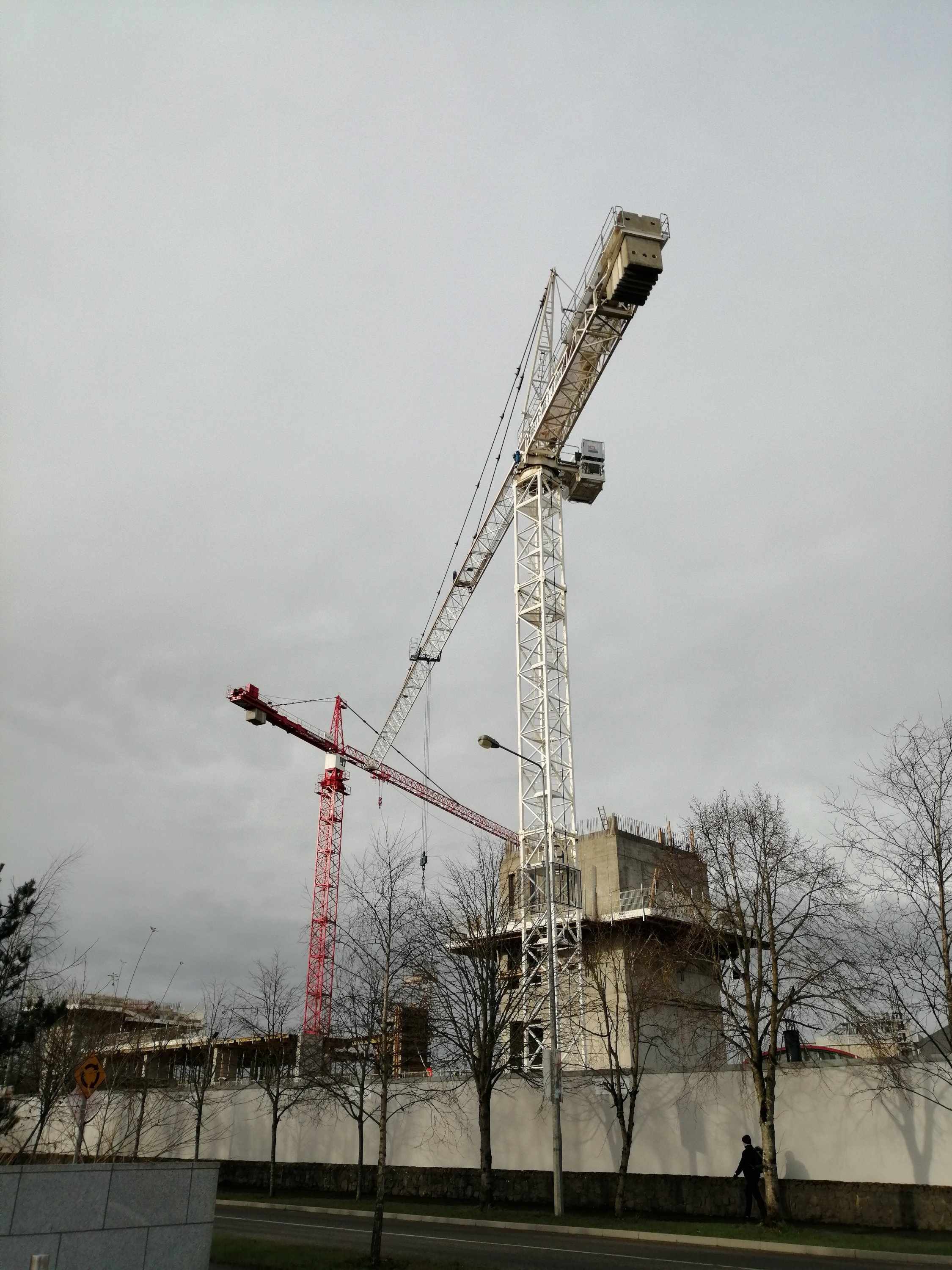
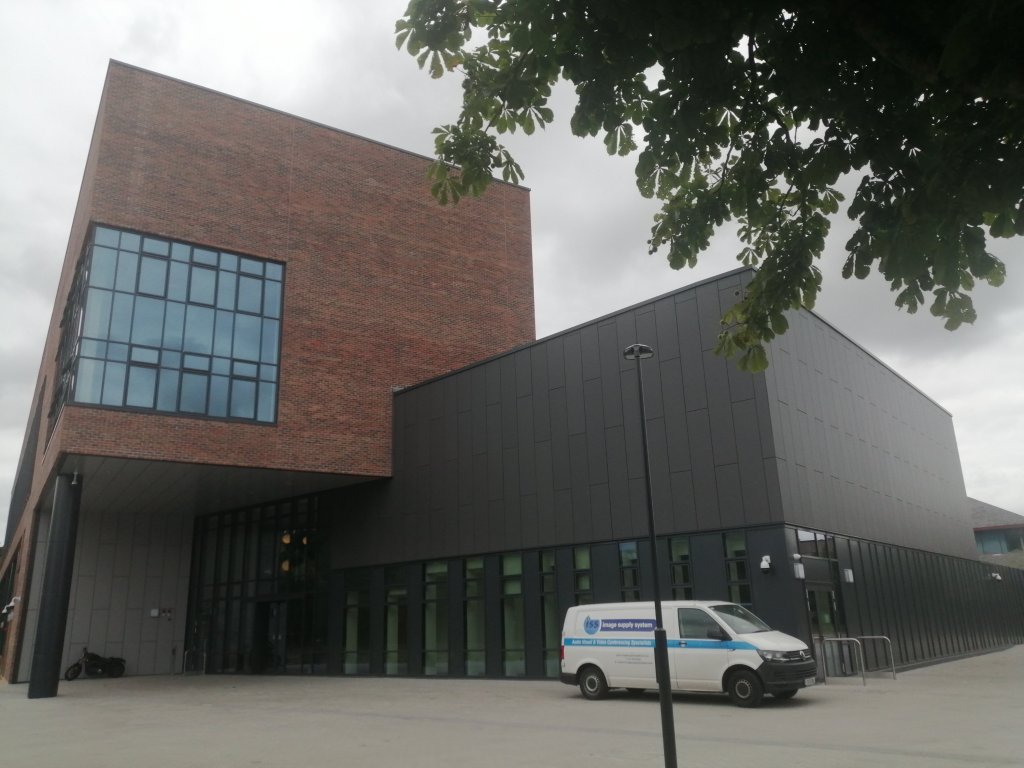
It seems that after long delays, the new building on Maynooth University’s North Campus is finally finished. Or at least I think it is. I haven’t been inside yet. I don’t know who are what is going to be housed there, except that the President’s Office is going to be there. The remaining space might nevertheless do something to relieve the shortage of office accommodation on campus.

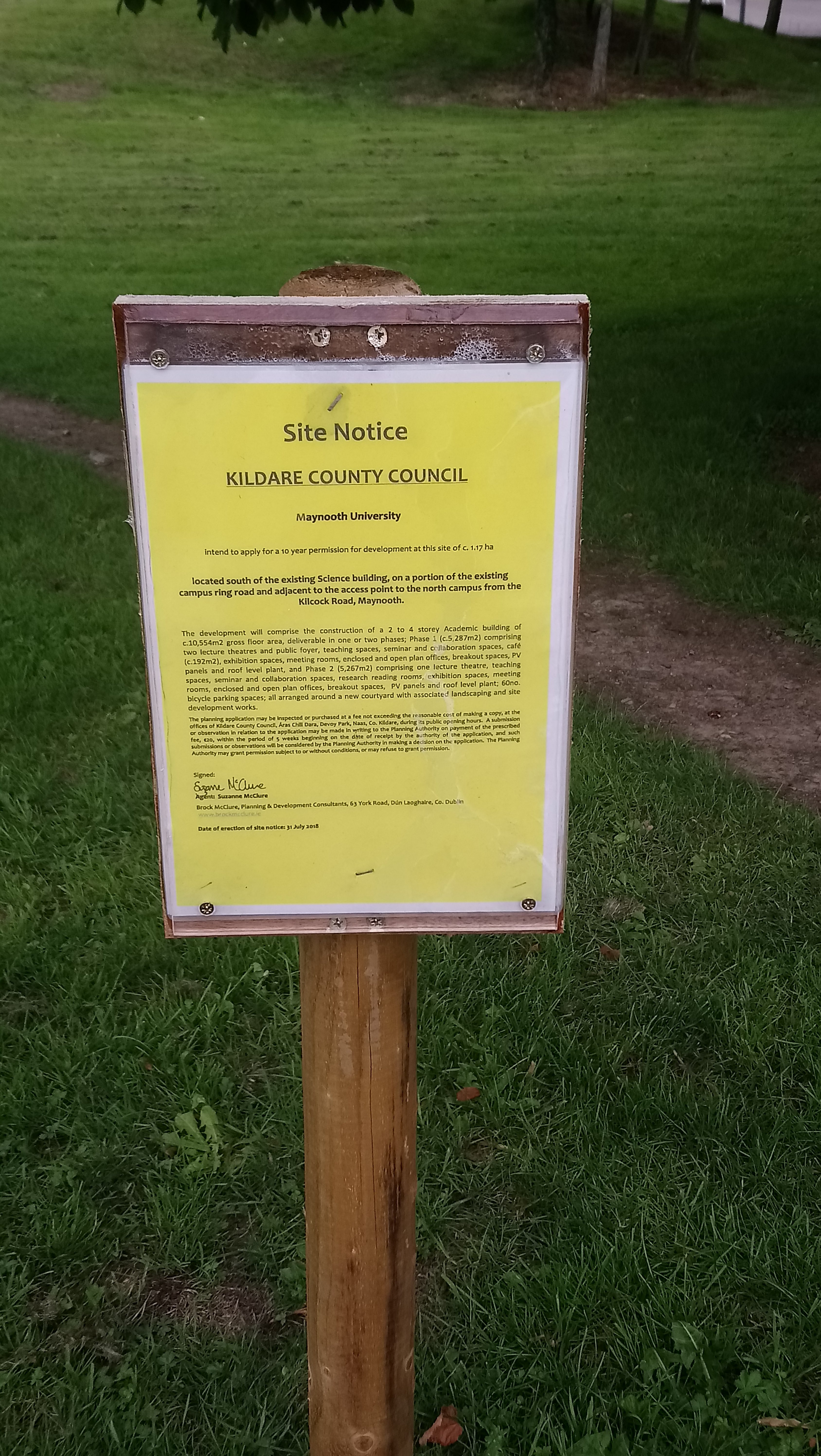
It was only just under four years ago that I saw this sign marking the proposed site of the new building.

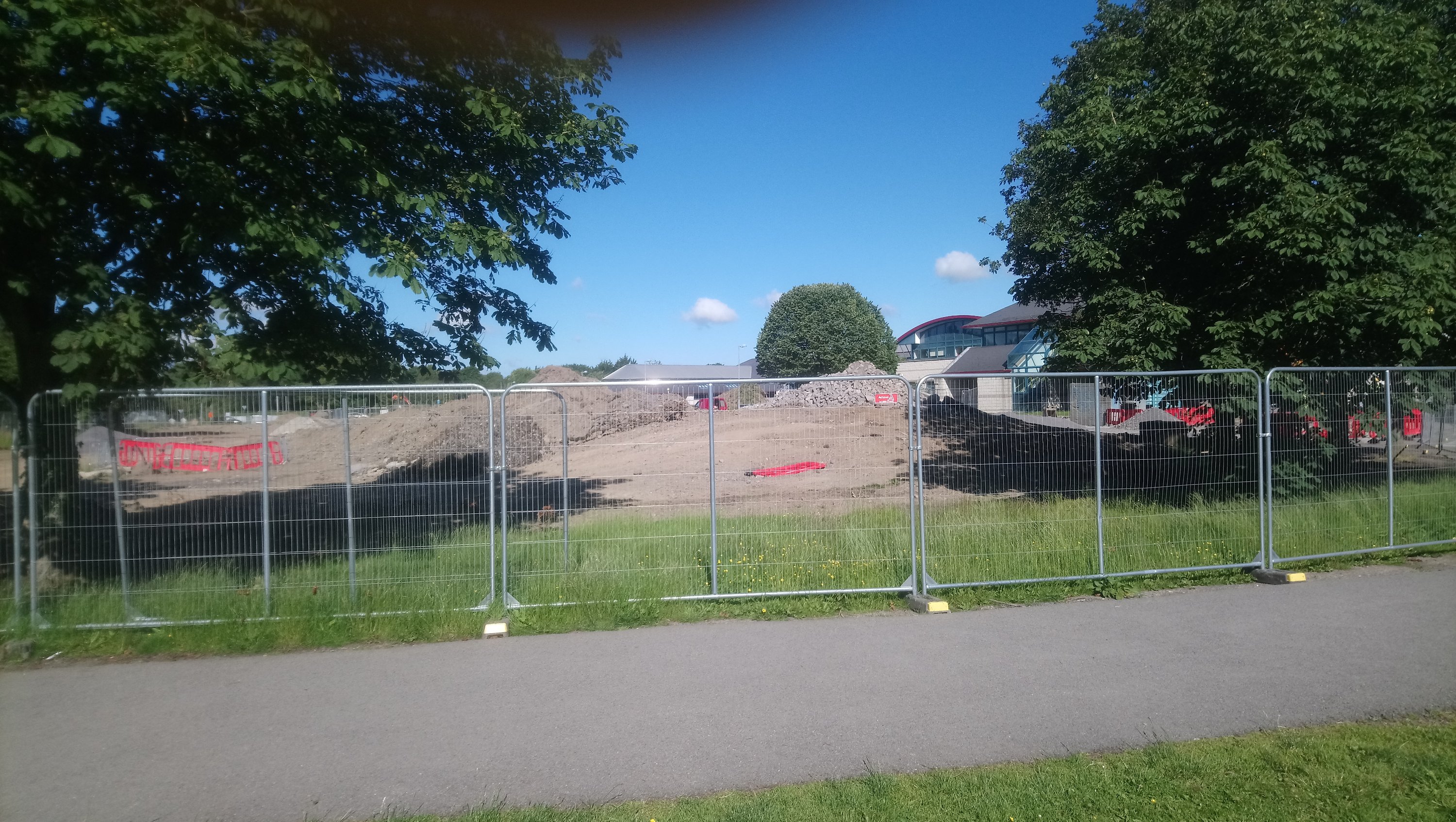
Less than a year later, work had started:

This was in January 2020:

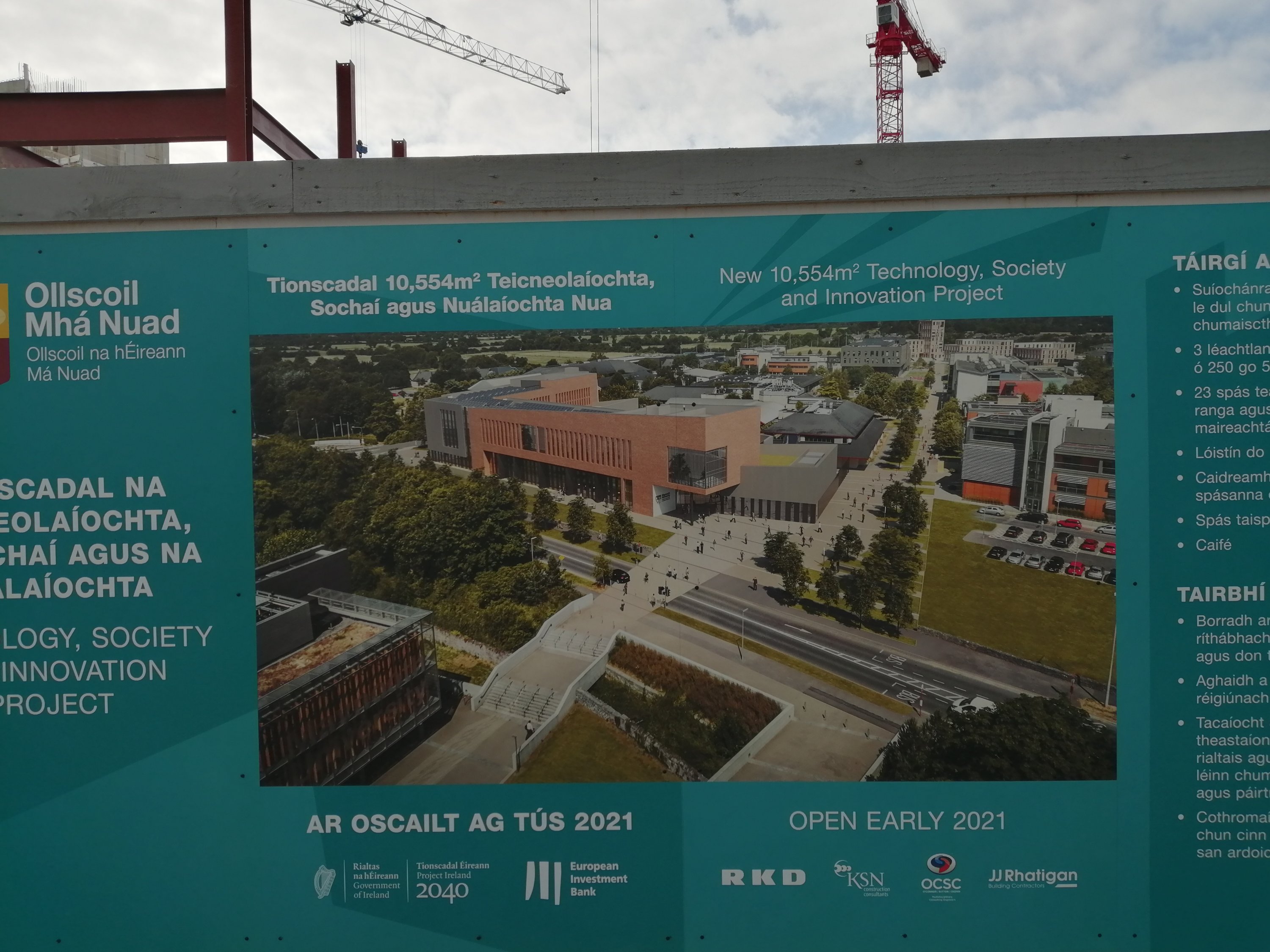
A couple of months later the site was surrounding by fencing decorated by an artist’s impression of the new building:

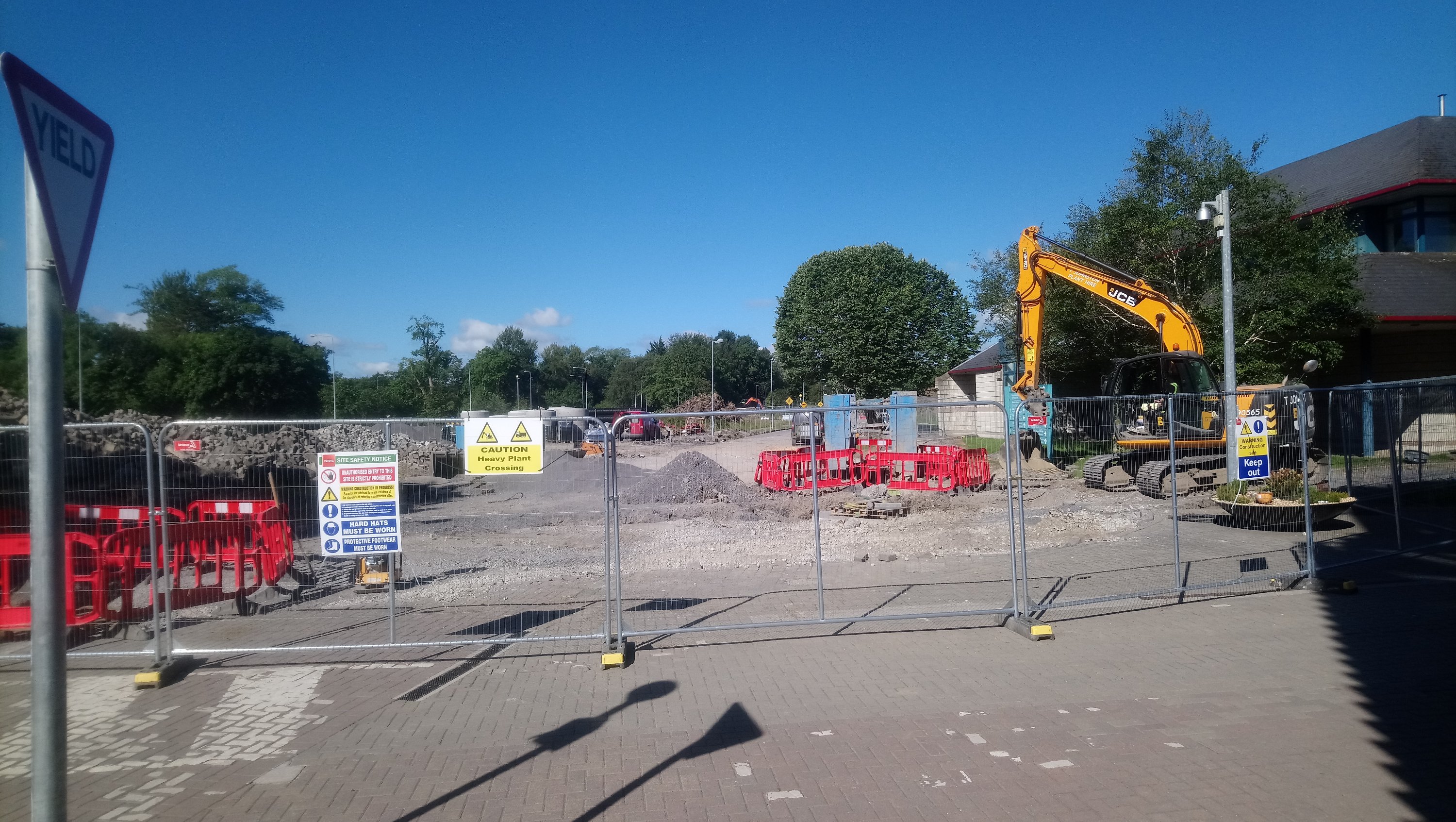
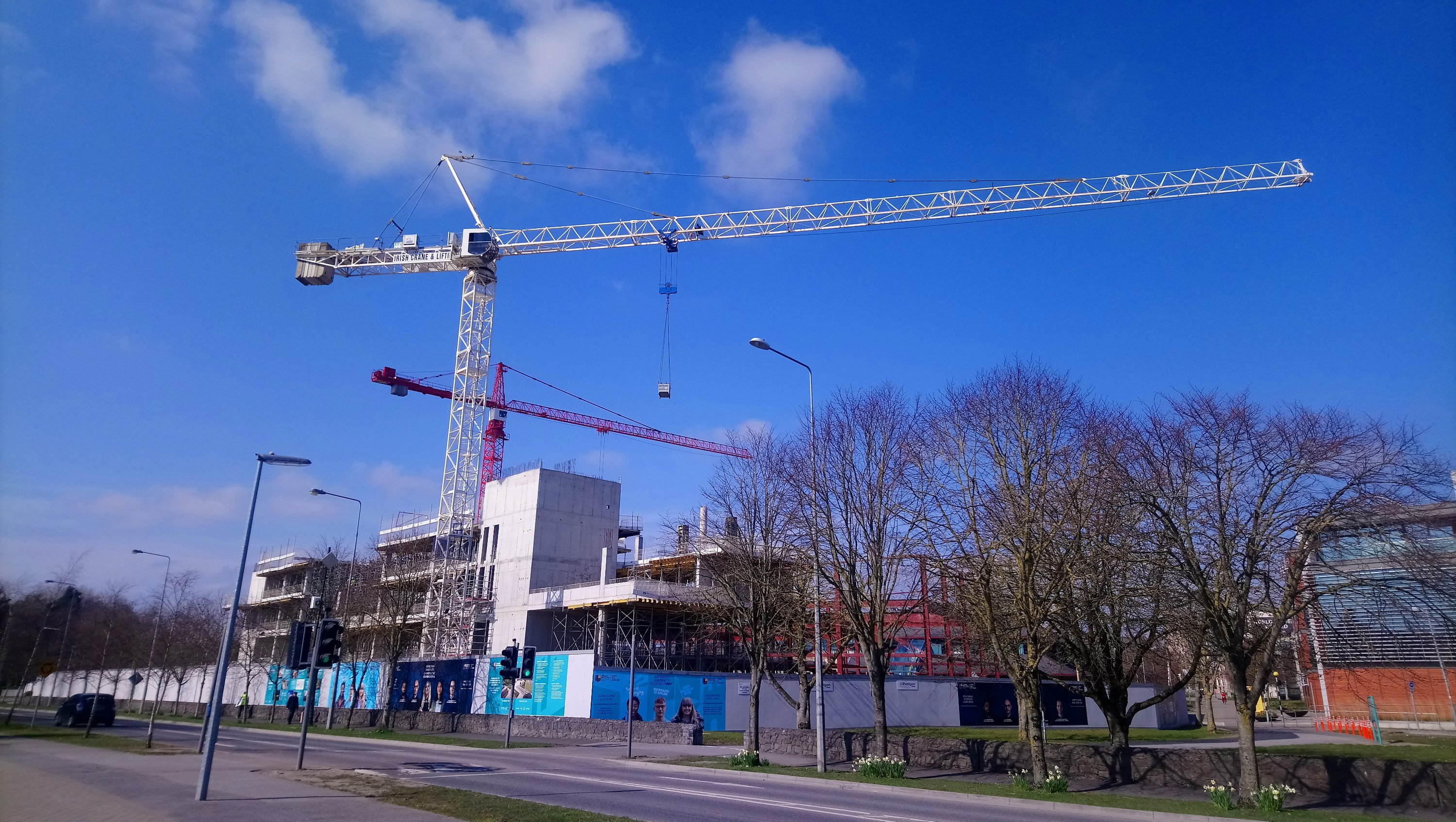
Notice that the plan was to open in “Early 2021”. Unfortunately the pandemic intervened and building stopped. This was at the end of March.

When building work eventually resumed there were further delays due to difficulties, e.g., in procuring materials. We were supposed to have use of this building for the last two open days on campus but that didn’t happen. It will be hopefully be ready for the new academic year, though. The finished product even looks a bit like the artist’s picture!

The building work has at times caused serious problems with noise in the Science Building, where my office is located, but not any more. Better is the end of a thing than the beginning thereof.

New Publication at the Open Journal of Astrophysics

Posted in Open Access, The Universe and Stuff with tags , , , , , , , on July 22, 2022 by telescoper

It seems we’re on a bit of a roll at the Open Journal of Astrophysics as we have yet another new paper for me to announce. I think with the end of teaching quite a few authors are finding time to make their revised versions (which I should also be doing, come to think of it….)

Anyway the new paper, published yesterday, is the 11th paper in Volume 5 (2022) and the 59th in all. The latest publication is entitled “Bayesian error propagation for neural-net based parameter inference” and is written by Daniela Grandón of the University of Chile and Elena Sellentin of Leiden University.

It being mainly about the application of parameter inference to cosmology, this is another paper in the Instrumentation and Methods for Astrophysics folder.

Here is a screen grab of the overlay which includes the  abstract:


You can click on the image to make it larger should you wish to do so. You can find the arXiv version of the paper here.

Life and Chemical Imbalances

Posted in Biographical, Cardiff, Maynooth, Mental Health with tags , , , , , on July 21, 2022 by telescoper

Although it has weighed on my mind in recent weeks, and I have mentioned it on this blog a couple of times, I’ve managed to avoid writing too much about the fact that exactly ten years ago I was languishing in the high-dependency unit of a psychiatric hospital. Today I saw that there’s an article doing the rounds about mental health issues so I thought I’d use it as a pretext for getting some of the memories of that time off my chest.

The article I mentioned above has the rather misleading title Depression is probably not caused by a chemical imbalance in the brain – new study. What the article argues is that there isn’t a simple cause-and-effect relationship between depression and the chemical serotonin. There may well be a biochemical explanation of depressive illness that involves serotonin, but it’s obviously very complicated. That shouldn’t surprise anyone. Very few things in neuroscience are simple.

Unfortunately some people are misrepresenting the piece by claiming that it proves that a widely-used class of anti-depressant drugs known as Selective Serotonin Reuptake Inhibitors (SSRIs; the best-known of which, Fluoxetine, is known by the trade name Prozac). This class also includes Citalopram and Paroxetine (trade name: Seroxat), both of which I have been on. The latter is not available on the National Health Service through a General Practitioner, but must instead be prescribed by a consultant psychiatrist because of rather serious side-effects.

I refer you to an explanatory article Dean Burnett who explains that nobody really knows how these SSRI anti-depressants work, and why it is not surprising that they can have unexpected side effects. I hope that the articles I mentioned above help make it clearer what is involved being on medication of this sort. These drugs are in widespread use, but ignorance about them is spread even wider.

Anti-depressants are not only prescribed for the treatment of clinical depression but also for, e.g., anxiety disorder, panic disorder, and post-traumatic stress disorder. It is for these things rather than depression per se that I have taken SSRIs. Nobody really knows why anti-depressants work against depression (although there is clinical evidence that they do), and there is even less understanding why (and, in some cases, evidence that) they are effective for these other conditions. Like many treatments they seem to have been discovered empirically, by trial and error.

As Dean Burnett explains in his article, SSRIs work by increasing the level of Serotonin (a monoamine neurotransmitter). However, taking an SSRI increases the level of Serotonin almost immediately whereas the effect on depression takes weeks to register. While low Serotonin levels may play a part in depressive illness, they’re clearly not the whole story.

Ten years ago, in the summer of 2012, I experienced awful problems largely as a result of trying to come off the medication I had been on since the previous autumn. The withdrawal symptoms then included shaking fits, insomnia, visual and auditory hallucinations, nausea, and hypervigilance.

The effect of this extreme collection of withdrawal symptoms was that I didn’t eat or sleep for a couple of weeks. My mental and physical health deteriorated steadily until my GP referred me to a psychiatric hospital just outside Cardiff. When I arrived there they took one look at me and put me in a high-dependency unit, under close supervision.

I think they thought I was suicidal but I really wasn’t. I was just so exhausted that I didn’t really care what happened next. I was however put on a kind of `suicide watch’, the reason for this being that, apparently, even while sedated, I kept trying to pull the tube out of my arm. I was being fed via a drip because I was ‘Nil by Mouth’ by virtue of uncontrollable vomiting. I guess the doctors thought I was trying to sabotage myself, but I wasn’t. Not consciously anyway. I think it was probably just irritating me. In fact I don’t remember doing it at all, but that period is very much a blur altogether. Anyway, I then found myself in physical restraints, so I couldn’t move my arms, to stop me pulling the tube out.

Those days are painful to recall but I was eventually moved to a general ward and shortly after that I was deemed well enough to go home. Fortunately, I recovered well enough to return to work (after taking a short break in Copenhagen). I signed up for 6 weeks of talking therapy. I had to wait some time before a slot became available, but had appointments once a week after that.

At the end of the summer of 2012, I was offered the job of Head of the School of Mathematical and Physical Sciences at Sussex University. I moved from Cardiff to Brighton in early 2013 to take up this new position. I hadn’t been there for long when my old problem returned. The stress of the job obviously played a role in this, and I soon realized that I couldn’t keep going without help from medication. It was then that I was tried out on Paroxetine, the dose being gradually increased until I was at the maximum recommended level (60mg daily).

While this medication was effective in controlling the panic disorder, it had some unpleasant side-effects, including: digestive problems; dizziness; difficulty in concentrating; fatigue; and the weirdest of all, a thing called depersonalisation, which I still experience (in a relatively mild form) from time to time.

I found myself living a kind of half-life, functioning reasonably well at work but not having the energy or enthusiasm to do very much else outside of working hours. Eventually I got fed up with it. I felt I had to choose between staying in my job as Head of School (which meant carrying on taking the drugs indefinitely) or leaving to do something else (which would mean I might be able to quit the drugs). I picked the latter. The desire to come off medication wasn’t the only factor behind my decision to stand down from my job at Sussex, but it played a big part.

I knew however that Paroxetine is associated with notoriously difficult withdrawal symptoms so, mindful of my previous experience in 2012, I followed the medical instructions to the letter, gradually cutting down my dose over a couple of months during the course of the Autumn in 2016. I still had significant withdrawal symptoms, especially the insomnia, but not as bad as before.

In 2016 had no idea that I would move to Ireland in 2017. I’m glad to say, though, that despite the isolation and stress caused by the pandemic, and workload issues generally, I’ve managed without any form of anti-depressants since then, though it hasn’t always been easy. Let’s just say that I am greatly looking forward to reaching the end of my term as Head of Department of Theoretical Physics at the end of next month…

The Earliest Galaxy we’ve seen?

Posted in Astrohype, The Universe and Stuff with tags , , , on July 20, 2022 by telescoper

The red smudge in the centre of this image is thought to be a galaxy with a redshift of around z=13, as seen by the NIRCam instrument on the James Webb Space Telescope. This redshift estimate is based on photometry so the object remains a candidate rather than a confirmed high-redshift galaxy, but if confirmed spectroscopically this would be the highest-redshift galaxy yet observed.

For more details on the observations and their implications see the preprint on arXiv here. It’s interesting (and challenging) that there are such bright galaxies at such an early stage of cosmic evolution, assuming of course that the redshift is correct. Photometric redshift estimates have been wrong before.

If we take the estimated redshift at face value and adopt the standard cosmological model, the lookback time to this galaxy (GLASS-z13) is about 97.6% of the current age of the Universe so we’re seeing it as it was just 330 million years after the Big Bang. It could therefore be the earliest galaxy we have seen. It isn’t very accurate to say that it is the oldest galaxy we’ve seen, as we are probably seeing it as it was when it was very young.

These observations come from JWST Early Science Release Programmes so are just a taster of what is to come. No doubt we’ll hear much more about high-redshift galaxies from JWST in future and there’s every chance that they will change our view of the high-redshift Universe in dramatic ways.

I’ll just mention here that I’m old enough to remember going to conferences where “high redshift” meant z=0.5! In those days the highest redshift objects were quasars, but they have long since been overtaken.

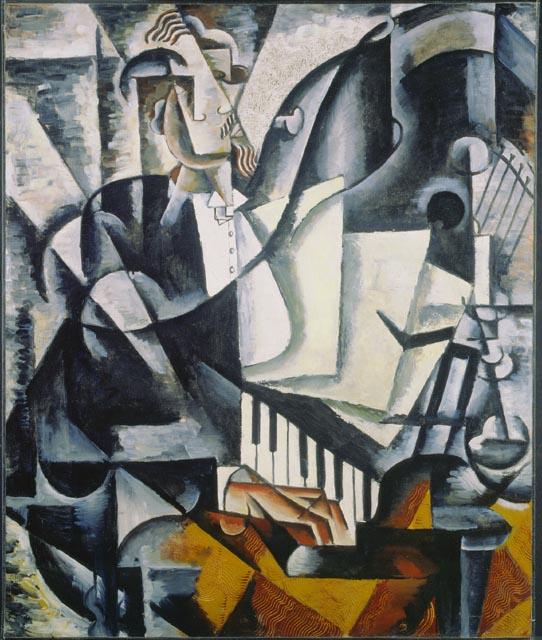
The Pianist – Lyubov Popova

Posted in Art with tags , , on July 19, 2022 by telescoper
Lyubov Popova, Public domain, via Wikimedia Commons

Lyubov Popova, 1914, oil on canvas, 106.5 x 88.7 cm, National Gallery of Canada.

A Clarivate Apology

Posted in Open Access with tags , , on July 19, 2022 by telescoper

Well, it seems that my recent post about Impact Factors has had some effect. Today I received an email from Clarivate, the salient part of which is appended below. I applied for inclusion on the Web of Science Collection in April 2021, so they have sat on this request for over a year.

Now I have to start the process  all over again. Sigh. I’m taking a wild guess here but I wonder if access to the Web of Science Publisher Portal might require the payment of a hefty subscription, so only big commercial publishers can afford it?

I suspect If I hadn’t posted about this on social media they would have ignored my submission request indefinitely.

To think so many people take this company seriously….

–0–

We are contacting you regarding the evaluation of the Open Journal of Astrophysics for the Web of Science Core Collection and following up from a recent post on social media.

Unfortunately we have not been able to evaluate your journal to this date due to the large amount of journal submissions we are continuously receiving and the implementation of new internal management systems. We are taking several actions to improve the efficiency of the editorial process, one of them is the migration of our submission platform to the Web of Science Publisher Portal. The Portal allows publishers to securely log in and submit journals for inclusion in the Web of Science Core Collection and provides a way to view the status of all journals submitted.

All journals previously submitted using the Journal Submission Form on the Master Journal List that have not received a decision regarding inclusion in the Web of Science Core Collection, have to be re-submitted through the Web of Science Publisher Portal; that is the case of the Open Journal of Astrophysics, which needs to be re-submitted. Please remember that only publishers can submit journals through the portal.


Dizzy on the French Riviera

Posted in Jazz with tags , , , on July 18, 2022 by telescoper

Today’s high temperatures provide me with an excuse to post my favourite hot-weather music, the 1962 album Dizzy on the French Riviera. Can this really have been recorded 60 years ago?

Anyway, the album features the great Dizzy Gillespie Quintet of that time which was heavily influenced by Latin American sounds and had Argentinian Lalo Schifrin on piano, a man best known as a prolific composer of film and TV scores. The band also featured Leo Wright, a very under-rated saxophonist and flautist, and is augmented on some of the tracks by various percussionists. I have lost track of the number of times I’ve listened to the happy seaside sounds of children playing leading into to the opening track No More Blues