Author Archive

Equality, Diversity and Euclid

Posted in Euclid, The Universe and Stuff with tags , , on June 7, 2019 by telescoper

So here I am, back in my hotel, after the second pleasant wine and food reception of the week – this time hosted by the University of Helsinki. I have to leave early tomorrow morning to get back to Maynooth so I’m not among those going for dinner afterwards.

It’s been a very satisfying meeting, in terms of scientific content, organization and even the weather which has been warm and sunny throughout.

That said I feel obliged to mention one less than satisfactory episode which happened this afternoon. Euclid is a very large consortium working on a complex mission. That requires certain management structures to be put in place, including how to deal with the many scientific publications that will hopefully result from the Euclid mission to be as fair as possible to everyone working on the various projects as well as ensuring the scientific quality of resulting papers.

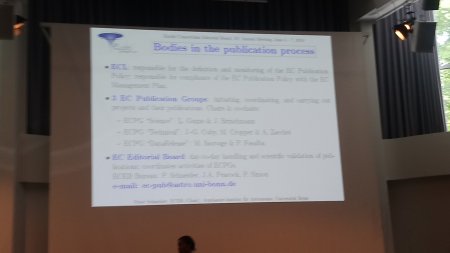
This afternoon a very distinguished senior member of the Euclid Consortium presented an overview of the publication policy on behalf of the Editorial Board which included this slide:

Not knowing all the names I didn’t think twice about the various panels until at the end of the talk a member of the audience pointed out that none of the individuals named are female.

I wasn’t alone in being surprised that such a situation had arisen, especially since Euclid has a Diversity Committee. But what made matters worse was the apparently dismissive response of the speaker, which caused a sharp intake of breath around the auditorium, and left many with the impression that the Consortium needs to look at whether unconscious or other bias might have been involved in the selection of these members. The impression given may have been inadvertent but appearances matter, and I know I’m not the only person who was troubled by what went on this afternoon. I sincerely hope the Diversity Committee looks into this issue as soon as possible.

UPDATE: 21st June 2019. I understand that this issue has been looked into in depth by the Euclid Consortium and active measures are being taken to improve the gender balance in future, which is a very positive outcome.

D-Day 75 Years On

Posted in Art, History with tags , , , , on June 6, 2019 by telescoper

Today is the 75th anniversary D-Day, the start of the Allied landings on the beaches of Normandy. I thought I’d mark the occasion by posting a slightly edited version of a piece I wrote about 9 years ago about this very famous picture:

This remarkable photograph was taken at 8.32am on 6th June 1944 on “Queen Red” beach, a sector in the centre-left of Sword Area, during the early stages of the D-Day invasion. The precise location is near La Brèche, Hermanville-sur-Mer, Normandy. The shutter clicked just as the beach came under heavy artillery and mortar fire from powerful German divisions inland.

Some time ago I came across a discussion of this image in the Observer. As the article describes, it consists of “a series of tableaux that look like quotations from religious art”. The piece goes on

In the foreground and on the right are sappers of 84 Field Company Royal Engineers. Behind them, heavily laden medical orderlies of 8 Field Ambulance Royal Army Medical Corps (some of whom are treating wounded men) prepare to move off the beach. In the background, men of the 1st Battalion, the Suffolk Regiment and No 4 Army Commando swarm ashore from landing craft.

The sapper in the bottom left, looking directly into the camera, is Jimmy Leisk who was born in Shetland. His strained expression gives the impression that he’s trying to escape from the photograph; through his eyes we get a glimpse of the grim reality of armed conflict. His colleague, turning away from the lens, seems to be calling to the men behind, but the image of his head and upper body links with the more distant figures forming a dramatic arc that pulls you into the centre of the picture before veering off to the right. Each element of this image tells its own story, but apart from one person in the foreground, all the faces are all hidden from view. I’m sure these anonymous figures were all just as frightened as the man in the foreground, but their individual identities are lost as they blend into graphic depiction of the monumental scale of the invasion. It’s a truly wonderful work of art, and a brilliant piece of storytelling, at the same level as an Old Master, but this is made all the more remarkable by the fact that the photographer was risking his life to take this picture.

This photograph, which was taken by Sergeant Jim Mapham of the Army Film and Photography Unit, was described by the US Press as “the greatest picture of the war”.

Jim Mapham was one of seven cameramen of the AFPU who went in on D-Day: Sgt Ian Grant, Sgt Christie, Sgt Norman Clague (killed), Sgt Desmond O’Neill (wounded), Sgt Billie Greenhalgh (wounded) and Sgt George Laws. Their work forms an extraordinary record of the invasion and is still widely used by the media – but rarely credited.

Robert Capa, the famous Hungarian photographer, was also on the beaches that morning, pinned down in the waves by enemy fire. But while he clambered on to a landing craft to get his pictures back to London, Sgt Mapham moved inland with the invasion force…

Jim Mapham survived the D-Day campaign and entered Germany with the army to document the fall of the Third Reich and the horrors of the Belsen concentration camp. He died in 1968. Until today I’d never heard of him. His name should be much more widely celebrated. I understand that the complete set of photographs he took on D-Day can be found in the Imperial War Museum‘s photographic archive.

As a final comment let me add that, contrary to popular myth, the landings at the Sword beaches were by no means a pushover. It’s true that the American forces, especially at Omaha beach, suffered heavier casualties on the actual landings – primarily because they failed to get their tanks and heavy artillery pieces ashore. However, the British troops at Sword were the only ones at any of the five landing areas to encounter strong German Panzer divisions on D-Day.

The main assault force at Sword beach was the British 3rd Infantry Division and its primary objective on the day of the invasion was to capture the city of Caen. As it turned out, the fighting was so heavy that they didn’t manage to take Caen until over a month after D-Day.

In fact it is worth remembering that the Allies failed to achieve any of their goals for D-Day itself: as well as Caen, Carentan, St. Lô, and Bayeux all remained in German hands. Only two of the beaches (Juno and Gold) were linked on the first day, and it wasn’t until 12 June that all five beachheads were connected. The battle to secure and expand the foothold took far longer than anticipated and the success of the operation was by no means the foregone conclusion that some would have you believe.

5th June 23.15 GMT

Posted in Literature, The Universe and Stuff with tags , , , on June 6, 2019 by telescoper


Blessent mon cœur
D’une langueur
Monotone.


(This excerpt from a poem by Paul Verlaine formed a coded message broadcast to the French resistance by Radio Londres, 5th June 1944 at 23.15 GMT informing them that the Allied invasion of France was imminent. Preceded by extensive airborne operations, the landings on the beaches of Normandy began on the morning of 6th June 1944.)


Glamorgan Top!

Posted in Cricket with tags , on June 5, 2019 by telescoper

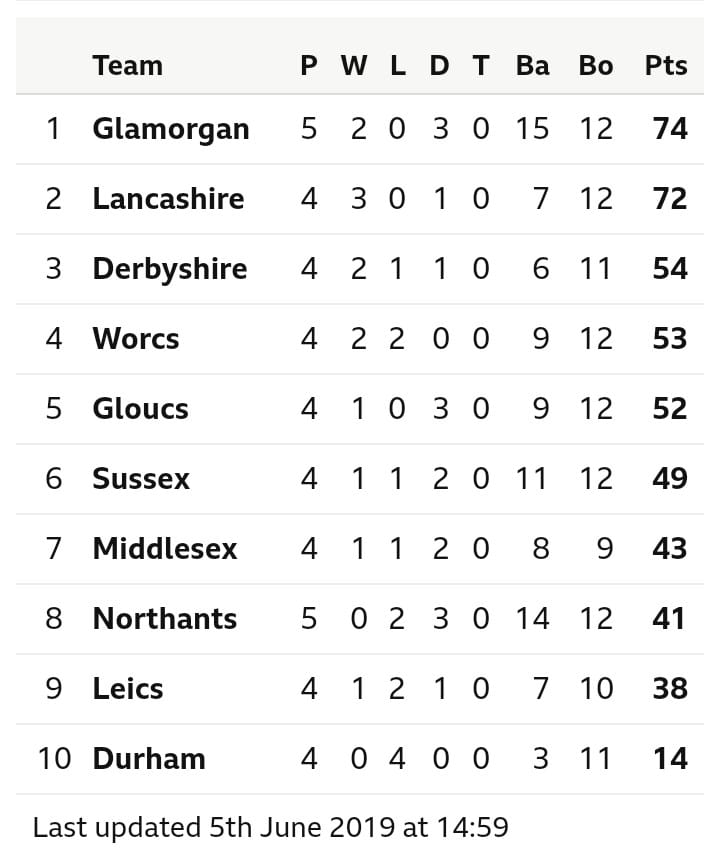
As a bit of light relief over the last few days I’ve been following (via the internet) the progress of Glamorgan’s match against Northamptonshire in Division 2 of the County Championship. The match started on Sunday and Northants, batting first, were bowled out for 209, with Marchant de Lange taking six wickets. In reply Glamorgan were struggling at 120-5 on Day 2 but managed a superb recovery, ending up scoring 547 thanks to a double-century from Billy Root. Most of yesterday was lost to rain, but this afternoon Glamorgan managed to bowl out Northants for 195, winning the match by an innings and 143.

Glamorgan are so far unbeaten and stand at the top of the Table:

This is almost certainly temporary as most of the other games in the current round started on Monday and won’t finish until tomorrow but I couldn’t resist posting the current standings, as the situation is so different from last year!

The Congress of Helsinki

Posted in Biographical, The Universe and Stuff with tags , , on June 5, 2019 by telescoper

After yesterday’s murky and rainy start, it’s lovely weather this morning in Helsinki as I get ready to leave my hotel for the conference venue. It took me a while yesterday to find the way in, but I succeeded in the end to find a promising opportunity through the rear entrance.

After close of play yesterday the conference participants adjourned to the City Hall (which is about a 30 minute walk from Finlandia Hall) for a reception hosted by the civic authorities which was nice.

There was time afterwards to have a drink in a bar overlooking the harbour too. Drinks are rather expensive here – as are most things, apparently – but Helsinki is definitely a very livable city, nice to walk around but also with very good public transport.

I’ve been here a couple of times before, though not recently. The last time I was here was just for a couple of days, on a Scandinavian funding panel, which was very hard work, so didn’t get the chance to see the City at all so it’s nice to be able to wander around a bit.

It’s light until very late and gets light again very early at this time of year in Helsinki, which gave me a bit of trouble sleeping the first night I was here but I slept well last night and managed not to wake up until 6am (local time).

Oh, and it was my birthday yesterday too.

Notes from Euclid 2019

Posted in Biographical, Maynooth, The Universe and Stuff with tags , , , , on June 4, 2019 by telescoper

I’ve just had my breakfast so I thought I’d do a quick post before the start of play on of the 2019 Euclid Consortium Meeting in Helsinki. Previous Euclid Consortium meetings were held in: Bologna (2011); Copenhagen (2012); Leiden (2013); Marseille (2014); Lausanne (2015); Lisbon (2016); London (2017); and Bonn (2018). I’ve only attended the last two: I was non-Euclidean before that.

Finlandia Hall

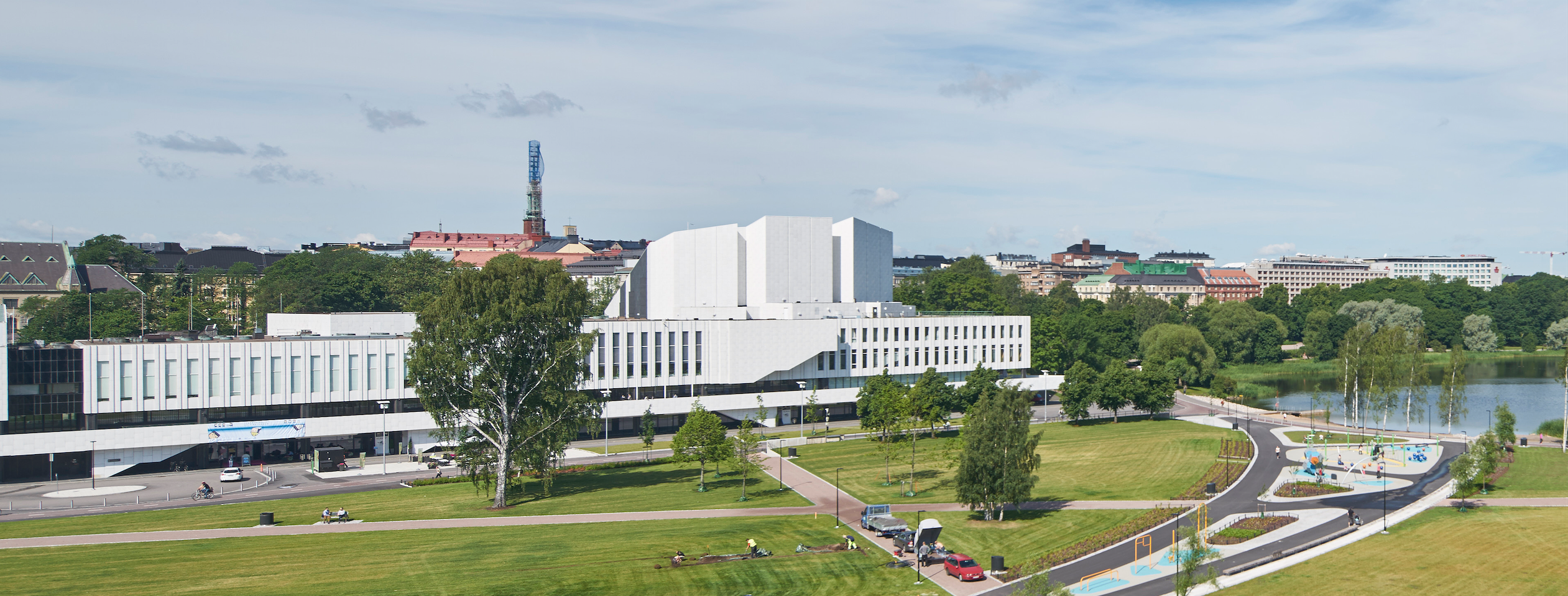
The venue is the Finlandia Hall, which looks splendid from the outside. I passed it during my stroll yesterday afternoon just so I could be sure where it is. It’s easy to find as it is very central and on the edge of a lake next to a major thoroughfare (Mannerheimintie). . I arrived yesterday to beautiful sunny weather but that has changed – it is pouring down as I write this, with thunder and lightning to boot. I don’t have to leave the Hotel for an hour or so, however, so perhaps it will have passed. There’s no sign of that just yet but I brought a brolly, and it’s only 15 minutes away from the Hotel on foot.

According to the web page there are 408 participants at the last count. I expect there’ll be quite a few people I know here but I haven’t met any yet. The Euclid Consortium has well over a thousand members, but obviously they’re not all here this week. I seem still to be the only representative of Ireland.

There’s a nice webpage showing all the institutions around the world who belong to the consortium behind the European Space Agency’s Euclid Mission. Here’s a screen grab that shows all the logos of all the institutions involved in this very large Consortium:

There are so many that it’s hard to see them all, but if you look very closely about half way down, among the Ms, you will see Maynooth University among them. Ireland is a member state of the European Space Agency, by the way.

Top tips for participants include not to tip:

Here is the latest timeline for the Euclid mission: launch around June 2022 followed by six years of operations.

If you want to follow on Twitter the relevant hashtag is #Euclid2019.

Hello Helsinki!

Posted in Biographical, Euclid with tags , , on June 3, 2019 by telescoper

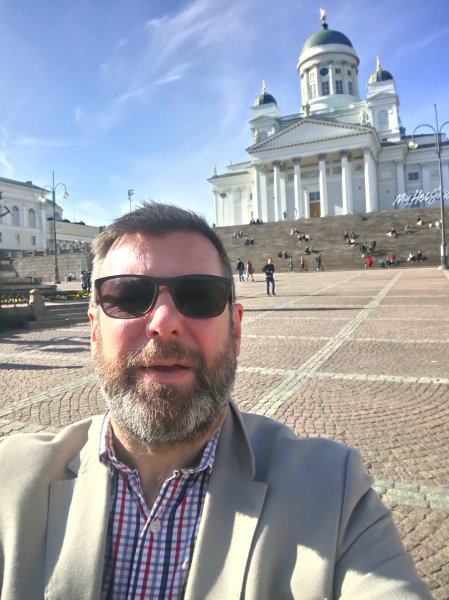
This picture will show you that I am not in Maynooth…

In fact I am in Helsinki. Here is a better picture of the splendid Cathedral behind me in the selfie.

The Cathedral is Lutheran by the way. I’m not sure Luther was into cathedrals, but there you go..

It’s about a three hour direct flight from Dublin to Helsinki via Finnair (and a two hour time difference) but all went according to plan. I also found my accommodation without difficulty: it seems comfortable enough.

I took a long walk around this afternoon because the weather is lovely and I wanted to stretch my legs after the flight. It’s a very pleasant city for a stroll, with lots of public spaces and plenty of places to stop for a coffee or something stronger.

All that done, it’s time for dinner!

The reason for being here, by the way, is the annual Euclid Consortium meeting but enough of that tomorrow..

Lights all askew in the Heavens – the 1919 Eclipse Expeditions (Updated)

Posted in History, Talks and Reviews, The Universe and Stuff with tags , , , , , on June 3, 2019 by telescoper

Here is a video of my talk at the Open Meeting of the Royal Astronomical Society on April 12 2019. Was it really so long ago?

You can find the slides here:

The English Higher Education Funding Mess

Posted in Biographical, Education, Politics with tags , , , , on June 2, 2019 by telescoper

One of the items that sneaked out in the news last week was the Augar report on the future of post-18 education and funding in England. A review led by a former equities broker was never likely to be friendly to the higher education sector, and so it seems to have turned out.

The headline recommendation that the level of tuition fee should be reduced from £9250 to £7500 seems to me rather silly: it’s enough of a reduction to cause serious financial problems to universities if the shortfall is not replaced by increased teaching grants  but not enough to make a qualitative difference to students. In fact, since the report also recommends reducing the threshold for repaying student loans, and increasing the term over which they will be repaid, many graduates will end up paying significantly more in the long run.

To be fair the Augar report does recommend:

Government should replace in full the lost fee income by increasing the teaching grant, leaving the average unit of funding unchanged at sector level in cash terms.

Unfortunately, I can easily see a Conservative government implementing the cut in tuition fees but not making up the difference with grants.

As I have blogged about before (many times e.g here) the current level of resource is insufficient to fund teaching STEM disciplines properly. This graphic is from a few years ago, but the situation has not changed significantly:

The annual cost per student in Arts and Humanities disciplines is typically around £6K whereas for STEM disciplines the figure is typically over £10K. The former are effectively subsidizing the latter in the current system. If the maximum fee chargeable is £7.5K then this subsidy will be impossible. Bear in mind also that a slice of the fee is used to fund bursaries and other schemes for widening participation, so only a fraction of that funding is available to be redistributed. It’s a system that is stacked against STEM disciplines already, and that will only get worse if the Augar proposals are implemented.

Another problem with the stance taken by the `independent panel’ is that it seems to regard the only useful courses to be those that lead to high earnings upon graduation. There is even a call to cut funding for course that do not produce `outputs’ that are paid high wages.  I find it profoundly depressing that the purpose of a university is reduced to such an empty utilitarian level. Is this what the education system is to become?

Increasing their future earning potential may indeed be why some people go to university, and good luck to them if it is, but others are driven by quite different goals. Anyone who wants to be a research scientist, for example, faces years of low salaries and insecure contracts until, if they’re lucky, they get a secure job with a decent wage. In this case and no doubt in countless others, students go to university because learning is and end in itself.

While I am critical about the Augar review’s narrow-minded view of higher education, I will give credit where it is due and point out that it does recommend the re-introduction of maintenance grants which, if implemented, would be a positive.

When I went to University (in 1982) I was the first in my family ever to go to university. I’m also, at least as far as my immediate family goes, the last. However, in those days there was no need for a First Generation Scholars scheme: there were no tuition fees and, because I don’t come from a wealthy background, I qualified for a full maintenance grant. Life (in Cambridge) as an undergraduate student on a grant was fairly comfortable. Times have changed a lot. Many more people go to university nowadays, but the price is that support for those who don’t have access to family funds is now spread very thinly. There are no full maintenance grants, and the fees are very high. Looking back, though, I don’t think it would have been the tuition fees that might have deterred me from going to university. After all, they don’t have to be paid back until after graduation, and when one’s income exceeds a certain level. What would have made a difference would have been the withdrawal of maintenance. Without the grant, I simply wouldn’t have been able to study without getting a job. Apart from the amount of work involved in doing my degree, the recession of the early 1980s meant that jobs were very hard to come by.

In summary, then, I think UK universities are right to be worried about, especially as it comes on top of the damage already being done by Brexit. But Brexit has also induced a paralysis in Westminster that means the legislation needed to enact the Augar recommendations is unlikely to be forthcoming any time soon. Although that means that cuts – and let’s face it, that’s what this review is about – are likely to be delayed, the uncertainty will make it difficult for universities to plan their finances.

To summarize the summary: it’s a mess and I’m glad I’m out of it. As I wrote a in 2018, after I’d decided to move to my current position in Ireland:

Oh, and there’s neither a Research Excellence Framework nor a Teaching Excellence Framework nor a Knowledge Exchange Framework nor punitive levels of student tuition fees nor any of the many other idiocies that have been inflicted on UK* universities in recent years. It will be a relief to be able to teach and do research in environment which, at least for the time being, regards these as things of value in themselves rather than as means of serving the empty cycle of production and consumption that defines the modern neoliberal state. Above all, it’s a good old-fashioned professorship. You know, teaching and research?

*To clarify, these idiocies are mainly of English origin, but the devolved systems of Scotland, Wales and Northern Ireland have had to deal with the consequences so they have been inflicted on the entire United Kingdom.

I just hope Ireland resists the temptation to destroy its own education system. Recent history does reveal a remarkable willingness to implement stupid ideas from across the Irish Sea but perhaps Brexit will put a stop to that.
 

Suddenly the End of Term

Posted in Biographical, Education, Maynooth with tags , , , on June 1, 2019 by telescoper

Yesterday I finished the last of my marking duties, and put away the exam scripts and other assessments. I had to rush to get them all done in time for this weekend because I will not be here for most of next week. That’s been quite difficult because of all the other things going on and has led to quite a few late nights!

The marks will of course need to be validated and uploaded to a database in advance of the meetings of the Examination Boards which take place the week after next in the presence of the External Examiner. It will be some time, therefore, before everything is finalised and the students get their marks. (In case you didn’t realise, that was a hint to any students reading this not to pester us for their marks…)

The last examinations took place this week and all of a sudden the campus is deserted. Most of the students at Maynooth University don’t actually live here so many of them depart as soon as their last examination is over. The effect is dramatic. There’s been a particularly noticeable change in the vicinity of the Library, which was crammed full of students during the examination period but yesterday morning was deserted. Our friendly feline celebrity will have a lot less company for the next few months but I’m sure he’ll still be well looked after..

Not everyone has disappeared for the summer, of course. The postgraduate will still be around, and we have quite a few students in Theoretical Physics staying for (paid) internships: I have two working with me and I’m looking forward to starting them off on their projects.

This is actually a Bank Holiday Weekend, so everyone will be off on Monday and the campus is closed, which makes  for a nice end-of-term break for some of us. Not all staff had exams early enough to finish in time like I did, however, and no doubt some will have to spend the weekend marking scripts. The June Bank Holiday (Lá Saoire i mí Mheitheamh) in Ireland is actually the equivalent of last week’s late May Bank Holiday in the UK, in that both have their origin in the old festival of Whitsuntide (or Pentecost) which falls on the 7th Sunday after Easter. Because the date of Easter moves around in the calendar so does Whit Sunday, but it is usually in late May or early June. Here in Ireland the Bank Holiday is always on the first Monday in June whereas on the other side of the Irish Sea it is on the last Monday in May.

Finally I noticed last night that the season of concerts from the National Concert Hall in Dublin is now over. The new season will start in September. I’ve been too busy this term to get to many of these but I’ll try to plan things a bit better for the new season.