I don’t know the answer to that question, but in my opinion this example from last week’s Private Eye comes pretty close. It made me laugh out loud anyway! 🙂

I don’t know the answer to that question, but in my opinion this example from last week’s Private Eye comes pretty close. It made me laugh out loud anyway! 🙂
It’s not known exactly how many people died on D-Day 6th June 1944 when the Normandy landings took place, but a fairly conservative estimate is about 9000 (including about 3000 French civilians).
In September last year, the beach at Arromanches (code-named Gold ) was the site of a remarkable art installation called The Fallen 9000 during which hundreds of volunteers stencilled images of 9000 fallen soldiers into the sand.
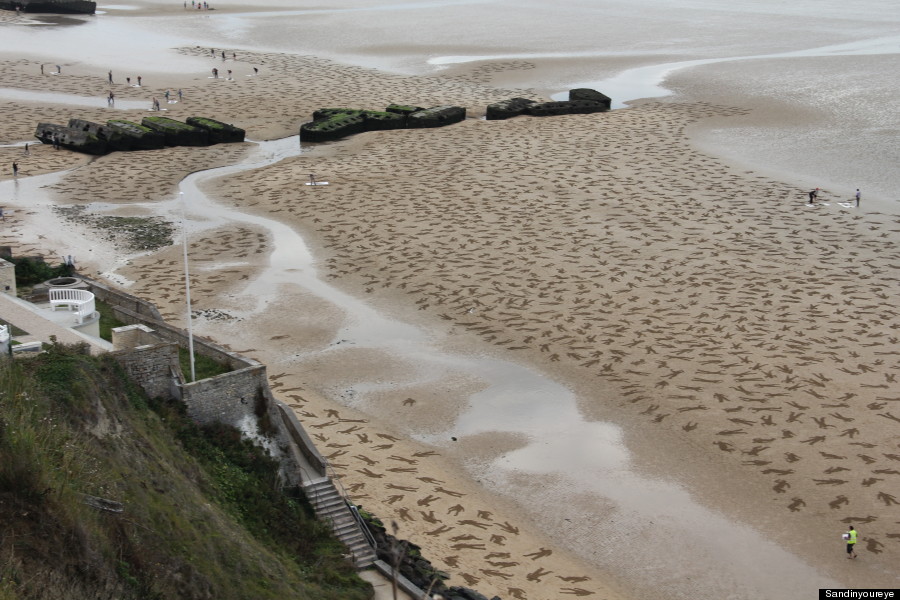
It’s a moving image, not least because the figures were soon to be washed away by the incoming tide. Let’s hope the courage and self-sacrifice of the soldiers who gave their lives that day are not forgotten too. Seventy years on, fascism is apparently once again on the rise in Europe. We should not forget where that road has led in the past.
Lest we forget.
Follow @telescoperToday’s tourist itinerary took me first to the Tokugawa Art Museum, which contains family treasures from the Owari Tokugawa family, one of the families from which the Shogun was chosen during the Edo period (which lasted from 1603 until 1867 and is sometimes called the Tokugawa period). The collection is magnificent, comprising arms and armour of the elite Samurai warriors as well as art, garments, furniture, and household objects of the period, all made to a standard befitting a Japanese noble family. The highlight for me was the wonderful display of maps and books illustrated with exquisite ink drawings. What struck me most is how stable was the general form of artistic expression in the period covered by the museum, in contrast with what you would find in a European collection over a similar timescale. Japan was very much a closed country during the Edo period and consequently did not experience foreign influences on its culture in the same way as Britain did in the 17th-19th centuries.
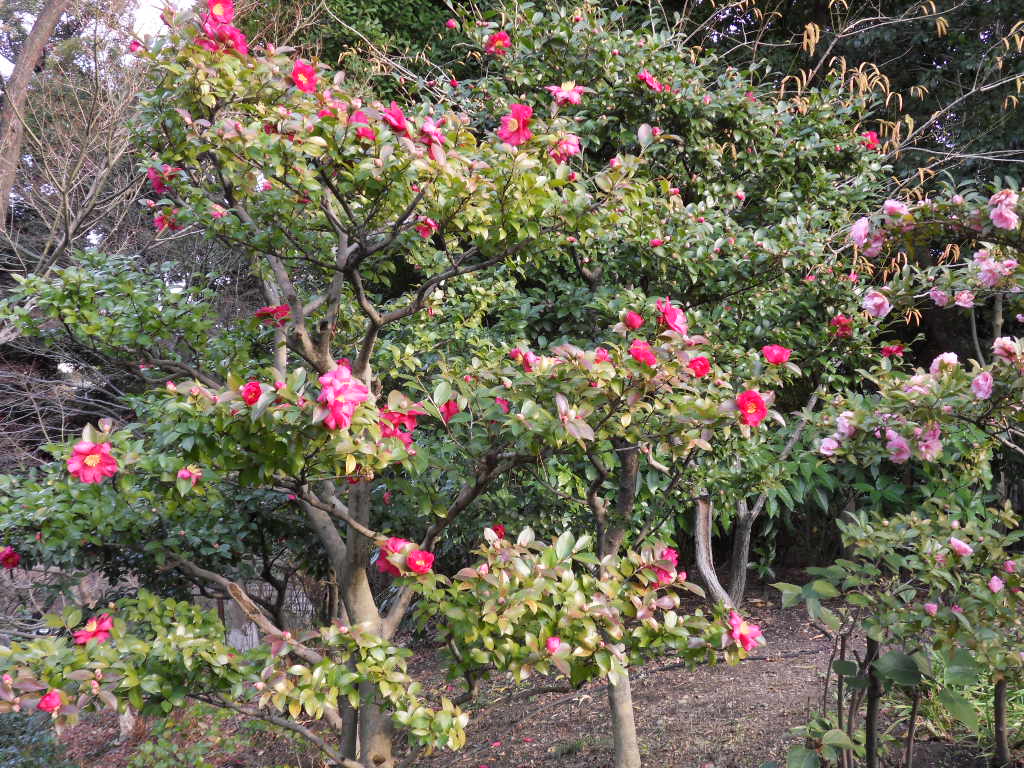
The Tokugawa Art Museum is adjacent to the Tokugawaen, a formal Japanese garden originally built in 1695. January is probably not the best time to visit this place – the numerous cherry trees must look beautiful when covered in blossom – but I was quite surprised to see a significant number of flowering plants even at this time of year.
I’m no botanical expert but these look like Camellias to me:

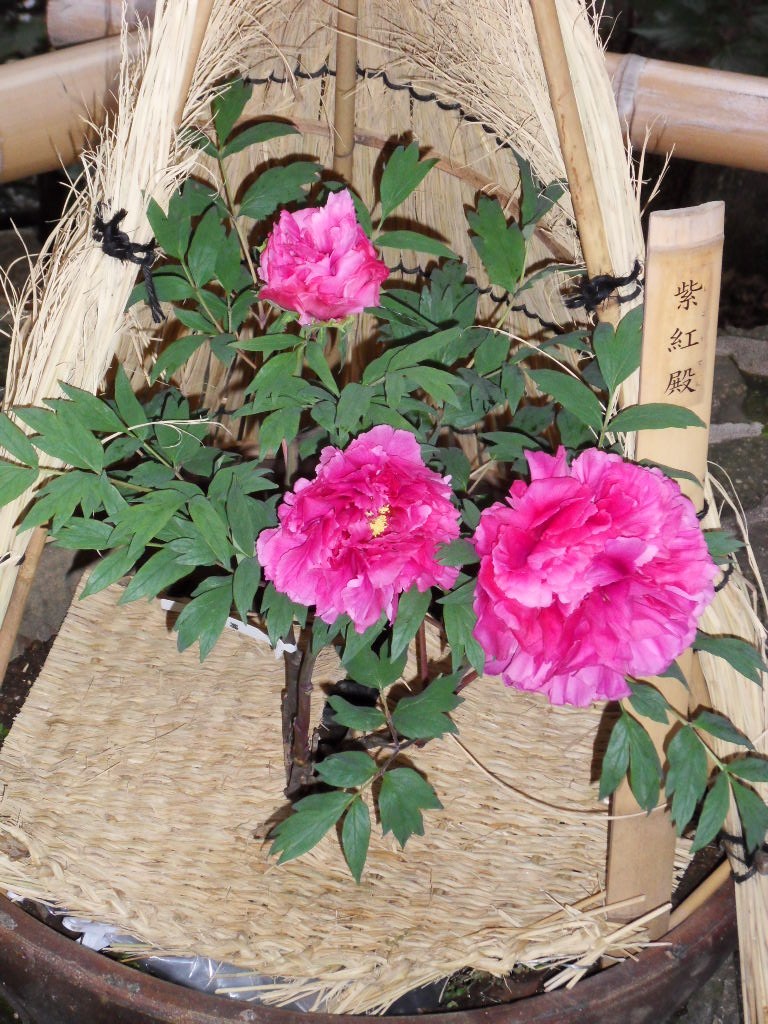
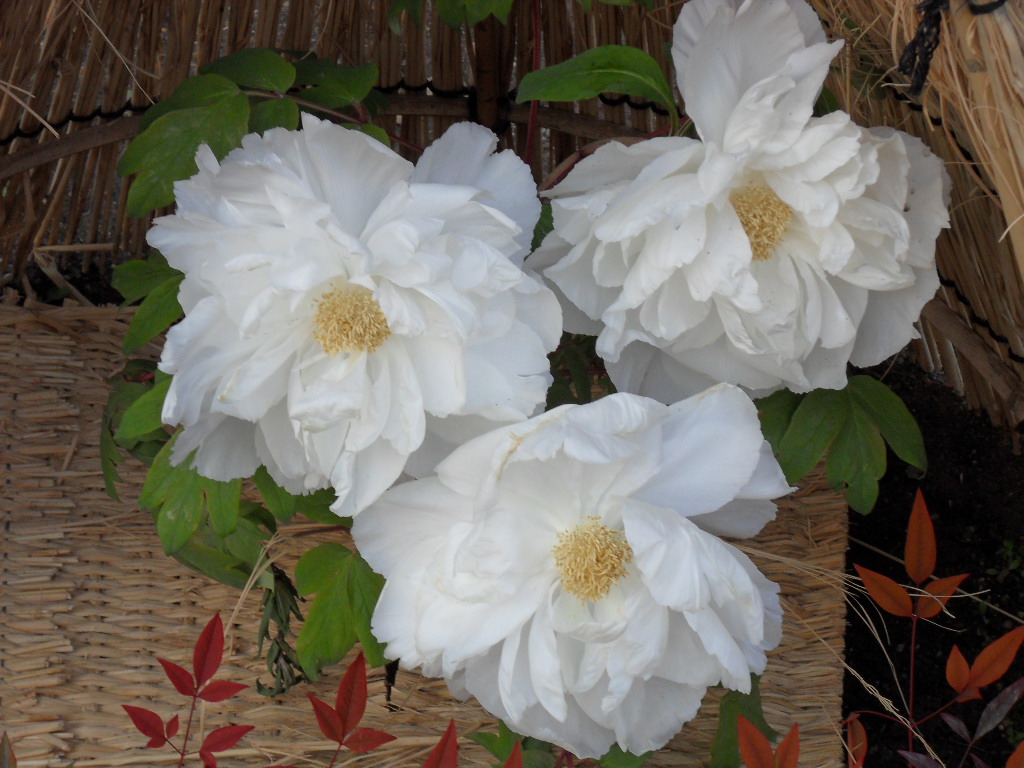
These are Peonies:
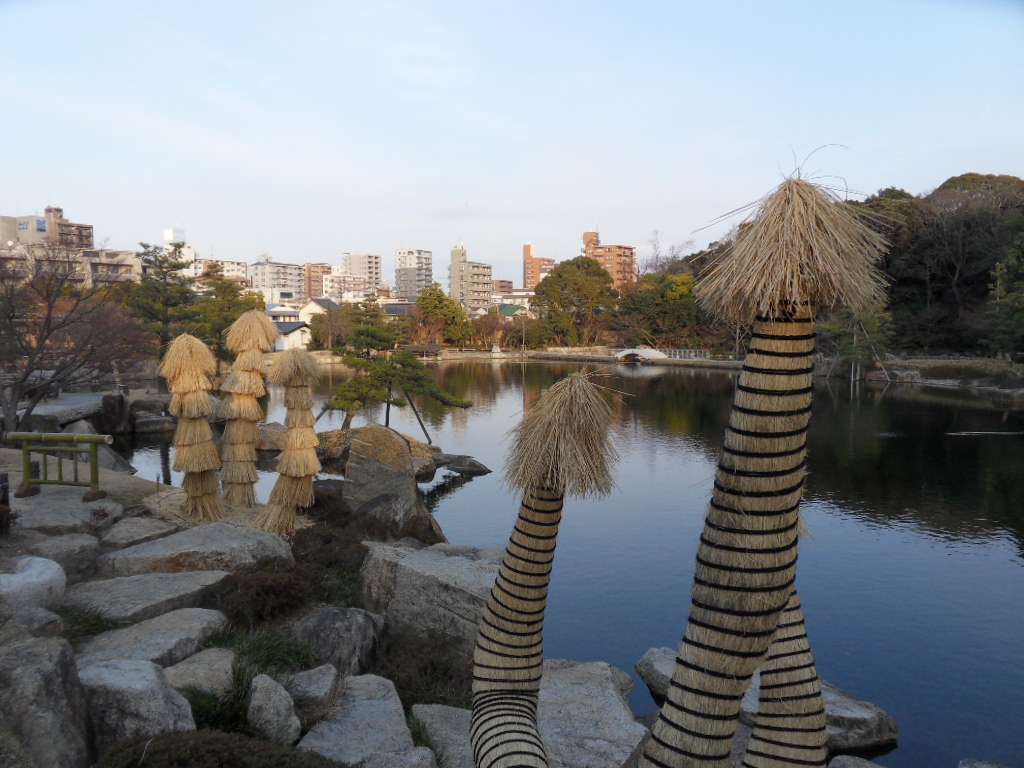
Some of the trees are still wrapped in their winter bamboo coats for protection from the frost:
The lake contains an impressive collection of multi-coloured carp

The Tokugawaen is worth a visit even in the off-season, but I really must find an excuse to come back in April or May when the cherry blossom will be out and, according to the literature handed out to visitors, thousands of Peonies will be in bloom all around the lake. That must look amazing!
Anyway, after that I travelled across town to visit the famous Atsuta Shrine, a holy place for the Shinto religion:

Light was fading and I was already feeling a bit tired, but I did the necessary ritual ablutions, and had a quick look around. Visitors are allowed to make a wish after throwing a coin in the appropriate place, then bowing and clapping twice. I wished for a beer, and lo and behold on the way home I found a bar in which my wish was granted!
Follow @telescoperDuring the late afternoon twilight of November 1st 1941, 72 years ago today, renowned American photographer and environmentalist Ansel Adams took this wonderful photograph of the moon over Hernandez, New Mexico. It’s such a celebrated image that it even has its own wikipedia page, but because it seems to fit the theme of this blog I couldn’t resist sharing it here:
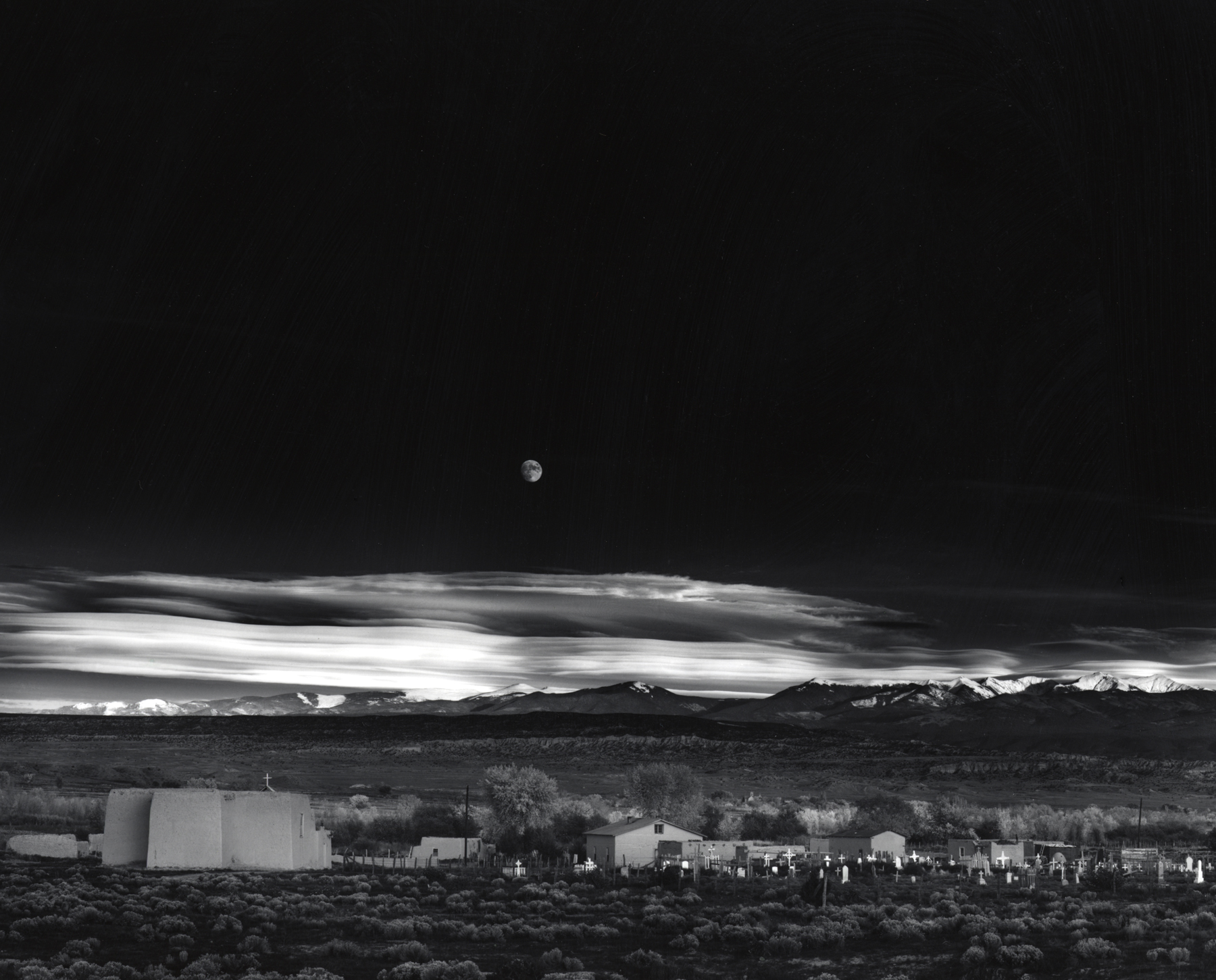
Click on the image for higher resolution
Follow @telescoperIt’s now ten years since Olafur Eliasson’s amazing instllation, Weather Project at Tate Modern. To celebrate this event people can share their responses to this unique experience online here or via the Grauniad website by contributing videos and photographs to a special archive.
Follow @telescoperI stumbled across this wonderful image (and associated description) yesterday and thought I’d share it. It’s a region of the Orion Nebula (which is located in the Midlands region of Orion’s “sword”, i.e. the long thing hanging down below his belt). It’s a turbulent region of dust and gas in which stars are forming. This image was taken in the far-infrared part of the spectrum by the Herschel Space Observatory, which is now defunct but much data remains to be analysed. Because the image was taken at wavelengths much longer than optical light, the colours are obviously “false”. I don’t work on star formation so I tend to see images like this just as beautiful things to be enjoyed for themselves rather than as a subject for scientific research. In fact, I have no difficulty at all in describing this picture as a work of art, slightly reminiscent of the cloudscapes and seascapes of J.M.W Turner in that it is, at the same time, both a representation of a natural phenomenon and an abstract creation that transcends it. You can click on the image to make it larger…

UPDATE: I see that someone else has thought of the parallel with Turner!
Follow @telescoper
 One of the interesting things going on in Durham during the week of this conference is an exhibition relating to the Lindisfarne Gospels. This extraordinary book was written around 715AD, just after the death of St Cuthbert. For those of you not familiar with Lindisfarne, or “Holy Island” as it is often called, it’s a small island off the Northumbrian coast, connected to the mainland by a causeway which is covered by the tide twice a day.
Although the Lindisfarne Gospels are about 1300 years old, the colours remain extremely vivid. It’s a remarkable thing to look at the pages on view in the exhibition to see the marks made by a human hand all that time ago; it’s difficult not to wonder about the life of the person who devoted what must have been a huge amount of time compiling this exquisite work.
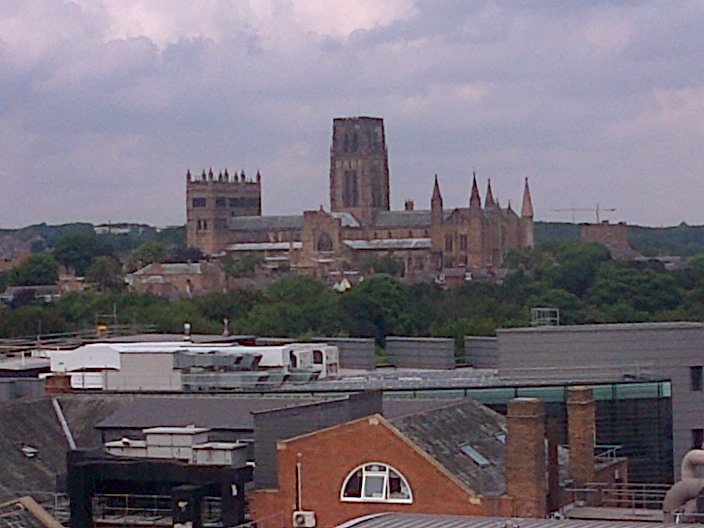
Incidentally, St Cuthbert’s remains now lie in a tomb inside Durham’s magnificent cathedral, of which we have a fine view from the balcony of the Calman Learning Centre during the coffee breaks:
Shamelessly ripped off from the University of Sussex Staff News comes an interest snippet. Nearly 50 years after it first came out, the revised Sussex edition of a renowned series of architectural guides is about to be published – with our own Falmer House on the front cover.
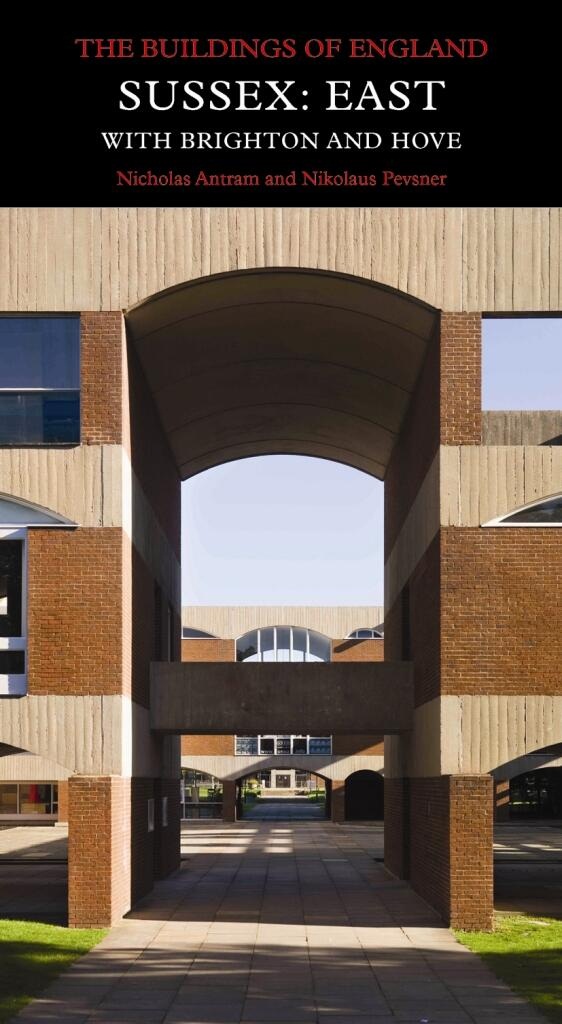
The news item goes on
The Sussex volume of Sir Nikolaus Pevsner’s comprehensive and authoritative 46-volume series was first published in 1965. It includes seven pages on the “uncompromising” 1960s Sussex architecture by Sir Basil Spence – the subject of an exhibition on campus in 2012.
“The campus has worn well,” writes Antram, who is sensitive to the original, listed Spence buildings and those of the later, evolving campus.
“There is a carefully controlled relationship between landscape and buildings, sometimes formal, sometimes informal, the established park and Downland setting omnipresent …
“The buildings are remarkably homogeneous, their leitmotifs being heavy, chunky slabs of in situ cast concrete vaults, often used as bands, contrasted against the red brick walls …
“Roman indeed seems the epic monumentality of the Sussex buildings with their rhythmic arches and grand exterior staircases, even if that formality is softened by the materials and the asymmetrical layout.”
The campus tour of individual buildings begins with Falmer House, the first 1960s building in the country to be given Grade I listed status by English Heritage.
Pevensey 1 is described as “high drama”, the Chichester Lecture Theatre as an “awesomely plain brick drum” and the Library as a “rather brooding presence”.
Swanborough, meanwhile, is “unassuming”, and East Slope consists of 13 “troglodytic blocks stepped up the hillside”.
In my experience, opinions are generally rather divided about the architectural quality of the buildings on the University of Sussex campus. Mine are too, actually. I think the overall plan is wonderful with its accurately aligned central axis visible in the jacket photograph. On the other hand, some of the buildings – especially the John Maynard Smith Building (when I was a student here it was called BIOLS) is not very good at all and may well be demolished soon to make way for new Science Buildings. I agree that East Slope is dire. The building I am in – Pevensey (formerly MAPS) -is actually rather nice, and most staff seem to like it here. My favourite building on the campus, however, is the Library; largely because Sussex still has a “library” as opposed to a “Learning Resources Unit” or some such nonsense. In any case I don’t find it at all “brooding” so I’m mystified by that comment.
Some have called it brutalist but I think the relationship between the campus buildings and the surrounding countryside has been managed very sensitively. It’s purely a matter of taste, of course, and no doubt some locals will want to express differing opinions through the comment box!
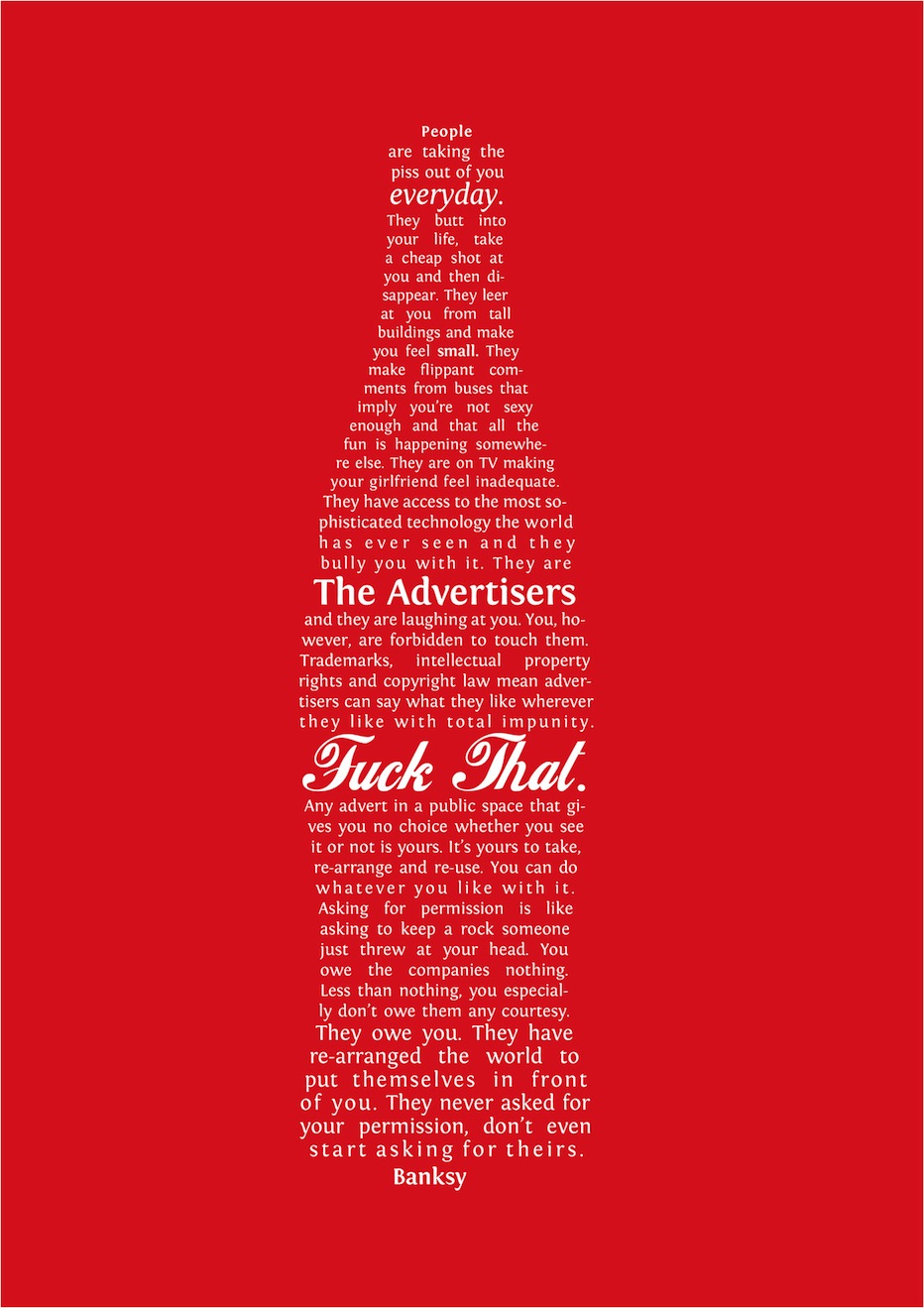
Follow @telescoperI came across this here piece by Banksy and couldn’t resist sharing it, especially in the light of the Royal Institution’s infamous trademarking..
The reason I was out of the office yesterday was that I was in Cambridge, doing a PhD oral in the Cavendish Laboratory so the first thing to say is congratulations Dr Johnston! It was one of those viva voce examinations that turned out to be less of an examination than an interesting chat about physics. In fact the internal examiner, Prof. Steve Gull, seemed to spend more time asking me questions rather than the candidate!
Afterwards I met up with Anthony Lasenby, the candidate’s supervisor. Not surprisingly the main topic of our brief discussion was today’s impending announcement of results from Planck. Anthony is one of the folks who have been involved with Planck for about twenty years, since it began as a twinkle in the eye of COBRAS/SAMBA. I was looking forward to getting in bright and early this morning to watch the live streaming of the Planck press conference from Paris.
Unfortunately however, I could feel a bit of a lurgy coming on as I travelled to Cambridge yesterday. It got decidedly worse on the way home – it must have been the Cambridge air – and I even ended up passing out on the train from Victoria to Brighton. Fortunately, Brighton was the terminus so someone woke me up when we got there and I got home, coughing and spluttering. I suspect many cosmologists didn’t sleep well last night because of excitement about the Planck results, but in my case it was something else that kept me awake. Anyway, I didn’t make it in this morning so had to follow the announcements via Twitter. Fortunately there’s a lot of press coverage too; see the ESA site and a nice piece by the BBC’s redoubtable Jonathan Amos.
Anyway, without further ado, here’s Planck’s map of the cosmic microwave background:
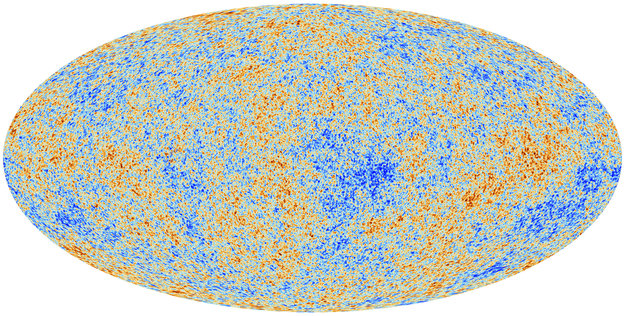
It’s rather beautiful, in a pointillist kind of way, I think…
It will take me a while in my weakened state to complete a detailed study of the results – and I’m sure to return to them many times in the future, but I will make a couple of points now.
The first is that the papers and data products are all immediately available online. The papers will all appear on the arXiv. Open Access sceptics please take note!
The second is that the most interesting result (as far as I’m concerned) is that at least some of the cosmic anomalies I’ve blogged about in the past, such as the Axle of Elvis Axis of Evil and the famous colder-than-it-should-be cold spot, are still present in the Planck data:

The other results excite me less because, at a quick reading, they all seem to be consistent with the standard cosmological model. Of course, the north-south asymmetry is a small effect on could turn out to be a foreground (e.g. zodiacal emission) or an artefact of the scanning strategy. But if it isn’t a systematic it could be very important. I suspect there’ll be a rush of papers about this before long!
I’m sure to p0st much more about the Planck results in due course, but I think I’ll leave it there for now. Please feel free to post comments and reactions through the box below.
Follow @telescoper
 In the Dark