Archive for the Art Category

Ireland’s First Olympic Medal

Posted in Art with tags , , , on July 26, 2024 by telescoper

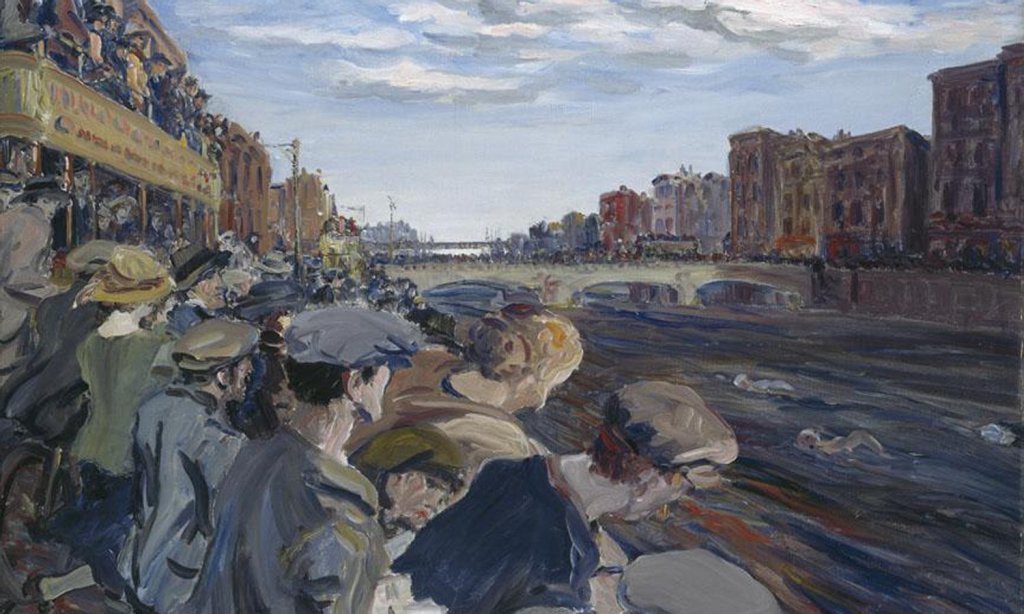
Ahead of the opening ceremony of the 2024 Paris Olympic Games, I thought I’d post a reminder of Ireland’s first ever Olympic medal. A silver medal was awarded to Ireland at the 1924 Olympic Games for this painting by Jack Butler Yeats, brother of the poet William Butler Yeats:

The Liffey Swim, by Jack B. Yeats (1923, 61cm x 91cm, oil on canvas)

Ireland only gained independence in 1922 so 1924 was the first Olympics at which Ireland competed as a separate nation. It may surprise you to learn that art competitions were a part of the Olympic Games from 1912 until 1948, as were competitions in music and literature. The 1924 Gold Medal for painting was won by an artist from Luxembourg called Jean Jacoby who specialized in sporting themes.

Although it was a style Yeats only started to experiment with around 1920, The Liffey Swim (which you can see in the National Gallery of Ireland) is clearly an Expressionist work – the unusual colour palette and texture of the paint are characteristics of that movement – but it also serves as an interesting bit of social history. The Liffey Swim is a regular event in Dublin (except during the Covid-19 pandemic) but only began in 1920 so it was fairly new when Yeats painted it. He captures the excited atmosphere surrounding the event by placing the viewer in the middle of a huge crowd struggling to get a good view, with the swimmers only shown in cursory detail. You see far more of the spectators than you do of the race!

Mercury Fountain, Miro Foundation

Posted in Art with tags , on July 2, 2024 by telescoper

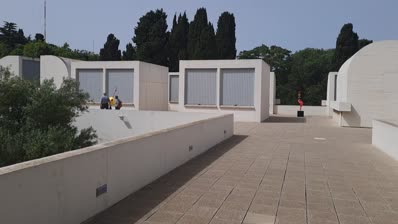
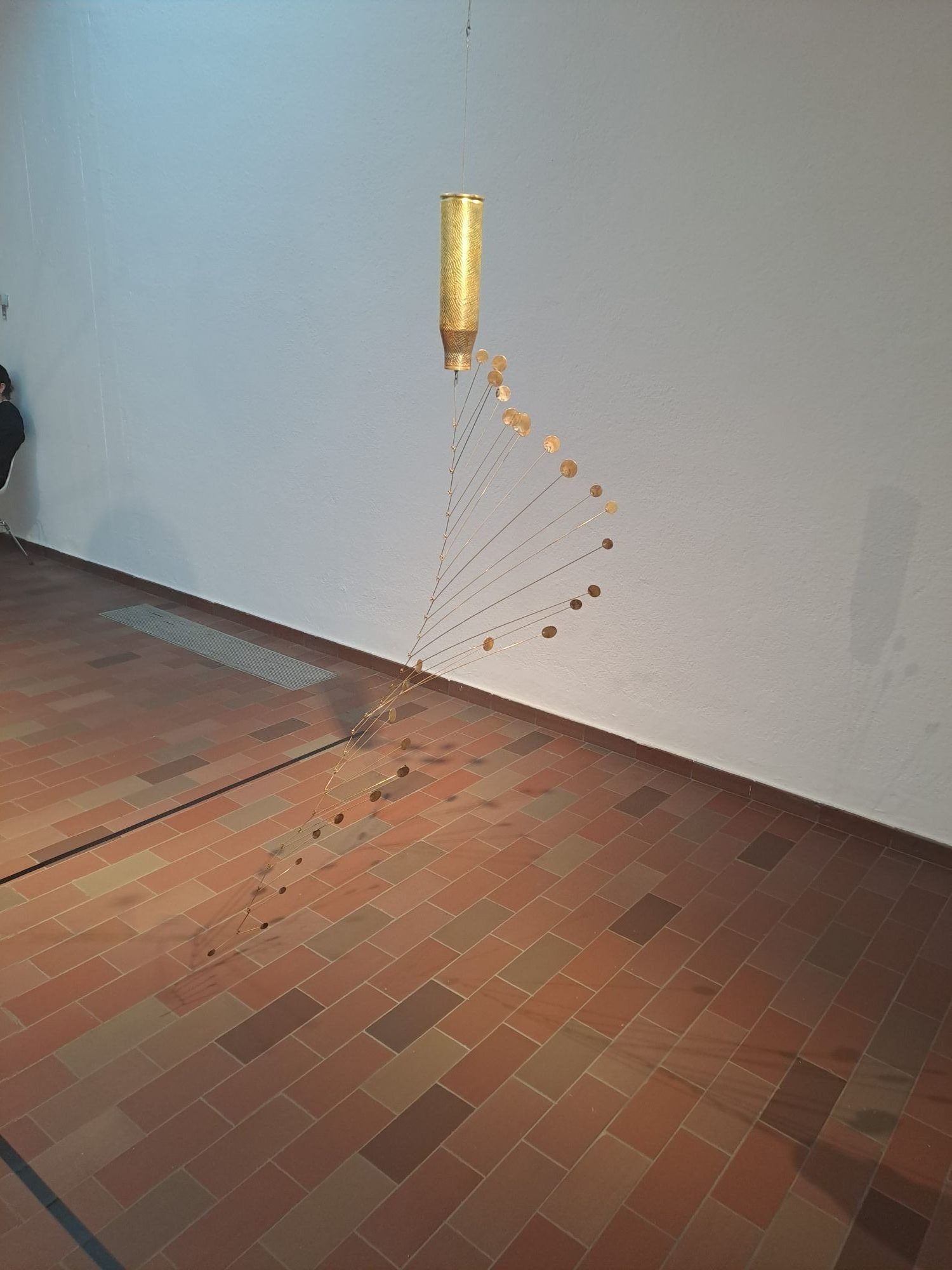
I thought I’d share a couple of little clips I took on my visit to the Fundació Joan Miró last week, one is a few of and from the rooftop, which is dotted with various sculptures, and the other is a fascinating mercury fountain created by Alexander Calder. And don’t worry, it’s enclosed in a glass case!

Fundació Joan Miró 

Posted in Art, Barcelona with tags , , on June 28, 2024 by telescoper

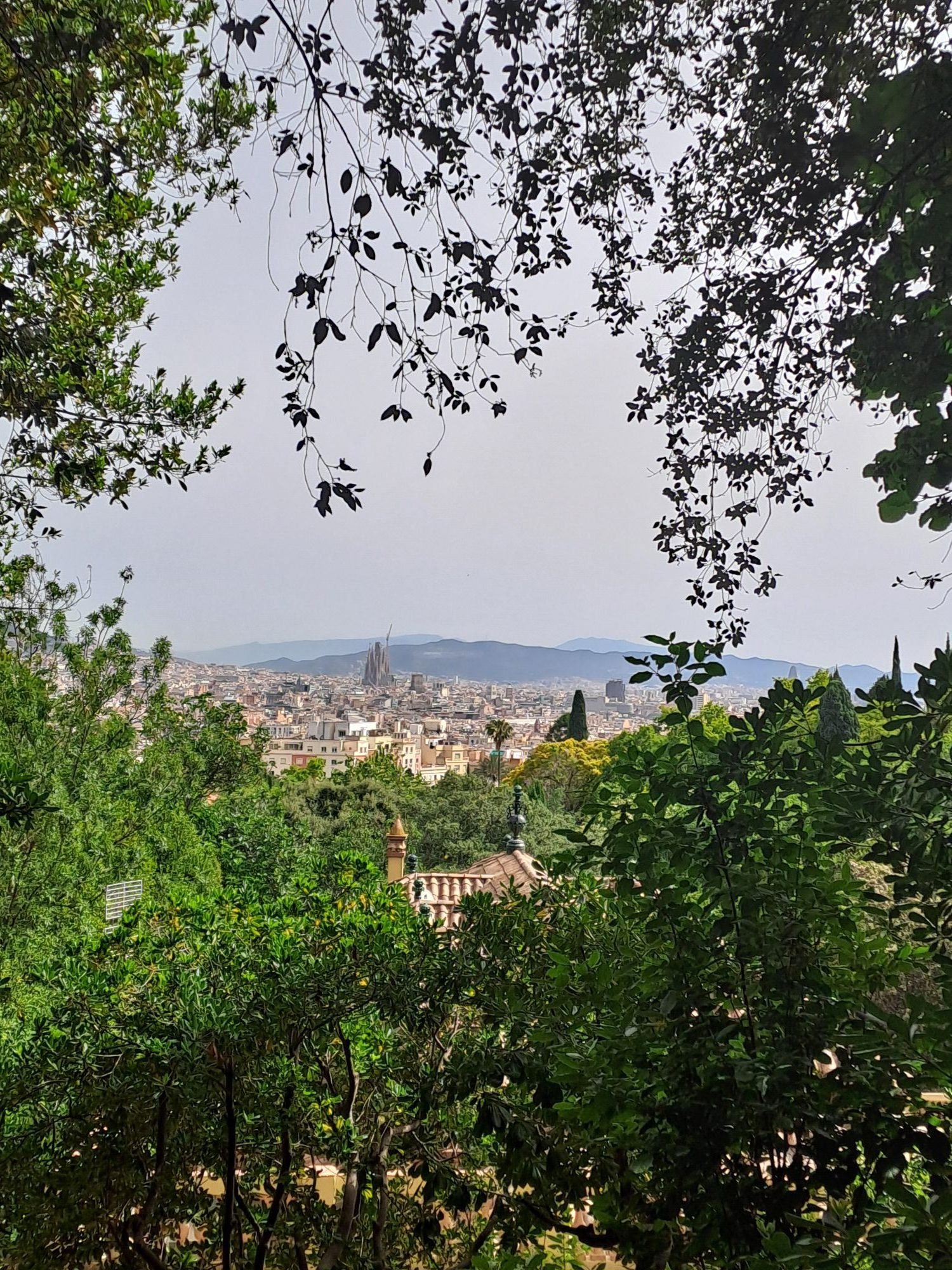
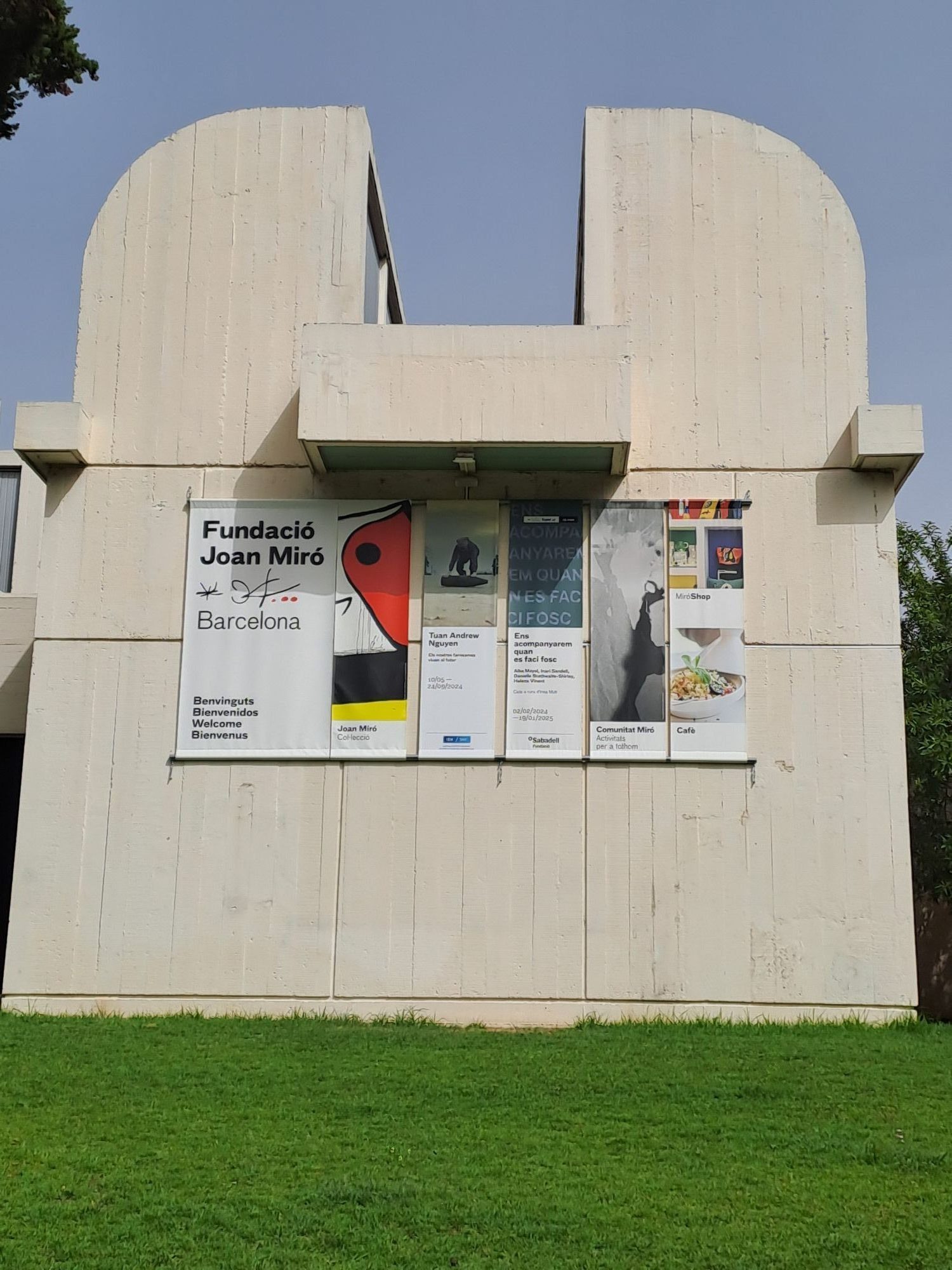
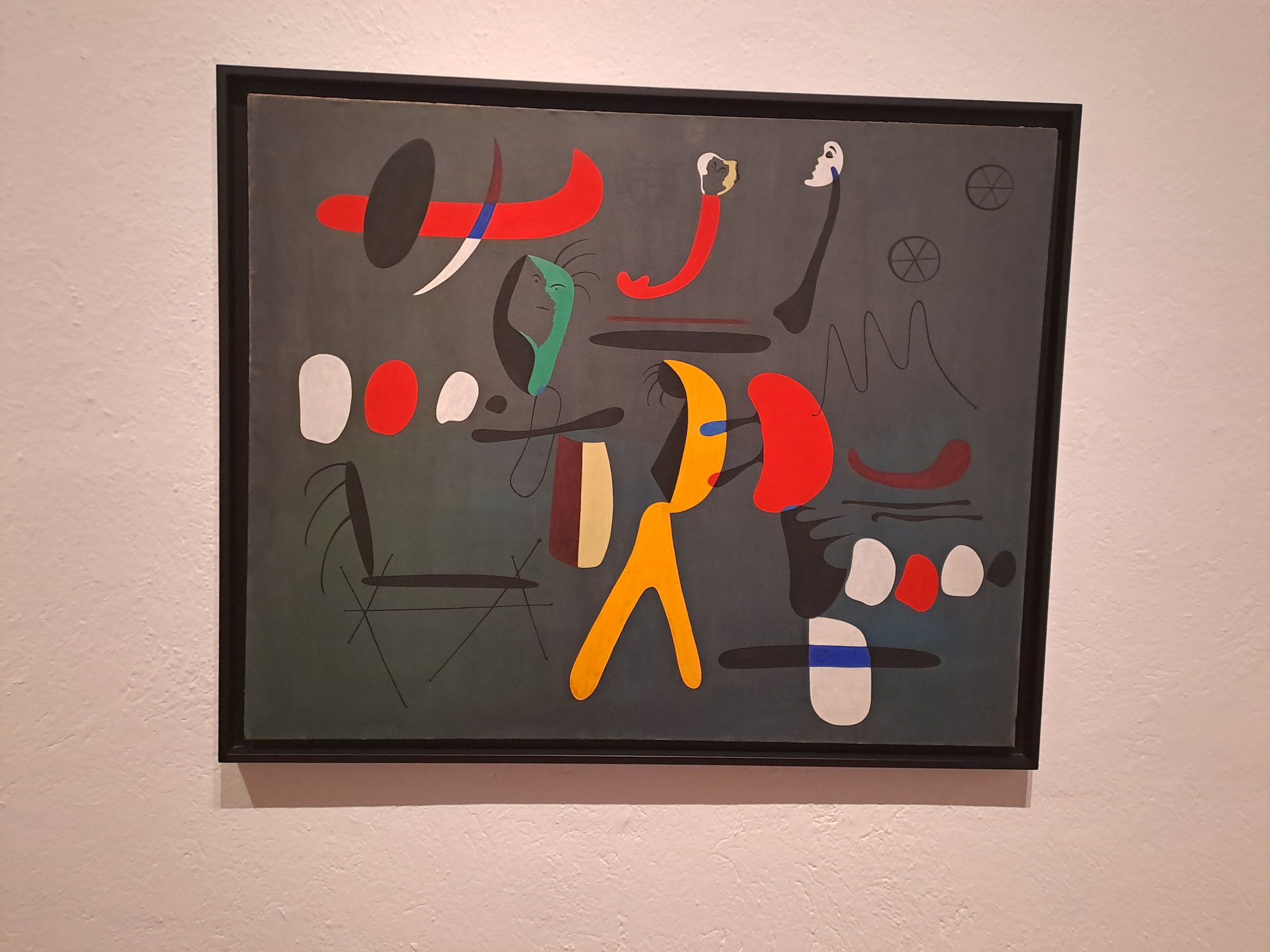
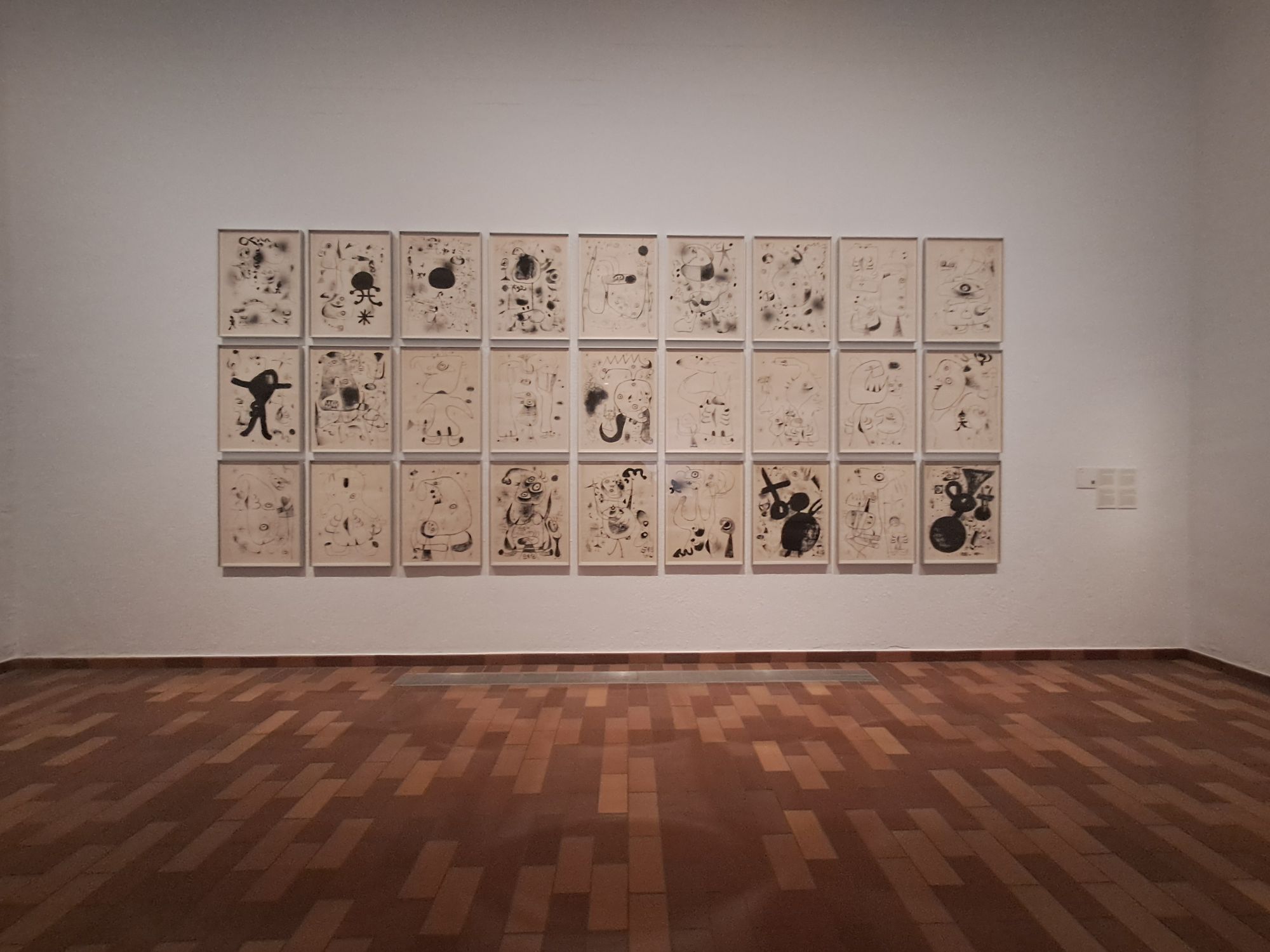
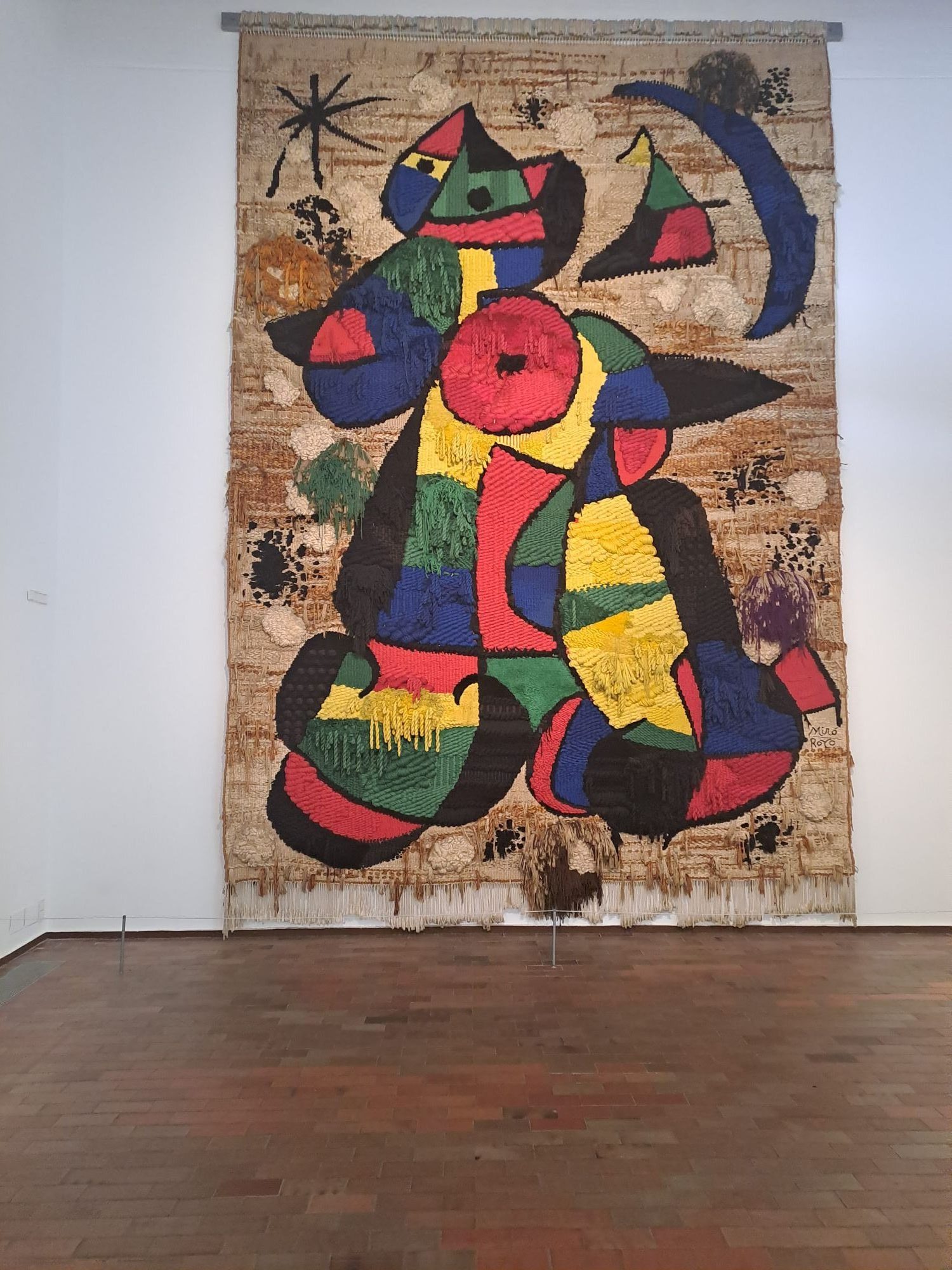
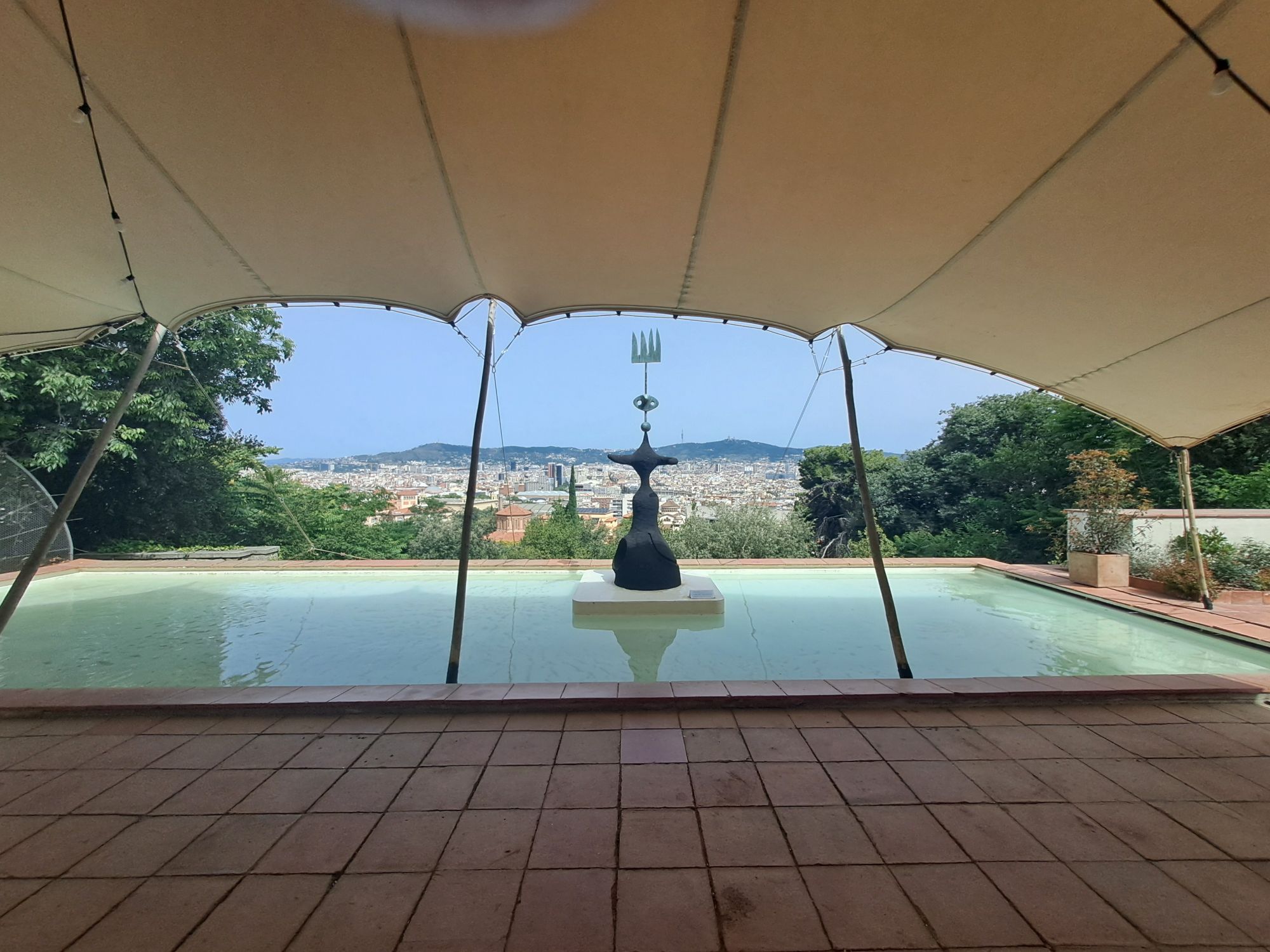
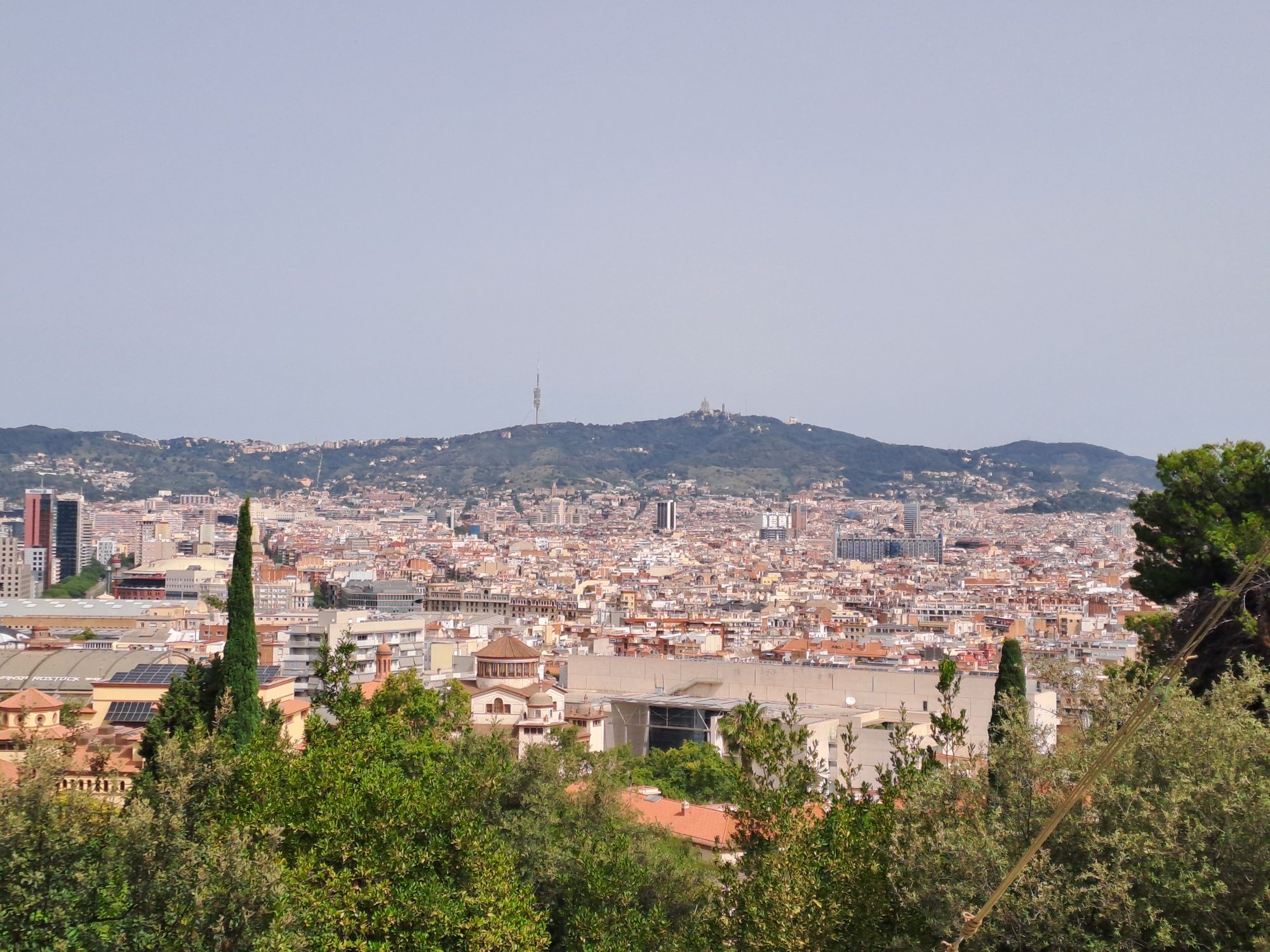
My time in Barcelona is rapidly drawing to a close so I thought I’d spend the morning visiting the Fundació Joan Miró, which is situated in the Parc de Montjuïc with excellent views of the City. Quite apart from the strange and wonderful collection of things inside, it’s just a beautiful space to wander around; there’s a sense of light and space which is very refreshing. It took no longer than 30 minutes to reach it from my apartment, via the Metro L3 and the funicular railway from Parallel which takes you within 5 minutes’ walk of the building.

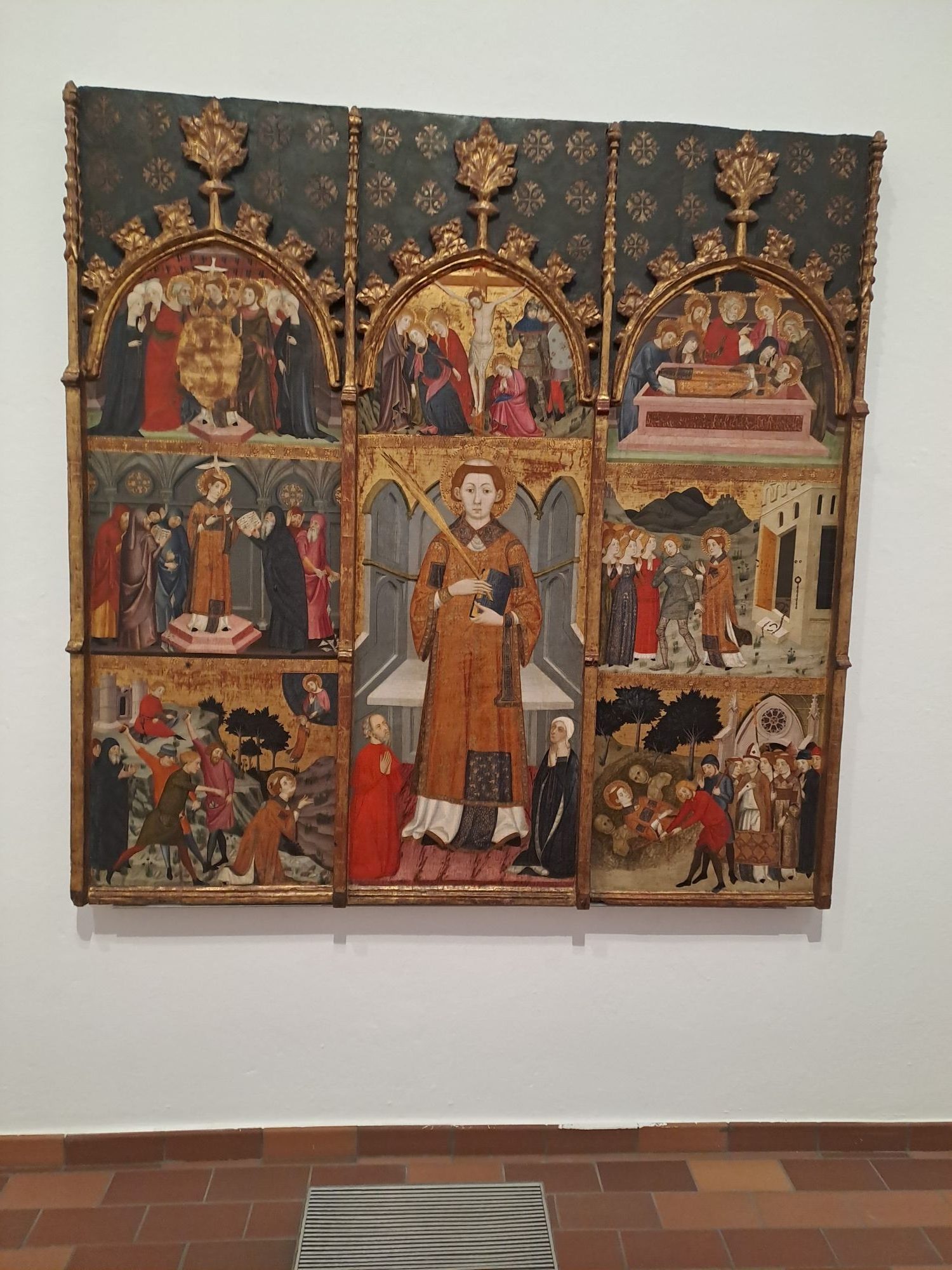
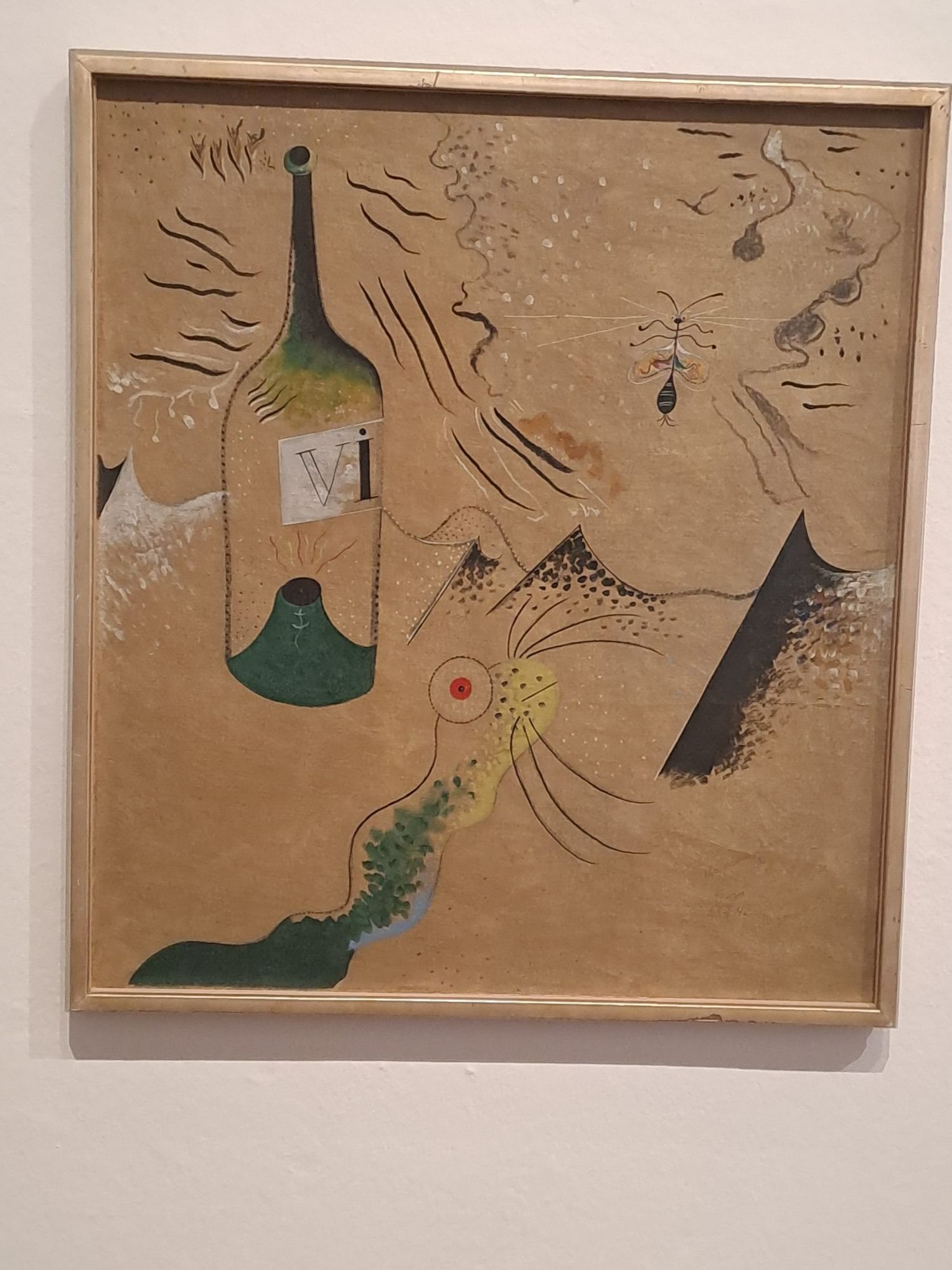
As well as the permanent collection of works by Joan Miró, there are pieces that influenced his development as an artist, such as the 14th Century altarpiece shown above: in his early years, Miró experimented with the very flat perspective often deployed in mediaeval art. The exhibition includes a large range of materials, including sailcloth and wool as well as the more usual oil and canvas; there’s also a mercury fountain. There is also a temporary exhibition by Vietnamese sculptor Tuan Andrew Nguyen whose creations include dynamic shapes evoking explosions made from fragments of unexploded bombs found in his homeland in the aftermath of the Vietnam war.

The Scream with Paper Clips

Posted in Art with tags , , on June 14, 2024 by telescoper

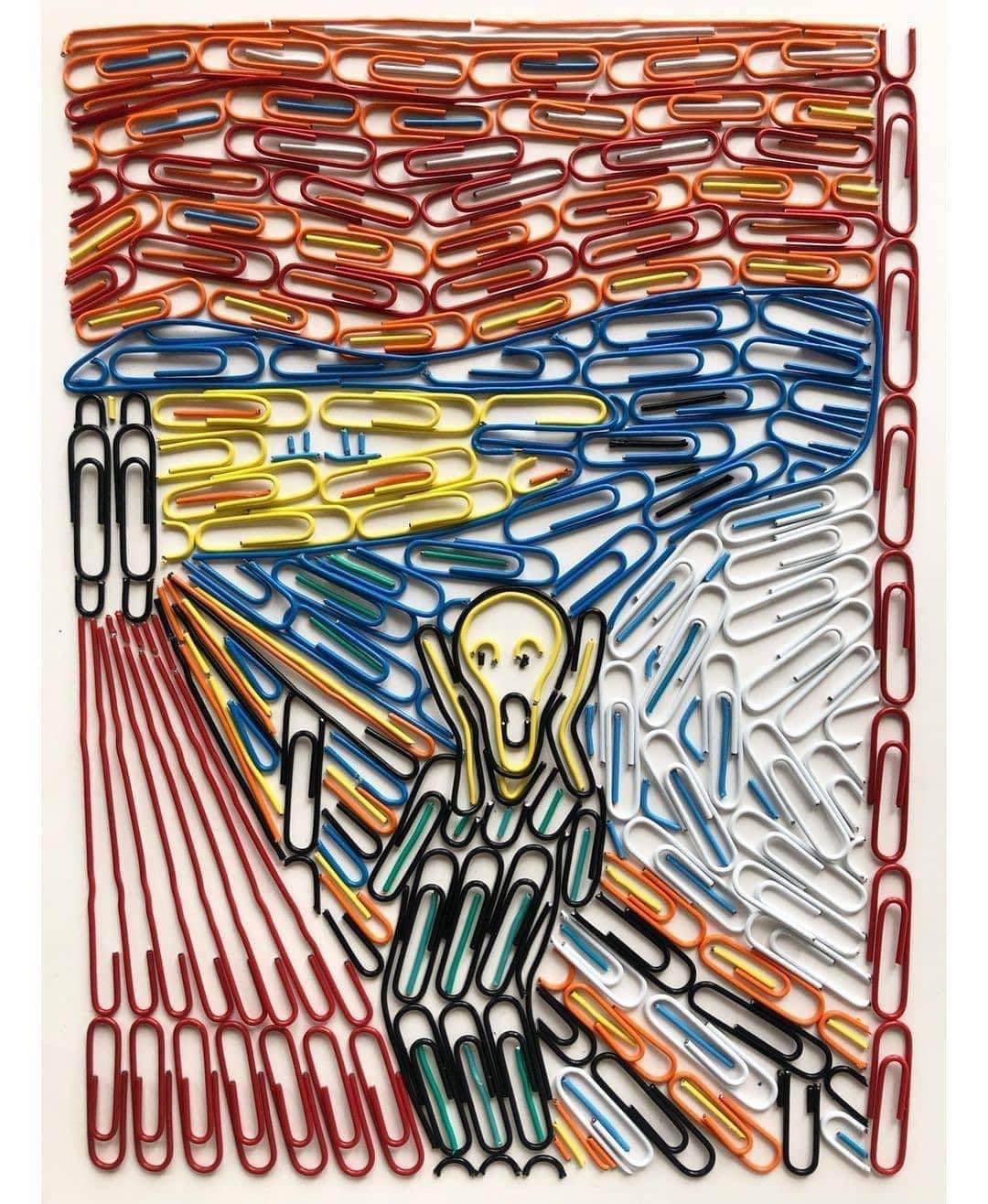
I was not inconsiderably amused by the above homage to The Scream by Edvard Munch which I see as a powerful artistic response to pointless corporate bureaucracy. It was created by Adam Hillman, an artist who specializes in making interesting designs and collages from everyday objects. You can read more about, and see more examples of, his work here.

Red Wall Destiny – Wassily Kandinsky

Posted in Art with tags , on May 7, 2024 by telescoper
Red Wall Destiny

by Wassily Kandinsky (1909; oil on canvas, 83 x 116 cm; Astrakhan, Dogadin State Art Gallery)

Carrowmore, County Sligo

Posted in Architecture, History with tags , , , , , on May 1, 2024 by telescoper

Today is 1st May, so it’s the Labour Day Holiday in Barcelona. Colleagues in Ireland will have to wait until Monday 6th May for their equivalent holiday. The First of May, Beltane (Bealtaine in Irish), is a festival of pagan origin that roughly marks the mid-point between the Spring Equinox and the Summer Solstice. It’s one of the so-called Cross-Quarter Days that lie halfway between the equinoxes and solstices.

In view of the ancient origins of this holiday I thought I’d share some pictures of the amazing megalithic burial grounds at Carrowmore which is about 4km outside Sligo (where I have been on a secret mission). Carrowmore is the largest of the four megalithic cemeteries in Ireland in terms of the number of tombs, although the tombs are smaller in size and less complicated than the larger structures found at Brú na Bóinne. The structures at are also significantly older; there are signs of human habitation on the site going back at least 6000 years. The English name derives from the Irish An Cheathrú Mhór, which means ‘the great quarter’. Photographs don’t do justice to the extraordinary beauty of the landscape around the site but here is a panorama which gives some impression.

A visitor can easily understand why this was felt to be an appropriate last resting place for the Great and the Good. The surrounding topography is very interesting, as you can see from the first picture (of a model in the Visitor’s Centre); it’s on a peninsula between Sligo Harbour to the North and Ballysadare Bay to the South, and is surrounded on three sides by mountains. In particular, the site is overlooked from the west by Knocknarea, on top of which lies a large cairn, Miosgán Meadhbha, reputed to be the burial-place of the legendary Queen Maeve (Méabh in modern Irish). I was surprised to learn that this has never been excavated, so nobody really knows who or what is inside though it probably contains a passage tomb of similar form to those on the Carrowmore site. The cairn at the centre of Carrowmore, called Listoghil, the entrance to which you can see in one of the pictures, is a reconstruction.

Sadly, many other tombs were destroyed in the 19th Century, with stones being robbed to make walls when the land was enclosed, and large-scale quarrying for gravel in the area. Only some of the tombs are on publicly-owned land, but others are visible in nearby fields and indeed all around the area. There is even a stone circle in Sligo itself, on a housing estate called Abbeyquarter. Who knows what else is lurking under the unexcavated ground?

This forthcoming Bank Holiday weekend there is the Queen Maeve Festival in Sligo, but I will be in Barcelona.

The Escape Ladder – Joan Miró

Posted in Art with tags , , , on April 10, 2024 by telescoper
The Escape Ladder

by Joan Miró (1940, gouache, watercolor, and ink on paper, 38cm × 46 cm, The Museum of Modern Art, New York City )

Thomas Cromwell and his Prayer-Book

Posted in Art, History with tags , , , , , , on April 1, 2024 by telescoper
(1532-1533, Oil on Panel, 78.1 cm × 64.1 cm) by Hans Holbein the Younger – The Frick Collection, Public Domain, https://commons.wikimedia.org/w/index.php?curid=207764

The famous portrait of Thomas Cromwell by Hans Holbein the Younger shown above is in fact a copy; the original is lost. There is another copy in the National Portrait Gallery in London, but it’s not as good. The original was painted around 1533, during the period covered by the novel Wolf Hall (which I reviewed yesterday) and is mentioned in the book. Holbein is known for having sometimes painted excessively flattering portraits – most notably of Anne of Cleves – but he doesn’t seem to have done that here. Cromwell is portrayed as dour, stern-faced and more than a little scary. He probably wanted people to fear him, so wouldn’t have minded this.

As well as the nature of the likeness, the composition is interesting. The subject seems to be squashed into the frame, and hemmed in by the table that juts out towards the viewer. He is also looking out towards the viewer’s left, though not simply staring into space; his eyes are definitely focussed on something. I’m not sure what all this is intended to convey, except that the table carries an ornate prayer-book (the Book of Hours) as if to say “look, here’s a symbol of how devout this man is”.

Interesting, just last year scholars published research that argues that the copy of the Hardouyn Hours which can be found in the Library at Trinity College, Cambridge, is precisely the book depicted on the table. If so, it’s a rare and perhaps unique example of an artefact seen in a Tudor painting that survives to this day.

A Casa a Barcelona

Posted in Architecture, Barcelona, Biographical with tags , , on March 23, 2024 by telescoper

It’s Saturday morning, and this week has been very busy and stressful, mostly for reasons that I can’t blog about, but it helped yesterday to come back to my very pleasant top-floor apartment on the Rambla de Catalunya to have a glass or several of wine on the terrace and enjoy the lovely weather. It reached 22°C yesterday afternoon, and my flat gets the sun most of the day.

I chose the angle for the second pic carefully, as a lady on the side of the street had obviously done her laundry recently and hung the smalls out to dry. I thought it would be indelicate to photograph them.

When the apartment was refurbished recently they took down the ceiling to reveal some interesting brickwork with the distinctive red clay that features in many buildings; the bricks are often covered with decorative ceramic tiles in a style called Bóveda Catalana in Spanish (Volta Catalana in Catalan), but along with the bare brickwork on the wall, this is a much plainer look.

You can see the mortar which attached the false ceiling removed during the refurbishment.

Anyway, if you want to know roughly where I am, it is just one block away from the Casa Batlló. I took the picture on the left last September but the crowds outside queuing to get in are apparently a perennial feature as you can see from the picture on the right I took today.

Anyway, I’m determined to relax today so will now go for a stroll, and do some shopping in preparation for cooking dinner tonight.

Kandinsky at the Art Gallery of New South Wales

Posted in Art with tags , , , , on February 28, 2024 by telescoper

Since my time in Sydney is rapidly running out, this afternoon I paid a visit to the Art Gallery of New South Wales. The main objective of this was to see the Kandinsky Exhibition I blogged about here, but there are many other fine things to see in the permanent so I went round that too.

First here are some works by Wassily Kandinsky. You can see the evolution of his art from the expressionist landscapes of the early 20th Century to the highly influential abstracts from the Bauhaus period. I particularly love these compositions of simple geometric shapes – lines, circles, squares and arcs – with bold colours. They are fully abstract but also manage to suggest form and perspective and even movement in a way that fascinates me. After the Bauhaus period, Kandinsky seems to have used more organic shapes and softened the colour palette in a way that suggests a partial return to his artistic origins.

Anyway, as you can see from the last picture in the gallery, I liked the exhibition so much I bought the book!

The permanent collection is also very fine, with European art from many different periods (early Renaissance to Pre-Raphaelite and Impressionist and beyond). There are also many works by Australian artists, some of whom painted landscapes in a very conventional style reminiscent of the Royal Academy, as if they had stepped out of Burlington House into the full glare of the Australian Sun and struggled to cope with the light.

One painting that struck me is this lovely composition by a painter called Rupert Bunny:

It doesn’t really show up well in the quick snap I took but I think the depiction of light and shade in this picture – called A Summer Morning and painted in 1908, around the same time as Kandinsky’s early painting above – is very striking. Bunny was born in Melbourne but moved to Paris in the 1880s and was much celebrated there as a salon painter. Although the style of this composition is rather conservative, he seems to have been a very versatile artist.

The permanent collection is free to visit and is well worth a visit or several. In fact, I might go back once more before I leave…