
by Jackson Pollock (1950, enamel paint on canvas, 266.7 x 525.8 cm, Metropolitan Museum of Art, New York)
This painting, an example of Pollock’s “poured-painting” style, was featured in the 1980 BBC Two series 100 Great Paintings.
by Jackson Pollock (1950, enamel paint on canvas, 266.7 x 525.8 cm, Metropolitan Museum of Art, New York)
This painting, an example of Pollock’s “poured-painting” style, was featured in the 1980 BBC Two series 100 Great Paintings.
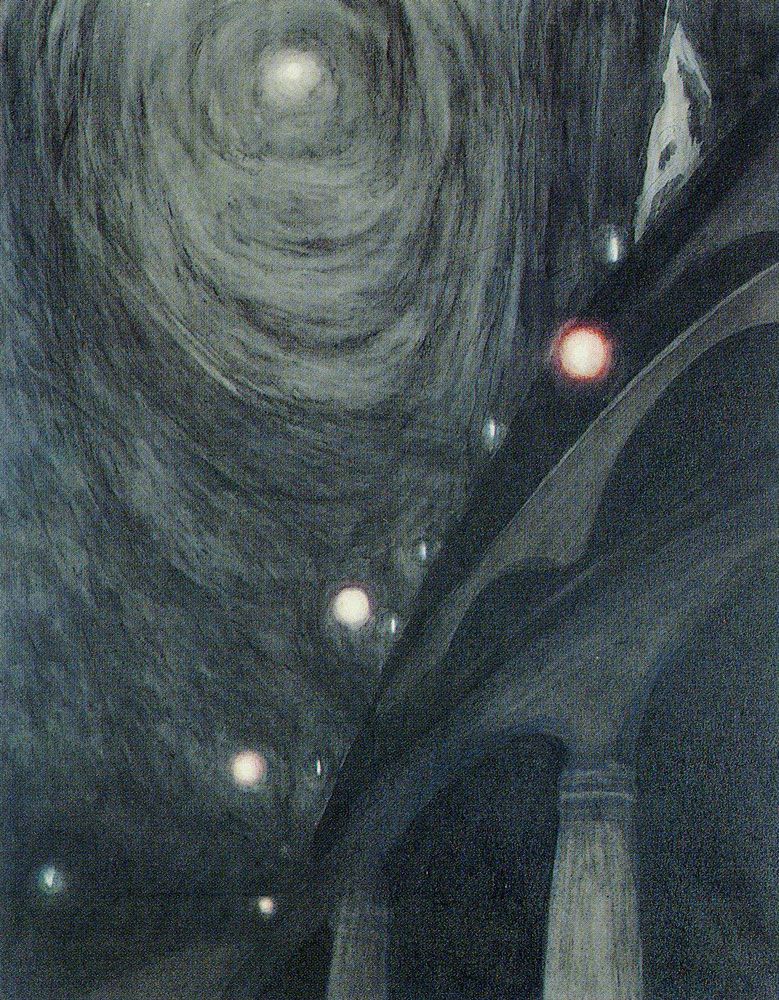
by Léon Spilliaert (1909, pastel and ink wash on paper, 65 x 50cm, Musée d’Orsay, Paris)
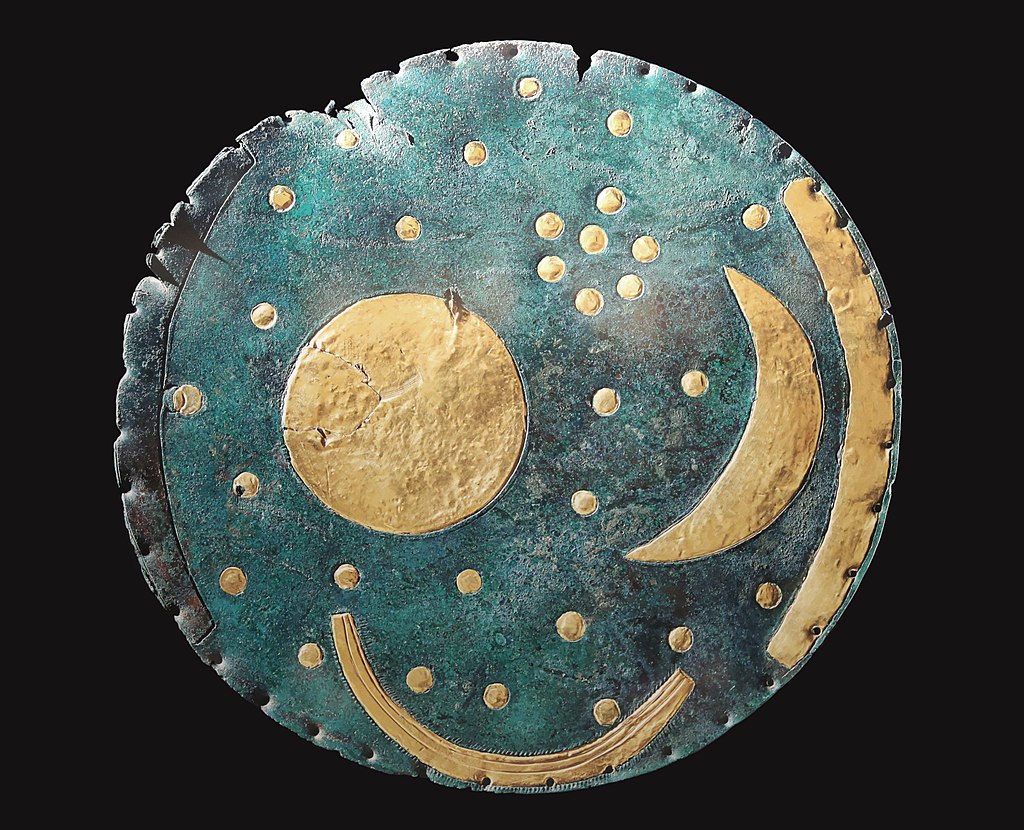
This remarkable object is made of bronze, is around 30 cm diameter and weighs about 2.2 kg. It has a blue-green patina and is inlaid with gold symbols, usually interpreted as the full moon, a lunar crescent, and stars, including a cluster of seven stars, thought to represent the Pleiades. The gold arc on the right probably represents the Sun’s path between the solstices; the angle subtended by the arc (82°) is the correct angle sunrise at the summer and winter solstices and at the latitude of the discovery site (Mittelberg, near Nebra, in Germany); there was probably another such arc on the other side of the disk (now lost). Remarkably, the tin used in making the bronze from which it is formed has been traced by metallurgical analysis to Cornwall.
The Nebra disc has been dated to c. 1800–1600 BCE (Bronze Age) which makes it the oldest (certain) depiction of celestial phenomena known from anywhere in the world. In November 2021, a replica of the Nebra Sky Disc was taken by German astronaut Matthias Maurer to the International Space Station.
One of the consequences of living in a (relatively) small Irish town surrounded by farmland is that every now and again you notice authentic countryside smells. This time of year is often accompanied by the whiff created by the slurry being spread on nearby fields. The farmers typically do this in mid to late September, depending on the weather; it is actually not allowed after 30th September). When I first noticed this sort of pong I thought there was something wrong with the drains, but you get used to it.
Anyway, this made me think of this painting

Of course the manure isn’t spread by hand nowadays. It’s done like this:

(I got this picture from a piece in the Irish Times about slurry as a poetic metaphor.)
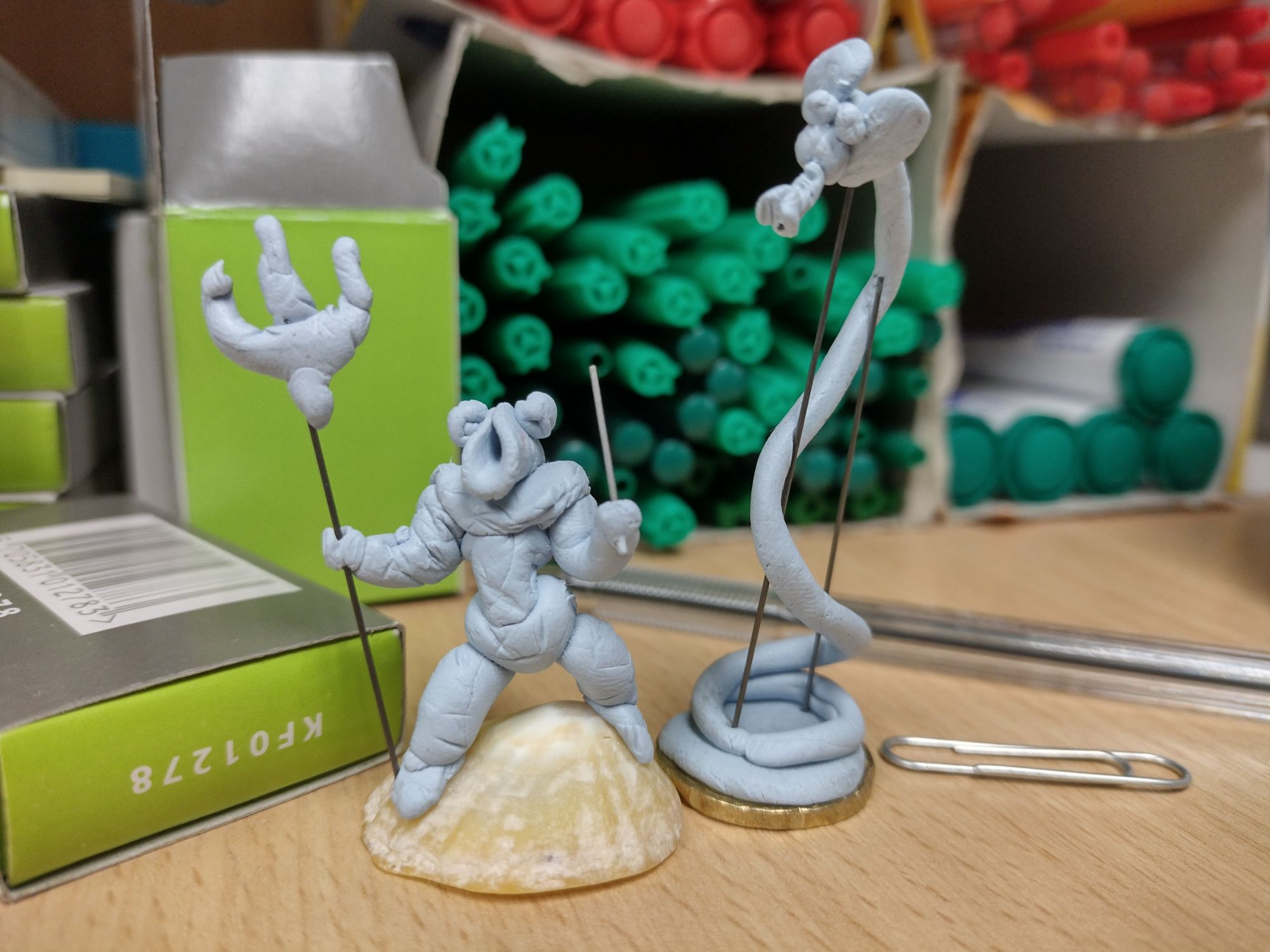
My attention was drawn today to this scuplture which is currently on display in the Department of Physics at Maynooth University. The artist and subject are unknown (to me) and the work is not dated, but the material is clearly Blu Tack, a putty-like pressure-sensitive adhesive commonly used to attach lightweight objects to walls, doors or other dry surfaces.

A young (male) person of my acquaintance sent me this picture a while ago. I think he found it here. I assume he thinks the old guy with the walking stick is me, and the boy is him. We’ll gloss over what he was trying to say by sending it to me but, whatever the reason, I found it intriguing.
The online description reads
Elderly man supported by boy, fresco of the Tomb of the Jugglers, Necropolis of Tarquinia (Unesco World Heritage List, 2004), Lazio, Italy, Etruscan civilization, 6th century BC.
This is from the Etruscan (i.e. pre-Roman) period and the best guess for the date is around 530 BC, so the first thing of interest is that, although it is damaged, it has survived pretty well. Fresco (paint on wet plaster, left to dry) is a very fragile medium and many made 1,000 years after this have not lasted as well. The reason for this is that the tomb was not unearthed until 1961, so it was undisturbed for about 2,500 years. The piece above is a section from a larger work that depicts a sort of funerary ritual.

Now to the description quoted above. For a start, the man is not all that “elderly” as his beard is not grey. He is however clearly older than the boy, who isn’t wearing a beard (nor anything else for that matter). The description says “supported by a boy” but if you look at the painting the older man is holding the younger man firmly by the wrist. That doesn’t look like “support” to me!
When I first saw this piece I assumed the older man was holding a staff or walking stick of some sort, but if you look at his right hand you’ll see his index finger extended as if he is pointing and the object in question is behind his hand. The stick also appears to be decorated, but I think it might be the trunk of a small tree; there are fig trees with fruit than hangs on the trunk, for example. It could be that the damaged area at the top of the stick represented foliage at the top. There are several depictions of trees elsewhere in the tomb.
Iinitially I thought the shapes under the original excerpt were meant to be waves, but it seems they are just part of an abstract frieze that runs all the way around.
So what can we infer from these clues? One interpretation is that the man with the beard is taking the boy away reluctantly for some nefarious activity? Sexual relationships between boys and older men were not uncommon in Greek civilisation so maybe that was also the case for the Etruscans?
But there is another interpretation, which I find more plausible given the context of the painting. The scenes in the centre and right represent the funeral rites, including music, but the man and boy (on the left) are clearly walking away from all that. Moreover, the figure in the central panel apparently standing in some sort of vessel looks very much like the boy in the panel above. Is the lid off to let him out, or is he about to be sealed in?
My reading of it, therefore, is that the boy is dead, and the man with the beard is no less than Charun, the demon charged with guiding the departed to the underworld. The name Charun is derived from the Greek Charon, but the character of Charun is quite different from the ferryman Charon. Anyway, he definitely looks like he’s taking the boy somewhere he doesn’t want to go, and Charun is often depicted wearing a skull cap as he is in the picture.
Now I definitely need to find out why my young friend sent me this…
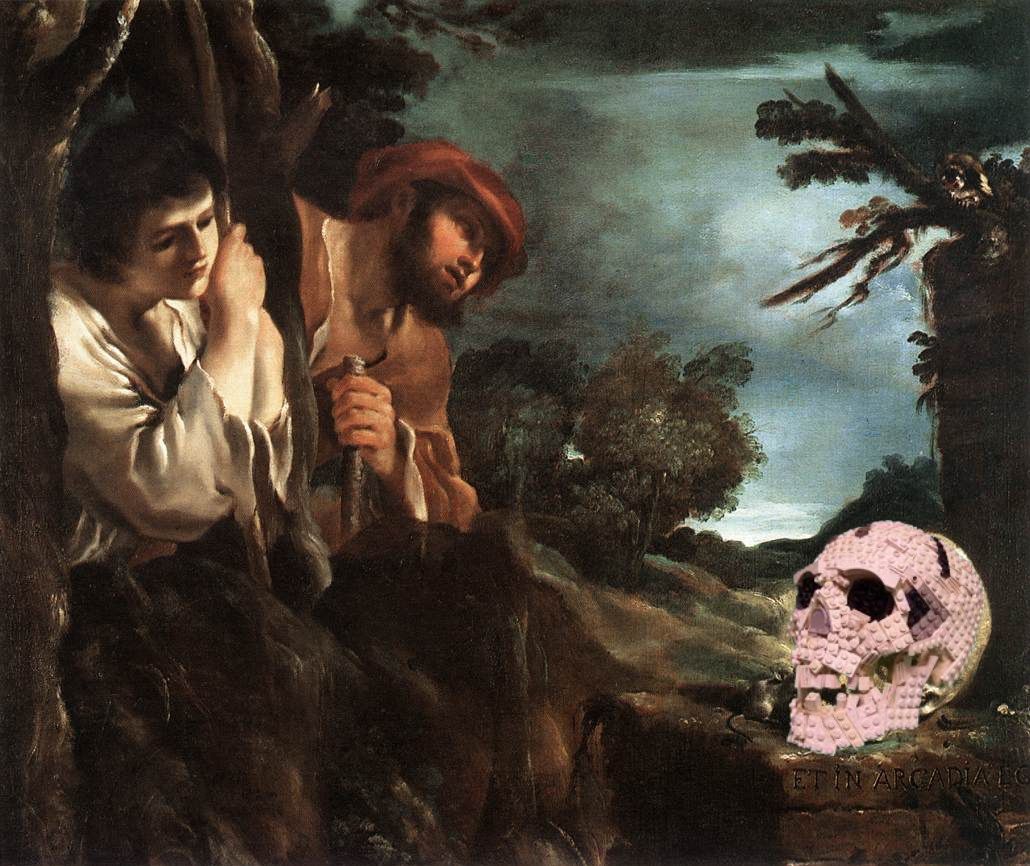
Posted with apologies to the Italian Baroque artist Giovanni Francesco Barbieri (Guercino) on whose original Et in Arcadia Ego this is based.

The artist Joan González was born in Barcelona, and lived from 1868 to 1908; the title of this work in Catalan is Sous-bois Printanier.
I got up at Stupid O’Clock this morning to catch an early morning plane from Dublin to Cardiff. It was very cold when I arrived but it soon warmed up and turned into a lovely day.
I had a nice breakfast at Bill’s when I arrived in the City then did tour of the National Museum of Wales where there is an exhibition about the Miners’ Strike of 1984/5, from which this display case caught my attention:

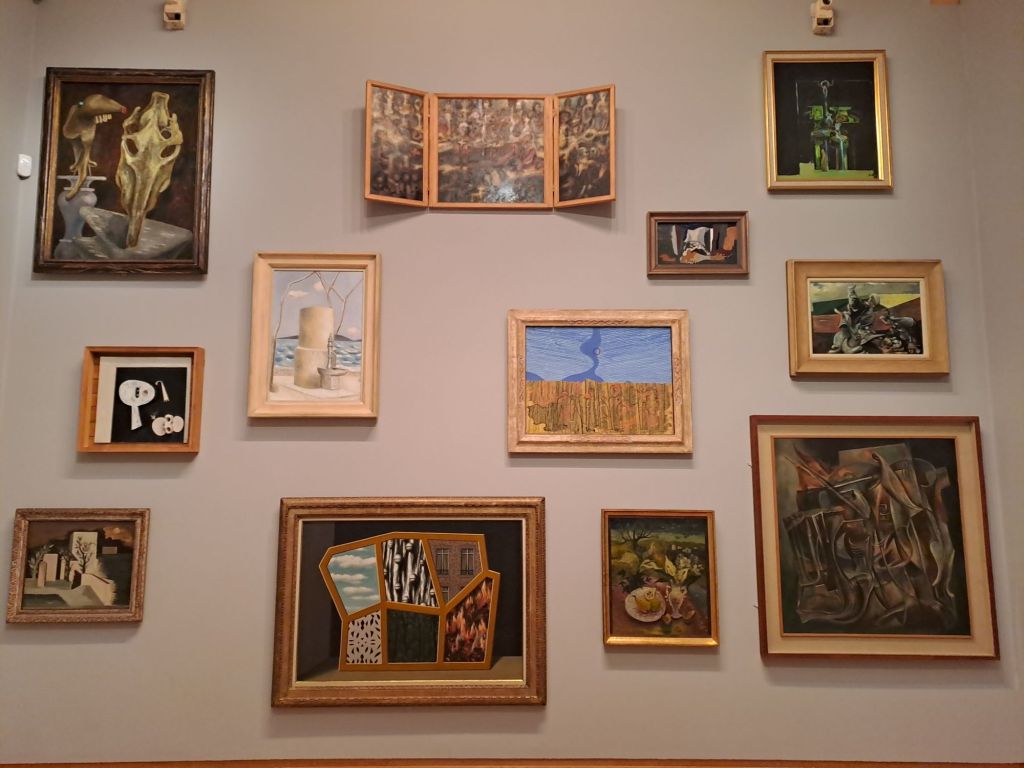
I also had time for a round of Name That Artist (scoring a miserable 3/12, for Sutherland, Ernst, and Magritte).
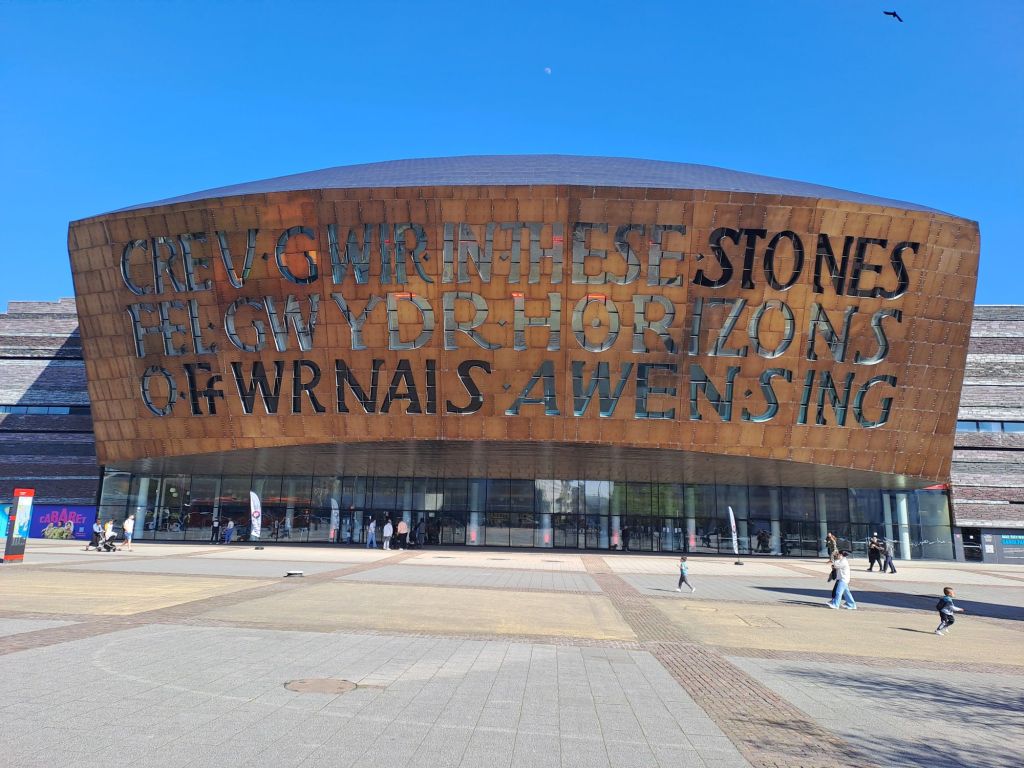
After that, I took a stroll around Bute Park before heading to my hotel in Cardiff Bay to check in and have a rest before the reason for my visit, an event which will take place here at 7pm:
I won’t be able to blog about that until I get back to Maynooth tomorrow afternoon.
Beware, all thieves and imitators of other people’s labour and talents, of laying your audacious hands upon our work.
Albrecht Dürer, 1511
I’ve remembered that quotation since it was uttered by Inspector Morse in the episode Who Killed Harry Field? Albrecht Dürer wasn’t referring to Artificial Intelligence when he said it, but it does seem pertitent to what’s going on today.
There’s an article in The Atlantic about a huge database of pirated work called LibGen that has been used by Mark Zuckerberg’s corporation Meta to train its artificial intelligence system. Instead of acquiring such materials from publishers – or, Heaven forbid, authors! – they decided simply to steal it. That’s theft on a grand scale: 7.5 million books and 81 million research papers.
The piece provides a link to LibGen so you can search for your own work there. I searched it yesterday and found 137 works by “Peter Coles”. Not all of them are by me, as there are other authors with the same name, but all my books are there, as well as numerous research articles, reviews and other pieces:

I suppose many think I should be flattered that my works are deemed to be of sufficiently high quality to be used to train a large language model, but I’m afraid I don’t see it that way at all. I think, at least for the books, this is simply theft. I understand that there may be a class action in the USA against Meta for this larceny, which I hope succeeds.
I think I should make a few points about copyright and authorship. I am a firm advocate of open access to the scientific literature, so I don’t think research articles should be under copyright. Meta can access them along with everyone else on the planet. It’s not really piracy if it’s free anyways. Although it would be courteous of Meta to acknowledge its sources, lack of courtesy is not the worst of Meta’s areas of misconduct.
In a similar vein, when I started writing this blog back in 2008 I did wonder about copyright. Over the years, quite a lot of my ramblings here have been lifted by journalists, etc. Again a bit of courtesy would have been nice. I did make the decision, however, not to bother about this as (a) it would be too much hassle to chase down every plagiarist and (b) I don’t make money from this site anyway. As far as I’m concerned as soon as I put anything on here it is in the public domain. I haven’t changed that opinion with the advent of ChatGPT etc. Indeed, I am pretty sure that all 7000+ articles from this blog were systematically scraped last year.
Books are, however, in a different category. I have never made a living from writing books, but it is dangerous to the livelihood of those that do to have their work systematically stolen in this way. I understand that there may be a class action in the USA against Meta for this blatant larceny, which I hope succeeds.


