Archive for the Biographical Category

Back to Maynooth

Posted in Biographical, Cardiff, Maynooth with tags , , , on March 7, 2018 by telescoper

So here I am back in Maynooth. The University re-opened on Monday after being closed from Wednesday last week owing to the extremely bad weather. I’m told the snow was several feet deep and the town was virtually cut off until the weekend. There is still some snow lying here and there, but the thaw has begun and you can see the effect of the meltwater on the river (the Lyreen) that flows through town, which is usually no more than a little stream:
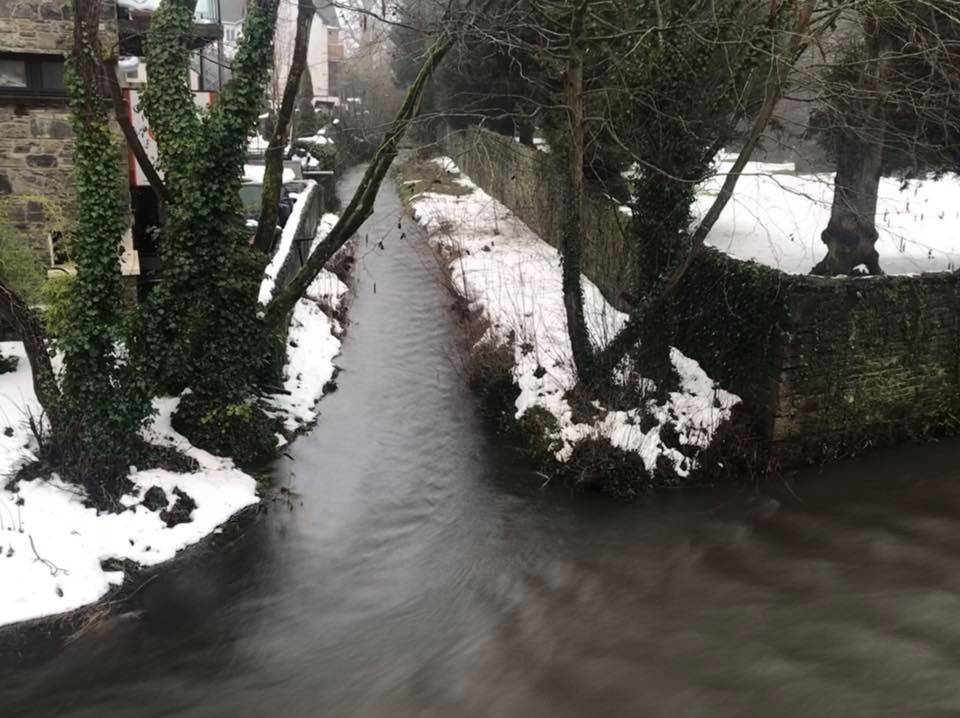
Picture Credit: Coyne’s Family Butcher, Maynooth

It’s not quite a raging torrent, but getting there!

At the moment there’s no sign of a resolution to the industrial action that’s affecting Cardiff University (as well as others in the UK) so I decided to travel to Ireland yesterday rather than my usual Wednesday. The flight over was virtually empty and so was Dublin Airport, so I got on the bus well ahead of schedule and made it back to my flat (which was cold, but otherwise all in order) in time to buy some groceries and make dinner. The panic-buying of bread had caused a shortage, but all seems to be back to normal again.

I had arranged for someone else to do last week’s Thursday lecture and Lab session so I could attend the event the IOP event I posted about, but as the campus was closed they were cancelled anyway and I now have to find a way to catch up. Do not worry, though, I have a cunning plan.

Unless there’s an announcement in the next couple of days that next week’s strike is off I plan to stay in Ireland over the weekend, which will give me the chance to explore Dublin a bit, something that my schedule has not so far allowed. Next week will be the fourth week of industrial action and the last of the current batch of strike days, this time a full week (having escalated from two, three and four days in the preceding weeks). If there is no resolution by then I don’t know what will happen, possibly an all-out indefinite strike. Nobody wants that, but there’s no doubt in my mind who is to blame for this dispute and it’s not the Universities and Colleges Union. However, there are some signs of movement, so let’s hope for a negotiated settlement. If not, I’m seriously thinking of trying to bring forward my full-time move to Maynooth. There’s little point continuing in my post in Cardiff if I’m going to be permanently on strike.

Anyway, I have a 9am lecture to give tomorrow so I think I’ll toddle off, get some tea and have an early night.

R.I.P. Trevor Baylis (1937-2018)

Posted in Biographical with tags , on March 6, 2018 by telescoper

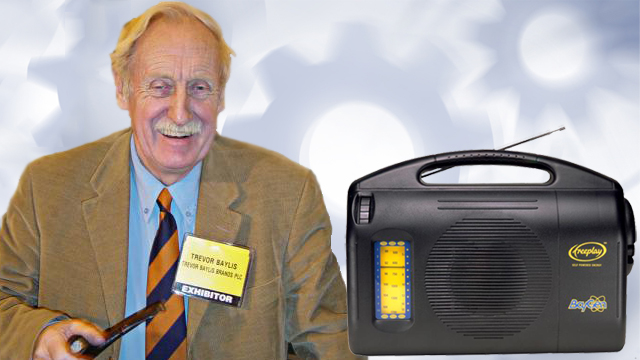
I heard yesterday the sad news of the death of inventor Trevor Baylis, who was most famous for his wind-up radio device. This brought back memories of when we both appeared in a Tomorrow’s World Live event that took place 21 years ago. I didn’t get to know him very well, but seemed to me to be a nice man, and the very epitome of an old-school boffin complete with pipe and tweed jacket.

I was on the show to do an item on the Tomorrow’s World Live show – which was not broadcast but performed in front of an audience of a few hundred people in a temporary theatre. In fact there were four shows a day for the period of the event (19-23 March 1997). Each show was only about 30 minutes long, but it was quite hard work as there were many technical things to sort out in between performances.

My role was to do a little piece about the refurbished Hubble Space Telescope and then answer questions on astronomy and cosmology from the audience. I had no script for that bit, as it was impossible to know what would be asked. I answered with varying degrees of success.

Other items featured on the show, as well as Trevor’s clockwork radio, were an  electric sports car, and a device for scrambling an egg without breaking its shell. I couldn’t see the point of the last invention, as one would have to break the shell to eat the egg anyway.

The best bit about being involved in Tomorrow’s World Live was meeting so many of the presenters, all of them proper professionals (unlike me) who were very friendly and helpful although most of them seemed very nervous beforehand. I think they knew better than I did how many things might go wrong. Only two presenters were involved in each show,  and  each pair only did one or two shows, so over the five days I got to work with the whole set, including Craig Doyle, Philippa Forester, Howard Stableford, Vivienne Parry and Shahnaz Pakravan. I didn’t envy them as they had to work not only with amateurs like me, but also had to learn a detailed script and deal with the gadgets. I was relieved that I could basically just wing it.

My clearest memory of the whole event was the technical rehearsal early  in the morning before the very first show. Apart from the wind-up radio, nothing worked properly, and I was convinced that it was all going to be a complete disaster. Somehow, however, it all came together and there weren’t any major problems in any of the real shows.

Talent versus Luck

Posted in Biographical with tags , , on March 5, 2018 by telescoper

I’ve remarked quite a number of times on the blog that I think I’ve been exceptionally lucky in my scientific career, the latest example being the good fortune that the position at Maynooth University came up precisely when it did, enabling me to relocate to Ireland.

It struck me further the other day that the people who think that science is genuinely meritocratic, tend to be those who have done well in the system rather than those who haven’t. It’s rather like the way that very rich people tend to think that they have earned their wealth and that makes them better people than those who are less well off, even when that’s demonstrably not true.

Likewise, luck plays a definite role in winning grant funding. Having been on grants panels I’m away that many very good proposals are not funded. A scoring system is generally used that introduces some level of objectivity into the process, but the fact is that a lot of proposals come out with similar scores and the ranking of these is a bit arbitrary. A slightly different panel would produce slightly different scores, but perhaps a large difference in ranking would result.

Anyway, there’s a paper on the arXiv (by Pluchino et al) with the title Talent vs Luck: the role of randomness in success and failure that
discusses the role of good fortune in scientific careers. This is the abstract:

The largely dominant meritocratic paradigm of highly competitive Western cultures is rooted on the belief that success is due mainly, if not exclusively, to personal qualities such as talent, intelligence, skills, efforts or risk taking. Sometimes, we are willing to admit that a certain degree of luck could also play a role in achieving significant material success. But, as a matter of fact, it is rather common to underestimate the importance of external forces in individual successful stories. It is very well known that intelligence or talent exhibit a Gaussian distribution among the population, whereas the distribution of wealth – considered a proxy of success – follows typically a power law (Pareto law). Such a discrepancy between a Normal distribution of inputs, with a typical scale, and the scale invariant distribution of outputs, suggests that some hidden ingredient is at work behind the scenes. In this paper, with the help of a very simple agent-based model, we suggest that such an ingredient is just randomness. In particular, we show that, if it is true that some degree of talent is necessary to be successful in life, almost never the most talented people reach the highest peaks of success, being overtaken by mediocre but sensibly luckier individuals. As to our knowledge, this counterintuitive result – although implicitly suggested between the lines in a vast literature – is quantified here for the first time. It sheds new light on the effectiveness of assessing merit on the basis of the reached level of success and underlines the risks of distributing excessive honors or resources to people who, at the end of the day, could have been simply luckier than others. With the help of this model, several policy hypotheses are also addressed and compared to show the most efficient strategies for public funding of research in order to improve meritocracy, diversity and innovation.

Comments are, as always, welcome!

Back to Snowy Cardiff

Posted in Biographical, Bute Park, Cardiff on March 3, 2018 by telescoper

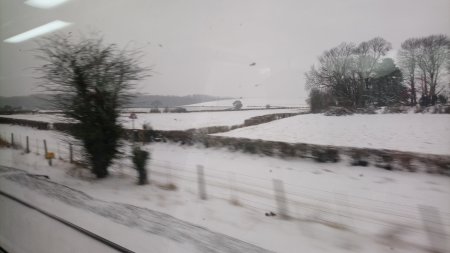
I made it back to Cardiff yesterday. The train I was on was about half an hour late, but that was understandable. The strange bit was that most of the delay resulted from us running very slowly through the Severn Tunnel. There certainly wasn’t any snow down there!

Cardiff city centre was virtually deserted and none of the roads had been cleared of snow. I’m guessing no buses were running, as I didn’t see any on the way, and there were few cars. Many shops were closed. The M&S in the station was open but had received no deliveries that day, and was just selling what it had from the day before. I bought some groceries, mostly at a reduced price.

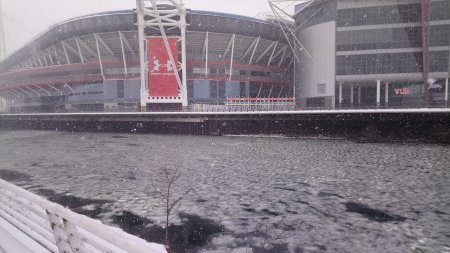
It was snowing quite heavily and was very cold when I walked back to my house from the station, so I didn’t take many pictures, but I couldn’t resist this one of the River Taff, frozen over by the Principality Stadium:

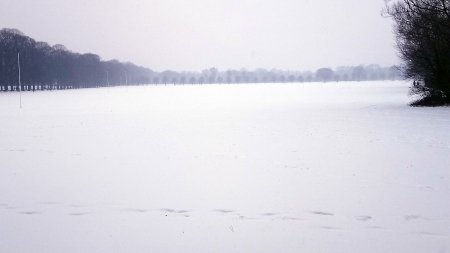
This was the view towards Pontcanna Fields from near the cricket ground.

Fortunately I was wearing heavy walking boots, but I’d forgotten what hard work it is to walk through snow!

This morning there’s still a lot of snow around and no sign of any attempt to clear the roads.

I wonder if there’ll be anywhere open to buy a paper?

Void Fill

Posted in Biographical, Cardiff, Politics with tags , , on February 26, 2018 by telescoper

It’s quite hard being on strike when you find your job interesting and rewarding so I’ve been looking for things not related to my employment at Cardiff University with which to plug the gap in my working schedule.

I’ve found the ideal thing:

LGBT+ History Month and the Royal Society

Posted in Biographical, History, LGBTQ+ with tags , , , , , on February 23, 2018 by telescoper

You may or may not know that this month is LGBT+ History Month for 2018, and, to mark it, the Royal Society has been marking it on Twitter by celebrating LGBT+ scientists.

I am very proud to be included among those featured on Twitter, although slightly disappointed that no mention was made of my greatest achievement, namely the Beard of Winter 2018 award.

I can’t show all the people in the Twitter thread produced by the Royal Society because there are too many of us, but I will mention two people that I know personally.

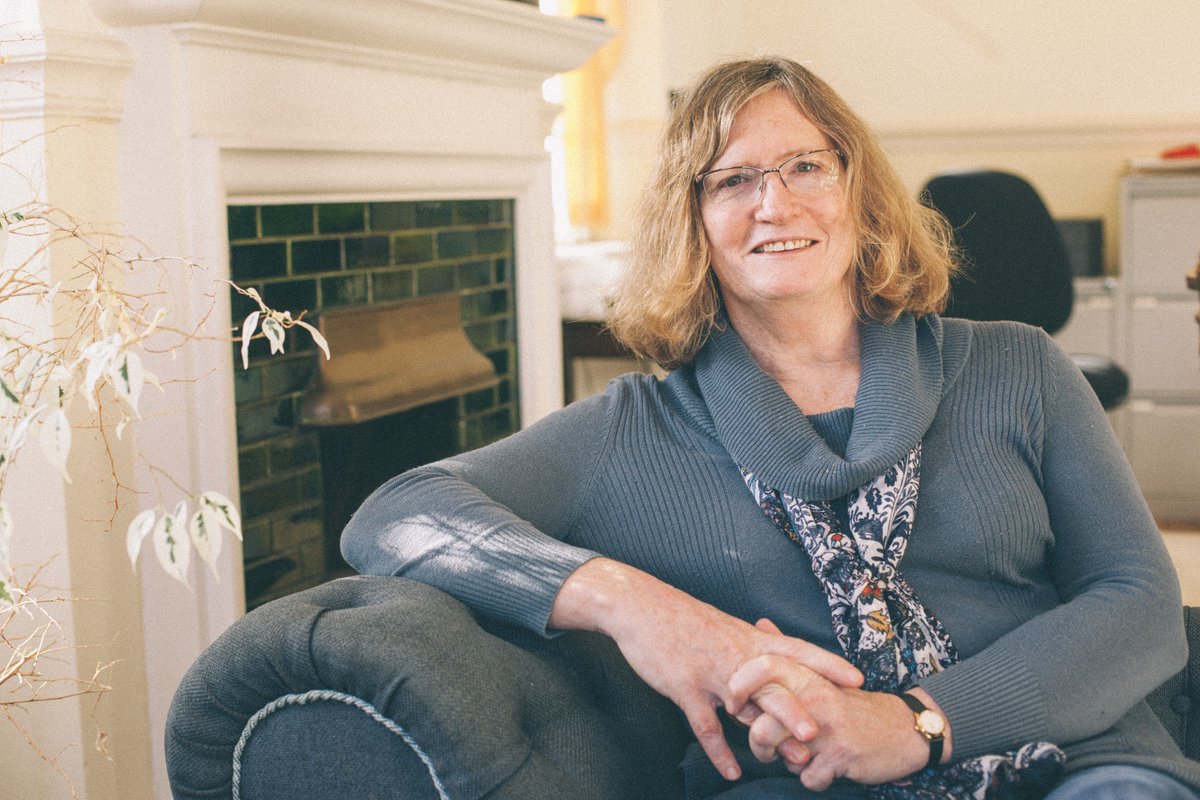
The first is radio astronomer Rachael Padman from the University of Cambridge:

Among other things, Rachael recently won an award from Gay Times magazine. I worked quite a bit with Rachael when I was External Examiner for Natural Sciences (Physics), a job I did from 2014-2016, as she was heavily involved in the administration of the examinations process at Cambridge during this time.

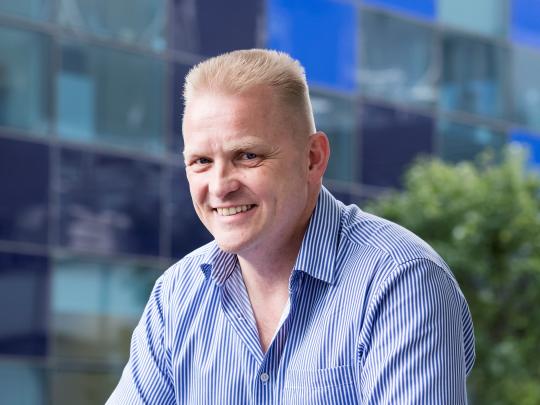
The other person I’d like to mention is Tom Welton, who is Professor of Sustainable Chemistry and Dean of the Faculty of Natural Sciences at Imperial College in London.

I especially wanted to mention Tom because he and I were contemporaries at the University of Sussex way back in the 1980s when I was a research student. I hadn’t seen him since I moved from Sussex in 1990 until two years ago when we were both panellists at an `Out in STEM’ event run by the Royal Society.

I know some of you will be asking whether the Royal Society should be getting involved in LGBT History Month. Some people commenting on the Twitter thread certainly think it shouldn’t.  I think it should, in order to demonstrate that a person can be openly LGBT+ and have a successful career in STEM.  If being visible in this way helps just one career feel more comfortable in themselves and in their career it would be well worth it.


Hands off the Good Friday Agreement!

Posted in Biographical, Politics with tags , , , , , , on February 22, 2018 by telescoper


I’ve been watching with increasing alarm the concerted attempt that certain extremist `Brexiteers’ have been trying to make a case for scrapping the Good Friday Agreement that came about in 1998 after decades of violent conflict in Northern Ireland and elsewhere.  These reckless fools think that derailing the peace process is a price worth paying for their ideological obsession with rejecting anything that involves the EU, in this case the Customs Union that allows an open border between the Republic of Ireland (whose future lies in the vibrant and outward-looking European Union) and Northern Ireland (which will remain shackled to the corpse of the United Kingdom, at least for the time being, until the creation of a united Ireland…). Not surprisingly, Irish politicians and the Irish are incensed about the reckless statements being made by some UK politicians.

Incidentally, the Good Friday Agreement was supported by simultaneous referendums in Northern Ireland (71.1% in favour) and the Republic  of Ireland  (94.4% in favour) ; a majority of the NI electorate also voted against leaving th European Union.  It’s strange how selectively some people are prepared to accept `The Will of the People’…

Anyway, just as a reminder of what is at stake, here are three examples based on my own experiences of what things were like before the GFA, when I lived in London (which I did for about eight years, between 1990 and 1998). During that time I found myself in relatively close proximity to three major bomb explosions, though fortunately I wasn’t close enough to be actually harmed. I also concluded that my proximity to these events was purely coincidental.

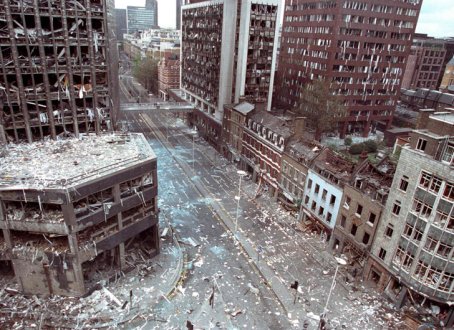
The first, in 1993, was the Bishopsgate Bombing. I happened to be looking out of the kitchen window of my flat in Bethnal Green when that bomb went off. I had a clear view across Weavers Fields towards the City of London and saw the explosion happen. I heard it too, several seconds later, loud enough to set off the car alarms in the car park beneath my window.

This picture, from the relevant Wikipedia page, shows the devastation of the area affected by the blast.

The other two came in quick succession. First, a large bomb exploded in London Docklands on Friday February 8th 1996, at around 5pm, when our regular weekly Astronomy seminar was just about to finish at Queen Mary College on the Mile End Road. We were only a couple of miles from the blast, but I don’t remember hearing anything and it was only later that I found out what had happened.

Then, on the evening of Sunday 18th February 1996, I was in a fairly long queue trying to get into a night club in Covent Garden when there was a loud bang followed by a tinkling sound caused by pieces of glass falling to the ground. It sounded very close but I was in a narrow street surrounded by tall buildings and it was hard to figure out from which direction the sound had come from. It turned out that someone had accidentally detonated a bomb on a bus in Aldwych, apparently en route to plant it somewhere else (probably King’s Cross). What I remember most about that evening was that it took me a very long time to get home. Several blocks around the site of the explosion were cordoned off. I lived in the East End, on the wrong side of sealed-off area, so I had to find a way around it before heading home. No buses or taxis were to be found so I had to walk all the way. I arrived home in the early hours of the morning.


Does anyone really  want to go back to experiencing this kind of event on a regular basis? If  the UK government is persuaded in its weakness to ditch the Good Friday Agreement then there is a real risk of that happening. And if it does, those calling for it will have blood on their hands.


Learning Technology

Posted in Biographical, Cardiff, Education, Maynooth with tags , , , , , , , , on February 20, 2018 by telescoper

I’m just taking a tea break in the Data Innovation Research Institute. Today has been a very day as I have to finish off a lot of things by tomorrow, for reasons that I’ll make clear in my next post…

It struck me when I was putting on the brew how much more technology we use for teaching now than when I was a student. I think many of my colleagues make far more effective use of the available technology than I do, but I do my best to overcome my Luddite tendencies. Reflecting on today’s teaching makes me feel just a little less like a dinosaur.

This morning I gave a two-hour lecture on my Cardiff module Physics of the Early Universe which, as usual, I recorded using our Panopto system. Although there was a problem with some of the University’s central file storage this morning, which made me a bit nervous about whether the lecture recording would work, it did. Predictably I couldn’t access the network drives from the PC in the lecture theatre, but I had anticipated that and took everything I needed on a memory stick.

After a short break for lunch I checked the lecture recording and made it available for registered students via the Virtual Learning Environment (VLE), known to its friends as Learning Central. I use this as a sort of repository of stuff connected with the module: notes, list of textbooks, problem sets, model answers, instructions and, of course, recorded lectures. The students also submit their coursework assignment (an essay) through this system, through the plagiarism detection software Turnitin.

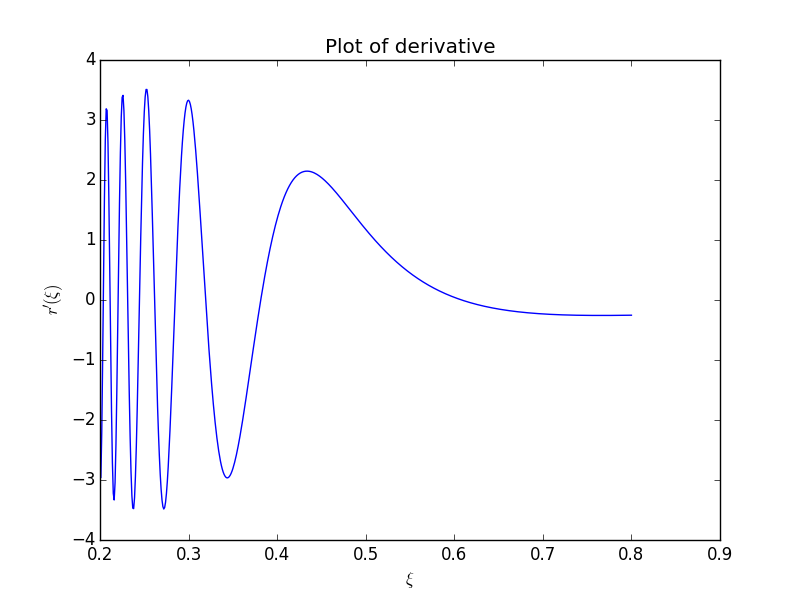
This afternoon the students on my Computational Physics course in Maynooth University had a lab test, the first of four such tests, this one consisting of a short coding exercise. There are two lab sessions per week for this class, one on Thursdays (when I am normally in Maynooth to help supervise) and another on Tuesdays (when I am normally in Cardiff). I have a number of exercises, which are similar in scope but different in detail (to prevent copying) and the Tuesday lab has a completely different set of exercises from the Thursday one. In each exercise the students have to write a simple Python script to plot graphs of a function and its derivative (computed numerically) using matplotlib. The students upload their script and pictures of the plot to the VLE used in Maynooth, which is called Moodle.

In the manner of a TV chef announcing `here’s one I did earlier’, this a sample output produced by my `model’ code:

I wonder if you can guess of what function this is the derivative? By the way in this context `model’ does not mean `a standard of excellence’ but `an imitation of something’ (me being an imitation of a computational physicist). Anyway, students will get marks for producing plots that look right, but also for presenting a nice (commented!) bit of code

This afternoon I’m on Cardiff time but I was able to keep an eye on the submissions coming in to Moodle in case something went wrong. It seemed to work out OK, but the main problem now is that I’ve got 20-odd bits of code to mark! That will have to wait until I’m properly on Maynooth time!

Now, back to the grind…

A Good Day

Posted in Beards, Biographical, Football with tags , , , , , , on February 11, 2018 by telescoper

It’s been a good day. First of all I was officially presented with the Beard of Winter 2018 Award by the inestimable Keith Flett (right):

The picture was taken (by Megan Davies) outside The Small Bar in Cardiff after a celebratory tipple.

After that it was down to Cardiff Bay, where the Wales Millennium Centre was resplendent in the winter sunshine for an excellent afternoon performance of Tosca (which I’ll review more fully tomorrow):

And if that wasn’t enough, I emerged from the Opera to find that Newcastle Utd had beaten Manchester Utd in the Premiership, a game I had expected them to lose…

So yes, it’s been a good day..

A Comment on Anonymous Comments

Posted in Biographical with tags , , , on February 5, 2018 by telescoper

My post last week has generated quite a lot of traffic among which is a larger-than-usual crop of abusive comments. Here’s just one example, a response to a comment of mine describing people posting such comments anonymously as `cowardly’.


Charming. I hope I don’t have to point out that the allegation therein is completely false and defamatory. Fortunately the WordPress software blocked it, along with several more of similar ilk. I don’t see why I should allow stuff like this to be published on my blog, especially if it’s anonymous, so I deleted them all. I thought I’d take this opportunity to remind readers of what it says on the front page of this blog:

Feel free to comment on any of the posts on this blog but comments may be moderated; anonymous comments and any considered by me to be abusive will not be accepted. I do not necessarily endorse, support, sanction, encourage, verify or agree with the opinions or statements of any information or other content in the comments on this site and do not in any way guarantee their accuracy or reliability.

I don’t mind people posting contrary views as long as they’re not abusive, but if you use a fake email address and/or a fake name then your comment will be blocked. If you’ve got something to say then at least have the courage to identify yourself!

When I first started blogging, almost a decade ago, I decided to have an open comment policy so that anyone and everyone could comment without any form of intervention. That turned out to be a disaster because of the number of automatically generated  SPAM comments that clogged up the boxes. I therefore switched on a SPAM filter so it could veto obvious garbage, but otherwise kept an open policy. The alternatives offered by WordPress include one that requires all comments to be from people registered at the site (which I thought would probably be a deterrent to people only wanting to comment on the odd post). Another option is to maintain a blacklist which treats all messages from persons on the list as SPAM. It’s also possible to block all comments entirely, of course, but I enjoy reading most of them so I think it would be a shame to do that just because of a few breaches of netiquette.

All went fairly well and I only had to ban a couple of individuals for abuse. I did for a time receive a stream of crudely abusive comments (of a personal nature) from various anonymous sources. These were mostly depressingly puerile and they didn’t affect me much but I did find it very disconcerting to think that there are people sitting out there with nothing better to do.

Since WordPress notifies me every time a  comment is posted, it is quite easy to remove this junk but I found it very tiresome (when there were several per day) and eventually decided to change my policy and automatically block comments from all anonymous sources. Since this requires a manual check into whether the identity information given with the comment is bona fide, comments from people who haven’t commented on this blog before may take a little while to get approved.

There are still comments on here which may appear to a reader anonymous (or with a pseudonym) on here, but these are from people who have identified themselves to me with a proper email address or who the software has identified through their IP address or information revealed by their web browser (which is probably more than you think…). I’m happy for people to comment without requiring they release their name to the world, and will do my best to ensure their confidentiality, but I’m not happy to publish comments from people whose identity I don’t know.

If you’re interested, as of today, 28,781 comments have been published on this blog. The number rejected as SPAM or abuse is 1,802,214. That means that fewer than 1 in 60 are accepted. I simply don’t have time to go through all the flagged comments individually, so I usually just delete them all.

Am I denying freedom of speech by rejecting anonymous comments? I don’t think so. If you want freedom of speech that much, you can write your own blog (anonymous or otherwise). And if every sight of this blog makes you want to write abusive comments, perhaps you should exercise your freedom not to read it.

I’d be interested to know from any fellow bloggers if they have the same problems with abusive comments. If not, perhaps I should start taking it personally!

More generally, I will not accept anonymous comments on the subject of the anonymity of comments, but any other contributions are welcome via the box.

Unless you’re banned.