Archive for the Education Category

The Expanding University

Posted in Biographical, Education, The Universe and Stuff with tags , , , on August 10, 2013 by telescoper

Well, I’m a bit busy today – despite the fact that it’s a weekend – so I’m just going to take the opportunity post here  a news item from my employer which has already been posted on the University of Sussex website. 

–o–

The School of Mathematical and Physical Sciences (MPS) will have 63 academics at the start of the 2013-14 academic year – an increase of 58 per cent from February, when only 40 were in post.

The expansion follows a very successful few years for the School, during which the number of students starting degrees in Physics and Astronomy at Sussex has grown almost threefold.

The department has also climbed to 5th in The Times Good University Guide 2013 and Mathematics was ranked in the top 10 for academic support in the 2012 National Student Survey (NSS).

From September, Physics and Astronomy will have 40 academics, up from 25 in February. There are 12 new posts as well as three replacements, including the arrival in February of Professor Peter Coles, who replaced the late Professor David Axon as Head of School.

Mathematics is increasing from 15 academics to 23, with five of these arrivals being new positions. In particular, three new professors will join the Department this year.

Professor Coles says that overseeing this expansion has been his main focus since returning to Sussex. He says: “When I arrived, plans were already under way to get new people in and I knew this had to be my priority in my first few months as Head of MPS.

“We had an incredibly high calibre of applicants for all the posts and, in many cases, have been able to appoint more than one person. For one of the posts in Astronomy, the shortlist was so strong that we have actually appointed four excellent academics in that area. We couldn’t miss that opportunity.

“Our three  new chairs in Mathematics are joining us from Denmark, Greece and Italy, bolstering the School’s international outlook.

“We have been strategic in our appointments to encourage growth into new areas for us, such as probability and stochastic modelling on the Mathematics side, and materials-based experimental research on the Physics side. We anticipate further strategic expansion in these areas in the near future.

“These appointments also represent a step towards more interdisciplinarity and better crossover between the two departments within the School, and indeed with other schools such as Life Sciences, developing still further the University’s traditional strength in interdisciplinary research.

“And, most importantly of all, students in MPS will benefit from more study choices and smaller class sizes.”

Lectured Out

Posted in Biographical, Education with tags , , , , , on July 10, 2013 by telescoper

Just time for a quick post today because I’m quite knackered. Both my lectures for the Summer School I’m attending were this morning, and each was 90 minutes long – though there was a 30 minute coffee break between the two. The students therefore had to out up with me droning on most of the morning so were probably sick of the sight of me by lunchtime although they were quite polite about it. MOst of the participants went off on an excursion after lunch, but I decided to stay behind and take a siesta. I’m definitely too old for hiking in this heat.

The conference organizers told me that ninety minute lectures are apparently quite normal in Germany. I’m not sure why. I don’t think students can concentrate for that length of time, and it’s a definite strain on the lecturer too. I find even an hour lecture quite tiring, actually, but that’s more the effect of expending nervous energy walking backwards and forwards trying frantically to tell if anyone is understanding what I’m talking about. I usually enjoy lecturing actually, but it’s definitely stressful at the time. Now that I’m Head of School I won’t get to do as much teaching in the future as I did in the past. I suppose I’ll miss that “contact” with students, but I don’t think their education will suffer at all as a consequence of not being taught by me!

This is graduation week at the University of Sussex; finalists from the School of Mathematical and Physical Sciences actually graduate tomorrow. In normal circumstances I would be there to read out the names as the graduands parade across the stage, but I committed to attend this Summer School long before I’d even been appointed to my job as Head of MPS so felt I shouldn’t leave the organizers in the lurch. The Deputy Head of School will therefore do the honours at tomorrow’s ceremony. I haven’t been there long enough to get to know the graduating class very well, so it’s quite fitting that he’s looking after them on the big day. In other words, I don’t think I’ll be missed. I also see that final year students from the School of Physics & Astronomy at Cardiff University will be graduating next Monday (15th July). I’ve known some of them for almost four years so feel a bit sad that I left before they finished, but I’m sure I won’t be missed on that occasion either. I bet most of them have already forgotten I was ever there!

Anyway, on the off chance that any graduating students from either Sussex or Cardiff happen to read this, I hope you enjoy the graduation ceremony and associated celebrations and wish you well as you embark on the next stage of life’s journey.

Can a University be Democratic?

Posted in Education, Politics with tags , , , on July 6, 2013 by telescoper

Today I thought I’d pick up on a topic I mentioned in last week’s post about Simon Fanshawe, about University governance.

The Royal Charter which formed the University of Sussex way back in 1961 includes the following clauses:

1.         By this Charter there shall be constituted and founded a University by the name of ‘The University of Sussex’ (‘the University’).

2.         In this Charter: ‘Council’ means the Council of the University; ‘Regulations’ except when otherwise required by the context, means Regulations made pursuant to this Charter or the Statutes. ‘Statutes’ means the Statutes of the University set out in the Schedule.

3.         The objects of the University shall be to advance learning and knowledge by teaching and research to the benefit of the wider community.

7.         There shall be a Council of the University which shall be the governing body of the University and shall have the custody and use of the Common Seal and shall be responsible for the revenue and property of the University, its conduct and activities, and shall exercise all the University’s powers.

8          There shall be a Senate of the University which shall, subject to the general control and approval of the Council, be responsible for academic standards and the direction and regulation of academic matters.

9.         There shall be a Students’ Union of the University.

This makes it quite clear that  the Senate (on which I happen to sit) is specifically meant to focus on academic matters; see below for a comment on this.  The role of the Student’s Union is not specified at all in this document, although it should be said that there are student members of Senate and Council too.

The reason for including this in a blog post is that it demonstrates an organization formed in this way has to strike a difficult balance between, on the one hand, listening to staff and students when it comes to forming policy and, on the other, having an efficient and effective executive that can implement those policies. There are about 16,000 people working and studying at the University of Sussex (c. 13,000 students and c. 3,000 staff), most of whom are highly intelligent and independent-minded so there’s bound to be a divergence of opinion on almost any topic under discussion. Even if it were possible for everyone to get involved in the University’s governance, it’s inevitable that decisions will be made that run counter to some of the input.

Difficult balances that have to be struck in the governance of any organization, whether religious, administrative, commercial or educational. The Council of the University of Sussex is its supreme governing body and everyone who works here is in some way accountable to it. In turn, Council is accountable to its “stakeholders”, not just funding authorities and students, but the wider world; its Charter states that

The objects of the University shall be to advance learning and knowledge by teaching and research to the benefit of the wider community.

In a nutshell, a University is not a democracy. It can’t be, not unless “democracy” is defined in a very limited way. A university can employ some democratic structures, and may (for many reasons) desire to include as many people as possible in its governance, but in the end this is limited by the need for effective and efficient management. We can – and do – debate where this balance should lie, but anyone who has ever worked in a University will agree that if it were allowed to be run “democratically” by some of academic collective then the result would be a complete shambles. Democracy has to be balanced by the rule of law.

Similar issues apply further down the pecking order. Since I took over as Head of Mathematical and Physical Sciences here earlier this year, I have had a wide range of responsibilities for the School, including its finances, academic matters, and even health and safety. I’m not an autocrat, so I try to do things as democratically as possible within the constraints I have to work, but this democracy is necessarily limited. I like to keep staff informed about and involved in decisions, but I sometimes have to make decisions without any consultation at all. This can be because such a quick decision is required that there is no time to consult widely, or because there is some issue to do with confidentiality which means that it can’t be discussed in an open forum (including, e.g., email). More often, though, it is just because they pay me to be Head of School and its my job to take responsibility so staff working in the School can get on with what they are supposed to do without being inundated with requests for input from me on trivial things.

On the other hand there are things in  MPS that are extremely  democratic compared with other places I’ve worked. We have a  Joint Committee which gives students direct input into various aspects of School life. In particular, the School has ceded part of its building to form Student Spaces and given students a budget to manage them (i.e. choose furniture, equipment, etc). These are extremely popular and no doubt contribute a great deal to our healthy position in the National Student Satisfaction (NSS) Survey. I think it’s great to have students involved in this way, but we have to remember that students are not the only stakeholders in a University; we also have obligations to other bodies whose requirements may run counter to the wishes of the student body.

Anyway, these ramblings are given a bit of topicality by an item in the Times Higher recently about two student representatives on the University of Sussex Senate who resigned in protest against alleged lack of consultation by the University management. I was at the Senate meeting when they resigned, as well as the previous one where there was a lengthy discussion at which they and others were given an extremely good hearing despite the fact that the matter concerned was not to do with academic so wasn’t strictly speaking in the remit of Senate anyway.

Eventually Senate voted and the two students concerned were on the losing side. I’m sad that they subsequently decided to resign from Senate, although to be absolutely factual both were due to be replaced next academic year anyway so it was a pretty empty gesture.

The point is that democracy isn’t just about being given the chance to express your own views. It’s also about acknowledging that others might feel very differently and accepting the decision when it turns out that you lost the argument.
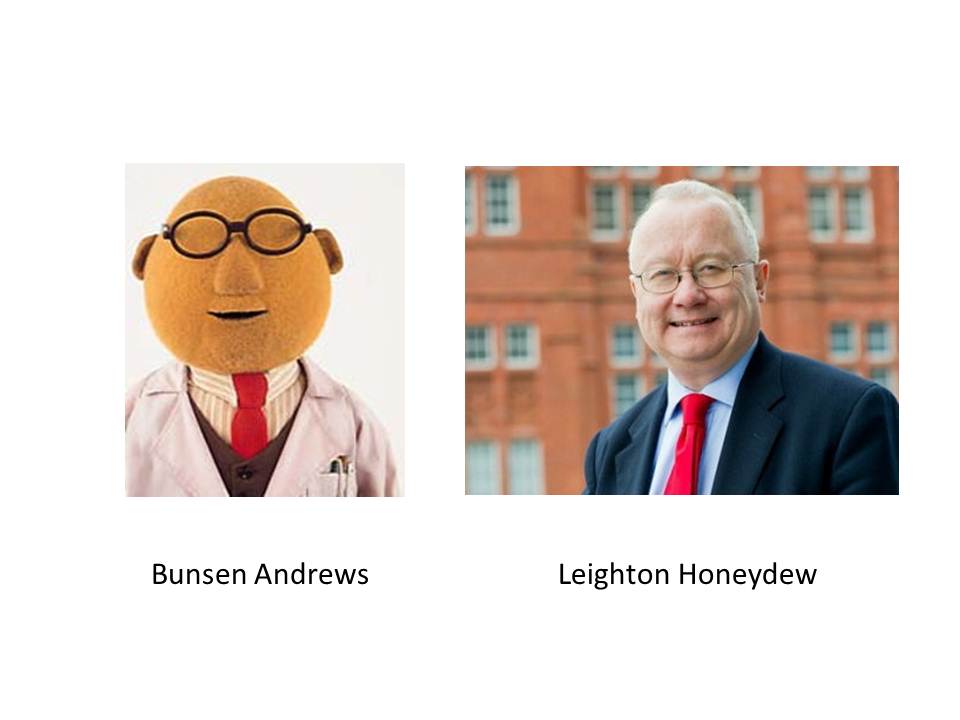
Farewell, then, Leighton Andrews…

Posted in Education, Finance, Politics with tags , , , , , , , on June 27, 2013 by telescoper

Although I no longer live in Wales I couldn’t resist commenting on the resignation, announced on Tuesday, of the Welsh Education Minister, Leighton Andrews. It seems that Mr Andrews was spotted holding a placard protesting against the planned closure of a school, a closure that results from his own policies. Personally, I think that it’s quite an imaginative move for a Minister to campaign against his own policies. It shows an open-mindedness absent in most politicians.

Leighton Andrews will probably be best remembered as the architect of the policy that students domiciled in Wales would be protected from having to pay large tuition fee rise by a system of grants, meaning that the Welsh Assembly will pick up the tab for Welsh students. They will still have to pay the “old”  fee level of £3290 per annum, but the WAG will pay the extra approx £6K charged by most Universities since the fee cap was raised. This is good news for the students of course, but the grants will be available to Welsh students not just for study in Welsh universities but wherever they choose to go. Since about 16,000 Welsh students are currently at university in England, this means that the WAG is handing over a great big chunk (up to 16,000 × £6000 = £96 million) of its hard-earned budget straight back to England. This has always seemed to me a very strange thing to do when the Welsh Government is constantly complaining that the Barnett formula doesn’t give them enough money in the first place.

What’s more, the Welsh Assembly grants for Welsh students are paid for by top-slicing the grants that HECFW makes to Welsh universities. So funding cuts for universities in Wales have been  imposed in order to subsidize English universities. This is hardly in the spirit of devolution either!

English students wanting to study in Wales will have to pay full whack, but will be paying to attend universities whose overall level of state funding is even lower than in England (at least for STEM subjects whose subsidy is protected in England). Currently about 25,000 English students study in Wales, compared with the 16,000 Welsh students who study in England, but I wonder how many of them realize that if they study England their £9K fee attracts an additional investment of £1.5K from HEFCE whereas there is no equivalent central resource supplied by HEFCW if they study in Wales? To put it another way, each £1 of tuition fee paid by a STEM student is worth £1.16 in England, but just £1 in Wales.

The other drastic implication of this policy is that HEFCW will have no money left to fund research via the QR mechanism that pertains in England (at least for the time being). I blogged about this a couple of days ago so won’t say any more today.

I don’t think any of my former colleagues in Cardiff are terribly upset to see Leighton Andrews go, but there is some nervousness about whether the replacement might be even worse. The new Education Minister is Huw Lewis. I wish him well in his new post, and hope he has the courage to question some of the decisions made by his predecessor that have had such a negative effect on education in Wales.

Anyway, in bidding farewell to Leighton Andrews I thought I’d show him all due respect, and do him the honour of presenting a look-alike. All reference to Muppets purely coincidental…

Slide1

The South-East Physics Network – The Sequel

Posted in Education, Science Politics with tags , , , , , , , , , , , , , on June 18, 2013 by telescoper

Every now and again I’m at a loss for something to blog about when a nice press release comes to the rescue. This announcement has just gone live, and I make no apology for repeating it here!


UPDATE: You can now read the University of Sussex take on this announcement here.

–0–

SEPnet_extratext_black

New Investment in Physics Teaching and Research in South East England

The South East Physics network (SEPnet) and HEFCE are delighted to announce their plans to invest £13.1 million pounds to sustain physics undergraduate and postgraduate teaching provision, and world class research facilities, staff and doctoral training over the 5 years up to 2018. HEFCE will provide £2.75 million to maintain and expand the network, to establish a dedicated regional graduate training programme for physics postgraduate students and address physics specific issues of student participation and diversity. On top of the HEFCE contribution, each SEPnet partner will support and fund programmes of Outreach, Employability and Research.

The South East Physics Network (SEPnet) was formed after receiving a £12.5 million grant from HEFCE in 2008 as a network of six Physics departments in South East England at the Universities of Kent, Queen Mary University of London, Royal Holloway University of London, Southampton, Surrey and Sussex. The Science and Technology Facilities Council and Rutherford Appleton Laboratory provided additional funds and resources for collaborations in particle physics and astrophysics. The University of Portsmouth joined in 2010. The Open University and the University of Hertfordshire will join the network effective the 1st August 2013.

SEPnet Phase One has been tremendously successful for the partners in SEPnet and for physics in the region. The Outreach programme, regarded as an exemplar for collaborative outreach, uses the combined knowledge and resources of each partner to provide greater impact and reach and demonstrates that the whole is greater than the sum of its parts. It has succeeded in effectively exploiting the growing national interest in physics through its wide range of public engagement and schools activities. There has been a substantial increase in applications and intake for physics undergraduate courses and undergraduate numbers are now 90% higher in the SEPnet physics departments compared with 2007 and applications up approximately 115% – well above national trends.

Announcing the investment, SEPnet’s Independent Chair Professor Sir William Wakeham said “This is a major success for physics both in the region and nationally. HEFCE’s contribution via SEPnet has enabled the partners in the consortium to grow and develop their physics departments for the long term. Before SEPnet, physics departments had falling student numbers and lacked research diversity. Now they are robust and sustainable and the SEPnet consortium is an exemplar of collaboration in Higher Education.”

David Sweeney, Director of Research, Innovation and Skills, HEFCE said: “We are delighted to see the fruits of a very successful intervention to support what was once a vulnerable subject. HEFCE are pleased to provide funding for a new phase, particularly to address new challenges in the field of postgraduate training and widening participation. The expansion to include new physics departments is a testament to the success of the network and can only act to strengthen and diversify the collaboration.”

Sir Peter Knight, President of the Institute of Physics, expressed strong support for the government’s continued investments in the sciences generally and in physics specifically. “SEPnet has been an undoubted success in sustaining physics in the South East region and has strongly participated in contributing to its beneficial effects nationally. It is an exemplar of collaborative best practice in outreach, employability and research and we now look forward to collaborating in the critical areas of graduate training, public engagement and diversity.”

The specific programmes already being developed by the network include:

  1. a regional Graduate Network built on the strength of current SEPnet research collaborations and graduate training whose  primary objectives  will be to:
  • develop and deliver an exemplar programme of PhD transferable and leadership skills training delivered flexibly to create employment-ready physics doctoral graduates for the economic benefit of the UK;
  • increase employer engagement with HEIs including PhD internships,  industrially-sponsored  studentships and Knowledge Transfer fellowships;
  • enhance the impact  of SEPnet’s research via a clear, collaborative impact strategy;
  • enhance research environment diversity through engagement with Athena SWAN and the IoP’s Project Juno.
  1. Expansion of its employer engagement and internship programmes, widening the range of work experiences available to enhance undergraduate (UG) and postgraduate (PG) employability and progress to research degrees.
  2. Enhancement of its Outreach Programme  to deliver and disseminate  best practice in schools and public engagement and  increase diversity in  physics education.

The inclusion of new partners The Open University and University of Hertfordshire broadens the range of teaching and postgraduate research in the network. The University of Reading, about to introduce an undergraduate programme in Environmental Physics (Department of Meteorology), will join as an associate partner.

A key part of the contributions from each partner is the provision of “SEPnet PhD Studentships”, a programme to attract the brightest and best physics graduates to engage in a programme of collaborative research within the network, of joint supervision and with a broad technical and professional graduate training programme within the SEPnet Graduate Network.

The network will be led by the University of Southampton. Its Vice-Chancellor, Professor Don Nutbeam: “I am delighted that the University of Southampton, in partnership with nine other universities in the region, is able to build on the success of the SEPnet initiative to reinvigorate the university physics teaching and research and take it to a new level in the turbulent period ahead for the higher education sector. The SEPnet training programme brings novelty, quality and diversity to the regions physics postgraduates that we expect to be a model for other regions and subjects.”

A Time for Honours

Posted in Education, Politics, Science Politics, The Universe and Stuff with tags , , , on June 15, 2013 by telescoper

The word “honour” provides a (tenuous) link between yesterday’s post and this one. After our recent preoccupation with the classification of honours for graduating students (i.e. first class, second class, and so on), today’s news included the Queen’s Birthday Honours List for 2013, which you can download in full here. To make up for the lack of recycling going on in Brighton these days because of the strike that started yesterday, I thought I’d recycle my thoughts from previous years.

The honours system must appear extremely curious to people from outside the United Kingdom. It certainly seems so to me. On the one hand, I am glad that the government has a mechanism for recognising the exceptional contributions made to society by certain individuals. Musicians, writers, sportsmen, entertainers and the like generally receive handsome financial rewards, of course, but that’s no reason to begrudge a medal or two in recognition of the special place they occupy in our cultural life.  It’s  good to see scientists recognized too, although they tend not to get noticed so much by the press.

The name that stood out for me in this year’s list is Professor Jim Hough, who gets an OBE. Jim is Professor of Experimental Physics at the University of Glasgow, and his speciality is in the detection of gravitational waves.  Gravitational waves haven’t actually been detected yet, of course, but the experimental techniques designed to find them have increased their sensitivity by many orders of magnitude in recent years, Jim having played a large part in those improvements. I imagine he will be absolutely thrilled in February 2016, when gravitational waves are finally detected. Jim is also Chief Executive of the Scottish University Physics Alliance, which does so much to nurture Physics and Astronomy North of the Border.

Although I’m of course more than happy to see recognition given to such people, as I did  a couple of years ago I can’t resist stating my objections to the honours system again. One is that the list of recipients  of certain categories of award is overwhelmingly dominated by career civil servants, for whom an “honour”  goes automatically with a given rank. If an honour is considered an entitlement in this way then it is no honour at all, and in fact devalues those awards that are  given on merit to people outside the Civil Service. Civil servants get paid for doing their job, so they should have no more expectation of an additional reward than anyone else. There’s much more honour in a  student who earns a First Class degree than for a career civil servant who gets a knighthood.

Honours have relatively little monetary value on their own, of course so this is not question of financial corruption. An honour does, however, confer status and prestige on the recipient so what we have is a much more subtle form of sleaze. One wonders how many names listed in the current roll of honours are there because of political donations, for example.

I wouldn’t accept an honour myself, but that’s easy to say because I’m sure I’ll never be nominated for one; hopefully this post will dissuade anyone from even thinking of nominating me for a gong. However, I imagine that even people like me who are against the whole system are probably still tempted to accept such awards when offered, as they generate good publicity for one’s field, institution and colleagues.It’s a very personal decision and I have no criticism to make of people who think differently from me about whether to accept an honour.

Congratulations, here and there..

Posted in Biographical, Education with tags , , on June 14, 2013 by telescoper

Well, the academic year has finally come to an end at the University of Sussex. This afternoon we had another marathon meeting of Senate to round off the week and today was also the last day of the examination period; final-year students had their last exams earlier in the assessment period so their papers could be marked and scrutinized in time for yesterday’s meeting of the Progression and Awards Board. Although we were operating under new regulations this year, so there was some nervousness about how it would go, it all went pretty well in the end. The recommendations of the PAB were checked by the University authorities yesterday as I went up to London for an event at the Royal Society and when I returned to work this morning it was my (very pleasant) job to sign off the pass lists and also sign the certificates relating to prizes for outstanding students.

When all was done, the pass list was put up in the foyer of Pevensey 2 at which point a scrum of anxious students formed around it to find out how they’d done. 

IMG-20130614-00123

The vast majority of the faces I saw had very happy smiles on them, as I knew would be the case because I had seen the results beforehand and knew how well so many of them had done! Champagne corks popped and prizes were handed out. There then followed a celebratory BBQ outside the building, organized by staff and students. The weather didn’t look very promising, and it remained rather windy – threatening to blow smoke into the building and possibly set off the smoke alarms – but it was a nice occasion.

IMG-20130614-00124

Unfortunately I had to leave in mid-party to attend a Senate briefing meeting, followed by Senate itself, which went on from 2pm until almost 6 during which time the Sun came out. The weather thus looked favourably on similar celebrations going on around campus, but not on those couped up in Bramber House for the Senate meeting.

Anyway, as Head of School I’d just like to say congratulations to all this year’s graduating class on their achievement and wish them well as today’s celebrations no doubt continue into the evening and perhaps beyond. I’d also like to all staff in the School for working so hard to get everything done so the students got their results in time and in good order; to the lecturers and examiners for getting their marks in on time; to the PAB members for their diligence in following the procedures; and, above all, to the wonderful staff in the MPS office for their huge contribution to the administration of the process. It’s the first time I’ve been involved in examinations here and the support staff did a fantastic job, sometimes under very difficult circumstances.

Meanwhile, back in Cardiff, similar events will have unfolded there. I don’t know how many of the graduating class from Cardiff University School of Physics & Astronomy are likely to read this blog nowadays. A few did in the past, but have probably stopped now that I’ve left. Just in case, however, I’d like to congratulate them all on their success and express regret that I didn’t see the same kind of smiles on their faces as I did on the Sussex students!

Well, that was the week that was always going to be very busy. Now I’m going to head home, put my feet up and tackle the latest Private Eye crossword. Oh, and maybe a glass or two of wine…

Replacement Plug

Posted in Biographical, Education, The Universe and Stuff with tags , on June 11, 2013 by telescoper

Time moves on. I just noticed that an advertisement has appeared for my old job at Cardiff University.

Faculty Position in Theoretical Astrophysics or Cosmology

(Senior Lecturer/Reader/Professor depending on experience)

The School of Physics and Astronomy at Cardiff University has an immediate vacancy for a permanent faculty position in Theoretical Astrophysics or Cosmology. Applications are particularly welcome from applicants who can work closely with existing observational astronomers in the School.  The position can be at any level from Senior Lecturer to full Professor depending on the experience of the appointed candidate.

 The appointee will be expected to strengthen further the existing programme and have demonstrated a world-class programme of research. The appointee will also be expected to teach theoretical astrophysics and physics courses at undergraduate and postgraduate level.

 Further information about the School may be found at http://www.astro.cf.ac.uk/ and further details about employment at Cardiff University as well as downloadable application forms may be found on the University website at http://www.cardiff.ac.uk/jobs/  under vacancy number 1046BR.

 Informal enquiries regarding this position may be made to Professor Walter Gear, Head of School (Walter.Gear@astro.cf.ac.uk).

If the person that eventually gets the job applies as a result of seeing the advert here it would be rather ironic! I’d consider applying for it myself, but it says the applicant  must “have demonstrated a world-class programme of research”, which clearly rules me out!

The Week Ahead

Posted in Biographical, Education, Science Politics on June 9, 2013 by telescoper

Looking at my calendar I see a very busy few days coming up, so I have to knuckle down and finish a couple of jobs today, as I won’t get time later in the week.

The most important events of the week ahead are various meetings of various examination boards culminating in the PAB (Progression & Award Board) at which final degree classifications are determined. There is a new system in place this year, and it requires the Head of School (i.e. Muggins here) to chair this meeting, which a number of external examiners also attend and which covers Mathematics, Physics and Astronomy.

Of course the decisions made at this Board can have a huge effect on students’ lives and career prospects, so a huge amount of work goes on beforehand: not just checking and double-checking marks, but also ensuring we follow the regulations scrupulously; because I’m new and the regulations have recently been revised, that’s required quite a lot of behind-the-scenes activity. Some will no doubt be disappointed come the end of the week, but at least we do everything we can to make the process as fair as possible.

The PAB take place on Thursday and marks will be released on Friday (14th) at which point the suspense will be over for this year’s graduating students at Sussex and the celebrations can begin..

I suppose the timetable at universities elsewhere is similar. I know it is in Cardiff, where some students I have known for 4 years will also be getting their results next week. I’ll be thinking of them, though obviously I can’t’ be there in person to congratulate them.

Anyway, good luck to all those at Sussex, Cardiff and anywhere else who are eagerly anticipating or completely dreading news next week. Just remember that triumph and disaster are indeed both impostors..

In between all the exams stuff I also have to fit in trips to London for a meeting of SEPNET and a Royal Society event, as well as Senior Management Group and Senate at the University of Sussex.

Then the undergraduate teaching year will be over, though I don’t see fewer appointments my calendar!

Final Goodbyes

Posted in Biographical, Education, Literature with tags , , on June 1, 2013 by telescoper

Yesterday, as the week drew to a close, along with the month of May itself, I found myself in a visitor’s office in the School of Physics & Astronomy at Cardiff University, nursing a hangover, and finishing off a few final matters arising from my time as a member of staff here. I took part in a couple of viva voce examinations for 4th year project students. Now the reports are written up, marks agreed, and paperwork handed in. When I’ve handed in my keys and ID card that will be that. I’ll be back at the University of Sussex next week, having fulfilled my obligations (as best I could) to the students whose interest in their projects outweighed the virtually complete absence of their supervisor for half the year.

The project assessments and the examination period in general at Cardiff  now being over, it’s time for final-year undergraduate students to think about packing up their things and heading out into the big wide world, to return only briefly in July (perhaps) for their graduation ceremony. It seems that no sooner do students’ faces become familiar than they disappear, most of them never to be seen again, and sometimes without so much as a word of goodbye…

I don’t really know why but this reminded me of Brutus’ famous goodbye to Cassius on the plains of Philippi  in Scene V of Julius Caesar:

And whether we shall meet again I know not.
Therefore our everlasting farewell take:
For ever, and for ever, farewell, Cassius!
If we do meet again, why, we shall smile;
If not, why then, this parting was well made.