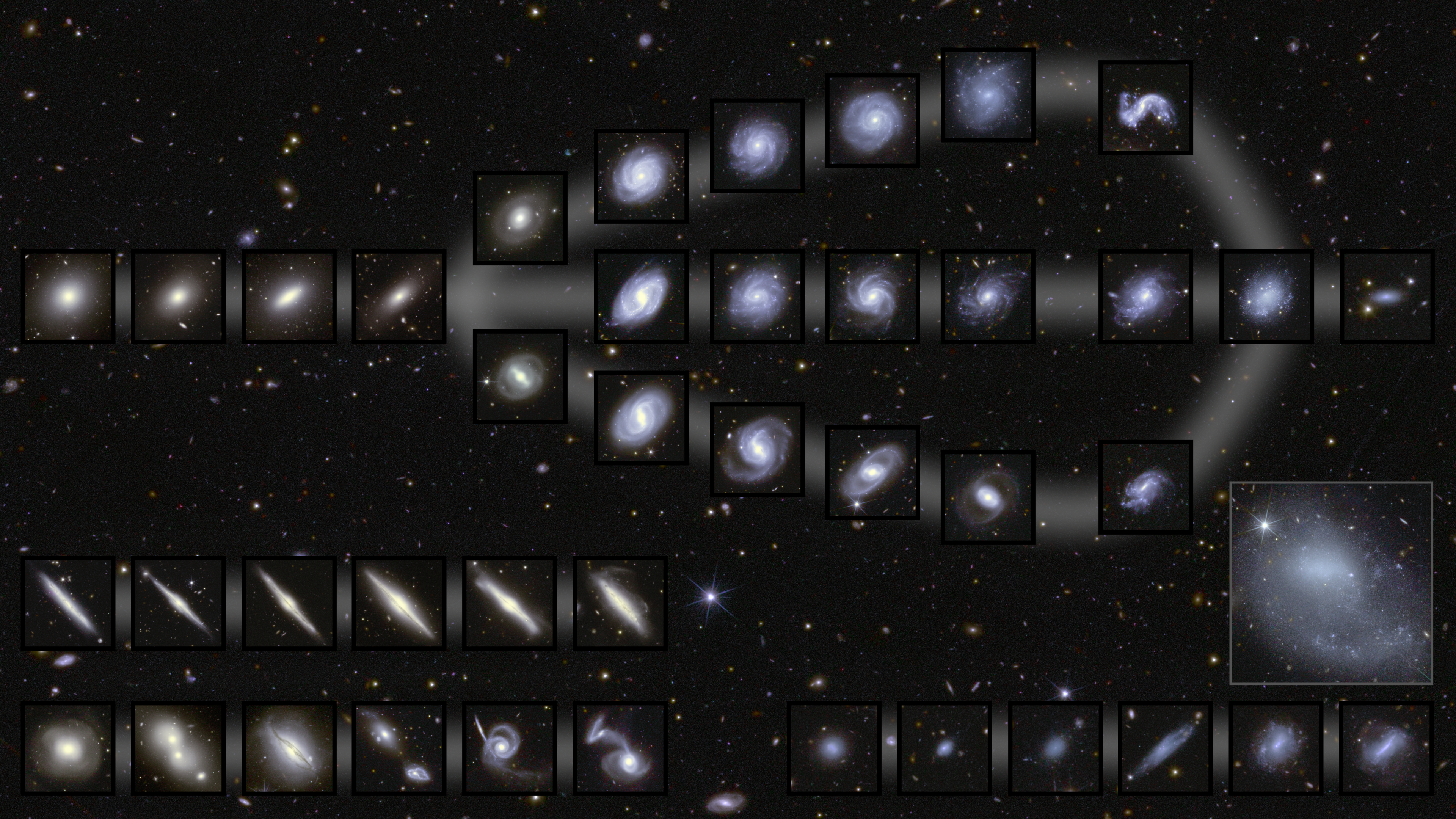
By way of a quick follow-up to yesterday’s post, here’s another Euclid Q1 product. This one is an updated version of the famous “Tuning Fork” representation of galaxy morphology:
Credits: Diagram: ESA/Euclid/Euclid Consortium/NASA, Diagram by J.-C. Cuillandre, L. Quilley, F. Marleau. Images alone: ESA/Euclid/Euclid Consortium/NASA, image processing by J.-C. Cuillandre, E. Bertin, G. Anselmi
You can click on the image to make it (much) bigger.
A galaxy’s structure is a sign of its formation history and the environment in which it resides. Since early on, astronomers have ordered galaxies according to their visible structure – as a basis to understanding the underlying physics: This panorama of galaxies’ structure shows the ‘classical’ morphological sequence from ellipticals (E, left) to lenticulars (S0) through spirals (S) to irregulars and dwarfs (right). The fork divides barred and unbarred spiral families: originally only SA (unbarred) and SB (barred) galaxies were arranged in a ‘tuning fork’ layout, the addition of SAB (weakly barred) galaxies as a third branch is making this term increasingly challenging to use. Lowercase letters a to d indicate progressively later spiral stages (tighter to looser arms), the trailing m (e.g., SAm) denotes Magellanic, very-late-type systems (patchy, often one-armed). The Milky Way is classified as an SBc galaxy.
Below the main sequence there are three auxiliary panels showing objects not represented in the fork: (1) spiral galaxies seen edge-on, with varying bulge-to-disk ratios and warps; (2) interacting and merging galaxies illustrating gravitationally driven morphological change; and (3) the morphological diversity of dwarf galaxies.
You can read more about this image and the other Q1 results here. You can also find an interactive version of the plot here.
I haven’t posted anything recently about the European Space Agency’s Euclid mission, but I can remedy that by passing on a new image with text from the accompanying press release. This is actually just one of a batch of new science results emerging from the first `Quick Release’ (Q1) data; I blogged about the first set of Q1 results here.
Image description: The focus of the image is a portion of LDN 1641, an interstellar nebula in the constellation of Orion. In this view, a deep-black background is sprinkled with a multitude of dots (stars) of different sizes and shades of bright white. Across the sea of stars, a web of fuzzy tendrils and ribbons in varying shades of orange and brown rises from the bottom of the image towards the top-right like thin coils of smoke.
Technical details: The colour image was created from NISP observations in the Y-, J- and H-bands, rendered blue, green and red, respectively. The size of the image is 11 232 x 12 576 pixels. The jagged boundary is due to the gaps in the array of NISP’s sixteen detectors, and the way the observations were taken with small spatial offsets and rotations to create the whole image. This is a common effect in astronomical wide-field images.
Accompanying Press Release
The above view of interstellar gas and dust was captured by the European Space Agency’s Euclid space telescope. The nebula is part of a so-called dark cloud, named LDN 1641. It sits at about 1300 light-years from Earth, within a sprawling complex of dusty gas clouds where stars are being formed, in the constellation of Orion.
This is because dust grains block visible light from stars behind them very efficiently but are much less effective at dimming near-infrared light.
The nebula is teeming with very young stars. Some of the objects embedded in the dusty surroundings spew out material – a sign of stars being formed. The outflows appear as magenta-coloured spots and coils when zooming into the image.
In the upper left, obstruction by dust diminishes and the view opens toward the more distant Universe with many galaxies lurking beyond the stars of our own galaxy.
Euclid observed this region of the sky in September 2023 to fine-tune its pointing ability. For the guiding tests, the operations team required a field of view where only a few stars would be detectable in visible light; this portion of LDN 1641 proved to be the most suitable area of the sky accessible to Euclid at the time.
The tests were successful and helped ensure that Euclid could point reliably and very precisely in the desired direction. This ability is key to delivering extremely sharp astronomical images of large patches of sky, at a fast pace. The data for this image, which is about 0.64 square degrees in size – or more than three times the area of the full Moon on the sky – were collected in just under five hours of observations.
Euclid is surveying the sky to create the most extensive 3D map of the extragalactic Universe ever made. Its main objective is to enable scientists to pin down the mysterious nature of dark matter and dark energy.
In visible light this region of the sky appears mostly dark, with few stars dotting what seems to be a primarily empty background. But, by imaging the cloud with the infrared eyes of its NISP instrument, Euclid reveals a multitude of stars shining through a tapestry of dust and gas.
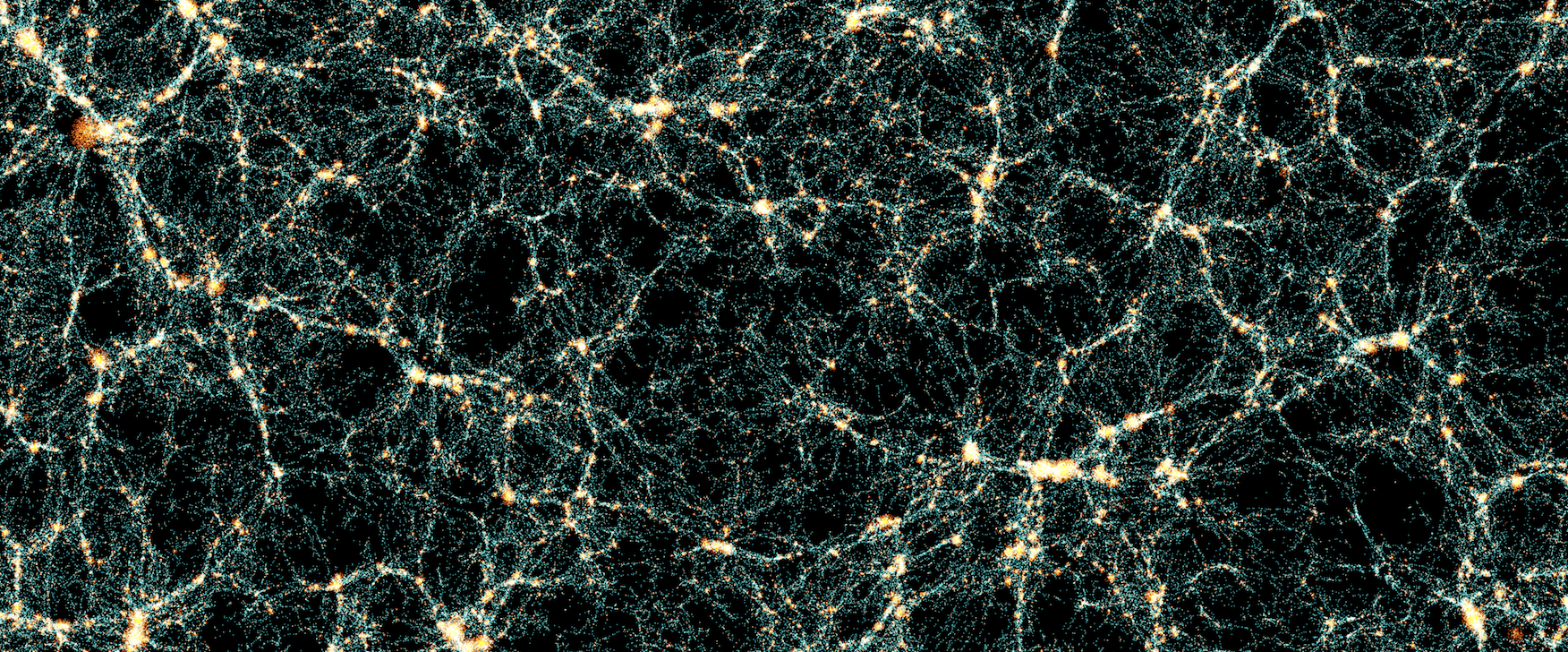
I was thinking earlier today that it’s been a while since I last posted anything about the European Space Agency’s Euclid Mission but I’ve got an excuse to remedy that today because there is a brand new a press release about the Euclid Consortium’s Flagship 2 simulations, a (low-resolution) visual representation of one of which is shown above.
The news is that the largest ever synthetic galaxy catalogue is now public; a team of 8 institutions within the Euclid Consortium, led by the Institute of Space Sciences (ICE-CSIC) and the Port d’Informació Científica (PIC) in Barcelona have developed this `mock’ catalogue, which includes 3.4 billion galaxies, each with 400 modelled properties available for the scientific community. It was constructed to help analyse data from the Euclid mission, but has many other potential uses so is being shared otuside the Consortium.
You can read more about this catalogue, and also find out how the access the simulated catalogues, here. You could also read the scientific paper describing the flagship simulations here.
P.S. The first main data release from Euclid (known to its friends as DR1) will take please on October 21, 2026. That’s just 13 months away…
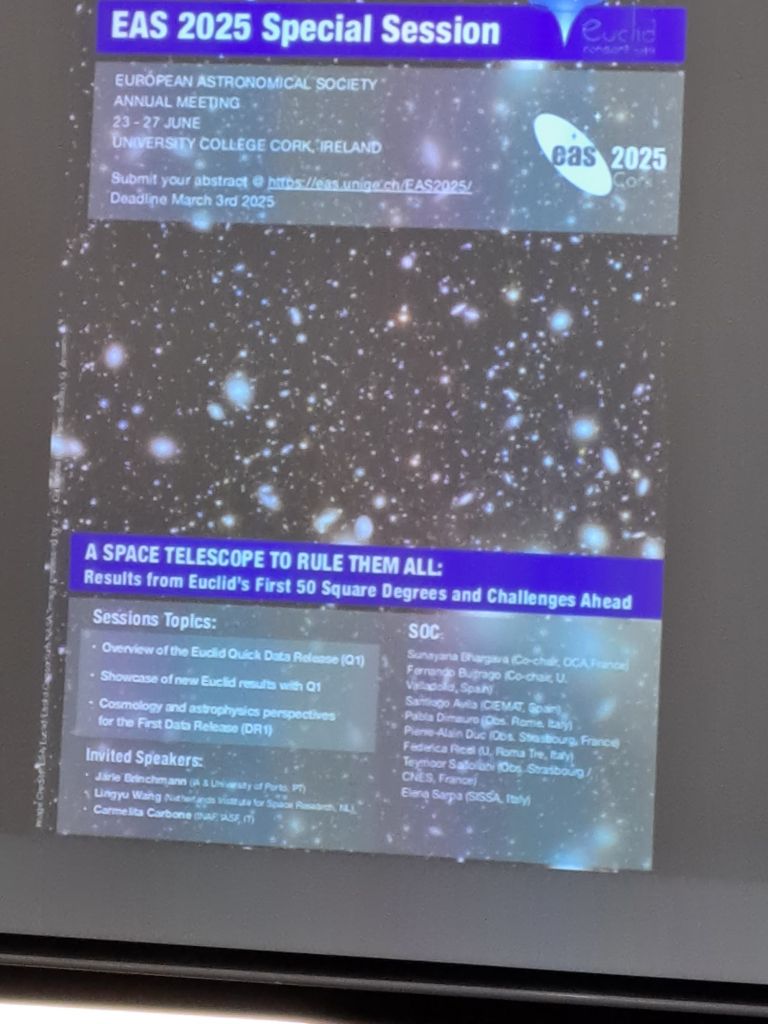
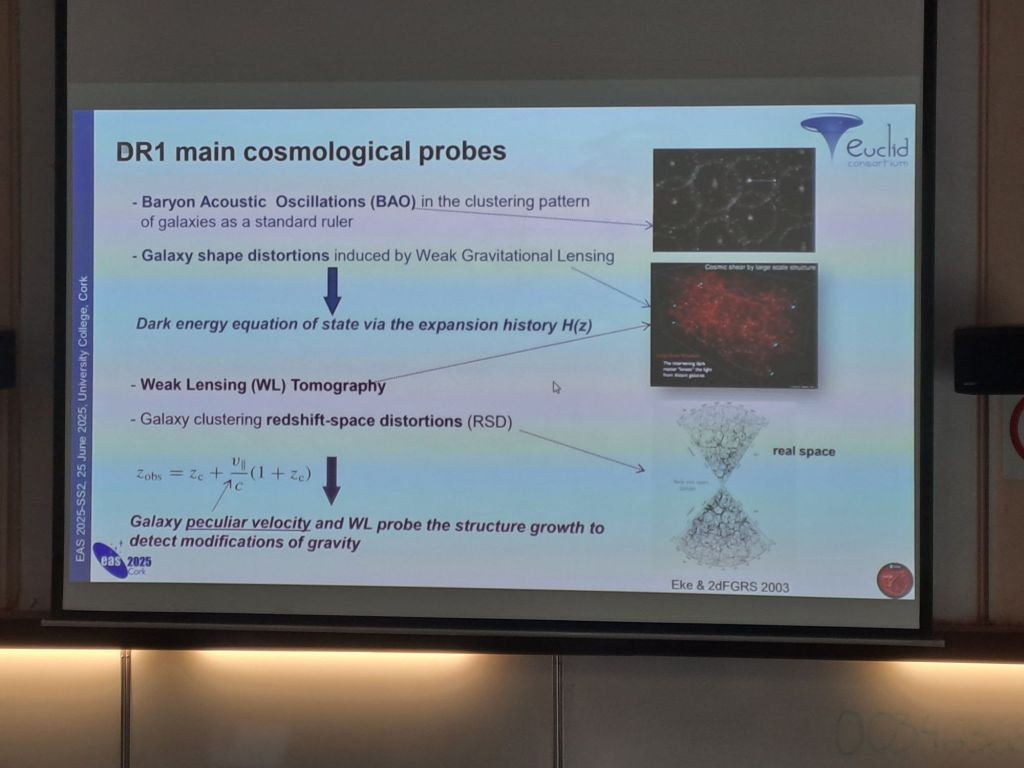
I spent most of today at the EAS 2025 sessions about Euclid. These were mainly about the Q1 data release I blogged about here, although there were some talks about what to expect about the first full data release (DR1), which is due towards the end of next year (2026), before I retire.
There were three Euclid sessions, one in the morning and two in the afternoon; I’m writing this during the last of these.
I was reminded this morning that the word “plenary” is derived from the Latin plenus, meaning “full”. This explains why there are no free seats for the plenary session, so I had to watch the stream in one of the overflow theatres.
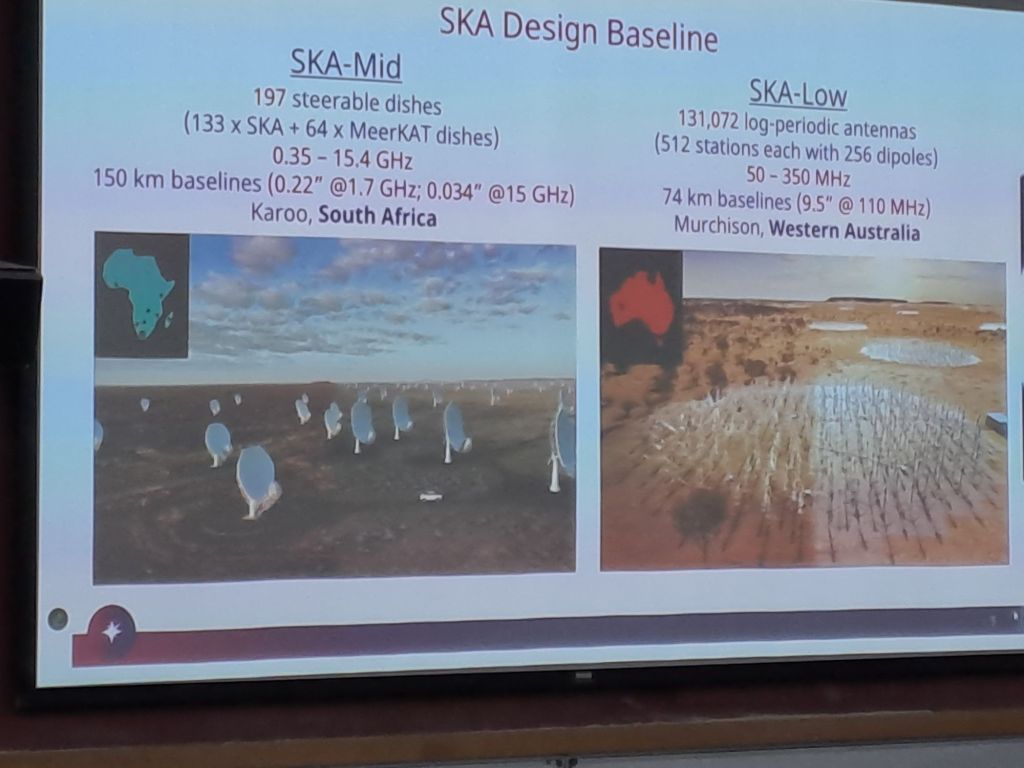
I also attended a lunchtime session about the Square Kilometre Array Observatory (SKAO). This was interesting, though the first full data release from SKAO will not happen until after I’ve retired.
And, to end the day, I’m at a reception and meeting of SKA Ireland, a group campaigning for Ireland to join the SKAO.. There’s win.
On Friday (9th May), the last day of undergraduate teaching at Maynooth, I gave the last lecture in my module on Particle Physics. I actually finished the syllabus on Tuesday (6th) so the final one was more a revision class than a lecture. I used it to go through some past examination questions and (try to) answer some general points raised by the class.
What surprised me about this lecture was that, as has usually been the case, there was more-or-less a full attendance. Examinations in Maynooth start on Friday (May 16th), but the Particle Physics examination is not until May 27th, near the end of the examination period. I therefore expected that many students would be concentrating on their revision for their other modules, which have exams earlier in the season or finishing their projects (which are due in before the exams start). There were one or two absences, but most came anyway. In fact there was even an extra student, one of our MSc students. When I saw him at the back of the lecture hall I asked, jokingly, why he had come. He replied “I haven’t got anything better to do”. I wasn’t sure how to interpret that!
That lecture was at 11am. Later that day, at 3pm, I gave a Departmental colloquium (which had quite a big audience). The title was Euclid: The Story So Far and the abstract was
The European Space Agency’s Euclid satellite was launched on 1st July 2023 and, after instrument calibration and performance verification, the main cosmological survey is now well under way. In this talk I will explain the main science goals of Euclid, give a brief summary of progress so far, showcase some of the science results already obtained, and set out the time line for future developments, including the main data releases and cosmological analysis.
The audience for these talks is very mixed: experimental and theoretical physics staff, postgraduates and even some undergraduate students (including some who were in my lecture earlier) so it was quite a general talk rather than one I might give to an specialist astrophysics audience. If you’re interested you can find the slides here.
Having a quick cup of tea after the end of the talk and before I headed off to catch the train, I talked briefly with a student who is taking his final examinations at Maynooth this year. He told me that I had actually given the first lecture he attended when he had just started his first year and the colloquium was the last talk he would attend at Maynooth. That would be the case for quite a few students in the audience, I suppose, but it won’t be true for any in future: I am no longer teaching any modules taken by first year students, and I’ll be retired when the current first year students graduate…
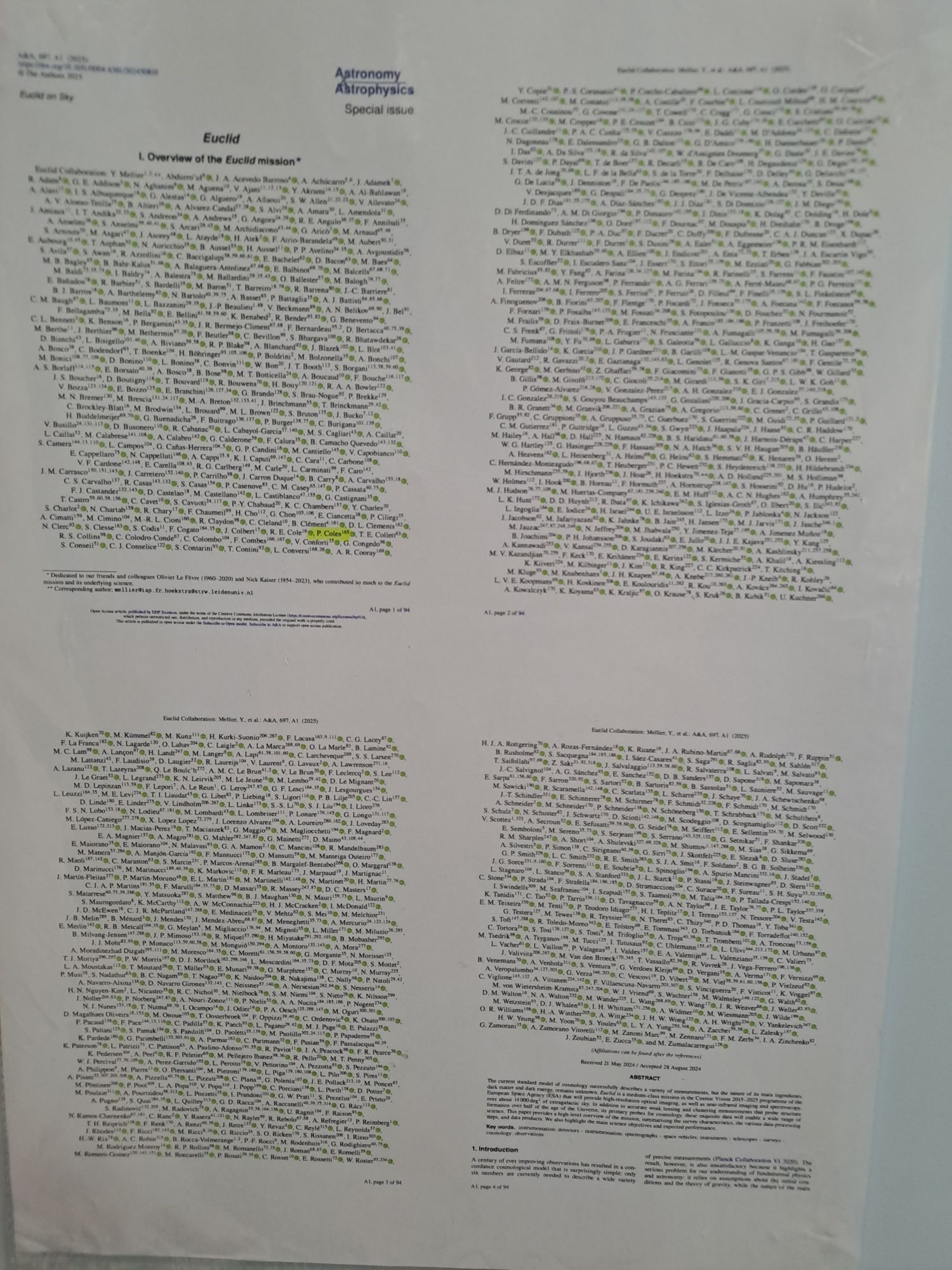
I haven’t posted much recently about the European Space Agency’s Euclid Mission but I’ve got an excuse to remedy that today as I’ve just seen that the Special Issue of Astronomy & Astrophysics called Euclid on Sky has at last been published (with a date of 30th April 2025). This contains the main mission and instrument overview papers as well as scientific papers relating to the Early Release Observations. All the individual papers have been on arXiv for some time already.
The main mission overview paper has 1139 authors (including yours truly); that’s definitely the longest author list I’ve ever been on! The arXiv version has been available for almost a year and has already got 254 citations. Here is the abstract:
The current standard model of cosmology successfully describes a variety of measurements, but the nature of its main ingredients, dark matter and dark energy, remains unknown. Euclid is a medium-class mission in the Cosmic Vision 2015-2025 programme of the European Space Agency (ESA) that will provide high-resolution optical imaging, as well as near-infrared imaging and spectroscopy, over about 14,000 deg^2 of extragalactic sky. In addition to accurate weak lensing and clustering measurements that probe structure formation over half of the age of the Universe, its primary probes for cosmology, these exquisite data will enable a wide range of science. This paper provides a high-level overview of the mission, summarising the survey characteristics, the various data-processing steps, and data products. We also highlight the main science objectives and expected performance.
The first I knew about today’s massive failure of electricy grids across the Iberian peninsula was at 4 o’clock this afternoon, when I tuned in to a regular Euclid telecon and found that the expected speaker wasn’t able to give their presentation because there was no power in Spain. I was subsequently shocked to discover the scale of the outage, the cause of which remains unknown (at least to me). I’ve often thought that Ireland’s power grid was a bit unstable but I’ve never known the whole country to be shut down!
There has been speculation about an “unusual atmospheric phenomenon” being the cause, but that seems somewhat implausible. Indeed, nothing I’ve read so far about the cause of this event makes much sense.
This time last year I was in Barcelona, and today’s events got me thinking what it would have been like to be there without any power. The apartment I was living in was all-electric so there would have been little I could do – no light, no cooking, no air conditioning, no internet, no TV, no radio. I was on the top floor and the lift was powered by electricity so I would have had to use the stairs to get in or out. It would have been an interesting experience to see the city in total darkness from my balcony.
Had I been in the Department of Physics when the power went off I probably would have had to walk home, as the Metro would not have been running and with all the traffic lights off the roads would be even more chaotic than usual. That would have meant a walk of an hour or so, which would have been annoying, but feasible. Come to think of it, people actually on the Metro when the failure happened would have been stuck in a tunnel which must have been very unpleasant.
Anyway I hope all my friends and colleagues in Spain are not too badly inconvenienced and that this very weird event doesn’t lead to any serious issues. I understand the power supply to hospitals is secure, which is a relief. I must admit though I am very curious to learn the cause of this catastrophic failure. Was it human error? Deliberate sabotage? Or was it really an “unusual atmospheric phenomenon”? No doubt there will be a full investigation and we’ll find out in due course.
The scientific community has been waiting for several weeks to find out precisely how heavily the Trump/Musk axe would fall on the National Aeronautics and Space Administration (NASA); this article reveals the shocking scale of the proposed cuts.
Under the proposal, NASA’s Science Mission Directorate (SMD) would receive almost a 50% reduction in its Budget. Within the individual SMD Divisions:
Planetary Science would have its budget cut from the current level of $2,717 Million to $1,929 Million;
Earth Science would see a cut from the current budget level of $2,195 Million to $1,033 Million;
Astrophysics would decrease from its current level of $1,530 Million to $487 Million;
Heliophysics budget would decrease from its current level of $805 M to $455 M.
It’s very bad news all round for NASA science, but the worst hit is Astrophysics (which includes cosmology) where the proposed cut is about two-thirds, which would be truly devastating. According to the American Astronomical Society,
The proposed cut to the astrophysics budget is likely to result in the cancellation of the Nancy Grace Roman Space Telescope, a Great Observatory that would revolutionize our understanding of dark matter and dark energy while also detecting hundreds of thousands of planets in other solar systems. As the Roman Space Telescope is already fully assembled and on budget for a launch in two years, a cancellation of the mission would be a significant waste of taxpayer dollars.
The Nancy Grace Roman Space Telescope (formerly known as WFIRST) is in many ways complementary to Euclid, though it will survey a smaller area of sky it has an telescope twice the diameter of Euclid so will reach fainter magnitudes. It has been threatened before, in Trump’s previous administration, but it survived. It is not clear that it will do so again as the current composition of Congress is not weighted favourably.
Those of us outside the United States can do little, but in case anyone reading this is in America the AAS has an Action Alert for you to contact your representative(s) to vote against the proposal.
Today is Q1 Day! This means the first public release of data from the full Euclid Survey. It’s only a very small portion (0.4%) of the survey – just 63 square degrees on the sky, while the full survey will be over 14,000 square degrees – but in contrast to earlier data releases, this has been passed through the full Euclid Ground Segment so it represents the true quality of the data we can expect for the rest of the mission. There are no actual cosmology results yet – there isn’t enough data to address the key science goals of Euclid – but there are some great illustrations of the many byproducts of a survey of this type.
Update: here’s one of the Cosmology Talks video by Shaun Hotchkiss with two members of the Euclid Consortium commenting on today’s data release:
As well as the splash of press coverage likely to follow the lifting of today’s embargo, there will be a deluge of Q1-related papers hit the arXiv on 20th March. You can find details here.
Here’s a gallery of pretty pictures released today. These are low resolution versions; try opening the image in a new tab to see it without the caption. You can find and explore higher resolution images on ESASky (see below). Picture credits are: ESA/Euclid/Euclid Consortium/NASA, image processing by J.-C. Cuillandre, E. Bertin, G. Anselmi for the first six images, then ESA/Euclid/Euclid Consortium/NASA, image processing by M. Walmsley, M. Huertas-Company, J.-C. Cuillandre for the next two (bottom row); and ESA/Euclid/Euclid Consortium/NASA; ESA/Gaia/DPAC; ESA/Planck Collaboration for the last one.
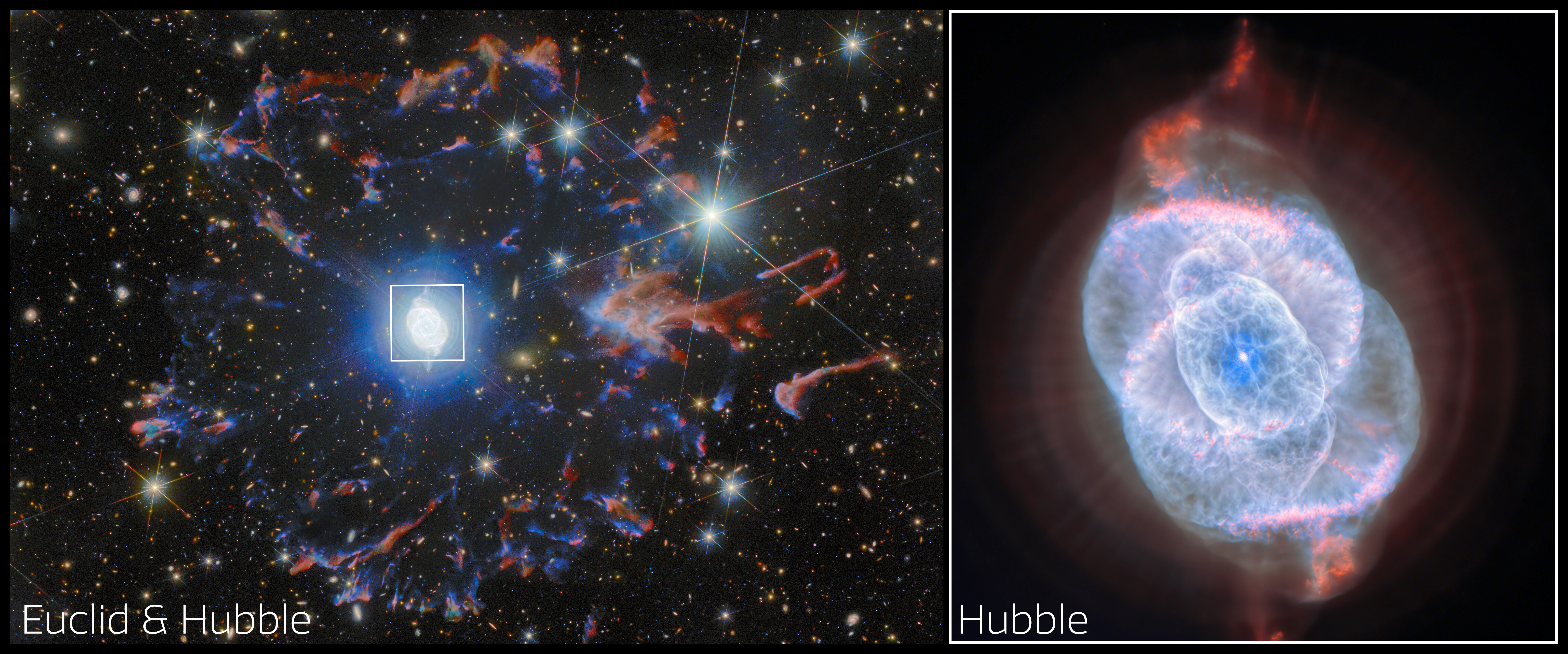
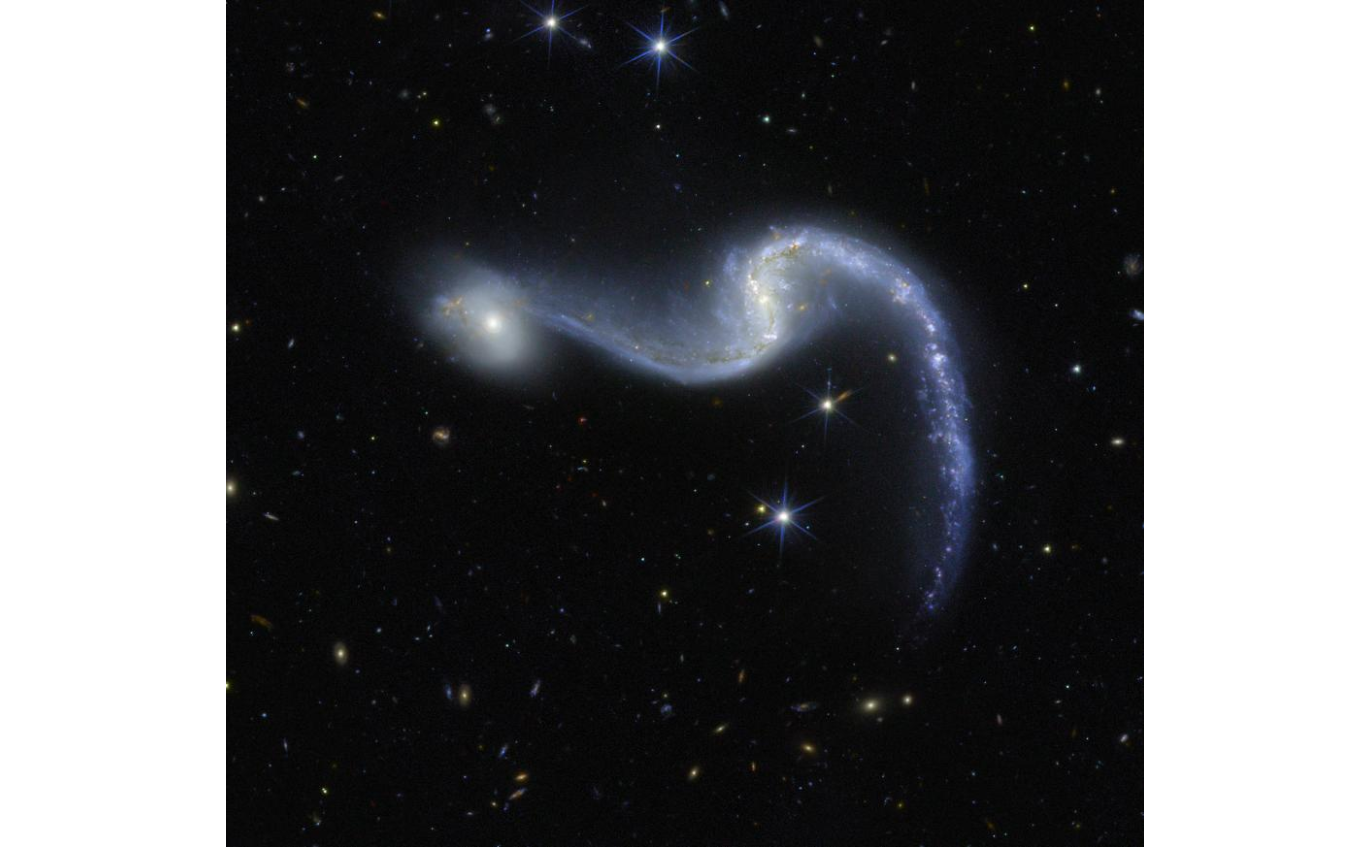
This is Euclid’s Deep Field Fornax. After only one observation, the space telescope already spotted 4.5 million galaxies in this field. In the coming years, Euclid will make 52 observations of this field to reach its full depth. This is a zoom-in of Euclid’s Deep Field North, showing the Cat’s Eye Nebula in the centre of the image, around 3000 light-years away. Also known as NGC 6543, this nebula is a visual ‘fossil record’ of the dynamics and late evolution of a dying star. This dying star is shedding its outer colourful shells. This is Euclid’s Deep Field North. After only one observation, the space telescope has already spotted more than ten million galaxies in this field. It is also very rich in Milky Way stars, as it is close to the Galactic plane. In the coming years, Euclid will make 32 observations of this field to reach its full depth. This is Euclid’s Deep Field South. After only one observation, the space telescope already spotted more than 11 million galaxies in this field. In the coming years, Euclid will make more observations of this field to reach its full depth. This image shows an area of Euclid’s Deep Field South. The area is zoomed in 16 times compared to the large mosaic.This image shows an area of Euclid’s Deep Field South. The area is zoomed in 70 times compared to the large mosaic.This image shows examples of galaxies in different shapes, all captured by Euclid during its first observations of the Deep Field areas. This image shows examples of gravitational lenses that Euclid captured in its first observations of the Deep Field areas. This graphic shows the location of the Euclid Deep Fields (yellow). This all-sky view is an overlay of ESA Gaia’s star map from its second data release in 2018 and ESA Planck’s dust map from 2014.
I’m taking the liberty to append the official ESA Press Release, which follows:
–o–
On 19 March 2025, the European Space Agency’s Euclid mission released its first batch of survey data, including a preview of its deep fields. Here, hundreds of thousands of galaxies in different shapes and sizes take centre stage and show a glimpse of their large-scale organisation in the cosmic web.
Covering a huge area of the sky in three mosaics, the data release also includes numerous galaxy clusters, active galactic nuclei and transient phenomena, as well as the first classification survey of more than 380,000 galaxies and 500 gravitational lens candidates compiled through combined artificial intelligence and citizen science efforts. All of this sets the scene for the broad range of topics that the dark Universe detective Euclid is set to address with its rich dataset.
“Euclid shows itself once again to be the ultimate discovery machine. It is surveying galaxies on the grandest scale, enabling us to explore our cosmic history and the invisible forces shaping our Universe,” says ESA’s Director of Science, Prof. Carole Mundell.
“With the release of the first data from Euclid’s survey, we are unlocking a treasure trove of information for scientists to dive into and tackle some of the most intriguing questions in modern science. With this, ESA is delivering on its commitment to enable scientific progress for generations to come.”
Tracing out the cosmic web in Euclid’s deep fields
Euclid has scouted out the three areas in the sky where it will eventually provide the deepest observations of its mission. In just one week of observations, with one scan of each region so far, Euclid already spotted 26 million galaxies. The farthest of those are up to 10.5 billion light-years away. The fields also contain a small population of bright quasars that can be seen much farther away. In the coming years, Euclid will pass over these three regions tens of times, capturing many more faraway galaxies, making these fields truly ‘deep’ by the end of the nominal mission in 2030.
But the first glimpse of 63 square degrees of the sky, the equivalent area of more than 300 times the full Moon, already gives an impressive preview of the scale of Euclid’s grand cosmic atlas when the mission is complete. This atlas will cover one-third of the entire sky – 14 000 square degrees – in this high-quality detail.
“It’s impressive how one observation of the deep field areas has already given us a wealth of data that can be used for a variety of purposes in astronomy: from galaxy shapes, to strong lenses, clusters, and star formation, among others,” says Valeria Pettorino, ESA’s Euclid project scientist. “We will observe each deep field between 30 and 52 times over Euclid’s six year mission, each time improving the resolution of how we see those areas, and the number of objects we manage to observe. Just think of the discoveries that await us.”
“The full potential of Euclid to learn more about dark matter and dark energy from the large-scale structure of the cosmic web will be reached only when it has completed its entire survey. Yet the volume of this first data release already offers us a unique first glance at the large-scale organisation of galaxies, which we can use to learn more about galaxy formation over time,” says Clotilde Laigle, Euclid Consortium scientist and data processing expert based at the Institut d’Astrophysique de Paris, France.
Humans and AI classify more than 380 000 galaxies
Euclid is expected to capture images of more than 1.5 billion galaxies over six years, sending back around 100 GB of data every day. Such an impressively large dataset creates incredible discovery opportunities, but huge challenges when it comes to searching for, analysing and cataloguing galaxies. The advancement of artificial intelligence (AI) algorithms, in combination with thousands of human citizen science volunteers and experts, is playing a critical role.
“We’re at a pivotal moment in terms of how we tackle large-scale surveys in astronomy. AI is a fundamental and necessary part of our process in order to fully exploit Euclid’s vast dataset,” says Mike Walmsley, Euclid Consortium scientist based at the University of Toronto, Canada, who has been heavily involved in astronomical deep learning algorithms for the last decade.
“We’re building the tools as well as providing the measurements. In this way we can deliver cutting-edge science in a matter of weeks, compared with the years-long process of analysing big surveys like these in the past,” he adds.
A major milestone in this effort is the first detailed catalogue of more than 380 000 galaxies, which have been classified according to features such as spiral arms, central bars, and tidal tails that infer merging galaxies. The catalogue is created by the ‘Zoobot’ AI algorithm. During an intensive one-month campaign on Galaxy Zoo last year, 9976 human volunteers worked together to teach Zoobot to recognise galaxy features by classifying Euclid images.
This first catalogue released today represents just 0.4% of the total number of galaxies of similar resolution expected to be imaged over Euclid’s lifetime. The final catalogue will present the detailed morphology of at least an order of magnitude more galaxies than ever measured before, helping scientists answer questions like how spiral arms form and how supermassive black holes grow.
“We’re looking at galaxies from inside to out, from how their internal structures govern their evolution to how the external environment shapes their transformation over time,” adds Clotilde.
“Euclid is a goldmine of data and its impact will be far-reaching, from galaxy evolution to the bigger-picture cosmology goals of the mission.”
Gravitational lensing discovery engine Light travelling towards us from distant galaxies is bent and distorted by normal and dark matter in the foreground. This effect is called gravitational lensing and it is one of the tools that Euclid uses to reveal how dark matter is distributed through the Universe.
When the distortions are very apparent, it is known as ‘strong lensing’, which can result in features such as Einstein rings, arcs, and multiple imaged lenses.
With the help of these models, Euclid will capture some 7000 candidates in the major cosmology data release planned for the end of 2026, and in the order of 100 000 galaxy-galaxy strong lenses by the end of the mission, around 100 times more than currently known.
Euclid will also be able to measure ‘weak’ lensing, when the distortions of background sources are much smaller. Such subtle distortions can only be detected by analysing large numbers of galaxies in a statistical way. In the coming years, Euclid will measure the distorted shapes of billions of galaxies over 10 billion years of cosmic history, thus providing a 3D view of the distribution of dark matter in our Universe.
“Euclid is very quickly covering larger and larger areas of the sky thanks to its unprecedented surveying capabilities,” says Pierre Ferruit, ESA’s Euclid mission manager, who is based at ESA’s European Space Astronomy Centre (ESAC) in Spain, home of the Astronomy Science Archive where Euclid’s data will be made available.
“This data release highlights the incredible potential we have by combining the strengths of Euclid, AI, citizen science and experts into a single discovery engine that will be essential in tackling the vast volume of data returned by Euclid.”
Notes to editors
As of 19 March 2025, Euclid has observed about 2000 square degrees, approximately 14% of the total survey area (14 000 square degrees). The three deep fields together comprise 63.1 square degrees.
Euclid ‘quick’ releases, such as the one of 19 March, are of selected areas, intended to demonstrate the data products to be expected in the major data releases that follow, and to allow scientists to sharpen their data analysis tools in preparation. The mission’s first cosmology data will be released to the community in October 2026. Data accumulated over additional, multiple passes of the deep field locations will be included in the 2026 release.
The three deep field previews can now be explored in ESASky from 19 March 12:00 CET onwards:
Euclid was launched in July 2023 and started its routine science observations on 14 February 2024. In November 2023 and May 2024, the world got its first glimpses of the quality of Euclid’s images, and in October 2024 the first piece of its great map of the Universe was released.
Euclid is a European mission, built and operated by ESA, with contributions from its Member States and NASA. The Euclid Consortium – consisting of more than 2000 scientists from 300 institutes in 15 European countries, the USA, Canada and Japan – is responsible for providing the scientific instruments and scientific data analysis. ESA selected Thales Alenia Space as prime contractor for the construction of the satellite and its service module, with Airbus Defence and Space chosen to develop the payload module, including the telescope. NASA provided the detectors of the Near-Infrared Spectrometer and Photometer, NISP. Euclid is a medium-class mission in ESA’s Cosmic Vision Programme.
Usually I disapprove of using a wine glass for any purpose other than drinking wine, but here’s a very neat short video by Phil Marshall explaining how you can use a one to simulate a strong gravitational lens such as the system that produced the wonderful Einstein ring recently discovered by Euclid. More specifically it shows how perfect alignment leads to a ring whereas other configurations can produce multiple images or arcs.
If you’re planning to try this at home, please remember to empty your glass beforehand.
The views presented here are personal and not necessarily those of my employer (or anyone else for that matter).
Feel free to comment on any of the posts on this blog but comments may be moderated; anonymous comments and any considered by me to be vexatious and/or abusive and/or defamatory will not be accepted. I do not necessarily endorse, support, sanction, encourage, verify or agree with the opinions or statements of any information or other content in the comments on this site and do not in any way guarantee their accuracy or reliability.