Archive for the History Category

Sine and Other Curves

Posted in History, mathematics with tags , , , , , , on December 10, 2022 by telescoper

Last week I learned something I never knew before about the origin of the word sine as in the well-known trigonometric function sin(x). I came to this profound knowledge via a circuitous route which I won’t go into now, involving the Italian word for sine which is seno. Another meaning of this word in Italian is “breast”. The same word is used in both senses in Spanish, and there’s a word in French, sein, which also means breast, although the French use the word sinus for sine. The Latin word sinus is used for both sine and breast (among other things); its primary meaning is a bend or a curve.

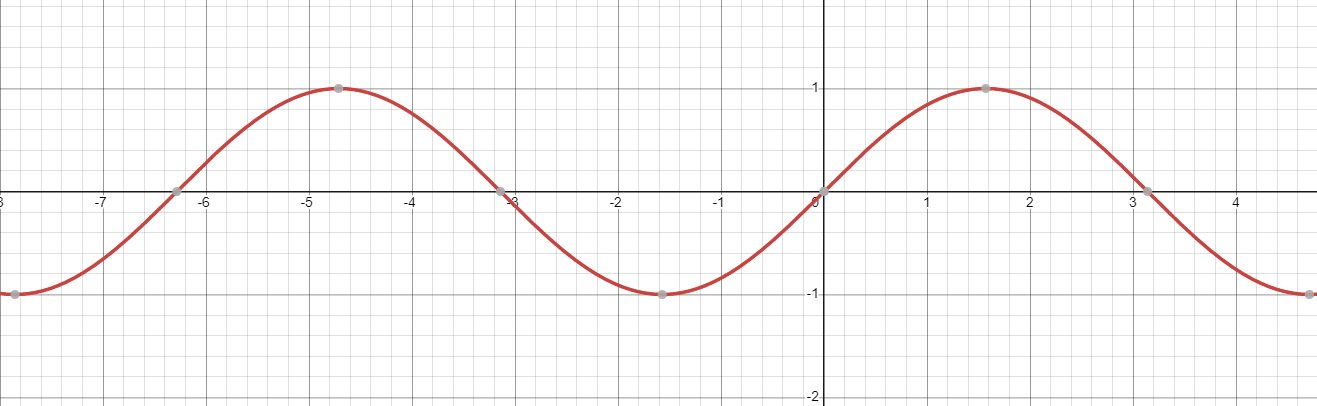
A friend suggested that it has this name because of the shape of the curve (above) but I didn’t think it would be so simple, and indeed it isn’t.

Since trigonometry was developed for largely for the purpose of compiling astronomical tables, I looked in the excellent History of Ancient Mathematical Astronomy by Otto Neugebauer. What follows is a quick summary.

Astronomical computations only became possible after the adoption of the Babylonian sexagesimal notation for numbers, which is why we still use seconds and minutes of arc. Trigonometry is indispensable in most such computations, such as passing from equatorial to ecliptic coordinates. This is needed for such things as calculating the time of sunrise and sunset. Spherical trigonometry was more important than plane trigonometry for this type of calculation, though both were developed alongside each other.

As an aside I’ll remark that I had to do spherical trigonometry at school, but I don’t think it’s taught anymore at that level. Because everything is done by computers nowadays it’s no longer such a big part of astronomy syllabuses even at university level either. I’m also of an age when we had to use the famous four-figure tables for sine and cosine. But I digress.

The first great work in the field of spherical trigonometry was Spherics by Menelaus of Alexandria which was written at the end of the First Century AD. If Menelaus compiled any trigonometric tables these have not survived. The earliest surviving work where trigonometry is fully developed is Ptolemy‘s Almagest which was written in the 2nd Century contains the first known trigonometric tables.

Almagest, however, does not use our modern trigonometric functions. Indeed, the only trigonometric function used and tabulated there was the chord, define in terms of modern sin(x) by 

chd(x)= 2 sin(x/2).

If you’re familiar with the double-angle formulae you will see that chd2(x)=2[1-cos(x)].

Sine was used by Persian astronomer and mathematician Abu al Wafa Buzjani in the 10th Century from which source it began t spread into Europe. The term had however been used elsewhere much earlier and many historians believe it was initially developed in India at least as early as the 6th century. Anyway, sine proved more convenient than chord, but its usage spread only very slowly in Europe. Nicolaus Copernicus used sine in the discussion of trigonometry in his De revolutionibus orbium coelestium but called it “half of the chord of the double angle”.

But what does all this have to do with breasts?

Well, the best explanation I’ve seen is that Indian mathematicians used the Sanskrit word jīva which means bow-string (as indeed does the Greek chordē). When Indian astronomical works were translated into Arabic, long before they reached Europe, the Indian term was translated as jīb. This word is written and pronounced in the same way as the word jayb which means the “hanging fold of a loose garment” or “breast pocket”, and this subsequently mistranslated into Latin as sinus “breast”.

I hope this clarifies the situation.

P.S. I’m told that if you Google seno iperbolico with your language set to Italian, you get some very interesting results…

The Special Beards of Relativity

Posted in Beards, History, The Universe and Stuff with tags , , , , , on December 7, 2022 by telescoper

I’ve recently moved on to the part about Special Relativity in my module on Mechanics and Special Relativity and this afternoon I’m going to talk about the Lorentz-Fitzgerald contraction or, as it’s properly called here in Ireland, the Fitzgerald-Lorentz contraction.

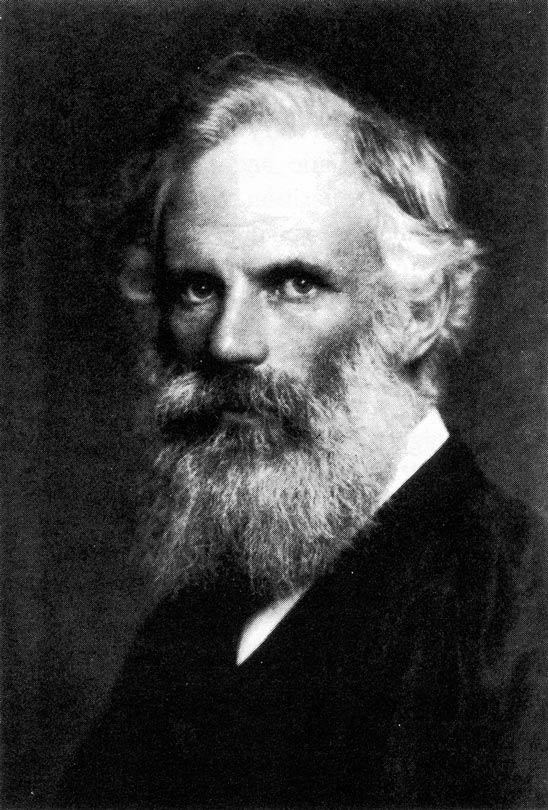
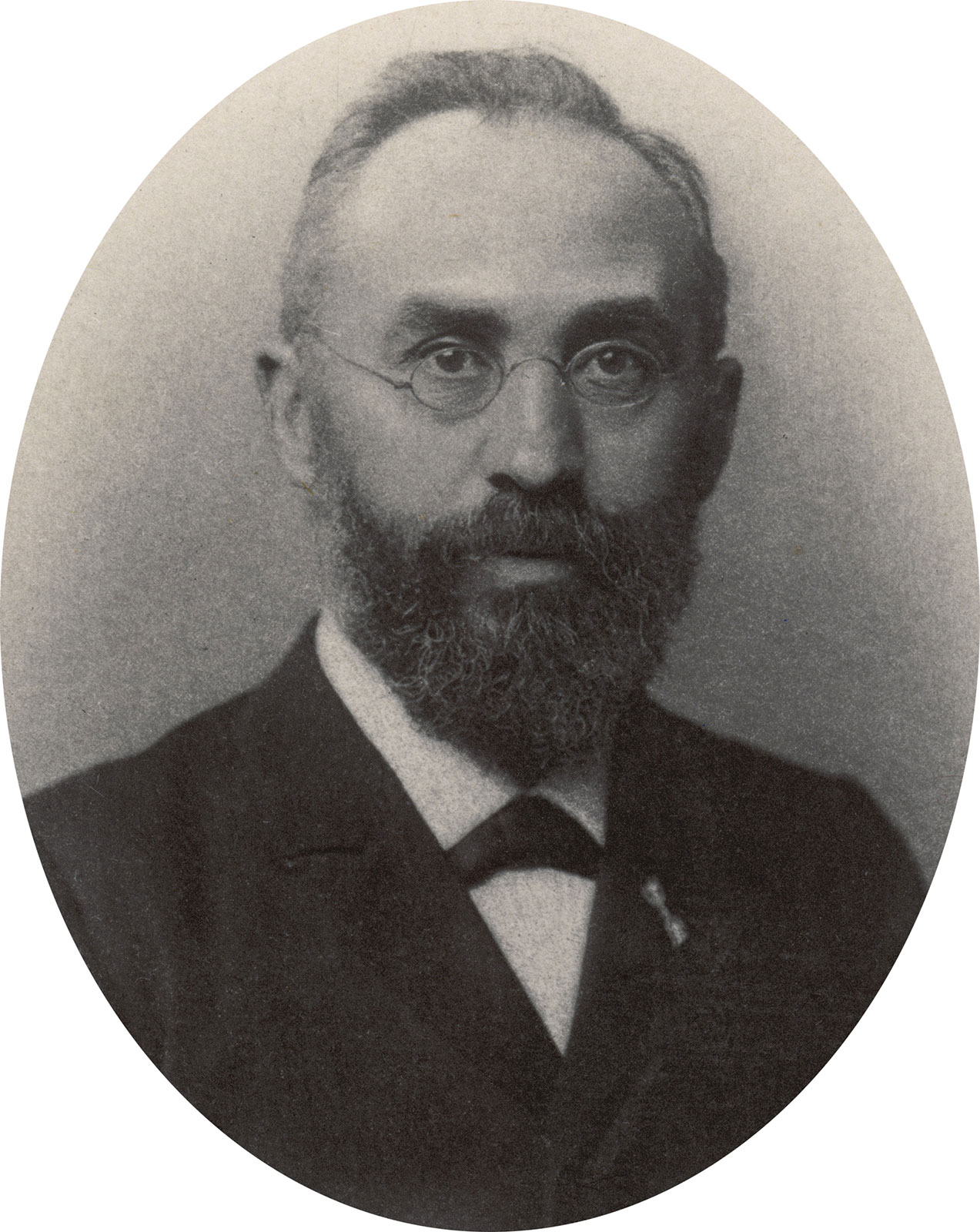
The first thing to point out is that the physicists George Francis Fitzgerald and Hendrik Lorentz, though of different nationality (the former Irish, the latter Dutch), both had fine beards:

One of the interesting things you find if you read about the history of physics just before Albert Einstein introduced his theory of special relativity in 1905 was how many people seemed to be on the verge of getting the idea around about the same time. Fitzgerald and Lorentz were two who were almost there; Poincaré was another. It was as if special relativity was `in the air’ at the time. It did, however, take a special genius like Einstein to crystallize all that thinking into a definite theory.

Special relativity is fun to teach, not least because it throws up interesting yet informative paradoxes (i.e. apparent logical contradictions) arising from  that you can use to start a discussion. They’re not really logical contradictions, of course. They just challenge `common sense’ notions, which is a good thing to do to get people thinking.

Anyway, I thought I’d mention one of my favorite such paradoxes arising from a simple Gedankenerfahrung (thought experiment) here.

Imagine you are in a railway carriage moving along a track at constant speed relative to the track. The carriage is dark, but at the centre of the carriage is a flash bulb. At one end (say the front) of the carriage is a portrait of Lorentz and at the other (say the back) a portrait of Fitzgerald; the pictures are equidistant from the bulb and next to each portrait is a clock.The two clocks are synchronized in the rest frame of the carriage.

At a particular time the flash bulb goes off, illuminating both portraits and both clocks for an instant.

It is an essential postulate of special relativity that the speed of light is the same to observers in any inertial frame, so that an observer at rest in the centre of the carriage sees both portraits illuminated simultaneously as indicated by the adjacent clocks. This is because the symmetry of the situation means that light has to travel the same distance to each portrait and back.

Now suppose we view the action from the point of view of a different inertial observer, at rest by the trackside rather than on the train, who is positioned right next to the centre of the carriage as the flash goes off. The light flash travels with the same speed in the second observer’s frame, but this observer sees* the back of the carriage moving towards the light signal and the front moving away. The result is therefore that this observer sees the two portraits light up at different times. In this case the portrait of Fitzgerald is lit up before the portrait of Lorentz.

Had the train been going in the opposite direction, Lorentz would have appeared before Fitzgerald. That just shows that whether its Lorentz-Fitzgerald contraction or Fitzgerald-Lorentz contraction is just a matter of your frame of reference…

But that’s not the paradoxical thing. The paradox is although the two portraits appear at different times to the trackside observer, the clocks nevertheless display the same time….

*You have to use your imagination a bit here, as the train has to be travelling at a decent fraction of the speed of light. It’s certainly not an Irish train.

Changing Time Again

Posted in History with tags , , on October 30, 2022 by telescoper

Some time ago, before the Covid-19 Pandemic, the European Parliament approved a directive that would abolish `Daylight Saving Time’. Unfortunately that plan has been ‘paused’ and this year we had to go through the usual rigmarole of putting the clocks back. Fortunately most devices do this automatically, though I have never figured out how to change the time on the clock on my cooker which means that we’re now in the 5 months of the year during which it shows the correct time.

I’ve long felt that the annual ritual of putting the clocks forward in the Spring and back again in the Autumn was a waste of time effort, so I’ll be glad when this silly practice is terminated. It would be far better in my view to stick with a single Mean Time throughout the year. I’m only disappointed that this hasn’t happened already.

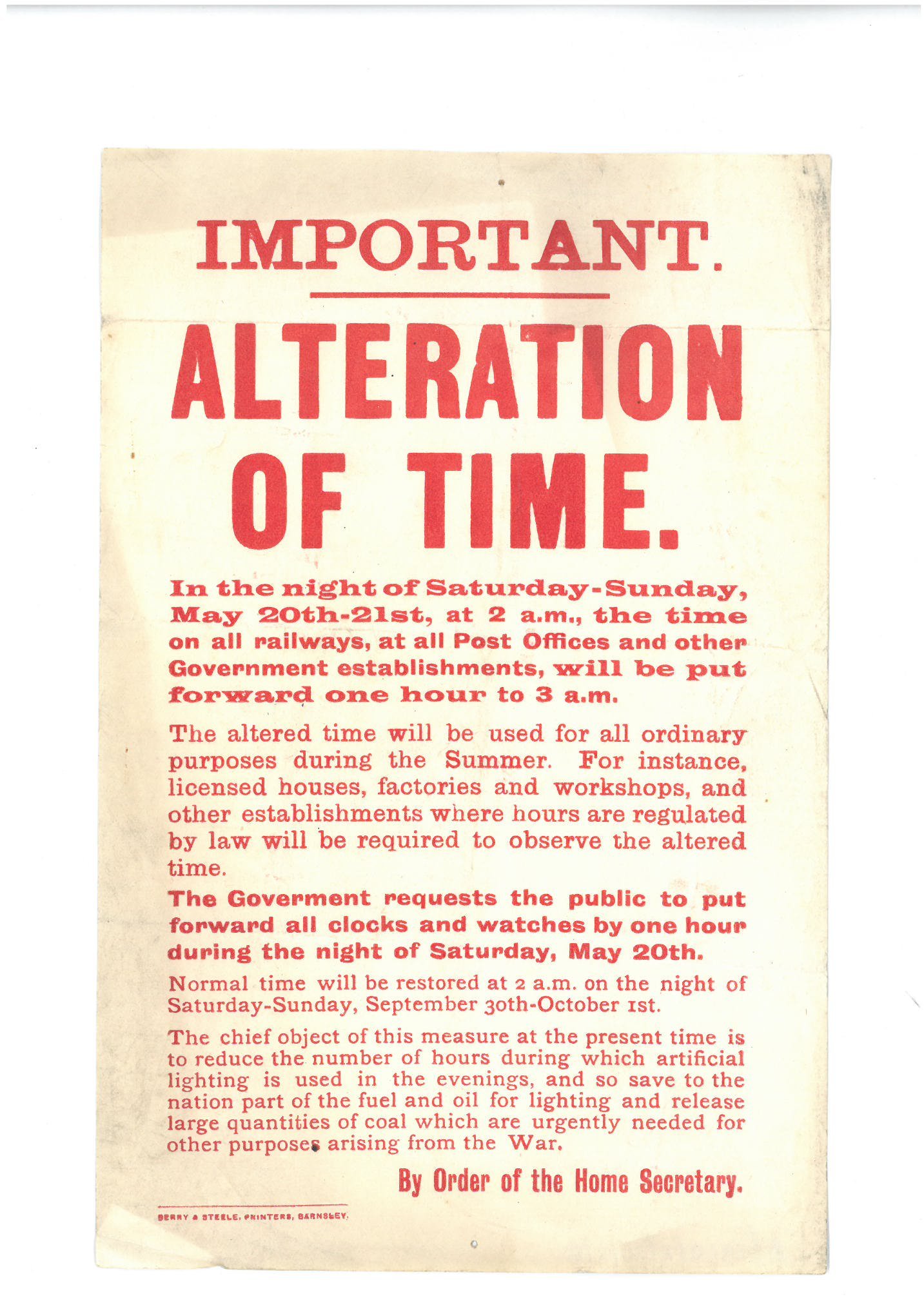
The marvellous poster above is from 1916, when British Summer Time was introduced. I was surprised to learn recently that the practice of changing clocks backwards and forwards in the UK is only about a hundred years old and was introduced as an emergency measure in wartime. To be honest I’m also surprised that the practice persists to this day, as I can’t see any real advantage in it. Any institution or organisation that really wants to change its working hours in summer can easily do so, but the world of work is far more flexible nowadays than it was a hundred years ago and I think very few would feel the need.

Anyway, while I am on about Mean Time, here is a another poster from 1916.

Until October 1916, clocks in Ireland were set to Dublin Mean Time, as defined at Dunsink Observatory, rather than at Greenwich. The adoption of GMT in Ireland was driven largely by the fact that the British authorities found that the time difference between Dublin and London had confused telegraphic communications during the Easter Rising earlier in 1916. Its imposition was therefore, at least in part, intended to bring Ireland under closer control. This did not go down well with Irish nationalists.

Ireland had not moved to Summer Time with Britain in May 1916 because of the Easter Rising. Dublin Mean Time was 25 minutes 21 seconds behind GMT but the change to GMT was introduced in Ireland at the same time as BST ended in the UK, hence the alteration by one hour minus 25 minutes 21 seconds, i.e. 34 minutes and 39 seconds as in the poster.

Britain will probably never scrap British Summer Time on the grounds that whatever the EU does must be bad. What will happen to Northern Ireland when Ireland scraps Daylight Saving Time is yet to be seen…

Remembering Violet Gibson

Posted in History, Politics with tags , , , on October 23, 2022 by telescoper

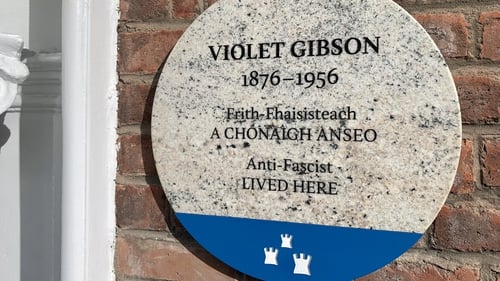
A few years ago I posted an item about Violet Gibson. Last week Dublin City Council unveiled a plaque in her memory, outside her childhood home, which reminded me of her story.

The story of Violet Gibson is both bizarre and tragic. She was born in 1876 into a well-to-do family living at No. 12 Merrion Square in Dublin, where the above plaque is now located. Her father, Edward Gibson, was made Baron Ashbourne in 1886. To cut a long story short, Violet Gibson turned up in Rome in 1926 where, at 11am on 26th April of that year, she attempted to shoot Fascist Leader Benito Mussolini with a pistol. She only failed in this task because Mussolini moved his head at the instant she pulled the trigger, and the bullet just grazed his nose. She tried to fire again, but her gun jammed. She was then seized by the angry mob of fascist supporters with whom she had mingled to get close enough to shoot. She was almost lynched but saved by the police. Eventually, the authorities came to the conclusion that she was insane and she was sent back to England. She spent the rest of her life in a psychiatric institution in Northampton. She died there in 1956, at the age of 79.

P.S. If you want to find out more about Violet Gibson, I recommend a book about her life called The Woman Who Shot Mussolini by Frances Stonor Saunders.

R.I.P. Maarten Schmidt (1929-2022)

Posted in History, R.I.P., The Universe and Stuff with tags , on September 20, 2022 by telescoper

Once again I find myself having to pass on some sad news. Astronomer Maarten Schmidt has passed away at the age of 92. The highlight of his long and distinguished career was the discovery, in 1963, that quasars showed hydrogen emission lines that revealed them to be at cosmological redshifts. Together with Donald Lynden-Bell (who passed away in 2018), Schmidt was awarded the inaugural Kavli Prize for Astrophysics in 2008.

Rest in peace, Maarten Schmidt (1929-2022).

Tywysog and Taoiseach

Posted in History, Irish Language with tags , , , , on September 12, 2022 by telescoper

When I heard that King Charles III has conferred the title “Prince of Wales, Tywysog Cymru”, on his eldest son and heir William, I was intrigued by the appearance of the Welsh word Tywysog because of its similarity to the Irish word Taioseach. There aren’t that many words that sound so similar in Welsh and Irish because the two language groups to which they belong diverged in the distant past. Their similarity suggests to me a common etymology that pre-dates the development of the two distinct branches of the Celtic languages that we now refer to as Goidelic and Brythonic. There isn’t any literature to go on, as ancient Celtic languages were primarily oral, but the theory is that both words are derived from a Proto-Celtic form towissākos.

The Goidelic group comprises Irish, Manx and Scottish Gaelic; and the Brythonic group comprises Welsh, Cornish and Breton. These are sometimes referred to as q-Celtic and p-Celtic, respectively, although not everyone agrees that is a useful categorization. It stems from the fact that the “q” in Indo-European languages morphed into a “p” in the Brythonic languages. The number five in Irish is a cúig which has a q sound (though there is no letter q in the Irish alphabet); five in Welsh is pump. Contrast with the number two: a dó in Irish and dau in Welsh.

Incidentally, Scottish Gaelic is not the language spoken by the Picts, the Celtic people who lived in Scotland at the time of the Romans, which is lost. Scottish Gaelic is actually descended from Middle Irish due to migration and trading contacts. The Ulster dialect of Irish is in turn much influenced by reverse migration from Scotland. Languages do not evolve in isolation or in any simple linear trajectory.

Contrary to popular belief, Breton is not a Continental Celtic language but was taken to Brittany by a mass migration of people, which peaked in the 6th Century AD, from South-West Britain, fleeing the Anglo-Saxons. The Saxons won a great victory in battle at Dyrham (near Bath) in 577 after which they advanced through Somerset and Devon, splitting the Celts of Cornwall and Wales and leading to the formation of two distinct Brythonic language groups, Welsh and Cornish. Breton is much closer to Cornish than it is to Welsh.

The Continental Celtic languages are all extinct, except for fascinating remnants that linger here and there in local dialect words in French and Spanish.

Anyway, both modern words tywysog and taioseach originally meant “leader”. In Scots Gaelic, tòiseach was the name given to a clan chief; the Irish taioseach had a similar usage. The capitalized form “Taioseach” has only been used for the Head of the Irish Government since 1937 when the name was introduced in the Constitution. It was remarked at the time that An Taoiseach – the equivalent of Prime Minister – has the same literal meaning as “Il Duce” or “Die Führer“…

The last native Welsh Tywysog was Owain Glyndŵr after whose demise in c1415 the title was appropriated by the English monarchy no doubt as part of its rigorous suppression of Welsh identity. The term doesn’t actually mean “Prince” and the “Prince of Wales” is certainly not a leader. If anything the word should be applied to the First Minister of Wales, an office currently held by Mark Drakeford.

P.S. The presence of the “e” in taioseach indicates that the “s” is pronounced like “sh” (as in “Seán”) so the word should not be pronounced “tea sock”…


The End of a Reign

Posted in Biographical, History with tags on September 8, 2022 by telescoper

Just a quick note in the manner of a journal entry to mark the fact that Queen Elizabeth II passed away this afternoon at the age of 96.

I was actually sitting on a plane about to take off for Dublin when the news filtered through. The Irish bloke next to me who knew I was born in England as we had been chatting, asked what happens next – what procedure would be followed to install the next Monarch, King Charles III. I told him that The Queen had been The Queen since before I was born, and had reigned all my life until now, so I had never experienced such an event and had no idea at all what comes next!

All I know is that the funeral of Queen Elizabeth will not happen for another ten days, but King Charles becomes King immediately. I’m not sorry to have made it back to Ireland today. I think I would have found the media coverage in the UK very tedious indeed.

It’s strange to imagine there being a King Charles instead of Queen Elizabeth. I suppose football crowds will henceforth be singing “God Save The King” instead of “God Save The Queen”, although I bet they’ll continue to do it just as tunelessly regardless of the change of words.

Queen Elizabeth was the longest-reigning British monarch by a margin of about 7 years over Queen Victoria. If you reckon history as a succession of Kings and Queens like we were taught to at school then today is a historic day. I can’t help wondering though how many more British monarchs there will be…

Louis Armstrong and Bix Beiderbecke: Singin’ the Blues

Posted in History, Jazz with tags , , on September 4, 2022 by telescoper

 Leon “Bix” Beiderbecke became a jazz-age romantic legend not only by playing brilliant cornet but also by drinking too much bad prohibition liquor resulting his premature death in 1931, at the age of only 28. His short life was punctuated by episodes of very bad health caused by chronic alcoholism in an era when the only booze that was available was bathtub gin or rotgut whisky. Despite all his problems, Bix still gave us some of the greatest ever jazz records.

Although he was of middle-class white origins, Bix’s playing was deeply admired by leading black musicians of the day notably the great Louis Armstrong. Some years ago I listened to a radio play called Bix: Singing the Blues which is a fictional account of the only occasion in which Bix Beiderbecke and Louis Armstrong played together, in a private, after-hours session. Given the description of that as “fictional” I assumed that Bix and Satchmo didn’t know each other well. Recently, however, I came across a recording of Louis Armstrong talking about Bix Beiderbecke that shows I was wrong:

(There is one little bit of confusion in the discussion: Bix wasn’t 31 when he died: he died in 1931, at the age of 28. )

So how good was Bix? Well, make your own mind up. Here is his classic version of Singing the Blues, with Frankie Trumbauer’s Orchestra in 1927, a three minute track in which Bix’s stunning solo starts a minute in and lasts a minute.

Jazz being largely improvised music, it is often a bit rough around the edges; even the Hot Fives and Hot Sevens have their share of duff notes. Bix’s solo on this record with that beautiful ringing, bell-like tone, and effortless swing at what is quite a slow tempo, is as close to perfection as you’ll ever find.

But you don’t need to take my word for it.

During his heyday in the1920s Louis Armstrong played virtually every popular tune that was put in front of him, including many songs that seemed unpromising from a jazz perspective, and in the process turned any amount of base metal into solid gold. Singin’ the Blues was a smash hit, but Louis Armstrong refused to play it. When asked why he replied that he didn’t think he could play it as well as Bix. There is no higher praise.

A Memory of Dunsink

Posted in Biographical, History, Open Access, The Universe and Stuff with tags , on September 2, 2022 by telescoper
Dunsink Observatory

Just time for an early morning post before I get the train in order to attend the second day of this year’s Irish National Astronomy Meeting at Dunsink Observatory (in the above picture, which I took yesterday morning). Incidentally, Dunsink Observatory is Réadlann Dhún Sinche in the Irish language.

Thinking about this meeting ahead of the event reminded me of a loose end, which I managed to tidy up this week.

Once upon a time, before the pandemic, I was involved in various events to celebrate the centenary of the famous eclipse expeditions of May 1919 which had a strong connection with Dunsink Observatory (see e.g. here). Among these things was an invitation to write a paper on the subject, which appeared in Contemporary Physics in June 2019.

Contemporary Physics being a commercial journal the paper was published behind a paywall. The publication rules however allowed the paper to be made freely available after an embargo period of one year.

I had intended to put the paper on arXiv in June 2020 when the embargo period lapsed, but at that point Covid-19 had taken hold, my workload went through the roof and I forgot about it until this week when a combination of my forthcoming trip to Dunsink and the appearance of my student’s first paper on arXiv conspired to remind me. Finally, therefore, the paper has now appeared in a fully open-access form on the arXiv here, just over two years later.

The title is A Revolution in Science: the Eclipse Expeditions of 1919 and the abstract reads:

The first direct experimental test of Einstein’s theory of general relativity involved a pair of expeditions to measure the bending of light at a total solar eclipse that took place one hundred years ago, on 29 May 1919. So famous is this experiment, and so dramatic was the impact on Einstein himself, that history tends not to recognise the controversy that surrounded the results at the time. In this article, I discuss the experiment in its scientific and historical background context and explain why it was, and is, such an important episode in the development of modern physics.

The Death of Michael Collins

Posted in History with tags , , , , on August 22, 2022 by telescoper
Michael Collins in full dress uniform, pictured a few days before his death.

Today marks the centenary of the death of Michael Collins during the Irish Civil War. The event was marked by a ceremony yesterday at Béal na Bláth, where Collins was shot in the head and killed by a sniper on 22nd August 1922. He was 31 years old.

The Civil War had erupted over the the Anglo-Irish Treaty with the pro-Treaty National Army (of which Collins was Commander-in-Chief) fighting against anti-Treaty forces. Opponents of the Treaty felt that the Irish Free State it created fell far short of the Republic they had fought for during the War of Independence. In particular the Treaty required an Oath of Allegiance to the British Crown, which many Republicans found totally unacceptable.

On 22nd August, with Free State forces gaining the upper hand, Collins was travelling through County Cork with a convoy including an armoured car, when it was ambushed by soldiers of the anti-Treaty IRA. Instead of trying to escape, the convoy stopped and a gunfight developed during which Collins was shot dead. He was the only fatality. There was no official inquiry into the events at Béal na Bláth and nobody knows for sure who fired the fatal shot. The death of Michael Collins, following the death a few days earlier of Arthur Griffith, was a big setback for the leadership of the Free State and the already bitter Civil War descended into cycle of atrocities and reprisals. The fighting was to grind on until May 1923.