I almost forgot that today is the Ides of March , but I’ve remembered now and it’s not too late a priceless bit of cultural history relevant to such this fateful day. This is from the First Folio Edition of Carry On Cleo, and stars the sublime Kenneth Williams as Julius Caesar delivering one of the funniest lines in the whole Carry On series. The joke may be nearly as old as me, but it’s still a cracker…
And if one old joke isn’t enough for you, here is a Caesar Salad:
It’s a lovely sunny Saint Ash Valentine’s Wednesday Day in Australia though I’m not sure what day it is at the 2nd Lagrange Point of the Earth-Sun system. Nevertheless, as I mentioned last week, Euclid’s Wide Survey starts today; here is the official announcement of this from ESA. To mark this momentous event here is another nice video update showing the preparations that have been going on ahead of the arrival of the deluge of real data:
Among other things, you will see an appearance by Henry Joy McCracken whose namesake led the United Irishmen in the Rebellion of 1798.
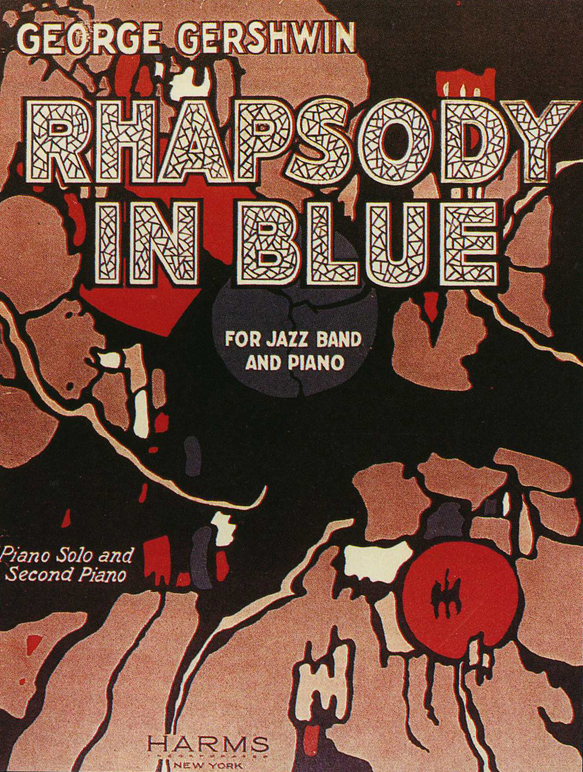
It is February 12th 2024, one hundred years to the day since the first performance of George Gershwin’s composition Rhapsody in Blue at the Aeolian Hall in New York by Paul Whiteman and his Palais Royal Orchestra with the composer himself on piano. This piece is has been a concert favourite for decades, but is usually heard in an arrangement for piano and full symphony orchestra which dates from 1942. The orchestration for that version was provided by Ferdi Grofe who had scored the original for Whiteman’s much smaller band back in 1924. Gershwin originally wrote the piece for two pianos, but didn’t know much about orchestration and had handed that task over to Grofe which the latter completed just a few days before the performance on February 12th 1924. It was not until the rehearsal with Whiteman’s band, however, that the famous opening took its now familiar shape.
The clarinet player with Paul Whiteman’s band in 1924 was a chap called Ross Gorman. It was his job to play the first few bars of Rhapsody in Blue, which had been scored for solo clarinet, consisting of a trill and then a long rising scale or arpeggio of more than two octaves. When they did the first play through Gorman didn’t play it as written but instead followed the trill with part of the scale followed by a long smeared glissando. Gorman often used smears to mimic laughing or sobbing noises, so this was a kind of trademark of his and came very naturally to him (though it is quite difficult to play a long glissando like this, especially slowly). There’s no question that it was “jazzed up” with humorous intent, but Grofe and Gershwin loved Gorman’s way of playing it, and that’s how it has been played ever since.
Rhapsody in Blue was a hit with the audience at its first performance, and has remained so with audiences around the world ever since. Sales of sheet music were good too! Critical reception was somewhat different, but those who disliked it were mostly judging it in comparison with classical music forms (e.g. a piano concerto) that it wasn’t attempting to be. I think it’s a piece to be enjoyed for its exuberance and atmosphere rather than thematic development or other more refined criteria.
There isn’t a recording of the original performance of 1924, but there is one of the same arrangement played by Paul Whiteman’s band in 1927 – complete with Ross Gorman on clarinet and George Gershwin again on piano. The difference is that it was played a bit faster for this recording than it was in concert so that it would fit on two sides of a 12″ record. Although I do think some modern performances of Rhapsody in Blue are too slow, this sounds to me rather rushed in places. The sound quality isn’t great either. Nevertheless, it’s an important piece of music history and it did sell over a million copies, so it would be remiss of me not to share it today!
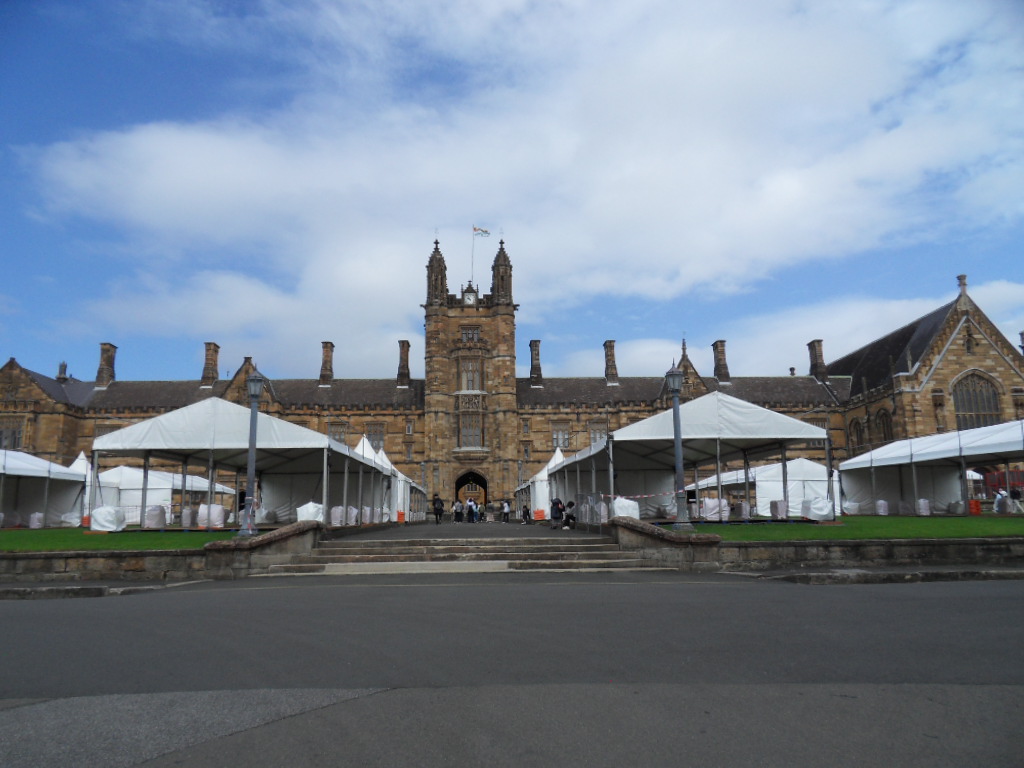
Here’s a gallery of random pictures I took on the way to the Physics Department at the University of Sydney this morning.
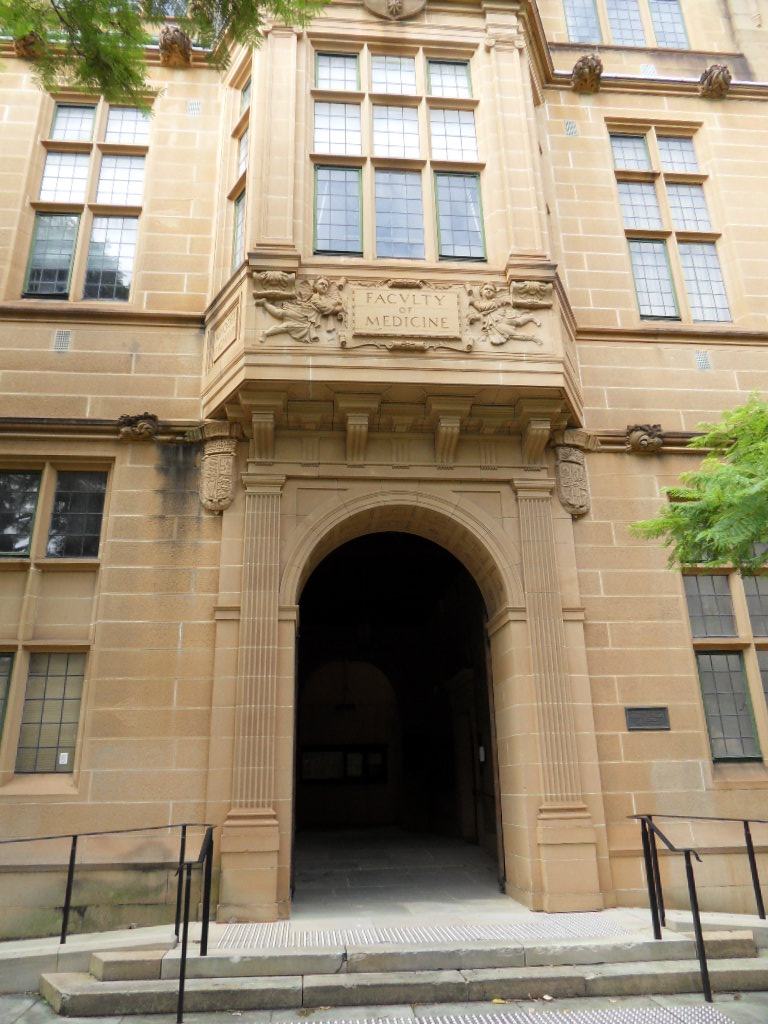
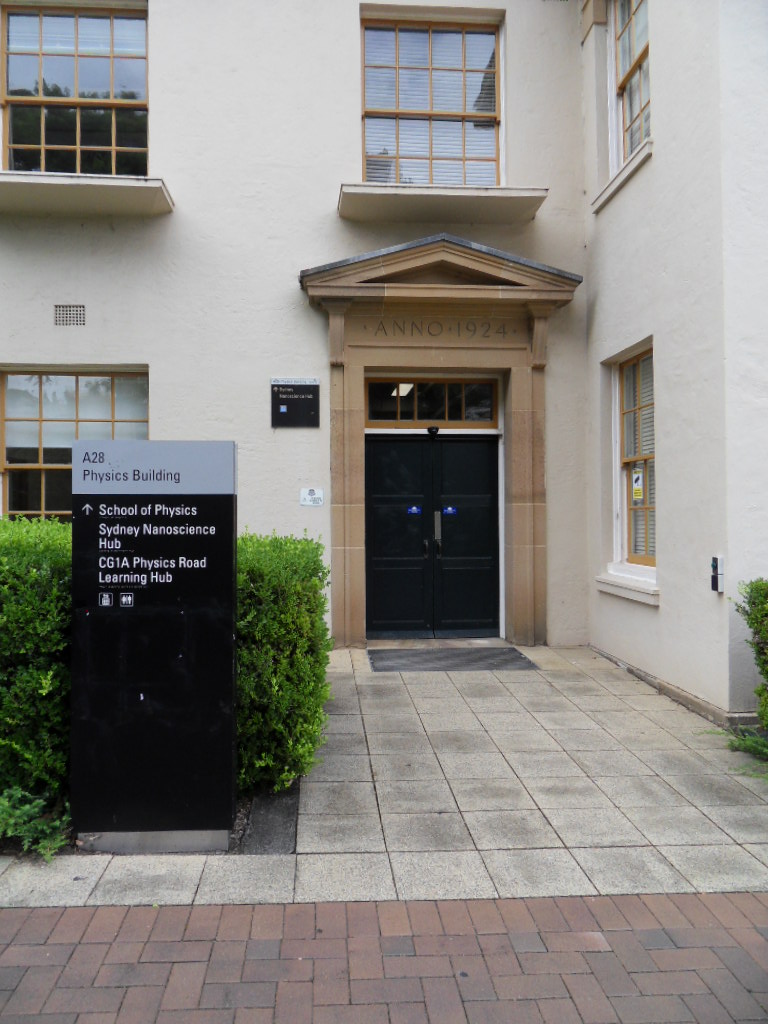
The academic year at the University of Sydney is about to start, with the new intake of students beginning to arrive next week and the first lectures taking place the week after that. The rows of tents are for the various student societies which will be hoping to recruit new members. The University was founded in 1850 and the architectural style of the older buildings on campus is what you might call Victorian Gothic Revival. There are also buildings dating from the 1920s, such as the Faculty of Medicine (1922) and the Physics Building (1924); the latter seems much bigger on the inside than the outside, and also has a new building next to it devoted to nanoscience.
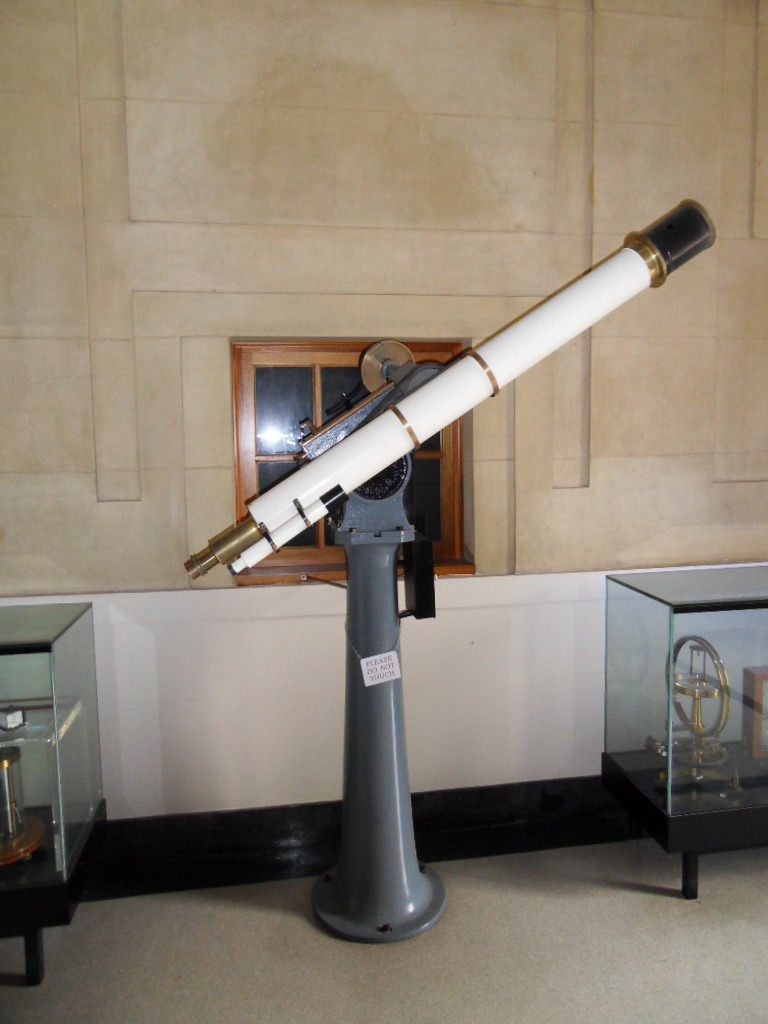
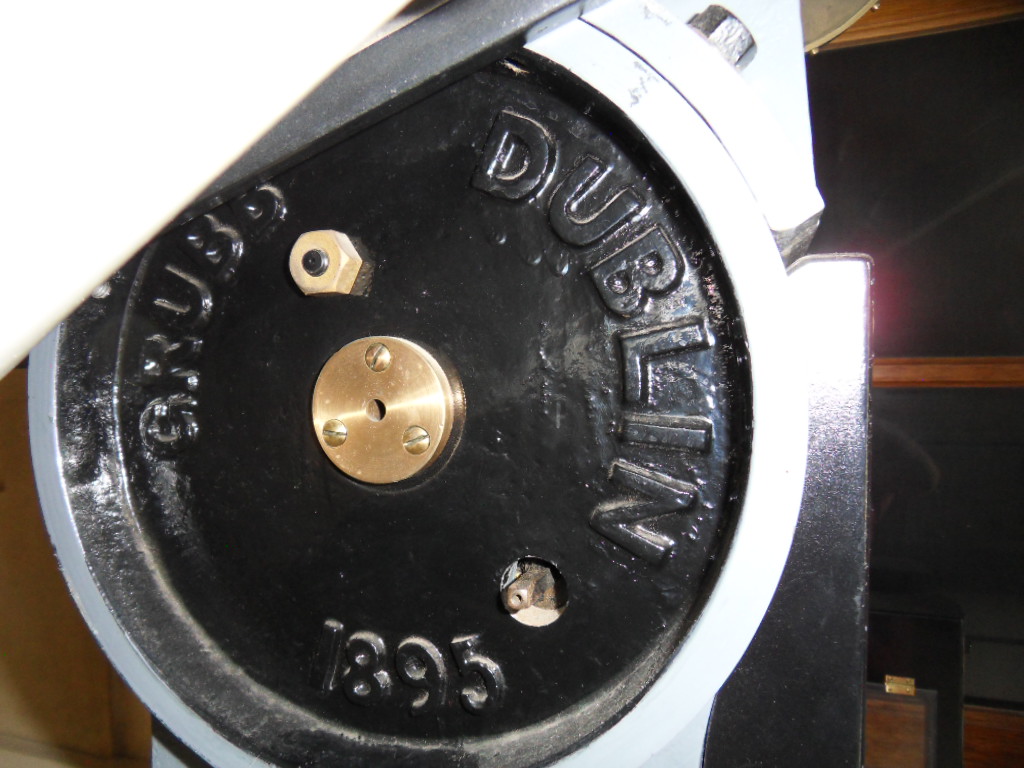
Entrance to CampusPreparing for Fresher’s FairGothic RevivalBuilt in 1922Way in to PhysicsLong CorridorA refracting telescopeGrubb Telescope Company 1893
I’ve posted before about the famous optical instrument manufacturer, the Grubb Telescope Company, founded in Dublin by Thomas Grubb and later renamed Grubb Parsons after its relocation to Newcastle upon Tyne. I’ve posted about other connections too, including the presence in the Physics Department in Barcelona of a refracting telescope made by Grubb. Imagine my surprise, then, when I saw yet another Grubb Telescope near the entrance to the Physics building of the University of Sydney, this one made in 1893. This is further evidence – as if it were needed – that, in its time, the Grubb Telescope Company really was the world leader in optical instrumentation.
P.S. The later manifestation of the Grubb Telescope Company – Grubb Parsons – also has Australian connections, including making the primary mirror for the Anglo-Australian Telescope (AAT) and building the UK Schmidt situated next to the AAT at Siding Spring Observatory (about 500 km from Sydney).
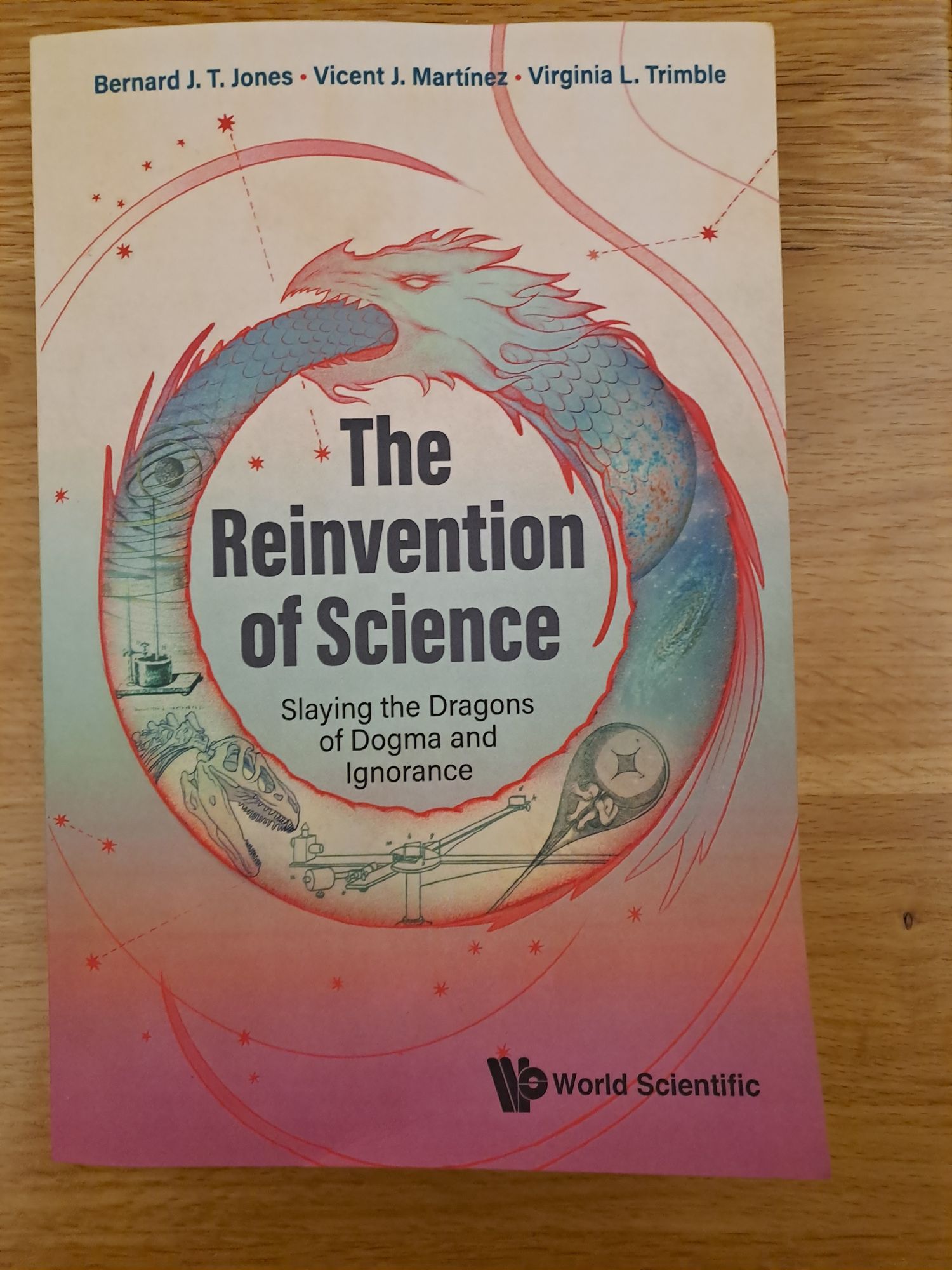
I’ve known about the existence of this new book for quite a long time – the first two of the authors are former collaborators of mine and I’m still in fairly regular touch with them – but I only received a copy a few weeks ago. Had I been less busy when it was in proof stage I might have been in a position to add to the many generous comments on the back cover from such luminaries as Martin Rees, Jim Peebles, Alan Heavens and, my hosts in Barcelona, Licia Verde and Raúl Jiménez. Anyway, now that I’ve read it I’m happy to endorse their enthusiastic comments and to give the book a plug on this blog.
One can summarize The Reinvention of Science as a journey through the history of science from ancient times to modern, signposted by mistakes, fallacies and dogma that have hindered rather than facilitated progress. These are, in other words, not so much milestones as stumbling blocks. Examples include the luminiferous aether and phlogiston to name but two. These and many other case studies are used to illustrate, for example, how supposedly rational scientists sometimes hold very irrational beliefs and act accordingly on them. The book presents a view of the evolution of science in spite of the suppression of heterodox ideas and the desire of establishment thinkers to maintain the status quo.
The volume covers a vast territory, not limited to astrophysics and cosmology (in which fields the authors specialize). It is a very well-written and enjoyable read that is strong on accuracy as well as being accessible and pedagogical. I congratulate the authors on a really excellent book.
P.S. I am of course sufficiently vain that I looked in the index before reading the book to see if I got a mention and was delighted to see my name listed not once but twice. The first time is in connection with the coverage of the BICEP2 controversy on this very blog, e.g. here. I am pleased because I did feel I was sticking my head above the parapet at the time, but was subsequently vindicated. The second mention is to do with this article which the authors describe as “beautiful”. And I didn’t even pay them! I’m truly flattered.
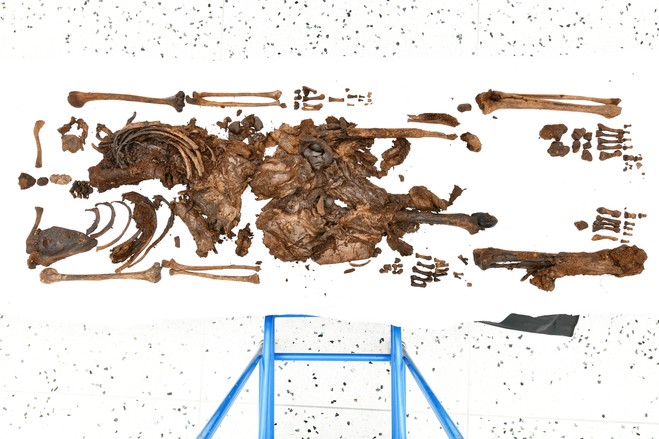
There was an interesting news item last week concerning the discovery of human remains in a peat bog in Bellaghy, County Derry. Radio-carbon dating has established that these remains are about 2,000 years old, so this was a person who lived in the Iron Age; a post-mortem has revealed it to be a teenage boy of around 15 years old. No cause of death has yet been established, but it is generally thought that these bog bodies were people who were executed as a punishment, or perhaps sacrificed for some ritual purpose.
These are neither the oldest nor the best-preserved such remains to be found in Ireland; the oldest belong to Cashel Man, who died, about 4,000 years ago, in the early Bronze Age. Nevertheless, the anaerobic conditions of the bog have slowed decomposition so much that not only bones, but some skin, hair and even parts of internal organs survive. This find is therefore important, not least because it should be possible to obtain detailed information about the DNA of this individual. Understanding of Ireland’s prehistoric past has been upended in recent years by DNA discoveries. What will Bellaghy Boy tell us? And how many more bog bodies are waiting to be found?
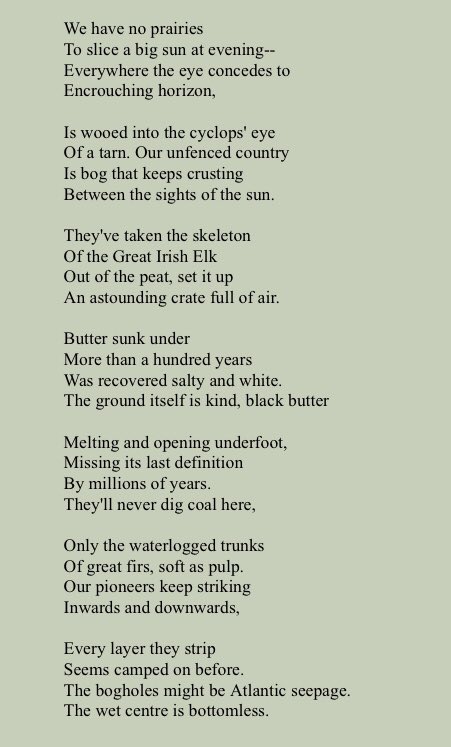
Another fascinating aspect of this story is that the location of the remains is very close to the house where the poet Seamus Heaney lived. Heaney wrote a number of poems about bog bodies and it’s ironic that there was one waiting to be found so close to his home.
Anyway, this gives me an excuse to post a vaguely relevant poem by Heaney called Bogland which, appropriately for the title of this blog, comes from a collection called Door into the Dark.
I’m indebted to my colleague David Malone for sending me this small excerpt from an old issue of the Kalendarium of St Patrick’s College, Maynooth, dating back to the 1960s, which deals with the appointments of new members of staff
Halfway down you will see a reference to Mathematical Mystics!
This is obviously a mistake. It should of course be Mathematical Psychics Physics. I also think the name of the Mathematical Mystics lecturer should be Tigran Tchrakian. I think these are both transcription errors from somebody’s very bad handwriting! The current Department of Theoretical Physics at Maynooth was formerly known by the title Mathematical Physics.
There are some other points of interest. in Experimental Physics you will find mention of a young Susan Lawlor who is now better known as Susan McKenna-Lawlor, a very eminent astrophysicist who specialized in space instrumentation, now in her eighties.
I’m also amused by the existence of a lecturer in Elocution…
The historical background of St Patrick’s College is that it was primarily a Catholic theological institution (founded in 1795) although it taught secular courses and was a recognized college of the National University of Ireland from 1910. It was only in the mid-1960s that it was opened to lay students, which expanded the numbers considerably. In 1997 that the secular part separated and formed NUI Maynooth (now known by the marketing people as Maynooth University). The remaining theological institution is known as St Patrick’s Pontifical University (or St Patrick’s College or just Maynooth College).
A major role for St Patrick’s College was the training of priests and I suppose it was important that priests should be well spoken, hence the lectures on elocution…
Near the top in connection with Sociology you can see the title An tAth which is the Irish language way of writing the abbreviation “Fr” for “Father”, indicating a priest; “father” is athair and the an is a definite article. Note the lower case t in front of Ath which is an example of prothesis.
Finally, right at the top of the page you can see the name Donal Linehan, which will be familiar to Irish rugby fans but I don’t know if there’s a family connection between the former Ireland intentional who is now a TV commentator and the lecturer in Roman and Civil Law.
Yesterday I heard the sad news of the death, at the age of 90, of American physicist and radio astronomer Arno Penzias.
I’ve used the above image hundreds of times in popular talks. It shows Robert W. Wilson (left) and Arno A. Penzias (right) standing in front of the famous horn antenna that (accidentally) discovered what we now know to be the cosmic microwave background, radiation left over after the Big Bang.
Penzias and Wilson made their historic measurements in 1964, published their results in 1965, and received the Nobel Prize for Physics in 1978. At the time of this experiment, the scientists were working at Bell Telephone Laboratories at Holmdel, New Jersey, on Project Echo. The antenna was built to receive radio signals bounced off a passive satellite in a low Earth orbit to check the feasibility of satellite radio communication. They found excess noise in their receiver, which was eventually identified as a relic of a time when the Universe was extremely hot. Coincidentally, the theory of this yet undiscovered radiation was being worked on by Bob Dicke and his group in Princeton at about the same time (and also in New Jersey). Discussions ensued, and the discovery paper by Penzias & Wilson appeared in the Astrophysical Journal in 1965 beside a paper by Dicke et al. giving the theoretical interpretation.
The discovery of the cosmic microwave background was probably the most important result in observational cosmology after that of the Hubble expansion and it paved the way for the establishment and further development of the Big Bang theory. One of the two discoverers of the CMB has now left us, leaving a priceless legacy.
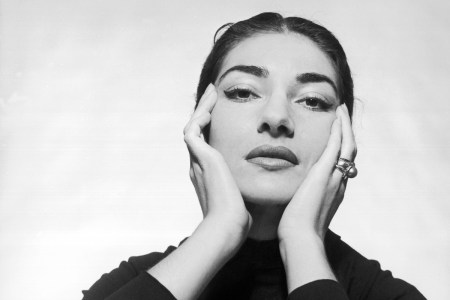
Today, 2nd December 2023, is the centenary of the birth of the most renowned opera singer of her time, Maria Callas. I couldn’t let this occasion pass without posting a tribute, Tonight I’ll be sipping wine and listening to some historic recordings of her. I think every classical radio station in the world will tonight be paying tribute to this remarkable artist.
Maria Callas was born on December 2nd 1923 in New York city, of Greek parents who had moved there the previous year, and christened Maria Anna Sofia Cecilia Kalogeropoulou. Her mother, disenchanted with her deteriorating marriage, abandoned her husband (Maria’s father) and took Maria and her sister back to Athens in 1937. Maria enrolled at the National Conservatoire of Greece the same year after winning a scholarship with the quality of her voice, which
was warm, lyrical, intense; it swirled and flared like a flame and filled the air with melodious reverberations.
At this age, Maria was a rather plump young lady with a rather deep singing voice. Initially, she aspired to be a contralto but at the Conservatoire she was encouraged instead to become a dramatic soprano. Accordingly, she underwent special training to raise her natural pitch (or tessitura) and learned how to control her remarkable voice more accurately so she could sing in a sufficiently disciplined fashion that she could take on the dazzling coloratura passages that she would perform in later years with such success. She also worked on her chest tones to broaden the scope of her voice in the mezzo region. Although she became more technically refined as a singer during this period, there were some things that didn’t change. One was the sheer power of her voice, which is something that we tend to notice less in these days of microphones and studio recordings. People who heard her sing live confess to being shocked at the sheer scale of sound she could deliver without amplification. Perhaps more tellingly, she eschewed many of the devices sopranos tended to use to control the highest notes (usually involving some alteration of the throat to produce accuracy at the expense of a thinner and more constricted tone). When Callas went for a high note, she always did so in a full-throated manner. This often produced a piercing sound that could be intensely dramatic, even to the extent of almost knocking you out of your seat, but it was a very risky approach for a live performance. Audiences simply weren’t used to hearing a coloratura sing with such volume and in such a whole-hearted way. It wasn’t always pretty, but it was certainly remarkable and often very moving. It was this aspect of her voice that led her friend Tito Gobbi (who sang with her in Tosca) to call it una grande vociaccia, which I translate in my schoolboy Italian as meaning something like “a big ugly voice”. That isn’t meant to be as disparaging as it sounds (Gobbi was a great admirer of Callas’ singing).
Having listened to lots of recordings of Maria Callas I have to admit that they are certainly not all good. Sometimes the voice didn’t come off at all. Unkindly, one colleague said that she “sang with her ovaries”. When she talked about her own voice, Callas herself often referred to it as if it were some independent creature over which she had very little control. Anyway, whatever the reason, when she was bad she was definitely bad. But I adopt the philosophy that one should judge artists (and scientists, for that matter) by their best work rather than their worst, and when Callas was good she was simply phenomenal, like a sublime and irresistible force of nature. Nobody else could bring characters to life in the same way. That’s why they called her La Divina.
Although her talent was very raw in the beginning there was no question that she always had a voice of exceptional power and dramatic intensity. When she started singing professionally she immediately attracted lavish praise from the critics not just for her voice but also for her acting. As a young soprano she sang in an astonishing variety of operas, including Wagner‘s Tristan und Isoldeand Die Walküre, neither of which one would now associate with Callas.
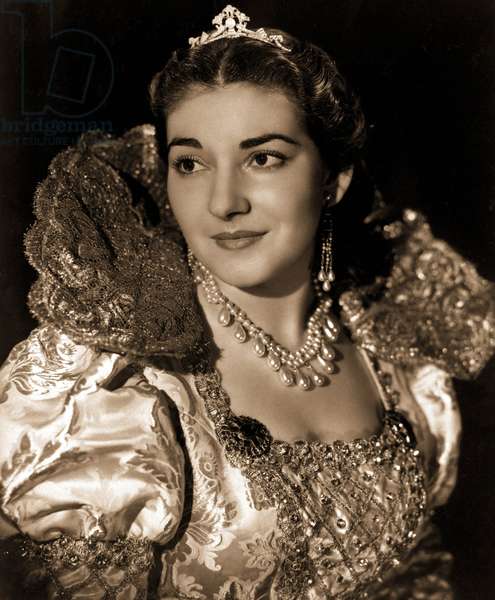
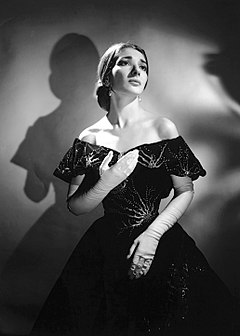
Maria Callas as Elvira in ‘I Puritani’, Teatro la Fenice, Venice, 1949Maria Callas as Violetta in `La Traviata’, Covent Garden, London, 1958
It was in the late 1940s that Callas began to take an interest in the type of opera that would really make her name. Bel canto opera was rather unfashionable at that time, probably because audiences preferred the grittier and more realistic verismo style. Virtually single-handed, Callas resurrected the bel canto canon by injecting a true sense of drama into works which had previously just been seen as vehicles for the singers to demonstrate their art. Callas brought an entirely new dimension to the great operas by Bellini (Norma, I Puritani, La Somnambula…) and Donizetti (Lucia di Lammermoor, Anna Bolena), although she was sufficiently versatile to also perform brilliantly in the verismo syle of Verdi and Puccini as well as lesser known composers such as Giordano (Andrea Chenier). Recordings of many of these performances are available, but it is sad that this glorious period of her singing career happened just a bit before high quality equipment was available so the true glory of her voice isn’t always evident.
In 1953, Callas decided that she wanted to change her appearance, perhaps so she would look more appropriate for the parts she was playing on stage. At the time she weighed almost 200lbs. In order to lose weight as quickly as possible, she followed the barbarous but highly effective expedient of swallowing a tapeworm. She lost 80lbs in a matter of months. The dramatic loss of weight changed her body and her face, emphasizing her high angular cheekbones and giving her a striking look very well suited to the opera stage. But it also affected her voice somewhat, especially at the upper end where she seems to have found it more difficult to avoid the dreaded “wobble” which was one of the alleged imperfections that critics tended to dwell upon.
Callas also had very poor eyesight which required her to wear very thick spectacles in order to see at all, a thing she refused to do onstage with the result that she was virtually blind during performances. In fact, during a performance of Tosca at Covent Garden she leant too far over a candle and her hair caught fire. Improvising magnificently, Tito Gobbi, as the loathsome Scarpia, extinguished the fire by throwing water at her before the audience had noticed. Although they weren’t much use for seeing with, her eyes were a great asset for her acting, in turns flashing like a demon then shining like an angel.
After her weight loss, Callas was suddenly no longer just a wonderful singer but also a strikingly beautiful woman. Her career took a back seat as she started to revel in the glamorous lifestyle that opened up in front of her. Her voice deteriorated and she performed rather less frequently. Eventually she embarked on a love affair with Aristotle Onassis, a notorious serial collector of trophy women. She hoped to marry him but he abandoned her to marry Jackie Kennedy, widow of John F. Kennedy.
She never really recovered from the failure of this affair, retired from singing and lived out the last years of her life as a virtual recluse in her apartment in Paris. She died in 1977.
I had heard a lot about Maria Callas when I was younger, but the recordings that I listened to (generally from the 1960s) were really not very good, as her voice was undoubtedly much diminished by then. I just assumed that, as is the case with many artists, the legend of Callas was all mere hype. Then, about 20 years ago, I was listening to BBC Radio 3 and they played the final scenes of the great 1954 recording of Norma with Callas in the title role, conducted by Tullio Serafin. I was completely overwhelmed by the emotion of it and tears flowed freely from my eyes. I’ve always had a tendency to blub when I hear really beautiful music, but as I’ve got older I’ve learned not to be embarrassed by it.
In England, Callas is probably best remembered for her performances in Tosca in Covent Garden. I have recordings of her in that role and they are really wonderful. But there are many fine recordings of Tosca by other singers, some of which are almost as good. In the case of Norma, though, there isn’t any other performance that comes within a mile of the Callas version. Or if there is, I’ve yet to hear it.
Now I know that there are some people, even opera lovers, who just don’t get Callas at all (just look at the comment boards on Youtube, etc). I grant that she wasn’t always the most accurate singer, and I don’t think you could say her voice had a purely classical beauty. But even if you don’t like her voice you have to admit that she revitalized the opera stage and brought a new public into the theatres. I can’t imagine what the state of opera would be now, if there hadn’t been a Callas, and you can’t argue that she is now an iconic figure. What I admire most about her is that, like it or loath it, her voice is instantly recognizable. In this sense, she always puts me in mind of a kind of operatic version of Billie Holliday. She’s a far cry from the many bland mediocrities that pass themselves off as opera singers nowadays.
I’m going to end with the obligatory clips from Youtube. There’s a lot of Callas on there, not all of it good. I’ve chosen a couple of items, although neither of them has a proper video. The first was performed live in 1955 in front of the notoriously difficult audience at La Scala in Milan and recorded from a radio broadcast so that the sound quality is very poor. A studio recording of this aria, from Andrea Chenier, features most movingly in the film Philadelphia. This live version, however, is notable for a number of reasons. One is that you get some idea of the power of the Callas voice in the way she pushes aside the entire orchestra and is even able to cut through the distortions introduced by the rather primitive recording technology. The second thing is that she sings it so beautifully, with such feeling, lovely phrasing, and so much colour and vitality. Listen to the way the texture of her voice matches perfectly her changing emotions as she tells her story. The shattering, climactic high C that occurs near the end is a perfect example of what I was saying above. She stabs this note out like her life depended on it. It sends shivers down my spine and clearly had the same effect on the audience. The thunderous applause that follows the end of this aria is quite frightening in its intensity, but gives a good idea how much her public adored her. If you can put up with the lo-fi recording, this is certainly a better performance than the studio version.
The final piece has to be from Norma. I think Bellini is a wonderful composer of opera, but he doesn’t make life easy for the singers. There’s never any doubling of the vocal line by the orchestra so the singer is very exposed. This doesn’t bother Maria Callas. This is the famous aria Casta Diva, which has become a kind of signature tune for her and it’s one of the pieces that she always seemed to perform beautifully. It might be a bit hackneyed but I love it and, after all, it’s my blog. There’s also a nice compilation of pictures.
I wonder how many times and in how many places, Casta Diva is being played today?
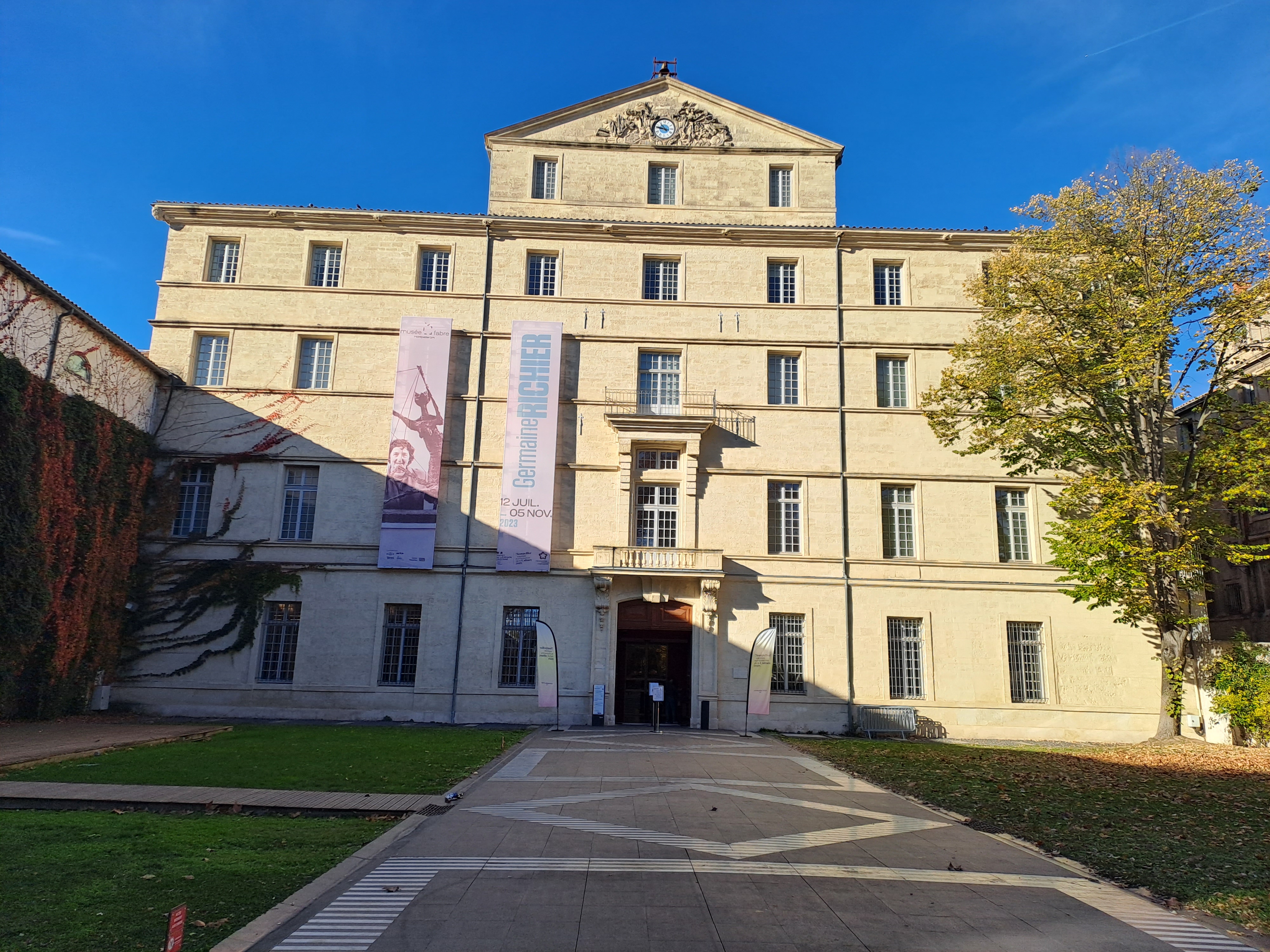
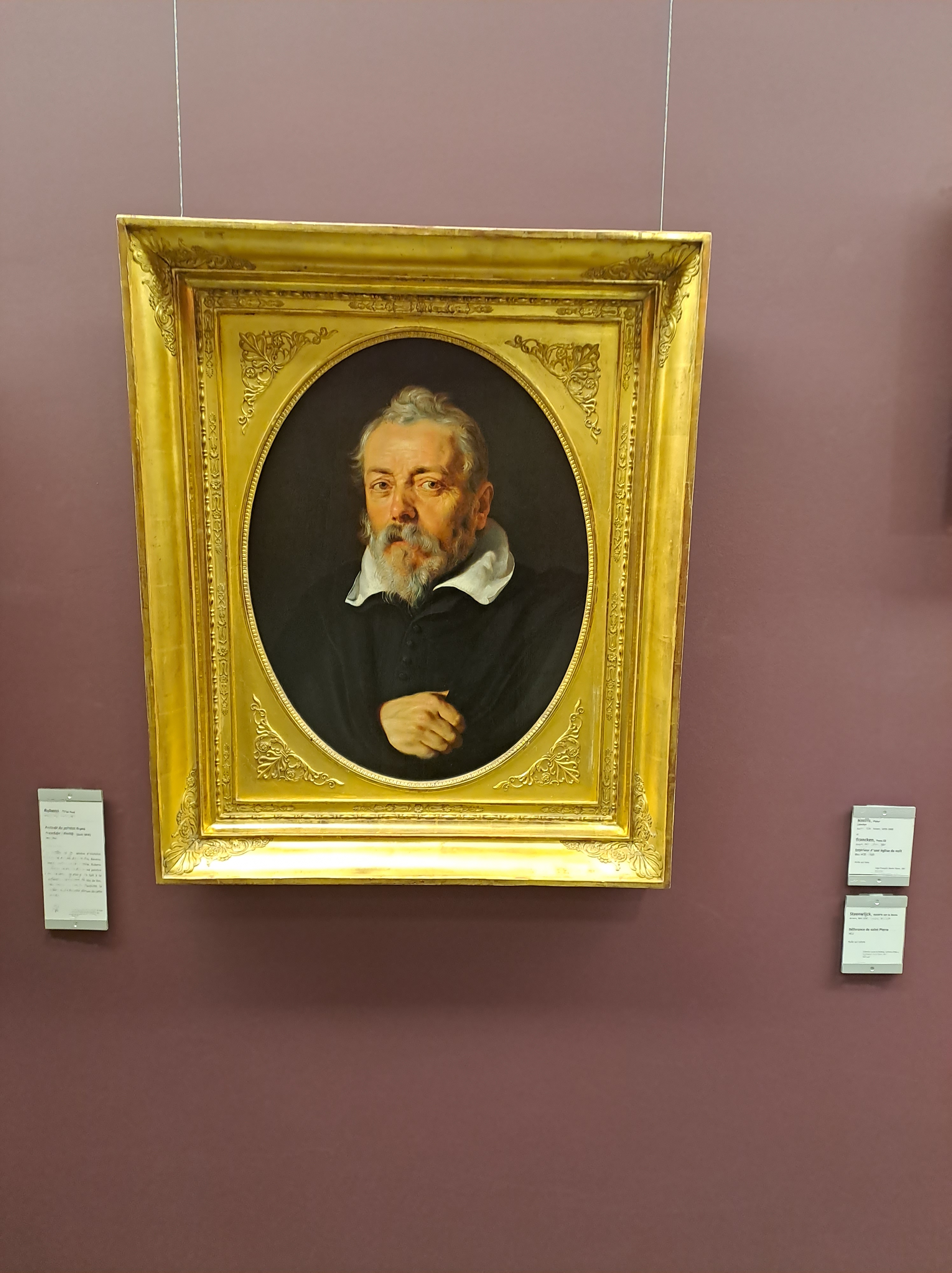
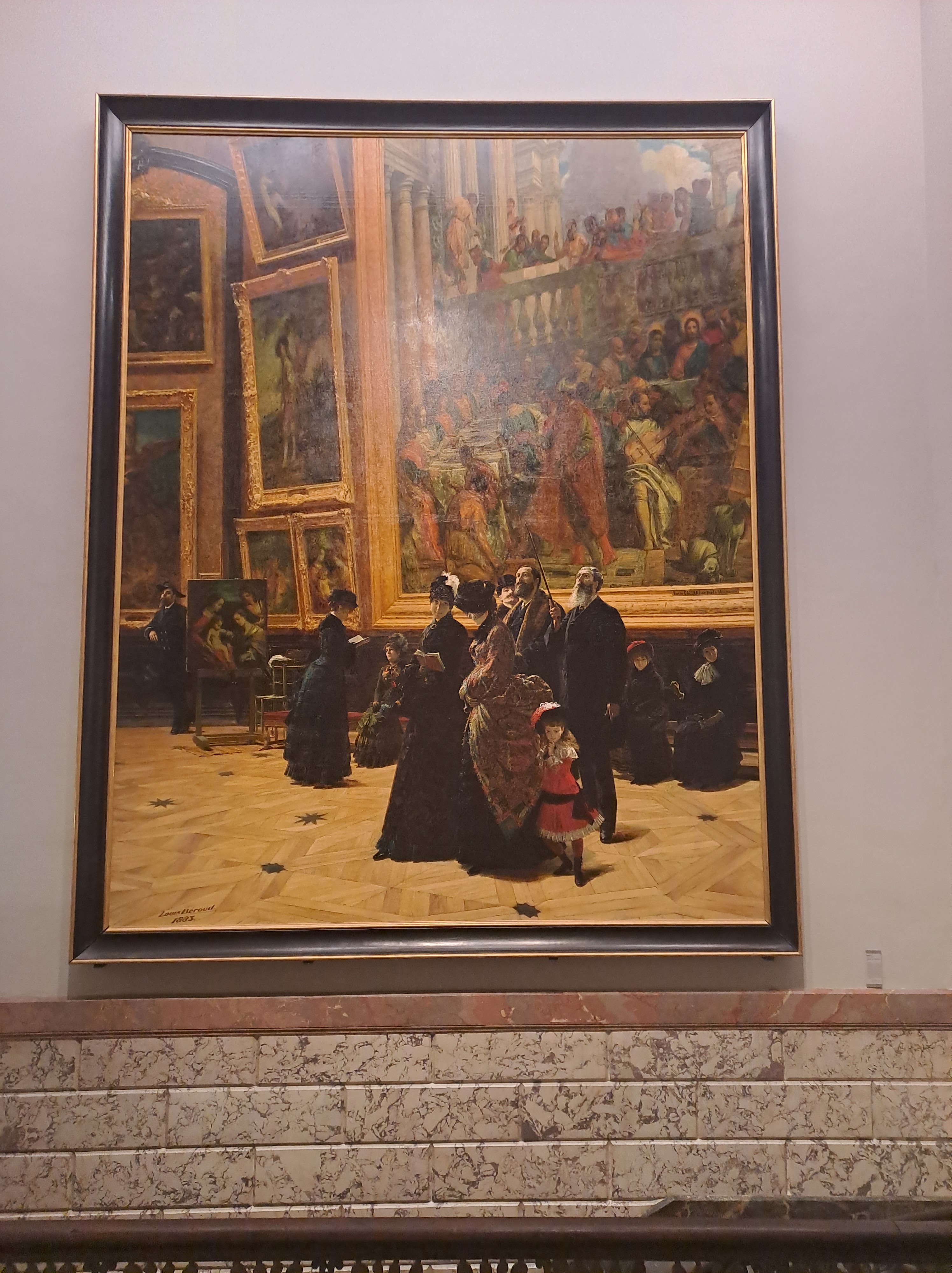
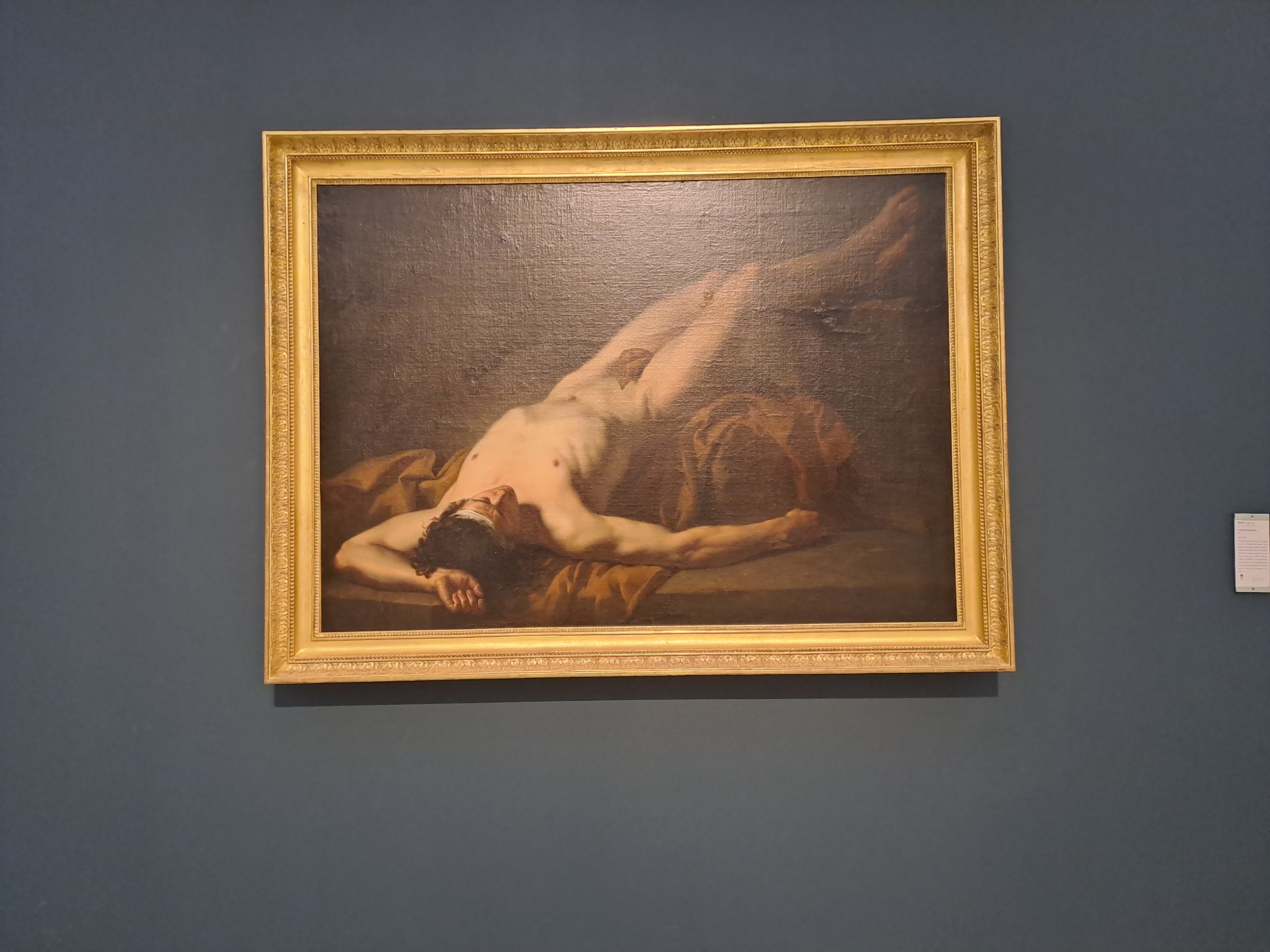
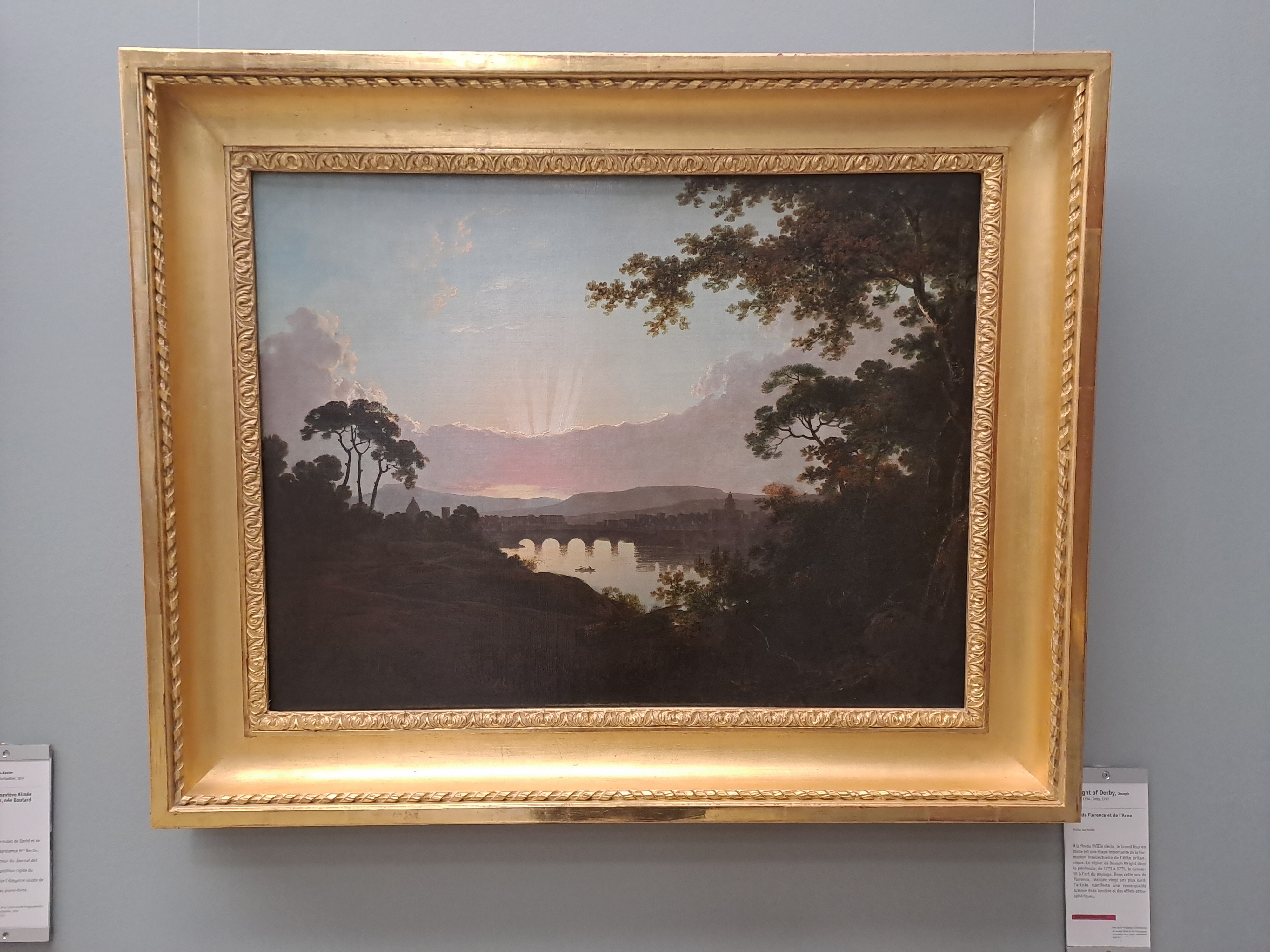
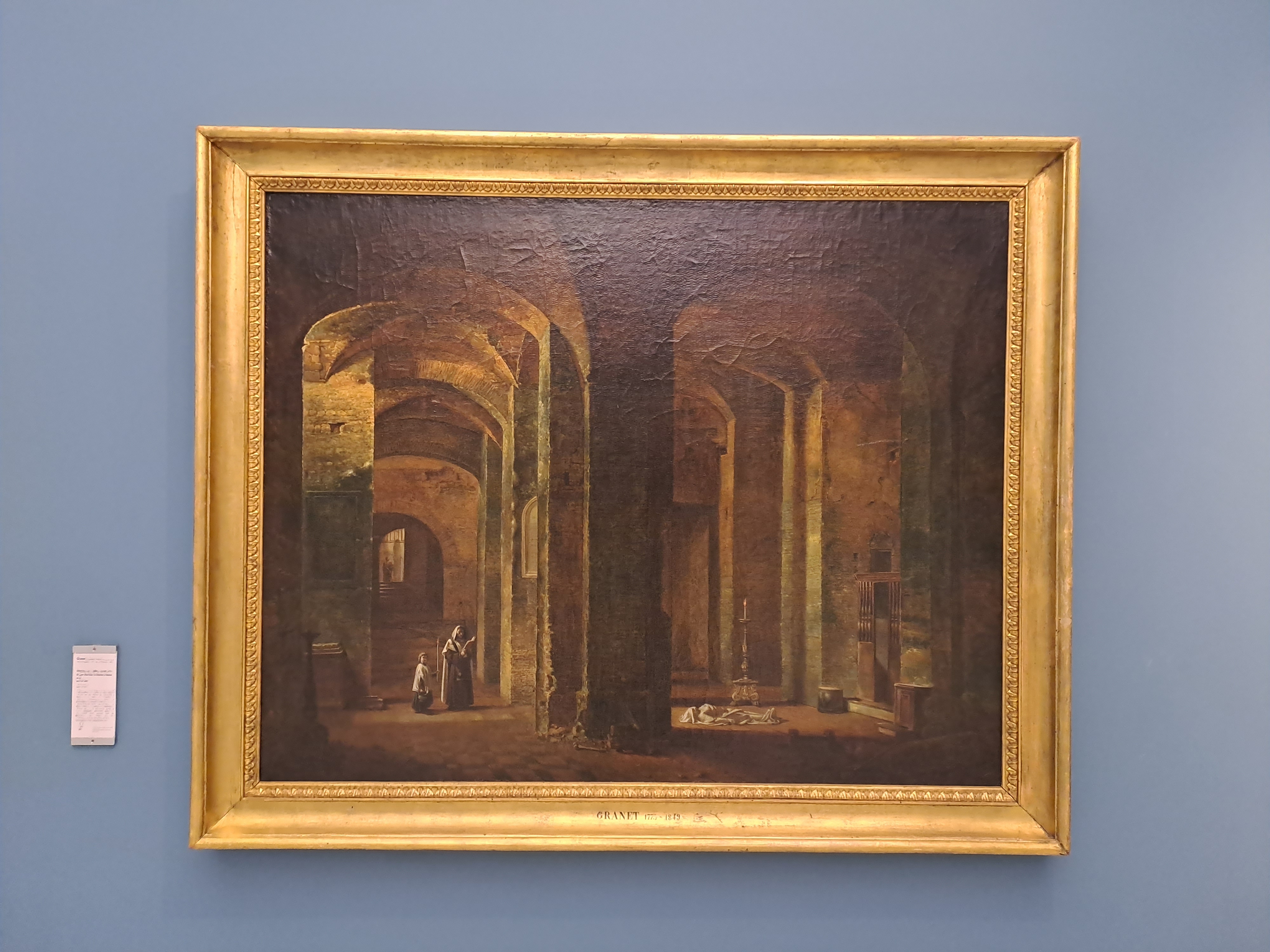
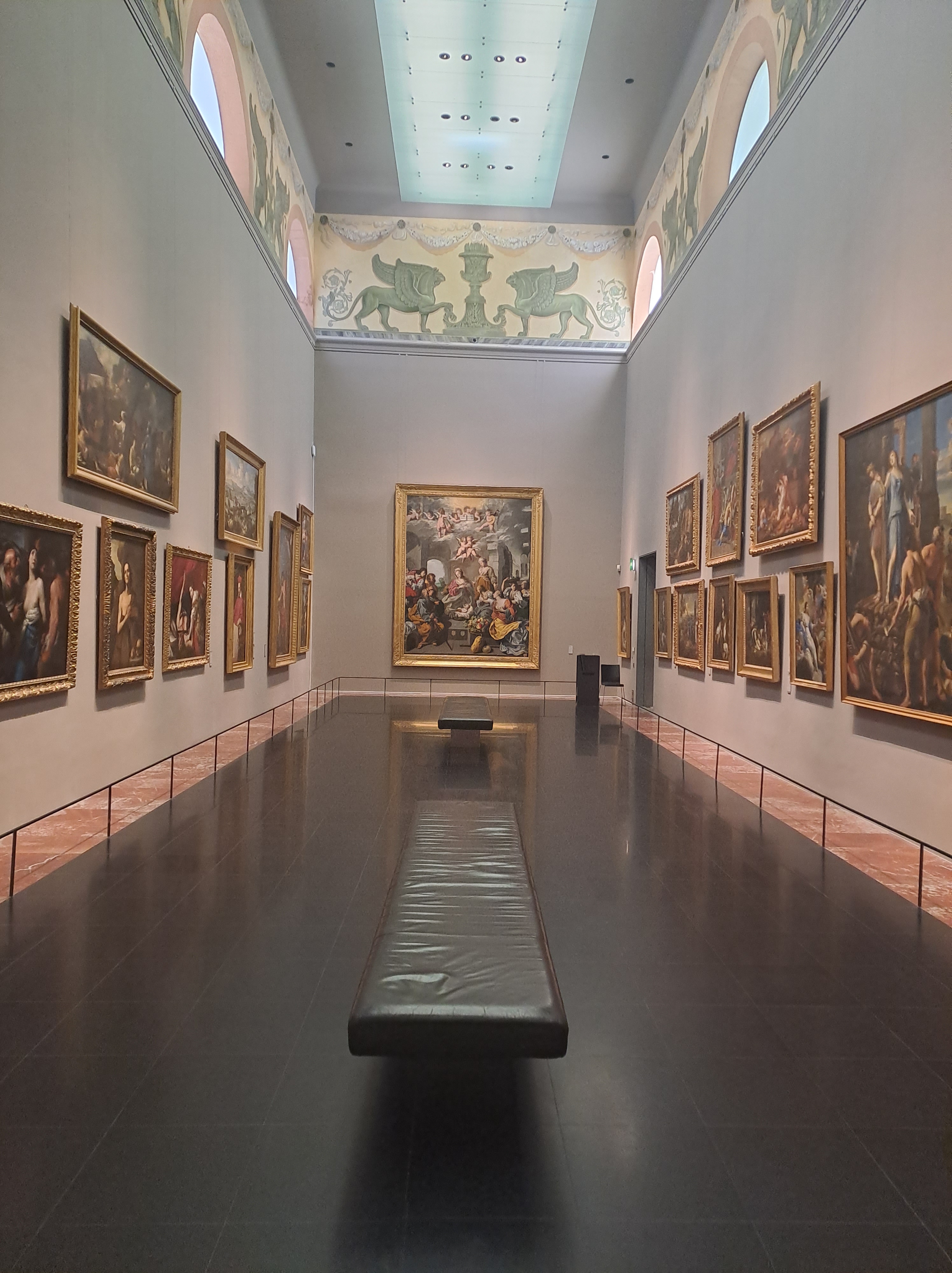
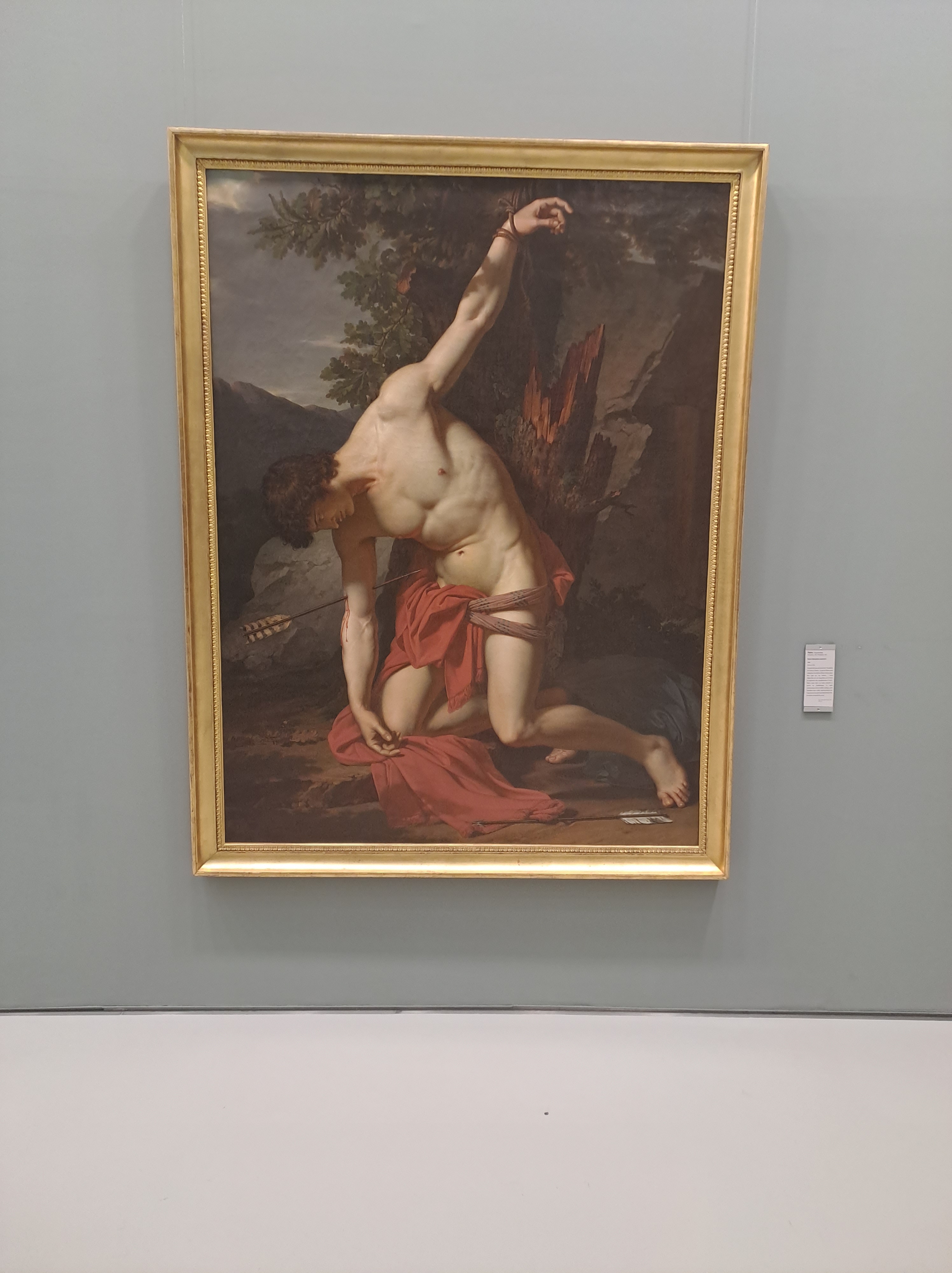
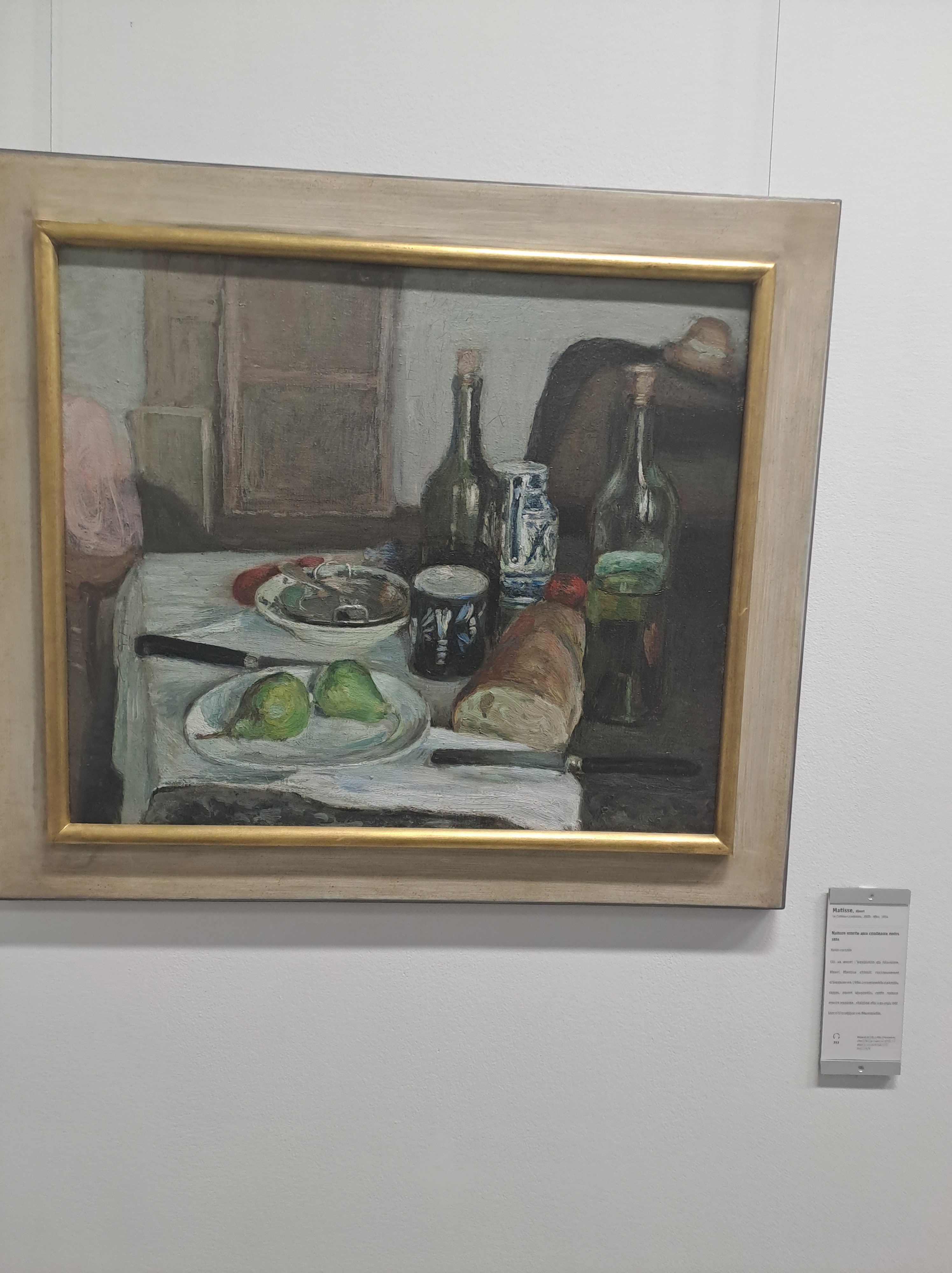
I spent several hours today wandering around the excellent Musée Fabre; for a little flavour of the place, see the little video I took in one of the rooms here. The largest part of the collection is French art, particularly from the 16th to 19th century, although there are also quite a few rooms dedicated to “northern” paintings, principally of Flemish origin. The gallery was founded by François-Xavier Fabre (1766-1837) who was born and died in Montpellier but spent most of his productive life as an artist in Italy (especially Florence). Fabre gave most of his own paintings to start the gallery, and there are many of examples of his work here, but many of his contemporaries are represented too, as well as earlier French artists such as Nicolas Poussin, and later ones such as Henri Matisse. Among the non-French artists are Peter-Paul Rubens, Joshua Reynolds and Thomas Wright of Derby, to name but a few.
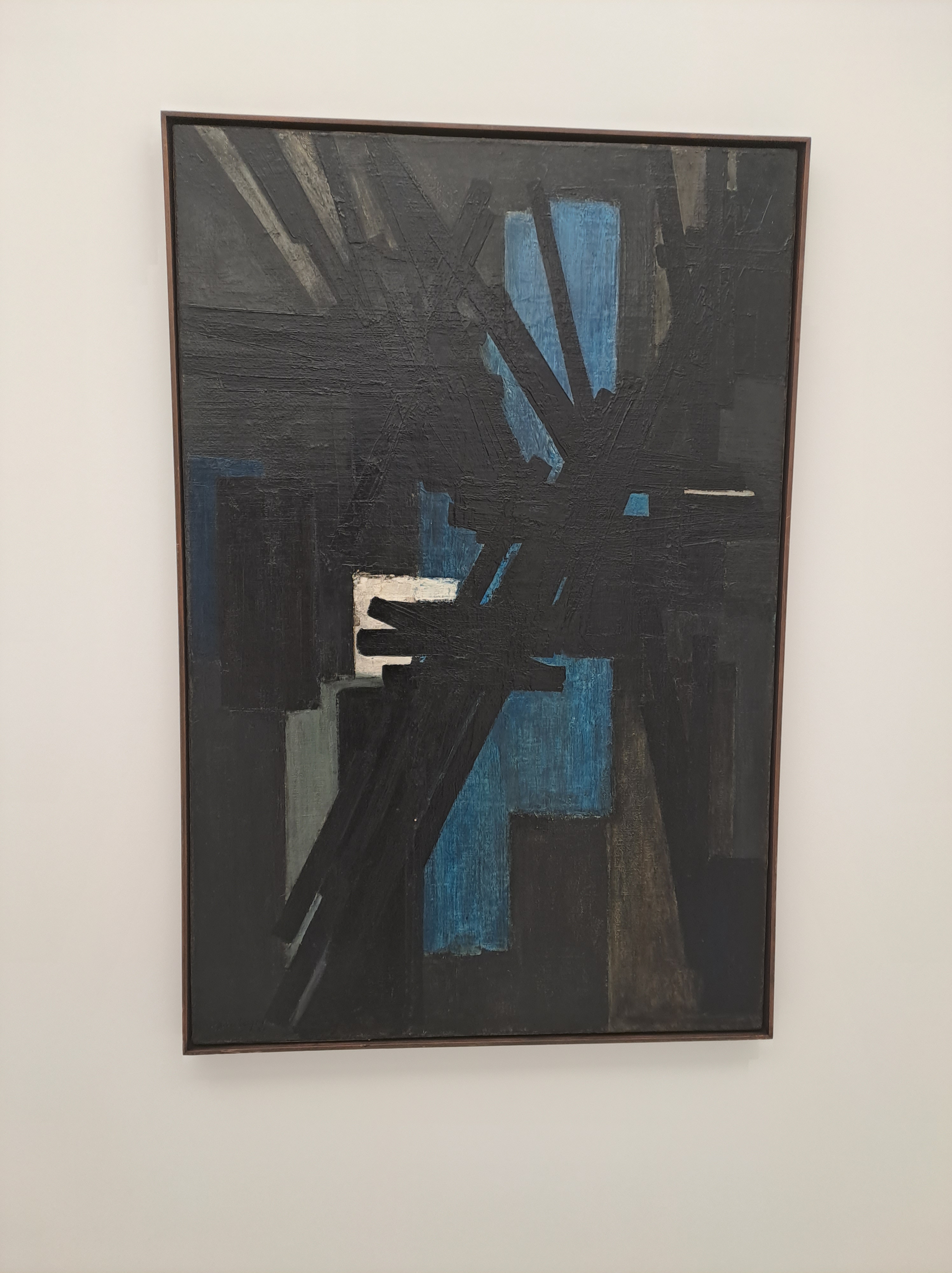
The permanent collection is accompanied by an exhibition of modern art by Pierre Soulages, who passed away last year, and who specialized in sombre abstracts which make quite a contrast with the permanent collection.
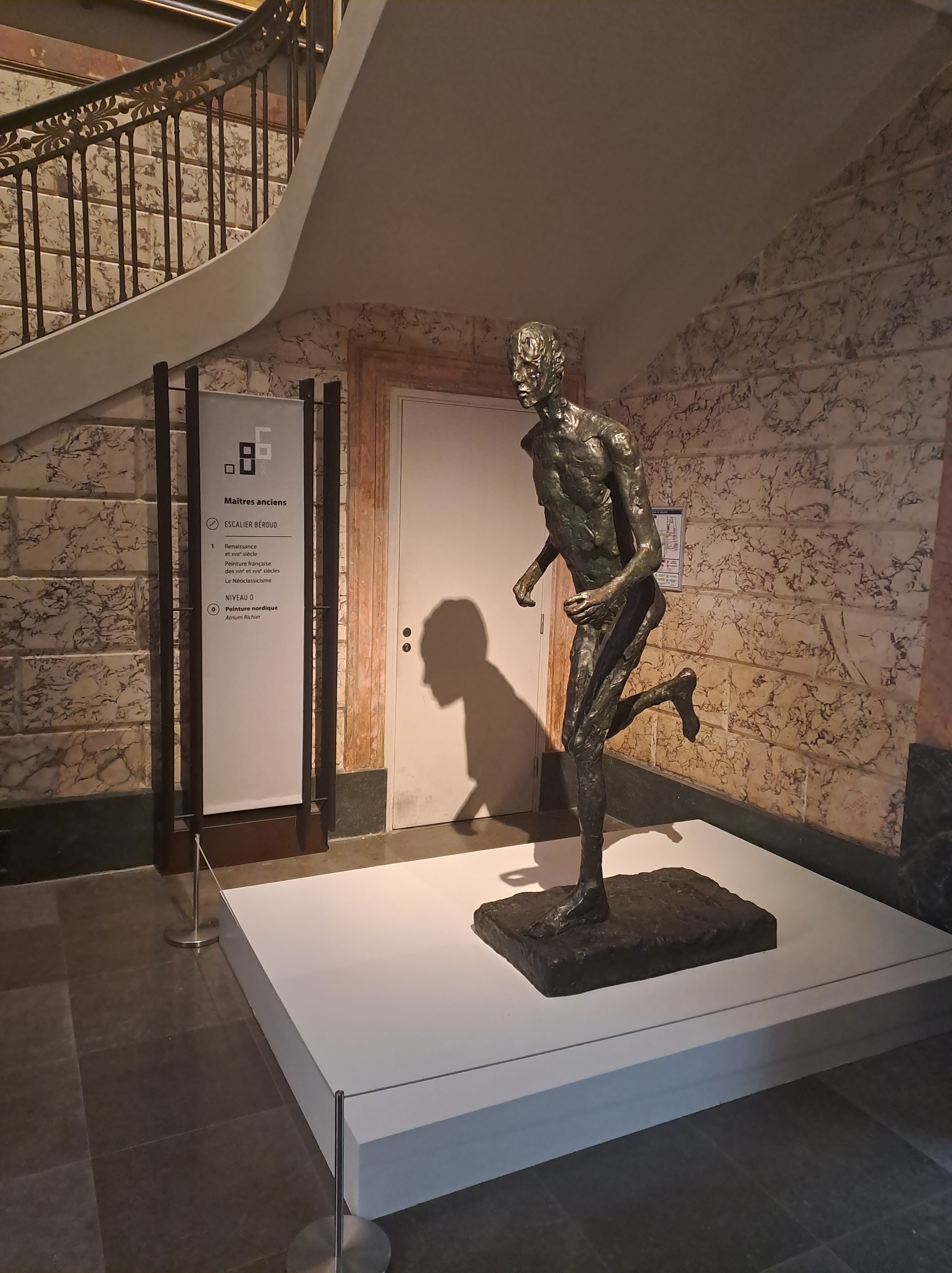
Anyway, here is a gallery of random pictures I took. If you click on the image it will tell you who the artist was: the one by Soulages is obvious; the very fine bronze sculpture is Le Coureur (1955) by Germaine Richier, an retrospective of her work finished earlier this month (as you can see from the banner in the first picture). Check out the little boy in the very sepulchral scene depicting a vigil for the dead, who is looking at the viewer as if to say “What are you doing here?”
The views presented here are personal and not necessarily those of my employer (or anyone else for that matter).
Feel free to comment on any of the posts on this blog but comments may be moderated; anonymous comments and any considered by me to be vexatious and/or abusive and/or defamatory will not be accepted. I do not necessarily endorse, support, sanction, encourage, verify or agree with the opinions or statements of any information or other content in the comments on this site and do not in any way guarantee their accuracy or reliability.







 In the Dark