I’m a bit jetlagged and have a busy day ahead, but fortunately I found this interesting and vaguely relevant poem in an old copy of the TLS last night, so will share it in lieu of a proper post.

I’m a bit jetlagged and have a busy day ahead, but fortunately I found this interesting and vaguely relevant poem in an old copy of the TLS last night, so will share it in lieu of a proper post.
It’s St David’s Day today, so although I’m still Down Under and far from any daffodils, I wish you all a big

Gratuitous Picture of some Daffodils near the Maynooth University Library.
It has become a bit of a St David’s Day tradition on this this blog to post a piece of verse by the great Welsh poet R.S. Thomas. This is The Bright Field.
I have seen the sun break through
to illuminate a small field
for a while, and gone my way
and forgotten it. But that was the pearl
of great price, the one field that had
treasure in it. I realize now
that I must give all that I have
to possess it. Life is not hurrying
on to a receding future, nor hankering after
an imagined past. It is the turning
aside like Moses to the miracle
of the lit bush, to a brightness
that seemed as transitory as your youth
once, but is the eternity that awaits you.
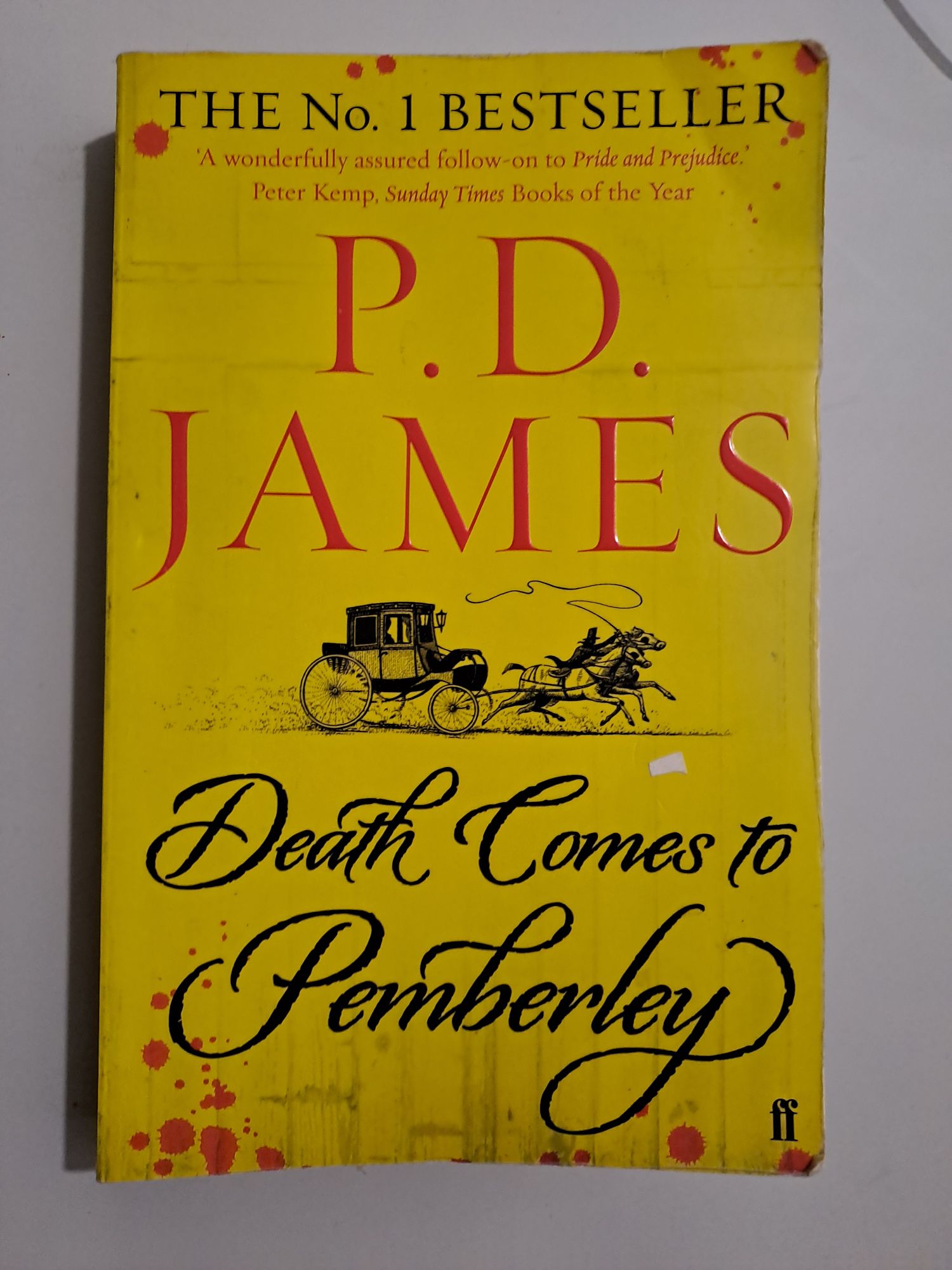
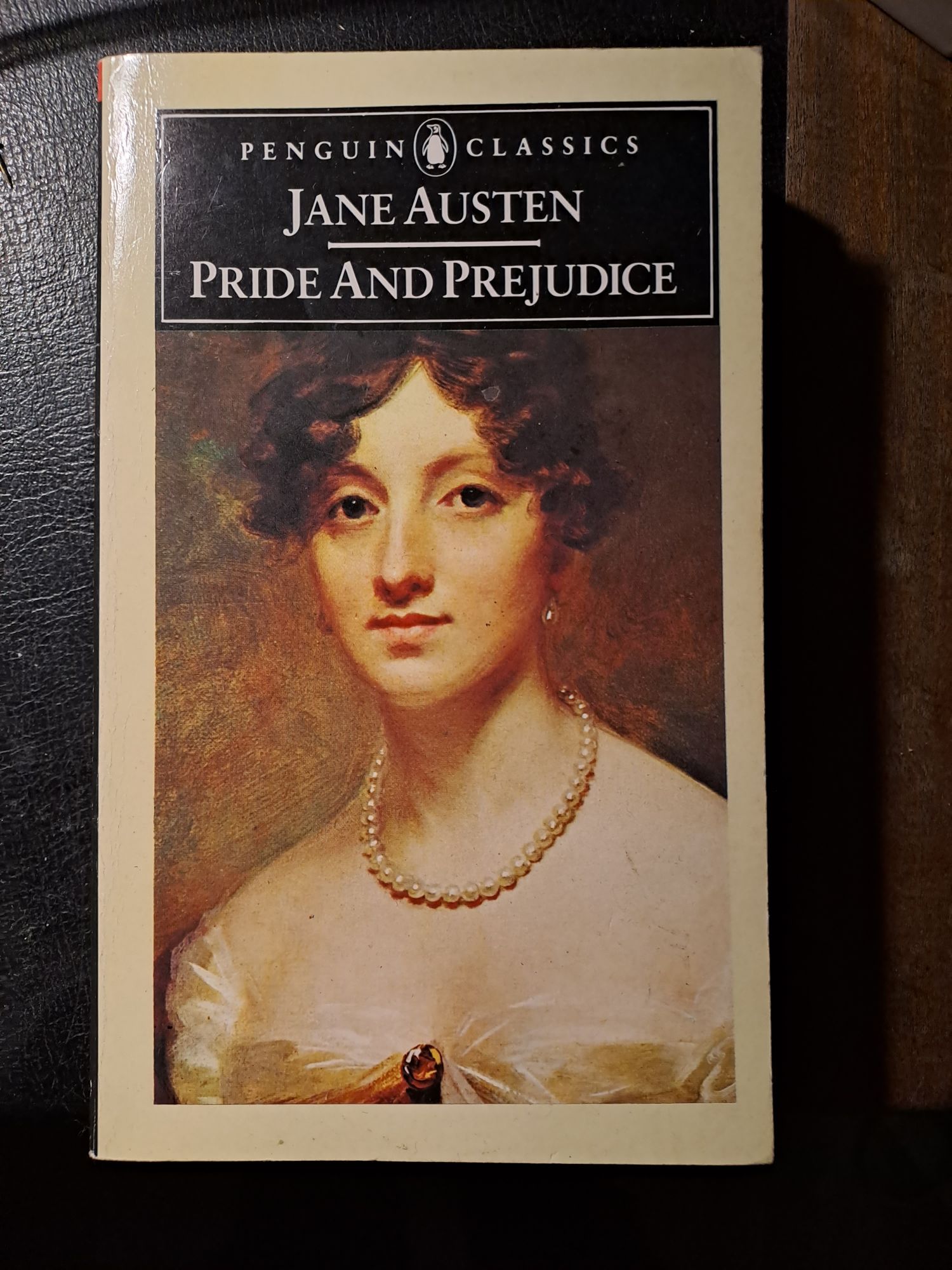
The latest book on my reading list is Death Comes to Pemberley, by P.D. James, which was published in 2011. The author was 90 years old when she began writing it and in her author’s note she admits that the book gave her a chance to indulge herself by combining her flair as a mystery writer with a love of the books of Jane Austen. This book is a skillful pastiche of the style of Jane Austen set in the world of Pride and Prejudice; this is why I re-read that book before departing for Sydney. It has however taken longer than I thought to get around to reading the P.D. James book as I have been rather busy.
It’s interesting to remark that Pride and Prejudice was actually written between 1796 and 1797, but not published until 1813 (and in a revised form). Jane Austen is a wonderful writer, with an elegant and witty style. It’s a hard act to follow, but P.D. James does a fine job. I’ll also remark that the original novel was written at the height of the Napoleonic Wars, and is set in England at a time when the threat of invasion from France was very real, but this barely registers in the plot.
I’ll let the author herself describe the setting
In Death Comes to Pemberley, I have chosen the earlier date of 1797 for the marriages of both Elizabeth and her older sister Jane, and the book begins in 1803 when Elizabeth and Darcy have been happily together for six years and are preparing for the annual autumn ball which will take place the next evening.
With their guests, which include Jane and her husband Bingley, they have been enjoying an informal family dinner followed by music and are preparing to retire for the night when Darcy sees from the window a chaise being driven at seed down the road from the wild woodlands. When the galloping horses have been pulled to a standstill, Lydia Wickham, Elizabeth’s youngest sister, almost falls from the chaise, hysterically screaming that her husband has been murdered. Darcy organises a search party and, with the discovery of a blood-smeared corpse in the woodland, the peace both of the Darcys and of Pemberley is shattered as the family becomes involved in a murder investigation.
P.D. James, Author’s Note, Death Comes to Pemberley
As this is a mystery novel, I will refrain from saying too much about the plot as that would spoil the book for readers. I will say that it is unusual for P.D. James that it isn’t a detective story as such because there isn’t actually a detective. The mystery of the murder is solved in the end by a spontaneous confession.
I get the impression that P.D. James wanted to use this book to add her own explanation of some of the events in Pride and Prejudice so there is a lengthy section at the end that functions to explain the back story. Most of the characters from Pride and Prejudice appear in the present book as bystanders, but they are well described and the overall atmosphere of the book is convincing. Darcy and Elizabeth have changed, but I imagine six years of marriage will do that. Although it’s a pastiche, this book is not at all superficial; the author seems to understand Austen’s characters and, rather than being merely imitative, the result is a genuine homage.
P.D. James passed away in 2014 at the age of 94. I bought Death Comes to Pemberley in 2014 too. The fact that it has taken me a decade to get around to reading it tells you something of how far I had got out of the reading habit. There’s also the point that I knew this was her last book and I was a bit reluctant to finish it knowing that there would be no more. Still, better late than never. I’m very glad I have read it at last as I enjoyed it greatly.
There’s something distinctively English about the novels of P.D. James, although that something is a something that clearly tends to polarize people. Some find her approach a bit too detached and genteel, some find it, “cosy”, snobbish and class-ridden, and some think that she was just an anachronism, harking back too much to the era of Agatha Christie and Dorothy L. Sayers. Yet others can’t understand the attraction of the genre at all. People are welcome to their opinions of course, but I think that the best detective fiction is not just about setting a puzzle for the reader to solve, but also posing questions about the nature of a society in which such crimes can happen. Far from being “cosy”, great crime writing actually unsettles complacent bourgeois attitudes. The solution of the mystery may offer us a form of comfort, but the questions exposed by the investigation do not go away. This is just as true for books set in the present as it is for those set two centuries ago in the world of stately homes and the threat of invasion from Napoleon.

Victoria Park, Sydney
She sits in the park. Her clothes are out of date.
Two children whine and bicker, tug her skirt.
A third draws aimless patterns in the dirt
Someone she loved once passed by – too late
to feign indifference to that casual nod.
“How nice” et cetera. “Time holds great surprises.”
From his neat head unquestionably rises
a small balloon…”but for the grace of God…”
They stand a while in flickering light, rehearsing
the children’s names and birthdays. “It’s so sweet
to hear their chatter, watch them grow and thrive, ”
she says to his departing smile. Then, nursing
the youngest child, sits staring at her feet.
To the wind she says, “They have eaten me alive.”
by Gwen Harwood (1920-1995)
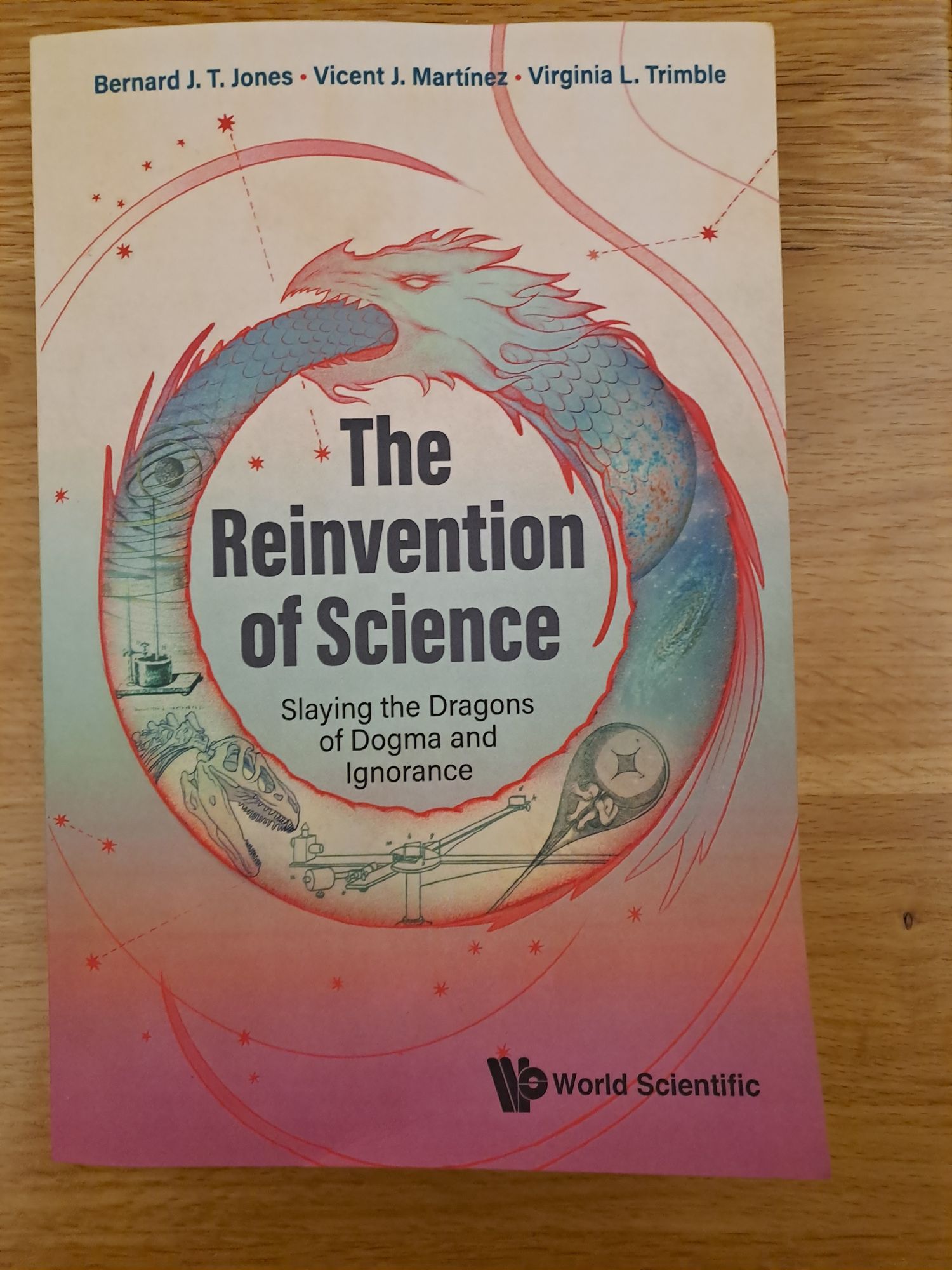
I’ve known about the existence of this new book for quite a long time – the first two of the authors are former collaborators of mine and I’m still in fairly regular touch with them – but I only received a copy a few weeks ago. Had I been less busy when it was in proof stage I might have been in a position to add to the many generous comments on the back cover from such luminaries as Martin Rees, Jim Peebles, Alan Heavens and, my hosts in Barcelona, Licia Verde and Raúl Jiménez. Anyway, now that I’ve read it I’m happy to endorse their enthusiastic comments and to give the book a plug on this blog.
One can summarize The Reinvention of Science as a journey through the history of science from ancient times to modern, signposted by mistakes, fallacies and dogma that have hindered rather than facilitated progress. These are, in other words, not so much milestones as stumbling blocks. Examples include the luminiferous aether and phlogiston to name but two. These and many other case studies are used to illustrate, for example, how supposedly rational scientists sometimes hold very irrational beliefs and act accordingly on them. The book presents a view of the evolution of science in spite of the suppression of heterodox ideas and the desire of establishment thinkers to maintain the status quo.
The volume covers a vast territory, not limited to astrophysics and cosmology (in which fields the authors specialize). It is a very well-written and enjoyable read that is strong on accuracy as well as being accessible and pedagogical. I congratulate the authors on a really excellent book.
P.S. I am of course sufficiently vain that I looked in the index before reading the book to see if I got a mention and was delighted to see my name listed not once but twice. The first time is in connection with the coverage of the BICEP2 controversy on this very blog, e.g. here. I am pleased because I did feel I was sticking my head above the parapet at the time, but was subsequently vindicated. The second mention is to do with this article which the authors describe as “beautiful”. And I didn’t even pay them! I’m truly flattered.
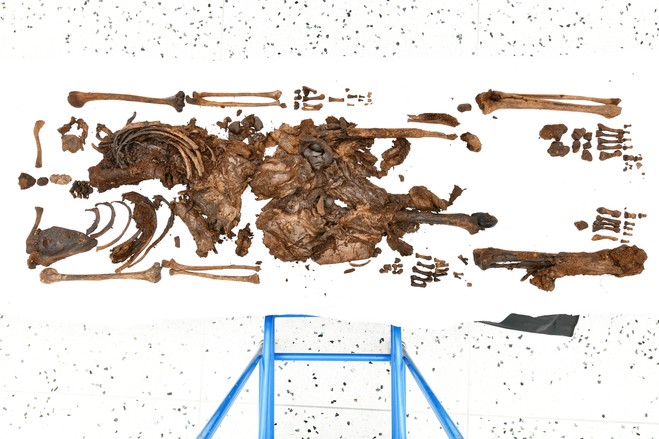
There was an interesting news item last week concerning the discovery of human remains in a peat bog in Bellaghy, County Derry. Radio-carbon dating has established that these remains are about 2,000 years old, so this was a person who lived in the Iron Age; a post-mortem has revealed it to be a teenage boy of around 15 years old. No cause of death has yet been established, but it is generally thought that these bog bodies were people who were executed as a punishment, or perhaps sacrificed for some ritual purpose.
These are neither the oldest nor the best-preserved such remains to be found in Ireland; the oldest belong to Cashel Man, who died, about 4,000 years ago, in the early Bronze Age. Nevertheless, the anaerobic conditions of the bog have slowed decomposition so much that not only bones, but some skin, hair and even parts of internal organs survive. This find is therefore important, not least because it should be possible to obtain detailed information about the DNA of this individual. Understanding of Ireland’s prehistoric past has been upended in recent years by DNA discoveries. What will Bellaghy Boy tell us? And how many more bog bodies are waiting to be found?
Another fascinating aspect of this story is that the location of the remains is very close to the house where the poet Seamus Heaney lived. Heaney wrote a number of poems about bog bodies and it’s ironic that there was one waiting to be found so close to his home.
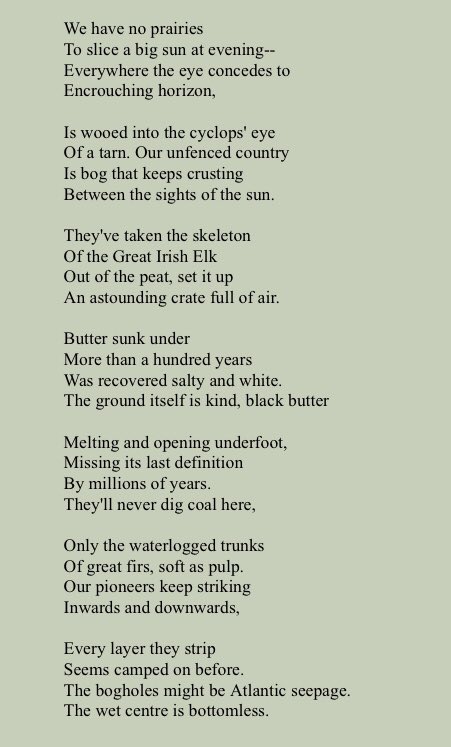
Anyway, this gives me an excuse to post a vaguely relevant poem by Heaney called Bogland which, appropriately for the title of this blog, comes from a collection called Door into the Dark.

My ongoing quest to keep up with the literature brings me to the winner of the 2023 Booker Prize, Prophet Song by Paul Lynch. Before writing a few comments on this extraordinary work I should mention the Maynooth connection: the book was written during the writer’s tenure as Writer-in-Residence at Maynooth University which involves teaching creativity and novel-writing, on the MA in Creative Writing, which is now in its second year.
So to the book, which is a grimly compelling novel set in an alternative Ireland after a far-right takeover revolving around Eilish Stack and her family. Her husband, Larry, a trade unionist, is detained by the state police and her efforts to find him get tangled up in the disintegration of society into civil war during which she tries desperately to keep herself and her family together as anarchy descends. We learn little of what goes on in the wider world, except what Eilish herself sees and rumours she picks up from others, but eventually, her home engulfed by the fighting, she is forced to attempt to flee with what remains of her family and cruelly exploited by human traffickers.
I won’t give away any details, but the story is bleak and at times is truly harrowing. I had to stop reading at one point – when Eilish visits a military hospital in the penultimate chapter, for those of you who have read it.
I have to admit that it took me a while to get the hang of Lynch’s writing style, with no conventional division into paragraphs and minimal punctuation. For example, speech is not included in quotation marks but embedded into the often very long sentences that blur the distinction between Eilish’s inner thoughts and the outer reality. Once I got used to it, however, I found it gripping despite the relentless horror of Eilish’s situation: Lynch conjures up an atmosphere of dread and hopelessness as effectively as George Orwell does in Nineteen Eighty-Four, with which this book has been rightly compared, but the prose also seems to me to be heavily influenced by James Joyce.
This is not an easy read, but is an important novel that should be read. I don’t think it will be long before it is on the syllabus for Leaving Certificate English.
I’ll just make further comment. Many of the reviews I have read of this book describe it as an “alternative future” and a warning about the rise of the fascism, but that’s only a part of the story. To me, it’s not really an alternative future, but an alternative present. The point is all the horrors described in this book – the murders, the abductions, the torture, the indiscriminate slaughter of innocent civilians, the people trafficking are actually happening right now elsewhere in the world, but those of us living in safer places can view them from a safe distance or, more likely, just ignore them. The novel’s power is that it makes such things happen on the familiar streets of Dublin, making the unthinkable an alternative reality.
You have to wait until near the very end of the book for Paul Lynch to explain the title, which he says far more eloquently, essentially what I said in the preceding paragraph.
…and the prophet sings not of the end of the world but of what has been done and what will be done and what is being done to some but not others, that the world is always ending over and over again in one place but not another and that the end of the world is always a local event, it comes to your country and visits your town and knocks on the door of your house and becomes to others but some distant warning, a brief report on the news, an echo of events that has passed into folklore…
Paul Lynch, Prophet Song
The tale ends with a crowd of refugees – Eilish and her young children among them – getting into small boats to attempt to reach safety across the sea. Frail as it is, that’s their only hope of survival and a better life…
We are prepared: we build our houses squat,
Sink walls in rock and roof them with good slate.
This wizened earth has never troubled us
With hay, so, as you see, there are no stacks
Or stooks that can be lost. Nor are there trees
Which might prove company when it blows full
Blast: you know what I mean – leaves and branches
Can raise a tragic chorus in a gale
So that you listen to the thing you fear
Forgetting that it pummels your house too.
But there are no trees, no natural shelter.
You might think that the sea is company,
Exploding comfortably down on the cliffs
But no: when it begins, the flung spray hits
The very windows, spits like a tame cat
Turned savage. We just sit tight while wind dives
And strafes invisibly. Space is a salvo,
We are bombarded with the empty air.
Strange, it is a huge nothing that we fear.
by Seamus Heaney (1939-2013)
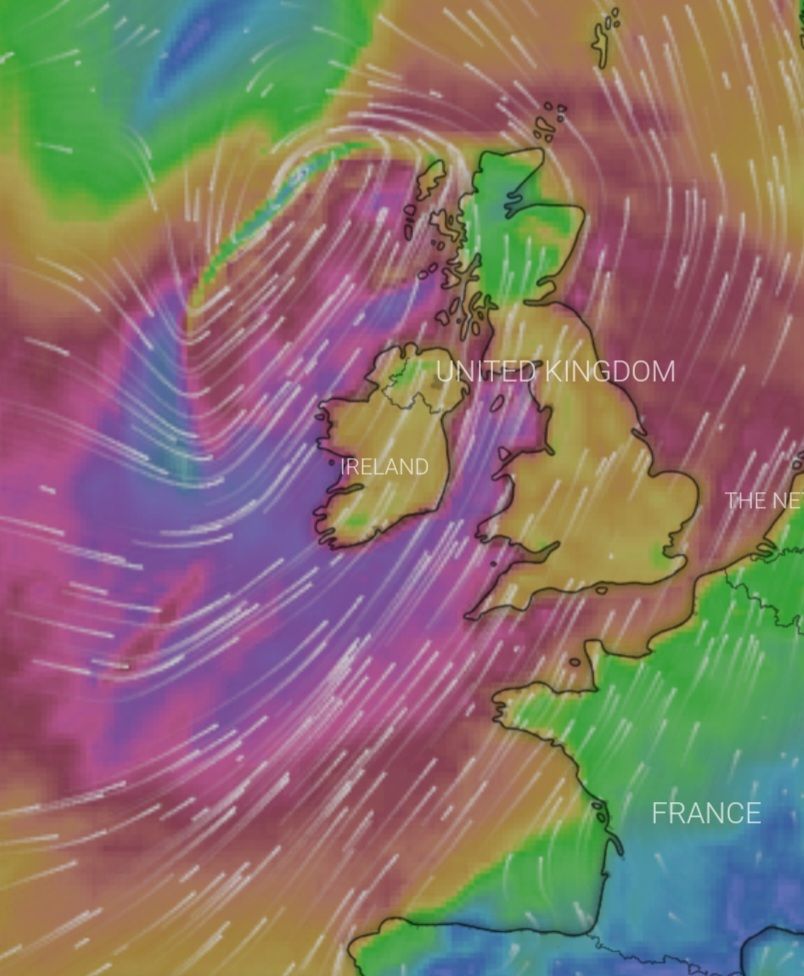
Storm Isha passed overnight, bringing down many trees and leaving many thousands of households without power.
For reasons that may or may not be revealed shortly, I am currently re-reading the novel Pride and Prejudice by Jane Austen:
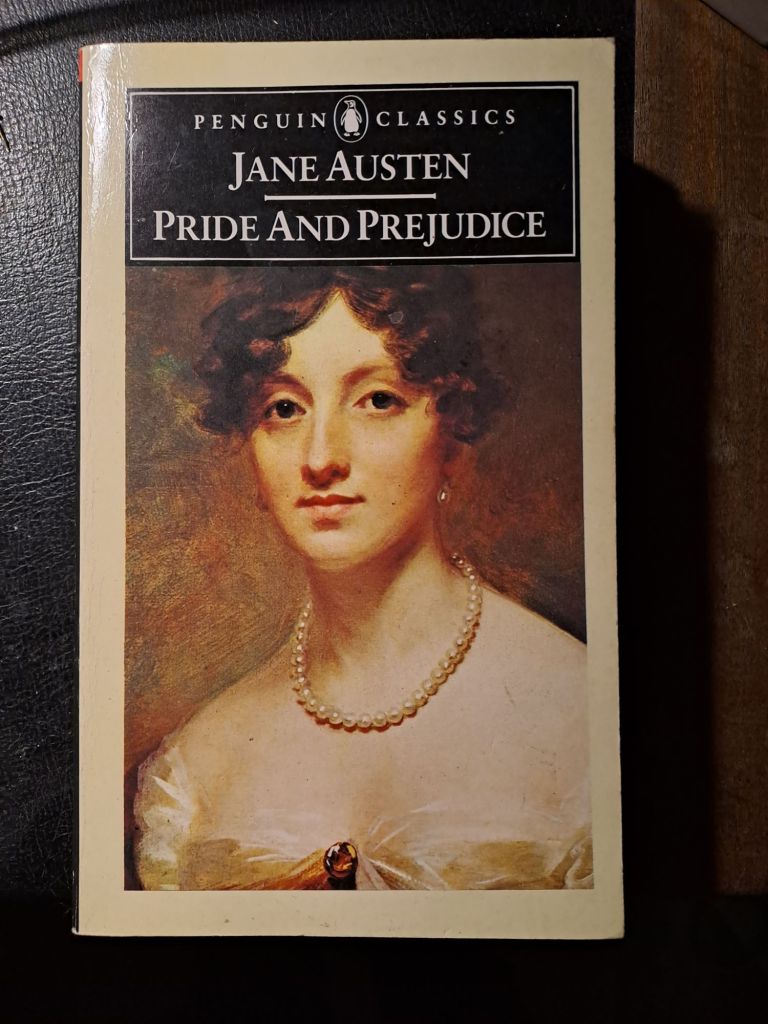
Among many other things, this has one of the most famously ironic opening lines in all English literature:
It is a truth universally acknowledged that, that a single man in possession of a good fortune must be in want of a wife.
I recently came across this discussion of this sentence by the philosopher Ludwig Wittgenstein, which I thought it would be amusing to share:
Let us ask what it is when we say “It is a truth universally acknowledged” that something is the case. Isn’t this a queer thing to say? How can we possibly understand it? At first sight it may appear that “it” is simply the something that is the case (ie that a man possessed of a certain degree of wealth will always feel the lack, or perhaps, without feeling it, be in need, of a wife). This “it”, however, can be no more than a pronominal anterior reference to the “truth” that is being claimed, without as yet there being any evidence for it, even though it is later stated to be acknowledged as a truth by everyone. In such a case it seems to us that the truth has been claimed a priori, since nothing can be acknowledged until it is proposed, although once proposed, such a supposed truth may be further tested through opinion and behaviour. Consider the much simpler proposition: “A man in possession of a good fortune must be in want of a wife”. We might reply “How do you know?”, a response that immediately raises the idea of possible exceptions to such a generalisation, such as (among other more complex forms of exception) that he may have a wife already, or may be a secret lover of men. To claim universal acknowledgement of a truth is to claim that a probable “truth” is undeniably true, which can be no more than a specious tautology. Moreover, as we have seen, the “it” with which we began has already laid claim to the existence of something (a kind of truth, as it soon turns out) that can only be assumed through this insistent and superfluous pronoun, which is a form of private acknowledgement by the speaker alone, and is by no means obviously universal. That this “it” is true, and that truth is also true, is what is being claimed here, and the double tautology becomes a distinct puzzle. To be induced to assent to an “it”, when there may be ample reason to doubt its very relation to the proposition which follows, is to be invited not to understand it.
I hope this clarifies the situation.
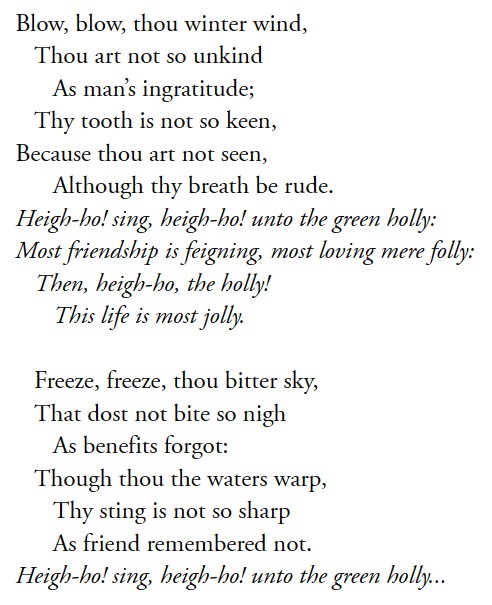
With gale force winds, torrential rain and hailstones, the weather is pulling out all the stops today; so here, from the album Shakespeare and all that Jazz by Cleo Laine with a band led by John Dankworth, here is a lovely version of the song Blow, Blow, Thou Winter Wind from As You Like It by William Shakespeare
I always loved how Cleo Laine sang Jazz without trying to put on an American accent!
And here are the words, if you want to sing along at home:

 In the Dark