Archive for the mathematics Category

The 2023 Irish National Astronomy Meeting

Posted in Biographical, History, mathematics with tags , , , , on August 24, 2023 by telescoper

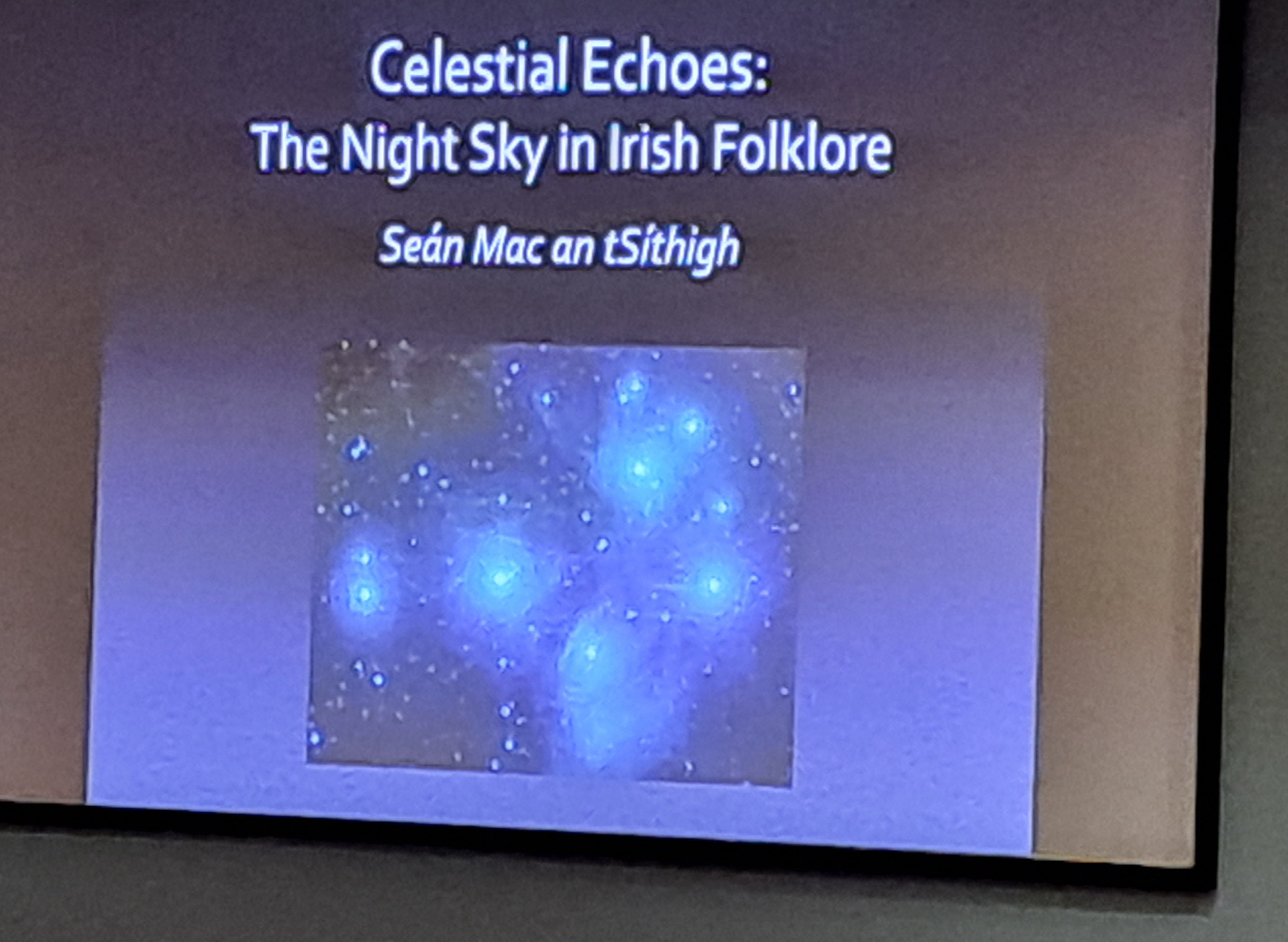
It’s been a busy day at the Irish National Astronomy Meeting, culminating with a fascinating public lecture by journalist Seán Mac an tSíthigh – bonus marks for getting the pronunciation right – and a very enjoyable shindig involving pizza and beer. There was a strong Maynooth contribution today, with excellent talks by students Noah, Saoirse, Joe & Hannah and postdocs Lewis & John. My contribution was limited to chairing a session, though I will be giving a talk tomorrow.

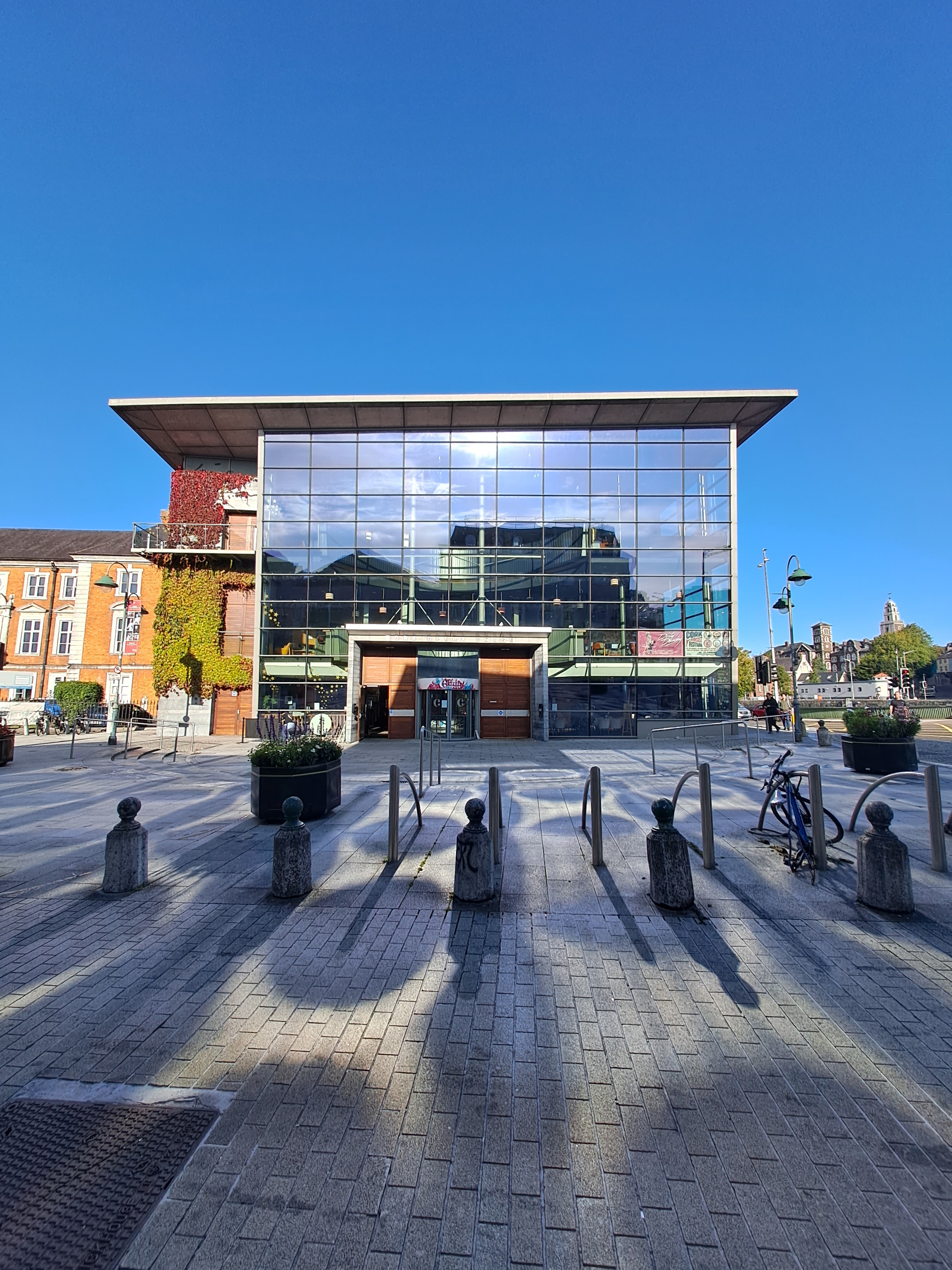
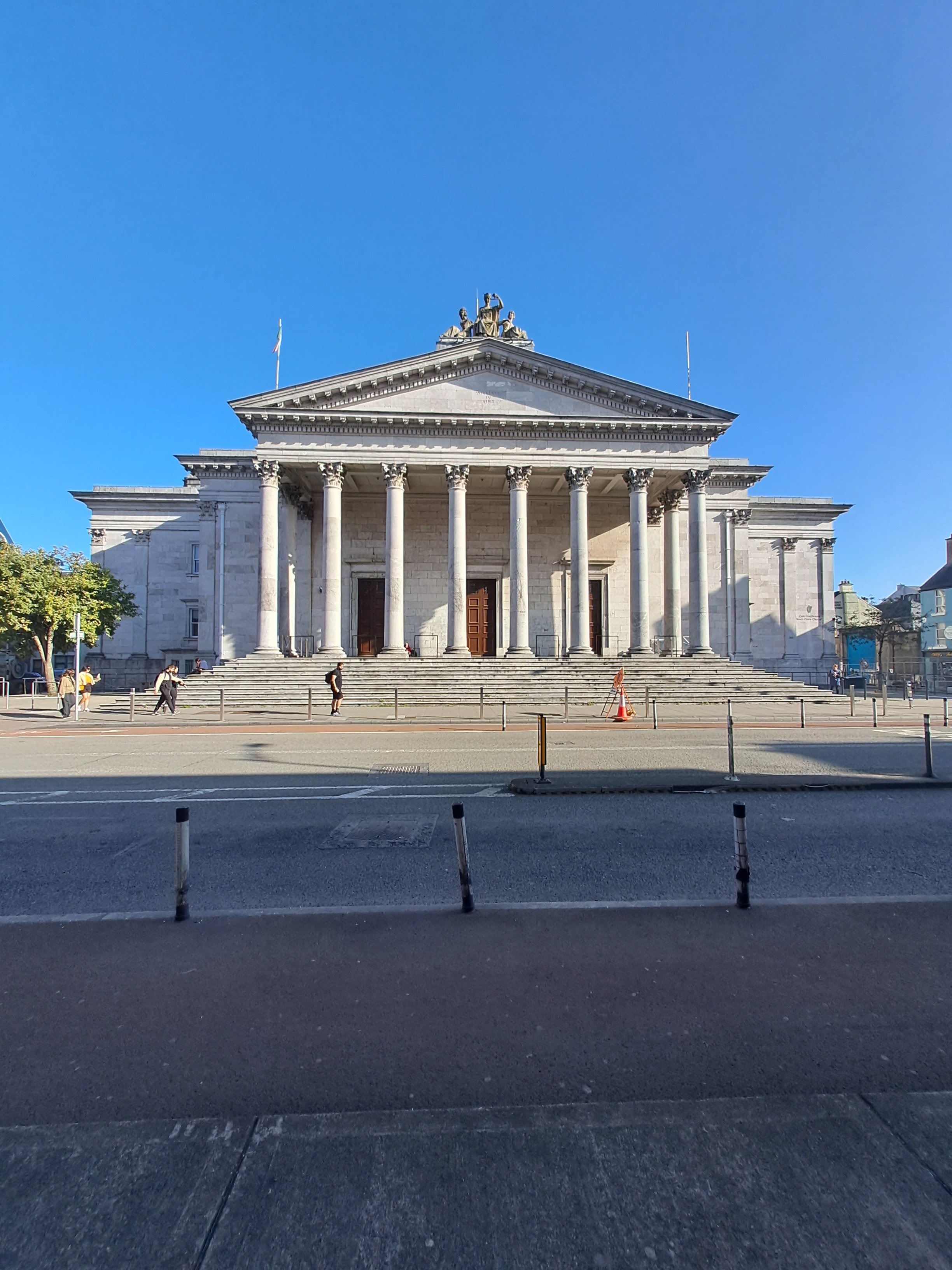
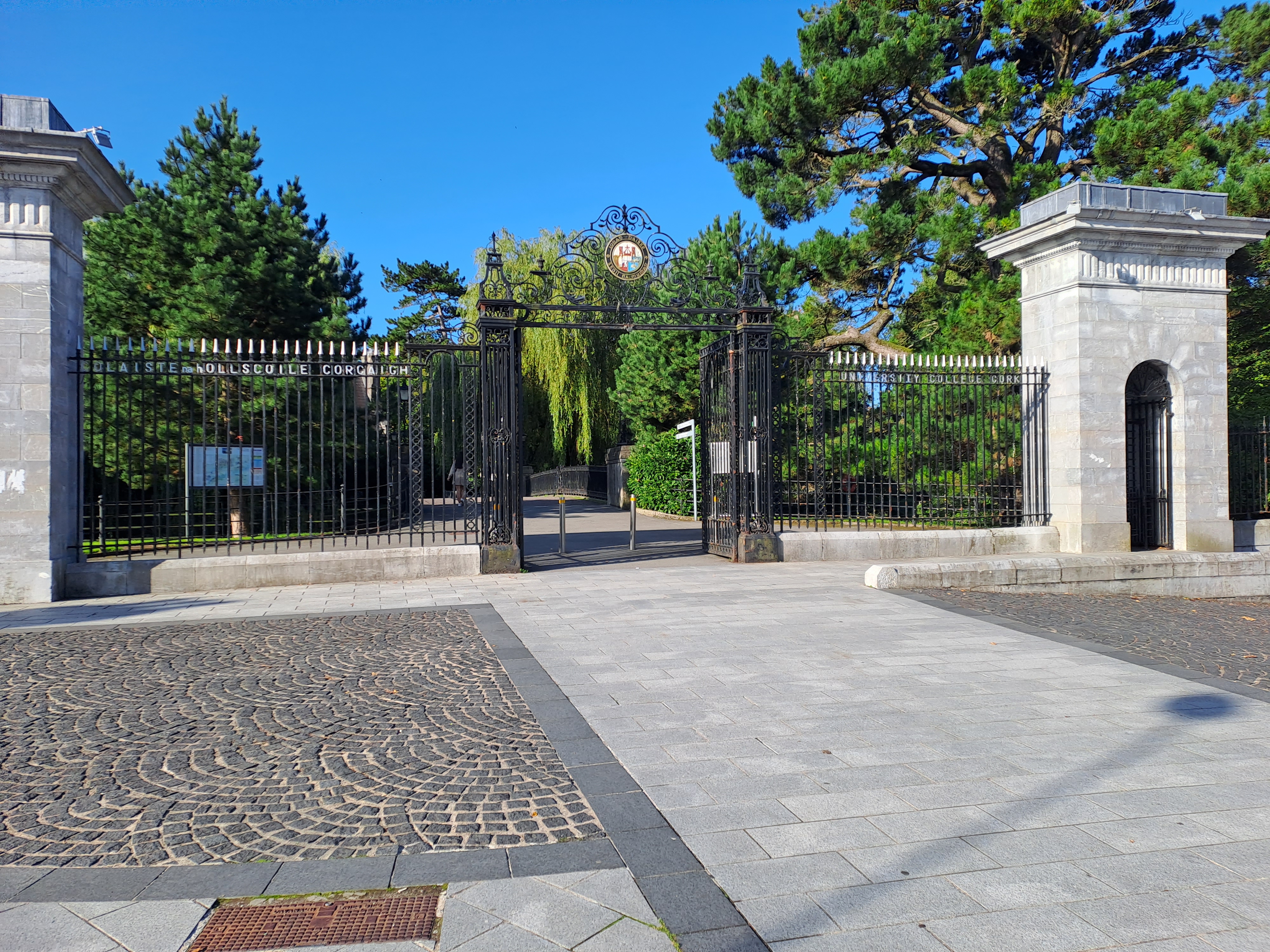
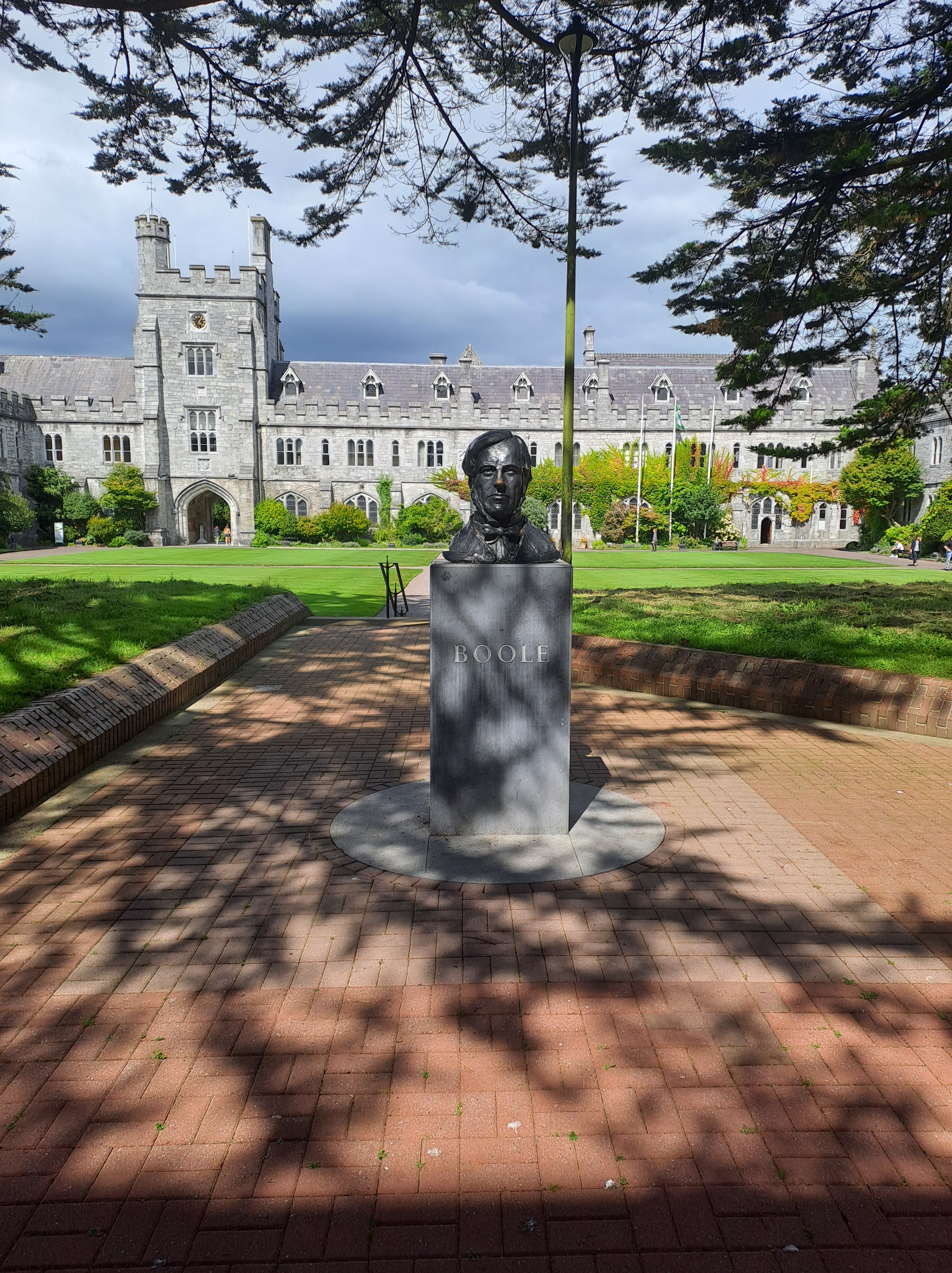
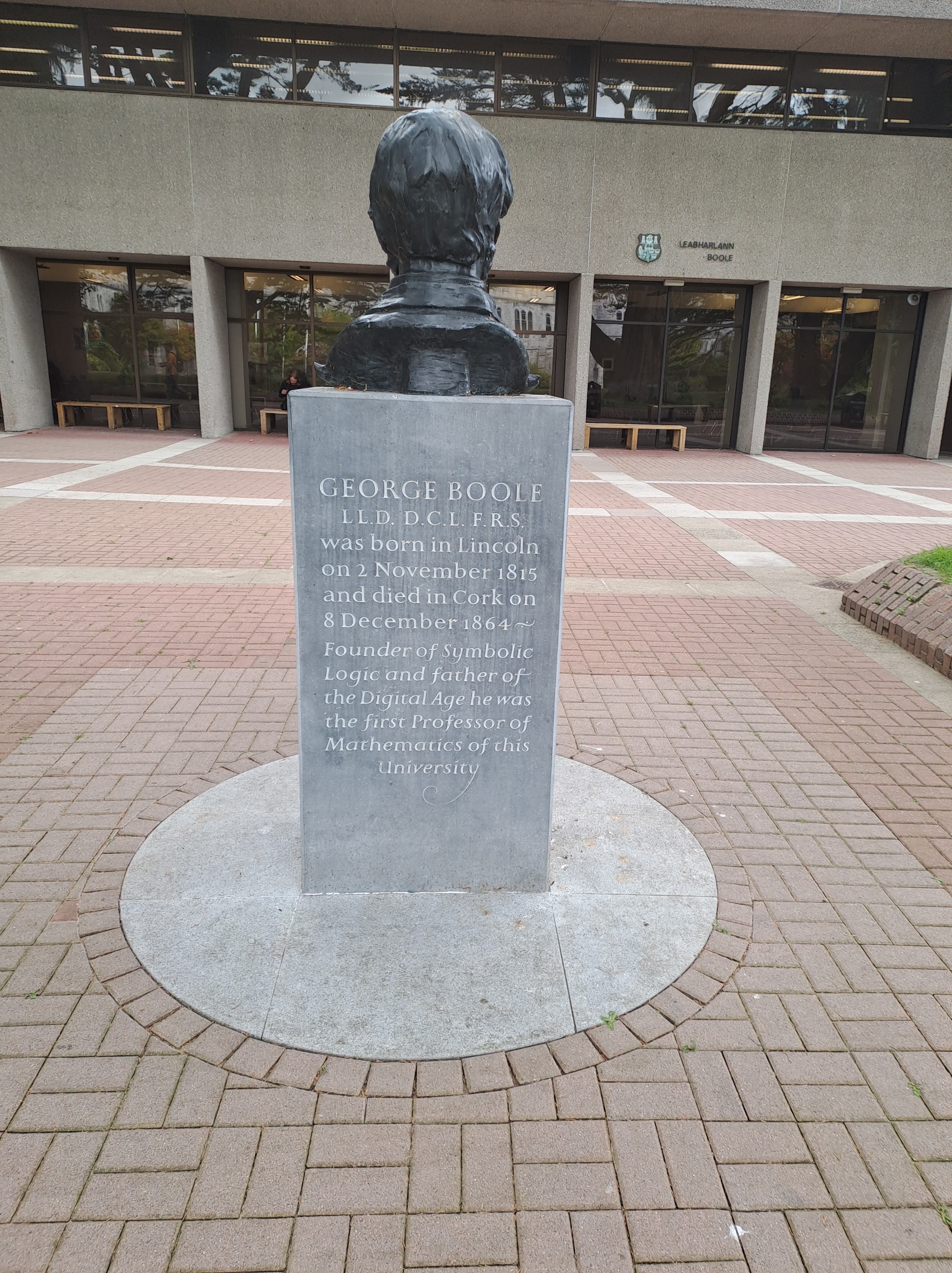
The only problem today was that I couldn’t get eduroam to work on the UCC campus so have only just managed to connect after getting back to my hotel, so am a bit late posting this. Anyway, here are some snaps I took on the way this morning, on the campus including a bust of George Boole.

ps. I’m sure to blog again about the public talk, but that will have to wait until I get home at the weekend.

Talking about the Leaving Certificate

Posted in Literature, mathematics, Maynooth, Poetry with tags , , , , , , on June 10, 2023 by telescoper

One thing that I forgot to mention in my post about examinations a few days ago is that students at Irish schools all sit exactly the same examination papers at the same time. This is very different from the UK where there are several different Exam Boards that have different syllabuses and set different papers. One consequence of the Irish system is immediately an exam is over, there is a national discussion of the students’ and teachers’ reaction to it. The examination papers are posted online after the examination too – you can find them here – so that everyone can join in the discussion.

I have to admit that when I was a student I was never one for talking about examinations after I had taken them. While most of my peers stood around outside the Exam Hall conducting a post mortem on the paper, I usually just went home. I always figured that there was nothing I could do about the results then so it was best to put it behind me and focus on the next thing. That’s what I’ve recommended to students throughout my career too: don’t look back, look forward.

Anyway, the first Leaving Certificate examination this year (on Wednesday) was English Paper 1, followed by Paper 2 on Thursday. Both seem to have been received relatively favourably by students; see some discussion here and here. Paper 1 is really an English Language Examination, with exercises on comprehension and composition while Paper 2 focuses on literature. Every year summer I look at the set books and poems for the English Leaving Certificate Paper 2 and they’re usually an interesting mix. This year the novels included Mary Shelley’s Frankenstein, Raymond Chandler’s The Big Sleep, Oscar Wilde’s The Picture of Dorian Gray, and Margaret Atwood’s The Handmaid’s Tale. The list of poets for the Higher examination was Elizabeth Bishop, Emily Dickinson, John Donne, Patrick Kavanagh, Derek Mahon, Paula Meehan, Adrienne Rich, and W.B. Yeats. Not all the texts come up in the examination. In the case of the poets, for example, Mahon, Kavanagh, Meehan, Donne and Rich appeared on Paper 2 but there was no Dickinson, Donne or Bishop.

While I have a personal interest in English literature, the English examinations are not relevant to me in a professional capacity. On the other hand, the Leaving Certificate papers in Mathematics are of direct relevance to me as a Professor in the Department of Theoretical Physics because they indicate the level of mathematical preparation of students likely to come in next academic year.

General reaction to Higher Mathematics Paper 1 seems to have been much more mixed than for the English papers, with many students taking to social media to express shock that it was so difficult: the hashtag #MathsPaper1 is still trending on Irish Twitter; you can also find some reaction here.

I have looked at the paper but can’t really comment on the level of difficulty because I haven’s studied previous years examinations in detail but I will say that (a) there’s quite a lot to do in the 150 minutes allowed and (b) there’s nowhere near as much calculus as in my A-level Mathematics over 40 years ago (though remember that Irish students do more subjects in the LC than UK students who do A-levels). Note also that because of the pandemic, this would have been the first state examination taken in Mathematics by many students.

The Leaving Certificate Higher Mathematics examination is split into two sections of equal weight. Section A (‘Concepts and Skills’) requires students to answer 5 questions from 6 (each split into parts); Section B (‘Contexts and Applications’) gives a choice of 3 out of 4 longer questions. That’s less choice than I expected; students have to answer 8 out of 10 questions. The Ordinary Level Examination has the same structure, but the questions are much more straightforward.

Mathematics Paper 2 is on Monday, so I’ll update this post then.

Update: Mathematics Paper 2 seems to have gone down much better than Paper 1. You can find it, along with some reaction, here.

Examinations, Past and Future

Posted in Biographical, Education, mathematics, Maynooth with tags , , , , , on June 7, 2023 by telescoper

No sooner is yesterday’s departmental Examination Board done and dusted (after just two and a half hours) when attention switches to school examinations. The Junior Certificate and Leaving Certificate examinations both start today, so the first thing I need to do is wish everyone taking examinations the very best of luck!

Among other things, the results of the leaving certificate examinations are important for next year’s University admissions. As we gradually dispense with the restrictions imposed during the pandemic, it seems this year we just might have the results before the start of teaching at the end of September. That will make a nice change!

In the system operating in England and Wales the standard qualification for entry is the GCE A-level. Most students take A-levels in three subjects, which gives them a relatively narrow focus although the range of subjects to choose from is rather large. In Ireland the standard qualification is the Leaving Certificate, which comprises a minimum of six subjects, giving students a broader range of knowledge at the sacrifice (perhaps) of a certain amount of depth; it has been decreed for entry into this system that an Irish Leaving Certificate subject counts as about 2/3 of an A-level subject for admissions purposes, so Irish students do the equivalent of at least four A-levels, and many do more than this. It’s also worth noting that all students have to take Mathematics at Leaving Certificate level.

Overall I prefer the Leaving Certificate over the UK system of A-levels, as the former gives the students a broader range of subjects than the latter (as does the International Baccalaureate). I would have liked to have been allowed to take at least one arts subject past O-level, for example.

For University admissions points are awarded for each paper according to the marks obtained and then aggregated into a total CAO points, CAO being the Central Applications Office, the equivalent of the UK’s UCAS. This means, for example, that our main Science pathway at Maynooth allows students to study Physics without having done it at Leaving Certificate level. This obviously means that the first year has to be taught at a fairly elementary level, but it has the enormous benefit of allowing us to recruit students whose schools do not offer Physics.

As much as I like the Leaving Certificate, I have concerns about using a simple CAO points count for determining entry into third-level courses. My main concern about is with Mathematics. Since the pandemic struck, students have been able to choose to questions from just six out of ten sections. That means that students can get very high grades despite knowing nothing about 40% of the syllabus. That matters most for subjects that require students to have certain skills and knowledge for entry into University, such as Physics.

I’ve been teaching the first year Mathematical Physics course in Maynooth for about 5 years. At the start of the module I put up a questionnaire asking the students about various mathematical concepts and asking them how comfortable they feel with them. It’s been noticeable how the fraction that are comfortable with basic differentiation and integration has been falling. That’s not a reflection on the ability of the students, just on the way they have been taught. As well as making adjustments during the pandemic for online teaching, etc, I have changed various things about the teaching, in particular adjusting the way I have introduced calculus into the module. Another problem is that we have been forced to start teaching first-years a week late because of delays to the CAO process caused by the pandemic.

I’ll be on sabbatical next academic year so I won’t be teaching the first-years (or anyone else) in September. It’s time to hand these challenges on to someone else!

A Question of Images

Posted in Cute Problems, mathematics, The Universe and Stuff with tags , on May 10, 2023 by telescoper

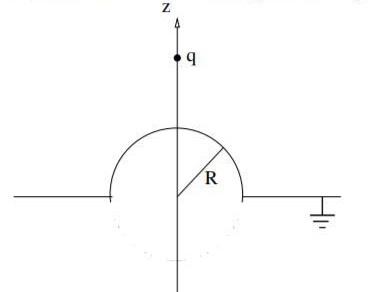
Today I gave a revision lecture/tutorial for my module Advanced Electromagnetism. With the Examination Period starting on Friday, that was the last class I will do for that. One of the topics I’ve been asked to cover in revision was the Method of Images for electrostatics. Preparing for the class I came across this cute problem which I thought I’d share here:

The question concerns a charge +q placed at a distance d as shown above an infinite earthed conducting plane distorted by the presence of a hemispherical bulge with radius R.

  1. Using the method of images, or otherwise, calculate the potential at an arbitrary point above the conducting surface. (HINT: you need three image charges)
  2. Find the magnitude and direction of the electrostatic force on the charge.

If you’re feeling keen you might also find what fraction of the total induced on the conductor is on the hemispherical part.

Answers through the comments box please!

Well, nobody posted an answer so here’s an outline solution.

To solve this problem you need three image charges: one is of charge – q at z=-d to make the plane an equipotential. For an isolated sphere you need a charge of -qR/d at z=-R^2/d  (the inverse point of the sphere). But this charge also has an effect on the plane, which you need to correct by placing another image charge of +qR/d at z=-R^2/d. That is, the solution for the potential is due to the original charge plus three image charges. Then the potential is just the sum of four point charges.

You can differentiate the answer to the first bit to get the force, or you could work out the force on the original charge directly by adding the forces in the z-direction from the three image charges, it being obvious by symmetry that there is no other component of the force. For d>R this results in a force which is downward, so the charge is pulled towards the conductor. I’ll leave that as an exercise!

String theory lied to us and now science communication is hard…

Posted in mathematics, The Universe and Stuff with tags , , on April 30, 2023 by telescoper

Taking the opportunity of the Bank Holiday weekend to catch up on some other blogs, I found this video on Peter Woit’s Not Even Wrong. It’s by Angela Collier. It’s a bit long for what it says, and I find the silly game going on while the speaker talks very irritating, but the speaker makes some very good points and it’s well worth watching all the way through. The most important message it conveys, I think, is how the hype surrounding string theory contributed to increasing public distrust of science and the media.

If I were a string theorist I probably wouldn’t appreciate this video, but I’m not and I do!

Teaching those who want to learn

Posted in Biographical, Education, mathematics, Maynooth with tags , , , on April 21, 2023 by telescoper

Yesterday afternoon I ran the last formal Computational Physics laboratory of the term. As is often the case with these sessions, the students were given a Python task to work through, with assistance available from myself and a demonstrator (and indeed other students). We have 25 students registered on this module, who are split into two groups, so about a dozen students were in yesterday’s session. That’s a comfortable number to make sure everyone can get some help.

This is the sixth year I’ve done this module, and I decided a long time ago that the best way to ensure that students learn the necessary skills is to give them things to do and let them work things out for themselves (with help where necessary). A couple of years ago, on my module feedback questionnaire, a student wrote an intended criticism along the lines of – “It’s like he expects us to learn to code by doing it ourselves, rather than him teaching us”. That is, of course, exactly what I intended, though we do give plenty of help during the labs.

Just as the best way to learn a foreign language is by speaking it, the best way to learn coding is by writing programs. Some of the students on this module have done any before, so for them the early stages of the module are rather straightforward. At least half the class, however, haven’t done any programming, so for them it’s a fairly steep learning curve.

Anyway, it being the last formal session of term this week’s task was a rather challenging one, involving the solution of a boundary value problem via the shooting method. It’s a good exercise because it brings together methods for solving ordinary differential equations with root-finding, as well as requiring some thought as to the general construction of a code that combines these two.

As expected, given the difference in background of the students, some finished this in good time, but others went more slowly. Some very excellent things happened, though, which made me very happy with the the whole experience.

One was that instead of leaving as soon as they had finished, a few of the students who had completed the task early stayed behind to help their friends. I encourage this, but it doesn’t always happen as much as yesterday. It’s called teamwork, and it’s essential not only in physics but also in everyday life.

The lab session was supposed to finish at 4pm, but not all students were done by then. Another excellent thing though was they didn’t just quit when they had run out of time. I stayed well past 4pm to help those who were determined to finish. In one case it was just a ‘0’ that should have been a ‘1’ in the index of an array that stopped it working. I don’t know why it took me so long to spot this, but we got there in the end.

One student, however, had another class at 4pm so left, only to return at five to continue. The student finally left, having completed the exercise, at about 6.45. The persistence shown by the students in refusing to be defeated was truly admirable. This harks back to a piece of advice I gave some time ago:

If you really want to develop as a physicist, don’t just solve a lot of easy problems; challenge yourself by tackling difficult ones too. Don’t be afraid to get “stuck” or make a mistake, as those are both necessary parts of the learning process. Above all, develop the confidence in your ability to take on a problem and back yourself to solve it and don’t be deterred if the answer doesn’t come quickly!

You may say that if it took some students much longer than the allocated time to finish then the problem was too difficult. That may be the case, but do you ever really learn if you’re not stretched? There is a place for straightforward formulaic tasks in higher education, but there’s much more to a university education than doing things like that.

Obviously the lab took up much more of my time as I had originally planned – more than double, in fact – but I went home pleased with a good day’s work. As I’ve said on this blog many times before, there are few things more rewarding than teaching students who want to learn.

Newsflash – New MSc Course at Maynooth!

Posted in Education, mathematics, Maynooth with tags , , on April 8, 2023 by telescoper

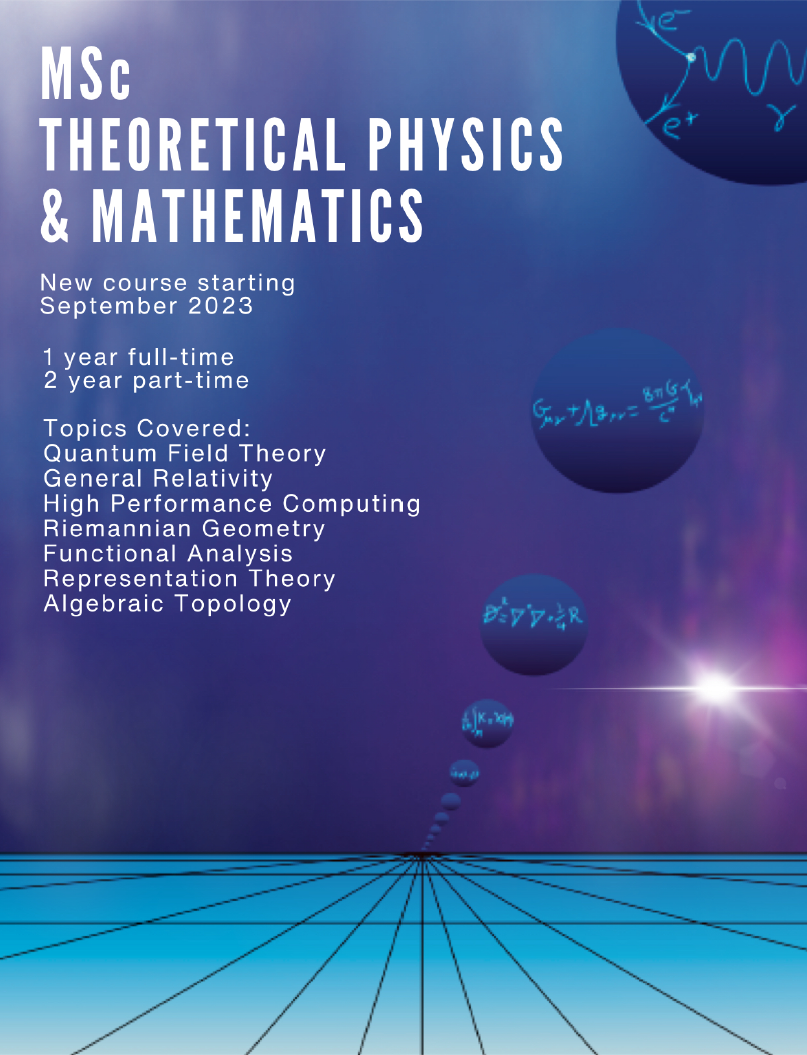
I know it’s the Easter holiday weekend but I couldn’t resist sharing the exciting news that we have just received approval for a brand new Masters course at Maynooth University in Theoretical Physics & Mathematics. The new postgraduate course will be run jointly between the Departments of Theoretical Physics and Mathematics & Statistics, with each contributing about half the material. The duration is one calendar year (full-time) or two years (part-time) and consists of 90 credits in the European Credit Transfer System (ECTS). This will be split into 60 credits of taught material (split roughly 50-50 between Theoretical Physics and Mathematics) and a research project of 30 credits, supervised by a member of staff in a relevant area from either Department.

This new course is a kind of follow-up to the existing undergraduate BSc Theoretical Physics & Mathematics at Maynooth, also run jointly . We think the postgraduate course will appeal to many of the students on that programme who wish to continue their education to postgraduate level, though applications are very welcome from suitably qualified candidates elsewhere.

Although the idea of this course has been on the cards for quite a while, the pandemic and other issues delayed it until now. This has so recently been agreed that it doesn’t yet exist on the University admissions webpages. This blog post is therefore nothing more than a sneak preview. There isn’t much time between now and September, when the course runs for the first time, which is why I decided to put this advanced notice on here! I will give fuller details on how to apply when they are available. You will also find further information on the Department’s Twitter feed, so if you’re interested I suggest you give them a follow.

50 Years of Hawking & Ellis

Posted in mathematics, The Universe and Stuff with tags , , , on February 15, 2023 by telescoper

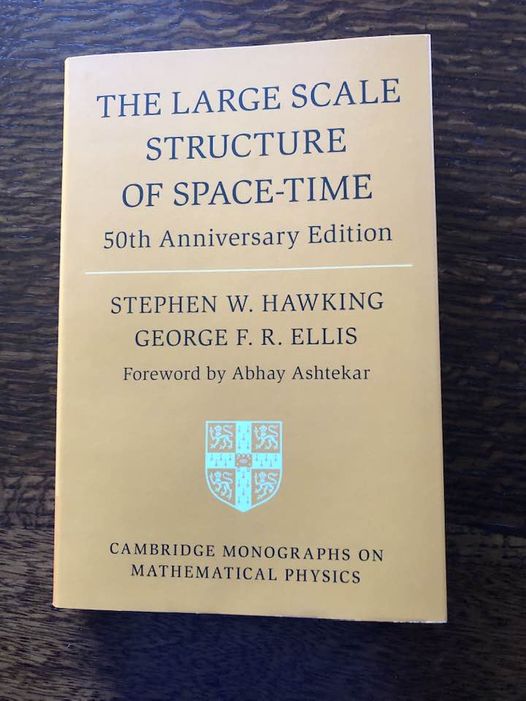
Today, 16th February 2023, sees the official publication of a special 50th anniversary edition classic monograph on the large scale structure of space-time by Stephen Hawking and George Ellis. My copy of a standard issue of the book is on the left; the special new edition is on the right. The book has been reprinted many times, which testifies to its status as an authoritative treatise. I don’t have the new edition, actually. I just stole the picture from the Facebook page of George Ellis, with whom I have collaborated on a book (though not one as significant as the one shown above).

This book is by no means an introductory text but is full of interesting insights for people who have studied general relativity before. Stephen Hawking left us some years ago, of course, but George is still going strong so let me take this opportunity to congratulate him on the publication of this special anniversary edition!

P.S It struck me while writing this post that I’ve been working as a cosmologist in various universities for getting on for about 35 years and I’ve never taught a course on general relativity. As I’ll be retiring pretty soon it’s looking very likely that I never will…

The Elements of Euclid

Posted in Euclid, mathematics, The Universe and Stuff with tags , , , , on February 15, 2023 by telescoper

My recent post pointing out that the name of the space mission Euclid is not formed as an acronym but is an homage to the Greek mathematician Euclid (actually Εὐκλείδης in Greek) prompted me to do a post about the Euclid of geometry and mathematics rather than the Euclid of cosmology, so here goes.

When I was a lad – yes, it’s one of those tedious posts about how things were better in the old days – we grammar school kids spent a disproportionate amount of time learning geometry in pretty much the way it has been taught since the days of Euclid. In fact, I still have a copy of the classic Hall & Stevens textbook based on Euclid’s Elements, from which I scanned the proof shown below (after checking that it’s now out of copyright).

This, Proposition 5 of Book I of the Elements, is in fact quite a famous proof known as the Pons Asinorum:

The old-fashioned way we learned geometry required us to prove all kinds of bizarre theorems concerning the shapes and sizes of triangles and parallelograms, properties of chords intersecting circles, angles subtended by various things, tangents to circles, and so on and so forth. Although I still remember various interesting results I had to prove way back then – such as the fact that the angle subtended by a chord at the centre of a circle is twice that subtended at the circumference (Book III, Proposition 20) – I haven’t actually used many of them since. The one notable exception I can think of is Pythagoras’ Theorem (Book I, Proposition 47), which is of course extremely useful in many branches of physics.

The apparent irrelevance of most of the theorems one was required to prove is no doubt the reason why “modern” high school mathematics syllabuses have ditched this formal approach to geometry. I think this was a big mistake. The bottom line in a geometrical proof is not what’s important – it’s how you get there. In particular, it’s learning how to structure a mathematical argument.

That goes not only for proving theorems, but also for solving problems; many of Euclid’s propositions are problems rather than theorems, in fact. I remember well being taught to end the proof of a theorem with QED (Quod Erat Demonstrandum; “which was to be proved”) but end the solution of a problem with QEF (Quod Erat Faciendum; “which was to be done”).

You can see what I mean by looking at the Pons Asinorum, which is a very simple theorem to prove but which illustrates the general structure:

  1. GIVEN
  2. TO PROVE
  3. CONSTRUCTION
  4. PROOF

When you have completed many geometrical proofs this way it becomes second nature to confront any  problem in mathematics (or physics) following the same steps, which are key ingredients of a successful problem-solving strategy

First you write down what is given (or can be assumed), often including the drawing of a diagram. Next you have to understand precisely what you need to prove, so write that down too. It seems trivial, but writing things down on paper really does help. Not all theorems require a “construction”, and that’s usually the bit where ingenuity comes in, so is more difficult. However, the “proof” then follows as a series of logical deductions, with reference to earlier (proved) propositions given in the margin.

This structure carries over perfectly well to problems involving algebra or calculus (or even non-Euclidean geometry) but I think classical geometry provides the ideal context to learn it because it involves visual as well as symbolic logic – it’s not just abstract reasoning in that compasses, rulers and protractors can help you!

I don’t think it’s a particular problem for universities that relatively few students know how to prove, e.g.,  the perpendicular bisector theorem, but it definitely is a problem that so many have no idea what a mathematical proof should even look like.

Come back Euclid, all is forgiven!

A Backronym for Euclid?

Posted in Euclid, mathematics, Poetry, The Universe and Stuff with tags , , , , on February 13, 2023 by telescoper
The Euclid Satellite

As a fully paid-up member of the Campaign for the Rejection of Acronymic Practices I was pleased to see the top brass in the Euclid Consortium issue instructions that encourage authors to limit their use of acronyms in official technical documents. Acronyms are widely used in the names of astronomical instruments and surveys. Take BOOMERanG (Balloon Observations Of Millimetric Extragalactic Radiation And Geophysics) and HIPPARCOS (HIgh Precision PARallax COllecting Satellite) to name just two. A much longer list can be found here.

I’m very pleased that the name of the European Space Agency’s Euclid mission is not an acronym. It is actually named after Euclid the Greek mathematician widely regarded as the father of geometry. Quite a few people who have asked me have been surprised that Euclid is not an acronym so I thought it might be fun to challenge my readers – both of them – to construct an appropriate backronym i.e. an acronym formed by expanding the name Euclid into the words of a phrase describing the Euclid mission. The best I’ve seen so far is:

Exploring the Universe with Cosmic Lensing to Identify Dark energy

But Euclid doesn’t just use Cosmic Lensing so I don’t think it’s entirely satisfactory. Anyway, your suggestions are welcome via the box below.

While you’re thinking, here is the best poetic description I have found (from Edna St Vincent Millay):

Euclid alone has looked on Beauty bare. 
Let all who prate of Beauty hold their peace,
And lay them prone upon the earth and cease
To ponder on themselves, the while they stare
At nothing, intricately drawn nowhere
In shapes of shifting lineage...