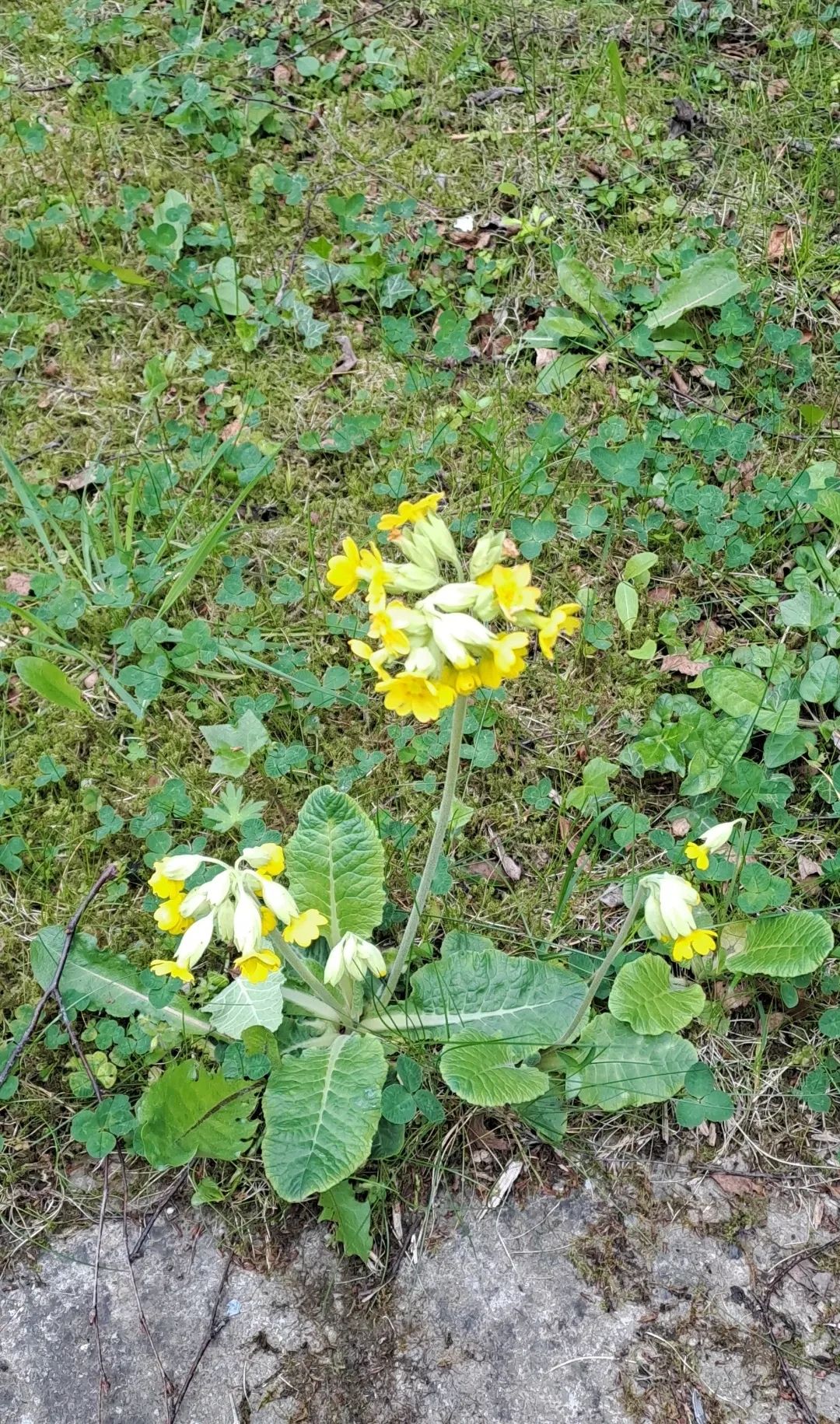
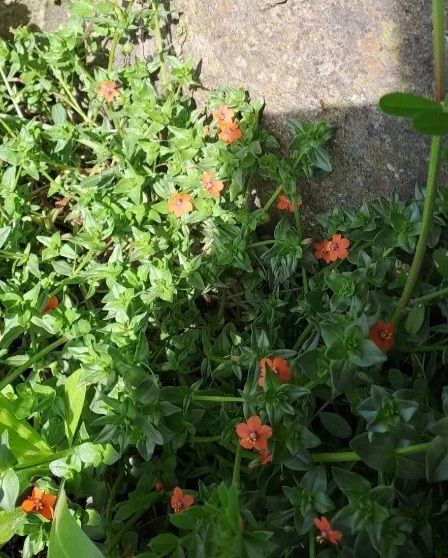
I’ve never thought before that a cat could be used as a sundial…

I’ve never thought before that a cat could be used as a sundial…
A couple of months ago I announced here a vacancy for a Professor of Observational Astrophysics or Cosmology at Maynooth. The position is on the AAS Jobs Register here. The deadline is 31st March 2025 which is today so if you were thinking of applying then this is your last chance! Applications close at 23.30 Irish Time; the clocks went forward yesterday so it’s actually 00.30 tomorrow CEST so you still have time. The application portal is here.
The strategic case for this Chair revolves around broader developments in the area of astrophysics and cosmology at Maynooth. Currently there are two groups active in research in these areas, one in the former Department of Experimental Physics (which is largely focussed on astronomical instrumentation) and the other, in the former Department of Theoretical Physics, which is theoretical and computational. We want to promote closer collaboration between these research strands. The idea with the new position is that the holder will nucleate and lead a research programme in the area between these existing groups as well as getting involved in outreach and public engagement.
It is intended that the position to appeal not only to people undertaking observational programmes using ground-based facilities (e.g. those provided by ESO, which Ireland recently joined), or those exploiting data from space-based experiments, such as Euclid, as well as people working on multi-messenger astrophysics, gravitational waves, and so on.
P. S. For those of you reading this from outside Ireland the job is tenured and includes a defined benefit pension way better than the equivalent UK system.
It is time once again to use the medium of this blog to advertise the fact that the MSc in Theoretical Physics & Mathematics at Maynooth University is open to applications for entry in September.

This postgraduate course is run jointly between the Departments of Physics and Mathematics & Statistics, with each contributing about half the material. The duration is one calendar year (full-time) or two years (part-time) and consists of 90 credits in the European Credit Transfer System (ECTS). This is split into 60 credits of taught material (split roughly 50-50 between Theoretical Physics and Mathematics) and a research project of 30 credits, supervised by a member of staff in a relevant area from either Department.
This course is a kind of follow-up to the existing undergraduate BSc Theoretical Physics & Mathematics at Maynooth, also run jointly. We think the postgraduate course will appeal to many of the students on that programme who wish to continue their education to postgraduate level, though applications are very welcome from suitably qualified candidates who did their first degree elsewhere.
Here is the “official” poster:
You can register your interest by scanning the QR code or, if you prefer, following the link here.

Just a quick note to mention that the Vernal Equinox (Spring Equinox) in the Northern hemisphere happens this morning, Thursday 20th March 2025, at 9.01 UTC (which is 9.01am local time here in Ireland, i.e. in about half an hour). Many people in the Northern hemisphere regard the Vernal Equinox as the first day of spring; of course in the Southern hemisphere, this is the Autumnal Equinox.
The date of the Vernal Equinox is often given as 21st March, but in fact it has only been on 21st March twice this century so far (2003 and 2007); it was on 20th March in 2008, has been on 20th March every spring from then until now, and will be until 2044 (when it will be on March 19th).
Anyway, people sometimes ask me how one can define the `equinox’ so precisely when surely it just refers to a day on which day and night are of equal length, implying that it’s a day not a specific time? The answer is that the equinox is defined by a specific event, the event in question being when the plane defined by Earth’s equator passes through the centre of the Sun’s disk (or, if you prefer, when the centre of the Sun passes through the plane defined by Earth’s equator). Day and night are not necessarily exactly equal on the equinox, but they’re the closest they get. From now until the Autumnal Equinox, days in the Northern hemisphere will be longer than nights, and the days will continue get longer until the Summer Solstice before beginning to shorten again.
P.S. This time last year I was in Barcelona. Time passes.
Well, it’s St Patrick’s Day, which is a public holiday here in Ireland, so Lá Fhéile Pádraig sona daoibh go léir!
This morning I watched the Parade in Maynooth. It didn’t rain, but it was a strangely subdued affair notable for the lack of music. The isn’t much of an atmosphere if the participants are walking along in silence! You can’t have Craic agus Ceol if there’s no Ceol. I only counted two tractors too; usually there are many more than that. Fortunately, I have a calendar that offers a tractor for every month to make up for this disappointment. Still, it was good to see the kids enjoing themselves. The highlight for me this year was the Coakley Septic Tank Cleaning Truck, which just outdid the Thornton’s Refuse Collection Vehicle for sheer splendour.
Anyway, I should take the opportunity to write something about St Patrick. Not much is known for certain but it seems he was born in Britain, probably in the late 4th Century AD, probably somewhere around the Severn Estuary, and probably in Wales. It also appears that he didn’t know any Latin. When a young man, it seems he was captured by Celtic marauders coming up the River Severn and taken as a slave to Ireland. He eventually escaped back to Britain, but returned to Ireland as a missionary and succeeded somehow in converting the Irish people to Christianity.

Or did he? This interesting piece suggests his role was of lesser importance than many think.
However it happened, Ireland was the first country to be converted to Christianity that had never been part of the Roman Empire. That made a big difference to the form of the early Church here. The local Celtic culture was very loose and decentralized. There were no cities, large buildings, roads or other infrastructure. Life revolved around small settlements and farms. When wars were fought they were generally over livestock or grazing land. The early Irish Church that grew in this environment was quite different from that of continental Europe. It was not centralized, revolved around small churches and monasteries, and lacked the hierarchical structure of the Roman Church. Despite these differences, Ireland was quite well connected with the rest of the Christian world.Irish monks – and the wonderful illuminated manuscripts they created – spread across the continent, starting with Scotland and Britain. Thanks to the attentions of the Vikings few of these works survive but the wonderful Lindisfarne Gospels, dating from somewhere in the 8th Century were almost certainly created by Irish monks. The Book of Kells was probably created in Scotland by Irish Monks.
The traffic wasn’t entirely one-way however. A few years ago I saw a fascinating documentary about the Fadden More Psalter. This is a leather-bound book of Psalms found in a peat bog in 2006, which is of similar age to the Lindisfarne Gospels. It took years of painstaking restoration work to recover at least part of the text (much of which was badly degraded), but the leather binding turned out to hold a particularly fascinating secret: it was lined with papyrus. The only other books from the same period with the same structure that are known are from the Coptic Church in Egypt. That doesn’t mean that whoever owned the Fadden More Psalter had actually been to Egypt, of course. It is much more this book made its way to Ireland via a sort of relay race. On the other hand, it does demonstrate that international connections were probably more extensive than you might have thought.
Anyway, back to St Patrick’s Day. Saint Patrick’s Day is celebrated on March 17th, the reputed date of his death in 461 AD. Nobody really knows where St Patrick was born, though, so it would be surprising if the when were any better known. In any case, it wasn’t until the 17th Century that Saint Patrick’s feast day was placed on the universal liturgical calendar in the Catholic Church. Indeed, St Patrick has never been formally canonized. In the thousand years that passed any memory of the actual date of his birth was probably lost, so the choice of date was probably influenced by other factors, specifically the proximity of the Spring Equinox (which is this year on Thursday March 20th).
The early Christian church in Ireland incorporated many pre-Christian traditions that survived until roughly the 12th century, including the ancient festival of Ēostre (or Ostara), the goddess of spring associated with the spring equinox after whom Easter is named. During this festival, eggs were used a symbol of rebirth and the beginning of new life and a hare or rabbit was the symbol of the goddess and fertility. In turn the Celtic people of Ireland probably adapted their own beliefs to absorb much older influences dating back to the stone age. St Patrick’s Day and Easter therefore probably both have their roots in prehistoric traditions around the Spring Equinox, although the direct connection has long been lost.
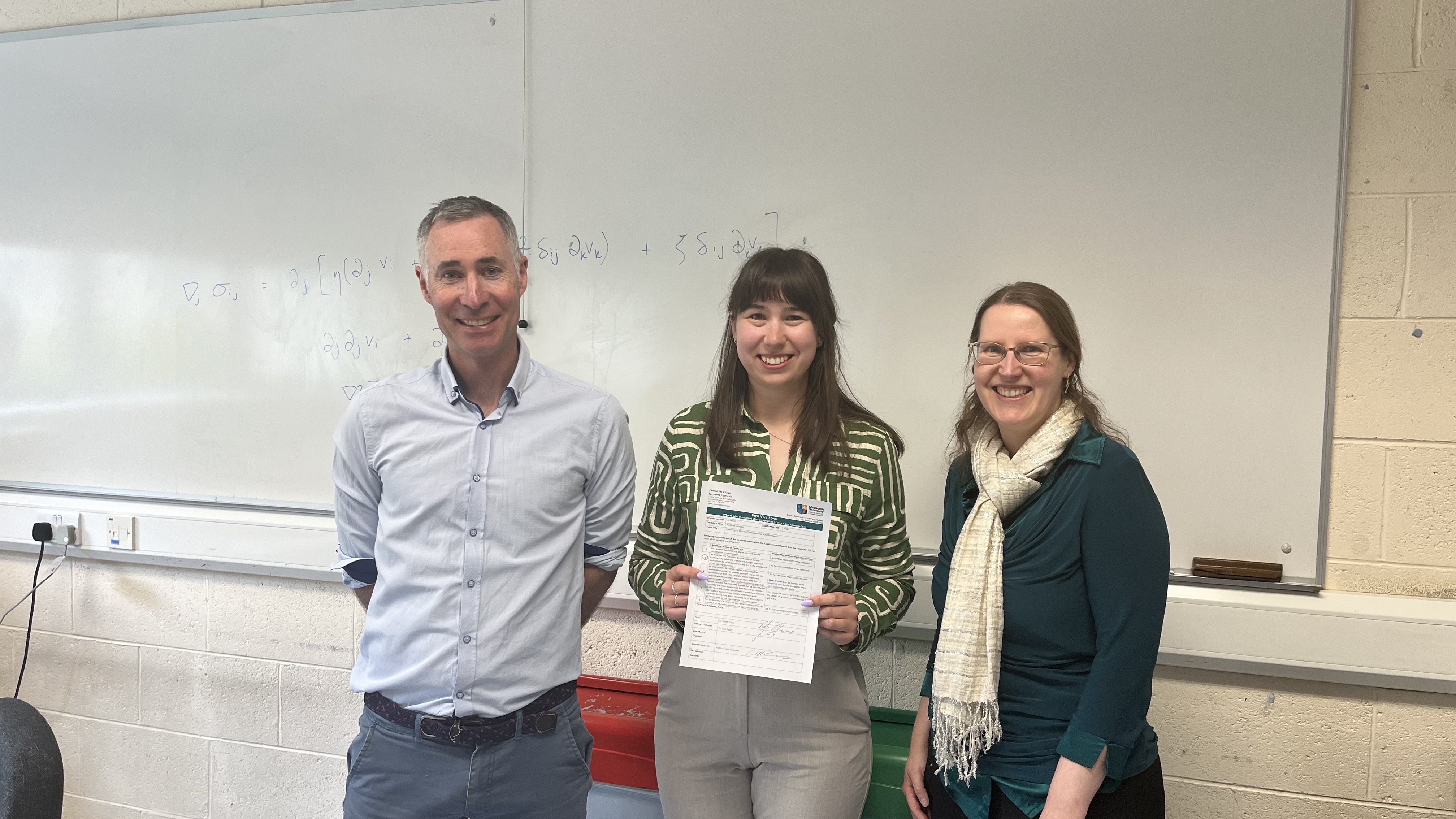
After a Departmental meeting this afternoon being the last item on the agenda for this week, at last we’ve reached the Mid-Semester Half-Term Study-Week Break. Six weeks down, six weeks to go (not including an extra week off for Easter). This coming Monday is St Patrick’s Day, a national holiday here in Ireland, and the rest of the week is free from lectures, labs and tutorials. I have two batches of computational physics tests and a particle physics assignment to grade, four examination papers to write and a graduation ceremony to attend before we return, so it’s not exactly a holiday. I plan to try to make the most of the time freed up by not having to teach to finishing writing up at least one, and possibly two, papers.
I’m glad of the arrival of this break, as I’ve been running on empty for the last several days, the general sense of fatigue exacerbated by a flare-up of the arthritis in my knees. Doctors say that there’s no reliable evidence that arthritis pain correlates with the weather, but in my case it does seem to come on when the weather changes, especially when it suddenly becomes cold or damp as it has done over the past few days. I’ll be due for another steroid shot soon, which should help, and hopefully the weather will improve over the next few weeks. Possibly. It seems to be a tradition for St Patrick’s Day to take place during inclement weather so, while I plan to go and watch the parade in Maynooth on Monday, I won’t linger outside if it’s cold. I will be taking the whole day off though.
The second half of term should be a bit easier than the first. For one thing, we have another break coming up four weeks after the resumption. Good Friday is on April 18th, so that is a holiday, as is the following week. The second 6 weeks of the Semester is therefore split 4-2 with a week off in between. Moreover, I usually only give lectures in Computational Physics for 9 or 10of the 12 teaching weeks in the Semester, after which the students will be working on the mini-projects which form part of the assessment for this module.
Anyway, it’s time to head home via the shops and buy something to eat while I watch St Pat’s versus Bohemians on the telly box. I haven’t got the energy for anything else!
At the start of my Computational Physics lecture at 9am this morning I suddenly remembered that it was the corresponding day five years ago that Covid-19 pandemic restrictions were introduced in Ireland. The date for that was Thursday March 12th 2020, while today is Thursday March 13th 2025, but it was the same stage of of the semester, the Thursday before St Patrick’s Day and the mid-term Study Break.
One thing I remember quite well from that day five years ago was that I told my Computational Physics class to keep an eye on their email during the day as I thought an announcement would be made. When it came – around lunchtime, if memory serves – it was much stricter than I had anticipated: from 6pm that day, all schools, colleges and cultural institutions were to close until 29th March. Few people believed that would be the end of it, and we were right!
I had a computing laboratory session that afternoon, which went ahead, but some students understandably left early as they had to find their way home. The next time I interacted with any students it was online, and remote working carried on for many months, not just the two weeks originally planned. I did not envisage it would last so long. Nor did I imagine how little support teaching staff would receive from management. Indeed, the University saw the opportunity to build up large surpluses during the lockdown, all generated by the huge amount of extra, unacknowledged and unrenumerated, work put in by academics and support staff. That’s all money that should have been spent on the education of students. It was never going to be easy to teach during lockdown, but deliberately withholding resources made it far harder than it had to be.
Among other things, the Covid-19 pandemic restrictions played havoc with my perception of the passage of time and messed with my memory. I remember some things very clearly, such the lecture and lab on the day the restrictions were announced, which seem like they happened a few weeks ago never mind five years. Other things are like ancient history. Several major life events took place during the Covid-19 period period that I find it hard place in chronological order without looking at written records (including this blog).
I am not an expert on such matters but it seems to me that the isolation, disruption of social interaction, and the loss of familiar routines imposed by work are among the things responsible for distorting one’s perception of the passage of time and powers of recall.
It was not just the disruption to routine of course. There was also a genuine fear of becoming infected. From time to time after my last in-person class on March 12th 2020, I wondered if I would ever see those students again. I also made arrangements to write a will. For a time it looked likely that intensive care facilities in Ireland might be overwhelmed so I felt it important to make contingencies of that sort. Fortunately they weren’t needed. As far as I know the Coronavirus never reached me, though I think even those of us who were never infected by Covid-19 were definitely affected by it.

You may recall that I posted about the decision by the Management of Maynooth University to scrap the John and Pat Hume Doctoral Scholarships and followed this up with another post suggesting the decision might be reversed and another pointing out that it hadn’t been and then another at the start of this month (March) pointing out that the scheme was still “paused” for a “review” which was actually completed in January…
Well, all of a sudden there was an announcement yesterday from On High to the effect that the Hume Doctoral Scholarships are back. When I say “back”, it’s not really accurate as the scheme has changed. In the past it was entirely applicant driven: prospective students had to apply with their own project proposals (usually developed with the help of a prospective supervisor). The new scheme is quite the opposite: prospective supervisors have to submit Expressions of Interest (EoIs), outlining possible PhD projects which are then advertised. Students then have to apply.
You can find details of the new scheme here, where it says:
Established in honour of John Hume, an alumnus of Maynooth University, and in recognition of his important contribution to Ireland, the John & Pat Hume Doctoral Awards are offered across all disciplines at Maynooth University.
No honour to Pat Hume, then.
The investigator-led approach is probably OK for science and engineering disciplines, but does not reflect how postgraduate research happens in the arts and humanities. There will be considerable resentment in some quarters about the way this change has been effected.
It is also worth mentioning that there are only 15 Hume Scholarships for the whole University; that’s just five per faculty. In the case of Science & Engineering that’s about 0.5 per Department. It will be a very competitive!
Having sat on this issue for the best part of two months, the deadline given to supervisors to submit EoIs is next Wednesday, 19th March. The EOI submission form went live today, giving just a week’s notice (Monday 17th is a national holiday and the rest of next week is a Study Break at Maynooth). The management of this whole issue has been very poor indeed, but at least we have some PhD opportunities to advertise. Prospective students can apply from March 20th until April 17th. It’s still too late, of course, as many students will already have accepted places elsewhere. I don’t know what’s been going on behind the scenes, but this is no way to run a University.
Just time for a quick post to pass on an Editorial by Masud Husain with the title On the responsibilities of intellectuals and the rise of bullshit jobs in universities which appeared in BRAIN magazine (which I buy for the Spot-the-Cell competition). I agree wholeheartedly with the article, which is available free of charge so I recommend you read it in full here, but I thought I’d give you a couple of tasters. The first is:
For some years now, it has become increasingly apparent to me that we are sleepwalking into a disaster. We are losing sight of the academic mission: to think, to enquire, to design and perform new research, to innovate, to teach and communicate our findings for the purpose of societal improvement. There are many reasons why this has occurred over just a quarter of century but a key contributor has been the corporatization of academic institutions.
The second is
To undertake corporatization, universities have borrowed principles that they think work in the private sector. These involve creating layers of administration to run different sectors of our institutions. In the UK, for example, between 1995 and 2019 while spending on university departments roughly doubled, the amount allocated to administration and central services more than quadrupled.
As you probably imagined, the piece borrows some themes from the book Bullshit Jobs (subtitled The Rise of Pointless Work and What We Can Do About It) by anthropologist David Graeber that I wrote about here.
The other day a colleague asked me if what I thought could be done about the underfunding of UK universities and the consequent job losses. I replied to say that I don’t think the problem so much that the universities as a whole are underfunded, but that the core missions of such institutions, by which I mean teaching and research, are. What is happening is that a huge slice of the money coming into universities is dissipated on bullshit jobs in a bloated management superstructure instead of being spent in the departments, which have become entirely subservient to “The Centre”. That is not only the case in the UK, but also here in Maynooth. Hardly a week goes by without some new bullshit job being advertised while our student-staff ratio soars and we academic underlings are starved of the resources we need to do our real jobs properly. It’s very dispiriting that Management continue to get away with this nonsense. If it continues, Ireland will undoubtedly encounter the same structural problems as are currently affecting the UK. I’m sure this is also the state of affairs in many other universities around the world.
It seems obvious to me that when your income falls, among the first things to do is reduce waste. If I were in charge of Higher Education funding my first priority would not be to increase funding but to impose penalties on universities that spend too little on what they’re actually supposed to be doing and too much on bullshit.