Oh go on, then. No explanation necessary…
Archive for the Music Category
Brahms, Byrne & Berlioz at the NCH
Posted in Biographical, Music with tags Brian Byrne, Jaime Martin, Johannes Brahms, National Concert Hall, National Symphony Orchestra on September 9, 2023 by telescoper
Last night I went to the Opening Concert of the new season by the National Symphony Orchestra at the National Concert Hall in Dublin. I’ll be away for most of the year, so I thought I’d make the most of the time I’ve got before I depart to get a fix of culture.
This year is the 75th anniversary of the founding of the National Symphony Orchestra, and the very first piece they performed at their very first concert back in 1948 was Academic Festival Overture by Johannes Brahms. I found it an especially fitting piece because this week we have been having graduation (conferring) ceremonies all week in Maynooth. It’s a familiar work, but provided an enjoyably upbeat start to the show.
The next piece was a a world premiere of a special commission for the National Symphony Orchestra. I was looking forward to this because it was to be the first time I’ve ever heard the uilleann pipes on the concert stage. The piece is a lot of fun, full of great tunes and robust humour. The uilleann pipes are a rather quiet instrument, however, and I have to say I hardly heard a note from them over the rest of the orchestra. At the end a Scottish piper walked on stage to play the bagpipes during the finale. These pipes are a much louder instrument, and even they were hard to hear with the rest of the band on full throttle.
Anyway, after the wine break, we had the Symphonie Fantastique by Hector Berlioz. I was put off this piece at school by a teacher who was obsessed with it and spent nearly a whole term banging on about how wonderful it is. While it is undoubtedly very imaginative – and very innovative for a piece written as early as 1830 – I remain unconvinced by all the hype. It’s basically a fever dream resulting from the composer’s experiments on opium and I find it rather gimmicky. Nevertheless, there is much to enjoy in a live performance of the work. Conductor Jaime Martín began the performance with a genial introduction to some of the “crazy” elements which he got the relevant musicians to play snippets representing, for example, the bubbling cauldron in the last movement which represents witches doing their stuff.
After the full performance the National Symphony Orchestra got a standing ovation. I joined in only briefly because the conductor’s introduction to the Berlioz meant that the concert was longer than I expected and I had to leave to catch my train back to Maynooth. I needn’t have worried. The train was 20 minutes late.
R.I.P. Michael Parkinson (1935-2023)
Posted in Jazz, R.I.P., Television with tags Duke Ellington, Michael Parkinson, Parky, Satin Doll on August 17, 2023 by telescoperMore sad news today. Chat show host and journalist Michael Parkinson has passed away at the age of 88. I watched his show very frequently on Saturday nights during its first run (from 1971 and 1982) and remember many great interviews he did, especially with wonderful raconteurs such as Peter Ustinov and Kenneth Williams.
I can’t add much to the extensive obituaries you can find in the regular media except to say that Parky was a big fan of jazz, as am I, and he often got jazz musicians on his show. One example I remember vividly watching 50 years ago (!) in 1973 was Duke Ellington. I remember the interview very well, but what I remember even better was the impromptu postscript. As they were wrapping up the recording, Ellington said he wanted to play a number with the resident band (led by Harry Stoneham on the organ), who I’m sure were absolutely thrilled at the prospect. What followed was this version of Ellington’s own tune Satin Doll. Parky’s show had its own signature tune, but I don’t think he’d mind being played out with this…
R.I.P. Michael Parkinson (1935-2023)
Blues for the Fisherman
Posted in Biographical, Jazz with tags Art Pepper, Blues for the Fisherman on August 15, 2023 by telescoperI had a pleasant surprise when I switched on the radio last night to listen to The Blue of the Night in that the presenter Bernard Clarke not only played a lot of music by the late great Art Pepper but also mentioned my name on air for having pointed him at the particular session from which he chose the tracks. I think he mistakes me for some sort of expert!
Anyway, listening last night brought back a lot of memories of hearing Art Pepper play in the flesh and many nights I spent in Ronnie Scott’s club during the 1990s when I lived in London. I thought I’d share here one of the tracks played last night.
The performance in question was recorded live at Ronnie Scott’s Club in London in June 1980 and first released on the small British record label Mole Jazz, an offshoot of the famous (sadly now defunct) record shop of the same name that used to be on Gray’s Inn Road. It’s a brilliant, brilliant album, with the intense atmosphere of a live performance adding to the superb playing of the musicians. It’s also extremely well recorded – so much so that you feel you are on stage with the musicians!

The band is listed as the “Milcho Leviev Quartet featuring Art Pepper”, although that was probably for contractual reasons, as this was the same band that toured extensively as “The Art Pepper Quartet”: Art Pepper on alto saxophone, Milcho Leviev on piano, Tony Dumas on bass and Carl Burnett on drums. I was also lucky enough to see this band play live at the Newcastle Jazz festival in 1981, not long after this recording, and they were great then too although that was in a concert hall so had a much less intense atmosphere. Art Pepper sadly passed away in 1982 and Milcho Leviev in 2019.
As far as I’m aware this record wasn’t released on CD until relatively recently, but now a whole lot of extra tracks recorded during Art Pepper’s residency in Frith Street are also available. There’s so much to enjoy in these recordings, including the superb drumming of Carl Burnett and virtuosic piano of Milcho Leviev, but the star of the performance for me is Art Pepper. His playing is at times lyrical and at times agonized, but always compelling and this band was especially good at spontaneous transitions of mood and dynamic. Anyway, here is the title track of the original album, Blues for the Fisherman.
R.I.P. Sinéad O’Connor (1966-2023)
Posted in Music, R.I.P. with tags Nothing Compares 2 U, Sinead O'Connor, You Do Something To Me on July 26, 2023 by telescoper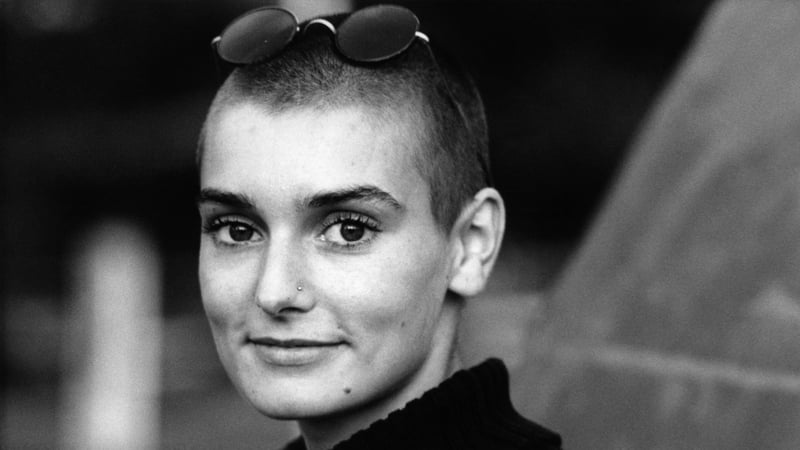
I just heard the truly awful news of the death at the age of 56 of Sinéad O’Connor. Words fail me, so here’s her classic Nothing Compares 2 U from 1990, when it was a worldwide hit.
There can’t be many pop videos done like this, entirely in close-up.
Incidentally I once saw Sinéad O’Connor in person, at the Zap Club in Brighton, when I literally bumped into her trying to get to the bar. When she turned around I was staggered to see such a beautiful face looking at me, although to be honest I did for a moment assume she was a boy. I was expecting an angry response to my clumsiness, but all I saw was an impish grin and those amazingly lovely eyes. That must have been in 1990 or earlier. Anyway, she was wearing the same leather jacket and cropped hair as in this picture, taken in 1988.
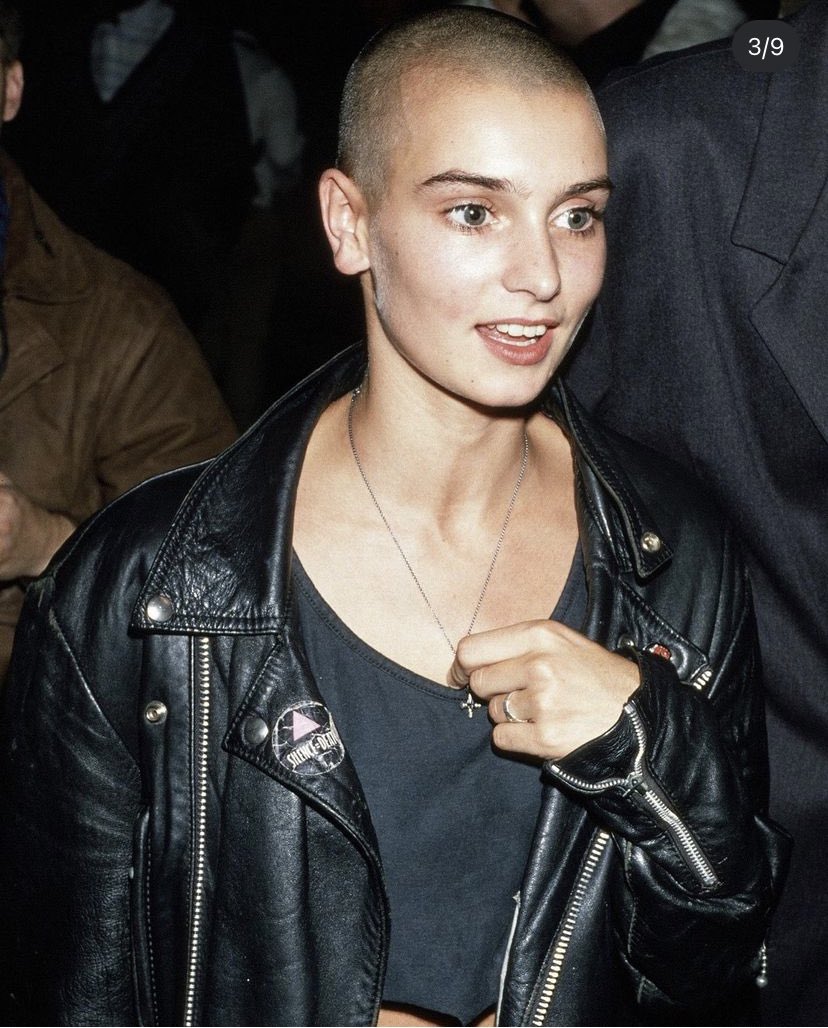
Back then, the time of the AIDS crisis, Sinéad O’Connor stood up for LGBTQ+ rights. She sang at Pride when it was far from fashionable to do so, and participated in the Red Hot and Blue album, which featured a wide range of artists doing covers of Cole Porter songs. I’ve always loved her satirical take on You So Something To Me, in which she is done up to resemble Veronica Lake:
Life had often been a struggle for Sinéad – she suffered from mental health problems and had to endure the loss of her son just 18 months ago – but she was a uniquely talented artist who enriched many lives. I just hope she knew how much she was loved by so many people.
R.I.P. Sinéad O’Connor (1966-2023).
R.I.P. Tony Bennett (1926-2023)
Posted in Jazz, R.I.P. with tags Bill Evans, Days of Wine and Roses, Ernest Dowson, Henry Mancini, Tony Bennett on July 21, 2023 by telescoperI just heard that the great singer Tony Bennett has passed away, just a couple of weeks short of his 97th birthday. In 2021, Bennett revealed that he was living with Alzheimer’s, a condition that had been diagnosed in 2016, but he had continued to perform until that announcement. His death does not come as a shock, but it is always sad to hear of the death of a legend.
What can I say about about Tony Bennett, except that I absolutely adored his singing? In fact I think he got better with age, his older voice showing even greater artistry in phrasing and melodic invention than when he first emerged as a star performer in the 1950s. He was admired by people across the generations, across different musical genres, and by the harshest judges of all – other musicians.
By way of a tribute I thought I’d pick a tune from my favourite album of his, recorded back in 1975 with Bill Evans on piano. I think the intimate combination of his voice with only a piano accompaniment suited him very well indeed. I’ve picked this tune, Days of Wine and Roses, which Henry Mancini wrote for an excellent film of the same name.
I picked this track, partly because it is lovely, but also because its title reminds me of a little poem by Ernest Dowson entitled Vitae Summa Brevis Spem Nos Vetat Incohare Longam, which I translate from my half-remembered schoolboy Latin as something like “the brief span of Life forbids us from conceiving an enduring hope”. It’s a quotation from one of the Odes of Horace (Book I, Ode 4, line 15). These aren’t the lyrics of the song, but seem apt in the circumstances:
They are not long, the weeping and the laughter,
Love and desire and hate:
I think they have no portion in us after
We pass the gate.
They are not long, the days of wine and roses:
Out of a misty dream
Our path emerges for a while, then closes
Within a dream.
Rest in peace, Anthony Dominick Benedetto (1926-2023).
The Honeycombs
Posted in LGBTQ+, Music with tags Eyes, Have I The Right, Honey Lantree, Joe Meek, The Honeycombs on July 14, 2023 by telescoperAt the end of a long week I’m now waiting for the oven to heat up for my dinner (salmon) and while it’s doing that I thought I’d share an old record or two by a popular beat combo of days gone by.
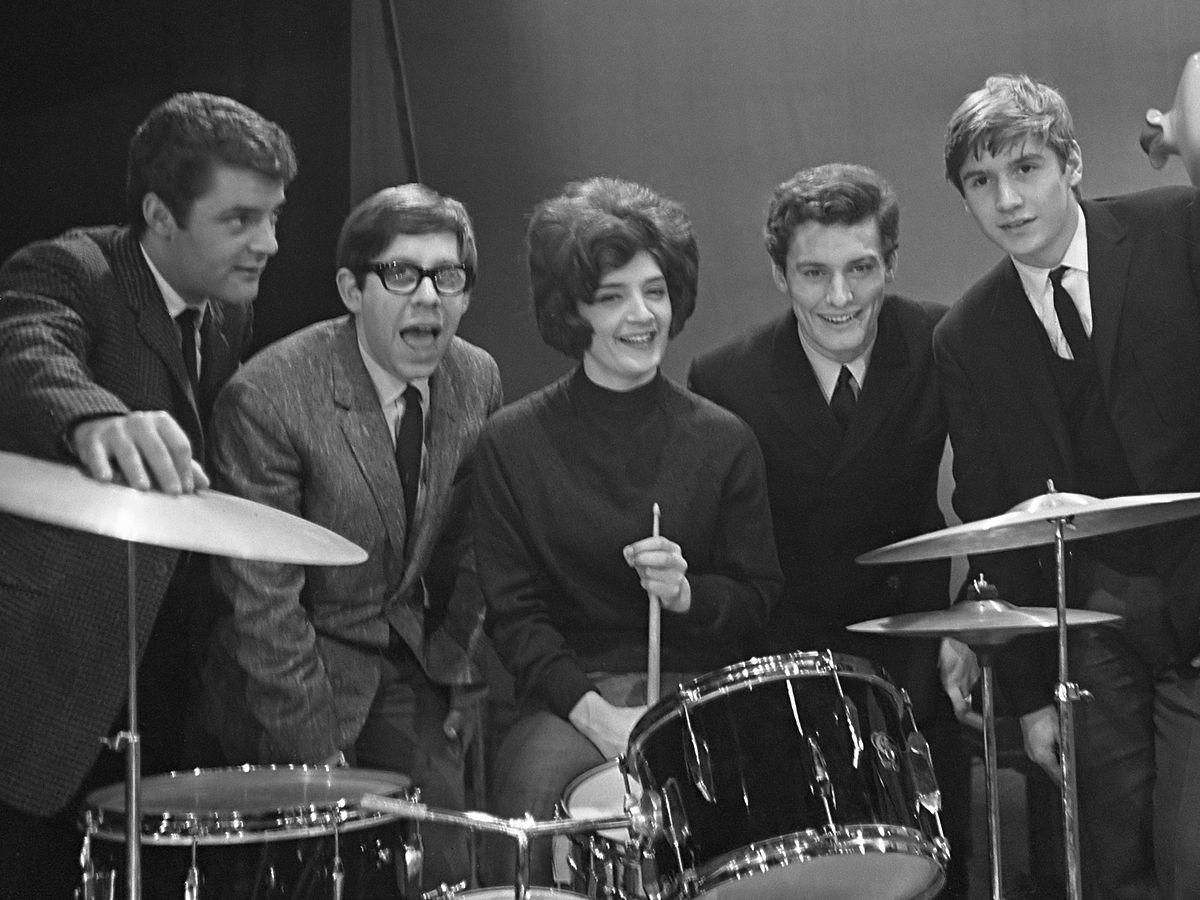
Have I The Right? was a big hit in 1964 for The Honeycombs. The video is redolent of the 1960s – the music, the photography, the clothes are very much of that period – the one exception being the drummer, Honey Lantree, who was one of the first female drummers in a hit band; she passed away five years ago. She was the sister of the bass player John Lantree. who is on the left in the above picture.
The band was produced by pioneering sound engineer Joe Meek (who I’ve blogged about before). Joe Meek like to have a strong blend of low frequencies in the mix, but Honey Lantree tended to use bass drum rather sparingly, hence Joe Meek’s suggestion that the band should stamp their feet during the “Come Right Back” bit of the chorus. Anyway, it’s what kinds nowadays call “a banger”…
The Honeycombs are generally regarded as a one-hit wonder, which is one hit more than most bands manage, but is a shame because their first album Here Are The Honeycombs has some great music on it. Take this, for example, their third follow-up single Eyes:
This record has an an interesting melody, hypnotic atmosphere all of its own and some great work on the drums by Honey Lantree. I think it’s great, actually, but it wasn’t a commercial success largely because it didn’t get played on the BBC at the time. Why not? Well, look at the lyrics:
Eyes, I’ve seen in some crowded places
Staring from lonely faces
Wanting someone to want them too
Eyes that night after night are trying
to keep themselves from crying
making believe their dreams are true
But eyes of, someone who’s in love
Who would ever have thought that I’d find them there
Eyes that watch as we drew together
wondering if we could ever
find all the love they’ve never known
Eyes that now we have left behind us
In places you never find us
where people go cause they’re alone
Now I gaze in the eyes of the one I love
Now no longer alone and afraid and sad…
Although it’s not explicit, the song is about a guy getting off with another guy in a crowded gay bar while the other customers look on. The BBC wouldn’t touch that sort of thing back in 1964!
R.I.P. Astrud Gilberto (1940-2023)
Posted in Film, Music, R.I.P. with tags Astrud Gilberto, Get Yourself a College Girl, The Girl from Ipanema on June 7, 2023 by telescoperI just read the sad news of the death, on Monday 5th June at the age of 83, of legendary Brazilian Bossa Nova and Samba singer Astrud Gilberto.
There was a time in the 1960s when the Bossa Nova seemed to be everywhere, and the reason for that was a collaboration between singer, guitarist and composer João Gilberto and tenor saxophonist Stan Getz that resulted in the award-winning album Getz/Gilberto that made the Bossa Nova go global, penetrating not only the world of jazz but the much wider cultural sphere including pop and film music. It also made a star of João Gilberto’s then wife, Astrud, who had never recorded before but sang on some of the tracks, the most famous example being The Girl From Ipanema. The popularity of this track resulted in a shorter version being released as a single which was a smash hit around the globe in 1964. Whether or not it’s true, the story goes that she was not under contract at the time the recording was made so never received any royalties for it, although the single made millions. It is said that it was Stan Getz – a wonderful musician but a notoriously horrible man – was responsible for swindling her.
Although an inexperienced singer at the time of this famous session, Astrud Gilberto had a direct, uncomplicated style and an aura of cool detachment that proved very appealing to audiences around the world, earning her a Grammy Award and turning her into a star almost overnight. Her relationship with her husband did not survive this transformation, however, and they divorced a few years later.
There was a lot more to Astrud Gilberto than that hit record, however. She started writing her own songs and her singing style matured. As a matter of fact I was lucky enough to see her perform live in London in the mid-1990s – at the Jazz Cafe in Camden, if I remember correctly – and she sang a very interesting mixture of music. I liked that later style more than the Getz/Gilberto recordings actually.
Anyway, here is a video of Astrud Gilberto singing The Girl From Ipanema in 1964 in what looks like it must be a clip from the film Get Yourself A College Girl – though I stand to be corrected if wrong! – and the music is exactly the same as the hit single so the band and the singer were obviously miming…
Rest in Peace, Astrud Gilberto (1940-2023).
Chanson d’Automne
Posted in Art, History, LGBTQ+, Music with tags Arthur Rimbaud, Chanson D'Automne, D-Day, Paul Verlaine on June 6, 2023 by telescoperI’ve mentioned on here before that I had an English teacher at school who used to set interesting creative writing challenges, in which we would be given two apparently disconnected topics and asked to write something that connected them together. The inspiration was ‘Only Connect’, the epigraph of E.M. Forster’s novel Howard’s End. Since I’ve spent all afternoon in an Exam Board meeting I thought I’d do a little bit of connecting now.
Les sanglots longs
Des violons
De l’automne
Blessent mon coeur
D’une langueur
Monotone.
Tout suffocant
Et blême, quand
Sonne l’heure,
Je me souviens
Des jours anciens
Et je pleure;
Et je m’en vais
Au vent mauvais
Qui m’emporte
Deçà, delà,
Pareil à la
Feuille morte.
Chanson d’Automne, by Paul Verlaine (1844-1896).
I posted the above poem by Paul Verlaine for two reasons. One is that lines from the poem were broadcast on the eve of the Normandy Landings. The landings themselves began in the morning of June 6th 1944 and the excerpt – the last three lines of the first verse – formed a coded message broadcast to the French resistance by Radio Londres, 5th June 1944 at 23.15 GMT, informing them that the Allied invasion of France was imminent and that sabotage operations should commence.
The other reason is that that it was just two weeks ago that I attended a concert featuring settings by Benjamin Britten of prose poems taken from Les Illuminations by Arthur Rimbaud. I didn’t know until that Verlaine and Rimbaud were lovers and that they lived for some time together in London. Their relationship was on the tempestuous side – at one point Verlaine fired a gun at Rimbaud, wounding him in the hand. Here’s a detail from a painting showing the two of them (Verlaine on the left, Rimbaud on the right).

It was said of Rimbaud that, as well as writing remarkable poetry, he was cute-looking, had a very dirty sense of humour, drank a bit too much, and liked lots and lots of rough sex. I think I would have liked him (although perhaps not enough to risk being shot by his jealous older boyfriend).
Anyway, this provides me with an excuse not only to commemorate D-Day but also Pride Month!
Rachmaninov (×2) + Tubin at the National Concert Hall
Posted in Biographical, Music with tags Andrei Bondarenko, Eduard Tubin, Mihhail Gerts, MIrjam Mesak, National Concert Hall, National Symphony Chorus, National Symphony Orchestra, Sergei Rachmaninov, Sinfonietta on Estonian Motifs, Valentyn Dytiuk on May 27, 2023 by telescoper
Yesterday, after a nice walk through the sunny streets of Dublin, at the National Concert Hall for the final concert of the season by the National Symphony Orchestra, under the direction of Mihhail Gerts, who were joined, for the second half, by the National Symphony Chorus directed by David Young and three star vocalists. The progamme consisted of two pieces by Sergei Rachmaninov (who was born 150 years ago this year) and one by Eduard Tubin (an Estonian composer who was new to me before last night).
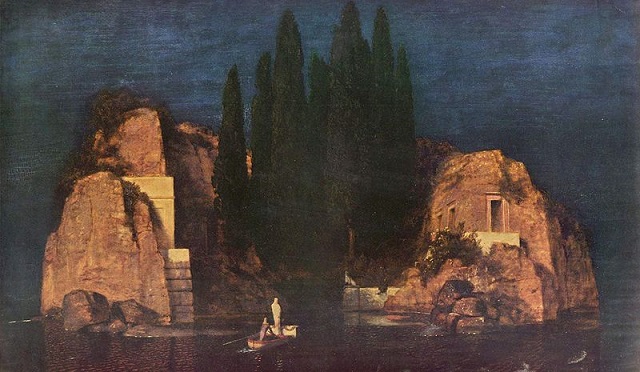
The first item one the menu was The Isle of the Dead, Op. 29 by Sergei Rachmaninov, inspired by a painting of the same name by Arnold Böcklin and written around 1908. The rhythms of the opening passage evoke the motion of a boat moving across the sea to the island, from which point the piece develops among a cloud of increasingly dense harmonic layers into a dark atmosphere full of foreboding. It’s a darkly dramatic work that I’ve enjoyed every time I heard it and last night was no exception.
There then followed the Sinfonietta on Estonian Motifs by Eduard Tubin introduced by conductor Mihhail Gerts, who is himself from Estonia. It’s a work in three movements inspired by the folk songs the composer heard as a child growing up in Estonia. I knew that much before the performance started but didn’t realize it would turn out to be such a weighty composition. The two outer movements are rhythmically complex in a way that’s reminiscent of Stravinksy (especially Petrushka) and the overall mood is far from the pastoral tranquility I’d expected: the music is rather edgy, in fact. I suppose that’s not surprising given that it was written in 1940. I enjoyed this but it is strange how much it reminded me of other composers: as well as Stravinsky, there are clear nods in the direction of Sibelius and at times it also reminded me of Arnold Bax. You might say it is a little bit derivative. I couldn’t possibly comment.
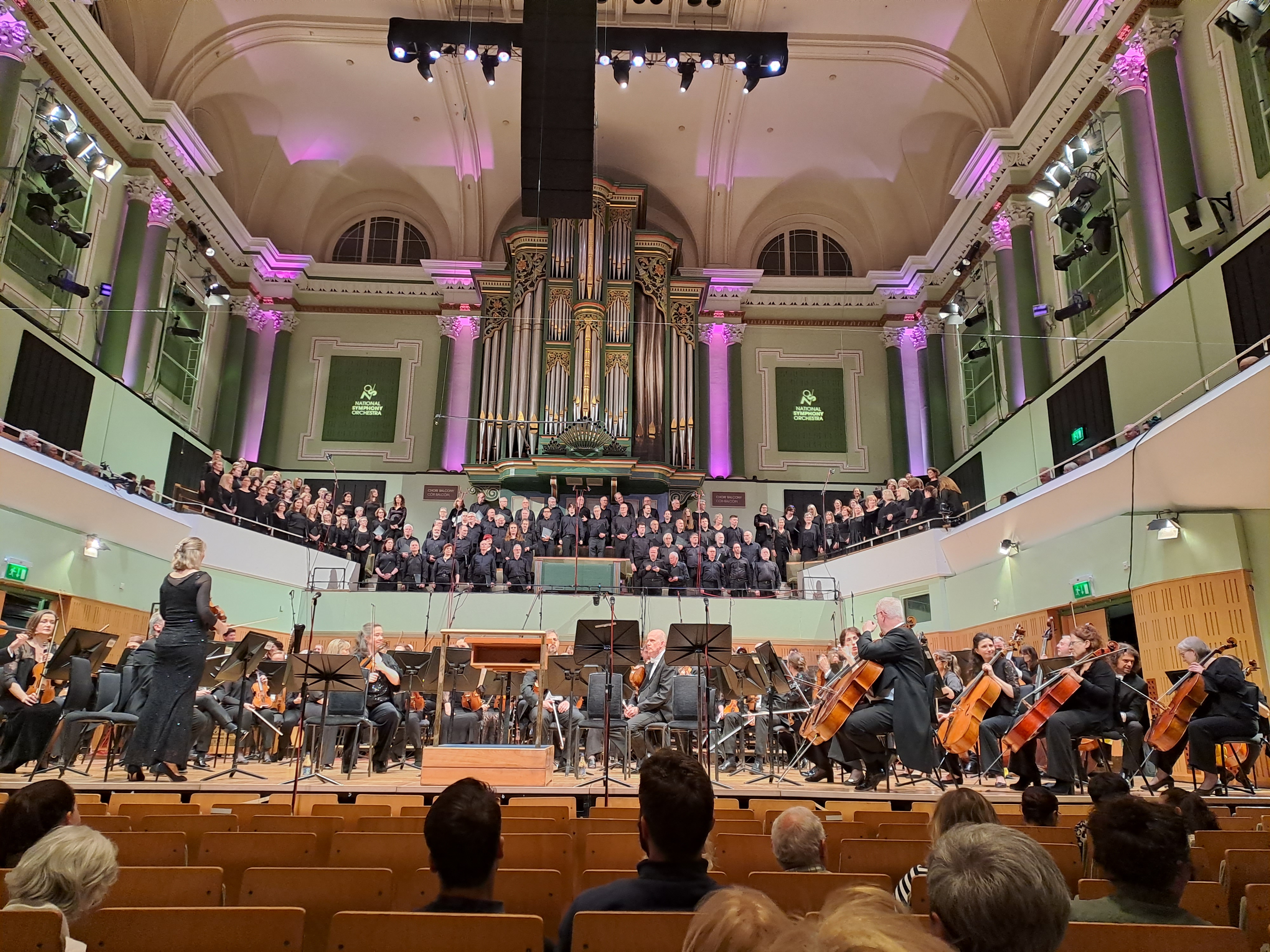
After the wine break we had The Bells, a choral symphony for soprano, tenor, bass-baritone, chorus and large symphony orchestra by Sergei Rachmaninov (Op. 35). The words are based on a Russian translation of the poem The Bells by Edgar Allan Poe which was very popular in Russia in the early 20th century and which clearly resonated with Rachmaninov:
The sound of church bells dominated all the cities of Russia I used to know, they accompanied every Russian from childhood to the grave and no composer could escape their influence. Most of my life was lived amid vibrations of of the bells of Moscow.
Sergei Rachmaninov
The Bells is in four movements, echoing the four stanzas of the poem, and representing the journey “from childhood to the grave”, the last movement being a Lento subtitled The Mournful Iron Bells. The three soloists sing in one part each; the third movement involves orchestra and chorus only. Ukrainian tenor Valentyn Dytiuk sang in the first movement, Estonian soprano Mirjam Mesak the second and Ukrainian baritone Andrei Bondarenko the fourth. All three soloists were superb but particularly enjoyed the sinewy muscularity of Bondarenko’s baritone which gave a sense of rawness to his performance.
It was a fitting finale to the season. Congratulations to the National Symphony Orchestra for a great performance, and to the National Symphony Orchestra who were outstanding too.
Walking back to Pearse Station to get the train for Maynooth I found myself wondering when my next visit to the National Concert Hall will be. I’ll be away on sabbatical most of next year. Still, there’ll be plenty of music where I’m going…

 In the Dark