I couldn’t resist posting this, given the impact of the TV series of the same name. If you’re following It’s A Sin you will find this track featured in Episode 4 which is set in 1987, when this track was released. Quite a lot of 80s synth-pop sounds rather dated to me nowadays but this doesn’t at all.
Rather than being directly about the AIDS crisis it’s really Neil Tennant‘s general reaction to his Catholic upbringing, hence the section of the Confiteor that you can hear from time to time:
Confiteor Deo omnipotenti vobis fratres quia peccavi nimis cogitatione, verbo, opere et omissione. Mea culpa, mea culpa, mea maxima culpa.
Although I wasn’t brought up a Catholic – and have therefore never been very good at guilt – the lyrics still have an impact:
When I look back upon my life
it’s always with a sense of shame
I’ve always been the one to blame
For everything I long to do
no matter when or where or who
has one thing in common too
It’s a, it’s a, it’s a, it’s a sin It’s a sin Everything I’ve ever done Everything I ever do Every place I’ve ever been Everywhere I’m going to It’s a sin
In fact, Neil Tennant went to St Cuthbert’s Roman Catholic Grammar School, literally just yards from where I grew up in Benwell in Newcastle upon Tyne. Given his age – he was born in 1954 – he would have been there while I was living in Benwell Village, though obviously we never met.
The video was directed by Derek Jarman who died from AIDS in 1994.
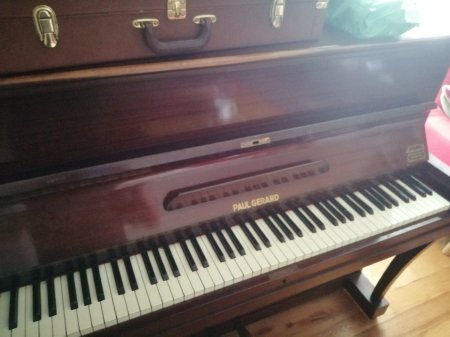
Not a lot of people know that I acquired a second-hand piano when I bought my house in Maynooth. I’ve been having a go on it from time since then. Fortunately it’s a detached house so that doesn’t cause the neighbours to suffer too much. I wish I’d got it tuned before the lockdown though. It’s a little bit flat in the middle range and gets worse as the notes get lower. Still, I’m such a terrible player that doesn’t make too much difference!
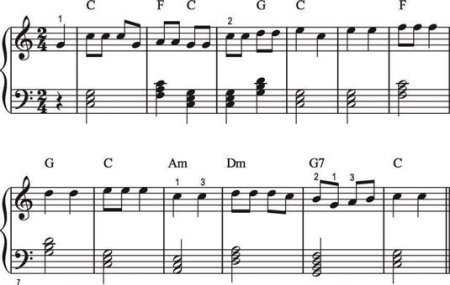
I can read music but am used to single note instruments and find piano parts difficult to read especially if there are complicated chords – or even simple ones, for that matter. I find having the notes squashed together like in the bass part here makes it difficult to disentangle them.
Fortunately I have a basic knowledge of harmony and can cope with chord symbols so I generally don’t try to read the bass parts but instead fill in chords according to the symbols. If the chords aren’t written on the music like the above example I add them myself.
Even for an oldie like me it’s quite easy to get used to playing basic chordal accompaninents. Most standard progressions involve only three or four chords. You can start playing block triads like in the example above just to get the idea. Adding, for example, the odd 7th here and there helps to explore the sound produced by different harmonic ingredients. After that you can play left-hand figures based on the chords to make it more interesting.
I know you’re all thinking that I’m way too old to be trying to teach myself how to play the piano. One of these days I think I’ll put up a YouTube video to prove that you are right.
I heard this afternoon of the death in prison of convicted murderer and music producer Phil Spector. He was 81 years old and was suffering from Covid-19. I have to say I have found a lot of the reporting of his demise has been reprehensible, talking about how his career was “marred” by the fact that he murdered actress Lana Clarkson. I’m surely the family and loved ones of Lana Clarkson have a different opinion about whose lives were “marred” …
Nevertheless, Phil Spector’s legacy as a record producer is undeniably immense. He produced over a hundred hit singles many of them having a trademark sound that others tried and failed to copy.
When Spector started out as a producer a normal recording session involved having the band and vocalists perform together in the studio. Spector adopted the approach of having very large backing groups – often with double or treble instruments and backing vocals – which he recorded separately, adding the lead vocals later. That is the way pop records have been made for a very long time now but it was quite unusual in the early sixties. The arrangements weren’t very complicated: many musicians just played in unison for some or all of the track. When it was all mixed (often with a lot of reverb) the layering effect was to make it difficult identify individual instruments – hence the term “Wall of Sound“. In classic Spector tracks you will find that it’s often in the chorus or when a big key change occurs that the full force of this wall appears. It’s a tremendously effective device, even if you know it’s coming.
Phil Spector came onto the music scene at about the same time as the pioneering British record producer Joe Meek. I’ve heard it said that they influenced each other or even that Spector stole Meek’s ideas. I don’t think that’s true at all. Both were very original but they worked in very different ways and Spector never favoured the distortions that Meek frequently exploited.
When I heard Phil Spector had died two tracks sprang immediately to mind. One was You’ve Lost That Loving Feeling by the Righteous Brothers and the other was this one. I searched for it on Youtube and found this fascinating recording from the session that created it. The track is Be My Baby by the Ronettes. The lead singer Veronica Bennett later married Phil Spector and became Ronnie Spector. They separated in 1972 amid allegations of psychological abuse by her husband.
In this video you can hear several takes of the relatively simple backing track (without backing vocals or lead singer or the string section that appears in the final mix heard right at the end) and there’s some interesting discussion between the producer and drummer (the excellent Hal Blaine). Spector liked to use unusual percussion – tambourines and castanets feature prominently on this track – but he wanted the drums to be simpler to begin with. Later on he asks Blaine to “make me an ending”. He promptly produces lots of great work, most of it sadly doomed to be faded out. If you’re interested the tune is based on two chord progressions: I – ii – V7 and the I – vi – IV – V progression that was ubiquitous in music from the 1950s. The completed track is less than three minutes in duration, but it’s a classic.
You’re probably wondering why I picked this one. Well for one thing it’s almost exactly as old as me! The other reason is that I hadn’t heard it for a while and it struck me very hard just how much of an influence it must have been on Amy Winehouse…
I’ve had a very busy day today so haven’t had time to write anything significant, but I just remembered this piece that I heard a few weeks ago and thought I’d take the opportunity to share it. The hymn Abide with Me sung to the tune Eventide by William Henry Monk is a piece that makes me quite nostalgic as I remember it coming up quite frequently during Evensong when I sang in the Church choir in Benwell when I was little. It’s also well known as the hymn that was always sung before the start of the FA Cup Final.
Anyway, I’m not really a huge fan of brass bands, but I think this arrangement of Eventide for brass instruments by Welsh composer Karl Jenkins is very beautiful. On this recording it’s played by the Cory Band.
It has been a long time since I last listened to the album Focus featuring Stan Getz on tenor saxophone so it was nice to be reminded of it when Bernard Clarke played the first track from that album on his show The Blue of the Night yesterday. I was listening when this track came up and I thought I’d share it here because I think it’s a cracker.
If you assume that a Stan Getz album from 1961 is going to be full of Samba and Bossa Nova tracks then you couldn’t be more wrong. This is an experimental album featuring Getz with a string orchestra. The suite of music for the album was originally commissioned by Getz from composer and arranger Eddie Sauter. Sauter’s orchestration did not include melodies for Getz. Instead he left spaces in the arrangements in which Getz would improvise.
The theme of the opening track, “I’m Late, I’m Late”, is nearly identical to the opening minutes of the second movement of Béla Bartók’s Music for Strings, Percussion and Celesta which Sauter intended the track as an homage. Not only the theme but also the broken rhythms and string orchestration definitely show the the influence of Bartók. One thing that struck me listening to this last night after not hearing it for a while is that it sounds very much like part of a movie soundtrack. Maybe it will be some day!
As an added bonus I’m Late, I’m Late also features the great Roy Haynes on drums, but front and centre for most of the time it’s Stan Getz himself playing quite brilliantly. In fact I’m told that Getz regarded this as his best album. Anyway, I think it’s great and I hope you enjoy it.
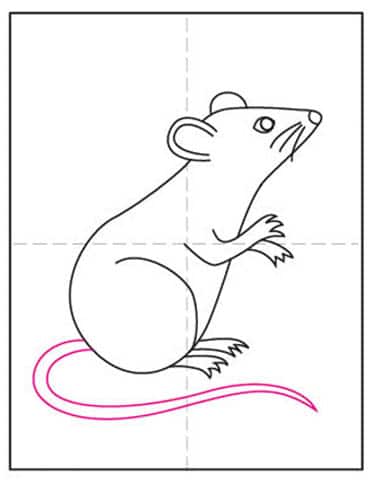
I am working from home at the moment owing to Covid-19 restrictions on campus activity but I have been informed by on campus staff that an unauthorized mouse bas been seen in the Department of Theoretical Physics. This is a very serious situation as access to the Science Building is for essential work only and this does not include rodents, even if they have a PhD. Furthermore, the mouse is not wearing a face mask and, from what I have heard, is not observing proper sanitary procedures.
More importantly, our Covid-19 protocols require all visitors to the Department to be in receipt of a letter authorizing their presence. I have contacted Human Rodent Resources and no such letters have been issued.
I have therefore instructed all staff and students in the Department that if they see this mouse they should instruct it to leave and that any refusal to comply will be met with disciplinary action, initially taking the form of a formal written warning but escalating if necessary to a meeting with Maynooth University Library Cat.
There now follows a message concerning these developments from Professor Brian Dolan.
Although I’m now officially on holiday I’m struggling a bit to get into the festive spirit this year, but this should help. Here’s a Christmas song that even Ebenezer Scrooge himself would find hard to resist. On December 20th 1954 the great Swedish tenor Jussi Björling did a benefit recital in the Södersjukhuset, Stockholm’s largest hospital; the performance was also broadcast on the radio. Because wasn’t recorded in a proper studio the acoustic isn’t great, but I love the intimacy of the setting with just a piano accompaniment. Here is an excerpt from that concert, the old carol “O Holy Night” sung in Swedish.
Update: I stupidly put the wrong link in earlier, now fixed.
This is Swedish musician Gunhild Carling out front of a swinging big band on the open-air stage at Central Park, New York, tearing it up on the bagpipes*.
You’re welcome.
(*to be precise these are a kind of traditional Swedish bagpipes known as the säckpipa).
It’s just over a year since my Mam passed away after several years of struggle with dementia. It seems like a century since I flew back to Newcastle to attend her funeral, so much has happened in the world since then. I got through the sad anniversary reasonably well until this morning I came across this video, which had me in pieces. It’s of a lady by the name of Marta C Gonzalez, a former ballet dancer, who passed away last year; the film was made at her care home in Valencia. A care worker plays her music from Tchaikovsky’s ballet Swan Lake and briefly she is a prima ballerina once more; the film is intercut with footage of herself dancing on stage in New York in the 1960s. It’s unbearably moving, bringing together the awful tragedy of dementia with the power of music if not to heal but at least to provide some measure of respite. Even when almost all is gone, music seems to remain in the deepest part of our being alongside our most cherished memories which it can bring back to life, if only briefly, before the darkness comes.
The views presented here are personal and not necessarily those of my employer (or anyone else for that matter).
Feel free to comment on any of the posts on this blog but comments may be moderated; anonymous comments and any considered by me to be vexatious and/or abusive and/or defamatory will not be accepted. I do not necessarily endorse, support, sanction, encourage, verify or agree with the opinions or statements of any information or other content in the comments on this site and do not in any way guarantee their accuracy or reliability.