Archive for the Music Category

WNO Eugene Onegin

Posted in Opera with tags , , , on October 2, 2017 by telescoper

Just time for a quick review of my second opera of the new season at Welsh National Opera, Eugene Onegin by Pyotr Ilyich Tchaikovsky which I saw on Friday evening. This Opera, based on a famous novel in verse by Alexander Pushkin continues this Autumn’s Russian theme, though it is very different in style from Khovanshchina which I saw last week.

The plot revolves around the eponynmous character Eugene Onegin who is dashing and handsome but also arrogant and self-centred. Young Tatyana becomes infatuated with Onegin, and writes him an an impassioned love letter but he haughtily dismissed her advances, not least because she is a simple country girl. Onegin then decides to flirt with Olga, girlfriend of his best friend Lensky who, infuriated, challenges Onegin to a duel. Onegin kills Lensky in the duel then, in remorse, Onegin travels abroad for many years (during which he grows his hair long but apparently doesn’t change his suit). He returns to St Petersburg and attends a posh shindig only to find Tatyana all grown up and the belle of the ball. Now that she has some social standing he now finds her desirable, but it turns out that she’s married (to a Prince no less). Though she still fancies him – Heaven knows why, as Onegin is not at all a likeable character – she puts loyalty before passion, and Onegin is left alone with his regrets.

Tchaikovsky’s music is very beautiful, with memorable arias and passages for the chorus. The most famous piece is, of course, the Polonaise that opens Act III. I have to admit that although I’ve heard this piece dozens of times I never knew how to dance the Polonaise before seeing this production. Here’s what it looks like (from a rather more opulent production):

This production has a conventional design and overall look, and is none the worse for that. It’s very much a piece about a particular time and place. Classic countryside settings are contrasted with beautiful ballroom scenes using a simple but effective staging involving a wall across the entire stage with a large rectangular gap in the centre. This aperture is used as a window, or a grand door for the interior scenes but also as a clever way to suggest outdoor settings. The only problem with this device is that it does restrict the stage area quite a bit, so the ballroom scenes look a bit cramped. Costumes are in period style, their rich colours complementing the rather simple staging. Onegin makes his first appearance in black, complete with a top hat, looking rather like an undertaker.

The Opera is in Three Acts, adding up to seven scenes in all. That makes for quite a few changes of scenery and two intervals or, as I call them, wine breaks. The kind of opera I like best of all is the kind with two intervals…

Nicholas Lester (baritone) was a fine Onegin in a role that’s challenging mainly because the character is so unsympathetic; he does get to sing some lovely music. Natalya Romaniw (soprano) sang and acted beautifully, her transformation from country girl to high society lady was very convincing. Miklós Sebestyén (bass-baritone) took the singing honours, though, with a stunning vocal performance that was very warmly received by the audience. It almost goes without saying that the WNO chorus were excellent, but I’ll say it anyway.

P.S. The house was pretty much full, by the way, which is good news. I just wish more people would turn up for the less familiar works!

WNO Khovanshchina

Posted in Opera with tags , , , , on September 24, 2017 by telescoper

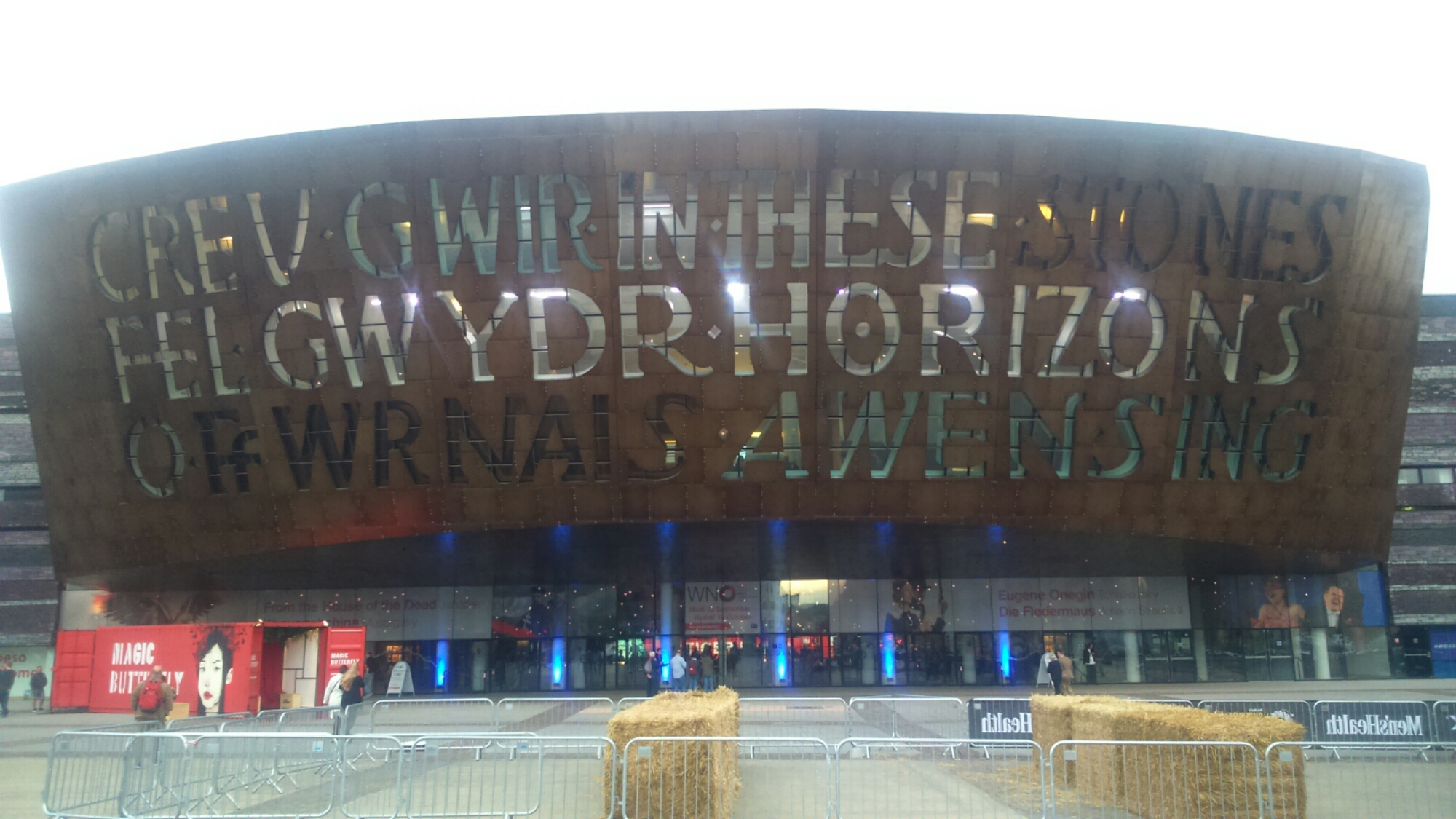
So, as promised, yesterday evening I took a stroll down to Cardiff Bay for the opening night of this run of Welsh National Opera’s production of Kovasnshchina. The walk proved a bit more eventful than anticipated because I blundered into the middle of some sort of police operation involving the pursuit of a suspect but I made it to the Wales Millennium Centre on time and relatively unruffled.

Khovanshchina (which roughly translates as `The Khovansky Affair’ or `The Khovansky Episode’) is based on historical events that took place in Moscow in the 1682. Prince Khovansky, at the head of his private army (the Strelsty) leads a rebellion against the government represented by Sofia, who is regent on behalf of her young brother Ivan and his half-brother Peter (destined to become Peter the Great) who has, with assistance from her lover Prince Golitsyn, restricted the power of the the Boyars (aristocracy). These rebels form an uneasy alliance with The Old Believers, who are opposed to religious reforms introduced by the Patriarch Nikon. The rebellion is crushed by Peter’s army. Khovansky is murdered, but the Streltsy, having been lined up to be executed, are spared by the young Tsar. Golitsyn is forced into exile. The Old Believers, on the other hand, convinced that the failure of the uprising means that the devil is taking over the world, opt for mass suicide.

Mussorgsky was inspired to write this Opera by the bicentenary of the birth of Peter the Great (who was born in 1672). He worked on it, off and on, composing the music and writing the libretto, from 1872 until his death in 1881 and which point it still wasn’t finished. His friend Nikllai Rimsky-Korsakov subsequently completed the work, and it is his version that is most frequently performed. This production, however, uses a different version, completed in 1959 by Dmitri Shostakovich and with the addition of the final scene – the immolation of the Old Believers – the music for which was composed by Igor Stravinsky. The compositional history of this piece is almost as complex as the historical events it depicts.

At a very basic level the message of Khovanshchina is “look how terrible everything was before Peter the Great”. None of the protagonists is a remotely sympathetic character, especially Khovansky himself who is an extremely unpleasant individual, as is his son, whom we first meet trying to force his attentions on a young German girl. Khovansky Senior arrives on the scene to stop him assaulting the girl, but only because he wants her for himself. They’re all charm, these Khovanskys.

Golitsyn seems at first like a good guy, but when a fortune teller forecasts doom and gloom he casually orders her to be murdered. The Old Believers just seem to be a group of religious maniacs. Peter the Great never actually appears on stage and neither does Sofia, a deliberate ploy to focus our attention on the undesirables in front of us. The story that unfolds is one full of horror and brutality, while hope waits in the wings, perhaps never to arrive.

This particular episode also serves to highlight the themes that recur elsewhere in Russian history, and indeed the history of any country that has a history, namely the conflicts between reason and superstition, between rich and poor, between East and West and, well, between War and Peace…

David Pountney’s design for  this production isn’t specific to the 17th century. The striking set, with its curious juxtaposition of abstract geometrical forms, owes much to the constructivist art that informed the iconography of the early Soviet era. Other elements of the design, such as the costumes of the serfs (grey) and the Old Believers (white), are more traditional. The Streltsy wear uniforms that look 20th century, but are a bright pink. This colour-coding is helpful, actually, given the complexities of the plot, and the fact that the stage is frequently crowded. The final apocalyptic suicide scene is not an immolation, but death by poison gas, administered by a steampunk contraption that descends from above the stage. These, and other devices, shift attention away from the specifics and emphasize the thematic universality of the piece.

Spread over five acts, and lasting about 3½ hours (including one interval), Khovanshchina is quite a long Opera but it doesn’t get bogged down because so much is happening musically, dramatically and visually.  It may not be the most comfortable viewing, but it’s a gripping story compelling realised. I certainly never felt bored, though I do wish I’d read a little more about the story beforehand as I got a bit confused in places.

With the exception of a few iffy moments by the French horns, the Orchestra of Welsh National Opera under the direction of Tomáš Hanus played excceedingly well, adding a sense of danger to the opening prelude that set the tone wonderfully. A special mention must be made of the Chorus of Welsh National Opera who were absolutely magnificent, showing off some of the sublime choral writing in this opera as well as provide lots of energy and colour to the crowd scenes.  It isn’t really fair to single out any of the principals, as this is really an ensemble piece, but I thought Robert Hayward was absolutely compelling.

There are two more performances in Cardiff but this piece goes on tour. Do go and see it if you can. It’s an enthralling experience.
 

Dawn over the Moscow River

Posted in Opera with tags , , , , on September 22, 2017 by telescoper

If the world doesn’t come to an end tomorrow, around 7pm I hope to be in my seat at the Wales Millennium Centre in Cardiff Bay for the start of Khovanschina performed by Welsh National Opera, it being the first night of their new season.

Khovanschina, composed by Modest Mussorgsky, is not a particular well-known opera but the lovely Prelude to Act I is performed fairly often as a concert piece with the title Dawn Over the Moscow River. Here it is, played in 1991 by the Orchestra of the Mariinsky Theatre conducted by Valery Gergiev:

Stardust – Louis Armstrong

Posted in Jazz with tags , , , on August 22, 2017 by telescoper

This wonderful recording of Hoagy Carmichael’s great song Stardust was made in 1931 by Louis Armstrong with his big band. After the heights that Armstrong reached in the 1920s, starting with King Oliver and then with the Hot Fives and Hot Sevens, some jazz critics maintain that the 1930s were a comparative wilderness. Well, I think he sings and plays beautifully on this so if this is a wilderness just take me to it, and I’ll pitch my tent there anytime!

The Vale of Clwyd

Posted in Music with tags , , , on August 19, 2017 by telescoper

Why did nobody tell me that Beethoven wrote a collection of 26 Welsh Folk Songs? I had to rely on BBC Radio 3 to educate me about them!

Here’s one example, Number 19 in the published collection, arranged for soprano voice with piano, violin and cello accompaniment and  called The Vale of Clwyd .

Here is a picture taken across the Vale of Clwyd, taken by Jeff Buck.


Photo © Jeff Buck (cc-by-sa/2.0)


Barcelona

Posted in Music with tags , , on August 18, 2017 by telescoper

After yesterday’s terrible news, it seems apt to remember happier times.


Deep Time and Doggerland

Posted in Biographical, Music, The Universe and Stuff with tags , , , , , on July 24, 2017 by telescoper

One of the bonuses on offer during the BBC Proms season on Radio 3 is the opportunity to listen to the fascinating discussions recorded over the road from the Albert Hall at Imperial College and broadcast during the intervals under the title of Proms Extra. Last week (at Prom Number 4) there was a discussion with the title Deep Time, taking its theme from the UK premier of a fascinating composition of the same name by Sir Harrison Birtwistle.

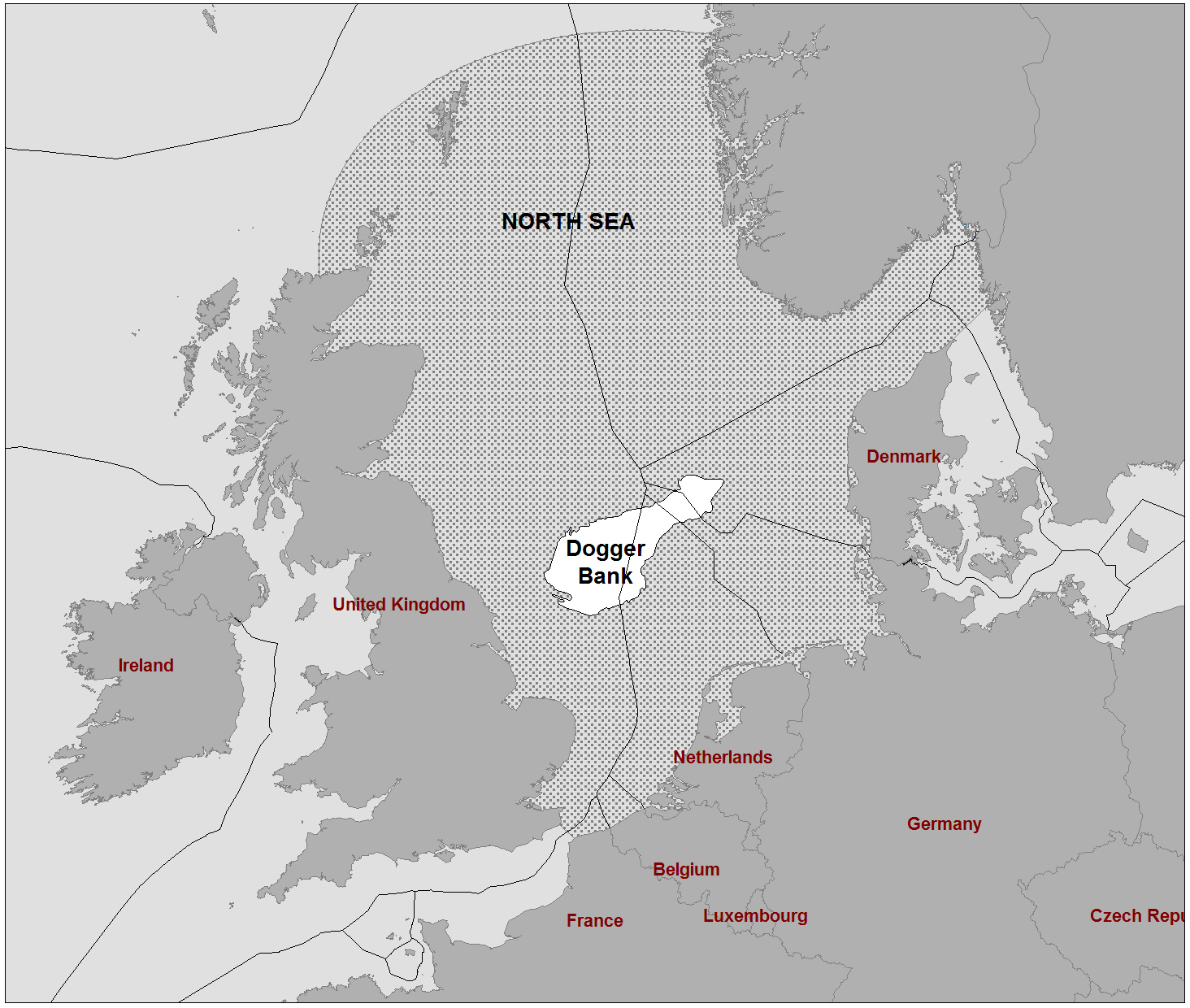
The Proms Extra programme focussed on `Deep Time’ in the sense in which it is used in geological, i.e. time as inferred from rock strata and the fossil record. In the course of the discussion mention was made of Doggerland which is not, as you might imagine, a theme park devoted to outdoor sexual activities, but an area now submerged beneath the North Sea that connected Great Britain to continental Europe during and after the last glacial period. About 12,000 years ago at the start of the Holocene Era, it is thought that the area now covered by the North Sea looked something like this:

(Picture credit: this website). Obviously the cities marked on the map where not there at the time! Britain was connected to mainland at this time, although much of the land mass was under glaciers at the time. At the end of the last ice age the glaciers retreated, sea levels rose and the area once covered by Doggerland was submerged. It is thought that this happened around 8500 years ago. Great Britain has been separated from the continent by less than 10,000 years.

Doggerland gets its name from the Dogger Bank, a huge sandbank off the North-Eastern coast of England which is thought to be a glacial moraine left behind by the retreating ice sheet. The Dogger bank lies about 60 miles from the coast, and is about 60 miles wide by 100 miles long. The water is quite shallow – typically 20 metres deep and is a well-known fishing area. Its name derives from old Dutch fishing vessels called doggers who specialised in catching cod. Here’s a map (from here) showing the Dogger Bank:

When I was a teenager I had the opportunity, with a few friends from school, to go out from Newcastle in a trawler to the Dogger Bank. The skipper insisted that the Dogger Bank was, in places, so shallow that you could paddle around on it with your trousers rolled up. We all believed him, but he was clearly having us on!

The other thing I remember about that trip in a trawler – apart from the all-pervasive smell of fish – was that a bit of storm brewed up on the way home. All my school friends got sea-sick, but I didn’t. That was the first time I realised that I don’t suffer from seasickness. I can enjoy travelling on ships and boats without having to worry about it.

Dogger is of course also the name of one of the sea areas used in the Shipping Forecast: it is East of the coastal area Tyne, South of Forties, North of Humber and West of German Bight. Whenever I hear the shipping forecast on the radio, I always feel a bit of nostalgia when I hear the names of these areas read out.

Anyway, trawlers operating at the Dogger Bank frequently bring up bits of ancient animals (including mammoth and rhinoceros) as well as prehistoric human artefacts, showing that the area was at one time inhabited. I don’t think anybody knows exactly how long it took Doggerland to become submerged, but it may well have involved one or more catastrophic flooding events. If there were people living on Doggerland then,  they obviously had to migrate one way or the other..


Daniel Barenboim’s Proms Speech

Posted in Music, Politics with tags , , , on July 19, 2017 by telescoper

Daniel Barenboim made this wonderful speech at the BBC Proms at the weekend. It seems to have annoyed some people who get annoyed when someone expresses something that doesn’t fit in their own narrow minds, and does it with grace, eloquence and great dignity. I’m posting it here to annoy such people still further. It’s no more than they deserve.

And here is the encore that followed the speech – Elgar’s Pomp and Circumstance  March No. 1 – in full. It’s a piece I usually hate. This was the first time in my whole life that I’ve actually enjoyed it.


Rondo alla Trad

Posted in Film, Jazz with tags , , , , on July 17, 2017 by telescoper

I think this will probably alienate serious jazz fans and serious classical music fans in equal measure, but I stumbled across this while searching for something else and couldn’t resit posting it here. It’s from the 1963 film Live it Up and it features Kenny Ball and his Jazzmen playing their arrangement of the famous Rondo alla Turca from the third movement Mozart’s Piano Sonata No. 11 (K331). It’s not as far fetched as you might think to perform this with a band led by a trumpet player because Mozart’s composition deliberately imitated the music of the Janissary marching bands which were much in vogue in Austria in the latter part of the 18th Century.

Anyway, when I clicked on this I thought I was going to hate it, but you know what? I rather like it!

The Versatile Four

Posted in History, Jazz with tags , , , , , on July 14, 2017 by telescoper

I’ve posted a few examples of Jazz drummers recently, so I thought you might be interested in this, a rare recording of performance from the (pre-Jazz) Ragtime era that provides a good example of where  Jazz drumming came from. This track was recorded in London way back in 1916 and it’s remarkable for the clarity with which you can hear the drums, which in those days usually proved very difficult to capture.  The tune, Down Home Rag (written by Wilbur C. Sweatman) was a big hit at the time and remains in the traditional jazz repertoire to this day. It’s played by The Versatile Four an almost legendary ragtime band that I know very little about other than the personnel: Tony Tuck (banjo; born 1879 Virginia); Charles W. Mills (piano; born 1883 Illinois); Gus Haston (banjo, vocals; born 1880 Missouri); and  Charlie Johnson (drums; born 1885 Kentucky). I’m not sure who it is who blows the whistle, but it may well be the drummer.

Charlie Johnson’s playing of the drums may sound very old-fashioned and a bit staff to ears accustomed to the swinging style of the jazz era, and he no doubt used a very crude kit, but this recording shows what an absolutely superb musician he was. You can also clearly hear the influence of the sort of drum patterns used by military marching bands. As well being an interesting piece from the point of view of music history, the drummer suffuses this high-energy performance with a sense of knockabout fun that is guaranteed to bring a smile to even the most crabbed face!