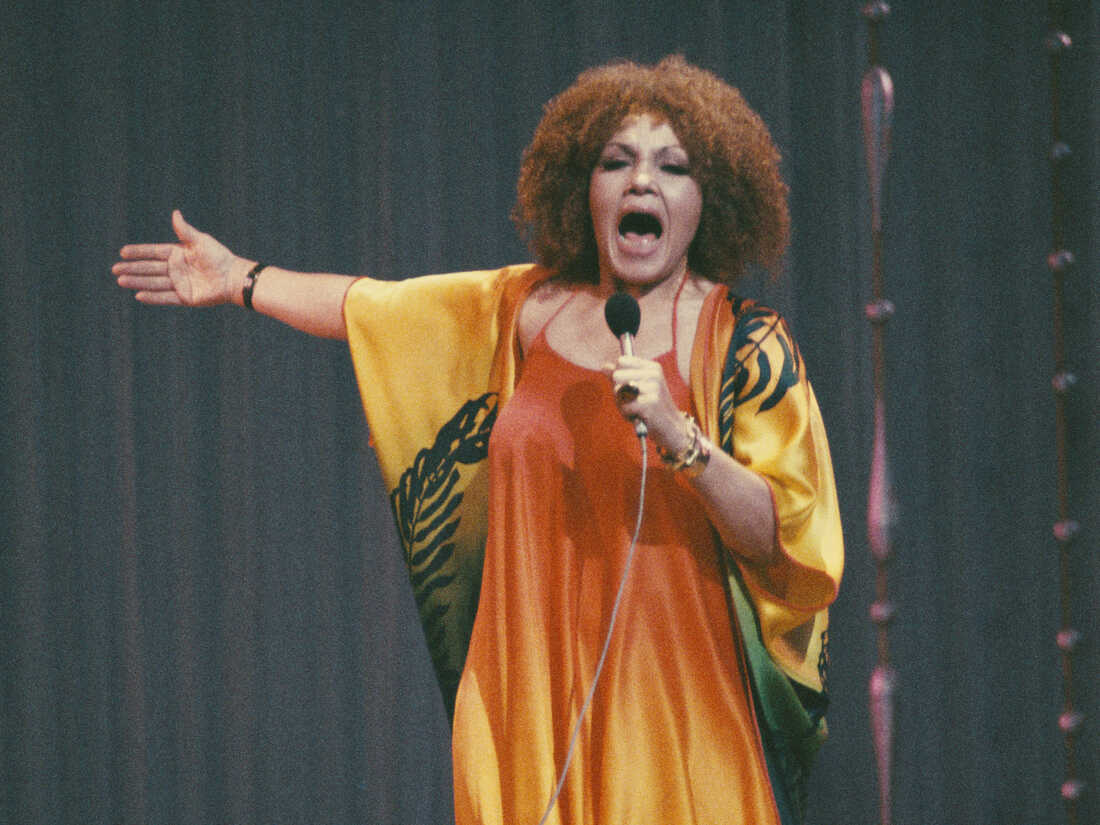
I just heard the very sad news of the death at the age of 97 of that great jazz singer, Cleo Laine. Although stylistically related to Sarah Vaughan, her voice was instantly recognisable. It always struck me that most British jazz singers would adopt an American accent when performing, but Cleo Laine always kept a very crisp diction and sounded very English…
I think it’s her musical and personal partnership with John Dankworth (who passed away in 2010) for which she will be known best. He hired Cleo Laine as a singer for his small band in 1951; they married in 1958 and remained together for over 50 years, until separated by John’s death.
I think it is appropriate to use this lovely version of George Gershwin’s great tune Lady be Good (with lyircs by his brother Ira) as a tribute. It’s always good to end on a high note. John Dankworth takes a back seat – as he often did when Cleo was singing – but the band is in great form. Unfortunately there is no personnel listing, apart from John Dankworth. The small band you see and hear here was drawn from his larger orchestra and many of the musicians therein doubled on different instruments. The vibes player, for example, could be Alan Branscombe, who also played piano. Or he could be the pianist. The trumpeter could very well be a young Kenny Wheeler.
Anyway, if you didn’t realise what a terrific vocalist Cleo Laine was, then pin back your lugholes around 2 minutes in where she demonstrates a range and level of vocal ontrol that would put many opera singers to shame.
The BBC Proms having started on Sunday (20th July), I decided to listen to some of the concerts via BBC Sounds. One can’t get BBC Radio 3 on the radio here in the Republic, at least not this far from the border.
I was disappointed, then, to see that BBC Sounds is no longer available to listeners outside the UK. Apparently The BBC is making BBC Sounds exclusively available to UK license fee payers, meaning users outside the UK, including those in Ireland, will no longer be able to access the full service. This change came into effect yesterday (21st July).
So here I am, as I write this, on 22nd July, listening to this evening’s Promenade concert via BBC Sounds. No, I’m not doing anything illegal or unlawful. Neither did I last night, when I listened to Mahler’s Symphony No. 7. It’s just that the change has been implemented in a very peculiar and confusing way.
To start with, this is what I see a see on my screen right now:
I don’t think you get the top message if you listen in the UK, but then you might be listening on the radio anyway.
At the top it says use the BBC.com or the BBC App. For one thing I can’t find any sign of the “BBC App” on PlayStore on anywhere else. For another, BBC.com offers only Radio 4, BBC World Service and a random selection of podcasts. So neither of those options are any good for listening to Radio 3.
If you click to “Find out how to listen to other BBC stations” you get this page which “explains”:
Earlier this year, we launched a new audio service outside the UK on BBC.com and the BBC app. This includes access to BBC Radio 4 and BBC World Service English, thousands of hours of podcasts (including Global News Podcast, World of Secrets and Infinite Monkey Cage) – as well as some of the best of the BBC’s journalism and storytelling including news and history programming.
As part of the announcement, we said we planned to close BBC Sounds to audiences living outside the UK later this year, making it available exclusively to people in the UK. Anyone who lives in the UK will still be able to use the BBC Sounds app when they go on holiday abroad. We can now confirm that BBC Sounds closed for listeners based outside the UK on 21 July 2025.
Leaving aside the mystery of the “BBC app”, this suggests that BBC Sounds is closed to listeners outside the UK. Except it isn’t.
The article goes on to explain:
Please use the links below for live listening access to the BBC’s other radio stations from across the UK, including BBC Radio 1, Radio 2 and Radio 3, 6Music, 1Xtra and Asian Network, Radio 4Xtra and 5Live, all the BBC’s stations from the UK nations and every local radio station in England.
In other words, it takes you back to BBC Sounds, which is where I am listening now! As far as I understand it, one can still listen to the live internet stream of BBC Radio on BBC Sounds, so it’s not closed to listeners outside the UK after all. What is closed (to us foreigners) is the back catalogue of past recordings. I only ever listen to live broadcasts, however, so after all that it’s business as usual for me.
I’ve just caught up with the news of the death last week of composer, arranger and pianist Lalo Schifrin. He was 93. Most of the media coverage of his passing concentrates on his many excellent TV and movie scores, such as Mission Impossible*, Dirty Harry and Bullitt, but he was first and foremost a Jazz musician so I thought I’d pay tribute by posting a relatively early work by him.
Lalo Schifrin was a huge fan of trumpeter Dizzy Gillespie whom he met when Gillespie toured Schifrin’s home country of Argentina in 1956. This long piece, Gillespiana was written for Gillespie’s big band in 1958. You can here in it many of the musical ideas that Schifrin was later to include in his film scores. In 1960, Lalo Schifrin moved to York and joined Gillespie’s band as a pianist after the departure of Junior Mance. He only stayed with the band for a couple of years but together they made some great records, especially Dizzy on the French Riviera (which I have blogged about here).
Anyway, Gillespiana is suite in five movements (Prelude, Blues, Panamerica, Africana, and Toccata) that takes up an entire album that was released in 1960. It’s not so well known nowadays but I think it’s great. It gives ample opportunity not only to listen to Dizzy’s trumpet and Lalo Schifrin’s piano – as well as the enormously underrated alto saxophonist and flautist Leo Wright – but also to enjoy the wonderful arrangements.
*The original theme for Mission Impossible is written in 5/4 time. Not a lot of people know that the resulting rhythmic pattern (dash dash dot dot) is Morse code for the letters M I…
Thinking back to yesterday’s EAS 2025 social event, I think the song that attracted the greatest degree of audience participation was this one. It’s very well-known and the chorus is great for a singalong. Anyone who has any Irish relatives – especially an uncle with a fondness for the drink – will certainly have heard this!
P.S. It wasn’t sung by the Luke Kelly and the Dubliners last night.
Not to be confused with the former UK Prime Minister, Ted Heath was the leader of a famous big band that was especially popular in the UK during the 1950s. His orchestra also served as a kind of “day job” for up-and-coming British jazz musicians, allowing them to earn enough cash through radio work and recording sessions to subsidize their jazz ventures. Among the excellent musicians that played with Ted Heath’s band were Ronnie Scott and Don Rendell (tenor sax), pianist Stan Tracey and trumpeter Kenny Baker, all of whom were what you might call modernists. I thought I’d share this recording of St James Infirmary – a tune that the legendary trombonist Jack Teagarden famously referred to as “the oldest blues I ever heard” – not only for the fine arrangement, but because of the excellent trombone solo on it. There is no personnel listing but I’d bet my bottom dollar that the featured trombonist is Keith Christie, who played with Humphrey Lyttelton’s band for many years before leaving to join the Heath band in 1957; this track was recorded in 1959.
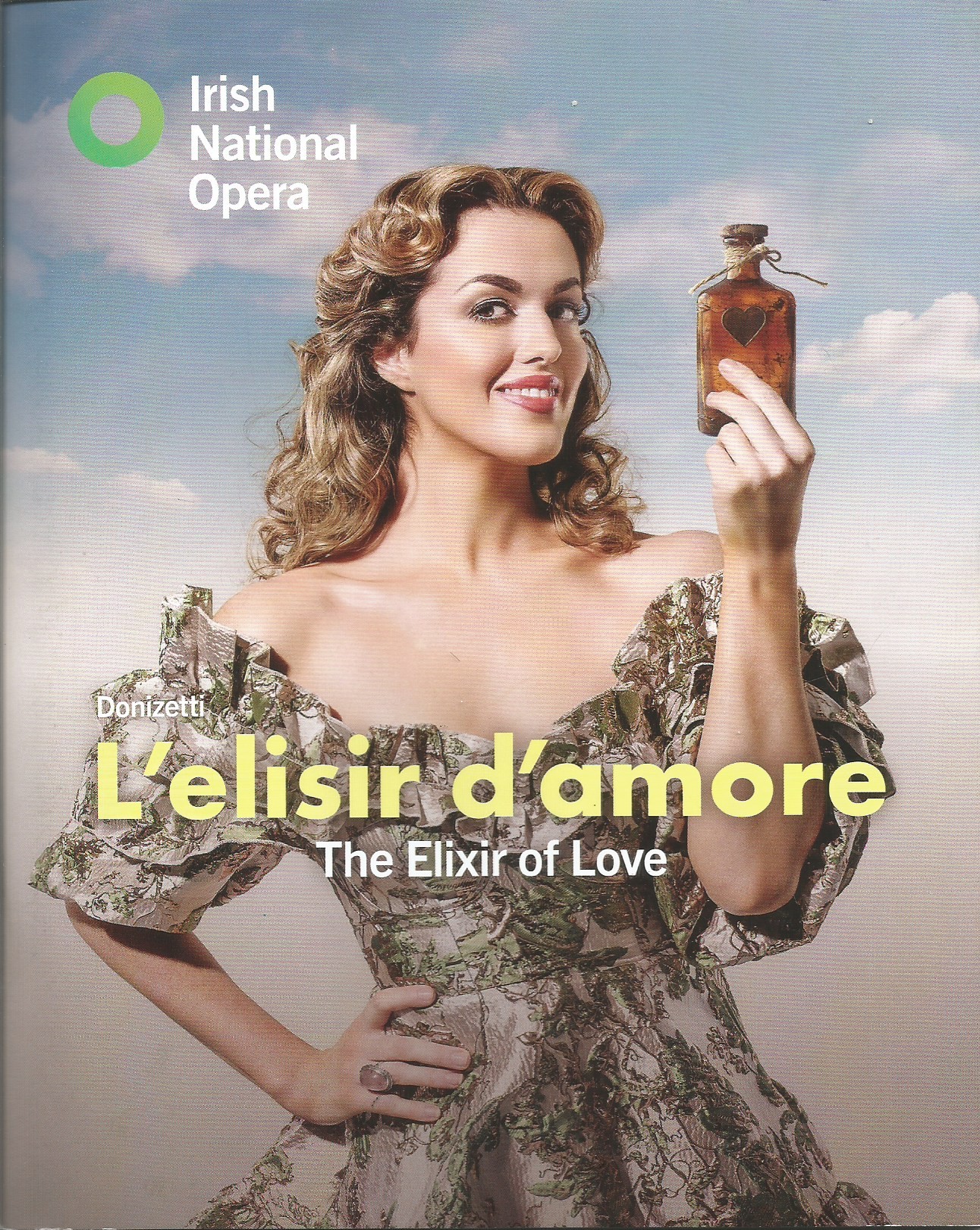
My trip to Wexford was to mark a special occasion by paying my first ever visit to the National Opera House to see a performance of Donizetti’s comic opera L’elisir d’amore by Irish National Opera. It was well worth the trip, as it was a wonderfully entertaining production with lovely singing and lots of laugh-out-loud moments. In short, it was a blast.
Billed as a melodramma giocoso, but more usually called an opera buffa, this was the first Donizetti opera to be performed in Ireland, in 1838; its world premiere was in 1832 in Milan and it has been in the operatic repertoire ever since. The show-stopping Una furtiva lagrima in Act II is one of the most recorded tenor arias, the first recording of which dates back to 1904 (by Enrico Caruso).
In case you’re not aware of the opera, it tells the story of a lowly peasant (Nemorino, tenor) who is in love with the wealthy Adina (soprano), who does not return his love – understandably not just because he’s poor but because he’s a bit of a drip. In despair Nemorino turns to the fake doctor Dulcamara (bass-baritone) “famous throughout the Universe and certain other places” who has arrived in town to peddle potions and quack remedies, no doubt made from snake oil. Nemorino asks him for a philtre that will make Adina fall for him. Dulcamara has sold all his potions, but fills an empty medicine bottle with wine and tells him it’s the love potion he needs. After drinking it, Nemorino feels more confident, but Adina still isn’t interested. Worse, Adina has agreed to marry to soldier Belcore. That’s Act I.
In Act II, desperate to stop the marriage, Nemorino wants to buy some more of the love potion but he has no money so he agrees to join the army for which he is entitled to a joining fee. He spends the money on more wine and gets completely wasted, so much so that he misses the news that a rich uncle has died and left him a large inheritance. When the women of the town find out that he is now rich, they all start showing an interest in Nemorino, which he assumes is because of the love-potion. At this point Adina decides she really does love Nemorino, buys out his contract with the army, and calls off the wedding with Belcore. The soldier shrugs off his loss. Dulcamara convinces himself that he really has magical powers…
Summarizing the plot doesn’t really do justice to the opera, however, as there are numerous musical interludes, with dancing, and slapstick comedy. Donizetti’s music is wonderful, and keeps the pace going. It’s basically a theatrical farce set to music, with the score keeping everything moving at the speed that is essential to make such a thing work. Erina Tashima conducted the Orchestra of Irish National Opera with great verve.
This production is set in a comical Wild West of America, with a relatively simple set but wonderful very witty costumes. Nemorino (Duke Kim) was dressed like Woody from Toy Story, for example. We also had appearances from Calamity Jane, Laurely & Hardy (who do their “Way Out West” dance), Abraham Lincoln and even the couple from Grant Wood’s painting American Gothic. Adina (Claudia Boyle) has no fewer than five costume changes, each one into a frock more glamorous than the previous. Dulcamara was the wonderful John Molloy and there is great comedy between him and his diminutive sidekick Truffaldino (a non-singing part played by Ian O’Reilly). Belcore’s troops are kitted out like the US Cavalry, and their dancing and messing about delivers laugh after laugh. There are also sundry “peasants”, i.e. cowboys and women of the town adding to the hilarity. I give 10/10 to the members of the chorus, their Director Richard McGrath and choreographer Paula O’Reilly.
All the principles were great too. Claudia Boyle sang beautifully, but also conveyed the comic aspects of her role. Duke Kim was perfectly cast as the boyish Nemorino; he has a light and agile tenor voice, which he used to bring the house down with the big number Una Furtiva Lagrima in Act II. Belcore was baritone Gianluca Margheri (whom I saw perform in Maynooth a couple of years ago). His physique matches the muscular quality of his voice, and he wasn’t shy in showing it off by taking off his shirt onstage! John Molloy’s singing was as impeccable as his comic timing in the role of Dulcamara. I think he got the most laughs, in a production that produced many.
This triumphant production plays L’elisir d’amore for laughs and wins by a knockout. Sadly there’s only one performance left in this run, in Cork on Saturday 7th June. Do go if you can!
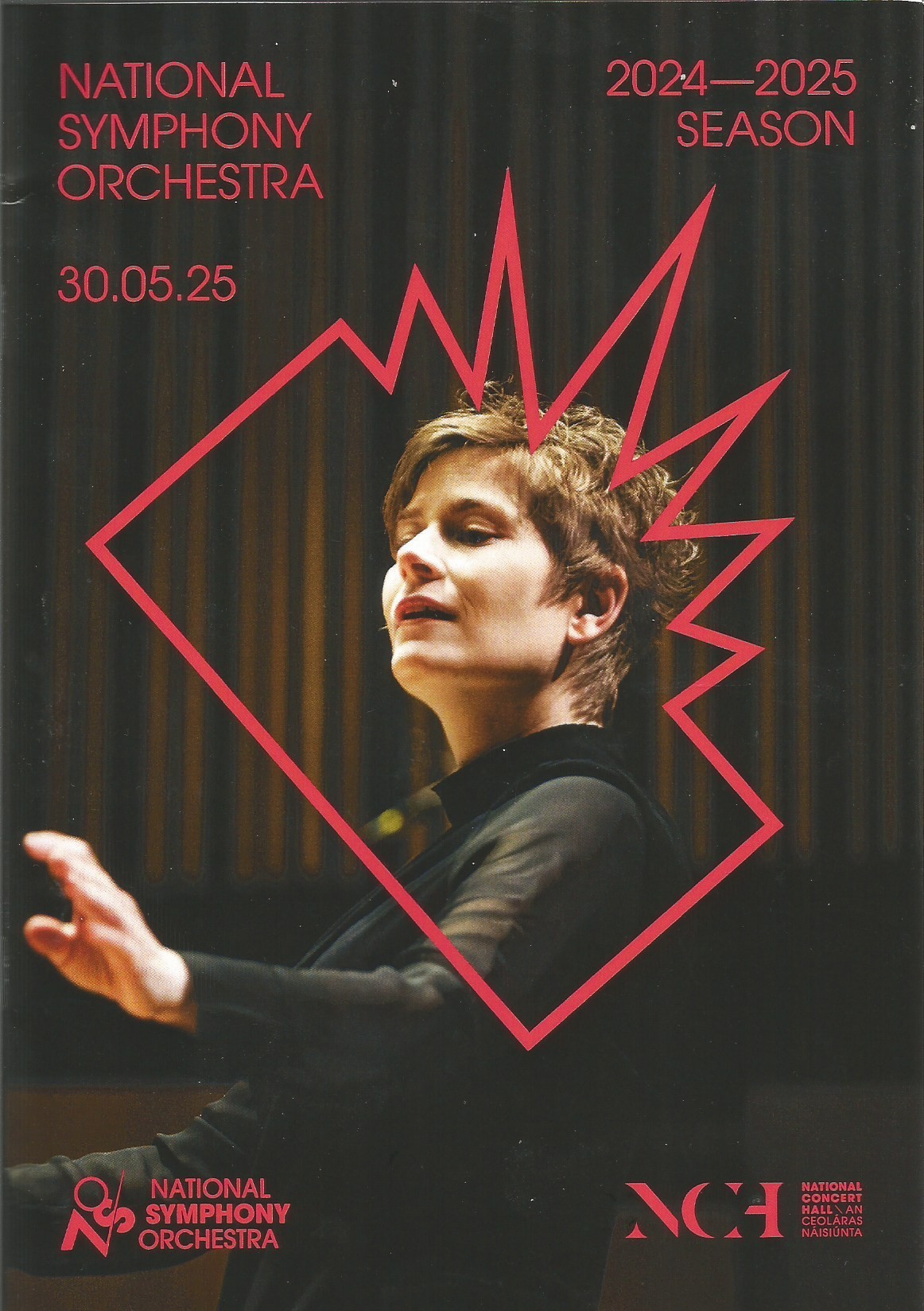
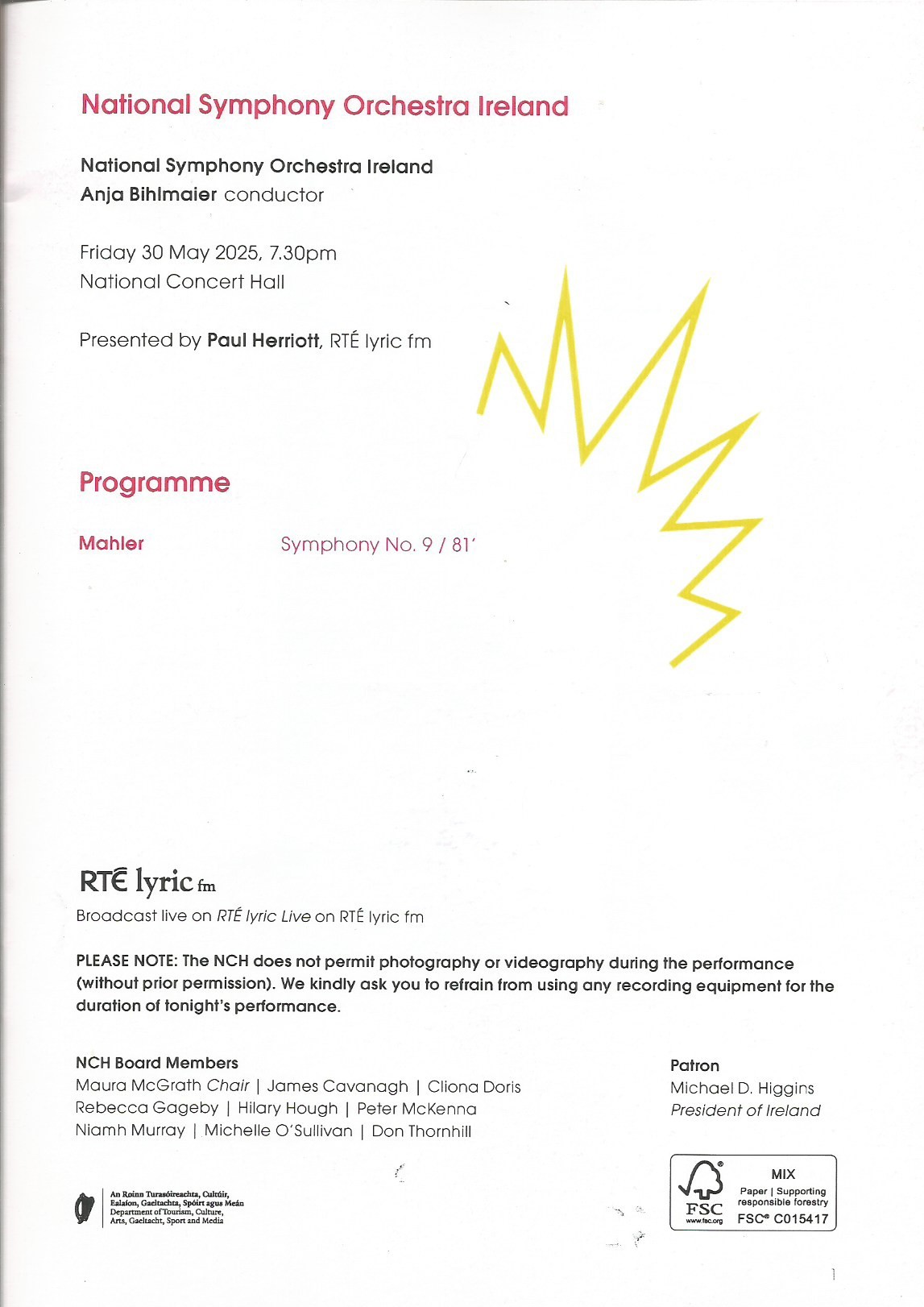
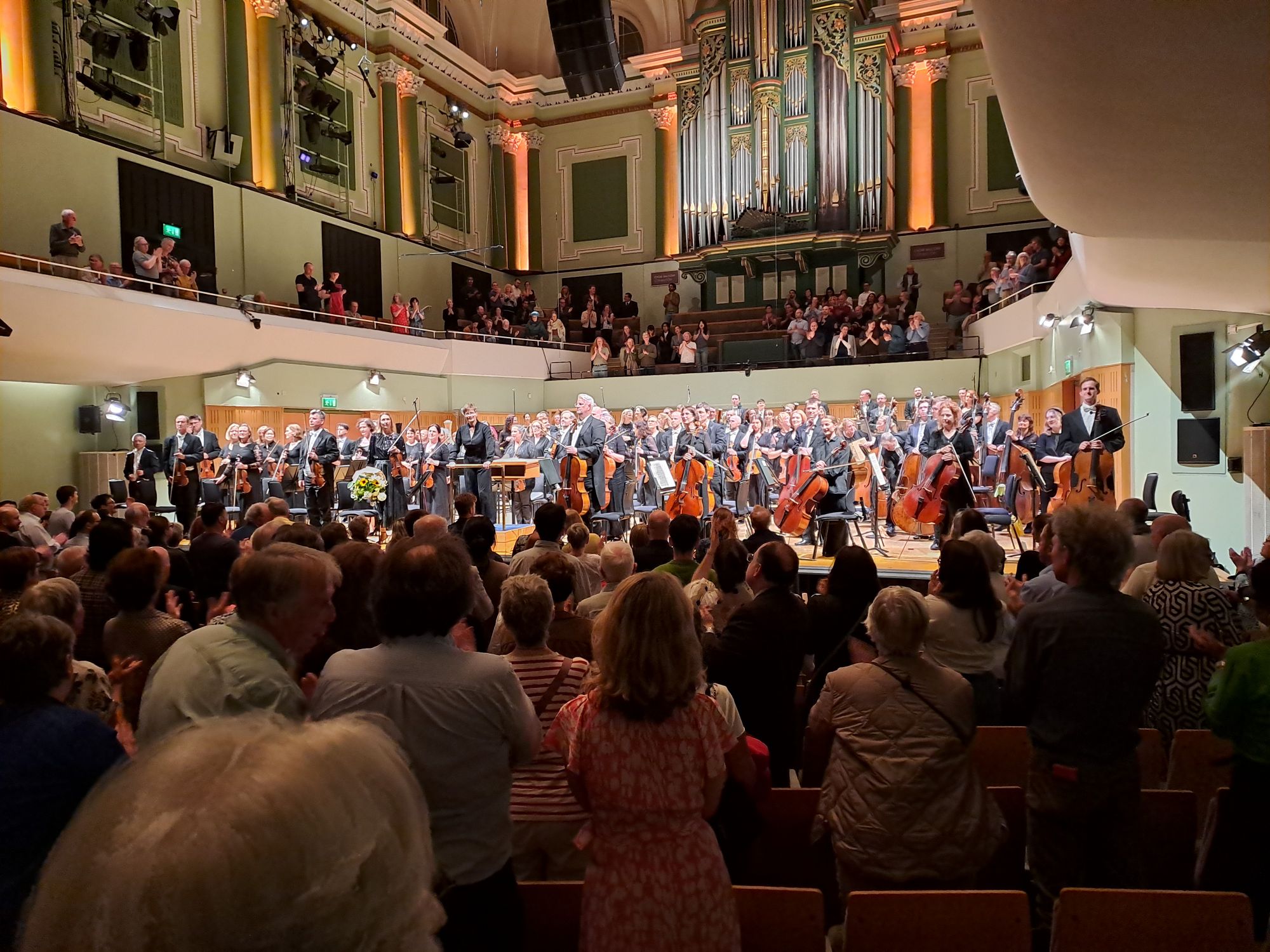
It was very nice to be able to put the marking of examinations behind me and travel into Dublin last night for the final concert of the season at the National Concert Hall in Dublin. It seems the former NSO is now to be called the NSOI, the National Symphony Orchestra Ireland, no doubt for some sort of corporate branding reason. Anyway, last night they were under the direction of guest conductor Anja Bihlmaier for a performance of the Symphony No. 9 by Gustav Mahler.
Looking back through my previous posts about Mahler I see that I haven’t previously written anything about his 9th Symphony. I am pretty sure that last night was the first time I’ve heard it live, although I have it on CD. Mahler wrote it between 1908 and 1909, immediately after finishing Das Lied von der Erde which is a symphony in all but name and which should really be his 9th. He was a very superstitious man, however, and he was worried about the Curse of the 9th, so it wasn’t given a number. After the acual 9th Symphony he went on to compose another, his 10th (though really the 11th), though he didn’t quite finish it before his death in 1911. I hope this clarifies the situation.
The 9th Symphony is a substantial piece last about 80 minutes in performance. That’s far from his longest, but it does justify it being performed on its own. The structure is unusual, with two very long slow movements either side of a pair of shorter movements, a scherzo and a rondo. The former is constructed from dance-like segments, and much of it is in 3/4 time; it reminded me a little of Ravel’s La Valse, which starts out like a standard waltz but disintegrates into a nightmarish parody of that form. The rondo described as “Rondo-Burleske” is very fragmented, grotesque and at times raucous, and also very modern-sounding. It has been described as “ferocious outburst of fiendish laughter at the futility of everything”. I think the final adagio movement is the best, and it brought out the best of the NSOI. The long sweeping passages played by only the strings, with the cellos and double-basses providing deep foundations to Mahler’s sumptuously textured harmonies. Absolutely gorgeous.
The Symphony ends very quietly indeed. Anja Bihlmaier kept her baton in hand for quite a long time before putting it down and letting the applause start. A little silence at the end of a piece of music is a very good thing: it allows the members of the audience a brief moment to reflect on what they have heard. It irks me when people starting clapping and shouting before the sound has even died away.
Anyway, when it was over, the applause was tumultuous. I’ve already mentioned the string sections, but ll the members of the NSOI contributed with outstanding contributions from the woodwinds and brass too.
There being only one item on the menu there was no wine break, but not having an interval meant that I had time to have a drink at the end before heading back to Pearse station to get the train back to Maynooth. In the old days the NCH used to treat the audience to a free prosecco after the season finale, but not any more. I had to buy my own.
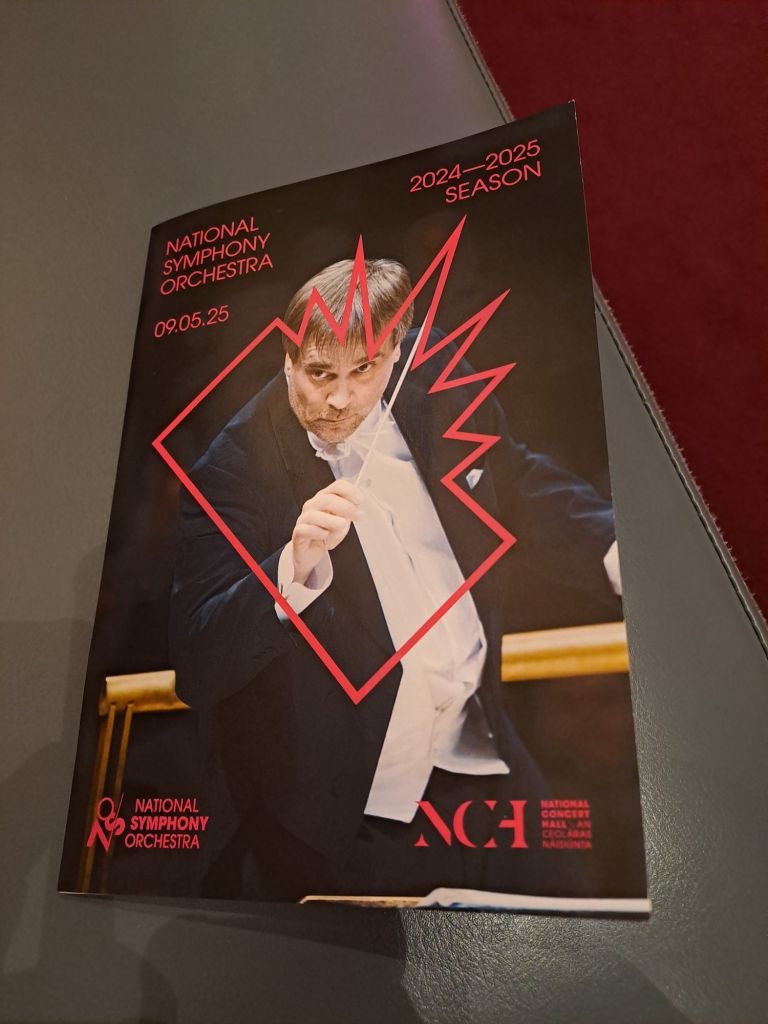
Well, this season may be over, but the booklet for next season is already out. I had a look through it on the train home. I plan to resume my Friday-night concert-going at the NCH in September, but there will be more music before then.
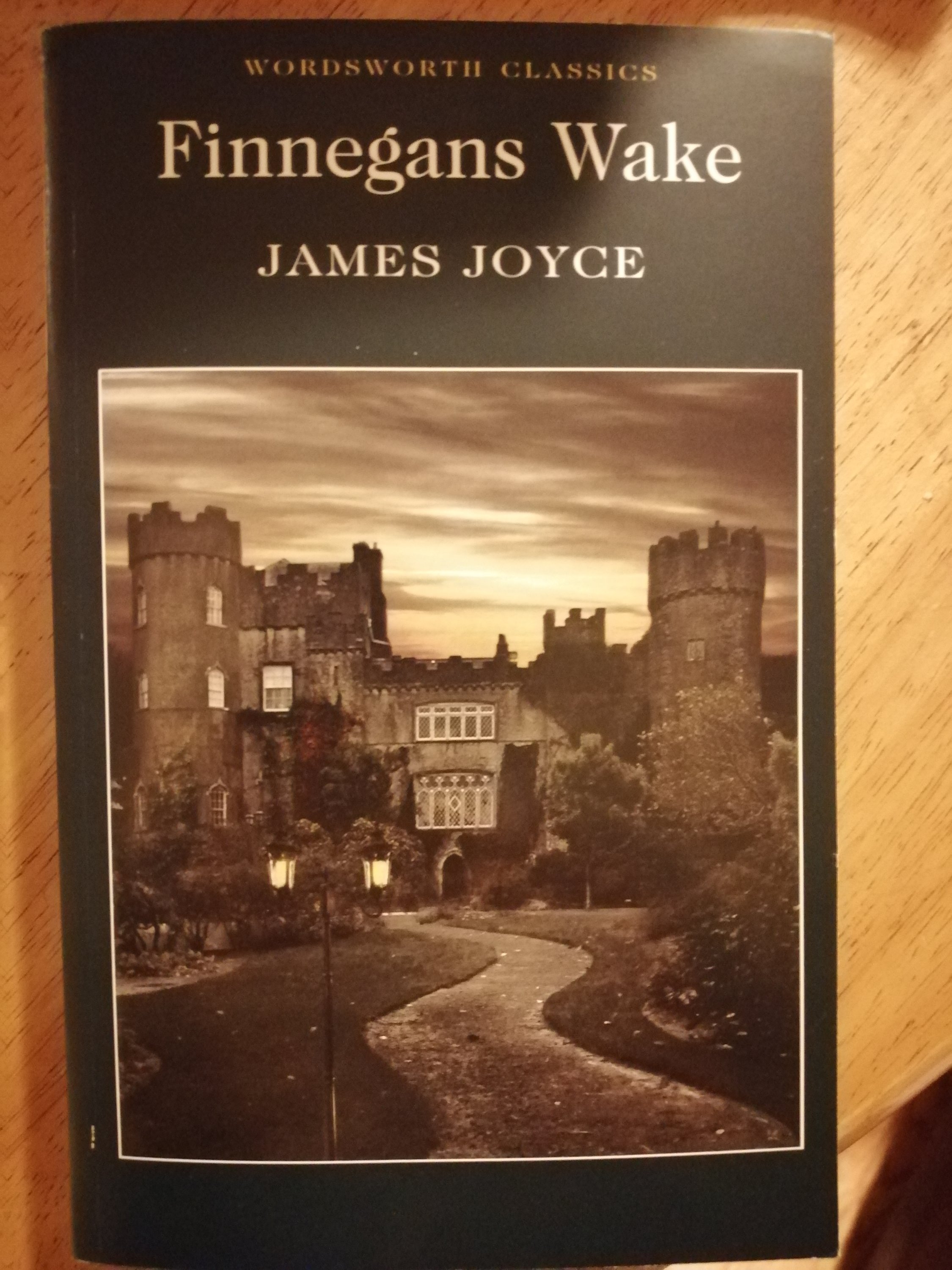
Taking a short break from examination duties I thought I would post this version of the song Finnegan’s Wake. It was first published in America in the mid-19th century, it is a ballad about the wake of a hod-carrier by the name of Tim Finnegan who is too fond of whiskey. One day, with a hangover, he falls off a ladder and dies. His wake gets a bit rowdy and eventually a bottle of whiskey is thrown over his body, which brings him miraculously back to life.
It’s been in my mind since I got talking at lunch with some colleagues a while ago about James Joyce‘s famous novel Finnegan’s Wake largely because of the connection with particle physics via the word “quark” and thence to the Arthurian legends; for more of that see here. Anyway, one of the people there knew the song on which Joyce based his book and proceeded to sing a few verses of it, much to the surprise of the people sitting around us.
The interesting thing about the title is that Joyce dropped the apostrophe so it is not really about the wake of Tim Finnegan but lots of Finnegans waking up. The implication is that, in a way, we’re all Tim Finnegan. That’s exactly the sort of play on words – or in this case play on punctuation – that Joyce revelled in and with which Finnegans Wake is peppered.
Another reason for posting this is for a chance to see the iconic beards of the Dubliners, especially lead singer Ronnie Drew. Enjoy!
Today has been such a busy day that I’ve only got time for a quick post. This morning was spent preparing and delivering a revision lecture, and this afternoon preparing and delivering a Departmental Colloquium. That done I headed straight for the railway station to get the train into Dublin and thence by foot to the National Concert Hall.
So here I am, sipping a glass of nicely chilled white wine as I wait for tonight’s performance. I’ll post a review tomorrow but, until then, Cheers!
This just appeared on Youtube a couple of days ago and I couldn’t resist sharing it here. It is from a BBC programme in the series Jazz 625 and is presented by a chap called Humphrey Lyttelton, himself a trumpeter and bandleader. Although Humph is best known as a musician on the traditional side of jazz, he was very broadminded about music and extremely knowledgeable about more modern forms, as he demonstrated on his long-running radio show The Best of Jazz, which I listened to avidly as a teenager and which introduced open my eyes and ears to lots of new things including “hard bop“, which is the genre to which this belongs.
This programme was broadcast in 1965, at which time the BBC Television programmes were all in black-and-white so the recording has been “colourized”, and think the sound has been remastered too. It sounds great.
Anyway, the band featured here is Art Blakey and the Jazz Messengers. I was lucky enough to hear a couple of later incarnations of this group play live in the 1980s. There’s no need to run through the personnel or tunes because Humph does so in the recording. I will just add that the intro and outro are Thelonious Monk’s 52nd Street Theme.
The views presented here are personal and not necessarily those of my employer (or anyone else for that matter).
Feel free to comment on any of the posts on this blog but comments may be moderated; anonymous comments and any considered by me to be vexatious and/or abusive and/or defamatory will not be accepted. I do not necessarily endorse, support, sanction, encourage, verify or agree with the opinions or statements of any information or other content in the comments on this site and do not in any way guarantee their accuracy or reliability.