More sad news today. Chat show host and journalist Michael Parkinson has passed away at the age of 88. I watched his show very frequently on Saturday nights during its first run (from 1971 and 1982) and remember many great interviews he did, especially with wonderful raconteurs such as Peter Ustinov and Kenneth Williams.
I can’t add much to the extensive obituaries you can find in the regular media except to say that Parky was a big fan of jazz, as am I, and he often got jazz musicians on his show. One example I remember vividly watching 50 years ago (!) in 1973 was Duke Ellington. I remember the interview very well, but what I remember even better was the impromptu postscript. As they were wrapping up the recording, Ellington said he wanted to play a number with the resident band (led by Harry Stoneham on the organ), who I’m sure were absolutely thrilled at the prospect. What followed was this version of Ellington’s own tune Satin Doll. Parky’s show had its own signature tune, but I don’t think he’d mind being played out with this…
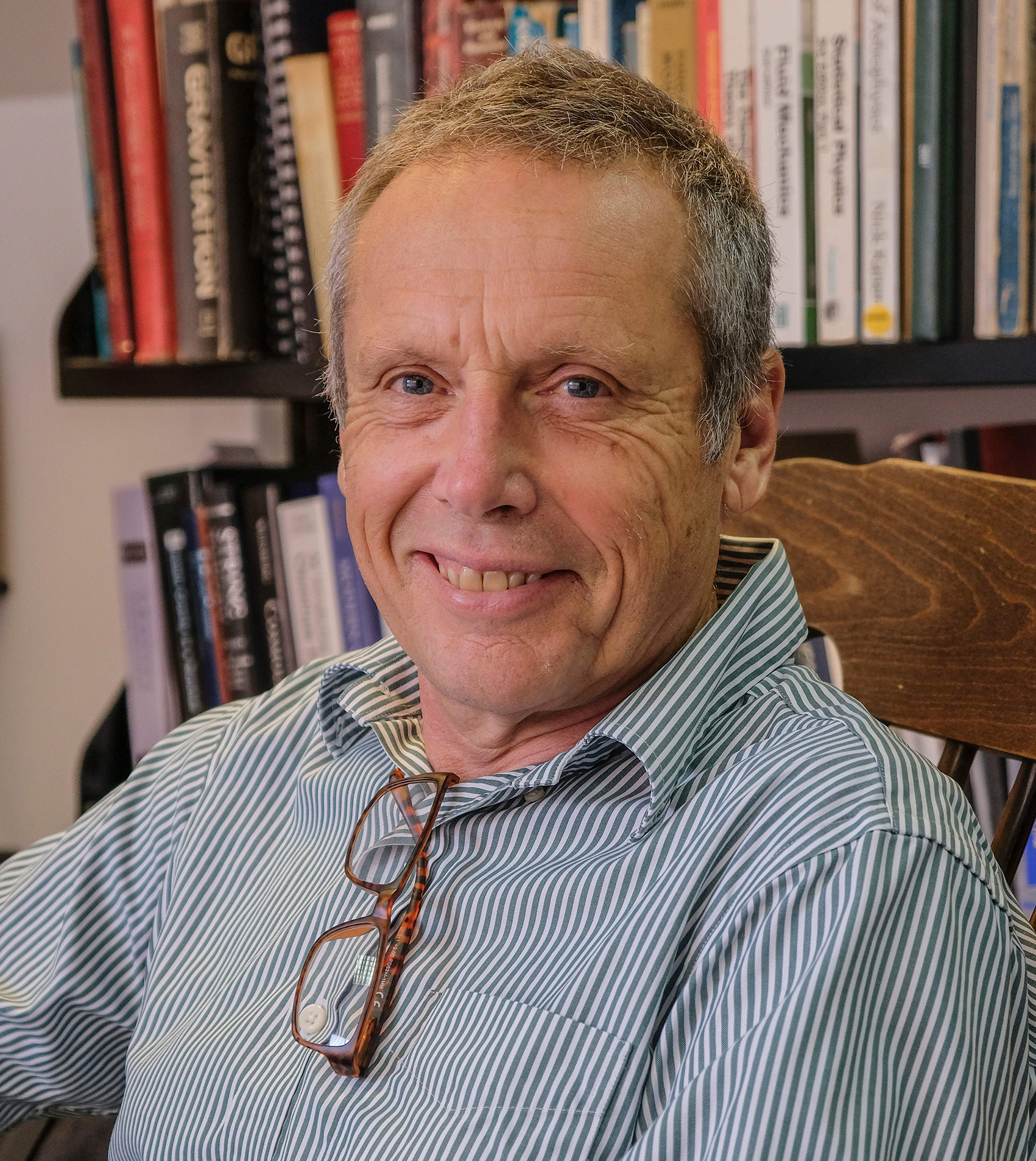
I just heard this morning of the passing of Mark Birkinshaw (left) who was, since 1992, William P. Coldrick Professor of Cosmology and Astrophysics at the University of Bristol. Before that he held positions in Cambridge and Harvard.
I’m told that he died in hospital of a “short but serious illness”.
Among other important contributions to cosmology and astrophysics, in 1984, along with Steve Gull of Cambridge and Harry Hardebeck of the Owens Valley Observatory, was the first to measure experimentally the Sunyaev-Zel’dovich effect in a galaxy cluster; the reference is here.
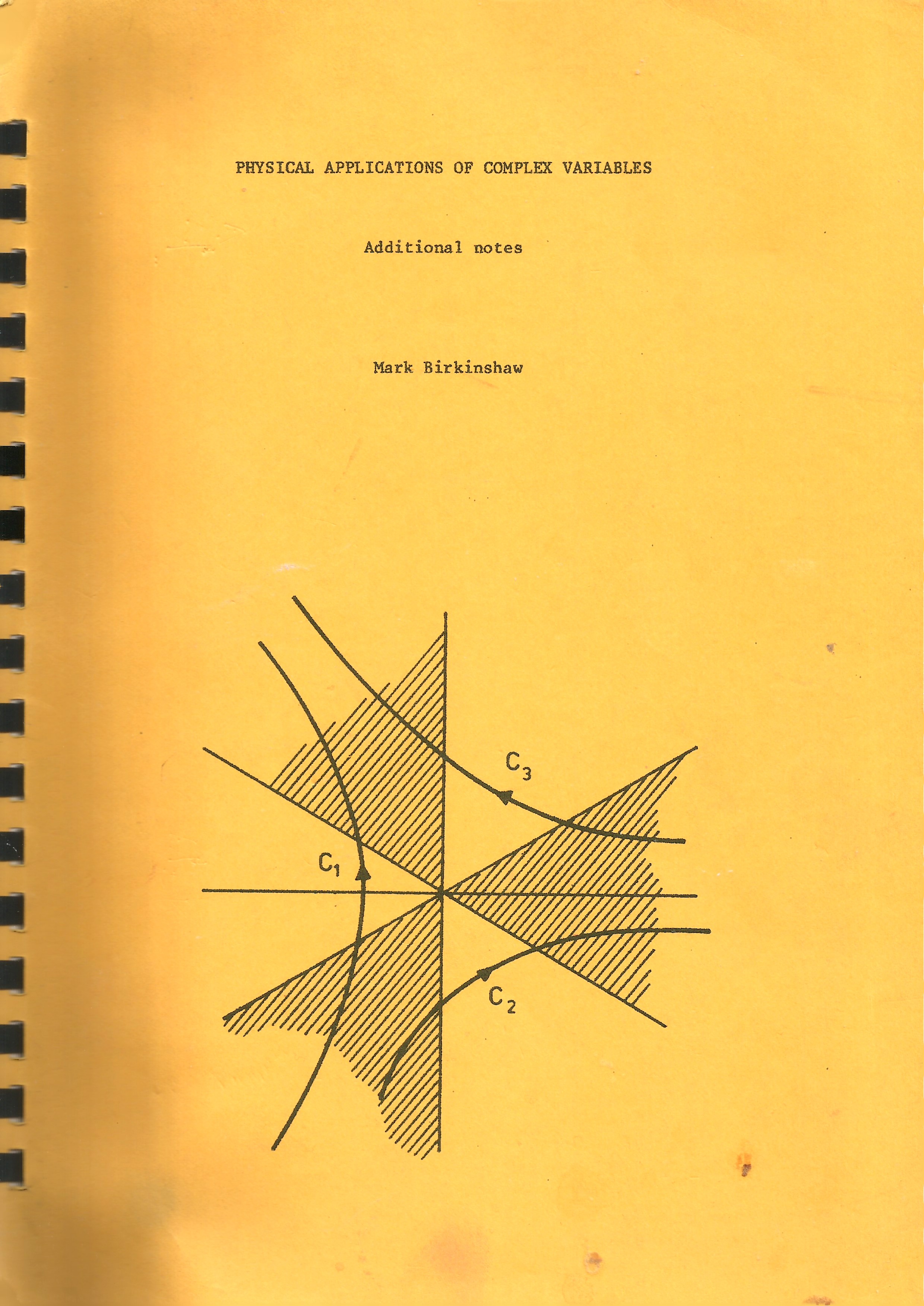
It was in Cambridge as an undergraduate that I first met Mark Birkinshaw. He taught the long vacation course on Physical Applications of Complex Variables that I took in the summer of 1984. It was a tough course but he was an excellent teacher. All these years later I still have my handwritten notes for that course as well as the handouts. I still use them too.
After that I saw him regularly at conferences and seminars and on various committees for PPARC and then STFC. He was extremely diligent in such “community service” roles and was an invaluable contributor owing to his wide range of knowledge beyond his own speciality.
Having been a mainstay of astrophysics research at Bristol University for over thirty years, Mark will be greatly missed. I send condolences to his friends and colleagues at Bristol and elsewhere in the world, and especially to Diana. You can send thoughts, tributes and condolences and/or make a charitable donation in Mark’s memory here, where there are also details of the funeral arrangements.
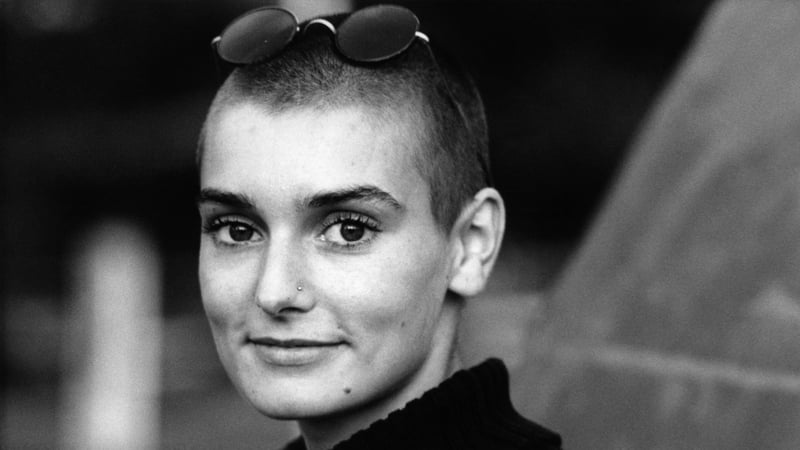
I just heard the truly awful news of the death at the age of 56 of Sinéad O’Connor. Words fail me, so here’s her classic Nothing Compares 2 U from 1990, when it was a worldwide hit.
There can’t be many pop videos done like this, entirely in close-up.
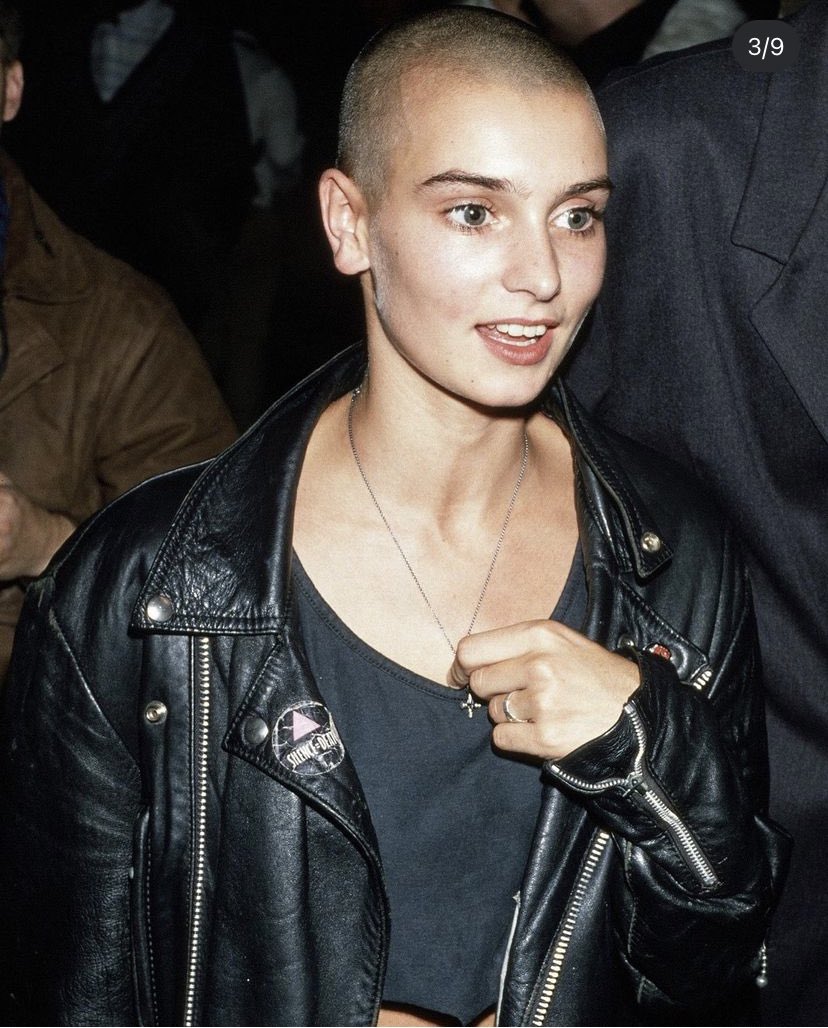
Incidentally I once saw Sinéad O’Connor in person, at the Zap Club in Brighton, when I literally bumped into her trying to get to the bar. When she turned around I was staggered to see such a beautiful face looking at me, although to be honest I did for a moment assume she was a boy. I was expecting an angry response to my clumsiness, but all I saw was an impish grin and those amazingly lovely eyes. That must have been in 1990 or earlier. Anyway, she was wearing the same leather jacket and cropped hair as in this picture, taken in 1988.
Back then, the time of the AIDS crisis, Sinéad O’Connor stood up for LGBTQ+ rights. She sang at Pride when it was far from fashionable to do so, and participated in the Red Hot and Blue album, which featured a wide range of artists doing covers of Cole Porter songs. I’ve always loved her satirical take on You So Something To Me, in which she is done up to resemble Veronica Lake:
Life had often been a struggle for Sinéad – she suffered from mental health problems and had to endure the loss of her son just 18 months ago – but she was a uniquely talented artist who enriched many lives. I just hope she knew how much she was loved by so many people.
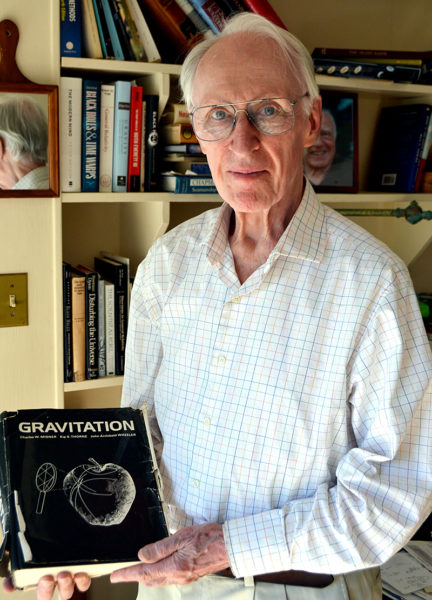
Charles Misner, pictured in 2016. (Picture credit: Maia Zewert)
Earlier this year I wrote a blog post pointing out that the classic textbook Gravitation by Misner, Thorne and Wheeler (above) is 50 years old this year. MTW (as it is usually known) was first published in 1973, and has has now been reprinted 24 times.
I was therefore saddened to learn that the eminent theoretical physicist Charles W. Misner, the first author of this famous tome, passed away a couple of days ago, on 24th July 2023, at the age of 91. A full obituary of Prof. Misner can be found here.
I just heard that the great singer Tony Bennett has passed away, just a couple of weeks short of his 97th birthday. In 2021, Bennett revealed that he was living with Alzheimer’s, a condition that had been diagnosed in 2016, but he had continued to perform until that announcement. His death does not come as a shock, but it is always sad to hear of the death of a legend.
What can I say about about Tony Bennett, except that I absolutely adored his singing? In fact I think he got better with age, his older voice showing even greater artistry in phrasing and melodic invention than when he first emerged as a star performer in the 1950s. He was admired by people across the generations, across different musical genres, and by the harshest judges of all – other musicians.
I picked this track, partly because it is lovely, but also because its title reminds me of a little poem by Ernest Dowson entitled Vitae Summa Brevis Spem Nos Vetat Incohare Longam, which I translate from my half-remembered schoolboy Latin as something like “the brief span of Life forbids us from conceiving an enduring hope”. It’s a quotation from one of the Odes of Horace (Book I, Ode 4, line 15). These aren’t the lyrics of the song, but seem apt in the circumstances:
They are not long, the weeping and the laughter, Love and desire and hate: I think they have no portion in us after We pass the gate.
They are not long, the days of wine and roses: Out of a misty dream Our path emerges for a while, then closes Within a dream.
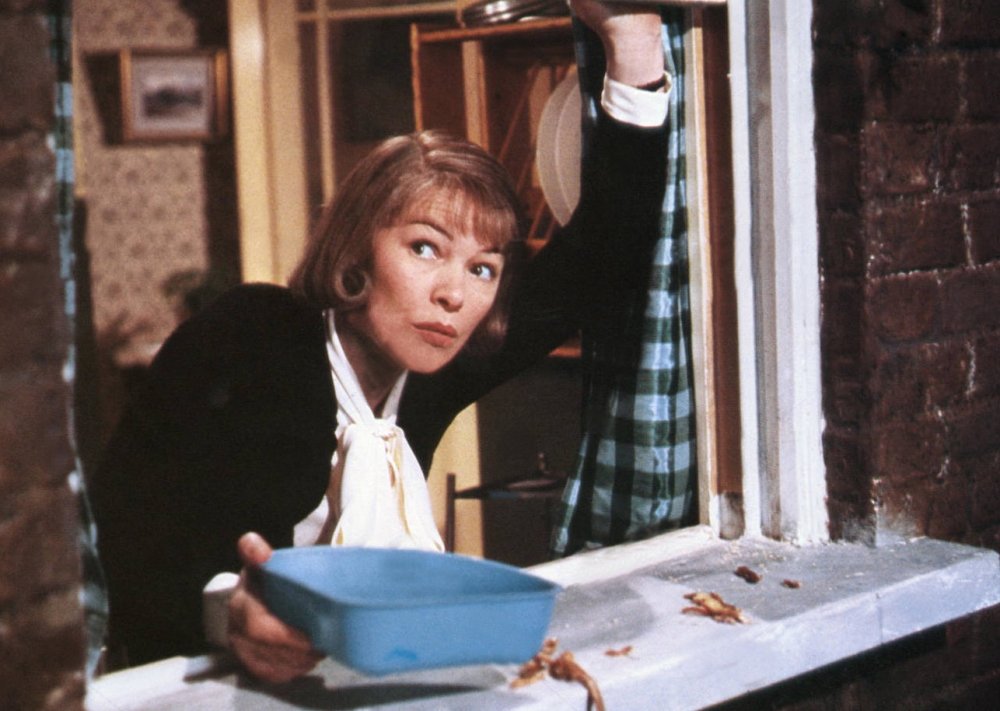
I’ve been writing far too many R.I.P. posts recently, but I had to say something to mark the passing of Glenda Jackson who has died at the age of 87. Glenda Jackson had an illustrious acting career during which she won many awards (including two Oscars) and then turned her hand to politics; she was a Labour Member of Parliament from 1992 to 2015.
Glenda Jackson in Stevie (1978)
The role in which I remember Glenda Jackson best was in the film Stevie (1978) in which she played the poet Stevie Smith, whose poetry I have admired greatly for its dark yet whimsical tone since I was introduced to it while at school. The originality of her voice is the reason I’ve posted some of her poems on this blog from time to time.
Stevie Smith, who died in 1971, made a number of radio broadcasts and, without really trying to impersonate her, I think Glenda Jackson captured perfectly her quirky mixture of wit and melancholia. It was a marvelous performance in what I think is a neglected film masterpiece.
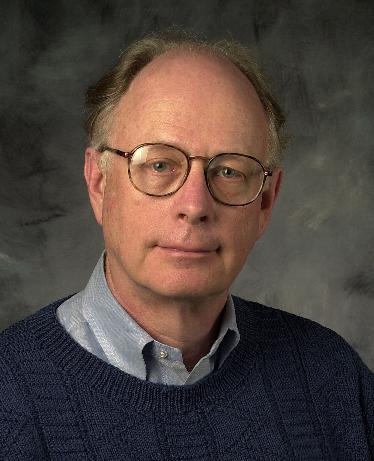
It was with a sense of shock that I heard this afternoon of the death of the age of 68 of cosmologist Nick Kaiser. It seems like only yesterday that we were celebrating the award of the Gruber Prize to Nick, but that was back in 2019. In a field filled with very clever people, Nick was one of the cleverest and also one of the nicest.
I have never worked directly with Nick Kaiser but he had an enormous influence on me, especially early on in my career. When I was doing my PhD, Nick was based in Cambridge and if I remember correctly he was the first person ever to ask me a question during a conference talk when I gave one there in 1987. Nick was never shy about making such interventions, sometimes somewhat mischievously. At first he terrified me because I didn’t know him except by scientific reputation, and didn’t realize what a nice guy he was. His question was actually very helpful, as it allowed me explain something that I’d skipped because I was under time pressure. His response to my explanation was very complimentary and supportive, which encouraged me a lot, and we chatted for quite a while after the session (in a pub). He was very friendly and approachable, and very far from the intimidating character I’d expected. Anyway, his 1984 paper on cluster correlations was the direct motivation for my very first publication (in 1986).
I mentioned yesterday that many of the papers published by the Open Journal of Astrophysics over the last few years have been in the field of weak gravitational lensing. It is safe to say that is a field that was basically created by Nick; see the paper by Kaiser & Squires (1993) that kicked it all off. You could also say the same about the use of redshift-space distortions, concerning which he wrote a seminal paper in 1987. These are two techniques that will be applied in the analysis of data from the Euclid spacecraft, to be launched next month.
These are just a few of things that Nick did. He did many others, always original and always interesting. In recognition of his achievements he was made a Fellow of the Royal Society in 2008, won the Gold Medal of the Royal Astronomical Society in 2017, the Daniel Chalonge and Hector de Vega Medals in 2018, and the Gruber Prize for Astronomy in 2019.
It’s hard to characterize someone of such intellectual breadth, but it always seemed to me that his approach was driven by a very deep physical insight. He was often able to identify what were the fundamental aspects of apparently complicated phenomena and build simple models that captured most of the physics. Using this approach he could penetrate the thickets in which others might get lost. He was perfectly capable of undertaking more complicated calculations to elaborate the details, but he always started by focussing on the basics.
I met Nick many times here and there, usually at conferences. He was always enthusiastic and energetic and entertaining, and was great company to talk to over a drink or several. You always had a good laugh talking to Nick, but you always learnt something too. His son studied in Cardiff some years ago, while I was working there, and Nick sometimes came to visit on the pretext of giving a seminar. I remember once he almost missed his own talk because we were sitting in a pub chatting.
Nick spent recent years in Paris; I remember his presence when I did an online colloquium for the Daniel Chalonge – Hector de Vega School in 2021. He certainly seemed in fine health and good spirits then. Indeed, he gave a talk in the same series that year which you can download here.
Nick’s untimely death is particularly shocking because he was ultra-fit. I think he got hooked on ultra-endurance events while living in Hawaii, as the first Ironman events were held there. Mere marathons were not enough for him. I think I last saw him in person in 2016 during a meeting in Italy. While most of us laboured on the “easy” hiking trails, Nick found them uninteresting and went running off looking for greater challenges.
It still hasn’t really sunk in that Nick has gone. I know I’m not the only one who feels that way. I think the sense of loss will pervade the cosmological community for a considerable time. I send deepest condolences to his family, friends, colleagues and co-workers. He’ll be hugely missed by a huge number of people.
I just read the sad news of the death, on Monday 5th June at the age of 83, of legendary Brazilian Bossa Nova and Samba singer Astrud Gilberto.
There was a time in the 1960s when the Bossa Nova seemed to be everywhere, and the reason for that was a collaboration between singer, guitarist and composer João Gilberto and tenor saxophonist Stan Getz that resulted in the award-winning album Getz/Gilberto that made the Bossa Nova go global, penetrating not only the world of jazz but the much wider cultural sphere including pop and film music. It also made a star of João Gilberto’s then wife, Astrud, who had never recorded before but sang on some of the tracks, the most famous example being The Girl From Ipanema. The popularity of this track resulted in a shorter version being released as a single which was a smash hit around the globe in 1964. Whether or not it’s true, the story goes that she was not under contract at the time the recording was made so never received any royalties for it, although the single made millions. It is said that it was Stan Getz – a wonderful musician but a notoriously horrible man – was responsible for swindling her.
Although an inexperienced singer at the time of this famous session, Astrud Gilberto had a direct, uncomplicated style and an aura of cool detachment that proved very appealing to audiences around the world, earning her a Grammy Award and turning her into a star almost overnight. Her relationship with her husband did not survive this transformation, however, and they divorced a few years later.
There was a lot more to Astrud Gilberto than that hit record, however. She started writing her own songs and her singing style matured. As a matter of fact I was lucky enough to see her perform live in London in the mid-1990s – at the Jazz Cafe in Camden, if I remember correctly – and she sang a very interesting mixture of music. I liked that later style more than the Getz/Gilberto recordings actually.
Anyway, here is a video of Astrud Gilberto singing The Girl From Ipanema in 1964 in what looks like it must be a clip from the film Get Yourself A College Girl – though I stand to be corrected if wrong! – and the music is exactly the same as the hit single so the band and the singer were obviously miming…
It’s another one of the occasions on which I have to use this blog to pass on some sad news. Renowned physicist James B. Hartle has passed away.
Jim Hartle’s scientific work was concerned with the application of Einstein’s theory of general relativity to astrophysics, especially gravitational waves, relativistic stars, black holes, and cosmology, specifically the theory of the wave function of the universe. For much of his career he was interested in the earliest moments of the big bang where the subjects of quantum mechanics, gravity theory and cosmology overlap, leading among other things to the Hartle-Hawking conjecture.
Jim Hartle was one of the speakers at the very first scientific conference I attended in Cargèse, Corsica way back in 1986. I remember his lectures very well after all these years, not least because he was so witty. I remember his response when someone asked him about the existence of large dimensionless numbers in cosmology: “…it’s a property that numbers have that some of them are larger than others.”
Condolences to his family, friends and colleagues. Rest in peace, Jim Hartle (1939-2023).
With the passing, on Sunday, of Ahmad Jamal, at the age of 92, another legendary Jazz musician has left us. He was a consistently inventive pianist, of great elegance, and a wonderful knack of deconstructing a tune into its component parts before reassembling it into something fresh. His formative years were a time when many keyboard players emphasized virtuosic brilliance, but Jamal’s approach was relaxed and spare. He was great letting his story develop gradually but very enjoyably through a series of riffs over a compelling rhythmic foundation. A perfect example is this track, Poinciana, from a hugely popular album Live at the Pershing: But Not For Me, recorded in 1958 with Israel Crosby on bass and Vernel Fournier on drums. Ahmad Jamal is no longer with us, but this groove will last forever!
R.I.P. Ahmad Jamal (born Frederick Russell Jones, 1930-2023).
The views presented here are personal and not necessarily those of my employer (or anyone else for that matter).
Feel free to comment on any of the posts on this blog but comments may be moderated; anonymous comments and any considered by me to be vexatious and/or abusive and/or defamatory will not be accepted. I do not necessarily endorse, support, sanction, encourage, verify or agree with the opinions or statements of any information or other content in the comments on this site and do not in any way guarantee their accuracy or reliability.



 In the Dark