Archive for the The Universe and Stuff Category

Planck and the Cold Galaxy

Posted in The Universe and Stuff with tags , , , , , , on March 17, 2010 by telescoper

Just a quick post to show a cool result from Planck which has just been released by the European Space Agency (ESA). It will be a while before any real cosmological results are available, but in the meantime here are a couple of glimpses into the stuff we cosmologists think of as foreground contamination but which are of course of great interest in themselves to other kinds of astronomers.

The beautiful image above (courtesy of ESA and the HFI Consortium) covers a portion of the sky about 55 degrees across. It is a three-colour combination constructed from Planck’s two shortest wavelength channels (540 and 350 micrometres, corresponding to frequencies of 545 and 857 GHz respectively), and an image at 100 micrometres obtained with the Infrared Astronomical Satellite (IRAS). This combination effectively traces the dust temperature: reddish tones correspond to temperatures as cold as 12 degrees above absolute zero, and whitish tones to significantly warmer ones (a few tens of degrees above absolute zero) in regions where massive stars are currently forming. Overall, the image shows local dust structures within 500 light years of the Sun.

Our top man in the HFI Consortium,  Professor Peter Ade, is quoted as saying

..the HFI is living up to our most optimistic pre-flight expectations.  The wealth of the data is seen in these beautiful multicolour images exposing previously unseen detail in the cold dust components of our galaxy.  There is much to be learned from detailed interpretation of the data which will significantly enhance our understanding of the star formation processes and galactic morphology.

This Planck image was obtained during the first Planck all-sky survey which began in mid-August 2009. By mid-March 2010 more than 98% of the sky has been observed by Planck. Because of the way Planck scans the sky 100% sky coverage for the first survey will take until late-May 2010.

Other new results and a more detailed discussion of this one can be found here and here.

Professor Denzil Dexter

Posted in Science Politics, The Universe and Stuff with tags , , on March 14, 2010 by telescoper

I’ve often complained about how the United Kingdom’s  Science & Technology Facilities Council is failing to reap adequate scientific rewards from  its investment in experimental facilities, astronomical observatories and space missions by refusing to provide funds necessary to support the exploitation and analysis of the data they provide.

In the interests of balance, however, I feel I should point out that this problem is also affecting research elsewhere in the world, even in the United States of America. In this short video presentation, my close friend and scientific collaborator Professor Denzil Dexter of the University of Southern California describes how a brilliantly conceived scientific project failed owing to lack of proper investment in “science exploitation” (i.e. data analysis).

(I’m obliged to point out that “Dave” is not the real name of the research student depicted in this clip.)

Astronomy with Knobs on

Posted in The Universe and Stuff with tags , , , on March 12, 2010 by telescoper

I just saw a splendidly smutty blog post which contains graphic examples of astronomical objects in the form of male genital organs. Since this appears to be an entirely suitable topic for a Friday afternoon blog post, here is my suggestion of  a contribution to her gallery. It’s the X-rated X-ray satellite XMM Newton which, as you can see, has a disturbingly phallic appearance.

I wonder if astropixie might be able to make room for this one?

To look at a star by glances..

Posted in Literature, The Universe and Stuff with tags , , , , , on March 9, 2010 by telescoper

I’ve blogged before about my love of classic detective stories and about the intriguing historical connections between astronomy and forensic science. However, I recently finished reading a book that gave me a few more items to hang on that line of thought so I thought I’d do a quick post about them today.

I picked up a copy of The Suspicions of Mr Whicher by Kate Summerscale when I saw it in a stack of discounted books in Tesco a few monthsa go. I thought it might be mildly diverting, so I bought it. It turned out to be a fascinating read. I won’t spoil it by telling too much about the story, but it is basically an investigation into the circumstances surrounding a real-life murder that happened on 30th June 1860. The case involved a truly shocking crime, the brutal slaying of a young boy, but it also offers great insights into the history of the Criminal Investigation Division (CID) of the Metropolitan Police, which was based at Scotland Yard from about 1842 onwards. Mr Jack Whicher was the Yard’s most celebrated detective at the time, but this crime went unsolved until, about five years later, the perpetrator walked into a police station and confessed to the murder.

In telling the story, Kate Summerscale touches on a lot of fascinating social history. For example, I had never realised that in the early days of the CID people were strongly opposed to the idea that plain clothes policemen might be snooping about so all detectives were required to wear their uniforms even when off duty! It’s also fascinating to note that the rise of the true-life detective coincided with the rise of the detective story in popular fiction.

Edgar Allan Poe’s short story The Murders in the Rue Morgue, generally accepted to have been the first real detective story, was first published in 1841. Even in this first example of the genre, we find a clear parallel being drawn with astronomy by the detective Dupin:

Thus there is such a thing as being too profound. Truth is not always in a well. In fact, as regards the more important knowledge, I do believe that she is invariably superficial. The depth lies in the valleys where we seek her, and not upon the mountain-tops where she is found. The modes and sources of this kind of error are well typified in the contemplation of the heavenly bodies. To look at a star by glances–to view it in a side-long way, by turning toward it the exterior portions of the retina (more susceptible of feeble impressions of light than the interior), is to behold the star distinctly–is to have the best appreciation of its lustre–a lustre which grows dim just in proportion as we turn our vision fully upon it. A greater number of rays actually fall upon the eye in the latter case, but in the former, there is the more refined capacity for comprehension. By undue profundity we perplex and enfeeble thought; and it is possible to make even Venus herself vanish from the firmament by a scrutiny too sustained, too concentrated, or too direct.

No less a figure than Charles Dickens also had thoughts along these lines. In 1850 in a short article called A Detective House Party, he compared detectives with the astronomers Urbain Leverrier and John Couch Adams who in 1846 had simultaneously discovered the planet Neptune. Dickens died in 1870 leaving his own detective story The Mystery of Edwin Drood still unfinished but his good friend Wilkie Collins did a great deal to establish the literary genre of detective fiction with The Moonstone and The Woman in White. Indeed, in the mid-19th Century the idea of detection seems to have imprinted itself on fields as diverse as natural history and journalism as well as astronomy.

The point that strikes me is that astronomy and criminal investigations are primarily observational rather than experimental. One has one Universe and one scene of the crime. In both disciplines the task is to reconstruct what happened from what is seen and what is not.

The detective instinct, brightened by genius, marked unerringly the place of that missing planet which no eye had seen, and whose only register was found in the calculations of astronomy.

I use metaphors like this quite often in popular lectures, and they seem to go down quite well. On the other hand, I’ve often had my leg pulled for admitting to watching TV programmes like CSI: Crime Scene Investigation. Admittedly, the characterisation is very weak and the plots often ridiculously far-fetched. However, these stories do at least attempt to portray something of what the scientific method is about. And that’s something that not many so-called science programmes bother to do these days.

Pix Mix

Posted in Columbo, The Universe and Stuff with tags , , on March 7, 2010 by telescoper

I just remembered that while I was at CERN last week I took a few crummy pics with my phone, so I thought I’d stick them on here.

This first one is actually of the control room of the ATLAS experiment, but it looked to me rather like the inside of a betting shop.

These two were taken in the facility where they test the magnets for the Large Hadron Collider. Each section of superconducting thingummyjig is about 10 metres long; the whole thing is 27km long so that’s a lot of sections! Although the magnets carry a huge current – 10,000 Amps – since they’re superconducting they have no resistance and therefore dissipate no power. However, they have to be kept at liquid helium temperatures, which does require quite a lot of power.

I like the sign on the second one: RISK OF LIQUID AIR.

Finally, here’s the most important one. While I am away Columbo is looked after by a lady called Helen who sends me daily updates. Here is Columbo in a characteristic pose.

Feed me. Feed me NOW!

The Joy of Natural Units

Posted in The Universe and Stuff with tags , , , on March 5, 2010 by telescoper

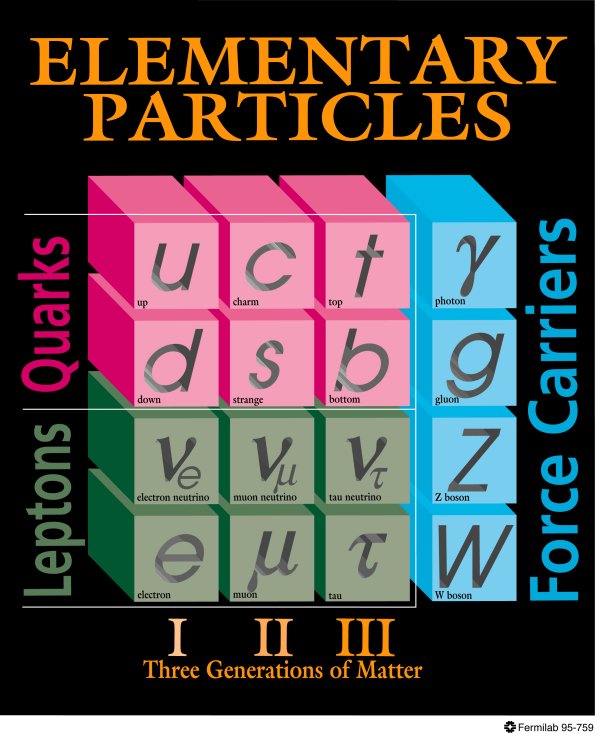
I’m glad it’s the end of the week. It’s been ridiculously busy. It didn’t help that I was already exhausted before it started, after a hectic three days in Geneva. Part of the reason for being so heavily occupied is that my teaching duties have just doubled. I teach the second half of a module called Nuclear and Particle Physics, and I’ve just taken over  for the second half of the semester to cover the part about particle physics. I started my set of 11 lectures with one about natural units, which is a lot of fun because it usually divides the class into two opposing camps.

About half the students think natural units are crazy, and the other half think they’re great. I’m in the second camp. The motivation is straightforward: particle physics combines quantum theory, which involves Planck’s constant

\hbar \simeq 1.05 \times 10^{-34}\,\,\,{\rm Js}

with special relativity, which involves the speed of light

c\simeq 3 \times 10^{8}\,\,\,{\rm m s}^{-1} .

Using everyday SI units (metres, seconds and kilograms) to deal with quantities that are either ridiculously small or ridiculously large doesn’t make any sense but, more importantly, the SI units don’t really reflect the physics very clearly.

In natural units we take these two constants to be equal to unity, so they don’t appear in any formulae:

\hbar = c =1

For example, the energy invariant in special relativity is usually written

E^2=p^2c^2 + m^2c^4

This is where the most famous equation in physics

E=mc^2

comes from. However, the equivalence between mass and energy (and also momentum) is much more clearly expressed in the natural units system:

E^2=p^2 + m^2

None of those tiresome factors of c^2 to remember! Mass, energy and momentum are all expressed in terms of the same natural unit of energy (usually, in particle physics, the GeV).  You can keep track of which is which by the simple expedient of using different names.

Velocities are, of course, always expressed as a fraction of c in this system so have no units.

In quantum theory we find energy E=\hbar \omega becomes E=\omega so energy is expressed in the same units as frequency. Energy is thus a measure of inverse time.  Momentum p =\hbar k becomes just p= k so momentum is an inverse length.  This is in accord with the various forms of Heisenberg’s Uncertainty Principle too:  \Delta p \Delta x \sim \hbar is \Delta p \Delta x \sim 1 and \Delta E \Delta t \sim \hbar becomes \Delta E \Delta t \sim 1. A particle with a finite lifetime thus has a finite energy width which is inversely proportional to the lifetime. It makes sense to use energy units for both of these things.

As an extra bonus we can dispense with the clumsy way that electromagnetism is handled in the SI system by noting that

\frac{e^2}{4\pi \epsilon_0 \hbar c} \equiv \alpha\simeq \frac{1}{137}

is dimensionless. In the SI system the coulomb force between two electrons is \frac{e^2}{4\pi \epsilon_0 r^2} whereas in natural units it is just \frac{\alpha}{r^2}, which is much nicer. Incidentally, the strange quantity \epsilon_0 that appears in the SI version is called the permittivity of free space. Nice name, but I wonder what it means?

The dimensionless quantity \alpha on the other hand, has a very clear  physical meaning: it is the fine structure constant,  a coupling constant that measures the strength of the electromagnetic interaction.

Some people – including emeritus professors of observational astronomy – object to natural units because they hide the units that things are expressed in. They don’t actually. What they do is express things in units that are better geared to the physics. In any case, if you want to convert back to SI units you can always do so straightforwardly with a little bit of dimensional analysis. This is necessary if you have to talk to engineers and the like, perhaps so they can build you a particle accelerator, but in the more elevated company of particle physicists you should definitely follow proper etiquette and keep your units natural.

When Energy Becomes Form

Posted in Art, The Universe and Stuff with tags , , , , , , on February 28, 2010 by telescoper

I’m back in Cardiff, exhausted but, at the same time, rather exhilirated by the past few days in Geneva. Before I crash out I thought I’d update the post I filed a couple of days ago.

On Friday we visited CERN, the highlight of which visit was, for me, seeing the facility where they test the superconducting magnets used in the Large Hadron Collider. We also saw the surface buildings of the ATLAS experiment, but since the LHC was getting ready to rumble again after its winter break we weren’t allowed to see the thing itself, 100 metres below ground. Coincidentally, I learned today that the LHC is now back making collisions once more. Obviously, the practical tips I passed on while I was there did the trick. One likes to help where one can.

The rest of Friday, back in downtown Geneva, was bizarre to say the least. We had the obligatory Swiss dinner of fondue, which is basically a big bowl of melted cheese into which you dip bits of bread repeatedly while hoping that at some point they’re going to bring some proper food. They don’t. To make matters worse we were serenaded by Swiss folk music:  cowbells, alphorns, yodelling – the works. One of the musicians was the spitting image of Dr Evil from the Austin Powers movies but at least there was no sign of Mini-me. I was traumatised by the thought that the world might be brought to a premature end, not by the LHC creating black holes but by excessive yodelling.

After that, as midnight approached, all 24 of us – 8 scientists, 8 artists and 8 architects – gave very short presentations about our work to the others in the hotel lobby area.  I couldn’t do justice to the range of ideas and forms presented there in a short blog like this so I’ll just say it was totally fascinating to listen to these people, see examples of their work, and have the chance to ask questions.

Saturday was the most intense and also the most interesting day. We were housed in a beautiful 19th Century house in the old part of Geneva that used to be the French ambassador’s residence the whole day. Split into various groups we thought, discussed, sketched, scribbled and generally brainstormed our way towards ideas for something to exhibit on our allocated theme. We got together at the end so each group could exchange their ideas with the others. It seemed every group had great fun and there seemed to be some great concepts floating around.

The artist I’m collaborating with is Carlos Garaicoa, who was born in Cuba and who has exhibited his work all over the world. He now shares his time between Havana and Madrid. He showed us examples of his work encompassing a huge range of materials and technologies: video, photography, sculpture – you name it. One of the themes he has been interested in is the idea of documentary matter, meaning objects of various kinds that bear testimony to events or forces acting on them.  Eyal Weizman is the architect Carlos and I will be working with.  He’s a research architect who has, amongst other things, recently completed a long project looking at the construction of the wall that the Israeli government has built in the west bank

And then there was me, like a fish out of water. I had looked at the title of the programme, Beyond Entropy: How Energy Becomes Form and decided that it might be interesting to get across the central idea in general relativity, i.e. that gravitational forces can be described in terms of the curvature of space. In my presentation I took this to an extreme and tried to explain how the large-scale structure of the Universe is shaped by small ripples in space in the early Universe that evolve under the action of gravity to produce the structures we see on scales as large as 100 million light years. It seemed to be a good example of gravitational energy becoming form. I summed it up with a quote from John Archibald Wheeler:

Matter tells space how to curve. Space tells matter how to move

Taking cue from these perspectives we had a wide-ranging conversation that took the idea of gravity as an effect of space, and explored this in more general contexts and from different angles. Space is often understood through its boundaries or through the surfaces constraining it and these edges take on a form that represents a sort of diagram of the forces that have acted on it. On a human scale we thought about walls and how the path they follow is shaped not only by topographical constraints but also by socioeconomic considerations. Walls and buildings generally suffer decay or damage too, including catastrophics events like explosions or earthquakes.

We also talked about the relationship between surfaces and the spaces they enclose or divide. The path of a wall such as the west bank barrier is extremely complicated because of the interplay between such factors. It curves in and out seemingly at random, but its shape makes it a document that contains information about the forces that have shaped it. It is a document in itself, not just because it happens to have things written on it in some places!

This thread of discussion got us interested in the possibility of using material objects to reconstruct the history of the processes that formed them: the Moon’s surface offers an example wherein the sequence of impacts can be inferred from the pattern of overlying and underlying craters. This led on to discussions about the relationship between surfaces and volumes generally, taking in holography as a specific example where  two-dimensional object contains three-dimensional volumes.

This all took us quite a long way from the initial riff, but I’m glad of that. My main worry about getting involved in this was that we might end up producing something that was merely didactic, just a fancy metaphorical treatment of basic physics. I wanted to avoid that because I think it would be very boring. I think I shouldn’t have worried that we might head in such a dull direction.

Some of the other groups managed to work up concrete ideas for prototypes to be exhibited. We didn’t really get that far. We were much keener to explore as many concepts as possible before settling on one. For myself, I was just really enjoying the discussion! There are no real constraints on what we can make – within reason of course. Sculptures, plans, buildings, installations, videos, photographs, and even books are all possibilities. It’s quite scary having such a blank canvas. We discussed a number of ways we might develop our discussion into material that can be exhibited but they all need a lot of work to develop, so we’ll carry on our collaboration remotely. I’m quite keen to bring some sort of holographic element into it, and promised to investigate the possibility of making some prototypes.

For the meantime, however,  it’s back to reality for me. A lecture to prepare and give, problem sets to get ready and an exercise class to run, an examination paper to finish writing, and a whole afternoon at the School’s research committee. I wonder if what I’ve been doing over the weekend will count as having “impact”?

Beyond Entropy

Posted in Art, The Universe and Stuff with tags , , , , , on February 26, 2010 by telescoper

It’s a cold and rainy morning here in Geneva, but I’m really looking forward to the next few days here. I arrived yesterday evening after a flight that was longer than it should have been. It seems the French air traffic controllers went on some sort of strike so my flight from Heathrow wasn’t allowed to cross French air space. For a flight between London and Geneva that is a bit of a problem. In the end we flew west over Belgium and then down into Switzerland from the North, the whole thing taking about an hour longer than expected. Still, when I did get to where I was going I found the hotel nice and comfortable and, better still, had a very enjoyable dinner at a swish Italian restaurant. It was nice to leave the chaos of French airspace behind.

I’m here as part of an unusual research project called (ironically, in the light of the aforementioned travel problems) Beyond Entropy. Organized by the Architectural Association School of Architecture, this experiment will bring together a group of artists, architects and scientists to investigate the notion of Energy. The way this is being done is by setting up a series of groups (one artist, one architect and one scientist) to look at each of a number of different forms of energy: potential, electric, thermal, mechanical, and so on; my own focus is gravitational energy. Each group will work together over the following few days to generate ideas a collaboration intended to create a work of some sort that gives form to the specific concept of energy they’re looking at. The subtitle of the project is “When Energy becomes Form”.

After we go back home, we’ll continue to work over the following months to produce prototypes of whatever emerges from the collaboration. The results will be exhibited at the Venice Architecture Biennale and the Architectural Association in August 2010. It is hoped that next year these prototypes will be developed into full-scale installations for the Venice Art Biennale in 2011.

I have no idea at this stage how the collaboration will work out or what is going to come out at the other end. The canvas is completely blank. I don’t really know the artist (Carlos Garaicoa) or the architect (Eyal Weizman) that I’ll be working with either. That makes it strangely exciting. At any rate it’s certainly different from the sort of scientific workshop I usually attend.

Anyway, to kick things off we’re going to be spending most of today at CERN, where I’ll be heading by bus just about as soon as I’ve finished this blog post. Later on today I’ll be giving a short presentation about how gravitational energy relates to my own research in the hope that this will stimulate a few ideas for my collaborators. Arts-science collaborations like this have been tried before and they have a chequered history, but we’ll just have to see how it goes. It feels more like research than most research workshops I’ve been to, in fact, because I really haven’t a clue what is going to happen!

P.S. Fellow blogger Andrew Jaffe is here too, but I think I might have beaten him in the competitive blogging stakes.

Scientists in Residence

Posted in Biographical, The Universe and Stuff with tags , , , on February 23, 2010 by telescoper

I’ve managed to get through the hectic  first couple of days of what promises to be a very hectic week without feeling too much of the strain, which is quite a pleasant surprise given my advancing senility.

This week a whole bunch of Cardiff astronomers are taking part in a Scientists in Residence scheme at Monkton Combe School which nestles in among the lovely hills in the picturesque countryside near Bath. The idea was to try to give the pupils some sort of idea what it’s like being a scientist – specifically an astronomer – by having an intensive series of teaching sessions run by scientists who visit the school for several days running.  A whole range of different types have taken part, from graduate students and postdoctoral researchers all the way down to Professors. Some, in fact, have been staying overnight there too.; it’s a boarding school, in fact.

As with most things these days, I’ve been a bit of a freeloader in this thing – the course materials were prepared by others, principally Chris North, so all I had to do was turn up and lend a hand on the day. Members of the department with duties at Cardiff have only been able to go for part of the time and even that has meant, for me at least, a bit of dashing backwards and forwards on the train. On Monday I had a full complement of meetings, lectures and exercise classes in Cardiff before heading off to Bath to give an evening lecture on The Big Bang to what turned out to be quite a large and attentive audience of sixth-form students. When I finished I had to get the train back to Cardiff – about 70 minute journey – in order to be able to give Columbo his evening insulin fix in good time.

This morning I was up at six to get the train again to Bath – after doing the necessary with Columbo again – in order to take part in a classroom session where we took the students through activities centred around the idea of using the orbital motions of astronomical objects to work out masses. I found this very interesting. On the one hand the students were keen and very easy to interact with, but on the other this experience reinforced the impression that today’s A-level physics students are given a syllabus that is diluted beyond all recognition compared with what older generations of physicists learned. Even in a private school, with excellent laboratoty facilities and highly motivated teachers, it is difficult for todays 16-18 year olds to learn anything meaningful about what physics is really like.

Not having kids of my own, I’ve only observed the changes in educational standards over the last decade indirectly, so this couple of days was a bit of a reality check for me. Unless someone can be persuaded to force schools to teach science properly again, university lecturers will have to carry on doing what is essentially remedial teaching.

Anyway, I’ve found the last couple of days very interesting and I hope the others taking part in the week will enjoy it as much as I did.

You might reasonably ask why a bunch of University academics – mainly funded by the taxpayer – should be running backwards and forwards organizing activities for a posh private school? The mercenary answer is, of course, that some of the kids we’ve been talking to might actually turn into Cardiff undergraduates one day and even if only one does so, the income that generates for the School of Physics & Astronomy more than pays for the number of person-hours we have put in. But even if that doesn’t happen it’s still worth it. Our plan is to offer this type of activity to all kinds of schools in  local areas, not only for our own recruitment, but also for the general purpose of “outreach”, communicating an interest in science in the society beyond academia. This week is the first time we’ve done it. Undoubtedly some things will work and others won’t. This week we will iron out some of the problems before we take it on the road to more challenging audiences.

It will need to be a good show if it is to go down well in the Valley Comprehensives, and what better way to improve it than to practice on the rich kids?

Cosmic Vision

Posted in Science Politics, The Universe and Stuff with tags , , , , , , , , , on February 20, 2010 by telescoper

It’s nice to have a bit of science stuff to blog about for a change. Just this week the European Space Agency (ESA) has  announced the results of its recent selection process for part of its Cosmic Visions programme, which represents ESA’s scientific activity for the period 2015-2025.

The selection process actually began in 2007, with over 50 proposals. This list was then whittled down so that there were six candidate missions under consideration for the so-called M-class launch slots (M meaning medium-sized), and three in the L-class list of larger missions. The latest exercise was to select three of the M-class missions for further study. They succeeded in selecting three, but have also kept another, much cheaper, mission in the frame.

As far as I understand it, only two M-class missions are actually envisaged so the race isn’t over yet, but the missions still in the running are:

PLATO.  The PLATO mission is planned to study planets around other stars. This would include terrestrial planets in a star’s habitable zone, so-called Earth-analogues. In addition, PLATO would probe stellar interiors by through stellar seismology. In some sense, this mission is the descendant of a previous proposal called Eddington. (PLATO stands for PLAnetary Transits and Oscillations of stars – I’ll give it 3/10 for quality of acronym).

EUCLID. Euclid would address key questions relevant to fundamental physics and cosmology, namely the nature of the mysterious dark energy and dark matter. Astronomers are now convinced that these substances dominate ordinary matter. Euclid would map the distribution of galaxies to reveal the underlying ‘dark’ architecture of the Universe. I don’t think this is meant to be an acronym, but I could be wrong. Perhaps it’s European Union Cosmologists Lost in Darkness?

SOLAR ORBITER. Disappointingly, this is neither an acronym nor a Greek person. It would take the closest look at our Sun yet possible, approaching to just 62 solar radii. It would deliver images and data that include views of the Sun’s polar regions and the solar far side when it is not visible from Earth.

These are the three main nominations, but the panel also decided to endorse another mission, SPICA, because it is much cheaper than the approximately 500 Million Euro price tag on the other contenders. SPICA would be an infrared space telescope led by the Japanese Space Agency JAXA. It would provide ‘missing-link’ infrared coverage in the region of the spectrum between that seen by the ESA-NASA Webb telescope and the ground-based ALMA telescope. SPICA would focus on the conditions for planet formation and distant young galaxies.

Many of Cardiff’s astronomers will be very happy if SPICA does end up being selected as it is the one most directly related to their interests and also their experience with Herschel which is, incidentally,  continuing to produce fantastic quality data. If SPICA is to happen, however, extra money will have to be found and that, in the current financial climate, is far from guaranteed.

Which of these missions will get selected in the end is impossible to say at this stage. There are dark mutterings going on about how realistic is the price tag that has been put on some of the contenders. Based on past experience, cost overruns on space missions are far from unlikely and when they happen they can cause a great deal of damage in budgets. Let’s hope the technical studies do their job and put realistic figures on them so the final selection will be fair.

Whatever missions fly in the end, I also hope that the Science and Technology Research Council (STFC) – or whatever replaces it – remembers that these are science missions, and its responsibility extends beyond the building of instruments to fly on them. Let’s to hope we can count on their support for research grants enabling us to answer the science questions they were designed to address.