Archive for the The Universe and Stuff Category

Schrödinger’s Theatre

Posted in Education, History, The Universe and Stuff with tags , , on June 21, 2022 by telescoper

Although it’s relatively old news in Ireland, a colleague recently sent me a story from Physics World about Trinity College Dublin’s decision to change the name of its Schrödinger Lecture Theatre (to the Physics Lecture Theatre). The Provost, Fellows, Foundation Scholars and the other members of Board, of the College of the Holy and Undivided Trinity of Queen Elizabeth near Dublin (to give it its proper title) took this decision in the light of revelations about Erwin Schrödinger‘s predatory sexual conduct towards very young girls.

According to my careful research carried out by reading his Wikipedia page, Schrödinger never actually worked at Trinity College Dublin; the Theatre in question was named in his honour after he delivered his famous lectures on What is Life there in 1943.

Reactions to the decision to rename the Theatre have generated a wide range of reactions from physicists and non-physicists alike. For my part I think it is the right decision. As the Physics World article states:

As an educational institute, we cannot condone or glorify someone who abused the trust between teacher and student.

Jonathan Coleman, Head of School Physics TCD

To me this is quite different from attaching Schrödinger’s name to his equation or even his cat. His unsavoury conduct should not mean that his scientific achievements should be “cancelled” . These are and should continue to be recognized through terms like Schrödinger’s Equation. As far as I am aware, however, Schrödinger did not build any lecture theatres.

It’s up to Trinity to decide what to call its rooms, of course, but that doesn’t mean we’re not allowed to have opinions about the decision. I’d therefore invite you to express yours through the following poll:

Of course if you wish to expand on your opinion you may do so through the box below.

Summer Solstice 2022

Posted in History, The Universe and Stuff on June 21, 2022 by telescoper

The Summer Solstice in the Northern hemisphere takes place today, Tuesday 21st June 2022, at 10.14am Irish Time (9.14 UTC). Among other things, this means that tomorrow is the longest day of the year around these parts. According to this website, the interval between sunrise and sunset in Dublin today will be 17 hours 5 minutes and 6 seconds. which is 2 seconds longer than yesterday while tomorrow will be four whole seconds shorter than that.

It’s all downhill from now on.

Days will get shorter from tomorrow until the Winter Solstice in December, although this does not mean that sunset will necessarily happen earlier on 22nd than it does tomorrow. In fact it is a little later. Nor does it mean that sunrise will happen later tomorrow; in fact it is a little earlier.

You can find such things out by looking at a table of the local mean times of sunrise and sunset for Dublin around the 2022 summer solstice. This shows that the earliest sunrise was actually on 17th June and the latest sunset is on 25th.

This arises because there is a difference between mean solar time (measured by clocks) and apparent solar time (defined by the position of the Sun in the sky), so that a solar day does not always last exactly 24 hours. A description of apparent and mean time was given by Nevil Maskelyne in the Nautical Almanac for 1767:

Apparent Time is that deduced immediately from the Sun, whether from the Observation of his passing the Meridian, or from his observed Rising or Setting. This Time is different from that shewn by Clocks and Watches well regulated at Land, which is called equated or mean Time.

The discrepancy between mean time and apparent time arises because of the Earth’s axial tilt and the fact that it travels around the Sun in an elliptical orbit in which its orbital speed varies with time of year (being faster at perihelion than at aphelion).

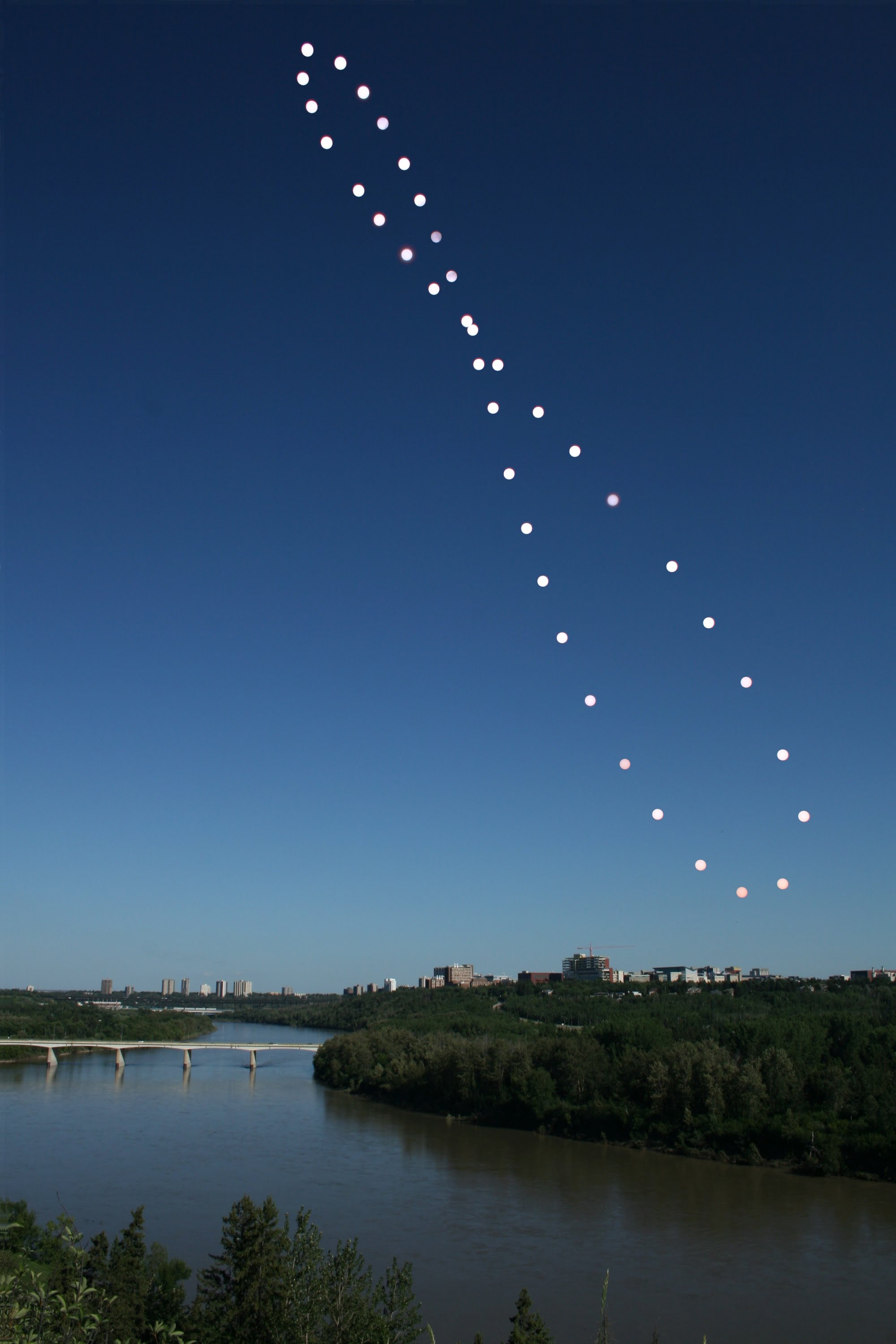
If you plot the position of the Sun in the sky at a fixed time each day from a fixed location on the Earth you get a thing called an analemma, which is a sort of figure-of-eight curve whose shape depends on the observer’s latitude. Here’s a photographic version taken in Edmonton, with photographs of the Sun’s position taken from the same position at the same time on different days over the course of a year:

maxresdefault

The summer solstice is the uppermost point on this curve and the winter solstice is at the bottom. The north–south component of the analemma is the Sun’s declination, and the east–west component is the so-called equation of time which quantifies the difference between mean solar time and apparent solar time. This curve can be used to calculate the earliest and/or latest sunrise and/or sunset.

Euclid Launch Delay

Posted in Euclid, Science Politics, The Universe and Stuff with tags , , on June 17, 2022 by telescoper

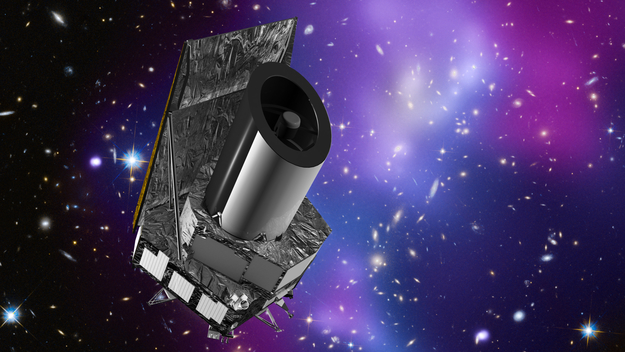
Until relatively recently we al thought the European Space Agency’s  Euclid mission would take place later this year (2022). For various reasons that date subsequently slipped to the first quarter of 2023.

Then Russia invaded Ukraine which, because Euclid was intended to be launched on a Russian Soyuz vehicle a further delay seemed likely (see here). The subsequent decision by the Russians to remove all their personnel from the launch site at Kourou (see here) made these even more likely as an alternative launch vehicle would have to be used.

There was an update about the situation at the recent Euclid Consortium meeting in Oslo which I could not attend but which I referred to here. The basic problem is that Plan B involves launching Euclid on an Ariane 6 rocket (which comes in two varieties, Ariane62 and Ariane64, with two and four boosters respectively). The problems are (a) that Ariane 6 is that it hasn’t yet had its first flight and (b) Euclid isn’t the only spacecraft now having to find an alternative launcher. The competition from commercial and military satellites may mean a lengthy delay to the Euclid Launch unless lobbying succeeds at a political level.

It has now emerged that earliest feasible date for launch on an Ariane 6 rocket is the 3rd quarter of 2024 and it may well be later than that, the uncertainty exacerbating the effects of the delay itself.

This is all very unfortunate. Euclid is now fully built and ready so a lengthy delay would be very damaging to morale. More concretely, many researchers employed to work on Euclid are on fixed-term contracts which will now expire before they can complete their work. This will have a very serious effect on younger researchers. To keep everything going while the spacecraft waits for a launch will be extremely expensive: the Euclid Consortium Board estimates a cost of about €50M for every year of delay and it is by no means clear where those funds would come from.

It seems to me that the best hope for a resolution of this problem would be for ESA to permit the launch of Euclid using something other than Ariane 6, which means using a vehicle supplied by an independent commercial operator. I sincerely hope ESA is able to come up with an imaginative solution to this very serious problem.

P.S. With this update, the odds on me retiring before Euclid is launched have just shortened considerably…

Gaia’s Third Data Release!

Posted in The Universe and Stuff with tags , , on June 13, 2022 by telescoper

It seems like only yesterday that I blogged about the second release of data from the European Space Agency’s Gaia mission but today sees the release of the third data set, known to its friends as DR3. This completes the set after some initial data were released early as EDR3 back in 2020.

Gaia on the Launchpad at Kourou, French Guyana, on 13th December 2013

In case you weren’t aware, Gaia, launched way back in 2013, is an ambitious space mission to chart a three-dimensional map of our Galaxy, the Milky Way, in the process revealing the composition, formation and evolution of the Galaxy. Gaia will provide unprecedented positional and radial velocity measurements with the accuracy needed to produce a stereoscopic and kinematic census of about one billion stars in our Galaxy and throughout the Local Group. This amounts to about 1 per cent of the Galactic stellar population.

Gaia is likely to operate until round about November 2024, so there’s a lot of data yet to come.

You can find a complete list of what is in DR3 here and if you want to go straight into the papers based on this dataset, go here. There is a nice promotional video here:

R.I.P. David Hughes (1941-2022)

Posted in The Universe and Stuff with tags , , on June 9, 2022 by telescoper
David W Hughes (1941-2022)

I am once again very sorry to have to pass on some sad news. Astronomer David Hughes (formerly of Sheffield University) passed away suddenly on Monday 6th June at the age of 80.

Born in Nottinghamshire, David did his first degree at Birmingham University and his DPhil in Oxford. He moved to Sheffield in 1965 and worked there until he retired in 2007.

David was an expert on the Solar System, especially its minor bodies, such as asteroids and comets; the Mars-crossing asteroid 4205 David Hughes is named in honour of his many achievements. He was also very knowledgeable about the history of astronomy and the threat to Earth from meteors and other impact phenomena. An ebullient public speaker, he was much in demand as a guest on TV programmes, as well as giving lectures on cruise ships and talks to amateur astronomical societies and lay audiences. Through these activities he did a huge amount for the popularization of astronomy especially in the UK.

I send my condolences to his family, friends and colleagues both in Sheffield and around the world.

R.I.P. David W Hughes (1941-2022)

R.I.P. Richard Hills (1945-2022)

Posted in Biographical, The Universe and Stuff with tags , , on June 7, 2022 by telescoper

Yet again I find myself having to pass on some sad news. I heard yesterday that Professor Richard Hills FRS lately at the Mullard Radio Astronomy Observatory of the Cavendish Laboratory in Cambridge, passed away on 5th June at the age of 76. Richard was a specialist in radio and sub-mm astronomy, being heavily involved in the James Clerk Maxwell Telescope (JCMT) and more recently the Atacama Large Millimetre Array (ALMA; shown in the background above).

I remember two encounters with Richard particularly well.

The first was when I was an undergraduate student at Cambridge. I did a final-year theory project that involved making a computer simulation of a laser. I had to attend a viva voce examination with two members of staff after submitting my project report. Richard was the one of the pair and, although it was not his specialist subject, he seemed genuinely interested in what I’d done. He managed to ask some very searching questions at the same time as being very friendly and encouraging. I must have answered quite well because they gave me a very good mark!

The other was much more recent occasion when I gave a seminar at the Cavendish about phase correlations in cosmological fields. As an expert in interferometry he knew a lot about this from a different perspective and again he asked some very interesting questions, ending up with a discussion of the closure phase.

Richard Hills was a very eminent scientist who made a huge range of contributions to astronomy, for which he was elected a Fellow of the Royal Society in 2014. He will be greatly missed by his friends, family and colleagues in Cambridge and around the world to whom I send my condolences.

R.I.P. Richard Edwin Hills (1945-2022)

Dead of Night

Posted in Film, The Universe and Stuff with tags , , , on June 6, 2022 by telescoper

Last week I was chatting to one of my colleagues about old films, particularly those made in the immediate post-war years by Ealing Studios. Nowadays this film production company is most strongly associated with superb comedy films, including such classics as Passport to Pimlico, Whisky Galore, The Ladykillers and The Lavender Hill Mob among many more. But there was more to Ealing Studios than the Ealing Comedies. During the war the company was involved in making propaganda films to help with the war effort, most of which are now forgettable but at least one, Went the Day Well, about people in an English village attempting to resist ruthless German paratroopers, is genuine shocking to this day because of its unusually frank depiction (for the time) of brutality and violence in a normally tranquil and familiar setting. The image of Thora Hird taking on the invaders with a Lee Enfield rifle is one that stays in my mind.

Horror films were banned during the War but in 1945 Ealing Studios released one which was to become enormous influential in the genre and which holds up extremely well to this day. As a matter of fact, I watched it again, for the umpteenth time, last night.

I’ve actually blogged about a bit of this film before. There is a sequence (to me by far the scariest in the  film) about a ventriloquist (played by Michael Redgrave) who is gradually possessed by his evil dummy which came up in a post I did about Automatonophobia many moons ago.

Anyway, you only have to watch Dead of Night to watch it to appreciate why it its held in such high regard by critics to this day. Indeed you can see ideas in it which have been repeated in a host of subsequent (and usually inferior) horror flicks. I’m not going to spoil it by saying too much about the plot. I would say though that it’s basically a portmanteau film, i.e. a series of essentially separate stories (to the extent of having a different director for each such segment) embedded within an overall narrative. It also involves an intriguing plot device similar to those situations in which you are dreaming, but in the dream you wake up and don’t know whether you’re actually awake or still dreaming.

In this film the architect Walter Craig arrives at a country cottage, is greeted by his host Elliot Foley who has invited him to discuss possible renovations of the property. He is shown into a room with several other guests. Despite apparently never having been to the property before it seems strangely familiar and despite never having met the guests before he says he has seen them all in a recurring dream. One by one the guests recount strange stories. When they’ve all had their turn the film reaches a suitably nightmarish ending but Craig then wakes up in bed at home and realizes it was all a dream. Then the phone rings and it’s Elliot Foley inviting him to his country cottage to discuss possible renovations. The film ends with Craig arriving at the cottage just as he did at the start of the film.

Here is the trailer:

It’s the “dream-within-a-dream” structure (presumably repeated forever) – what physicists would call a self-similar hierarchy – of the overall framework of this movie that gives it its particular interest from the point of view of this blog, because it played an important role in the evolution of theoretical cosmology. One evening in 1946 the mathematicians and astrophysicts Fred Hoyle, Hermann Bondi and Tommy Gold went to see Dead of Night in Cambridge. Discussing the film afterwards they came up with the idea of the steady state cosmology, the first scientific papers about which were published in 1948. For the best part of two decades this theory was a rival to the now-favoured “Big Bang” (a term coined by Fred Hoyle which was intended to be a derogatory description of the opposing theory).

In the Big Bang theory there is a single “creation event”, so this particular picture of the Universe has a definite beginning, and from that point the arrow of time endows it with a linear narrative. In the steady state theory, matter is created continuously in small bits (via a hypothetical field called the C-field) so the Universe has no beginning and its time evolution not unlike that of the film.

Modern cosmologists sometimes dismiss the steady state cosmology as a bit of an aberration, a distraction from the One True Big Bang but it was undeniably a beautiful theory. The problem was that so many of its proponents refused to accept the evidence that they were wrong.  Supporters of  disfavoured theories rarely change their minds, in fact. The better theory wins out because younger folk tend to support it, while the recalcitrant old guard defending  theirs in spite of the odds eventually die out.

And another thing. If Fred Hoyle had thought of it he might have  called the field responsible for creating matter a scalar field, rather than the C-field, and it would now be much more widely recognized that he (unwittingly) invented many elements of modern inflationary cosmology. In fact, in some versions of inflation the Universe as a whole is very similar to the steady state model, only the continuous creation is not of individual particles or atoms, but of entire Big-Bang “bubbles” that can grow to the size of our observable Universe. So maybe the whole idea was actually right after all..

R.I.P. David Matravers

Posted in Biographical, The Universe and Stuff with tags , , , on June 3, 2022 by telescoper
David Matravers, pictured on his 80th birthday in December 2017 (Picture Credit: ICG)

I was very sad this morning to hear via George Ellis of the death at the age of 84 of David Matravers. A South African by borth, David moved to (then) Portsmouth Polytechnic in 1990, just before it became the University of Portsmouth, where he set up a group in cosmology and relativity with the Mathematics Department. Though initially small, that group grew steadily branching out into other areas, including observational cosmology, and became, in 2002, the Institute of Cosmology and Gravitation which is recognized throughout the world as a centre of excellence in research. I see it did particularly well in the recent Research Excellence Framework, for example.

NOTE: I am grateful to David Wands for pointing out that David Matravers wasn’t the first Director of the ICG as I said in an earlier version of this post: that was Roy Maartens. David Matravers actually retired just as the ICG was being set up but played a huge role in its creation.

David Matravers is rightly regarded as its founding father of research in cosmology and gravitation at Portsmouth. He therefore leaves a wonderful legacy not only in the ICG itself but in the many alumni who have passed through it at various stages of their careers and are now carrying on their work all around the globe.

During the 1990s I saw David Matravers quite regularly as he visited Queen Mary & Westfield College where I was working at the time to attend our relativity seminars and talk to the relativity group. He was a very cheerful and engaging chap who was always keen to encourage early career researchers. I was in that category at the time and, although I never worked directly with David, he was always very kind and supportive to me. What struck me in particular about him were his enthusiasm and determination, which is no doubt why he was so successful at building up the ICG from scratch. He will be greatly missed.

My condolences to his friends, colleagues and family.

Rest in peace, David Matravers (1937-2022).

Revisiting the Case for Irish Membership of CERN

Posted in Politics, Science Politics, The Universe and Stuff with tags , , , , on May 31, 2022 by telescoper

At last week’s Irish Theoretical Physics meeting I had the opportunity to have lunch with particle physicist Professor John Ellis (of King’s College London). Among other things we discussed whether or not it was likely that Ireland might join CERN. Currently Ireland has no official relationship with CERN, not even associate membership, which makes it anomalous among European countries. In November 2019 I blogged about the issue here.

There was a move reported in the news here in Ireland of a report from a Committee of the Houses of the Oireachtas making the case for Ireland to join CERN. You can download the report here (PDF) and you’ll find this rather striking graphic therein:

You will see that there are only three European countries other than Ireland that don’t have any form of membership or other agreement with CERN: Latvia, Bosnia-Herzegovina, Moldova. The fact that almost everyone else is in is not in itself necessarily a good argument for Ireland to join, but it does make one wonder why so many other countries have found it to join or have an agreement with CERN while Ireland has not.

As the document explains, if the Irish government  were to decide to take Ireland into CERN then  it would first have to become an Associate Member, which would cost around €1.2 million per year. That’s small potatoes really, and  the financial returns to Irish industry and universities are likely to far exceed that, so the report strongly recommends this step be taken. This Associate member stage would last up to 5 years, and then to acquire full membership a joining fee of around €15.6 million would have to be paid, which is obviously a much greater commitment but in my view still worthwhile.

There were some positive noises when the document came out, but that was near the end of 2019. Not far into 2020 the pandemic struck and the idea sank without trace. Perhaps now is a good time to raise the issue again?

While I strongly support the idea of Ireland joining CERN I do have a couple of concerns about the case as presented in the Oireachtas report.

One is that I’m very sad that the actual science done at CERN is downplayed in the  report. Most of it is about the cash return to industry, training opportunities, etc. These are important, of course, but it must not be forgotten that big science projects like those carried out at CERN are above all else science projects. The quest for knowledge does have collateral benefits, but it a worthy activity in its own right and we shouldn’t lose sight of that.

My other (related) concern is that joining CERN is one thing, but in order to reap the scientific reward the government has to invest in the resources needed to exploit the access to facilities membership would provide. Without a related increase in research grant funding for basic science the opportunity to raise the level of scientific activity in Ireland would be lost.

Ireland recently joined the European Southern Observatory (ESO), a decision which gave Irish astronomers access to some amazing telescopes. However, there is no sign at all of Irish funding agencies responding to this opportunity by increasing funding for academic time, postdocs and graduate students needed to do the actual science. In one respect ESO is very like CERN: the facilities do not themselves do the science; we need people to do that. The jam is already spread very thinly in Ireland so having an extra thing to spread it on will not necessarily be a good thing for science in general.

Professorial Position in Observational Astrophysics or Cosmology at Maynooth!

Posted in Maynooth, The Universe and Stuff with tags , , , , on May 30, 2022 by telescoper

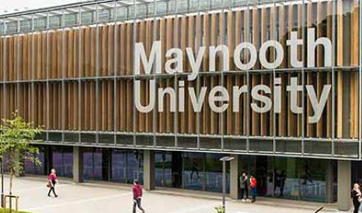
With about a month to go to the deadline, I thought I would take the opportunity to remind readers that Maynooth University has a Chair (i.e. Full Professor) position in Astrophysics or Cosmology under the Strategic Academic Leadership Initiative (SALI). I blogged about this scheme here and announced this Chair position originally here.

You can find the full announcement of the competition for all the SALI positions here; you can apply for the position at Maynooth here. The position is now also advertised on the AAS Jobs Register here.

The deadline for applications is in July 2022, and the provisional start date is January 2023 (although this is flexible). As well as a good salary (starting at €124,683 at current rates, rising by annual increments to €157,611) the position comes with membership of the Irish public service pension scheme, a defined benefit scheme (comparable to the older version of the UK’s USS which has now been scrapped).

The key rationale for these SALI positions is clear from the statement from Simon Harris, the Minister responsible for Third Level education in Ireland:

“Championing equality and diversity is one of the key goals of my department. The Senior Academic Leadership Initiative (SALI) is an important initiative aimed at advancing gender equality and the representation of women at the highest levels in our higher education institutions.

We have a particular problem with gender balance among the staff in Physics in Maynooth, especially in Theoretical Physics where all the permanent staff are male, and the lack of role models has a clear effect on our ability to encourage more female students to study with us.

The wider strategic case for this Chair revolves around broader developments in the area of astrophysics and cosmology at Maynooth. Currently there are two groups active in research in these areas, one in the Department of Experimental Physics (which is largely focussed on astronomical instrumentation) and the other, in the Department of Theoretical Physics, which is theoretical and computational. We want to promote closer collaboration between these research strands. The idea with the new position is that the holder will nucleate and lead a new research programme in the area between these existing groups as well as getting involved in outreach and public engagement.

It is intended that the position to appeal not only to people undertaking observational programmes using ground-based facilities (e.g. those provided by ESO, which Ireland recently joined), or those exploiting data from space-based experiments, as well as people working on multi-messenger astrophysics, gravitational waves, and so on.

Exciting as this position is in itself, it is part of wider developments and we are expecting to advertise further job opportunities in physics and astronomy very soon! I’d be happy to be contacted by any eligible person wishing to discuss this position (or indeed the general situation in Maynooth) on an informal basis.