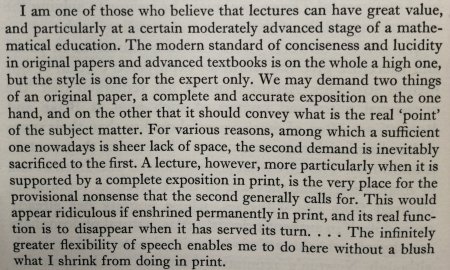
Back for Episode 7 of this series in which I explain how we can measure the strength of acoustic waves in early Universe using measurements of the cosmic microwave background, and how that leads to the conclusion that the Big Bang wasn’t as loud as you probably thought. You can read more about this here.
I was rummaging around looking for some things related to a paper I’m struggling to finish before term starts and I found some vintage diagrams. They brought back a lot of memories of working on the textbook I wrote with Francesco Lucchin way back in the 1990s. In particular I remember how long it took to make these figures, when nowadays it would take a few minutes. In fact I’m thinking of setting this as a Computational Physics project for next year. These are not full computations either, just a simple fluid-based approach.
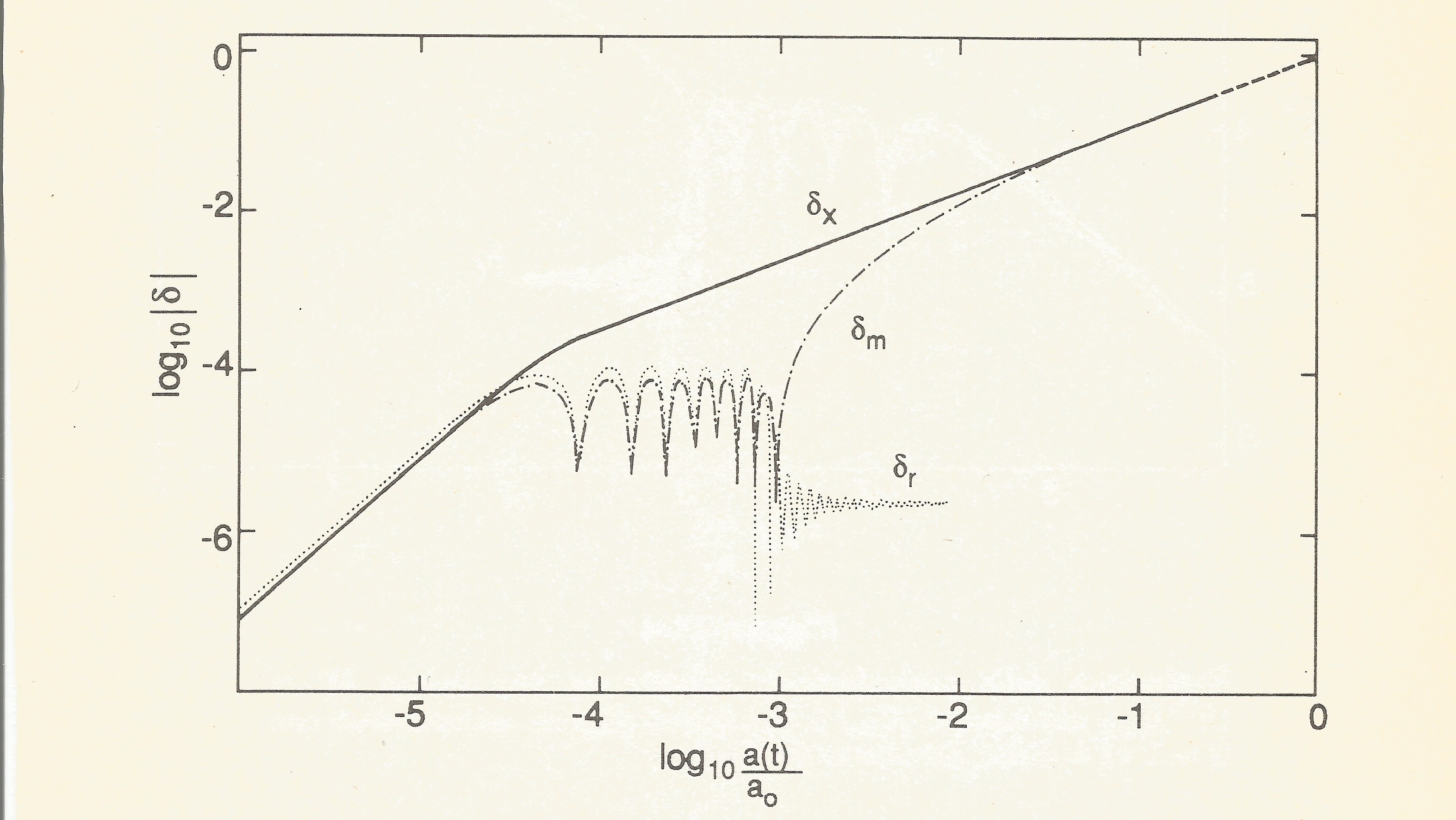
The curves show the evolution of fluctuations in both matter δm and radiation δr on a particular scale (i.e. a Fourier mode of given wavelength) defined as δm=δρm/ρm, etc. The x-axis shows the cosmic scale factor, which represents the expansion of the Universe and in both cases the universe is flat, i.e. it has a critical density. The first graph shows a universe with only baryonic matter:
Notice the strongly coupled oscillations in matter and radiation until a scale factor of around 10-3, corresponding to a redshift of a thousand or so, which is when matter and radiation decouple. The y-axis is logarithmic so the downward spikes represent zero points.
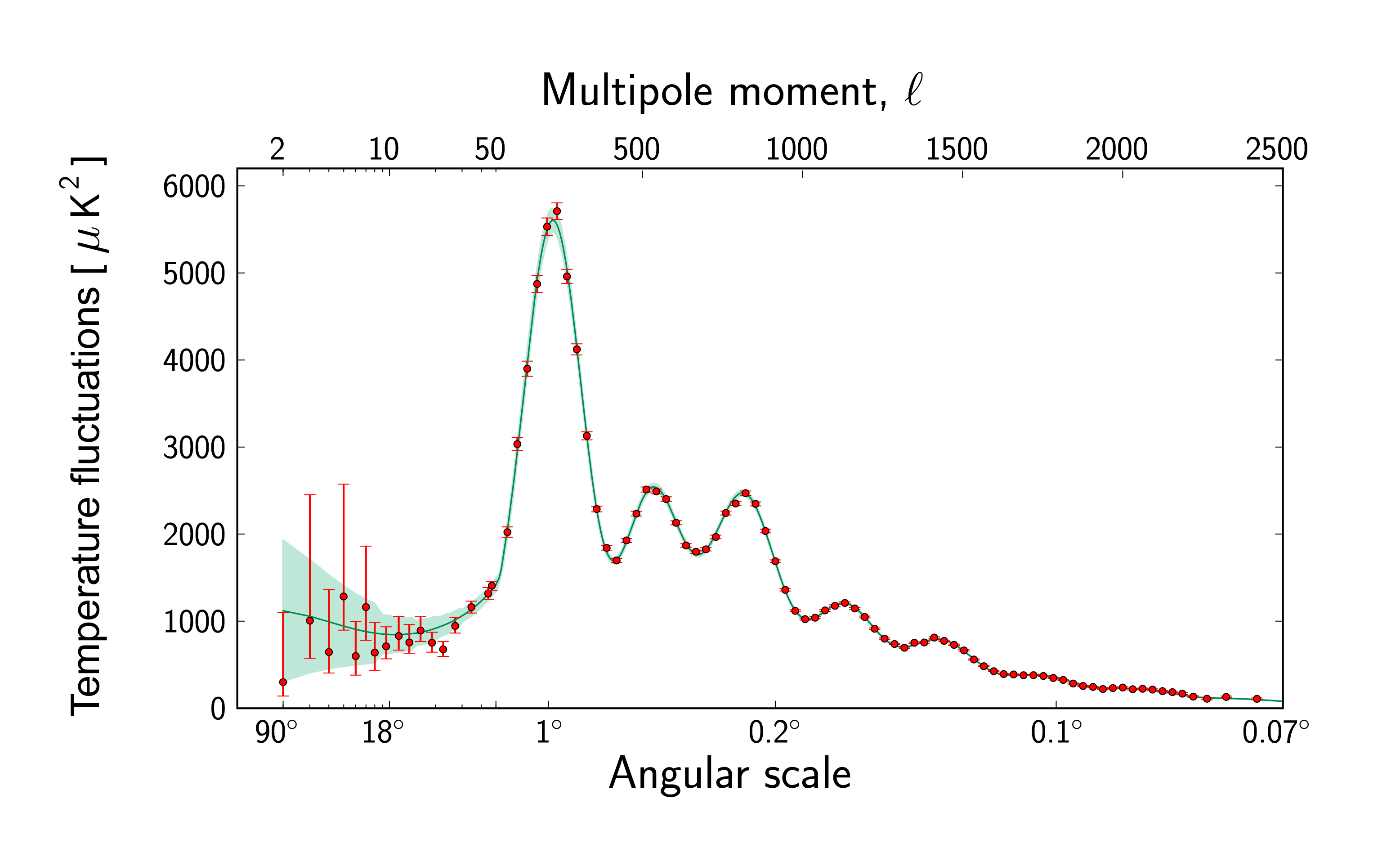
It is these oscillations which are responsible for the bumps and wiggles in the spectrum of the cosmic microwave background spectrum, as different Fourier modes arrive at the last scattering surface at a different phase of its oscillation. Of course going from the Figure above to the CMB fluctuation spectrum (see below) involves more calculations, and there is now a well-established machinery for doing these with full physical descriptions, but I think the above diagram makes the physical origin of these features clear.
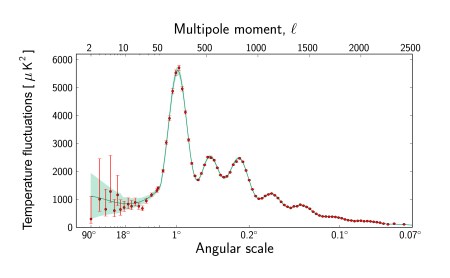
The CMB power spectrum from Planck
The second diagram shows what happens if you add a third component called `X’ in the Figure below which we take to be cold non-baryonic matter. Because this stuff doesn’t interact directly with radiation (while baryons do) it doesn’t participate in the oscillations but the density perturbations just carry on growing:
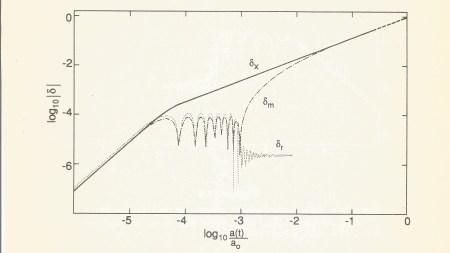
Notice too that at late times (i.e. after the baryonic matter and radiation have decoupled) the baryonic component grows much more quickly than in the first Figure. This is because, when released from the effect of the photon background, baryons start to feel the gravitational pull of the dark matter perturbations.
There’s nothing new in this of course – these Figures are thirty years old and similar were produced even earlier than that – but I still think pictures like these are pedagogically useful,
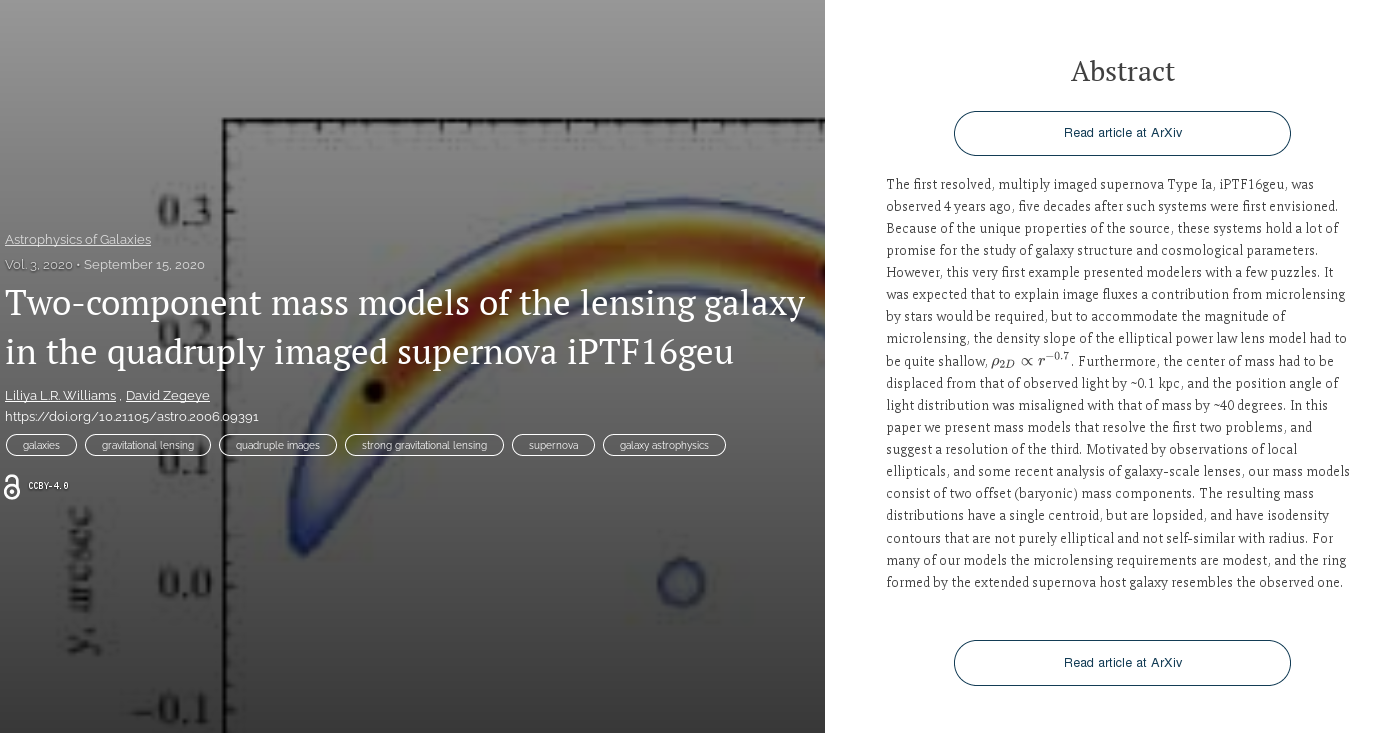
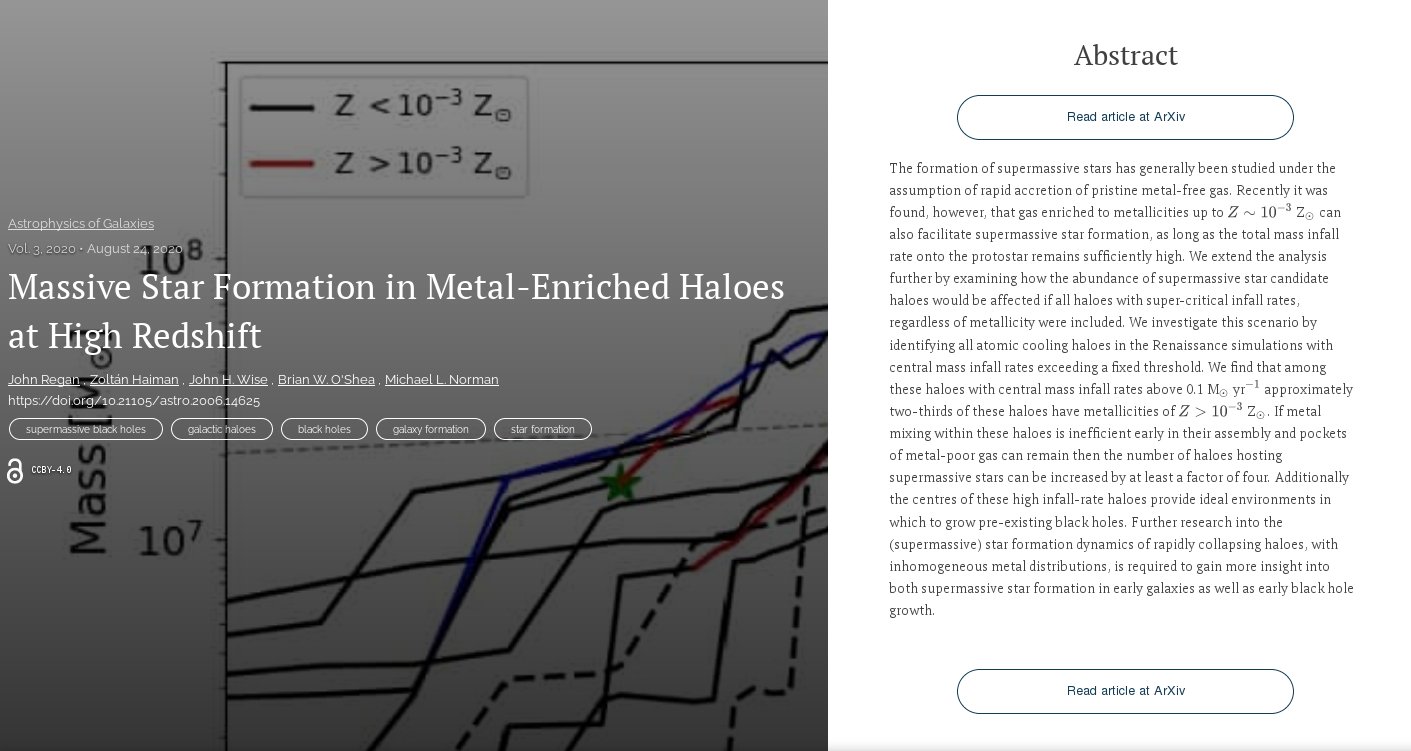
So another new paper has been published in the Open Journal of Astrophysics! This one is in the folder marked Astrophysics of Galaxies and is entitled Massive Star Formation in Metal-Enriched Haloes at High Redshift. I should explain that “Metal” here is the astrophysicist’s definition which basically means anything heavier than hydrogen or helium: chemists may look away now.
The authors of this paper are John Regan (of the Department of Theoretical Physics at Maynooth University), Zoltán Haiman (Columbia), John Wise (Georgia Tech), Brian O’Shea (Michigan State) and Michael Norman (UCSD). And before anyone asks, no I don’t force members of staff in my Department to submit papers to the Open Journal of Astrophysics and yes I did stand aside from the Editorial process because of the institutional conflict.
Here is a screen grab of the overlay:
You can click on the image to make it larger should you wish to do so.
Here’s a fascinating bit of astrophysics history by former Cardiff colleague Bernard Schutz: one hundred years ago today, Arthur Stanley Eddington gave a talk in Cardiff in which he, with great prescience, proposed the idea that stars might be powered by nuclear fusion.
One hundred years ago today, on 24 August 1920, with over 1000 people gathered in Cardiff for the annual meeting of the British Association, Arthur Eddington gave his address as the incoming president of the physical and mathematical sciences section. He elected to speak on the subject of the “Internal Constitution of the Stars”. When I first came across the text of the address last year (published in Nature in 1920), I was amazed to find as early as this such an insightful proposal that stars are powered by the synthesis of helium from hydrogen. But what really brought me up short was this sentence:
If, indeed, the sub-atomic energy in the stars is being freely used to maintain their great furnaces, it seems to bring a little nearer to fulfilment our dream of controlling this latent power for the well-being of the human race – or for…
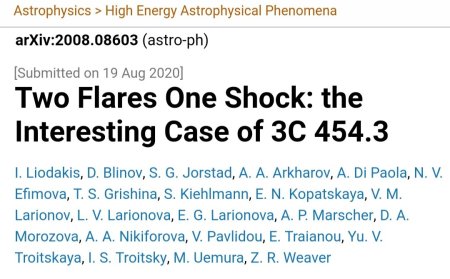
I found out yesterday that the title of the above paper (on arXiv here) has been causing a bit of a scandal in the astrophysics community.
When I saw the title I was baffled as to why it could cause offence. Then I was told that it was a reference to pornography. I still didn’t understand at all. Then I was told the title of the film to which it is alleged to refer: Two Girls One Cup. I had never heard of it until yesterday and wish I hadn’t because it’s so gross. It is so notorious that it even has a Wikipedia page describing it and reactions to it. Don’t click if you’re easily disgusted. I am fairly broad-minded but I found it entirely disgusting.
I’m told that the film generated a large number of derogatory and misogynistic memes circulated on social media but they all passed me by too. I must be too old.
But even knowing about the film I still don’t see the paper’s title as a reference to it. Had it been an attempt to be a pun then I would have got it, but I don’t think it is. “Flares” and “shock” don’t rhyme with or sound anything like “girls” and “cup”. If it was meant as a pun it’s a failure on two counts. Is every phrase of the form “Two X One Y” now a reference to scat porn?
If anything I would interpret the title as a reference to the idiomatic expression “to kill two birds with one stone”. Or it could just be a reference to the fact that the paper is about two flares associated with one shock.
Regardless of my opinions, though, if this combination of words has caused offence – whether intentionally or not – then it is not a big deal to change the title and that’s what should be done. I’d suggest that simply inserting “with” or “from” would do the trick.
The comments I saw on Twitter yesterday basically divide into those like me who didn’t get the alleged reference at all and those who were appalled. The latter were almost exclusively younger people based in America (who are more likely to have been exposed to the film) . The authors of the paper are predominantly based outside the USA and in my view it would be a mistake to assume they all share the same cultural experience as a particular demographic of the United States. I think it would be very unfair to jump to the conclusion that the reference is deliberate.
I’m genuinely interested to see what people think about this title. I realise I have spoilt this by giving the background, but here’s a poll. Please answer by giving your initial reaction.
Update: the title has been changed, as I suggested…
While this morning’s repeat exams were going on I was leafing through an old second-hand text book, one of many I have acquired over the years looking for nice problems and worked examples. The good thing about old books is that solutions to the problems are usually not available on the internet, unlike modern ones. The book concerned this morning is a classic: Statics by Horace Lamb, which you can still get via Cambridge University Press. I have the first edition, published in 1912.
Looking through I was somewhat alarmed to see what had been pencilled in some of the margins:
Of course anyone who has been to India knows that the swastika isn’t necessarily a Nazi symbol: you find it all over the place in the Indian sub-continent, where it is used as a symbol for good luck. I remember being given a very nice conference bag in Pune many years ago with a swastika on it. I didn’t use it back home, of course.
The first owner of the copy of Statics that I have was acquired in 1913 by a J.H.C (or G) Lindesay of Sidney Sussex College, Cambridge. I know because he/she inscribed their name in the front. That doesn’t look to me like an Indian name, but I think it’s a fair bet that the book passed through many hands before reaching me and that one of the past owners was Indian. I haven’t tried any of the problems marked with the swastika, but perhaps they are difficult – hence the `good luck’ symbol? I notice though that the symbol at the bottom of the page has a chirality different from the others. Is this significant, I wonder?
All of which irrelevance reminded me of an discussion I’ve had with a number of people about whether they like to scribble in the margins of their books, or whether they believe this practice to be a form of sacrilege.
I’ll put my cards on the table straightaway. I like to annotate my books – especially the technical ones – and some of them have extensive commentaries written in them. I also like to mark up poems that I read; that helps me greatly to understand the structure. I don’t have a problem with scribbling in margins because I think that’s what margins are for. Why else would they be there?
This is a famous example – a page from Newton’s Principia, annotated by Leibniz:
Some of my friends and fellow academics, however, regard such actions as scandalous and seem to think books should be venerated in their pristine state. Others probably find little use for printed books given the plethora of digitial resources now available online or via Kindles etc so this is not an issue..
I’m interested to see what the divergence of opinions is in with regard to the practice of writing in books, so here’s a poll for you to express your opinion:
I’d forgotten about this little video made after I appeared on the Pat Kenny show on NewsTalk radio last year. It was just me and the camera in a little room, but it turned out less like a hostage video than I’d feared..
The above image is from the Kilo Degree Survey, performed using the OmegaCAM instrument on the European Southern Observatory’s VST Survey Telescope at Cerro Paranal in Northern Chile. I got it by googling `Pictures of KiDS’, which was probably unwise.
Here’s another picture, of part of the survey region.
A few people have asked me why I didn’t post about the new results from KiDs which came out last week. The answer is simply that I’ve been a bit busy, but here we go now with a post on the blog about the new KiDs papers. These appear as a bunch of five on the arXiv:
The result that stands out from the latest release is the suggestion that the Universe is about 8% less clumpy than the standard cosmological model suggests. The level of clumpiness is quantified by the parameter S8which, according to Planck, has a value 0.832 ± 0.013 whereas KiDS gives 0.776 (+0.020/-0.014), a discrepancy of about 3σ. It’s not only the Hubble constant that is causing a bit of tension in cosmological circles!
Another new paper has been published in the Open Journal of Astrophysics! This one was actually published last Friday but it being the Bank Holiday weekend I just got round to blogging about it today. This is another one for the Cosmology and NonGalactic Astrophysics section. It’s called Cosmic event horizons and the light-speed limit for relative radial motion and is a sort of pedagogical review of the subject aimed at dispelling some common misconceptions about radial velocities and horizons. The author is Markus Pössel of the Max Planck Institute for Astronomy at Heidelberg.
Here is a screen grab of the overlay:
I’ve taken the liberty of adding the background teaser image in full here, as it is rather groovy:
Just a short post to mark the fact that celebrated Irish physicist John Tyndall was born 200 years ago today, on 2nd August 1820.
Tyndall made his name initially for his research on diamagnetism but then worked on the scattering of light by atmospheric particles, and on the absorption of infrared radiation by gases. In the latter context he is generally credited with having discovered the Greenhouse Effect.
One should also mention his rather splendid beard.
John Tyndall was born at Leighlin Bridge, near Carlow in Ireland. After a little formal schooling, he gained a practical education by working as a surveyor and engineer. He entered the University of Marburg, Germany, in 1848 and earned his doctorate two years later. His dissertation research interested Michael Faraday, who later brought him to the Royal Institution of London. In 1867 Tyndall succeeded Faraday as superintendent there. He retired in 1887 and died in 1893.
The views presented here are personal and not necessarily those of my employer (or anyone else for that matter).
Feel free to comment on any of the posts on this blog but comments may be moderated; anonymous comments and any considered by me to be vexatious and/or abusive and/or defamatory will not be accepted. I do not necessarily endorse, support, sanction, encourage, verify or agree with the opinions or statements of any information or other content in the comments on this site and do not in any way guarantee their accuracy or reliability.