Britten, Bacewicz & Prokofiev at the NCH

Posted in Music with tags , , , , , , , , , on May 20, 2023 by telescoper

Last night I went to the National Concert Hall in Dublin for the penultimate performance of the season by the National Symphony Orchestra under the direction of Christian Reif, for a programme of music by Benjamin Britten, Grażyna Bacewicz and Sergei Prokofiev all written in the 1940s. The hall was not even half full for this concert, which is a shame because it was both interesting and enjoyable, but at least it was broadcast live so it could be heard on the radio.

Before the concert

I’d never heard Britten’s Les Illuminations in a live performance before last night, although I had heard it on BBC Radio 3 some time ago. It’s a cycle of nine songs based on poems by Arthur Rimbaud, including an opening ‘fanfare’ and interlude based on a single phrase of Rimbaud J’ai seul la clef de sette parade sauvage. The themes of the text are the poet’s reactions to desire, exile, transgression and decadence. Britten apparently felt more comfortable setting these themes, and conveying the sense of homoerotic desire that pervades the poems, in French because he felt that he could use them to say things he couldn’t say in English. Even so, he did omit some of the naughtier bits of Rimbaud’s texts.

Britten started writing Les Illuminations in 1939 but finished it after he had moved to America and it was first performed in 1940. This was an early “hit” for Britten and I found Julia Bullock‘s lovely soprano voice give it a very different form of sensuality than it has when performed by a tenor; it was performed quite often by Peter Pears, actually. Incidentally, Julia Bullock is married to conductor Christian Reif.

Next up was a work that was completely new to me, the Concerto for String Orchestra by Grażyna Bacewicz which was written in 1948. In three movements, this is rather like an old-fashioned Concerto Grosso in construction, but with a distinctively modern edge. The outer movements are forceful and energetic, contrasting with a beautiful but rather desolate Andante in the middle. I’m glad to have been introduced to this work and indeed to this composer. I must find out more about her.

The first two pieces featured only the strings of the National Symphony Orchestra but after the win break the stage was joined by the brass, woodwinds, and a full panoply of percussion (including a piano) for Symphony No. 5 in B♭ Major, which he wrote in the summer of 1944 and was first performed in January 1945 with Prokofiev himself conducting. This work is generally perceived to be an expression of the anticipation of victory over the Nazis after the opening up of the Western front by the Normandy landings. According to the programme, however, the composer had been sketching the symphony for several years beforehand, so this can’t all be true. I think you can read it in two ways, one as the devastating human cost of the war with Russia and the other as a covert response to Soviet oppression. Prokofiev, like Shostakovich, was good at ambiguity. I guess he had to be.

In four movements, this Symphony opens with an expansive Andante movement, followed by and Allegro which is rather like a Scherzo, a darkly beautiful Adagio, and a very varied final Allegro. I found myself at times thinking of Prokofiev’s music for the film Alexander Nevsky and the menacing atmosphere of the ballet Romeo and Juliet.

The winds and percussion had obviously been champing at the bit during the first half, and they unleashed some terrific playing during this performance, especially during the climactic passages that evoke thunderstorms or battles. Whatever they are intended to represent, if anything, I enjoyed the loud bits very much.

Congratulations to the National Symphony Orchestra and soloist Julia Bullock on an excellent evening of music. I do enjoy being introduced to unfamiliar works and do love the site and sound of a big orchestra in full flood. I look forward to next week’s concert, the Season Finale.

The Physics World Mystery

Posted in Maynooth, The Universe and Stuff with tags , on May 19, 2023 by telescoper

Now here’s a funny thing. The April and May 2023 editions of Physics World, shown above, published a month apart in the UK, arrived in the same day earlier this week in the post at my house in Maynooth. Both were correctly addressed. One took just over two weeks to cross the Irish Sea; the other took a whole month longer.

Can anyone provide a physical explanation for this phenomenon?

Between Papers

Posted in Biographical, Education, Maynooth with tags , , , on May 19, 2023 by telescoper
Maynooth University Library Cat, photographed yesterday by Joost Slingerland.

Yesterday morning final-year students theoretical physics students sat my first examination of the session, on Advanced Electromagnetism, and tomorrow another group will take my second, on Computational Physics 1. I collected the first scripts from the Exam Hall at the end of the examination at 11.30 and have actually finished correcting them. I don’t think I’ll come in tomorrow morning though. Correcting the second batch can wait until Monday. That doesn’t mean I get a break though because I still have to complete grading the Computational Physics Projects. It does mean, however, that I’ll probably be finished with examination marking for this session by the end of next week, in good time for the Exam Boards in June.

That won’t mean that I’m finished with examination matters for the year; I’ll have four repeat examinations to grade in August. When those are done, however, I won’t have to do any further marking of examinations or anything else to do with teaching for a whole year. My sabbatical starts on 1st September.

Meanwhile, Maynooth University Library Cat, has been patrolling the area in front of the Library, which is quite busy these days with students doing last-minute revision in the study spaces there. By the end of next week the examinations will be over, most students will have departed for the summer, many staff will be at home marking scripts, and campus will be much quieter.

Newsflash: another Neutron Star – Black Hole merger?

Posted in The Universe and Stuff with tags , , , , , on May 18, 2023 by telescoper
Fanciful “artist’s impression” of a Neutron Star – Black Hole merger (from last time).

It seems that the engineering data ahead of the imminent observing run from the newly refurbished LIGO gravitational wave observatory has just triggered an alert for astronomers to look for an electromagnetic counterpart. The code number for this candidate event is S230518h. If confirmed this could very well be another Neutron-Star – Black Hole merger event. The search area is rather large, with the 90% probability region being about 1002 square degrees on the sky:

For more details, see here.

I’m reminded about the excitement surrounding the first Neutron Star merger way back in 2017. In fact, rumours started to spread via this blog as people outside the LIGO/transient source community used a comments thread here to share information of where telescopes were looking. Those were the days. Was that really 6 years ago?

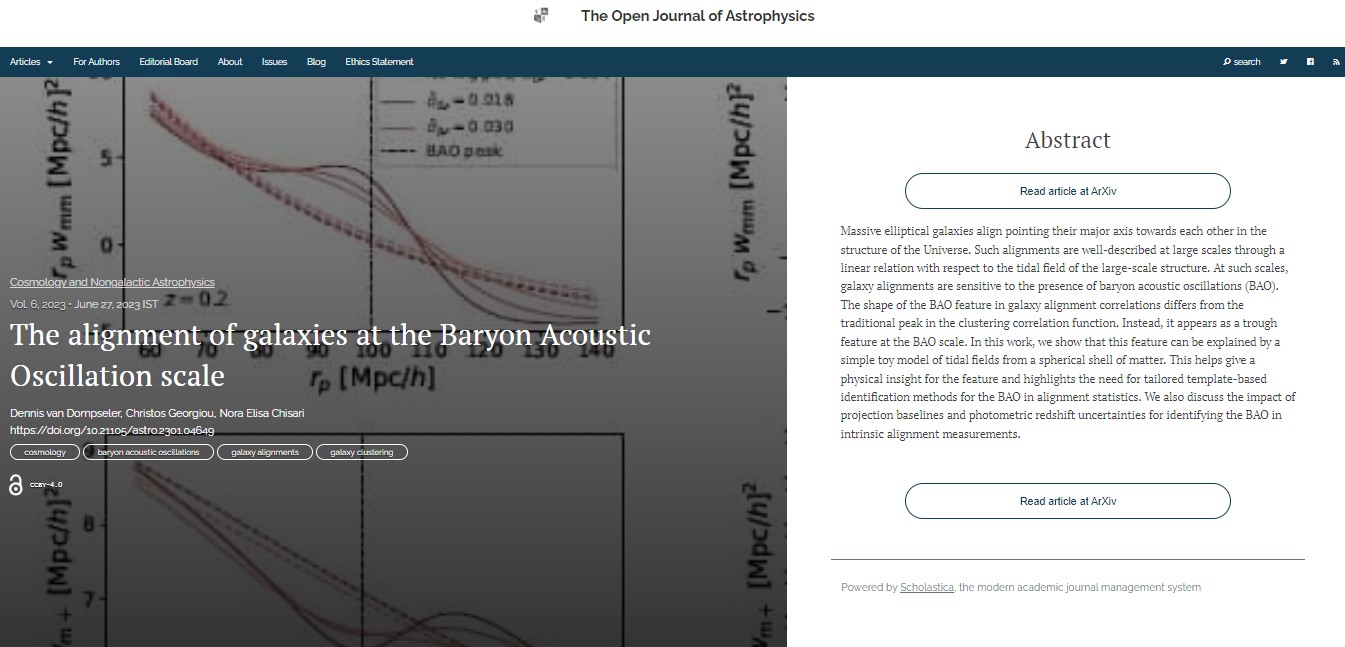
New Publication at the Open Journal of Astrophysics

Posted in OJAp Papers, Open Access, The Universe and Stuff with tags , , , on May 18, 2023 by telescoper

It’s time to announce yet another new paper at the Open Journal of Astrophysics. This one was published yesterday (17th May).

The latest paper is the 17th paper so far in Volume 6 (2023) and the 82nd in all. With this one we have now published as many papers so far in 2023 as we did in all of last year. With significantly less than half the year gone, and a large number of papers in the pipeline, I think it’s quite likely we will exceed a total of 100 papers by the end of 2023. How’s that for cosmic acceleration?

The primary classification for this paper is Instrumentation and Methods for Astrophysics and its title is “Deep-field Metacalibration”. This article describes a technique that reduces the pixel noise in estimators of weak gravitational lensing shear signals by using a deeper imaging survey for calibration.

The authors are Zhuoqi (“Jackie”) Zhang (University of Chicago, IL, USA), Erin Sheldon (Brookhaven National Laboratory, NY, USA), and Matthew Becker (Argonne National Laborary, IL, USA).

Here is a screen grab of the overlay which includes the  abstract:


You can click on the image of the overlay to make it larger should you wish to do so. You can find the officially accepted version of the paper, along with all other astrophysics and cosmology research papers worth reading, on the arXiv here.

International Day Against Homophobia, Biphobia and Transphobia

Posted in LGBTQ+ with tags on May 17, 2023 by telescoper

I just remembered that today is May 17th which means that it is International Day Against Homophobia Transphobia and Biphobia, This is a worldwide celebration of sexual and gender diversities and a chance to show solidarity against bigotry and intolerance.

A video circulating today on social media in Ireland showing a teenager being beaten up because he is gay reminds us that we need this now more than ever; there’s a news report here. I hope the culprits are brought to justice. The rising tide of violence and discrimination against LGBTQI+ individuals is encouraged by those who spread poisonous rhetoric in the media and online.

The Euclid Launch Kit!

Posted in Euclid, The Universe and Stuff with tags , , , , , on May 17, 2023 by telescoper

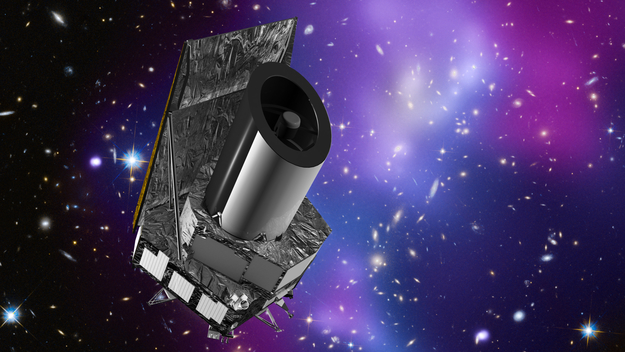
As the launch of the European Space Agency’s Euclid mission approaches, though we don’t know official launch date yet, the associated publicity machines are ramping up for the big occasion. The latest bit of merch is the Euclid Launch Kit.

Sadly, this does not allow you to build your own Falcon 9 launcher which is what I inferred from the name. What it is is an interactive PDF file that allows you to navigate around and learn things about the satellite, its orbit, its instruments and the science case. I think it’s pretty good. You can download it here. It’s over 100 MB though, so beware if you have a very slow connection.

To whet your appetite, here some graphics extracted from the launch kit. You can click on the tiles to make them bigger.

The two science images relate to weak gravitational lensing and baryon acoustic oscillations; for more details you can click on the relevant links.

To Preprint or not to Preprint?

Posted in Open Access with tags , , , , on May 16, 2023 by telescoper

In my capacity as managing editor of the Open Journal of Astrophysics I’ve received a few emails recently disagreeing with our policy of asking authors to submit their papers to the arXiv before submitting them to OJAp. Before reflecting on the wider issue, let me just point out that we don’t actually require papers to on the arXiv first. It is possible to submit a PDF directly to the Scholastica platform. We do however say in our For Authors page:

We strongly encourage authors to submit in the manner described above (i.e. on the arXiv first). We can receive and review papers submitted directly to this platform but since the final version must be on the arXiv in order to be published we feel it is far better to submit it there first in order to establish that it is on an appropriate topic for this journal.

Looking back over the 81 papers we have published, only a handful were submitted directly to the platform; the vast majority were put on the arXiv first.

This behaviour is in some sense a continuation of a very old practice in astrophysics. I can’t resist sharing this, one of the interesting astronomical curiosities I’ve acquired over the years, which is a preprint of the classic work of Burbidge, Burbidge, Fowler and Hoyle in 1957 (a paper usually referred to as B2FH after the initials of its authors), which is such an important contribution to the literature that it has its own wikipedia page.

Younger readers will probably not realize that preprints were not always produced in the electronic form they are today. We all used to make large numbers of these and post them at great expense to (potentially) interested colleagues before publication in order to get comments. That was extremely useful because a paper could take over a year to be published after being refereed for a journal: that’s too long a timescale when a PhD or PDRA position is only a few years in duration. The first papers I was given to read as a new graduate student in 1985 were all preprints that were not published until well into the following year. In some cases I had more or less figured out what they were about by the time they appeared in a journal!

The B2FH paper was published in 1957 but the practice of circulating preprints persisted well into the 1990s. Usually these were produced by institutions with a distinctive design, logo, etc which gave them a professional look, which made it easier to distinguish `serious’ papers from crank material (which was also in circulation). This also suggested that some internal refereeing inside an institution had taken place before an “official” preprint was produced and this lending it an air of trustworthiness. Smaller institutions couldn’t afford all this, so were somewhat excluded from the preprint business.

With the arrival of the arXiv the practice of circulating hard copies of preprints in astrophysics gradually died out, to be replaced by ever-increasing numbers of electronic articles. The arXiv does have some gatekeeping – in the sense there are some controls on who can deposit a preprint there – but it is far easier to circulate a preprint now than it was.

It is still the case that big institutions and collaborations insist on quite strict internal refereeing before publishing a preprint – and some even insist on waiting for a paper to be accepted by a journal before adding it to the arXiv – but there’s no denying that among the wheat there is quite a lot of chaff, some of which attracts media coverage that it does not deserve. It must be admitted, however, that the same can be said of some papers that have passed peer review and appeared in high-profile journals! No system that is operated by human beings will ever be flawless, and peer review is no exception.

Nowadays, in astrophysics, the single most important point of access to scientific literature is through the arXiv, which is why the Open Journal of Astrophysics was set up as an overlay journal to provide a level of rigorous peer review for preprints, not only to provide quality control but also to improve papers through the editorial process. In fact, I think the latter is more important than the former.

New Publication at the Open Journal of Astrophysics

Posted in OJAp Papers, The Universe and Stuff with tags , , , , on May 16, 2023 by telescoper

It’s time to announce yet another new paper at the Open Journal of Astrophysics. In fact it’s a little overdue, because we published this one on Friday 12th May, but I just got round to posting it on here.

The latest paper is the 16th paper so far in Volume 6 (2023) and the 81st in all. The primary classification for this paper is Instrumentation and Methods for Astrophysics and its title is “Metadetection Weak Lensing for the Vera C. Rubin Observatory“. I added the link to Wikipedia myself for those who might be unfamiliar with the Rubin Observatory.

The authors are Erin Sheldon (Brookhaven National Laboratory, NY, USA), Matthew Becker (Argonne National Laborary, IL, USA), Michael Jarvis (University of Pennsylvania, PA) and Robert Armstrong (Lawrence Livermore National Laboratory, CA) – all in the USA – and the LSST Dark Energy Science Collaboration, who have published a significant number of publications with OJAp. In fact, we’ll have another one in a day or two.

Here is a screen grab of the overlay which includes the  abstract:


You can click on the image of the overlay to make it larger should you wish to do so. You can find the officially accepted version of the paper, along with all other astrophysics and cosmology research papers worth reading, on the arXiv here

Cosmology Talks: DESI detects BAOs!

Posted in The Universe and Stuff with tags , , , , on May 15, 2023 by telescoper

It’s been too long since I last posted one of the cosmology talks curated on YouTube by Sean Hotchkiss so I will endeavour to put that right by posting one today.

In this video, Jeongin Moon, David Valcin and Christoph Saulder talk about the first cosmologically relevant results from DESI (the Dark Energy Spectroscopic Instrument), including the first detection of the BAOs (Baryon Acoustic Oscillations) therefrom. It’s pretty impressive for a first detection with only two months worth of data, so the final result with the full data set should be spectacular!

You can of course read the paper related to these results (by Moon et al.) on the arXiv here.