On the Exploitation of Postgraduates

Posted in Education, Maynooth with tags , , , on September 27, 2020 by telescoper

Thinking through the implications of Friday’s announcement for teaching I saw the following advice sent out to students from Maynooth University

For the next few weeks most lectures will move online. You will be invited on-campus for practical classes, tutorials and for the teaching which requires a lot of interaction.

I can’t see significant numbers of students travelling to campus for a tutorial when they have no other teaching sessions but thinking about this yesterday I was struck by the decision that tutorials should go ahead while lectures shouldn’t. Tutorials are largely given by postgraduate students and it seems extremely unfair to me that they should be required to run the risk and incur the expense of travelling to campus in order to carry out in-person teaching, when full-time staff can minimize their chances of infection by staying at home and teaching remotely.

I’ll therefore be instructing all postgraduate tutors in my Department that they are not expected to run their tutorials on campus.

Yesterday I moaned about university staff being taken for granted but the situation is even worse for postgraduate tutors, who make an invaluable and essential contribution to teaching but are often treated horrendously badly by universities.

Take for example the scandalous situation at NUI Galway, where postgraduate students are being required to undertake 120 hours of unpaid teaching duties per year. The University’s justification for this is the following

Contributing to teaching is an integral part of the training of a research Master’s or PhD student. Teaching assists you in the acquisition of generic and transferable skills, and is an important element in the formation of a research graduate.

This may well be true but it does not constitute an argument why such work should be unpaid. I would argue that an even more “important element in the formation of a research graduate” is learning not to allow oneself to be exploited.

One of the very few things I can say I achieved in my time at Sussex was to abolish the use so-called Graduate Teaching Assistantships in the School of Mathematical and Physical Sciences that required postgraduates to do unpaid teaching and make all such work voluntary and paid.

I am well aware of the reason why Galway is trying this on – it’s the chronic underfunding of Ireland’s universities and colleges exacerbated by rampant managerialism – but that’s no excuse for institutionalised exploitation. I wholeheartedly support the postgraduates at Galway refusing to carry out unpaid teaching duties and hope the University will withdraw this unjustified and iniquitous policy.

Third Level at Level Three and Back to Square One

Posted in Covid-19, Education, Maynooth with tags , on September 26, 2020 by telescoper

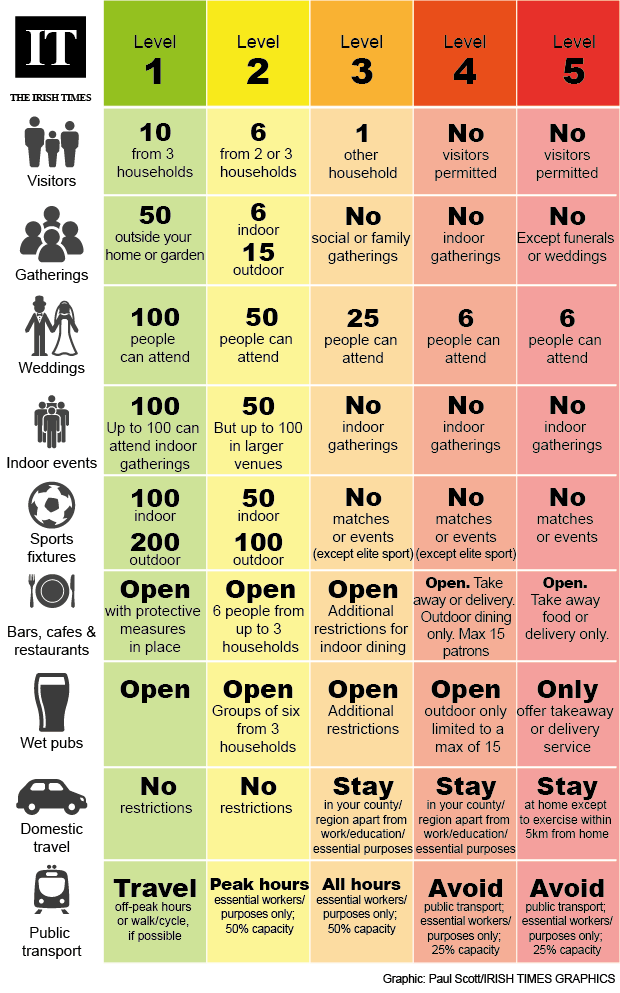
I spent a big chunk of yesterday assigning students to groups and organization rotations to allow them to attend lectures on campus at Maynooth University in a manner consistent with public health guidelines relating to Covid-19. Then, late yesterday afternoon, the Irish Government announced that all third-level institutions should move practically all* their teaching online. In effect, all higher education institutions have been raised to Level Three on the Government’s scale of restrictions.

This announcement came as a shock, not least because of the timing. Announcing drastic changes on the Friday before the Monday teaching is due to start has bounced a huge number of lecturers (including myself) into having to work all weekend to revise our plans and to contact students to tell them in time that they shouldn’t come onto campus on Monday morning. As far as I am aware there was no discussion of this move with the University sector. It’s yet another example of those in authority taking for granted the willingness of academic staff to work at weekends.

Maynooth University had anticipated some of the changes by reducing the maximum class size to 30 but the Government announcement is much more stringent than these. It seems to have been motivated by developments in universities elsewhere at which high levels of infection have arisen. The extent to which these are due to transmission in lecture halls and laboratories as opposed to student residences is unclear to me though. Many of our students are already on campus. I’m not sure that having them here but cooped up in halls will achieve very much.

Institutions like Maynooth University have spent all summer putting in stringent measures to comply with public health guidance to allow in-person teaching for the new semester. Now it is clear that was all a complete waste of time and resources. Moreover, the decision to keep students off campus is tantamount to an admission that the measures previously suggested by the HSE were inadequate.

I know colleagues at other institutions that made the decision some months ago to go online this Semester are saying “I told you so”. They’re justified in feeling a bit smug. All our attempts to bring students onto campus have achieved is to distract us from putting more time and resources into preparations for online teaching. We tried because we think the on-campus teaching is valuable to the student experience. I think it was worth a shot, but it has come to naught. We’re now back where we were in March. It’s very frustrating, to put it mildly, to have spent so long on a fool’s errand.

Anyway, all our lectures will be online from next week for the foreseeable future. The official Government line is “for two weeks”, but that’s what we were told on March 12th. I think it’s much more likely that we’re online for the entire academic year.

I’m not going to mention the considerable number of other things that went wrong last week, but I trudged home last night overwhelmed with fatigue. And term hasn’t started yet. I’m too old for all this.

* There is a possible exemption for laboratories and other practical sessions, as well as small-group tutorials. Students in experimental subjects will therefore get some tuition on campus. As for tutorials, though, I can’t really see students travelling for a tutorial when they have no lectures to attend on campus, so we’ll probably move them online too.

Government of Ireland Postdoctoral Fellowships

Posted in Maynooth with tags , on September 25, 2020 by telescoper

Looking for something to take my mind briefly off the business of preparing for next week’s start of teaching I thought I’d use the medium of this blog to advertise the Government of Ireland Postdoctoral Research Fellowships which have just been announced by the Irish Research Council.

These positions are of one or two years’ duration starting from 1st October 2021. The research relating to the fellowship can be in any discipline (including Astrophysics and Cosmology, hint hint….) and can be held in any University in the Irish Republic (including Maynooth, hint hint..). These positions are intended for early career researchers; applicants are required to have a PhD by the end of May 2021 but not have been awarded it before the end May 2016.

The deadline for completed applications is 19th November 2020.

For further information, see here.

Anyone interested in applying to hold one of these positions in Maynooth is welcome to contact me privately for advice and/or assistance!

Astronomy Photograph of the Year 2020

Posted in Art, The Universe and Stuff with tags , , , , on September 24, 2020 by telescoper

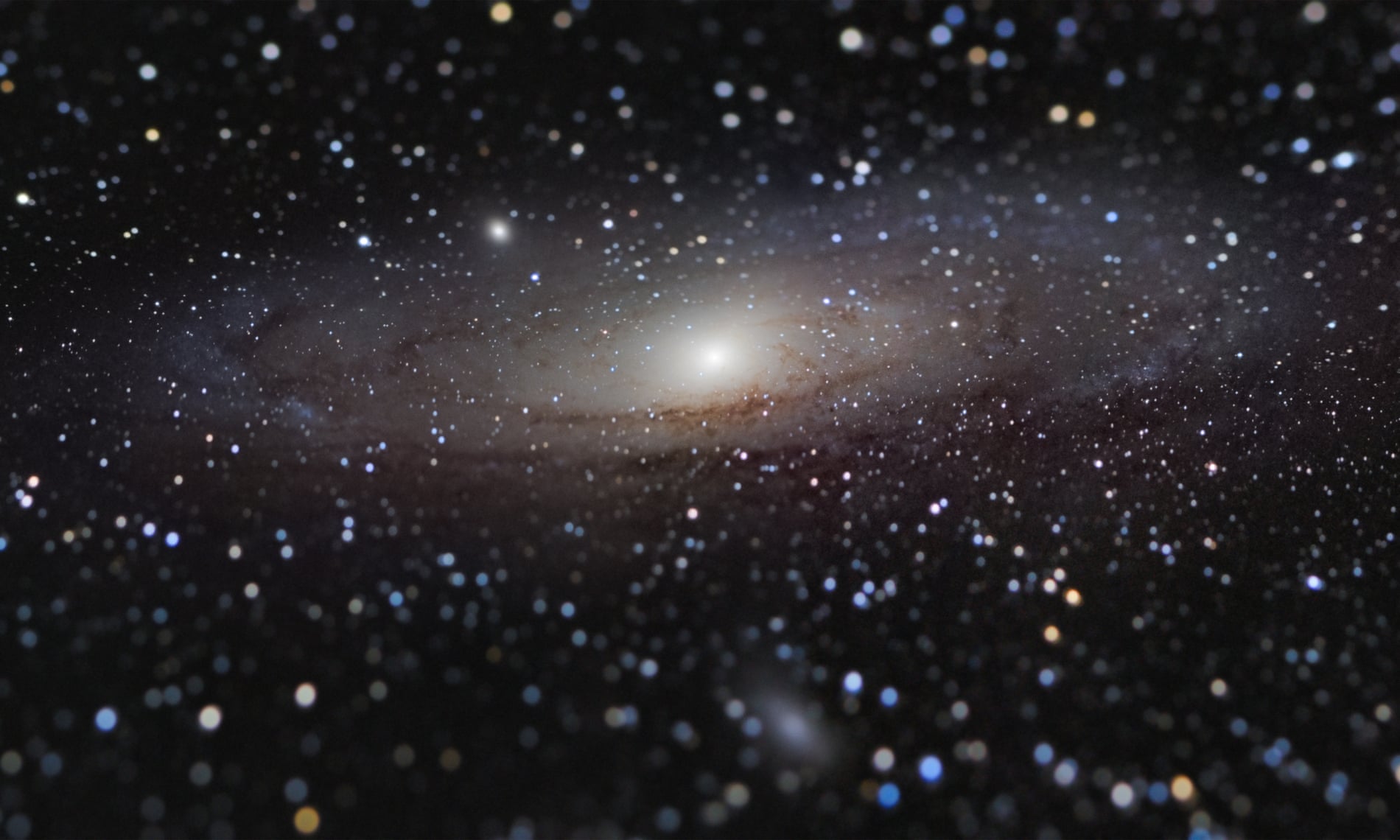
Very busy today so I only have time to share a this stunning picture, the overall winner of the 2020 Astronomy Photographer of the Year, Andromeda Galaxy at Arm’s Length? by Nicolas Lefaudeux (France).


Photo credit: Nicolas Lefaudeux/2020 astronomy photographer of the year

Arguing the Case for Preprints

Posted in Open Access with tags , , , , on September 23, 2020 by telescoper

This is Peer Review Week 2020 as part of which I am participating tomorrow afternoon (Irish Time) in a live panel discussion/webinar called Increasing transparency and trust in preprints: Steps journals can take.

Working in a field like astrophysics, where the use of preprints as a means of disseminating information and ideas is well established, I’m always surprised that some people working in other disciplines don’t really approve of them at all. See for example, this Twitter thread. Still, even in the biosciences, preprints have their advocates and there are signs that attitudes may be changing.

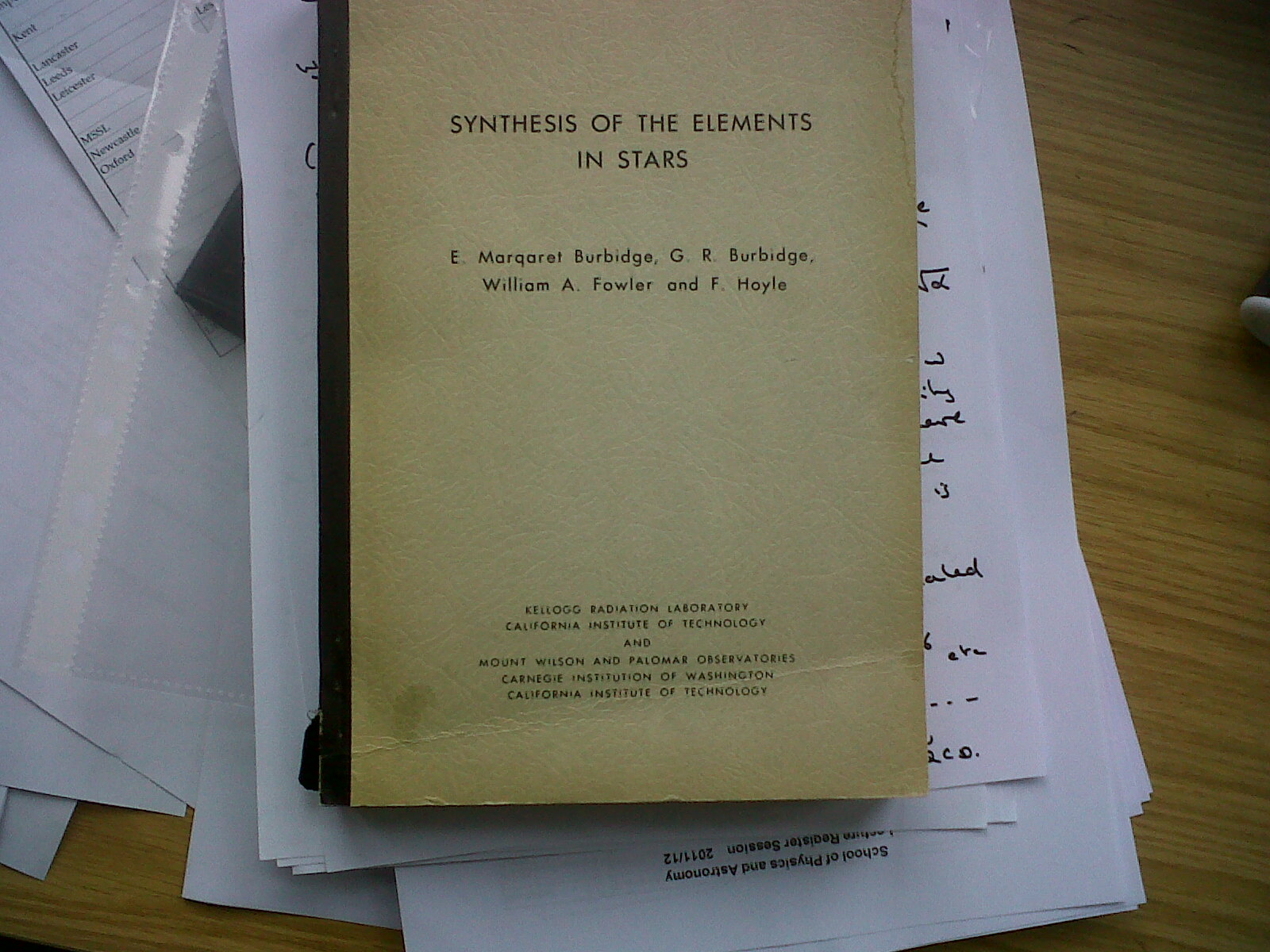
That is not to say that things aren’t changing in astrophysics too. One of the interesting astronomical curiosities I’ve acquired over the years is a preprint of the classic work of Burbidge, Burbidge, Fowler and Hoyle in 1957 (a paper usually referred to as B2FH after the initials of its authors). It’s such an important contribution, in fact, that it has its own wikipedia page.

Younger readers will probably not realize that preprints were not always produced in the electronic form they are today. We all used to make large numbers of these and post them at great expense to (potentially) interested colleagues before publication in order to get comments. That was extremely useful because a paper could take over a year to be published after being refereed for a journal: that’s too long a timescale when a PhD or PDRA position is only a few years in duration. The first papers I was given to read as a new graduate student in 1985 were all preprints that were not published until well into the following year. In some cases I had more or less figured out what they were about by the time they appeared in a journal!

The B2FH paper was published in 1957 but the practice of circulating preprints persisted well into the 1990s. Usually these were produced by institutions with a distinctive design, logo, etc which gave them a professional look, which made it easier to distinguish `serious’ papers from crank material (which was also in circulation). This also suggested that some internal refereeing inside an institution had taken place before an “official” preprint was produced and this lending it an air of trustworthiness. Smaller institutions couldn’t afford all this, so were somewhat excluded from the preprint business.

With the arrival of the arXiv the practice of circulating hard copies of preprints in astrophysics gradually died out, to be replaced by ever-increasing numbers of electronic articles. The arXiv does have some gatekeeping – in the sense there are some controls on who can deposit a preprint there – but it is far easier to circulate a preprint now than it was.

It is still the case that big institutions and collaborations insist on quite strict internal refereeing before publishing a preprint – and some even insist on waiting for a paper to be accepted by a journal before adding it to the arXiv – but there’s no denying that among the wheat there is quite a lot of chaff, some of which attracts media coverage that it does not deserve. It must be admittted, however, that the same can be said of some papers that have passed peer review and appeared in high-profile journals! No system that is operated by human beings will ever be flawless, and peer review is no different.

Nowadays, in astrophysics, the single most important point of access to scientific literature is through the arXiv, which is why the Open Journal of Astrophysics was set up as an overlay journal to provide a level of rigorous peer review for preprints, not only to provide a sort of quality mark but also to improve the paper through the editorial process.

As for increasing transparency and trust in preprints, I think I’ll save some suggestions for tomorrow’s webinar. A good start, however, would be for journals to admit their own limitations and start helping rather than hindering the dissemination of information and ideas.

The Autumnal Equinox 2020

Posted in Biographical, Maynooth, The Universe and Stuff with tags , , on September 22, 2020 by telescoper

So here we are then. The Autumnal Equinox (in the Northern hemisphere) takes place this afternoon at 14.31 Irish Time (13.31 UT).

Though  the term `equinox’  refers a situation in which day and night are of equal length which implies that it’s a day rather than a specific time, the equinox is more accurately defined by a specific event when the plane defined by Earth’s equator passes through the centre of the Sun’s disk (or, if you prefer, when the centre of the Sun passes through the plane defined by Earth’s equator). Day and night are not necessarily exactly equal on the equinox, but they’re the closest they get. From now on days in the Northern hemisphere will be shorter than nights and they’ll get shorter still until the Winter Solstice.

For many people the autumnal equinox is taken to be the end of summer, though there is a saying around these parts that `Summer is Summer to Michaelmas Day’ (September 29th). Looking back over the posts I’ve written at this time of year since I started blogging in 2008, it’s noticeable how many times we’ve had a window of good weather around the autumnal equinox. In Wales such a warm spell in late September is called Haf Bach Mihangel – “the little summer of St Michael”.

Here’s a sample excerpt from the post I wrote in 2008 on this:

The weather is unsettling. It’s warm, but somehow the warmth doesn’t quite fill the air; somewhere inside it there’s a chill that reminds you that autumn is not far away.

I find this kind of weather a bit spooky because it always takes me back to the time when I left home to go to University, as thousands of fledgling students are about to do this year in their turn.

It has been quite warm here in Maynooth recently too. Last night I mowed the lawn in the evening sunshine, which may well be the last time I do that until spring. The weather turned a bit colder overnight and the weather forecast suggests the little summer may be over.

Anyway, this is Welcome Week in Maynooth and, barring any sudden changes of plan, we’re due to start teaching on Monday 28th September. I’ve been keeping an eye on the registrations of students as they come in as well as starting to get my notes, problem sheets, recordings and other teaching materials together. I have to say that hasn’t been helped by the decision to install a new fire alarm system in the Science Building this week. I had to go home early because of the constant din of the sounders being tested.

I have to admit I’m very apprehensive about the forthcoming semester and beyond. It’s impossible to predict where we will be by the next equinox in March, or even by the Solstice in December. Covid-19 cases are increasing and it doesn’t seem that anyone has a clue how to stop the `second wave’ surging through the population this autumn. The September equinox is often said to to be the start of Astronomical Autumn. This year more than ever it seems to herald that Winter is coming.

Plan B for Teaching

Posted in Covid-19, Education, Maynooth with tags , , , on September 21, 2020 by telescoper

Yesterday’s Covid-19 figures for Ireland were a bit of a shocker, with 396 new cases (241 of them in Dublin). The latest 7-day average is 283.1 new cases per day. We haven’t seen figures like this since April. Here’s the latest log-linear graph:

Just a reminder: I keep a complete record of the daily figures here.

The surge in cases in Dublin is the the reason for the imposition of additional restrictions. Although we’re not in Dublin, many of our students travel to campus from the areas of West Dublin where the rate of infection is high (such as Tallaght) so Maynooth University has decided to ‘escalate protective measures‘. This means, among other things, that the maximum class size for in-person lectures on campus is 30.

So this morning I’ve been grappling with the implications of this for our teaching plans in the Department of Theoretical Physics. Student registrations are coming in now and though they are not complete we have a much better idea of how many students we will have in each class. The limit of 30 really just makes a difference to second year Mathematical Physics modules where the class size is around 40. We had intended to teach these all together but now they will need to be split into two groups to be taught separately. It will also impact our teaching for Engineering and Product Design, both of which have more than 30 students in class.

The remaining issue is the first year Mechanics & Special Relativity module MP110 which is a much larger class that I’d already decided to split into three groups. The problem would arise if the size of these groups exceeded the capacity constraints. First-year registration has not yet finished but it looks at the moment that we’ll be OK with Plan A. Possibly.

One of the difficulties will be communicating the arrangements to new students in time for the start of lectures on Monday 28th September, a week today. It is important that we don’t have students turning up for sessions to which they have not been assigned. There will be a lot of messages flying around about this for the rest of this week and over the weekend. Even even set up a departmental Twitter feed which you can follow here:

If the situation in Dublin (and nationally) continues to deteriorate we may well be back in the situation in which we found ourselves in March, with everything going online but that isn’t where we are at the moment. The limit of 30 on class sizes is a challenge, but it is our intention that lectures in Theoretical Physics will go ahead on campus starting next Monday.
How long it will take to move to Plan C is anyone’s guess.

Garden Birds

Posted in Biographical, Maynooth with tags , , , on September 20, 2020 by telescoper
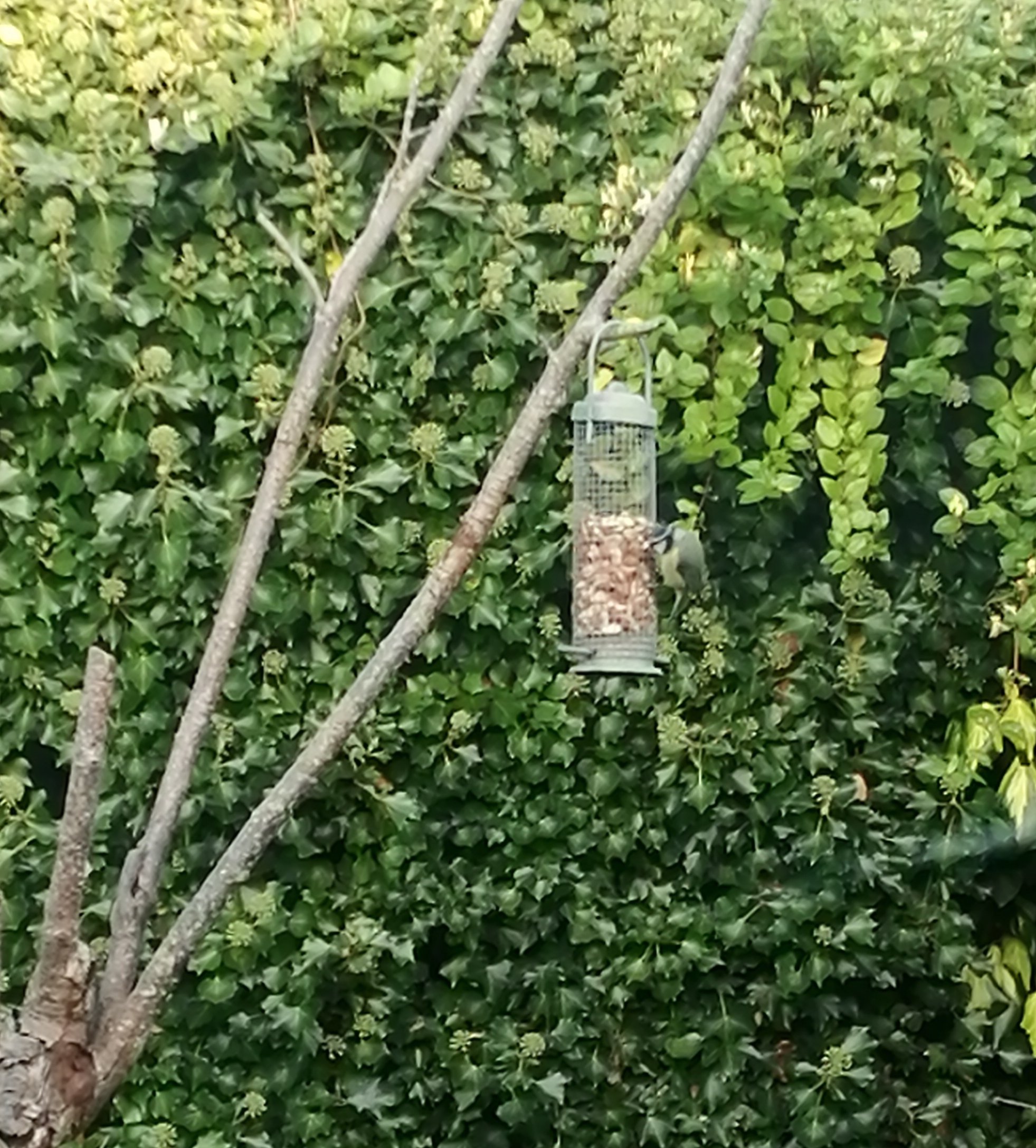
A blue tit at the peanuts

The previous owner of my house left a bird feeder in the shed so I decided to see what sort of birds would come if I put it up. The feeder has quite a wide mesh so I bought a sack of peanuts, filled it up, and suspended from one of the trees.

Almost immediately a group of starlings arrived and took turns at pecking at the contents. I know that some starlings are resident all year round, but there is an annual influx of migratory birds around autumn. It seems a bit early for the continental starlings which usually start to turn up in October. Anyway, they seem ravenously hungry but are rather messy eaters and keep dropping bits on the ground.

The principal beneficiary of the starlings’ messiness is a robin, whose tactic is to wait underneath for peanuts from above. It does not seem keen to attempt the acrobatics needed to feed directly from the feeder. Sparrows do this too, but not when the robin is around as the robin chases them off; robins are feisty little critters. This one isn’t afraid to have a go at the much larger starlings if they descend to ground level.

There are at least two blue tits that visit the garden but they rarely get the chance to get at the peanuts before being scared off by yet more starlings. The picture above is an exception.

To help the smaller birds I bought a second feeder with a finer mesh that the starlings can’t get into this and filled it with mixed seed. The blue tits have this to themselves but obviously like the nuts too and will go to that feeder if there are no starlings.

Yesterday one of the many resident jackdaws tried the peanut feeder but failed in its mission as it was too big to hang on.

So far apart from those mentioned above I’ve also seen a chaffinch and a great tit but mainly it’s been blue tits and starlings. Of course I’m not in during the day so there might well be other species of garden visitor that I don’t see.

I’m thinking of getting a third feeder (for fat balls, etc) but I’m told that around here that will just mean a garden permanently full of rooks jackdaws and magpies. Any suggestions for alternative feeding mechanisms that might attract a wider variety of birdlife are welcome!

Culture Night 2020

Posted in Biographical, Covid-19, Education, Maynooth, Music on September 19, 2020 by telescoper

Yesterday evening was Culture Night 2020. I’m afraid the only event I was able to enjoy was the concert from the National Concert Hall by the RTÉ National Symphony Orchestra under the direction of Gavin Maloney that consisted of:

Bartok: Romanian Folk Dances, BB 76

Mozart: Clarinet Concerto K.622 in A Major
John Finucane (clarinet)

Mendelssohn: Symphony No.4 Op.90 in A Major (Italian)

Here is the concert as it appeared on the live stream.

The bright and breezy Italian Symphony by Mendelssohn was a welcome tonic at the end of yet another exhausting and stressful week.

On Culture Night last year I was actually in the National Concert Hall after spending a very enjoyable afternoon wandering around Dublin. Yesterday however it was announced that after a surge in Covid-19 cases in the capital additional restrictions would be imposed there. What a difference a year makes! On Culture Night 2019 nobody had even heard of Covid-19.

Because many of our students come from the West Dublin area it has been decided to ‘escalate protective measures‘ at Maynooth University. This means, among other things, that the maximum class size for in-person lectures is 30. That means we have to revise our teaching plans yet again with just a week to go before the students arrive on campus, though I think for Theoretical Physics it really only changes the second-year modules. That is unless there are further restrictions, which is not unlikely.

Another exhausting and stressful week beckons!

Moving Over

Posted in Biographical, Covid-19, Maynooth with tags , , on September 18, 2020 by telescoper

Although I moved into my new house in Maynooth nearly three weeks ago, it was only today that my former landlord came to collect the keys to the flat I was formerly living in. I am quite pleased that I no longer have the keys because having them made me feel some sort of responsibility for the place even though there is nothing of mine there. Handing over the keys is a form of closure, I suppose.

The fact that the landlord wasn’t in a hurry to complete the formalities gave me a bit of extra time to finish a couple of tasks that took longer than I’d expected.

The first was to close the electricity account for which task I needed a final reading from the electricity meter. One of the awkward things about the flat I was in was that the electricity meter isn’t in the flat but in a cupboard in the hallway along with the meters for the other three flats in the building. The cupboard belongs to the management company and they have the only keys. Whenever I needed a meter reading I therefore have to ask them to take one. I contacted them before moving out to do this, but they only sent me the reading this Monday so I only just got the account closed this week. I was a bit irritated that it took so long, but pleased in the end because the reading was substantially less than the `estimated’ reading used by the electricity company in the absence of any readings during the lockdown so I got a nice farewell refund.

Incidentally, the level of sloth of managing agents is by no means unusual in my experience. They always seem to manage to do as little as possible.

The other thing was the washing machine. The appliance supplied with the flat broke down at the start of the lockdown so I bought a new one just in time before all the stores closed and, with the landlord’s permission, I scrapped the old one. I always had the intention of taking the new one with me when I moved out. When the time came however it proved more difficult than I’d imagined.

In order to detach a washing machine from the water supply it is necessary to close a valve, otherwise there will be a flood. Unfortunately the valve was jammed and I could budge it. No worry, I thought, I’ll just turn off the cold water at the stopcock. Mostly this is found under the kitchen sink but when I looked for it I realized that whoever had installed the unit under the sink had boarded up the stopcock so it was inaccessible. I therefore had to take the back panel off the unit to get at the stopcock. When I had done that I found the stopcock wouldn’t budge. Not at first anyway. Eventually, with the application of a bit of elbow grease, I got it to turn. And so it came to pass that the washing machine was detached.

I then had to cart it to my new house. The only hard bit of that was lifting the thing onto the trolley I’d borrowed for the purpose. Washing machines are rather heavy, you see. After some struggling I managed to get going and trundled quite happily down the road to my new house and got it attached to the water there without any problem.

After having a cup of tea and a bit of a rest I thought it would be a good idea to go back to the flat and leave a note to explain that the cold water was turned off at the main and that it would be inadvisable to turn it on without sealing up the inlet pipe with a blank (or indeed another washing machine).

These tasks completed, and the keys returned, one part of the process of moving is now over. Phase Two will involve transporting the rest of my belongings from Cardiff, but that won’t be possible for a while as it looks like both Ireland and the UK are heading for more restrictions on movement due to Covid-19.

The one thing that has really struck me since moving is how much quieter my new neighbourhood is. The flat was on a main road so – apart from the full lockdown period in the spring – there was constant traffic noise. Although I got used to it, it did make it very hard to record video lectures etc. The new place is sufficiently far from large roads that the background noise is negligible, and it’s a detached house so there’s no noise from the neighbours either!