All-Ireland Hurling Final Day

Posted in GAA with tags , , , , , on December 13, 2020 by telescoper

As the absurd Pantomime of Brexit negotiations continues and I prepare for a very busy final week of an exhausting term I’m taking this afternoon off to watch the final of the All Ireland Senior Hurling Championship from Croke Park in Dublin. The final is between Limerick and Waterford, and is in effect a re-run of the 2020 Munster provincial final, which was won by Limerick. (The winners of the Leinster and Munster Provincial championships go straight into the semi-finals of the All-Ireland Championship, while the runners-up play in the Quarter-Finals).

The All-Ireland Senior Hurling Final usually takes place in August or September, but this year’s competition has been rescheduled because of the Covid-19 pandemic.

It was raining very heavily overnight and into this morning in the Dublin are but the bad weather has cleared so I’m looking forward to a good match. According to the bookies, Limerick are strong favourites at 4/9 with Waterford at 5/2. Throw-in is at 3.30pm. The match will be played in a largely empty Croke Park, which means the atmosphere won’t be the same as in front of a crowd of 80,000 but I hope it will be enjoyable nonetheless. I’m not going to live blog the match but will update at half time and at the end.

As a bonus, the main event is preceded by the final of the Joe McDonagh Cup which is the second tier of the All-Ireland Senior Hurling Championship. This year’s final is between Antrim and Kerry. Antrim were strong favourites before the match and began the match better of the two teams, but Kerry fought back well from a poor start to lead 1-07 to 0-9 at half time.

UPDATE: Half-time Limerick 0-14 Waterford 0-11. The scoreline doesn’t really reflect Limerick’s dominance, but Waterford are doing well to stay in the game. Only three points in it. I still think Limerick will win.

UPDATE: Full-time Limerick 0-30 Waterford 0-19. Limerick just too strong for Waterford, who had no answer to the relentless accuracy of Limerick’s shooting from long range. Limerick’s defence also impressive, nullifying the threat from Waterford’s full forwards. Congratulations to Limerick.

Yesterday’s Irish Times prediction has aged well…

Late in the Year

Posted in Biographical, Covid-19 with tags , on December 12, 2020 by telescoper

I’ve noticed over the last few months that things coming from the UK to Ireland are getting heavily delayed en route, which is probably a sign of things to come. Last year my Royal Astronomical Society diary arrived in October. This year’s – complete with new logo – arrived yesterday (Friday 11th December):

The subscription to Physics World that comes with my IOP membership has suffered even worse disruption. Since I moved to Ireland I noticed that copies of this magazine take at least 6 weeks to arrive. After the pandemic started however, they stopped coming altogether until I contacted the Institute of Physics last month. They sent a package of replacement issues, which arrived promptly. The December issue arrived last week, in a white paper envelope instead of the usual plastic covering. Why that would make a difference to its speed of delivery I don’t know, but it seems to.

Usually I get an IOP wall planner every year, but the 2021 version hasn’t arrived yet. I’m not too worried about that, however, as the 2020 planner in my office is probably the item that proved of least use for me in 2020. Come to think of it, I haven’t had much call to use the RAS diary, either…

Some weeks ago I ordered a couple of chairs through a website with a “.ie” address. The chairs were actually made in Spain though and had to make the journey to Ireland through the UK. This process took much longer than I thought it would but when I queried with the supplier I was eventually given a delivery date of last Sunday (6th December). They didn’t show up. Using the tracking facility supplied by the company, the two packages seemed to have been lost. The customer service people had no information either. I was about to cancel the order and asked for a refund, but they showed up in Ireland on Thursday night; I received delivery this morning and am very happy with them. All’s well that ends well, I suppose, though the disruption to shipments coming through the UK is obviously not going to stop anytime soon.

My strong preference in shopping online is to buy from local (i.e. Irish) companies. Sometimes, though, businesses based elsewhere have a website in Ireland but nothing else. A lesson from this episode is to check carefully where the goods are actually going to be sent from before you order. Those that have to travel through England will probably arrive very late.

#OTD in 1920 – War of Independence | The Burning of Cork.

Posted in History with tags , , on December 11, 2020 by telescoper

The Burning of Cork is the name commonly given to a devastating series of fires that swept through the centre of Cork City on the night of 11th December 1920. The burning and the subsequent controversy is one of the most significant events of the Irish War of Independence. During the War of Independence, Cork…

#OTD in 1920 – War of Independence | The Burning of Cork.

Message from President Michael D. Higgins to Third-Level Students

Posted in Covid-19, Education, Politics with tags , on December 11, 2020 by telescoper

I saw this yesterday and thought I’d share it here, partly because it contains lots of thoughtful comments* for students – especially first-year students – currently in third-level education, and partly because it is a reminder that it is possible for the President of a country to be an intelligent, kind and empathic person…

*I’m proud to say that many of his comments echo those I used to make at induction events for new students long before the Covid-10 pandemic!

New Publication at the Open Journal of Astrophysics!

Posted in OJAp Papers, Open Access, The Universe and Stuff with tags , , , , , , on December 10, 2020 by telescoper

Time to announce another new paper in the Open Journal of Astrophysics. The latest publication is by Johan Comparat and 27 others – too numerous to list individually here –  and is entitled Full-sky photon simulation of clusters and active galactic nuclei in the soft X-rays for eROSITA. This is another one for the Cosmology and Nongalactic Astrophysics folder.

This paper is closely connected to the eROSITA instrument which is why it involves a considerable number of authors in different institutions – the current record length for an OJAp author list – though this is by no means a large collaboration by the standards of astrophysics and cosmology! It’s good to see some big names in there though!

Here is a screen grab of the overlay:

You can click on the image to make it larger should you wish to do so. You can find the arXiv version of the paper here.

With this paper we have exceeded the number of papers published last year. We do in fact have quite a few in the pipeline but owing to the ongoing pandemic there have been some refereeing delays and in some cases authors are taking more time than expected to do the “revise and resubmit” routine. I think there are plenty of other people around who are just as tired as I am! Perhaps we’ll see a clutch emerging in the New Year!

The Advent of Covid

Posted in Biographical, Covid-19, Maynooth on December 10, 2020 by telescoper

I witnessed this disturbing scene last night as I walked home through Courthouse Square in Maynooth. Look at them – not a single one wearing a mask!

Perhaps however they have formed a social bubble so we can forgive that, and the lack of social distancing?

Nevertheless I was confused as to what was going on until I worked it out. The child in the front has obviously fallen asleep with its head on a Frisbee and the others are waiting for it to wake up so they can get it back.

With this Mystery solved, continued my journey to Supervalu, where they were sadly out of Gold, Frankincense and Myrrh so I bought a bottle of wine instead.

Lorentz-Fitzgerald or Fitzgerald-Lorentz?

Posted in Beards, History, The Universe and Stuff with tags , , , , on December 9, 2020 by telescoper

I’ve recently moved on to the part about Special Relativity in my module on Mechanics and Special Relativity and this afternoon I’m going to talk about the Lorentz-Fitzgerald contraction or, as it’s properly called here in Ireland, the Fitzgerald-Lorentz contraction.

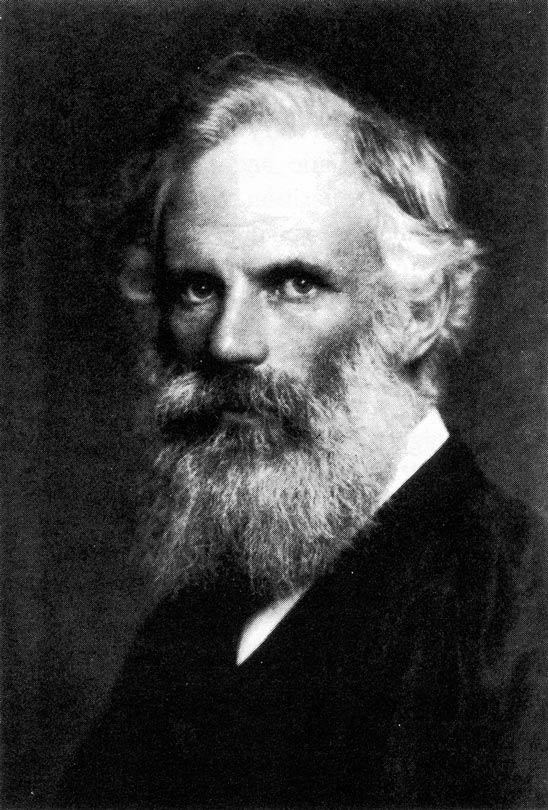
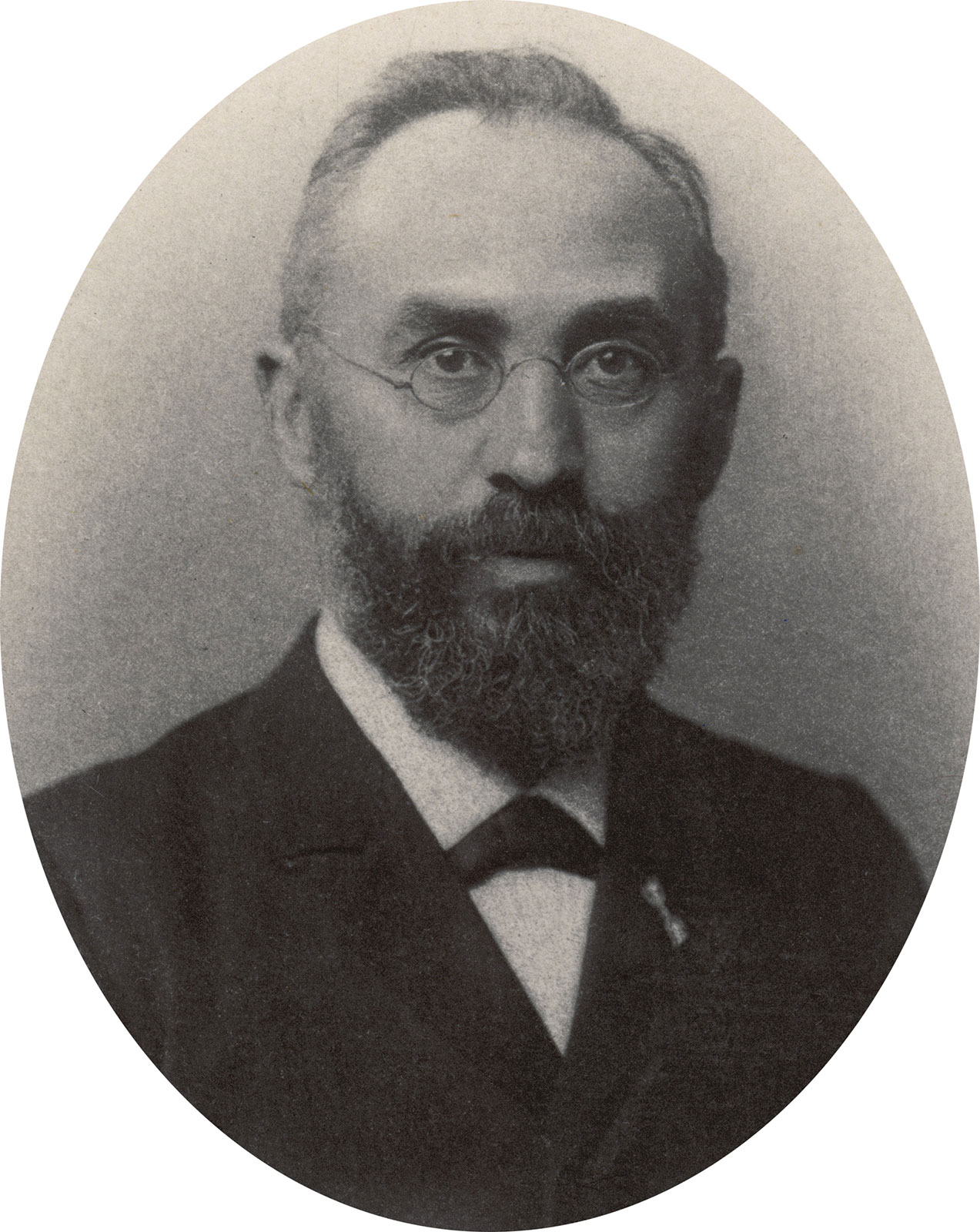
The first thing to point out is that the physicists George Francis Fitzgerald and Hendrik Lorentz, though of different nationality (the former Irish, the latter Dutch), both had fine beards:

George Francis Fitzgerald (1851-1901)

Hendrik Lorentz (1853-1928)

One of the interesting things you find if you read about the history of physics just before Albert Einstein introduced his theory of special relativity in 1905 was how many people seemed to be on the verge of getting the idea around about the same time. Fitzgerald and Lorentz were two who were almost there; Poincaré was another. It was as if special relativity was `in the air’ at the time. It did, however, take a special genius like Einstein to crystallize all that thinking into a definite theory.

Special relativity is fun to teach, not least because it throws up interesting yet informative paradoxes (i.e. apparent logical contradictions) arising from  that you can use to start a discussion. They’re not really logical contradictions, of course. They just challenge `common sense’ notions, which is a good thing to do to get people thinking.

Anyway, I thought I’d mention one of my favorite such paradoxes arising from a simple Gedankenerfahrung (thought experiment) here.

Imagine you are in a railway carriage moving along a track at constant speed relative to the track. The carriage is dark, but at the centre of the carriage is a flash bulb. At one end (say the front) of the carriage is a portrait of Lorentz and at the other (say the back) a portrait of Fitzgerald; the pictures are equidistant from the bulb and next to each portrait is a clock.The two clocks are synchronized in the rest frame of the carriage.

At a particular time the flash bulb goes off, illuminating both portraits and both clocks for an instant.

It is an essential postulate of special relativity that the speed of light is the same to observers in any inertial frame, so that an observer at rest in the centre of the carriage sees both portraits illuminated simultaneously as indicated by the adjacent clocks. This is because the symmetry of the situation means that light has to travel the same distance to each portrait and back.

Now suppose we view the action from the point of view of a different inertial observer, at rest by the trackside rather than on the train, who is positioned right next to the centre of the carriage as the flash goes off. The light flash travels with the same speed in the second observer’s frame, but this observer sees* the back of the carriage moving towards the light signal and the front moving away. The result is therefore that this observer sees the two portraits light up at different times. In this case the portrait of Fitzgerald is lit up before the portrait of Lorentz.

Had the train been going in the opposite direction, Lorentz would have appeared before Fitzgerald. That just shows that whether its Lorentz-Fitzgerald contraction or Fitzgerald-Lorentz contraction is just a matter of your frame of reference…

But that’s not the paradoxical thing. The paradox is although the two portraits appear at different times to the trackside observer, the clocks still appear show the same time….

*You have to use your imagination a bit here, as the train has to be travelling at a decent fraction of the speed of light. It’s certainly not an Irish train.

The Hunger

Posted in Art, History, Television with tags , , on December 8, 2020 by telescoper

An iconic image of the Great Irish Famine: pen & ink drawing of Bridget O’Donnel and two of her children by (it is believed) James Mahony, published in the London Illustrated News on 22nd December 1849.

The last couple of Monday nights have seen the airing of a two-part documentary series called The Hunger on RTÉ. It was, of course, about the Great Irish Famine, which led to the death of one million (mainly poor) Irish people and the emigration of over two million in the subsequent years. It was a shattering episode that altered Ireland for ever; the population of this island still hasn’t recovered to pre-Famine levels.

The series, based on a serious scholarly book called Atlas of the Great Irish Famine, and narrated by Liam Neeson, was unflinching and sometimes harrowing to watch, the dreadful personal accounts of suffering juxtaposed with equally shocking graphics showing the scale of the depopulation of rural Ireland. I haven’t read the book on which the The Hunger is based, but have ordered it from the local bookshop.

‘No imagination can conceive — no tongue express— no brush paint— the horrors of the scenes which are daily exhibited in Ireland’, observed Senator Henry Clay in 1847 at the height of the Great Hunger.

I think it would be great if The Hunger were shown on British television, though I suspect few would watch it. The British prefer their own propaganda to the truth about the empire. Oscar Wilde once remarked “The problem is the English can’t remember history, while the Irish can’t forget it”. I don’t think the Great Famine will be forgotten soon, but I for one don’t see that as a problem.

Time for Resilience?

Posted in Education, Maynooth with tags , on December 8, 2020 by telescoper

I’ve just received an invitation to a two-hour seminar on Resilience for Heads of Department. I post the description here:

Sadly I don’t have time to attend this, as it is right in the middle of a teaching day in the last week of an absurdly busy term and it clashes with a previous commitment. I can’t see yet another two hour meeting on Zoom doing much for my wellbeing anyway, especially when I’ve already been running on empty for weeks.

I will be “taking the time to renew and refresh” after December 18th, when I’ll have the first proper holiday I’ve been able to take since March. I’ll probably spend most of that asleep. Or maybe “resilience” is all about adapting to life without any time off?

“We know we’re working you into the ground, but if you learn how to be *resilient* we might might get a few more months out of you before you crack.”

Sharpening the Saw seems like an interesting book. I wonder what the sequel is,  Wielding the Axe?


Einstein’s Universe

Posted in The Universe and Stuff with tags , , on December 7, 2020 by telescoper

I’ve just started teaching about special relativity and for some reason I suddenly remembered this blast from the past (in 1979) which I saw when I was still at School. It is now available in fully remastered form on YouTube. It’s a feature-length film (2 hours long) but I think it’s worth sharing in its entirety. Here is the description from YouTube, with a few additions:

Based on Nigel Calder’s book Einstein’s Universe, this fascinating and rare film going by the same title has been re-mastered and digitally enhanced to bring Einstein fans a priceless experience. Narrated by the charismatic Peter Ustinov and hosted by Nigel Calder, the film was first broadcast on the centenary of Albert Einstein’s Birth; March 14th, 1979. Ustinov takes the viewer on a wonderful experience through the McDonald Observatory at the University of Texas-Austin where he is thoroughly enlightened on the great physicist’s theories, especially General Relativity, by a renowned team of scientists including Dennis Sciama, Roger Penrose, John Wheeler, Wallace Sergeant, Irwin Shapiro, Sidney Drell, and Ken Brecher.

Included in Ustinov’s experience at the McDonald Observatory are experiments to help understand gravity, warped space, how light responds to gravity, the “Doppler effect” and how radio waves, as used in police radar, are an unbeatable way of measuring speed. From these simpler experiments much larger concepts are drawn, such as the discovery of a Binary Pulsar, the nature of black holes and how they are created, and the ultimate theory of how the universe was formed. Other demonstrations measure the speed of light, how time passes more slowly for people traveling in an airplane, the incredible accuracy of the Atomic Clock in Washington, DC and how time itself would appear to stop at the surface of a black hole. The conclusion of the program portrays Einstein as a great humanitarian. Although known as the “father of the Atomic Bomb”, his greatest concern was for the potentially devastating effects splitting the atom could have on the future of mankind. His famous letter to President Franklin Roosevelt warned that although the splitting of the atom to detonate an atomic bomb could be used to end World War II, it could also potentially be used for far more deadly ends.

It’s a great chance to see and hear some of the greats of physics as they were over forty years ago, some of whom make remarkably prescient comments about the future (now our present) including about gravitational waves!