WNO Eugene Onegin

Posted in Opera with tags , , , on October 2, 2017 by telescoper

Just time for a quick review of my second opera of the new season at Welsh National Opera, Eugene Onegin by Pyotr Ilyich Tchaikovsky which I saw on Friday evening. This Opera, based on a famous novel in verse by Alexander Pushkin continues this Autumn’s Russian theme, though it is very different in style from Khovanshchina which I saw last week.

The plot revolves around the eponynmous character Eugene Onegin who is dashing and handsome but also arrogant and self-centred. Young Tatyana becomes infatuated with Onegin, and writes him an an impassioned love letter but he haughtily dismissed her advances, not least because she is a simple country girl. Onegin then decides to flirt with Olga, girlfriend of his best friend Lensky who, infuriated, challenges Onegin to a duel. Onegin kills Lensky in the duel then, in remorse, Onegin travels abroad for many years (during which he grows his hair long but apparently doesn’t change his suit). He returns to St Petersburg and attends a posh shindig only to find Tatyana all grown up and the belle of the ball. Now that she has some social standing he now finds her desirable, but it turns out that she’s married (to a Prince no less). Though she still fancies him – Heaven knows why, as Onegin is not at all a likeable character – she puts loyalty before passion, and Onegin is left alone with his regrets.

Tchaikovsky’s music is very beautiful, with memorable arias and passages for the chorus. The most famous piece is, of course, the Polonaise that opens Act III. I have to admit that although I’ve heard this piece dozens of times I never knew how to dance the Polonaise before seeing this production. Here’s what it looks like (from a rather more opulent production):

This production has a conventional design and overall look, and is none the worse for that. It’s very much a piece about a particular time and place. Classic countryside settings are contrasted with beautiful ballroom scenes using a simple but effective staging involving a wall across the entire stage with a large rectangular gap in the centre. This aperture is used as a window, or a grand door for the interior scenes but also as a clever way to suggest outdoor settings. The only problem with this device is that it does restrict the stage area quite a bit, so the ballroom scenes look a bit cramped. Costumes are in period style, their rich colours complementing the rather simple staging. Onegin makes his first appearance in black, complete with a top hat, looking rather like an undertaker.

The Opera is in Three Acts, adding up to seven scenes in all. That makes for quite a few changes of scenery and two intervals or, as I call them, wine breaks. The kind of opera I like best of all is the kind with two intervals…

Nicholas Lester (baritone) was a fine Onegin in a role that’s challenging mainly because the character is so unsympathetic; he does get to sing some lovely music. Natalya Romaniw (soprano) sang and acted beautifully, her transformation from country girl to high society lady was very convincing. Miklós Sebestyén (bass-baritone) took the singing honours, though, with a stunning vocal performance that was very warmly received by the audience. It almost goes without saying that the WNO chorus were excellent, but I’ll say it anyway.

P.S. The house was pretty much full, by the way, which is good news. I just wish more people would turn up for the less familiar works!

Supremus No. 58

Posted in Art with tags , , , on October 1, 2017 by telescoper

Kazimir Severinovich Malevich (1879–1935).Oil on canvas (79.5 x 70.5 cm); painted 1916.  State Russian Museum, St. Petersburg.


Close of Play

Posted in Cricket with tags , , on September 29, 2017 by telescoper

Yesterday saw the end of this year’s County Championship season, which I take to be definition of the official end of summer.  It’s happened very late this year. Is this the latest end to a County Championship season ever?

There is, of course, an inconsequential 50-overs game still going on between England and the West Indies but the proper cricket is over and done with until next spring. Glamorgan won their last game earlier this week against Kent in three days, and finished 7th in the 2nd Division. Some good performances by young players (many of whom came through the Academy) adding a ray of optimism to what has been a fairly disappointing season (though with one highlight in a semi-final spot in the Twenty20 `blast’). Worcestershire finished top of the Second Division and Nottinghamshire were second, so they’ll both be playing in Division 1 next season. Essex won the County Champions in great style, unbeaten for the whole season.  The main drama on the final day involved who got relegated along with Warwickshire (the latter having been adrift at the bottom of the Table for some time).  Going into the last round of matches, Somerset looked the most likely to go down but they beat fellow strugglers Middlesex. Hampshire clung on for a draw against Warwickshire, giving them the points they needed to overtake Middlesex who will play in Division 2 next season.

Other big news yesterday was the selection of the England squad to tour Australia and play for the Ashes this Winter: Joe Root (capt, Yorkshire), Moeen Ali (Worcestershire), James Anderson (Lancashire), Jonny Bairstow (wk, Yorkshire), Jake Ball (Nottinghamshire), Gary Ballance (Yorkshire), Stuart Broad (Nottinghamshire), Alastair Cook (Essex), Mason Crane (Hampshire), Ben Foakes (wk, Surrey), Dawid Malan (Middlesex), Craig Overton (Somerset), Ben Stokes (Durham), Mark Stoneman (Surrey), James Vince (Hampshire), Chris Woakes (Warwickshire). I’m not particularly impressed with some of the choices (especially Ballance and Vince), and it looks likely that Stokes won’t be available owing to his recent fracas outside a nightclub, but we’ll see.

Anyway, yesterday was also National Poetry Day so it seems apt to mark the end of the County Championship with one of the classic cricket poems, Close of Play  by Thomas Moult.

How shall we live, now that the summer’s ended,
And bat and ball (too soon!) are put aside,
And all our cricket deeds and dreams have blended —
The hit for six, the champion bowled for none,
The match we planned to win and never won? …
Only in Green-winged memory they abide.

How shall we live, who love our loveliest game
With such bright ardour that when stumps are drawn
We talk into the twilight, always the same
Old talk with laughter round off each tale —
Laughter of friends across a pint of ale
In the blue shade of the pavilion.

For the last time a batsman is out, the day
Like the drained glass and the dear sundown field
is empty; what instead of Summer’s play
Can occupy these darkling months ere spring
Hails willows once again the crowned king?
How shall we live so life may not be chilled?

Well, what’s a crimson hearth for, and the lamp
Of winter nights, and these plump yellow books
That cherish Wisden’s soul and bear his stamp —
And bat and ball (too soon!) are put aside,
Time’s ever changing, unalterable score-board,
Thick-clustered with a thousand names adored:
Half the game’s magic in their very looks!

And when we’ve learnt those almanacs by heart,
And shared with Nyren … Cardus ….the distant thrill
That cannot fade since they have had their part,
We’ll trudge wet streets through fog and mire
And praise our heroes by the club-room fire:
O do not doubt the game will hold us still!


I Grant You Ample Leave

Posted in Poetry with tags , , , on September 28, 2017 by telescoper

“I grant you ample leave
To use the hoary formula ‘I am’
Naming the emptiness where thought is not;
But fill the void with definition, ‘I’
Will be no more a datum than the words
You link false inference with, the ‘Since’ & ‘so’
That, true or not, make up the atom-whirl.
Resolve your ‘Ego’, it is all one web
With vibrant ether clotted into worlds:
Your subject, self, or self-assertive ‘I’
Turns nought but object, melts to molecules,
Is stripped from naked Being with the rest
Of those rag-garments named the Universe.
Or if, in strife to keep your ‘Ego’ strong
You make it weaver of the etherial light,
Space, motion, solids & the dream of Time–
Why, still ’tis Being looking from the dark,
The core, the centre of your consciousness,
That notes your bubble-world: sense, pleasure, pain,
What are they but a shifting otherness,
Phantasmal flux of moments?–“

by George Eliot (1819-1880)


Gravitational Wave Flash

Posted in The Universe and Stuff with tags , , , on September 27, 2017 by telescoper

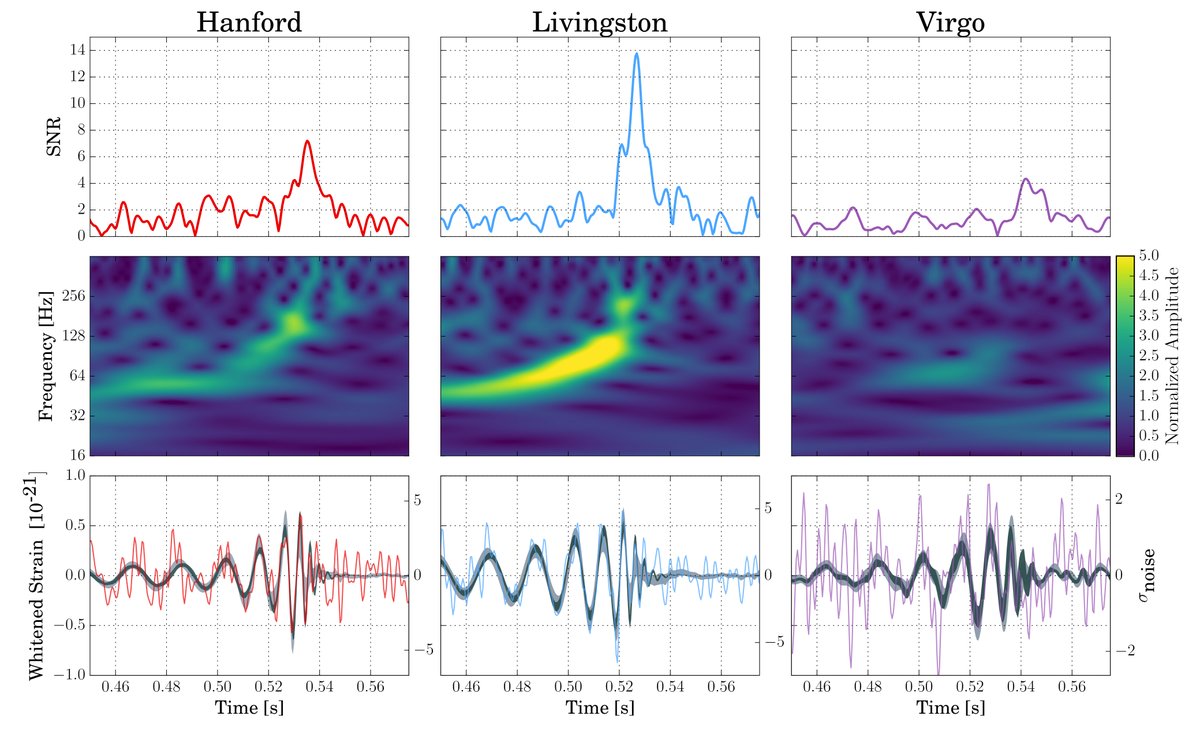
Inconveniently timed just before I was due to go to the pub, a new announcement has come out from the LIGO and Virgo gravitational wave detectors. This time it reports a coalescing binary black hole system detected by all three instruments. The new source is called GW170814, which indicates that the signal from it was received by the detectors on the day I returned from Copenhagen this summer!

Here’s the key figure:

The paper is here and there’s a Nature comment piece here.

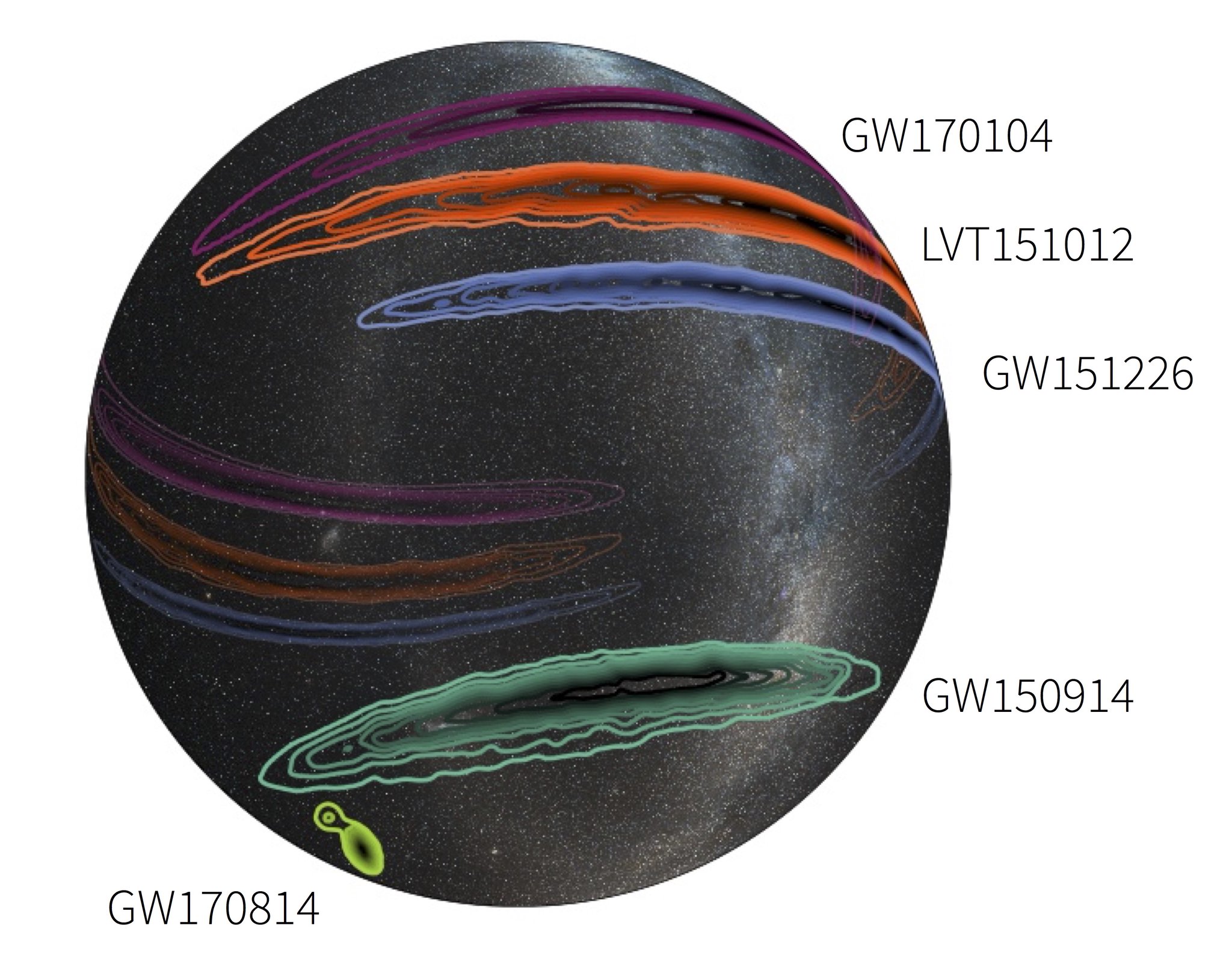
I have to say that, on its own, the Virgo `detection’ looks rather marginal to me, but assuming that it is a detection this graphic shows how much it helps to localize the source compared to previous signals:

More on this in due course, perhaps, but now I’m off for a pint or two…

Why we should abandon “statistical significance”

Posted in Bad Statistics with tags , on September 27, 2017 by telescoper

So a nice paper by McShane et al. has appeared on the arXiv with the title Abandon Statistical Significance and abstract:

In science publishing and many areas of research, the status quo is a lexicographic decision rule in which any result is first required to have a p-value that surpasses the 0.05 threshold and only then is consideration–often scant–given to such factors as prior and related evidence, plausibility of mechanism, study design and data quality, real world costs and benefits, novelty of finding, and other factors that vary by research domain. There have been recent proposals to change the p-value threshold, but instead we recommend abandoning the null hypothesis significance testing paradigm entirely, leaving p-values as just one of many pieces of information with no privileged role in scientific publication and decision making. We argue that this radical approach is both practical and sensible.

This piece is in part a reaction to a paper by Benjamin et al. in Nature Human Behaviour that argues for the adoption of a standard threshold of p=0.005 rather than the more usual p=0.05. This latter paper has generated a lot of interest, but I think it misses the point entirely. The fundamental problem is not what number is chosen for the threshold p-value, but what this statistic does (and does not) mean. It seems to me the p-value is usually an answer to a question which is quite different from that which a scientist would want to ask, which is what the data have to say about a given hypothesis. I’ve banged on about Bayesian methods quite enough on this blog so I won’t repeat the arguments here, except that such approaches focus on the probability of a hypothesis being right given the data, rather than on properties that the data might have given the hypothesis.

While I generally agree with the arguments given in McShane et al, I don’t think it goes far enough. I think p-values are so misleading, if I had my way I’d ban them altogether!

ARSE News

Posted in Uncategorized on September 27, 2017 by telescoper

I’m more than happy to draw the attention my readership to the fact that the fine country of Australia is home to a new organization called Australian Research and Space Exploration, henceforth known as ARSE:

I haven’t managed to get to the bottom of who was responsible for the acronym, but I’m sure the new venture will aim to rear a generation of new researchers who won’t bum around and that other countries will soon follow behind.

P.S. Yes, it is a fake. However it did remind me that one of the institutions at which I have previously worked almost created an `Academic Registry for Science and Engineering’. They got as far as making letterheads and everything. The volume of comments from the staff led them to scrap the name at the very last minute.

Team News from the Vale

Posted in Uncategorized with tags , , on September 26, 2017 by telescoper

We have a short break in the schedule for our induction event here at the Cardiff Vale Resort Hotel. Yesterday we had a full schedule of presentations, an excellent interactive training session by Cardiff PhD student Ed Fauchon-Jones about version control and the use of Github, an ongoing `hackathon event’, and a networking event with our industrial partners. It’s been a busy but very exciting and enjoyable start to the new Centre for Doctoral Training. This afternoon we have more activities, but this morning the new students have been sent out into the countryside in land rovers for a `Team Building’ event, leaving us old fogeys behind to enjoy a little bit of peace and quiet back in the hotel.

One of the aims of the hackathon has been to build teamwork. The students are in groups of three or four. Each group has been given a bit of old software (written in Fortran) and charged with the task of figuring out what it does and then rewriting it in a modern programming environment (most of them are using Python). That plan was that by the end of this afternoon they should be able to present us a working piece of code. Unfortunately I don’t think we’ve allowed enough time so it may be that the teams don’t all finish their challenge, but it’s been fun to see how they’ve tackled the problems. I’m old enough to remember Fortran very well, so I was able to help a couple of the groups by explaining some of its idiosyncracies.

We discovered last night that the Leeds United football team is staying in this hotel in advance of their game this evening against Cardiff City. Some of the players were in the bar last night, but I didn’t recognise any of them. With Leeds currently top of the Championship I’m not sure to what extent their team needs building, but they’re playing a Cardiff City team which is in third place, level on points and separated only by goal difference, so it should be a good game tonight.

Anyway, I’d better get on and get some work done before the students get back. We have a full afternoon in front of us, and then we have to tackle the logistics of getting everyone back to Swansea, Cardiff and Bristol respectively!

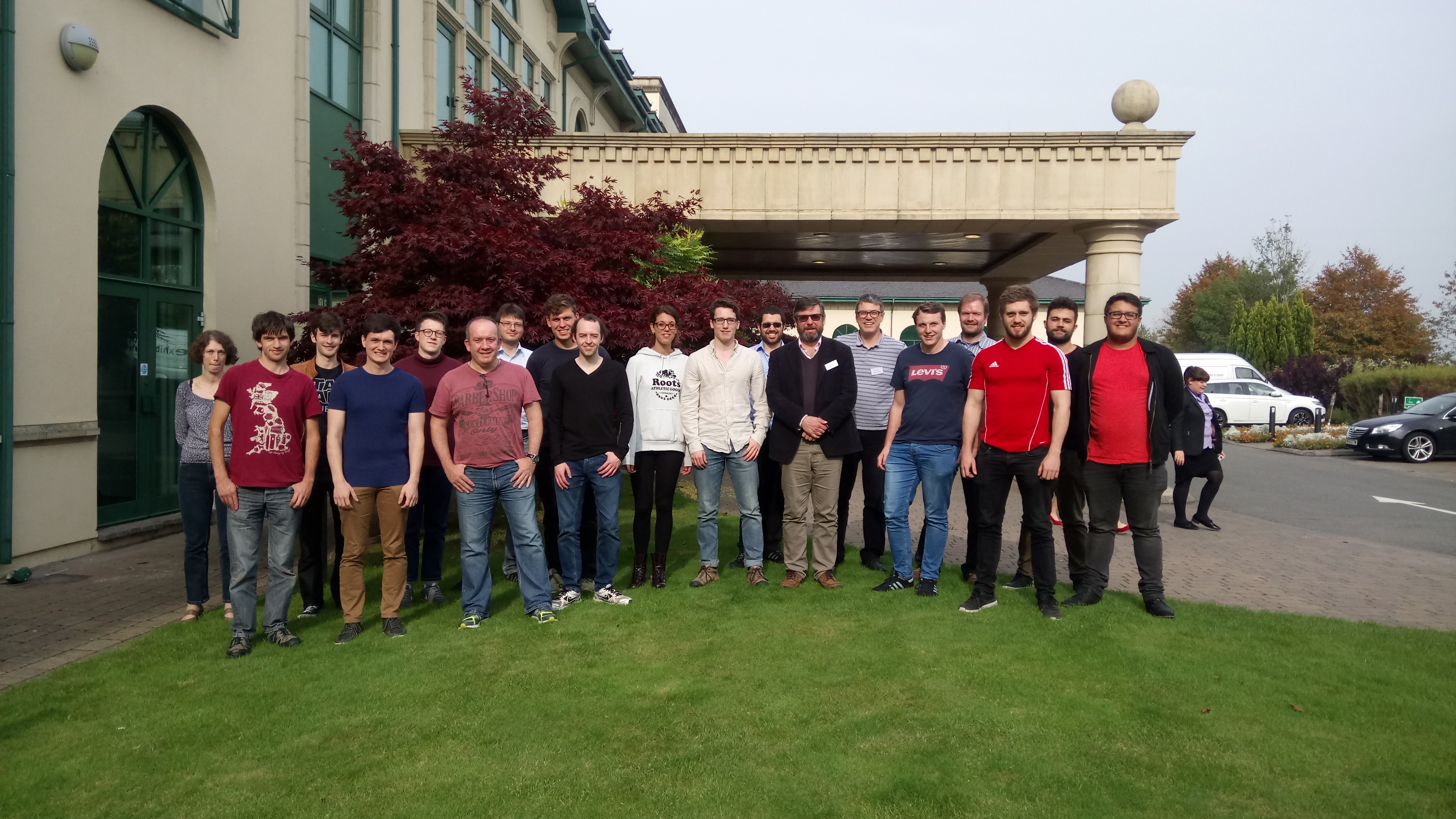
Here is a picture of the students along with a few of the staff that attended the event, taken during the last afternoon. Happily the students all got back safely from their adventures this morning!

UPDATE: 27th September. This event finished yesterday evening and we left just as Leeds United were getting ready to depart in their team coach for their match against Cardiff City last night. Cardiff City won 3-1.

Induction at the Vale

Posted in Uncategorized with tags , , on September 25, 2017 by telescoper

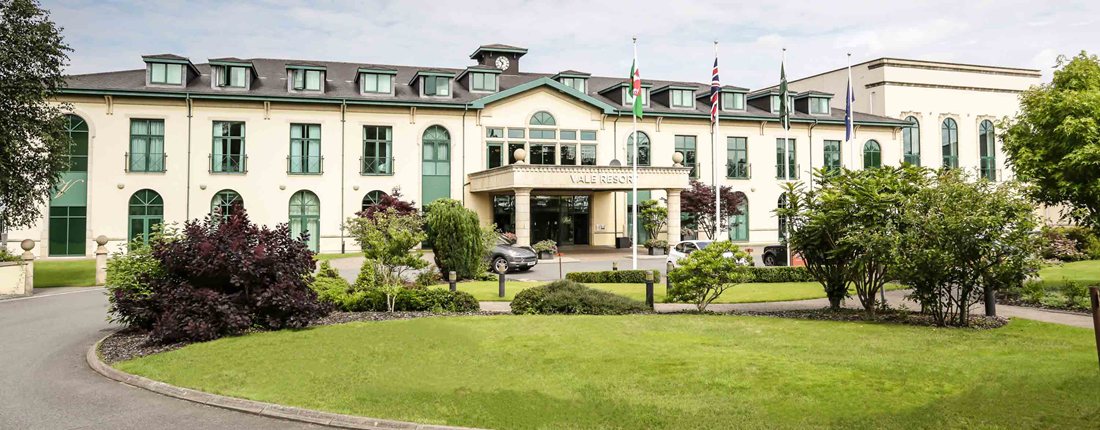
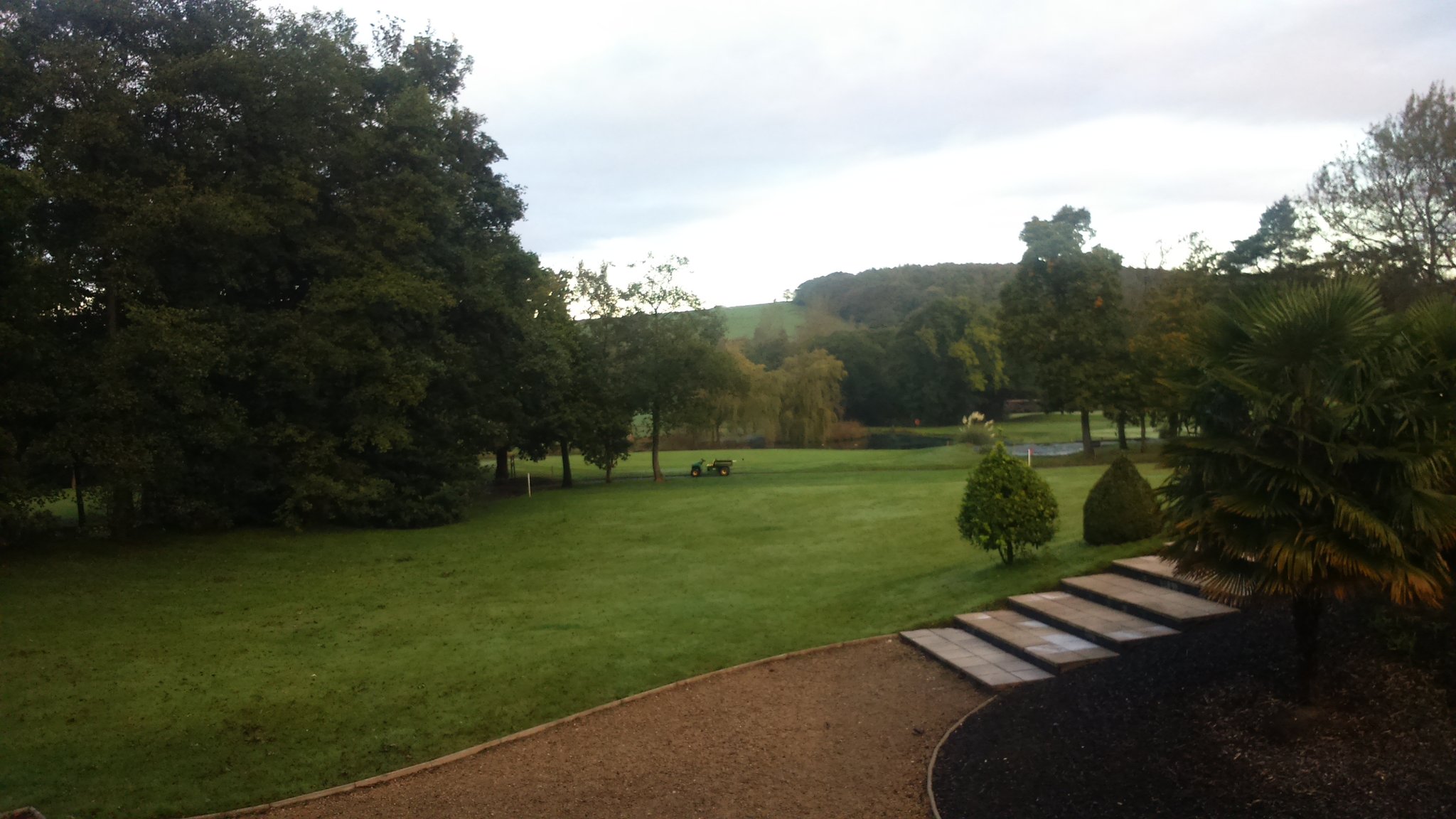
So here I am, at the Cardiff Vale Hotel. It’s quite swanky. Apparently the Juventus team stayed here immediately before the UEFA Champions League final in Cardiff this summer. They lost, so perhaps they enjoyed their stay too much before the game! The view from my window this morning wasn’t bad at all:

I’m here participating in an Induction event for our new STFC-funded Centre for Doctoral Training (CDT), which involves the Universities of Cardiff, Bristol and Swansea. This is coordinated by the Data Innovation Institute at Cardiff University and it covers  a wide range of data-intensive research in particle physics, astrophysics and cosmology carried on at the three member institutions. ‘Data-intensive’ here means involving very big data sets, very sophisticated analysis methods or high-performance computing,  or any combination of these.

Since this Centre for Doctoral Training is being coordinated by Cardiff University we got to organize this launch event, at which we get the new students (14 of them), supervisors and industrial partners together to introduce the programme we’ve got in store. Over the next two days we’ll have some lectures, networking sessions, team-building exercises and a `hackathon’ challenge.

Hopefully all this will start to bring the students from the three institutions together as a cohort with its own identity, so that the CDT functions as more than the sum of three separate components. That’s the plan anyway.

Anyway, they seem a friendly bunch and I think this is going to be quite a lot of fun though it will be rather busy. Although we’re booked into this hotel as a `conference package’, the hotel is rather large and most of the clientele seem to be here to play golf…

Oh, and if you think all this luxury is probably a waste of money then I should point (a) the Cardiff Value Hotel has given us a very good deal for the accommodation and conference facilities and (b) this is induction week for new undergraduates and other postgraduates at Cardiff University and it would have been hard to find rooms for this event there. The splendid isolation of this `neutral’ venue will hopefully help folk concentrate on the matters at hand, away from the hustle and bustle of the new student arrivals.

WNO Khovanshchina

Posted in Opera with tags , , , , on September 24, 2017 by telescoper

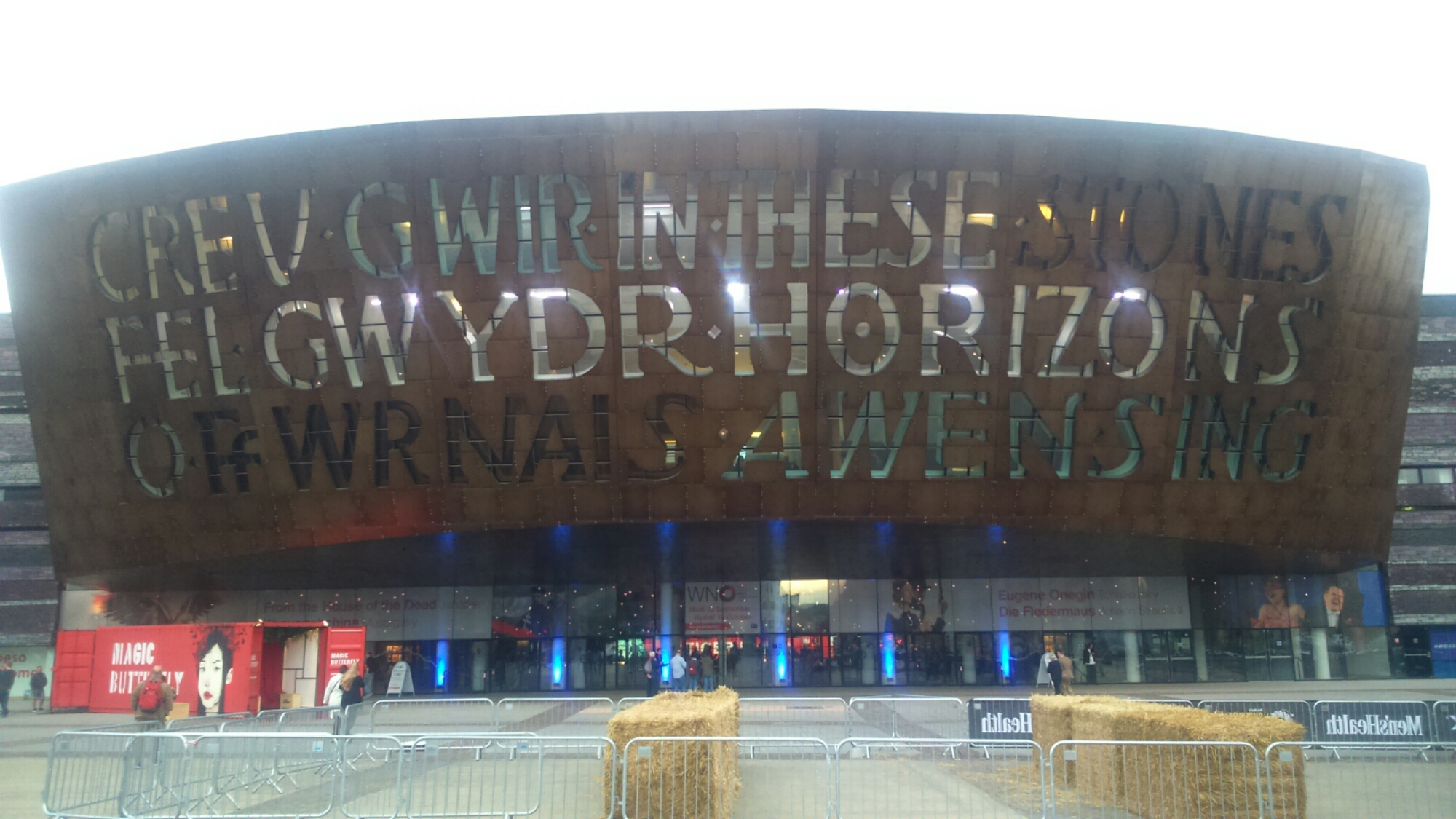
So, as promised, yesterday evening I took a stroll down to Cardiff Bay for the opening night of this run of Welsh National Opera’s production of Kovasnshchina. The walk proved a bit more eventful than anticipated because I blundered into the middle of some sort of police operation involving the pursuit of a suspect but I made it to the Wales Millennium Centre on time and relatively unruffled.

Khovanshchina (which roughly translates as `The Khovansky Affair’ or `The Khovansky Episode’) is based on historical events that took place in Moscow in the 1682. Prince Khovansky, at the head of his private army (the Strelsty) leads a rebellion against the government represented by Sofia, who is regent on behalf of her young brother Ivan and his half-brother Peter (destined to become Peter the Great) who has, with assistance from her lover Prince Golitsyn, restricted the power of the the Boyars (aristocracy). These rebels form an uneasy alliance with The Old Believers, who are opposed to religious reforms introduced by the Patriarch Nikon. The rebellion is crushed by Peter’s army. Khovansky is murdered, but the Streltsy, having been lined up to be executed, are spared by the young Tsar. Golitsyn is forced into exile. The Old Believers, on the other hand, convinced that the failure of the uprising means that the devil is taking over the world, opt for mass suicide.

Mussorgsky was inspired to write this Opera by the bicentenary of the birth of Peter the Great (who was born in 1672). He worked on it, off and on, composing the music and writing the libretto, from 1872 until his death in 1881 and which point it still wasn’t finished. His friend Nikllai Rimsky-Korsakov subsequently completed the work, and it is his version that is most frequently performed. This production, however, uses a different version, completed in 1959 by Dmitri Shostakovich and with the addition of the final scene – the immolation of the Old Believers – the music for which was composed by Igor Stravinsky. The compositional history of this piece is almost as complex as the historical events it depicts.

At a very basic level the message of Khovanshchina is “look how terrible everything was before Peter the Great”. None of the protagonists is a remotely sympathetic character, especially Khovansky himself who is an extremely unpleasant individual, as is his son, whom we first meet trying to force his attentions on a young German girl. Khovansky Senior arrives on the scene to stop him assaulting the girl, but only because he wants her for himself. They’re all charm, these Khovanskys.

Golitsyn seems at first like a good guy, but when a fortune teller forecasts doom and gloom he casually orders her to be murdered. The Old Believers just seem to be a group of religious maniacs. Peter the Great never actually appears on stage and neither does Sofia, a deliberate ploy to focus our attention on the undesirables in front of us. The story that unfolds is one full of horror and brutality, while hope waits in the wings, perhaps never to arrive.

This particular episode also serves to highlight the themes that recur elsewhere in Russian history, and indeed the history of any country that has a history, namely the conflicts between reason and superstition, between rich and poor, between East and West and, well, between War and Peace…

David Pountney’s design for  this production isn’t specific to the 17th century. The striking set, with its curious juxtaposition of abstract geometrical forms, owes much to the constructivist art that informed the iconography of the early Soviet era. Other elements of the design, such as the costumes of the serfs (grey) and the Old Believers (white), are more traditional. The Streltsy wear uniforms that look 20th century, but are a bright pink. This colour-coding is helpful, actually, given the complexities of the plot, and the fact that the stage is frequently crowded. The final apocalyptic suicide scene is not an immolation, but death by poison gas, administered by a steampunk contraption that descends from above the stage. These, and other devices, shift attention away from the specifics and emphasize the thematic universality of the piece.

Spread over five acts, and lasting about 3½ hours (including one interval), Khovanshchina is quite a long Opera but it doesn’t get bogged down because so much is happening musically, dramatically and visually.  It may not be the most comfortable viewing, but it’s a gripping story compelling realised. I certainly never felt bored, though I do wish I’d read a little more about the story beforehand as I got a bit confused in places.

With the exception of a few iffy moments by the French horns, the Orchestra of Welsh National Opera under the direction of Tomáš Hanus played excceedingly well, adding a sense of danger to the opening prelude that set the tone wonderfully. A special mention must be made of the Chorus of Welsh National Opera who were absolutely magnificent, showing off some of the sublime choral writing in this opera as well as provide lots of energy and colour to the crowd scenes.  It isn’t really fair to single out any of the principals, as this is really an ensemble piece, but I thought Robert Hayward was absolutely compelling.

There are two more performances in Cardiff but this piece goes on tour. Do go and see it if you can. It’s an enthralling experience.