R.I.P. Ornette Coleman

Posted in Jazz with tags , , , on June 11, 2015 by telescoper

I’m now officially in mourning.

I just heard the news that  Ornette Coleman has passed away at the age of 85. He was one of the true innovators of Jazz and his influence on the development of this music over the last 50 years has been absolutely immense. I don’t have the words to pay adequate tribute to the either the man or his music, so I’ll just highlight two tracks from my favourite album of his, which was recorded Live at the Golden Circle club in Stockholm  in 1965, and was proclaimed “Record of the Year” the following summer in Downbeat magazine.  This  features a trio of Coleman on alto sax, David Izenzon on bass, and Charles Moffit on bass. By the mid-60s Ornette Coleman had already established his reputation as leading light of avant-garde saxophonists and, in his own way, was as great an influence on jazz as Charlie Parker, Sonny Rollins and John Coltrane had been just a few years earlier, but this album is, for me, when Ornette Coleman underwent the transition to greatness.

The track European Echoes starts in a deceptively simple manner, with Ornette’s little two-note statements over a fast waltzy 3/4 foundation provided by Izenzon and Moffitt. It then eases into  a passage marked by freer improvisations by Ornette, the meter changing at the same time to 4/4. Ornette plays for more than half the track, after which Izenzon and Moffitt take over for all but the final minute, at which point Izenzon drops out and Moffitt plays an intricate percussion solo.

Although most people I know recognize the virtuosity of modern jazz musicians they don’t really like the music very much. On the other hand fell in love with this track as soon as I heard it, partly because it begins simply enough for a beginning saxophonist to play along with, but also because it’s highly original without being  at all self-indulgent. In fact, at one level, everything Ornette Coleman  does on this track is quite simple; he plays the saxophone here like he’d just discovered the instrument and was in the process of finding out what it could do; at least in his early years, he didn’t have much of a technique at all in the conventional sense but nevertheless managed to produce amazing music. This a view echoed by the great Charles Mingus in quote I got from another blog about Ornette Coleman:

Now aside from the fact that I doubt he can even play a C scale in whole notes—tied whole notes, a couple of bars apiece—in tune, the fact remains that his notes and lines are so fresh. So when [the jazz dj] Symphony Sid played his record, it made everything else he was playing, even my own record that he played, sound terrible.

I did learn to enjoy and admire Ornette Coleman’s more “difficult” music later on, but  European Echoes was the track that convinced me that Ornette Coleman was a genius.

Though from the same album, Faces and Places is quite a different kettle of fish. It goes like the clappers right from the start, with some terrific work on the drums by Moffit, skittering along on the cymbals with interludes of powerful rapid-fire accents on the skins. Fantastic stuff.

I’ve decided that I’m going to spend this  evening listening to Ornette Coleman records and drinking to his memory.

Rest in Peace, Ornette Coleman (1930-2015).

Six key trends in contemporary statistics that really could revolutionise astronomical data analysis …

Posted in Biographical, The Universe and Stuff with tags on June 11, 2015 by telescoper

I’ve just come across this very interesting astrostatistics site, and I thought I’d reblog a piece from it. In fact I did make a very crude attempt back in the 90s to do something very like the SPDE analysis described here, but it came to nothing and I dropped the idea. Now it seems that there’s been a great deal of more recent activity in this area which I knew nothing about so it might be worth reviving interest in it.

Now. Where did I put those notes?

Robotic Failures

Posted in Uncategorized with tags , on June 10, 2015 by telescoper

This made me chuckle so I couldn’t resist sharing it here. I think it’s amazing that robots have now become so sophisticated that they are now perfect in their ability to emulate the behaviour of a human being….or at least one who’s totally drunk!

The Latest TV – Experimental Particle Physics at Sussex

Posted in Brighton, The Universe and Stuff with tags , , , , on June 10, 2015 by telescoper

I just came across this clip featuring our own Prof. Antonella de Santo of the Department of Physics & Astronomy at the University of Sussex (where she leads the Experimental Particle Physics group) talking about the group’s work on The Latest TV, a new documentary TV station based in Brighton.

An “Enfys” for Sussex…

Posted in Biographical, LGBTQ+ with tags , , , on June 9, 2015 by telescoper

As Head of School for Mathematical and Physical Sciences I get to do all kinds of jobs across the University to do with all kinds of matters, academic and non-academic alike. In the course of one of these – chairing the University’s Human Resources Committee – it occurred to me that it was very strange that it was a bit strange that a University (Sussex) so close to a famously gay-friendly city (Brighton) didn’t have any real forum for LGBT staff to share information, to support each other, and to run social, cultural or other events. It also seemed strange to me that the University of Sussex was not part of the Stonewall Diversity Champions scheme. Even worse, there is no official University staff representation at Brighton’s annual Pride celebrations, though the Student LGBTQ society has

My former institution, Cardiff University, not only has a thriving staff network (called Enfys, the Welsh word for “Rainbow”) and belongs to the Stonewall scheme, it also ranks 24th in the top 100 Equality Index of all UK employers.

Anyway, it was definitely with Enfys in mind that I suggested setting up a similar network here on the Sussex campus, open to all staff (not just academics). I wasn’t sure whether there would be any enthusiasm for it, but the senior management of the University gave me their backing to try.

And so it came to pass that we announced that a network was being set up, and there would be a kind of “launch party” on 18th June to plan what sort of things we would do. I had no idea how many people would be interested and was quite prepared for the idea to bomb completely. However, just a couple of weeks after the initial announcement we have more than 50 people on the mailing list, and I’m expecting good turnout for the launch which I hope will be a fun occasion in itself but also the start of something very interesting to be part of. I also hope people bring plenty of ideas for the sorts of events and activities we can organize and the energy and enthusiasm to work at actually bringing these ideas into being.

One of the most important things we have to do, though, is to come up with a name. Although I nicked the idea from them I don’t think we can really use Enfys. And “Sussex University LGBT Staff Network” sounds a bit dull. Any suggestions?

Pelléas et Mélisande at WNO

Posted in Opera with tags , , , on June 8, 2015 by telescoper

Having had a very busy working birthday it was nice to take off to Cardiff for the weekend for a delayed treat. For me the cultural event of the weekend in the Welsh capital was neither One Direction nor the Manic Street Preachers, both which bands were playing there that weekend. It wasn’t even the Ladyboys of Bangkok, which I would definitely have preferred to either of the former acts. No, it was an evening at the Wales Millennium Centre for a new production of Pelléas et Mélisande by Claude Debussy.

This was an opera that was quite new to me, though I did know that the previous production of this work by Welsh National Opera was back in 1992 and the conductor was none other than Pierre Boulez. There is a famous recording of the piece on Deutsche Grammaphon, so the bar was set rather high for the new production. I don’t often agree with opera reviews so don’t usually read them before I go in case they put me off, but I did read the review in the Guardian of the opening night (May 31st) performance of this one as I was sent it by a friend. As it turns out there’s little I can add to George Hall’s review. It was absolutely magnificent.

The plot of Pelléas et Mélisande is, on one level, fairly simple. Prince Golaud finds a mysterious young woman, Mélisande, lost in a forest. She becomes his wife and goes to live with him in the castle of his grandfather, King Arkel of Allemonde. After a while, though, Mélisande gets the hots for Golaud’s younger half-brother Pelléas and he reciprocates her feelings. Eventually Golaud starts to suspect that there’s something going and goes out of his way to find out how far the relationship has developed. He even gets his own child, Yniold, to spy on the couple. Since it’s all getting a bit weird, Pelléas decides to leave the castle but arranges to meet Mélisande one last time before he departs. Golaud gatecrashes the meeting and kills Pelléas in a jealous rage. Mélisande eventually dies too, but not until it is revealed that she has given birth to a daughter. Golaud never really finds out “the truth”, i.e. whether Pelléas and Mélisande ever consummated their love for each other.

But of course the plot tells only part of the story. This opera is based on the symbolist play of the same title by Maurice Maeterlinck. It’s an essential component of the symbolist manifesto that art should try to represent absolute truths that can only be expressed indirectly. Consequently very little in Pelléas et Mélisande is quite what it seems on the surface. The characters are enigmatic, especially Mélisande, and the boundary between reality and imagination is often blurred to such an extent that it takes on the quality of a dream.

That may all seem very confusing, but what binds it all together is Debussy’s music which was a revelation to me: all the sensuality I associate with his music was there, but it’s far darker and more mysterious than I’d imagined in my mind’s ear before the show. I have to say that the Orchestra of Welsh National Opera under the direction of Lothar Koenigs was absolutely magnificent. This was probably the best I’ve ever heard them play – and they’ve been excellent many times I’ve heard them. They obviously rose magnificently to the challenge set by Pierre Boulez. As for the singers, I don’t think there were any weak links at all but for me the pick of them was Rebecca Bottone in the “trouser role” of the young boy, Yniold. She sang and acted quite beautifully.

I didn’t realise straightaway, but the set was based on the same metallic structure used for the WNO production of Lulu, although in this case it wasn’t festooned with body parts, although there was a pool of water around it. Come to think of it, there is quite a lot in common between the characters of Lulu and Mélisande, which may be why they did it that way. Or it might just have been to save money. Anyway, cylindrical structure in the centre of the stage was used very cleverly indeed. At one time it represented a tower, at another a well, and even when it wasn’t being used it added a touch of steampunk to the look.

I also have to mention the staging of the final scene. Mélisande’s death was depicted most movingly, wrapped in black scarves by maidservants. At the end of the performance, the rest of the cast are escorted offstage by a representation of death there’s a beautiful image of rebirth as a hand rises defiantly from a white shroud.

Congratulations to Welsh National Opera on this production. I don’t think I’m often given to exaggeration but I’d call this one a triumph!

Sailing to Byzantium

Posted in Poetry with tags , , , on June 7, 2015 by telescoper

 I
That is no country for old men. The young
In one another’s arms, birds in the trees
—Those dying generations—at their song,
The salmon-falls, the mackerel-crowded seas,
Fish, flesh, or fowl commend all summer long
Whatever is begotten, born, and dies.
Caught in that sensual music all neglect
Monuments of unaging intellect. 

II
An aged man is but a paltry thing,
A tattered coat upon a stick, unless
Soul clap its hands and sing, and louder sing
For every tatter in its mortal dress,
Nor is there singing school but studying
Monuments of its own magnificence;
And therefore I have sailed the seas and come
To the holy city of Byzantium. 

III
O sages standing in God’s holy fire
As in the gold mosaic of a wall,
Come from the holy fire, perne in a gyre,
And be the singing-masters of my soul.
Consume my heart away; sick with desire
And fastened to a dying animal
It knows not what it is; and gather me
Into the artifice of eternity. 

IV
Once out of nature I shall never take
My bodily form from any natural thing,
But such a form as Grecian goldsmiths make
Of hammered gold and gold enamelling
To keep a drowsy Emperor awake;
Or set upon a golden bough to sing
To lords and ladies of Byzantium
Of what is past, or passing, or to come.

by William Butler Yeats (1865-1939)

The Frontier of Computing – Quantum Technology

Posted in The Universe and Stuff with tags , , , on June 6, 2015 by telescoper

I came across this video last week and thought I would share it here. It was made by a group students and is called The Frontier of Computing – Quantum Technology. It features Prof. Winfried (“Winni”) Hensinger of the Department of Physics & Astronomy at the University of Sussex.

This gives me a chance to plug once more the unique Frontiers of Quantum Technology MSc Course at the University of Sussex, which seems to be attracting considerable interest this year!

Hannah and her Sweets: that EdExcel Examination Question…

Posted in Education with tags , , on June 5, 2015 by telescoper

You may or may not know that yesterday there was a bit of a Twitterstorm of students complaining about an “unfairly difficult” examination question on the GCSE Mathematics paper set by EdExcel.

This is the question:

There are n sweets in a bag. Six of the sweets are orange. The rest of the sweets are yellow.

Hannah takes a sweet from the bag. She eats the sweet. Hannah then takes at random another sweet from the bag. She eats the sweet.

The probability that Hannah eats two orange sweets is 1/3. Show that n²-n-90=0.

Not sure what all the fuss is about. Seems very straightforward. The question tells you that 6/n × 5/(n-1)=1/3 whence the equation follows by a trivial rearrangement. In fact I’m a little surprised the question didn’t go on to ask the students to solve the quadratic equation n²-n-90=0 to show that n=10…

I don’t really know what is on the GCSE Mathematics syllabus these days. In fact I never did GCSE Mathematics, I did O-level Mathematics which was quite a different thing. You can see the papers I took – way back in 1979 – here.


Thirty years a graduate..

Posted in Biographical, Film with tags , , , , on June 4, 2015 by telescoper

Today got off to a bad start when Radio 3 swtiched on shortly after 6am with a Concerto for Two Harpsichords. Since even one harpsichord is one more harpsichord than I can tolerate, I switched it off immediately and went back to sleep. When I finally got going I arrived at my usual bus stop (at Old Steine) to find it taped off and out of service. The wreckage of a burnt-out bus at the stop provided the obvious explanation. I therefore had to walk all the way up to St Peter’s Church to get a bus up to campus. I got here just in time to have a quick coffee and head off to an two-hour long Joint Planning Meeting with the School of Engineering and Informatics.

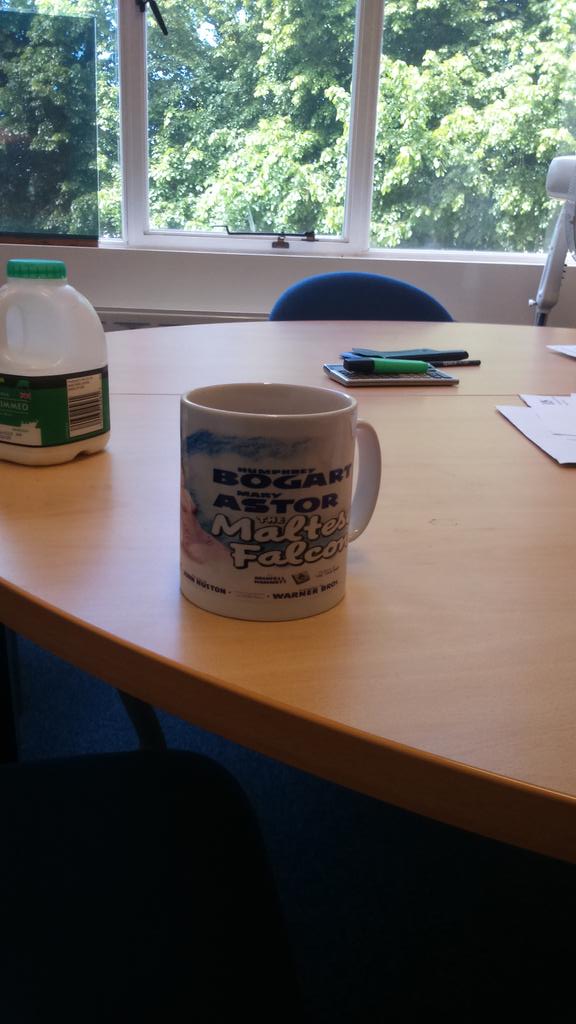
All things considered this wasn’t the best start to a birthday I’ve ever had, but at least I now have time for a celebratory cup of tea from my birthday mug.

Mug

Thank you to Miss Lemon for the lovely present – as regular readers of this blog (Sid and Doris Bonkers) will know – the Maltese Falcon is my favourite film.

Anyway, I only have a brief respite because this is a very busy part of the academic year. Next week we enter the time of the Final examination boards where we have to classify the degrees of graduating students. While I was lying in bed recovering from harpsichord-induced schock this morning I realised exactly 30 years ago I had just finished my own final examinations. In those days they were very intense, six three-hour papers in just three days for most students. I got off lightly because I did a theory project which I could substitute for one paper. It was still quite exhausting though. Can that really be thirty years ago?

I remember the grand plans I had to celebrate the end of my finals, especially since they coincided to closely with my birthday. When the time came, however, I was totally exhausted and just ended up having a few beers and crashing out. That’s probably what’s going to happen today too…

Anyway, must get on. Time to prepare for this afternoon’s meeting of the School of Mathematical and Physical Sciences Executive Committee. Another two hours. What a way to spend a birthday…